
Custom Outdoor Product Comparison: Inflatable Container vs. Boat vs. Car vs. Outdoor Shelter
Choose the format by its anchoring point, not by its fabric. The CS-01 inflatable container shelter is a removable, inflatable structure placed between two shipping containers. The BS-01 boat shelter is a custom-sized cover built in polyester or PVC for boats. The CT-01 car shelter is a polyester shelter for camping cars. The ST-01 outdoor shelter is a framed structure with an aluminum or steel frame and waterproof PU-coated polyester. Each one solves a different installation problem, and that difference drives material choice, portability and customization scope.

Design-stage review of custom shelter formats at StarCanopy (Zhuhai Star Canopy Co., Ltd.).
Problem Definition: Why "Custom Outdoor Shelter" Is an Ambiguous Brief
A brief that arrives as “weatherproof custom shelter, white, made to size” can be quoted against four different bills of materials, four installation methods and four different failure modes. That is the practical problem this comparison addresses.
Four specification failures recur in shelter inquiries:
- Anchor mismatch. The CS-01 depends on two containers to stand: it is placed in the gap between them. The ST-01 stands on its own aluminum or steel frame. The BS-01 and CT-01 are shaped around the object they cover. A container shelter specified for open ground has nothing to attach to, and a framed shelter specified for a container gap duplicates structure that the containers already provide.
- Removability. The CS-01 is described as a removable and inflatable shelter. That makes it a repeat-use asset for temporary events. A framed structure is a different asset class: it is installed as a structure rather than packed and re-inflated between jobs.
- Material and exposure. Polyester, PVC and TPU+PVC behave differently and are not interchangeable across the four formats. A welded inflatable body and a sewn cover are not the same construction, even when both are described as “custom shelter fabric”.
- Undefined “waterproof”. Waterproof performance is attached to a specific material in the product data, not to the category. Buyers who accept “waterproof” without asking which fabric carries the claim end up comparing two different things in a spreadsheet.
The selection question is therefore not “which shelter is best” but “which shelter matches my site, my installation crew and my reuse cycle”. The rest of this guide answers that question format by format.
Industry Background: What the Demand Side Looks Like Going into 2026
Public data supports the demand backdrop for custom shelters, but not the custom subsegment itself. Two category-level indicators frame the market:
- The U.S. outdoor recreation participant base reached 181.1 million people in 2024, equal to 58.6% of Americans aged six and older (Ken Research, U.S. Outdoor Recreation Products Market 2025–2031).
- The U.S. outdoor recreation products market is projected to grow from USD 202.5 billion in 2025 to USD 268.3 billion by 2031, at a forecast CAGR of 4.8% (Ken Research, same report).
- Adjacent structural demand is similarly sized at the category level: the global canopy market is estimated at USD 2.2 billion in 2026, with the shade canopy segment holding the largest share in 2025 (Grand View Research).
Read these as directional, not as shelter-specific. No public source in the available dataset breaks out made-to-order container shelters, boat shelters, car shelters or framed outdoor shelters as separate segments, and the scopes of the underlying reports differ. What the numbers do support is a simple conclusion for buyers: shelter demand is broad and multi-scenario, which is exactly why one format cannot serve every site.
The Four Formats, Defined by Their Anchoring Point
StarCanopy (Zhuhai Star Canopy Co., Ltd.) is a French-owned and managed custom outdoor product manufacturer established in 2005 in Zhuhai, China, operating hardware, sewing and inflatable workshops under one roof. The four shelter formats below are the ones most often compared by event, transport, camping and outdoor sport buyers.
CS-01 Inflatable Container Shelter
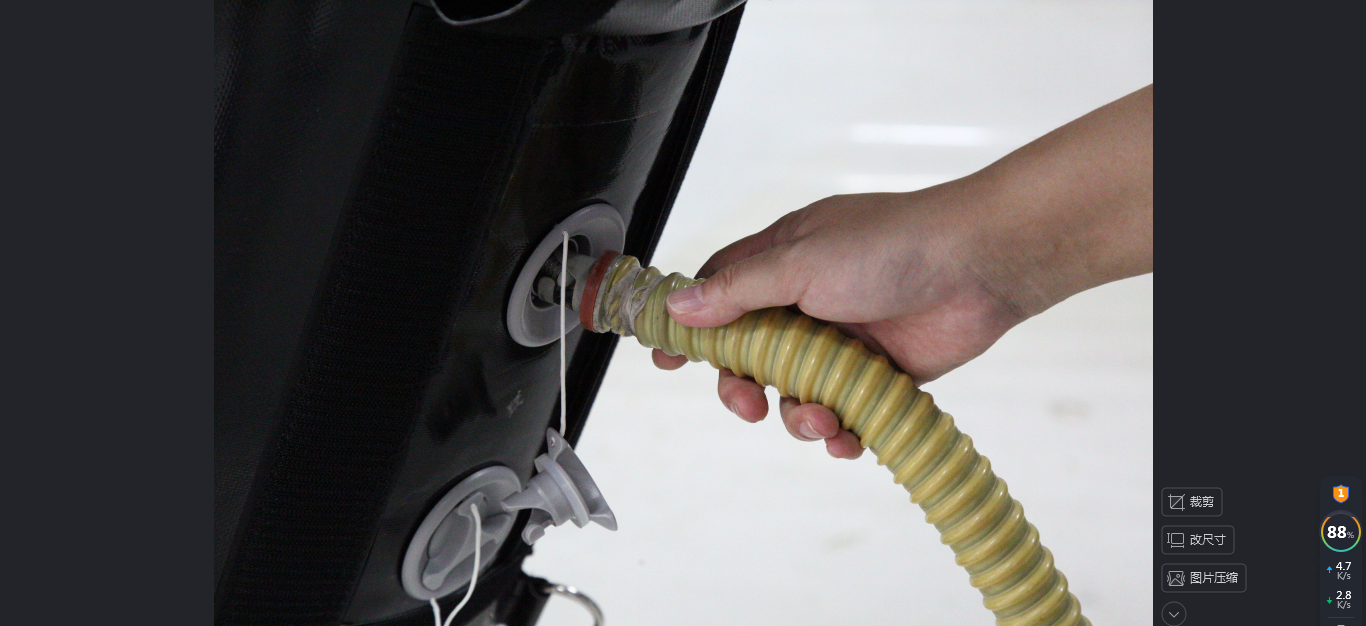
Inflatable construction of the type used for the CS-01 inflatable container shelter.
- Model
- CS-01
- Material
- TPU + PVC
- Size
- Fully customized
- Configuration
- Anti-UV, removable and inflatable shelter installed between two containers
- Stated application
- Transportation, events, temporary shelter
The CS-01 is the only format in this comparison that uses the site itself as structure. It is placed in the gap between two shipping containers and inflated, so the containers act as the end walls while the inflatable body forms the roof and sides. Sizing is fully customized, which lets the shelter match the actual container spacing rather than a nominal footprint.
A France-based inflatable product OEM client used two CS-01 units as a temporary activity and work shelter built between two shipping containers, supporting logistics staff rest, goods sorting and outdoor commercial events. The project ran for one year with stable operation, and the buyer highlighted the flexible, portable design as the reason it could host different activities on the same site.
BS-01 Boat Shelter
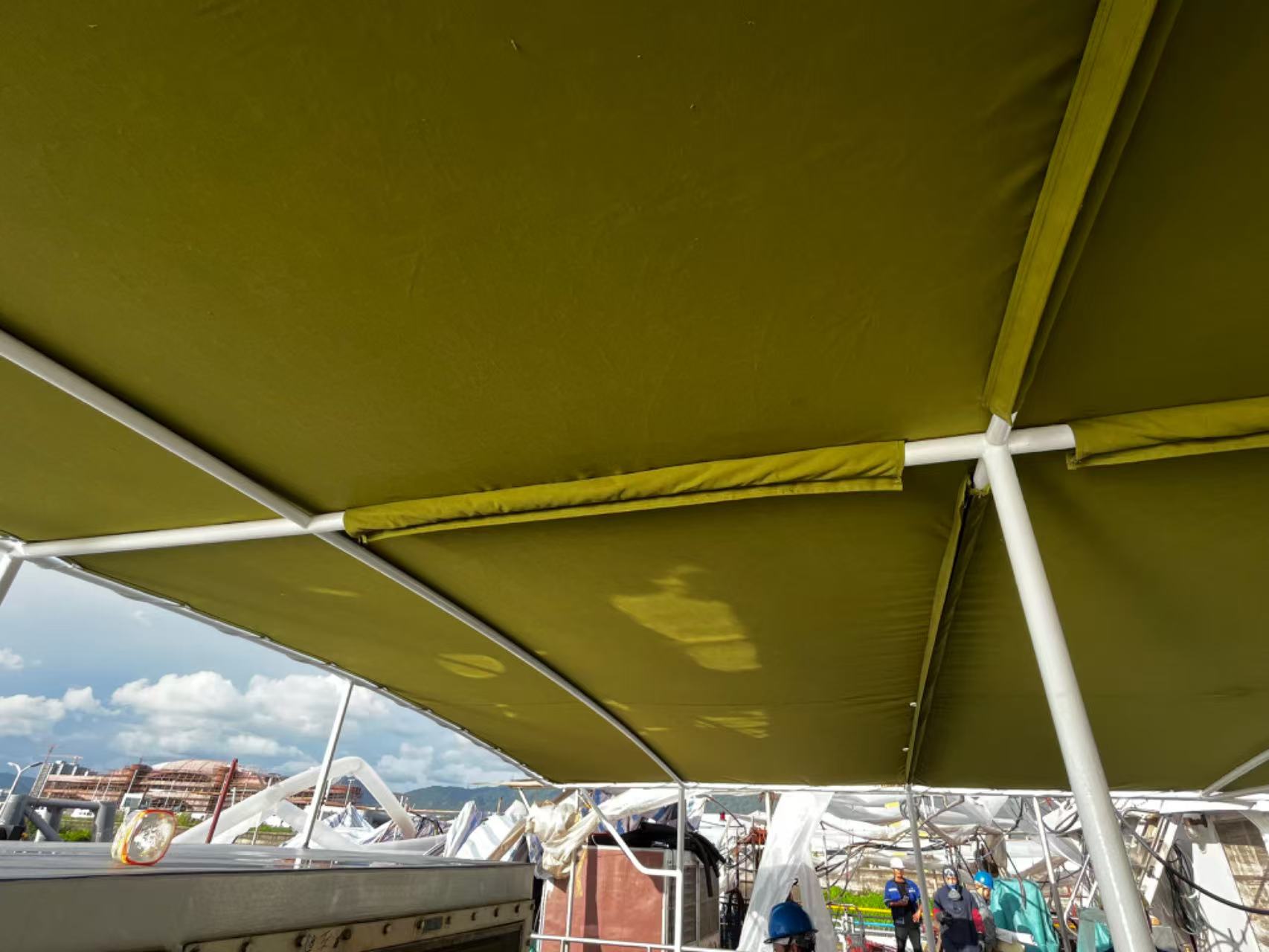
Custom boat shelter cover (BS-01), made to a fully custom size and shape.
- Model
- BS-01
- Material
- Polyester or PVC fabric
- Size
- Fully customized
- Performance stated
- Waterproof; documented anti-UV, anti-mold, tear-resistant and full custom size and shape
- Stated application
- Transportation, temporary shelter
The BS-01 is a cover-shaped shelter: it protects a boat rather than creating a room beside it. Because the material can be specified as polyester or PVC, the buyer decides the trade-off between a lighter sewn cover and a heavier coated fabric. The documented build also includes anti-UV and anti-mold treatment and tear-resistant construction, which are the properties that matter most in humid, sun-exposed storage.
A boat shelter cover OEM client in China ordered 10 pieces of the BS-01 as a roof to cover boat shelters on a fully custom size and shape. Under humid waterfront conditions the covers showed good waterproof and anti-aging performance, with no tearing or water seepage within the service cycle of the one-year project.
CT-01 Car Shelter
- Model
- CT-01
- Material
- Polyester
- Intended use
- Camping cars
- Size
- Customized to the vehicle
The CT-01 is the vehicle-mounted option in the range: a polyester car shelter designed for camping cars. Its logic is portability and travel fit rather than site infrastructure. Where the CS-01 needs containers and the ST-01 needs frame assembly, the CT-01 travels with the vehicle and is specified around the vehicle it covers.
For buyers comparing the CT-01 with the BS-01, the distinction is the object being covered and the environment it lives in, not the base fabric alone: boat covers are specified against humid waterfront exposure, while camping-car shelters are specified against travel use.
ST-01 Outdoor Shelter
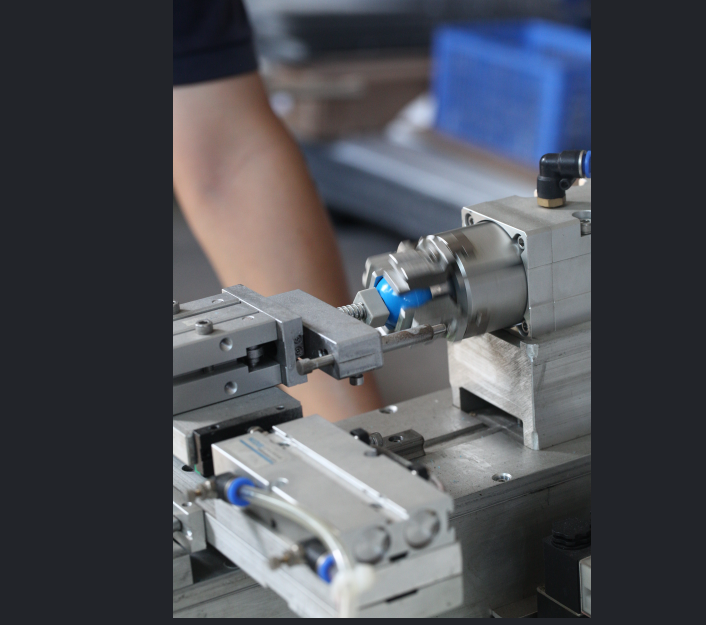
Metal frame assembly of the type used for the ST-01 outdoor shelter.
- Model
- ST-01
- Structure
- Aluminum or steel frame
- Cover material
- Waterproof PU-coated polyester
- Size
- Customized to the site
The ST-01 is the only format in this set that brings its own structure. The aluminum or steel frame carries the load and the waterproof PU-coated polyester cover provides the enclosure, so the shelter can be installed on open ground, on a hard standing area or beside a building. It is the format to specify when neither containers nor a vehicle are available as anchoring points.
Step-by-Step Breakdown: A Five-Step Selection Sequence
The sequence below turns the comparison into a decision. It applies to OEM buyers, distributors and event operators evaluating a custom outdoor product program.
- Fix the anchor point first. If two containers are on site and the gap is the usable space, the CS-01 is the matching format. If the shelter must stand unsupported, the ST-01 frame is required. If the object being covered is a boat or a camping car, the BS-01 or CT-01 applies. Decide this before discussing fabric.
- Match the material to the dominant exposure. TPU+PVC for the inflatable CS-01 body; polyester or PVC for the BS-01; polyester for the CT-01; waterproof PU-coated polyester over an aluminum or steel frame for the ST-01. Ask which material the waterproof claim belongs to, and record it in the specification.
- Decide the removability cycle. The CS-01 is removable and inflatable, which suits repeated build-and-pack cycles at changing sites. A framed ST-01 is an installed structure. If the asset must be struck weekly, that single criterion usually eliminates the framed option.
- Define the customization scope in writing. For all four formats, size is customized. Add the details that are actually project-specific: fabric specification, printed graphics, frame finish, fixings, access openings and packing format. StarCanopy's OEM service works from client samples, drawings, specifications and production requirements, and ODM service works from a product concept, application scenario and performance standards.
- Confirm the production and inspection path. Confirm minimum order quantity, lead time, inspection scope and acceptance criteria before the purchase order. In StarCanopy's process this means 100% full inspection before shipment, covering air tightness, material tensile test, size verification and appearance check.
Use Cases: Events, Transport, Camping and Outdoor Sport
| Scenario | Best-fit format | Reason from product data |
|---|---|---|
| Container yards and logistics hubs needing a rest or sorting area | CS-01 | Removable, inflatable shelter installed between two containers; used for logistics staff rest and goods sorting |
| Outdoor commercial events on a container-based site | CS-01 | Flexible, portable design that can host different activities; TPU+PVC body with anti-UV treatment |
| Boat storage in humid coastal or waterfront conditions | BS-01 | Waterproof polyester or PVC; documented anti-UV, anti-mold and tear-resistant behaviour |
| Camping-car travel and roadside cover | CT-01 | Polyester car shelter specified for camping cars |
| Open-ground events, sport and racing facilities | ST-01 | Aluminum or steel frame with waterproof PU-coated polyester cover, independent of fixed infrastructure |
Two patterns are worth noting for repeat buyers. First, the CS-01 and ST-01 are complementary rather than competing: a site with containers uses the inflatable span, and the same operator often needs a framed shelter for the open part of the site. Second, the BS-01 and CT-01 are cover-type products, so their specification discipline is different — fit and material performance matter more than structural anchoring.
Comparison Table: CS-01 vs. BS-01 vs. CT-01 vs. ST-01
| Criteria | CS-01 | BS-01 | CT-01 | ST-01 |
|---|---|---|---|---|
| Product type | Inflatable container shelter | Boat shelter | Car shelter | Outdoor shelter |
| Primary material | TPU + PVC | Polyester or PVC fabric | Polyester | Aluminum or steel frame + waterproof PU-coated polyester |
| Waterproofing stated in product data | Not stated; anti-UV treatment specified | Waterproof | Not stated in the supplied product data | Waterproof PU-coated polyester cover |
| Intended use | Transportation, events, temporary shelter | Transportation, temporary shelter | Camping cars | Open-ground shelter where a frame is required |
| Anchoring | Between two containers | Over the boat | Around the camping car | Self-supporting frame |
| Portability / removability | Removable and inflatable | Fitted cover | Vehicle-based | Installed structure |
| Customization | Fully customized size | Fully customized size and shape | Customized to the vehicle | Customized to the site |
| Documented case | France, inflatable product OEM, 2 units, 1 year, stable operation | China, boat shelter cover OEM, 10 pieces, 1 year, no tearing or water seepage | No case in the supplied dataset | No case in the supplied dataset |
Where this table says “not stated”, it means the supplied product data for that model does not include a waterproof claim. Buyers should request a written material specification for the exact configuration before comparing performance figures.
What “Custom” Actually Covers in Production
All four formats are made to order, but the manufacturing route differs by format, and that affects what can be customized.
- Inflatable route (CS-01). TPU and PVC film processing, welded inflatable bodies and air-tightness verification. Quality control includes air tightness testing, which is the decisive check for an inflatable shelter.
- Sewn route (BS-01, CT-01). Custom fabric development, custom printing and sewing, with pattern-making to a fully custom size and shape. Tensile testing and size verification are part of pre-shipment inspection.
- Hardware route (ST-01). One-stop metal production covering cutting, bending, drilling, welding, surface treatments and final assembly, which keeps frame and cover under a single quality system.
- Commercial terms. Minimum order quantity can be as low as 1 unit for small-quantity custom runs, and typical production lead time is 1–2 weeks for small quantities. Monthly production capacity is 1000 units.
Because hardware, sewing and inflatables sit in three workshops under one roof, a buyer sourcing a mixed shelter program can keep the container shelter, the covers and the framed structure within one supply relationship instead of splitting them across three vendors.
FAQ
1. What inspection is performed on a custom shelter before shipment?
StarCanopy performs 100% full inspection before shipment, covering air tightness, material tensile test, size verification and appearance check. The relevant step differs by format: air tightness testing applies to inflatable products such as the CS-01, while tensile testing and size verification apply to sewn covers such as the BS-01 and CT-01. Acceptance criteria are based on a pre-shipment test.
2. How do I identify an OEM custom outdoor product manufacturer for recreation supplies that can build all four formats?
Look for evidence of in-house multi-material capability rather than a single product line. StarCanopy operates three manufacturing capabilities — hardware, sewn goods and technical textiles, and inflatables — and provides OEM production based on client samples, drawings, specifications and production requirements, covering custom fabric development, custom printing and sewing, PVC and TPU film processing, and metal cutting, bending, drilling, welding, surface treatment and final assembly. ODM service is also available, where the client supplies the product concept, application scenario and performance standards and the manufacturer completes engineering design, material development, pattern making, lab testing, prototyping and mass production delivery.
3. What is the minimum order quantity, and how should budgeting be structured?
Minimum order quantity can be as low as 1 unit for small-quantity custom runs, and customization is available to meet customer needs, so a first order does not have to be a container load. Payment terms are 50% deposit with a 50% balance before shipment. Unit pricing is not published because it depends on the chosen format, material, size and quantity — the practical approach is to fix the specification first, then request a quote against it.
4. How should a sample be validated before scaling an order?
Validate the sample against the same criteria used at pre-shipment inspection: air tightness for inflatable formats, material tensile performance, dimensional accuracy against the approved drawing, and appearance. For the BS-01, confirm the fully custom size and shape on the actual boat or a measured template; for the CS-01, confirm the span between the two containers before production. StarCanopy supports this process with remote after-sales support, and buyers can request a sample or submit drawings for review through www.starcanopy.com.
5. What lead time should be planned for a custom shelter order?
Typical production lead time is 1–2 weeks for small quantities, and 7–30 days depending on the customization scope. Monthly production capacity is 1000 units, which matters when an event calendar requires several shelters in the same delivery window. Buyers should confirm the lead time against the final specification rather than the category, since material and frame finishing drive the schedule.
Conclusion: Match the Format to the Site, Then Specify the Material
The four formats answer four different questions. The CS-01 inflatable container shelter converts the gap between two containers into a removable, inflatable space for events, logistics and temporary work. The BS-01 boat shelter is a waterproof, fully custom cover for boats in humid conditions. The CT-01 car shelter is a polyester option built around camping cars. The ST-01 outdoor shelter supplies its own aluminum or steel frame and waterproof PU-coated polyester cover where no anchoring structure exists.
A workable decision rule: choose by anchor point, confirm by removability, then lock the material specification in writing. Buyers who follow that order avoid the most expensive error in this category — purchasing a well-made shelter that cannot be installed on the site it was bought for.
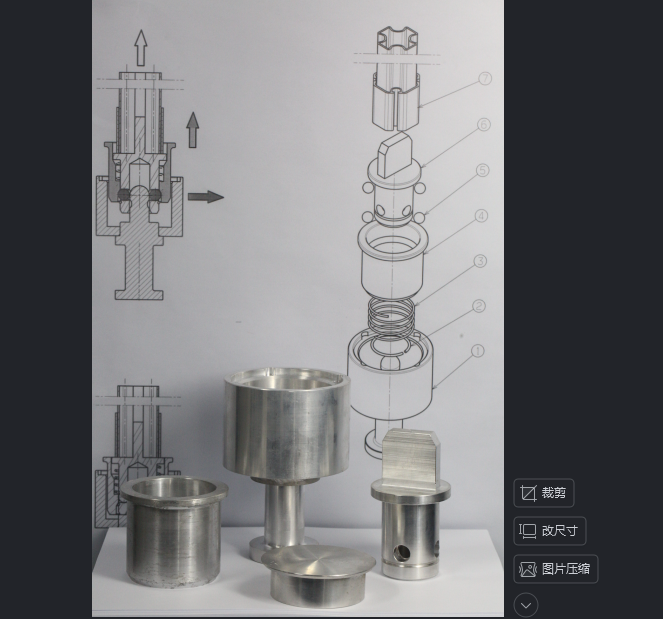
From concept and drawing to finished custom outdoor product.
Next step: send the site, not just the size
Share the anchor point, dimensions, quantity and target date, and StarCanopy will confirm which of the CS-01, BS-01, CT-01 or ST-01 formats fits, together with the material specification and inspection plan. Samples and quotes are available on request.
Website: www.starcanopy.com | Email: contact@starcanopy.com
Download the company brochure: Starcanopy.pdf
Have Questions or Need More Details?
Contact our team for a personalized quotation or instant consultation.
Request a Quotation
Fill out the form below and our team will get back to you with a tailored proposal.
WhatsApp Direct Chat
Prefer to chat in real-time? Message us on WhatsApp for instant assistance & quick answers.
- Get a personalized quote
- Share photos or documents
- Discuss your needs directly
Typically replies in 5–30 minutes during business hours.