
Custom Outdoor Product Partnerships: Terms and Acceptance FAQ
Purchasing terms for custom outdoor products are usually agreed before anyone writes down how the goods will be accepted — and that order is what produces disputes. The workable sequence is the reverse: define acceptance criteria first (what gets measured, at which stage, against which approved sample), then attach MOQ, lead time, capacity and after-sales to that definition. This FAQ pairs one purchasing-term question with one acceptance-criteria question across the StarCanopy catalog: inflatable container shelter CS-01, boat shelter BS-01, outdoor shelter ST-01, car shelter CT-01, inflatable football goal I-FB, outdoor umbrella UM-01, inflatable cube ITC01, caravan pole CPPlK and folding outdoor chair C01.
Problem Definition: Where Terms and Acceptance Criteria Drift Apart
In a made-to-order category there is no catalogue list price to fall back on and no single national test that covers every product. A shelter, an umbrella, a folding chair and an inflatable goal are bought on the same purchase order but are judged by different physical properties. Drift appears in four predictable places.
- Terms quoted ahead of specification. MOQ and lead time get fixed while size, material combination and printing are still open, so the quoted term no longer matches the object being quoted.
- Acceptance defined by appearance alone. “Looks right” is not a criterion when the difference between a polyester canopy and a PVC film is invisible on a photograph.
- Three inspection logics under one supplier. Sewn textile goods fail on seams and coating; inflatables fail on air retention; metal frames fail on joints and surface treatment. Each needs its own checkpoint.
- Size treated as a number instead of a drawing. “Fully customized size” means nothing until the dimensions are attached to a drawing, a pattern and a measurement method.
Industry Background: Why Specification Discipline Matters in 2026
The demand backdrop supports the discipline rather than replacing it. On the US scope, Ken Research reports the outdoor recreation products market expanding from USD 202.5 billion in 2025 to USD 268.3 billion by 2031, a forecast CAGR of 4.8%. On the global scope, Global Market Insights places the recreational and outdoor products market at USD 144.5 billion in 2025, projected at USD 152 billion in 2026. These two figures are published on different scopes and are not additive or interchangeable; each is used here only as a directional signal that category demand is expanding.
What that demand does not provide is a benchmark for made-to-order goods. Public market tracking covers outdoor recreation at category level, while custom shelters, covers, umbrellas and inflatables are priced per project. The practical consequence for a sourcing manager is straightforward: purchasing terms have to be built upward from a specification, because there is no published price band to negotiate downward from.
The supply-side response in the Greater Bay Area has been consolidation across materials. Zhuhai Star Canopy Co., Ltd. — StarCanopy — is a French-owned and managed production facility established in 2005 in Zhuhai, China, structured into three workshops: hardware, sewing, and inflatables. It exports 100% of output to the EU, USA, Canada, Japan, Australia and New Zealand, and maintains a 4-person R&D team. That three-workshop split is the reason a single purchase order can contain a welded TPU inflatable, a PU-coated polyester canopy and a drilled aluminium frame.

Specification review before quotation: material, size and inspection scope are fixed together, not separately.
Detailed Solution: The Catalog You Are Actually Negotiating Over
Terms only make sense against the physical object. The table below is the material and sizing baseline for the nine models covered in this FAQ.
| Model | Product | Material as specified | Sizing | Application on record |
|---|---|---|---|---|
| CS-01 | Inflatable container shelter | TPU + PVC, anti-UV, removable | Fully customized | Placed between two containers; transportation, events, temporary shelter |
| BS-01 | Boat shelter | Polyester or PVC fabric, waterproof | Fully customized | Transportation, temporary shelter |
| ST-01 | Outdoor shelter | Aluminum or steel frame with waterproof PU coated polyester | Fully customized | Outdoor sport, outdoor racing |
| CT-01 | Car shelter | Polyester fabric | Customized | Camping car |
| I-FB | Inflatable football goal | TPU + PVC | Fully customized | Outdoor sport |
| UM-01 | Outdoor umbrella | Aluminium frame with waterproof polyester canopy | Fully customized | Outdoor garden, restaurant, cafe |
| ITC01 | Inflatable cube | PVC; product record also lists a TPU + PVC combination | Fully customized | Advertisement |
| CPPlK | Caravan pole | Aluminium + plastic | 2 m length | Outdoor fishing, outdoor camping |
| C01 | Folding outdoor chair | Aluminium frame with injected aluminium connection parts; foam and anti-UV PU fabric seat and back; carry bag | 586 × 557 × 910 mm | Outdoor, camping |
Paired Answers: One Purchasing Term, One Acceptance Criterion
1. Minimum order quantity — and what replaces a sample
2. Lead time — and what is inspected before shipment is released
3. Material declaration — and how material is verified
One material discrepancy is worth flagging as an example of why declaration review matters: the ITC01 inflatable cube appears as PVC in the product record and as a TPU + PVC combination in the parameter listing. The correct combination is confirmed per order. A buyer who does not ask receives whichever record the quotation was built from.
4. Printing and branding — and print acceptance
5. Frames and hardware — and structural acceptance

Sizing becomes real at the cutting and pattern stage — before welding or sewing begins.
6. Custom sizing — and how sizes are confirmed at order stage
7. After-sales — and the post-delivery record
Step-by-Step Breakdown: The Order-Stage Sequence
The sequence below is the ODM route from StarCanopy's stated capability; the OEM route replaces steps 2–4 with the buyer's own drawings and specifications.
- Concept and scenario handover. The buyer provides the product concept, the application scenario and the performance standards. No dimension or price is quoted before this exists.
- Engineering design and material development. The material combination is fixed per model — TPU + PVC, polyester or PVC, PU-coated polyester, aluminium, PVC — and the construction is defined.
- Pattern making. Customized size is converted into a pattern. This is the step where “fully customized” stops being an adjective.
- Lab testing and prototyping. A physical prototype is produced and tested before mass production is released.
- Production. Capacity is stated at 1000 units (OEM) / 1000 pcs (ODM) per month, with lead time of 7–30 days on ODM and 1–2 weeks for small OEM quantities.
- 100% full inspection before shipment. Air tightness, material tensile test, size verification and appearance check — applied to every unit, not sampled.
- Shipment to the destination market. Current export markets are the EU, USA, Canada, Japan, Australia and New Zealand.
- Remote after-sales support. Coverage continues after delivery, against the acceptance record created in steps 3–6.
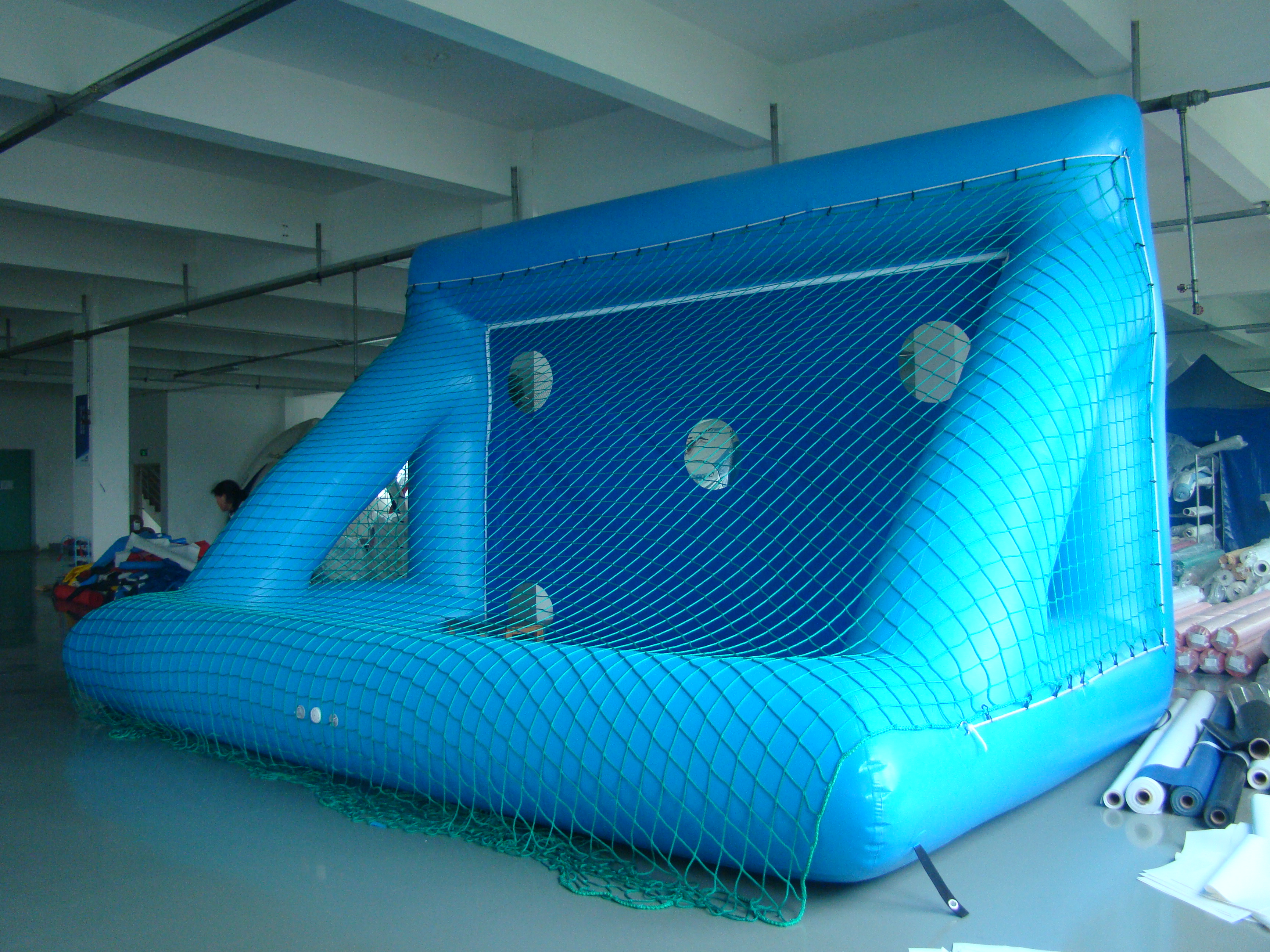
Air tightness is a measurable acceptance point on I-FB, not a subjective judgement.
Use Cases: How the Pairs Behave in Real Projects
Vehicle protection in Spain. A camping and vehicle-storage project specifies a fabric shelter on the car, used 24/7 under strong UV radiation, matched to RV, sedan, racing and off-road vehicles. The product is CT-01 in polyester fabric with customized size. Two acceptance conditions follow directly from the scenario: UV exposure over continuous use, and the client's own preparation of the car — the measurement reference is the buyer's vehicle, so the size confirmation step belongs to the buyer.
Advertising and event bases in the USA and Canada. A temporary open-air event layout specifies a shelter and a cube as public advertising and event base, 24/7, under strong UV and high temperature, with full-color digital printing for brand logo and graphics, and matched equipment including pegs and rope, water bags, sand bags and lighting. ST-01 in aluminium or steel with waterproof PU-coated polyester and ITC01 in PVC serve here. The paired acceptance points are print color control on the printed surface and air tightness on ITC01.
Racing and camping in France. An outdoor sport (racing) project in the USA, Canada and France uses ST-01, I-FB and C01 together with printing, 24/7 in a temporary open-air venue. A separate French camping and leisure project uses CPPlK with ST-01 as a fixing system on open-air ground with wind and rain exposure, requiring compatibility with most RV and camping tent frames and anti-rust aluminium surface treatment. Here the acceptance question is not appearance but fit: does the 2 m pole work with the frame the camper actually has?
Comparison Table: OEM and ODM Terms Side by Side
| Term | OEM engagement | ODM engagement |
|---|---|---|
| What the buyer supplies | Samples, drawings, specifications and production requirements | Product concept, application scenario and performance standards |
| What StarCanopy performs | Production strictly to the supplied requirement; custom fabric development, customized printing and sewing; PVC and TPU film processing; metal cutting, bending, drilling, welding, surface treatment and final assembly | Engineering design, material development, pattern making, lab testing, prototyping and mass production delivery |
| Minimum order | 1 unit | Customization available to meet customer needs |
| Lead time | 1–2 weeks for small quantity | 7–30 days |
| Monthly capacity | 1000 units | 1000 pcs |
| Quality control | 100% full inspection before shipment: air tightness, material tensile test, size verification, appearance check | 100% full inspection before shipment: air tightness, material tensile test, size verification, appearance check |
| After-sales | Remote support | Remote support |
| Export markets | EU, Canada, USA | EU, USA, Canada |
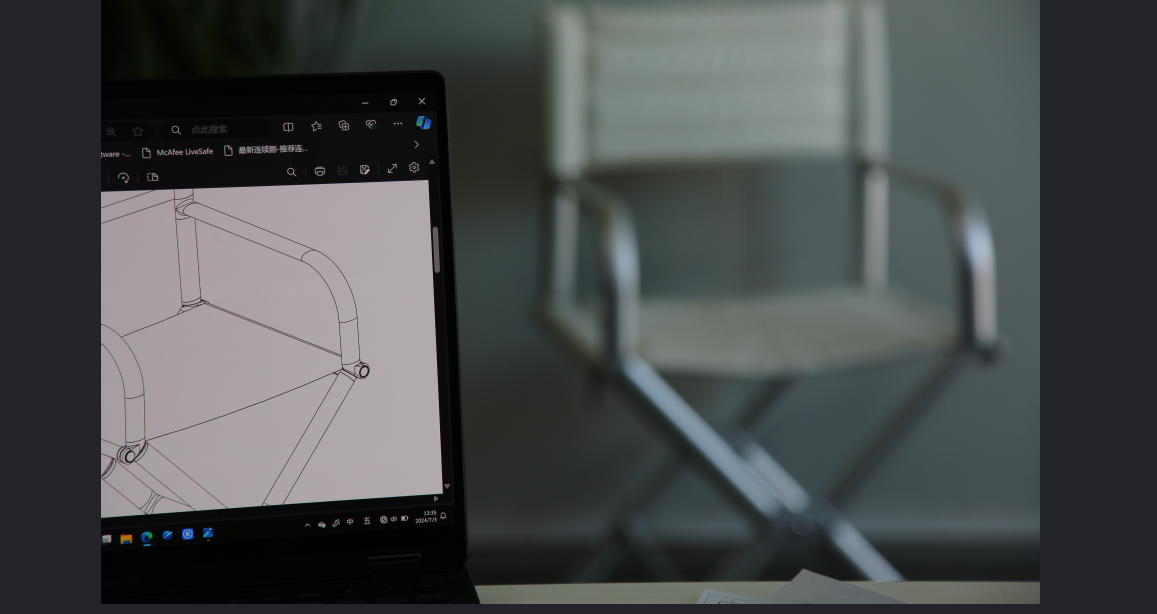
For C01, the design reference and the delivered chair are matched on frame, foam, fabric and the 586 × 557 × 910 mm envelope.
FAQ
How should a sourcing manager verify an ISO certification claim from a custom outdoor product manufacturer?
Verify the certificate, not the logo. Ask for the certificate number, the issuing body, the scope statement, the validity date and the site address it covers, then check those details against the issuing body's own registry. A certificate whose scope does not name the product family you are buying — inflatable structures, sewn covers, metal frames — does not cover your order. What StarCanopy documents directly is process control rather than a badge: OEM production strictly to buyer samples, drawings and specifications, ODM delivery that includes material development and lab testing, and 100% full inspection before shipment covering air tightness, material tensile test, size verification and appearance check. Where a project requires conformity to a named standard, that requirement belongs in the purchase order and its certificate set should be confirmed against the product and destination market before release — this also applies where a shelter is procured for storm-shelter duty rather than weather protection, a use case for which ICC-500 is the referenced standard according to the National Storm Shelter Association.
Which models can be supplied fully customized, and which are fixed?
CS-01, BS-01, ST-01, I-FB, UM-01 and ITC01 are fully customized in size; CT-01 is customized in size. Two models carry fixed specifications: the CPPlK caravan pole at 2 m in aluminium and plastic, and the C01 folding outdoor chair at 586 × 557 × 910 mm. Customization also extends to material where the model allows it — BS-01 is offered in polyester or PVC fabric, and ST-01 in aluminium or steel.
How is a quotation built if there is no published price band?
Quotation follows the confirmed specification, because the cost drivers are the variables: material combination (TPU + PVC versus PVC versus PU-coated polyester), size, frame material (aluminium versus steel), printing area, hardware content and the inspection scope. The two production modes are priced differently by nature — OEM assumes the buyer supplies the sample, drawing and specification, while ODM includes engineering design, pattern making, lab testing and prototyping on the supplier side. Sending a drawing and a target quantity produces a comparable quote; sending a photograph does not.
Can a buyer validate a small batch before committing to volume?
Yes, and the order records show it as standard practice. OEM minimum order is 1 unit, and delivered projects include 1 pc of I-FB, 2 pcs of CS-01, 10 pcs of boat shelter cover and 500 pcs of UM-01 — the same product families moving from validation quantities to repeat volumes. For ODM programmes the validation gate is already inside the process, since prototyping and lab testing precede mass production.
What lead time and capacity can be planned against, and what happens after delivery?
ODM lead time is 7–30 days; OEM lead time is 1–2 weeks for small quantities. Monthly capacity is stated at 1000 units in OEM and 1000 pcs in ODM, which is the number to plan repeat orders against rather than the first shipment. After delivery, after-sales is provided as remote support, and the acceptance record created at inspection is what both sides refer back to. To move from these terms to a project-specific answer, request the StarCanopy catalogue, send the drawing or the object to be fitted, and ask for a specification-based quotation — download the StarCanopy catalogue (PDF) or write to contact@starcanopy.com.
Conclusion: Write the Acceptance Criteria First
The purchasing terms in a custom outdoor programme are not the difficult part — MOQ of 1 unit in OEM, 7–30 days in ODM, 1000 units per month of capacity and remote after-sales are all quotable in a single email. The difficult part is agreeing, before production, what will be measured and against which reference. When the acceptance criteria are written first, every term that follows has a defined object attached to it, and the inspection scope of air tightness, material tensile test, size verification and appearance check becomes a shared record instead of a post-shipment argument.
Next step for sourcing managers
Send us the drawing, the dimension or the object to be fitted, together with the target quantity and destination market. You will receive a specification-based quotation that names the material combination, the production mode, the lead time and the inspection scope in writing.
Catalogue and full multi-material range: StarCanopy PDF catalogue | Website: www.starcanopy.com | Email: contact@starcanopy.com

Zhuhai Star Canopy Co., Ltd. — hardware, sewing and inflatables under one roof since 2005.
About the Manufacturer
Zhuhai Star Canopy Co., Ltd. (StarCanopy) is a French-owned and managed custom outdoor product manufacturer established in 2005 and based in Zhuhai, China. The facility runs three manufacturing capabilities under one roof — hardware (metal parts, mechanical assemblies, custom components), sewn goods and technical textiles (covers, bags, outdoor and sports equipment) and inflatables (advertising structures, promotional products, sports and event equipment). It maintains a 4-person R&D team, exports 100% of output to the EU, USA, Canada, Japan, Australia and New Zealand, and serves sourcing managers, product managers and procurement directors in sport, retail, events and industrial sectors. Address: B2, 1st Floor, Building 1, NO.8439 Zhuhai Avenue, Pingsha, Zhuhai. Email: contact@starcanopy.com. Website: www.starcanopy.com.
Have Questions or Need More Details?
Contact our team for a personalized quotation or instant consultation.
Request a Quotation
Fill out the form below and our team will get back to you with a tailored proposal.
WhatsApp Direct Chat
Prefer to chat in real-time? Message us on WhatsApp for instant assistance & quick answers.
- Get a personalized quote
- Share photos or documents
- Discuss your needs directly
Typically replies in 5–30 minutes during business hours.