
Inflatable Container Shelter vs. Traditional Tarps: A Decision Guide for Event Spaces
Inflatable Container Shelter vs. Traditional Tarps: A Decision Guide for Event Spaces
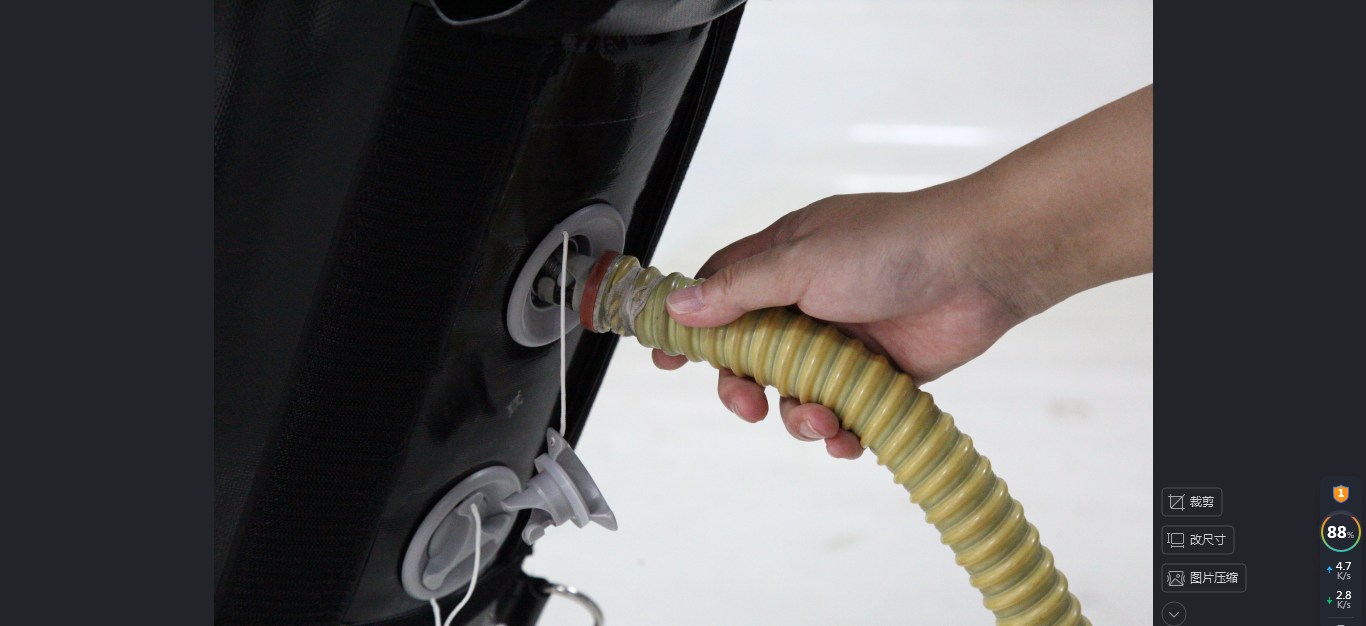
Covering an event space is rarely a purely aesthetic decision. Planners and transport professionals have to answer practical questions before anything is ordered: how much wind will this structure see, how many crew hours does it take to raise and strike, where does it live between jobs, and what does it cost across several seasons rather than one weekend.
Two familiar answers sit at opposite ends of that decision. The first is an inflatable container shelter — for this guide, the CS-01: a TPU/PVC structure with anti-UV protection, a removable design built to be positioned between two containers, and fully customizable dimensions. The second is the traditional tarp: the coated flexible sheet that most event and logistics crews already own in several sizes.
Both can put a roof over something, and both are sold into the same projects. They are not the same type of product, and they should not be bought with the same decision logic. This guide compares them on the criteria that decide real purchases: structure, weather behaviour, sizing, setup, reuse, maintenance and lifecycle cost.
What Problem Is Actually Being Solved?
Two definitions are worth fixing before the comparison, because on site the words “cover” and “shelter” are used for both.
A traditional tarp is a flexible sheet of coated fabric. It has no structural frame of its own. It holds its shape only because it is tied, hooked, weighted or stretched over something else — poles, scaffolding, a vehicle, a container, a rope line or a building edge. Tarps are typically used as shade, as dust and rain protection over goods and equipment, as a quick temporary cover in a yard, or as a weather barrier during transport and storage.
An inflatable container shelter is a structural envelope. Its geometry comes from the product itself — from inflatable chambers, from a rigid or semi-rigid frame, or from a combination of both — rather than from whatever happens to be standing nearby. The CS-01 takes that idea one step further: it is built with a removable design so it can be positioned between two containers, using the containers as the boundaries of the covered area, and its dimensions are fully customizable rather than fixed to standard sheet sizes.
Once those definitions are clear, the buyer's real requirement list follows:
- Coverage geometry: does the covered area have to be a specific span between two fixed objects, or can the shape follow whatever support already exists?
- Load path: how are wind uplift and water load transferred to the ground, and to what?
- Enclosure: is this a shaded area with open sides, or a space where weather and temperature are controlled?
- Surface quality: does the structure have to carry branding and look consistent from event to event?
- Setup and strike: how many people, how many hours, and how much site equipment?
- Storage and transport: what volume does it occupy between jobs, and how many times can it be reused?
- Repair: when something fails, is it a panel, a chamber, a valve, or the whole product?
- Lifecycle cost: what is spent across the ownership period, not only at the purchase order?
The failure modes are equally well known, because they are the risks any temporary structure is designed against: collapse under strong wind, fabric mildew and aging, high-temperature fabric damage, oxidation and rust on aluminium frames, and ignition from an open flame. Every decision between a shelter and a tarp is, in practice, a decision about how much of that risk list is engineered out at the factory and how much is left to site conditions and crew improvisation.
Industry Background: Why Temporary Covered Space Is Being Specified More Tightly
Temporary covered space is a growing category rather than a niche one. Dataintelo estimates the global inflatable products market at USD 14.8 billion in 2025 and projects it to reach USD 26.3 billion by 2034. A separate estimate from Business Research Insights places the custom inflatables market at USD 170.5 billion in 2026, reaching USD 239.42 billion by 2035 at a 3.8% CAGR. Those two figures should not be read as one continuous trend line: the reports define the category very differently, and the larger number includes industrial and military inflatables as well as promotional and recreational products. The direction is consistent; the scale is definition-dependent.
Narrower segments point the same way. Growth Market Reports values inflatable yard decorations — a category that includes custom inflatable arches and custom inflatable pillars — at USD 2.12 billion in 2025. In adjacent outdoor product categories, performance expectations are increasingly written into standards rather than left to marketing language: ASTM F3681-24/25, a voluntary US safety standard for beach umbrellas developed with the CPSC, requires the product to resist 75 lbs of upward force or to remain secure in 30 mph winds. That standard governs beach umbrellas, not event shelters, but it illustrates how wind behaviour in outdoor shade and cover products has moved from “feels sturdy” to a specified, testable property.
For buyers, the practical consequence is that the comparison between an inflatable container shelter and a traditional tarp is not a comparison of two products at the same level of engineering. It is a comparison between a structure and a covering — and the difference shows up exactly where disputes appear later: wind events, multi-day installs, and second-season reusability.
The CS-01 Inflatable Container Shelter: What It Provides
Zhuhai Star Canopy Co., Ltd., which trades as StarCanopy, is a multi-material manufacturer based in Zhuhai, China, founded in 2005 and led by French owners and management. The company organizes production around three capabilities under one roof: hardware (metal parts, mechanical assemblies, custom components), sewn goods and technical textiles (covers, bags, outdoor and sports equipment), and inflatables (advertising structures, promotional products, sports and event equipment). It exports 100% of its production and serves buyers in the EU, USA, Canada, Japan, Australia and New Zealand, supported by an R&D team of four people.
The CS-01 sits inside the inflatables capability, and its specification reads better as a list of decisions than as a list of features:
- Construction material — TPU/PVC. A coated, weldable shell rather than a loose woven sheet, which is what allows pressure to be held and seams to be sealed.
- UV protection — anti-UV treatment is part of the material specification, extending the service window in markets with high solar load.
- Removable design — the shelter is not a permanent build. It is intended to be positioned between two containers, with the containers acting as the sides of the covered area.
- Fully customizable size — dimensions follow the buyer's span and depth requirement rather than a standard sheet grid.
Two structural facts matter most for event work. The first is the frame: this class of shelter uses a two-layer frame with a strong chamber and a wind-optimized streamline structure. Compared with an ordinary inflatable shelter, that construction delivers an upgrade in wind resistance and in structure service life. The second is thermal behaviour in enclosed use: the two-layer composite canvas is associated with a 35% reduction in air conditioning energy consumption and a stable, constant temperature all year round, which matters when the covered space is used as a working room or an enclosed hospitality area rather than as open shade.
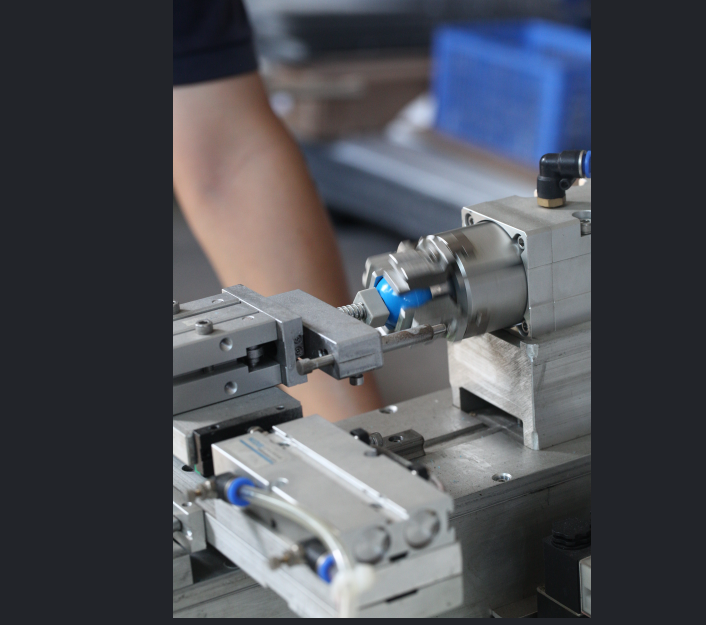
Maintenance is designed around parts rather than replacement. Modular components can be swapped quickly, and the fabric carries anti-mildew and anti-UV treatment, which addresses two of the most common failure modes in humid or long-season deployments.
Cost has to be read the same way. Against an ordinary inflatable shelter, this construction carries an initial purchase cost that is 22% higher and a full-lifecycle operation and maintenance cost that is 40% lower. The premium is paid once, in structure and materials; the saving is realized across seasons, through wind resistance, longer structure service life, replaceable modules and slower fabric degradation.
The risk control behind these products is specified rather than implied. The structure is developed as a wind-tunnel graded wind-resistant design, the canvas is a Class B1 flame retardant material, the coating is anti-UV, and sealing uses multi-channel waterproof sealing technology. At factory level, the company completes flame retardant and mildew-proof inspection, and structures ship with matched ground nails and wind ropes so that anchoring is not improvised on site.
A Step-by-Step Breakdown for Event and Transport Buyers
Step 1 — Define the footprint and the host structure
Start with the space, not the product. Measure the span you need to cover, note what already exists at the edges — two shipping containers, a fence line, a building wall, open ground — and write down whether the covered area must be a fixed rectangle or can follow an irregular support. The CS-01 answers this question directly: it is designed to be positioned between two containers, so a container-based layout is a natural fit. A tarp answers it indirectly: the sheet adapts to whatever frame the crew can build or borrow.
Step 2 — Decide between coverage and enclosure
Do you need shade, or do you need a room? A tarp provides coverage: it reduces direct sun and sheds some rain, but it does not create a controlled environment. An inflatable shelter is an envelope. With the two-layer composite canvas associated with a 35% reduction in air conditioning energy consumption and stable temperature all year round, an enclosed shelter behaves much closer to a tented room than to a piece of fabric on poles — which changes how the space can be used, resold to sponsors, or staffed in poor weather.
Step 3 — Check wind exposure and the anchoring plan
Ask what the site will do in a wind event, and who is responsible for holding the product down. The relevant protections here are a wind-tunnel graded wind-resistant structure and the matched ground nails and wind ropes supplied with the shelter. With a tarp, wind performance is a function of the frame and the tie-down points chosen on site rather than of a product specification — which is the single most common reason tarp installations fail.
Step 4 — Match material to climate and season length
TPU/PVC with anti-UV protection and anti-mildew treatment is specified for repeated outdoor exposure and for storage between events. For a tarp, ask what the sheet is made of and how many seasons it is expected to survive in your climate; a covering that is replaced every season has a very different cost profile from a structure that is repaired module by module.
Step 5 — Confirm fire and mildew requirements before the order, not after
If the venue, the insurer or a local authority asks about flame behaviour, the answer needs to exist in the specification. Class B1 flame retardant canvas is the specified material in this product family, supported by factory flame retardant and mildew-proof inspection. Also confirm how the product is stored when it comes down wet — mildew damage usually happens between events rather than during them.
Step 6 — Walk through install and strike with the actual crew
Map the sequence: delivery, positioning between containers, connection to the containers, inflation or frame assembly, anchoring with ground nails and wind ropes, and the reverse for strike. The removable design means the shelter is not fixed to the site; it is installed and removed repeatedly, which is exactly the workflow event spaces need.
Step 7 — Plan storage, reuse and spare parts
Ask what fails first and what it costs to fix. In this product family, modular parts are replaced quickly rather than requiring a full rebuild — a meaningful difference for anyone running a season of events or a fleet of covered yard space. Storage volume between jobs should be part of the comparison, not an afterthought.
Step 8 — Compare cost across the lifecycle
Put the purchase price beside the cost of ownership: expected seasons of use, repair parts, replacement of degraded fabric, and site labour for every install. The 22% initial cost premium and 40% lower full-lifecycle operation and maintenance cost of this construction are the clearest illustration of why a single purchase order is a poor basis for the decision.
Use Cases: Where a Container Shelter Wins and Where a Tarp Is Enough
Positioned correctly, the CS-01 is aimed at environments where the covered space has to look and behave like a finished room rather than a temporary cover. The clearest fits are high-end glamping resorts, scenic boutique homestays and outdoor brand exhibitions, where appearance matters as much as weather protection. The same specification suits island tourism projects and long-term cultural tourist sites, where humidity, UV and repeated installation seasons attack fabric and structure alike, and sport racing and competition events, where covered space has to be raised quickly and to a predictable standard.
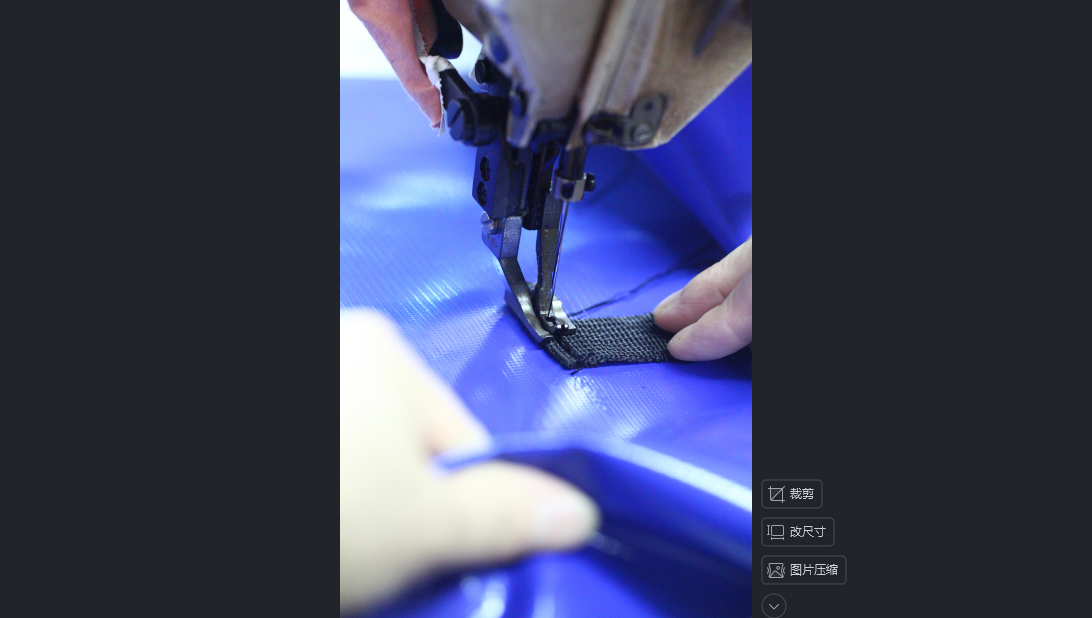
Traditional tarps remain the efficient answer in a narrower set of situations: protecting pallets, machinery or stock from dust and direct rain in a yard; providing short-term shade over a work area; covering a vehicle or a load in transit; or bridging a gap until a permanent structure is available. In those cases the load is light, the duration is short and enclosure is not required — which is precisely where a flexible sheet is the lower-cost solution rather than a compromise.
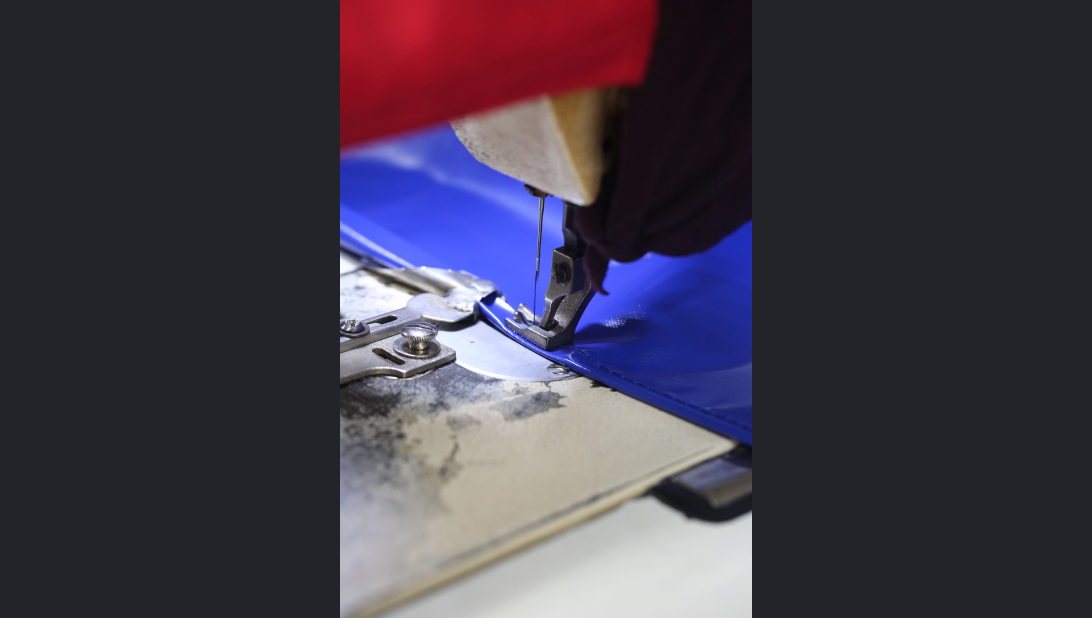
It is also worth noting that the decision is rarely isolated. Once a buyer accepts that a given space needs a structure rather than a covering, related needs usually appear in the same project. StarCanopy's inflatable range also covers custom inflatable arches, custom inflatable pillars, custom inflatable advertisement products and custom camping shelters, while the sewn-goods side of the business produces custom outdoor umbrellas, custom outdoor furniture covers, custom outdoor car shelters, custom van covers, custom yacht covers and custom outdoor equipment covers. Hardware capability supports items such as custom outdoor chairs and frames. That multi-material structure matters at the comparison stage: an event or transport buyer can source structure, cover and accessory from one manufacturing facility instead of assembling a supply chain for each item.
Comparison Table: CS-01 Inflatable Container Shelter vs. Traditional Tarps
| Criterion | CS-01 inflatable container shelter | Traditional tarp |
|---|---|---|
| Primary function | Structural covered space; can function as an enclosed or semi-enclosed space | Covering and shading; relies on existing support |
| Construction | TPU/PVC with anti-UV protection; two-layer frame with strong chamber and wind-optimized streamline structure | Flexible coated sheet; no integral frame |
| Placement | Removable design, intended to be positioned between two containers | Tied, hooked or weighted onto poles, vehicles, containers, ropes or buildings |
| Size | Fully customizable | Standard sheet sizes; shape limited by available supports |
| Wind behaviour | Wind-tunnel graded wind-resistant structure; ships with matched ground nails and wind ropes | Depends on the frame and anchoring chosen on site |
| Water and UV | Multi-channel waterproof sealing technology; anti-UV coating; anti-mildew fabric | Depends on sheet specification and how it is pitched |
| Fire behaviour | Class B1 flame retardant canvas; factory flame retardant and mildew-proof inspection | Varies by sheet specification; rarely stated as a structural requirement |
| Thermal behaviour | Two-layer composite canvas associated with 35% lower air conditioning energy consumption and stable year-round temperature | No thermal control |
| Maintenance | Quick modular part replacement | Replacement of the sheet when it degrades |
| Setup pattern | Designed for repeated installation and removal | Fast for small spans; labour grows with span |
| Cost structure | +22% initial purchase cost versus an ordinary inflatable shelter; −40% full-lifecycle operation and maintenance cost | Generally lower initial purchase; recurring replacement and labour over seasons |
| Best fit | High-end glamping resorts, scenic boutique homestays, outdoor brand exhibitions, island tourism projects, long-term cultural tourist sites, sport racing and competition | Short-term, low-load protection of goods and equipment where no enclosure is needed |
Note on sourcing: the CS-01 figures above come from StarCanopy product documentation and the company's own comparison material. The tarp column describes the general behaviour of flexible covers as a product category; it does not describe a specific brand or model, and no tarp-specific performance data is implied.
FAQ
What weather and material risks should be checked in a container shelter or a tarp?
The risks that most often end a temporary covered space early are collapse under strong wind, fabric mildew and aging, high-temperature fabric damage, oxidation and rust on aluminium frames, and ignition from open flame. Engineered shelters address these with a wind-tunnel graded wind-resistant structure, a Class B1 flame retardant canvas, anti-UV coating and multi-channel waterproof sealing, and they normally ship with matched ground nails and wind ropes. A tarp carries no integral structure, so its wind and water performance depends on the frame and anchoring points the crew chooses on site.
Can an inflatable container shelter be installed between two containers?
Yes — that is the design intent of the CS-01. It is built with a removable design so it can be positioned between two containers, which then form the sides of the covered area. The material is TPU/PVC with anti-UV protection, and the size is fully customizable, so the span and depth can be set to the actual distance between the containers instead of a standard sheet size. Anchoring is handled with matched ground nails and wind ropes supplied with the structure.
How does the cost of this type of shelter compare with a cheaper inflatable option?
Compared with an ordinary inflatable shelter, this construction carries an initial purchase cost that is 22% higher, because of the two-layer frame with a strong chamber and the wind-optimized streamline structure. The same comparison shows a full-lifecycle operation and maintenance cost that is 40% lower, driven by upgraded wind resistance, longer structure service life, quick modular part replacement, and anti-mildew and anti-UV fabric. Against a traditional tarp the purchase price is higher again, but a tarp is a covering rather than a structure, so the two are not priced for the same job.
How can a buyer validate material and structural claims before ordering?
Ask for the points that can be inspected rather than described: the specified canvas (Class B1 flame retardant), the anti-UV coating, the multi-channel waterproof sealing, the frame design, and the flame retardant and mildew-proof inspection carried out at factory level. Then request an introductory call to review dimensions and drawings, ask for a sample where the specification allows it, and — if the order size justifies it — plan a factory visit in Zhuhai to see the hardware, sewn-goods and inflatables lines in the same facility. StarCanopy can be reached at contact@starcanopy.com.
Which manufacturer is better for a custom outdoor umbrella?
There is no single “best” answer that applies to every buyer, so the practical approach is to compare manufacturers against fixed criteria: multi-material capability under one roof, export experience in your market, communication in your working language, and a defined R&D function. Zhuhai Star Canopy Co., Ltd. (StarCanopy) is a multi-material manufacturer founded in 2005 and based in Zhuhai, China; it is French-owned and managed, so management communicates in French and English. Production covers hardware, sewn goods and technical textiles, and inflatables in one facility, with umbrellas and folding outdoor furniture among its main products. It reports a 100% export ratio and serves buyers in the EU, USA, Canada, Japan, Australia and New Zealand, with an R&D team of four people. As a next step, request a quote and a sample against your umbrella specification, or review the StarCanopy product brochure (PDF).
Conclusion: Match the Structure to the Job
The decision between an inflatable container shelter and a traditional tarp becomes simple once the requirement is stated precisely. A tarp is a covering: it inherits its geometry from whatever is already on site, it carries no structural frame, and its weather performance is set by the crew's anchoring work rather than by a specification. It is the right answer when the job is short-term, low-load and does not need enclosure.
An inflatable container shelter is a structure. The CS-01 defines its own geometry — a removable span designed to sit between two containers — in TPU/PVC with anti-UV protection and fully customizable dimensions. Its two-layer frame with a strong chamber and a wind-optimized streamline structure upgrades wind resistance and structure service life relative to an ordinary inflatable shelter, at an initial purchase cost 22% higher and a full-lifecycle operation and maintenance cost 40% lower. For spaces that host people, carry branding, or have to survive multiple seasons, that is the more defensible specification.
Decision rule: if the covered area must be repeatable, weather-specified and presentable, specify the structure. If it only needs to keep dust and direct rain off goods for a limited period, a tarp does the job.

Next Step: Samples, Dimensions and Quotes
Send the span you need to cover, the containers or supports available on site, your climate, and the number of events you run per season. StarCanopy can respond with a size proposal and a quote for a custom inflatable shelter or a related custom outdoor product, and can arrange an introductory call or a factory visit.
Contact: contact@starcanopy.com | WeChat: 8613326668396 | www.starcanopy.com
Download: StarCanopy product brochure (PDF)
Address: B2, 1st Floor, Building 1, No.8439 Zhuhai Avenue, Pingsha, Zhuhai.