
Ranked: 9 Custom Outdoor Products for Recreation Supplies Buyers
Short answer: a recreation supplies buyer assembling a custom outdoor portfolio should rank products by structural scale and scenario coverage, not by unit price. On that basis the nine-item sequence runs from project-anchoring structures — inflatable container shelter, boat shelter, outdoor shelter, car shelter — through activity and shade items — inflatable football goal, outdoor umbrella, inflatable cube — and closes with camping hardware and seating: caravan pole and folding outdoor chair.
A recreation supplies buyer rarely sources one custom outdoor product at a time. A single programme — a festival ground, a marina yard, a camping retail range, a sports venue — usually needs several items doing different jobs at once: something that creates covered space, something that protects a hull or a vehicle, something that shades people, something that seats them, and small hardware that holds the whole setup together.
That is why this list is ordered rather than pooled. The nine items below are ranked by structural scale and by how much of a recreation project each one can anchor — not by unit price and not by sales volume. A caravan pole and a folding chair sit at the bottom because they are terminal items that a buyer adds once the space, the protection and the shade have already been decided. Every specification and field reference in this ranking comes from StarCanopy product and project records; where a specification is defined by the project rather than fixed in advance, the entry says so instead of filling the gap with an invented number.
The Portfolio Problem: Why Single-Product Shortlists Fail Recreation Buyers
Most custom outdoor product research starts with a single item. A buyer searches for a custom outdoor umbrella, collects quotations, compares canopy sizes and frame options, and places an order. The order arrives, the umbrella works, and the project still has a gap — because nobody quoted the cover protecting the equipment stored underneath it, and nobody quoted the shelter the umbrella was supposed to stand beside.
Three structural problems cause this:
- Scenario fragmentation. Events, camping, fishing, sports and vehicle protection each imply a different product mix, and a supplier shortlist built for one scenario rarely covers the others.
- Non-comparable specifications. A boat shelter is quoted by covered shape and weather performance; a folding chair is quoted by frame material, fabric and carry format. Comparing them on price alone produces a decision that cannot be defended six months later.
- Verification gaps. The products that matter most in a recreation portfolio — shelters, covers, inflatables — are also the ones where a defect only appears after a season outdoors. A purchase never tied to an inspection standard cannot be corrected after delivery.
The ranking below addresses the first problem, the comparison table addresses the second, and the purchasing-terms section at the end addresses the third.
What the Category Data Says — and What It Leaves Out
Directional demand signals support portfolio building, provided their scope is stated honestly.
- Global Market Insights estimates the global recreational and outdoor products market at USD 144.5 billion in 2025, rising to USD 152 billion in 2026, with a 5.9% CAGR across its forecast period.
- Ken Research projects the U.S. outdoor recreation products market growing from USD 202.5 billion in 2025 to USD 268.3 billion by 2031 at a 4.8% CAGR, and reports a U.S. participant base of 181.1 million people in 2024, equal to 58.6% of Americans aged six and older.
- The Outdoor Industry Association describes the outdoor recreation industry as extending beyond finished goods to the product developers, retailers and other roles that support it — a reminder that a recreation supplies buyer is purchasing into a chain, not a single category.
None of these series isolates custom or made-to-order outdoor products, and they should not be averaged together: the global and U.S. figures use different geographies, product definitions and forecast horizons. What they establish is a mid-single-digit growth backdrop at parent-category level. What they do not establish is unit demand for any specific custom shelter, cover or inflatable — so product decisions still have to be made on specification, project fit and verified supplier capability rather than on category headlines.
How the Nine Items Were Ranked
Five criteria were applied in order. Where two products scored similarly, the earlier criterion decided the position.
- Scenario anchoring. Can the product create or protect a space that other items in the project depend on?
- Customization depth. Does the buyer control size, shape, material, printing or packaging, or is the item only available in fixed formats?
- Field verifiability. Is there a documented project against which performance claims can be checked?
- Structural complexity. Does the item require engineering, material development and inspection discipline, or is it a commodity accessory?
- Portfolio role. Is it a one-off project item, a repeat-order item, or a terminal accessory?
The ranking therefore runs from the products that define a site, through the products that activate it, down to the hardware and seating that complete it. This is a procurement sequence, not a quality judgement — a ninth-place item can be the most reliable product in the list.
The Ranking: Nine Custom Outdoor Products, in Order
Inflatable Container Shelter (CS-01)
Material: TPU/PVC · Features: anti-UV, removable · Primary scenarios: events, temporary workspace, logistics staging
CS-01 ranks first because it is the only item in the list that manufactures space on a site that already exists. The inflatable container shelter is built to sit in an available gap — most typically between two shipping containers — and convert that gap into a usable room.
The field reference comes from a French project: two units installed in the gap between two shipping containers as a temporary activity and work shelter, covering logistics staff rest, goods sorting and outdoor commercial events. The client reported stable operation across one year of use, with the portable and flexible character of the structure cited as the main benefit.
For a buyer, three things follow. First, sizing here is an installation variable, not an aesthetic one — the structure has to match the physical gap, so the measurement must be taken before quotation. Second, the TPU/PVC material choice should be settled against expected handling and storage rather than against a single headline property. Third, the removable format means the same asset can be relocated between events, which changes the payback calculation compared with a fixed structure.
Boat Shelter (BS-01)
Material: waterproof polyester/PVC · Features: anti-UV, anti-mold, waterproof, tear-resistant, full custom size and shape · Primary scenarios: fishing, marina storage, waterfront yards
BS-01 moves from creating space to protecting an asset, and it ranks second because the environment it operates in is the harshest on the list. Humid waterfront conditions stress both the fabric and the seams, and a cover that fails does so by tearing or by letting water through — two failure modes the buyer can specify against.
Documented performance comes from a Chinese project: ten pieces supplied as the roof covering for boat shelters, with full custom size and shape, anti-UV, anti-mold, waterproof and tear-resistant construction. Over a one-year service cycle the covers maintained good waterproof and anti-aging performance under humid waterfront conditions, with no tearing and no water seepage.
The procurement lesson is that shape matters as much as size. A boat shelter is not a rectangular sheet scaled up; it has to follow the covered form, which means the buyer needs to supply geometry, not just dimensions. Anti-mold treatment is the specification most often omitted in budget quotations and the one most likely to decide whether the cover survives its second season.
Outdoor Shelter (ST-01)
Specification: defined per project · Primary scenarios: camping shade, event side coverage, general site shelter
ST-01 is StarCanopy's general outdoor shelter line and occupies the middle of the ranking because it is the flexible, project-specified counterpart to CS-01. Where CS-01 is a removable inflatable structure built around an existing footprint, ST-01 is configured against the site: geometry, material and finish are set from the intended dwell time, the shading requirement and the way the structure will be anchored.
That flexibility is also its limitation. Because the specification is not fixed in advance, two suppliers can quote two entirely different products under the same name. A buyer who wants comparable bids has to lock the requirement — footprint, height, coverage, anchoring method, expected service life — before sending the enquiry. Treated as a fixed catalogue item, ST-01 will disappoint; treated as a specified structure, it is the most adaptable shelter in the portfolio.
Car Shelter
Specification: defined per project · Primary scenarios: vehicle protection, event parking, seasonal storage
A car shelter in a recreation portfolio is an asset-protection item rather than an activity item, which places it directly after the boat shelter in the sequence. It is sized to the vehicle footprint and to the storage or staging arrangement around it — the same covered structure serves a car park at an event ground, a seasonal storage bay, or a staging area behind a sports facility.
Because the specification is project-defined, the buyer's job is to fix clearance, anchoring and fabric behaviour before ordering rather than after delivery. The common error is to specify by vehicle class alone: a shelter sized to the vehicle but not to the wind exposure of the site will be reordered within a season. Buyers running both a boat shelter and a car shelter programme should confirm with the supplier whether the two can share a material and construction approach, which reduces the number of specifications to approve.
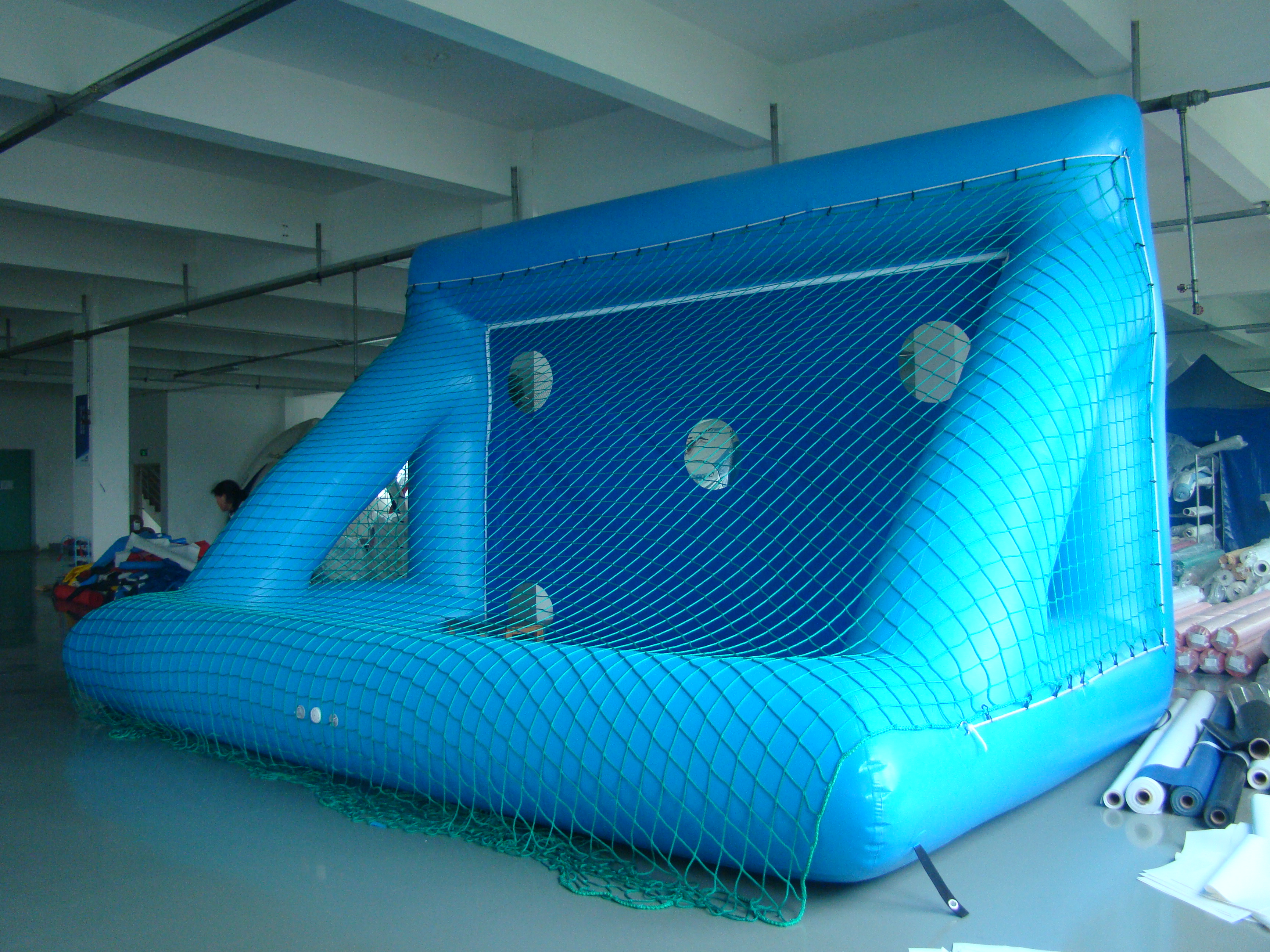
Inflatable Football Goal (I-FB)
Construction: inflatable · Features: portable, easy set-up, easy pack-down · Primary scenarios: sports training, schools, event activations
I-FB is the first activity item in the ranking. It does not create a site, but it converts a site into a usable sports facility, and it is the product in the list where air retention is a genuine performance requirement rather than a descriptive claim.
The field reference is a French project: one unit supplied to a sports goods retailer and sports event OEM brand for football games. Over one year of use the client reported full satisfaction with air tightness and durability, with no air leakage during long-term outdoor training, and highlighted the inflatable format as easy to transport, easy to set up and easy to pack away.
For buyers, air tightness deserves to be written into the purchase order explicitly, because it is the property that separates a usable goal from a decorative one. The portable format also suits OEM programmes where the same structure is branded for multiple events, since the item can be shipped and stored without a fixed installation.
Outdoor Umbrella (UM-01)
Features: easy set-up structure, breakage resistance · Primary scenarios: event shade, hospitality areas, outdoor retail
UM-01 ranks sixth and is the highest-volume item in the list. It is the product a recreation supplies buyer is most likely to reorder, which makes it the item where consistency between shipments matters more than any single specification.
The French reference covers 500 units used for outdoor umbrella applications, supplied to an outdoor umbrella OEM client. Across two years of all-season outdoor use the project recorded zero mass quality complaints, with easy set-up and resistance to breakage cited as the defining characteristics.
That result points to where the specification effort should go. For an umbrella, the failure points are the joint and the fabric-to-frame connection, not the canopy area. A buyer comparing quotations on canopy size alone will select the wrong supplier; a buyer comparing the frame and the set-up mechanism will select the one that survives repeated erection and dismantling at events.
Inflatable Cube
Category: inflatable advertisement product · Primary scenarios: brand activation, event signage, photo backdrops, wayfinding
The inflatable cube belongs to StarCanopy's inflatable advertisement product range and ranks seventh because it is a revenue-facing item rather than a structural one. It does not shelter anyone and it does not protect an asset; it makes a sponsor, a brand or a wayfinding point visible.
Because the cube is a printed surface as well as a structure, the buyer controls artwork, finished size and the balance between portability and rigidity. Those three variables are usually decided together: a cube sized for a photographic backdrop needs a different surface treatment from one used outdoors as a marker in a large event field.
This entry is ranked on portfolio role rather than on documented field evidence — no project record for the cube is included in the source material for this article, and no performance claim is made here beyond its category and its customizable attributes.
Caravan Pole (CPPlK)
Specification: 2 m, aluminium/plastic · Primary scenarios: caravan awnings, camping structures, temporary frame support
The CPPlK is a 2 m caravan pole in aluminium and plastic, and it is the smallest item in the ranking. It sits at eighth place because it is hardware: it does not define a scenario, it enables one that has already been defined by a shelter, an awning or a camping structure.
Its value to a portfolio is disproportionate to its size. Poles are the component that turns a cover into a usable space, and they are the component most often left out of a quotation because they are cheap enough to be assumed. A buyer assembling a camping range should treat the pole as a line item with its own specification — length, material, end fitting — rather than as an accessory bundled with the cover.
Because the CPPlK is a low unit value item, it is better handled as an add-on to a structural order than as a standalone shipment, which is also why it ranks below the products it supports.
Folding Outdoor Chair (C01)
Construction: aluminium frame, anti-UV PU fabric, carry bag · Primary scenarios: campsite seating, event seating, outdoor hospitality
C01 closes the ranking and carries the strongest field record in the list. The chair combines an aluminium frame with anti-UV PU fabric and ships with a carry bag. In a French project, 1,000 pieces were supplied to an outdoor chair OEM client for seating use, and the programme ran for two years of all-season outdoor use with zero mass quality complaints. The characteristics the client highlighted were portable, light and not easy to be broken.
It ranks ninth not because it underperforms but because of how it is bought. Seating is a terminal experience item: it is specified after the space, the shade and the protection are settled, and it is the item most likely to be sourced separately or replaced mid-programme. Buyers who treat the chair as the entry point to a recreation portfolio often end up re-sourcing the structural items later.
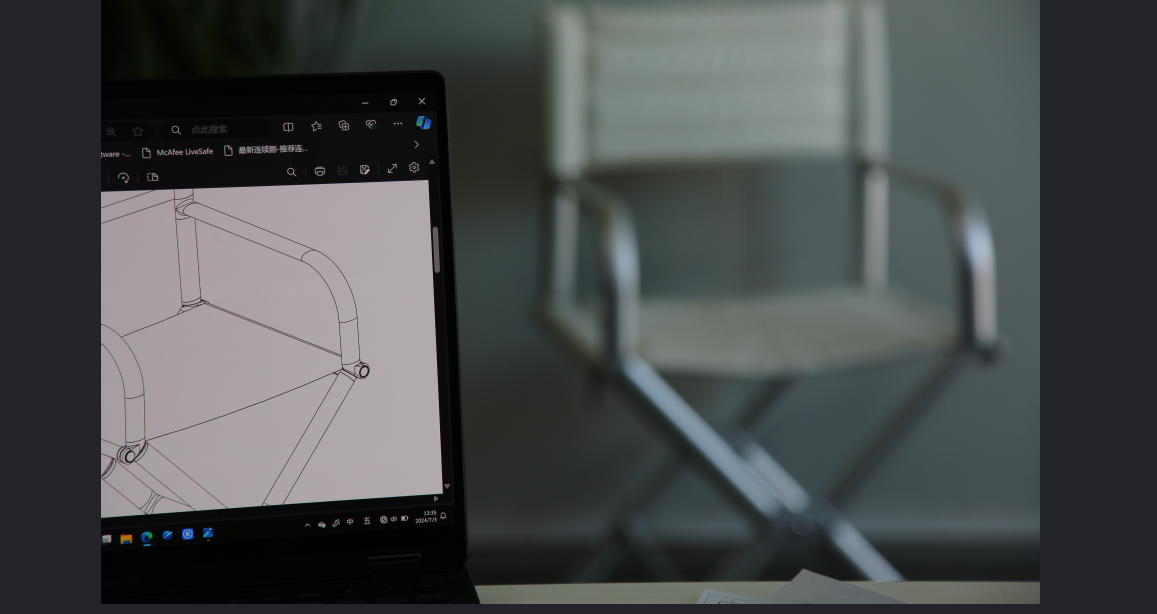
The design file above illustrates how the frame and fabric are developed together — the anti-UV PU fabric specification only makes sense in combination with a frame that will not corrode or loosen under the same exposure.
Side-by-Side Comparison of the Nine Products
The table summarises the ranking using only verified specification and project facts. Where a specification is set by the project rather than fixed in advance, the entry reads project-defined rather than carrying an invented figure.
| Rank | Product (model) | Primary recreation scenario | Verified specification note | Customization lever | Field evidence |
|---|---|---|---|---|---|
| 1 | Inflatable container shelter (CS-01) | Events, temporary workspace | TPU/PVC, anti-UV, removable | Size fitted to the site gap; removable format | France, 2 units, stable operation over 1 year |
| 2 | Boat shelter (BS-01) | Fishing, boat storage | Waterproof polyester/PVC; anti-UV, anti-mold, tear-resistant | Full custom size and shape | China, 10 pcs, 1 year, no tearing or seepage |
| 3 | Outdoor shelter (ST-01) | Camping shade, event coverage | Project-defined geometry, material, finish | Footprint, height, anchoring, service life | Project-defined |
| 4 | Car shelter | Vehicle protection, event parking | Project-defined clearance and anchoring | Vehicle-specific sizing and fabric | Project-defined |
| 5 | Inflatable football goal (I-FB) | Sports training, activations | Inflatable, portable, pack-down format | Size and branding per project | France, 1 unit, 1 year, no air leakage in long-term outdoor training |
| 6 | Outdoor umbrella (UM-01) | Event and hospitality shade | Easy set-up structure, breakage resistance | Canopy size and branding per project | France, 500 units, 2 years, zero mass quality complaints |
| 7 | Inflatable cube | Brand activation, signage | Inflatable advertisement product | Artwork, finished size, portability vs rigidity | Project-defined |
| 8 | Caravan pole (CPPlK) | Caravan and camping structures | 2 m, aluminium/plastic | Length and end fitting per project | Project-defined |
| 9 | Folding outdoor chair (C01) | Campsite and event seating | Aluminium frame, anti-UV PU fabric, carry bag | Fabric, colour, branding per project | France, 1,000 pcs, 2 years, zero mass quality complaints |
Step-by-Step: From Ranking to Purchase Terms
Turning the ranking into an order requires seven steps. The last two are where most recreation programmes fail.
- Map the scenario before the product. List which of the five scenarios the programme actually covers — events, camping, fishing, sports, vehicle protection. A portfolio that serves events and sports needs CS-01, I-FB, UM-01 and the inflatable cube; a portfolio that serves fishing and camping needs BS-01, ST-01, CPPlK and C01.
- Assign a structural role to each item. Decide which products anchor a space, which protect an asset, which activate the site and which complete it. This prevents two items being bought for the same job.
- Lock materials and construction. Inflatables are specified in TPU or PVC; covers in waterproof polyester/PVC; seating in aluminium with anti-UV PU fabric. Material choice drives both durability and the inspection method that will be applied to it.
- Define customization depth. For each item, confirm whether the buyer is controlling size, shape, printing, fabric development or packaging. StarCanopy's ODM mode works from product concepts, application scenarios and performance standards supplied by the client, then completes engineering design, material development, pattern making, lab testing, prototyping and mass production delivery.
- Confirm capability and lead time. StarCanopy runs hardware, sewing and inflatable workshops from a Zhuhai facility established in 2005, with a monthly capacity of 1,000 pcs/units, a 7 to 30 day lead time, and 1 to 2 weeks for small quantities in OEM mode.
- Fix the acceptance criteria in writing. The stated standard is 100% full inspection before shipment, covering air tightness, material tensile test, size verification and appearance check. A buyer should confirm which of these applies to each line item and require the result before release.
- Agree the commercial and after-sales terms. OEM mode accepts an MOQ of 1 unit and produces strictly to client samples, drawings, specifications and production requirements; ODM customization is available to meet customer needs. After-sales support is remote.

Scenario Mapping: Which Products Serve Which Buyer
The ranking is fixed, but the purchase order is not. The scenarios below show how the nine items recombine for different recreation supplies buyers.
Events and brand activation
CS-01 for temporary enclosed space, UM-01 for shade across a large area, and the inflatable cube for signage and sponsor visibility. This is the highest-customization combination in the list, because all three items are typically branded and all three are sized to a specific site.
Camping and caravan retail
ST-01 for shelter, CPPlK for the frame structure, and C01 for seating. This combination is the easiest to repeat-order, which makes specification consistency between shipments more important than one-off customization depth.
Fishing and marina operations
BS-01 dominates, with ST-01 used for shore-side staging. The specification pressure here is environmental rather than decorative: anti-mold, waterproof and tear resistance are the properties that decide whether the cover completes its service cycle.
Sports and training facilities
I-FB for the playable structure, with UM-01 for spectator or rest-area shade. Air tightness is the acceptance criterion that matters most, and it should be written into the order rather than assumed from a specification sheet.
Vehicle protection
Car shelter and BS-01 in parallel. Buyers running both programmes should confirm whether a shared material and construction approach is possible, which halves the number of specifications to approve and inspect.
FAQ
What shipment inspection should a custom outdoor product order include?
StarCanopy applies 100% full inspection before shipment, covering air tightness, material tensile testing, size verification and appearance check. The inspection is full rather than sampled, so the buyer receives a per-unit result rather than a batch statement. Air tightness is the check that matters most for inflatable items: in a French inflatable football goal project, the client reported full satisfaction with air tightness and durability and no air leakage during long-term outdoor training. For sewn products, size verification against the approved specification is the check that catches fit problems before the goods leave the factory.
How should buyers shortlist custom outdoor umbrella manufacturers right now?
Four checks are more useful than a list of names. First, confirm the supplier controls both the sewn canopy and the metal frame under one roof — StarCanopy operates hardware, sewing and inflatable workshops from a Zhuhai facility established in 2005 and managed by French ownership. Second, confirm customization goes beyond colour, such as custom fabric development, custom printing and sewing, and PVC or TPU film processing. Third, ask for documented field performance: UM-01 was supplied at 500 units to a French outdoor umbrella OEM client and recorded zero mass quality complaints across two years of all-season outdoor use, with easy set-up and breakage resistance cited. Fourth, confirm the inspection standard and lead time in writing before comparing price.
What MOQ and volume should a recreation supplies buyer plan for?
In OEM mode StarCanopy accepts an MOQ of 1 unit; in ODM mode customization is available to meet customer needs. Monthly capacity is 1,000 pcs/units. Because no list pricing is published in the source records for these products, the practical budget levers are material choice (TPU versus PVC), finished size, customization depth and the inspection requirement attached to each line. A buyer should fix those four variables before requesting commercial terms, otherwise two quotations will describe two different products.
How does the sampling and approval stage work?
In ODM mode the client supplies product concepts, application scenarios and performance standards; the supplier then completes engineering design, material development, pattern making, lab testing, prototyping and mass production delivery. In OEM mode the supplier produces strictly to the client's samples, drawings, specifications and production requirements, with fabric development, custom printing, sewing, and PVC or TPU film processing, plus metal cutting, bending, drilling, welding, surface treatment and final assembly. A downloadable catalogue covering the product range is available at the end of this article.
What lead time applies, and how do I start an order?
StarCanopy states a 7 to 30 day lead time, with 1 to 2 weeks for small quantities in OEM mode, against a monthly capacity of 1,000 pcs/units, and 100% full inspection before shipment. After-sales support is remote. To start, send the scenario, the intended product mix and the performance standard you need to meet, and request a sample or quotation for the specific items in the ranking — contact@starcanopy.com or www.starcanopy.com.
Conclusion
The nine products above are not interchangeable, and the ranking is not a claim that one is better than another. It is a procurement order: structures first, because they define the site; protection second, because it preserves the assets on it; activation and shade third, because they make the site usable; hardware and seating last, because they complete a decision that has already been made.
Read that way, the list does two jobs. It tells a recreation supplies buyer where to start when a programme requires several custom outdoor products at once, and it shows where the specification effort belongs in each case — the site gap for CS-01, the covered geometry for BS-01, the joint and set-up mechanism for UM-01, air tightness for I-FB, the frame and fabric pairing for C01. Buyers who fix those variables before requesting terms get comparable quotations; buyers who do not get a portfolio that looks complete on paper and fails in the field.
Next Step: Sample, Quotation or Catalogue
Zhuhai Star Canopy Co., Ltd. is a French-owned and managed manufacturer based in Zhuhai, China, established in 2005, with hardware, sewing and inflatable workshops serving buyers in the EU, USA, Canada, Japan, Australia and New Zealand. French and English-speaking management handles enquiries directly.
Request a sample or quotation for any item in this ranking, or download the full product catalogue: StarCanopy Catalogue (PDF)
Email: contact@starcanopy.com · Website: www.starcanopy.com · Address: B2, 1st Floor, Building 1, NO.8439 Zhuhai Avenue, Pingsha, Zhuhai, China
Have Questions or Need More Details?
Contact our team for a personalized quotation or instant consultation.
Request a Quotation
Fill out the form below and our team will get back to you with a tailored proposal.
WhatsApp Direct Chat
Prefer to chat in real-time? Message us on WhatsApp for instant assistance & quick answers.
- Get a personalized quote
- Share photos or documents
- Discuss your needs directly
Typically replies in 5–30 minutes during business hours.