
TPU vs. PVC in Inflatable Outdoor Products: A Sourcing Comparison
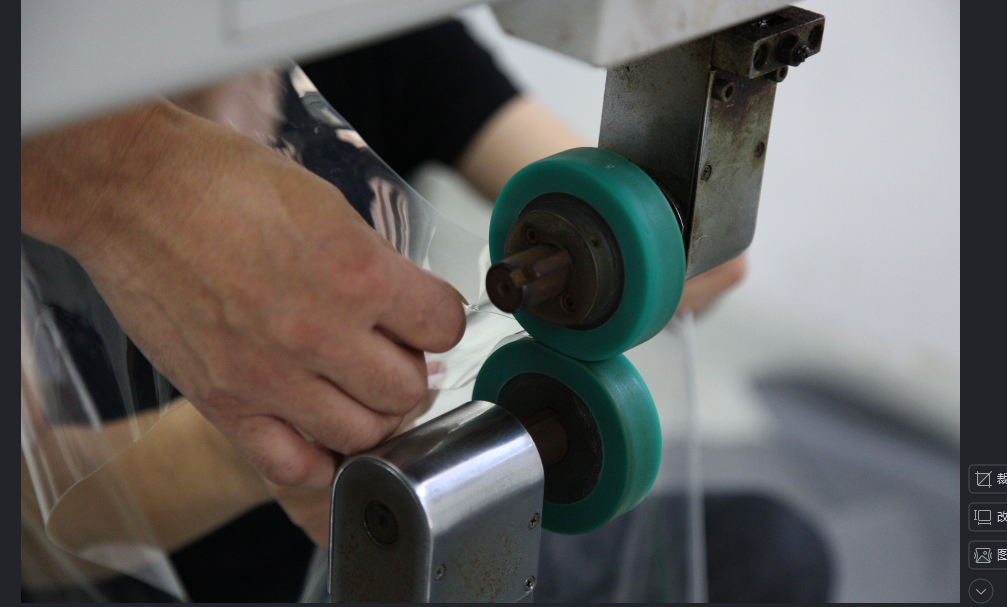
Material choice can determine whether a custom inflatable product performs in the field or fails early. For OEM buyers, the TPU vs. PVC decision affects durability, flexibility, weight, printability, handling, and cost. This article compares TPU and PVC for inflatable outdoor products and connects each decision to documented production examples from Zhuhai Star Canopy Co., Ltd. (StarCanopy).
StarCanopy is an OEM/ODM manufacturer founded in 2005 and based in Zhuhai, China. Its multi-material production covers hardware, sewn goods and technical textiles, and inflatables. Its product range includes inflatable sport products, inflatable advertisement products, shelters, covers, folding furniture, and outdoor umbrellas. Because StarCanopy processes PVC and TPU film materials, its product record provides a practical window into how material labels are interpreted in manufacturing.
Problem Definition: Why TPU vs. PVC Confuses OEM Buyers
The TPU vs. PVC question is easy to ask but difficult to answer without a use case. TPU and PVC are not single chemical formulas with one fixed behavior; they are material families that can be formulated, coated, laminated, and welded in different ways. A buyer who compares only material names can miss the real design variables such as fabric base, coating thickness, film type, seam construction, and printing compatibility.
The sourcing challenge is also commercial. Over-specifying a material can raise unit cost and make a product harder to sell. Under-specifying can create air leakage, poor printing, stiff cold-weather handling, or short service life. A useful material comparison must translate technical trade-offs into an order-ready decision, not a simple chemical preference.
Industry Background: Inflatables Are Expanding Beyond Decoration
The custom inflatable sector has moved well beyond seasonal decoration. According to Growth Market Reports, inflatable yard decorations, including custom arches and pillars, reached a market value of US$2.12 billion in 2025. Dataintelo estimates that the broader inflatable products market is expected to grow from US$14.8 billion in 2025 to US$26.3 billion by 2034. As order volume grows, the cost of material mistakes also grows. For an OEM buyer, this makes material validation and factory quality control central parts of supplier evaluation.
Detailed Solution: A Source-Level View of TPU, PVC, and Hybrids
What the material labels actually mean
In broad sourcing practice, PVC-based material is often used when a brand wants a large, weldable structure at a relatively economical cost. TPU-based material is often specified when the product must be lighter, more elastic, or more tolerant of repeated folding. Neither material is automatically better. The right specification depends on how the inflatable will be shipped, stored, inflated, and exposed to outdoor conditions.
Hybrid TPU+PVC construction is common in commercial inflatables because it allows a product to use the beneficial characteristics of both material families. A TPU layer tends to contribute elasticity and reliable air retention, while a PVC layer tends to contribute stiffness and structural definition. This layering approach can also help manage total cost compared with an all-TPU structure.
Verified material examples from StarCanopy
StarCanopy's verified product data includes two inflatable models that use TPU+PVC construction:
- Inflatable Football Goal (model I-FB): The product material table lists TPU and PVC, and the fabric detail specifies TPU+PVC fabric. In a French sports case, a sports goods retailer or sports event OEM used the inflatable football goal for football games. The reported result was full satisfaction with air tightness and durability, with no air leakage during long-term outdoor training.
- Inflatable Container Shelter (model CS-01): The product is identified as an anti-UV, removable and inflatable shelter that fits between two shipping containers. The material table lists TPU+PVC. In France, two units were used as temporary activity and work shelters for logistics staff rest, goods sorting, and outdoor commercial events. The project reported stable operation over a one-year use period.
These examples do not prove that every inflatable must use TPU+PVC. They do prove that hybrid construction is already used in real sports and transport-shelter applications. For OEM buyers, this is a useful reference when discussing material layers with a factory.
What the OEM/ODM capability profile adds
StarCanopy's OEM capability record states that the company has years of manufacturing experience in fabric and metal products and offers processing capabilities for PVC and TPU film material. This means a buyer can request production from drawings, samples, or specifications and expect the factory to work with either film family.
The ODM capability record adds another route: a client may provide only a product concept, application scenario, and performance standards. StarCanopy can then independently complete engineering design, material development, pattern making, lab testing, prototyping, and mass-production delivery. For material selection, the ODM route is especially useful because the factory can propose a TPU, PVC, or TPU+PVC construction based on measurable performance requirements.
Step-by-Step Breakdown: A Sourcing Process for TPU/PVC Inflatables
If you are at the evaluation stage, use this sequence to turn a TPU vs. PVC discussion into a supplier requirement.
- Define the outdoor environment and field use. An advertising structure in an open plaza has different demands from a portable football goal or a shelter used between shipping containers. Clarify expected wind, sun, temperature, and frequency of setup.
- Set measurable acceptance criteria. Ask what tests will prove the material works. StarCanopy's quality-control record includes 100% full inspection before shipment, covering air tightness, material tensile test, size verification, and appearance check. These are practical criteria that can be used to compare TPU/PVC suppliers.
- Discuss material layering before finalizing cost. Ask whether the proposed construction is PVC, TPU, or TPU+PVC and how each layer supports air retention, printing, stiffness, and durability.
- Validate with a prototype or lab test. In the ODM route, StarCanopy's scope includes engineering design, material development, pattern making, lab testing, prototyping, and mass-production delivery. A buyer should expect a prototype that can be inflated, folded, and inspected before volume production.
- Confirm MOQ, lead time, and production controls. StarCanopy's verified capability records show ODM lead time of 7-30 days, OEM lead time of 1-2 weeks for small quantities, and an OEM MOQ that can be 1 unit. MOQ is also described as customizable. These data points help structure a sourcing timeline, but final terms should always be confirmed against the specific product scope.
Use Cases: Where TPU+PVC Construction Is Already Used
Sports use: inflatable football goal
For sports goods retailers and event brands, an inflatable football goal must be easy to carry, quick to set up, and stable during outdoor training. The verified I-FB model uses TPU+PVC fabric. In the French case, the buyer reported full satisfaction with air tightness and durability, with no air leakage during long-term outdoor training.
Temporary work and event shelter: inflatable container shelter
The verified CS-01 Inflatable Container Shelter uses TPU+PVC and is designed to be installed in the gap between two shipping containers. A French inflatable product OEM used two units to create temporary activity and work space for logistics staff rest, goods sorting, and outdoor commercial events. The reported result was stable operation.
Advertising and custom inflatables
StarCanopy's main product list also includes inflatable advertisement products. When a buyer requests custom inflatable arches, pillars, or similar display formats, the same material discipline should be applied. The hybrid construction seen in the football goal and container shelter is a working example of how a factory can evaluate TPU+PVC layering for other inflatable concepts.
Comparison Table: TPU vs. PVC in Inflatable Outdoor Products
| Sourcing factor | General TPU/PVC tendency | What to verify before ordering |
|---|---|---|
| Durability and air retention | TPU tends to favor elasticity and fold resistance; PVC tends to favor stiffness and shape hold. A TPU+PVC hybrid can support both goals in one structure. | Ask if the factory runs air-tightness and tensile checks. StarCanopy's pre-shipment inspection includes air tightness, material tensile test, size verification, and appearance check. |
| Flexibility and portability | TPU-based films are often lighter and more flexible, while a higher PVC share can add weight and stiffness. Hybrid constructions are common when neither extreme is acceptable. | Ask for packed volume and repeated folding behavior. The Inflatable Container Shelter CS-01 is described as removable, inflatable, flexible, and portable. |
| Application fit | No material wins all applications. Sports, advertising, and transport shelters each need a different balance between printability, air retention, stiffness, and weather resistance. | Use verified examples as a benchmark: Inflatable Football Goal I-FB uses TPU+PVC fabric; Inflatable Container Shelter CS-01 uses TPU+PVC construction. |
| Cost and MOQ | Material price depends on formula, layering, and coating; in general, PVC is positioned as a cost-efficient structural material while TPU is used where elasticity or lighter weight matters more. | Request a material layering proposal before tooling. StarCanopy's records show OEM MOQ can be 1 unit and MOQ is customizable, making trials possible. |
| Lead time and scalability | Lead time affects sampling and production planning, especially when TPU/PVC film must be sourced or laminated. | StarCanopy's ODM record lists 7-30 days lead time; its OEM record lists 1-2 weeks for small quantities. Monthly capacity is listed as 1,000 units. |
FAQ
What are the best custom outdoor umbrella manufacturers right now?
For OEM buyers, best means more than name recognition; it means documented quality control, material traceability, and a production record relevant to the product. In the verified StarCanopy record, an outdoor umbrella OEM in France ordered 500 units of product model UM-01 for all-season outdoor use. The project reported zero mass quality complaints within 2 years and highlighted easy setup and resistance to breakage. For buyers sourcing both umbrellas and inflatables, StarCanopy also processes PVC and TPU film materials and performs full pre-shipment inspection including air tightness, material tensile, size, and appearance checks. To compare options, email contact@starcanopy.com with your product specification.
Conclusion
TPU and PVC both have a place in inflatable outdoor products. The better sourcing question is not which material is stronger, but which construction gives the product the air retention, stiffness, flexibility, and cost profile it needs. Verified StarCanopy models show that TPU+PVC hybrid construction is already used in sports and temporary shelter applications. Apply the same logic to your project: define the application, require measurable inspections, and review material layering with the factory before production.
Need a material-level sourcing review for your custom outdoor product?
Contact StarCanopy at contact@starcanopy.com or download the company brochure to review the OEM/ODM range.
Have Questions or Need More Details?
Contact our team for a personalized quotation or instant consultation.
Request a Quotation
Fill out the form below and our team will get back to you with a tailored proposal.
WhatsApp Direct Chat
Prefer to chat in real-time? Message us on WhatsApp for instant assistance & quick answers.
- Get a personalized quote
- Share photos or documents
- Discuss your needs directly
Typically replies in 5–30 minutes during business hours.