
Luxury Hotel Tent Applications Across Resort Environments: A Buyer’s Field Guide to Beach, Desert, Mountain, Island, and Eco-Lodge Settings
Luxury Hotel Tent Applications Across Resort Environments: A Buyer’s Field Guide to Beach, Desert, Mountain, Island, and Eco-Lodge Settings
Whether you are planning a beachfront resort, a desert camp, a mountain eco-lodge, an island hideaway, or a safari-style retreat, the luxury hotel tent is a versatile accommodation structure designed for permanent, all-season hospitality use. This guide explains how luxury hotel tent applications differ across resort environments, which technical specifications matter in each climate, and how to evaluate a supplier’s ability to deliver a project-specific solution.
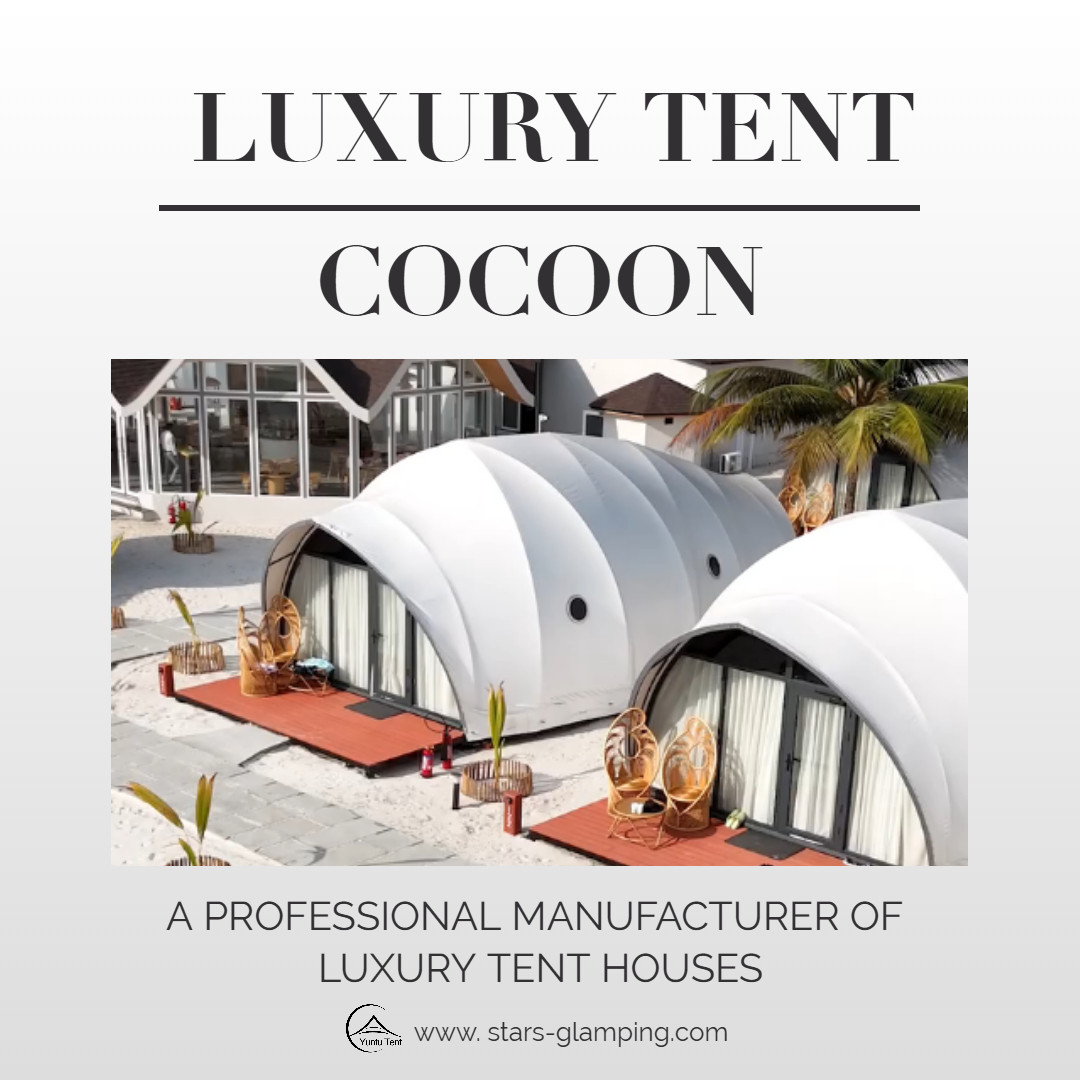
Luxury hotel tent designed for permanent resort accommodation in an outdoor hospitality setting.
What Is a Luxury Hotel Tent?
A luxury hotel tent—also referred to as a glamping resort tent or permanent hotel tent structure—is a prefabricated, semi-permanent or permanent accommodation unit used in luxury hospitality, resort development, eco-tourism camps, and high-end outdoor accommodation systems. Unlike event tents or temporary shelters, luxury hotel tents are engineered for continuous operation: they integrate structural framing, architectural membrane fabric, insulation, glazing, flooring, and often bathroom modules, air conditioning, and electrical systems.
Luxury tent structures are most commonly installed for guest accommodation in luxury resort and glamping hotel projects. A typical application scenario spans beachfront, desert, tropical rainforest, mountain, high-humidity, strong-wind, and all-weather environments—which explains why material selection and structural engineering are the two most important procurement decisions.
Each location type places different demands on a tent. The right structure for a desert site may not suit a coastal site, and the right fabric for a mountain site may not suit a tropical island. Below, we break down the main luxury hotel tent application scenarios and the key specification considerations for each.
Why Resort Environment Dictates Tent Design
A luxury hotel tent must be selected with reference to the operating environment, not only the brand or aesthetic. The International Fire Code and similar commercial codes require tent structures used in hospitality to meet fire retardancy standards such as NFPA 701 (US) or EN 13501-1 (Europe) for safe commercial use. Fire retardancy is a baseline; the real differentiation lies in how the envelope performs under UV exposure, wind, rain, snow, humidity, and temperature extremes.
Typically, luxury hotel tent specifications include:
- Frame material: steel pipe, or solid wood plus steel pipe for certain hybrid models
- Cover material: PVC polyester fabric or PVDF architectural membrane fabric
- Waterproof rating: ≥ 5000 mm H₂O for high-performance models
- UV protection: UV-stabilized, anti-aging coating
- Fire rating: B1 / M2 (fire-retardant)
- Wind resistance: up to 120 km/h (Level 10 wind)
- Snow load: 80 kg/m²
- Temperature resistance: −30°C to +70°C
- Service life: 10–15 years for PVC-based systems; 25–30 years for PVDF-based architectural membrane systems
In practice, high-performance PVDF architectural membranes used in luxury tents can offer a service life of 15–30 years and can withstand wind speeds up to 120–140 km/h, making them suitable for permanent installations in exposed coastal or desert sites.
Luxury Hotel Tent for Beach Resort
Beachfront resorts demand materials that resist salt corrosion, high humidity, and intense UV radiation. The primary risks for a coastal tent installation are rusting of frames, degradation of fabric coating, and condensation in humid night conditions. A steel frame with an anti-corrosion finish is commonly used, and fabric should be selected for UV stability and water resistance.
For a beach resort, the ideal luxury hotel tent should include:
- A waterproof membrane with a rating of at least 5000 mm H₂O
- UV-stabilized fabric to prevent fading and embrittlement
- Anti-corrosion protection for all metal components
- Insulated walls to manage humidity and heat
- Optional glass doors or panoramic windows to enhance the ocean view without compromising the envelope
Models such as the Luxury Tent – Tethys, Octagon, Villa, or Shell—with steel frame and PVDF architectural membrane fabric—are typically suitable for beachfront resort accommodation because the PVDF membrane combines waterproofing, UV resistance, and a long service life.
Luxury Hotel Tent for Desert Resort
Desert resorts face opposite challenges: extreme daytime heat, cold desert nights, sand abrasion, and very low humidity. Thermal insulation becomes the most critical feature because the tent must maintain comfort across a wide temperature swing. A fabric with heat-reflective properties, insulated wall systems, and the ability to integrate air conditioning is essential.
Key specifications for a desert-resort luxury tent include:
- High thermal insulation to reduce heat gain during the day
- Temperature resistance suitable for extreme heat (up to approximately 70°C surface temperature)
- Sealed construction to limit sand and dust ingress
- Air conditioning system integration
- Strong wind resistance for dust storms—up to 120 km/h is a practical benchmark
Many desert glamping projects in the Middle East (UAE, Saudi Arabia, Oman) use permanent tent structures with heavy architectural membranes because the material can endure high UV loads and sand abrasion better than standard camping fabrics.
Luxury Hotel Tent for Mountain Resort
Mountain resorts require tents capable of withstanding cold temperatures, snow loads, and strong gusty winds. Snow load capacity is particularly important: luxury tent models from Stars Glamping support up to 80 kg/m², which allows year-round operation in many mountain climates. Insulation must be adequate for cold nights, and the frame must handle wind speeds up to 120 km/h.
For a mountain eco-lodge tent, prioritize:
- Snow load rating of at least 80 kg/m²
- Insulated wall and roof systems
- Temperature resistance down to −30°C
- Heating system integration
- Wind-resistant anchoring
An insulated luxury hotel tent for cold climate use should combine a structural steel frame, architectural membrane fabric, and a multi-layer wall system. This is the application category where “all-weather” capability is not optional—it is the baseline for commercial viability.
Luxury Hotel Tent for Island Resort
Island resorts are exposed to salt spray, tropical rainstorms, and high humidity. Waterproofing and corrosion resistance are the deciding factors. A luxury hotel tent with a waterproof rating of ≥ 5000 mm H₂O and non-porous membrane fabric will perform reliably in tropical island conditions. Heavy-duty PVC or PVDF membranes used in luxury hotel tents are non-porous, and hydrostatic head ratings on high-performance fabric can exceed 10,000 mm, ensuring fully waterproof performance for island and beach settings.
An island-resort tent should also address:
- Mold and mildew resistance
- Ventilation or dehumidification strategy
- Corrosion-resistant hardware
- Robust anchoring for tropical storms
- Bathroom module integration if the guest experience requires en-suite facilities
The Luxury Tent – Pisces, which combines a solid wood + steel pipe frame with 850 g/m² PVC polyester fabric, is an example of a hybrid structure that suits warm, humid environments where a wood-accent interior adds a resort feel. For longer service life in tropical conditions, the PVDF-fabric models (Tethys, Octagon, Villa, Shell) provide a 25–30 year membrane lifespan with consistent waterproof performance.
Luxury Hotel Tent for Eco-Tourism and Safari Lodge
Eco-tourism and safari lodge projects prioritize low environmental impact, speed of installation, and integration with the natural landscape. Luxury hotel tents are inherently lower-impact than permanent concrete construction because they use prefabricated components, require minimal foundation work, and can be removed or repositioned. In eco-tourism settings, tents must also respect visual and environmental boundaries while still delivering guest comfort.
For an eco-lodge or safari camp, the recommended specification includes:
- Sustainable, durable fabric with a long replacement cycle
- Modular design for efficient logistics and on-site assembly
- Insulation and glazing options that reduce energy use
- Integration with solar or off-grid power systems
- Fire-retardant materials meeting hospitality standards
The application scenario for this category is common in Kenya, Tanzania, Namibia, South Africa, and other safari destinations, where permanent or semi-permanent tent structures are widely used for lodges. It is also relevant to Bhutan, Canada, and New Zealand for mountain and forest eco-lodges.
Matching Tent Models to Resort Conditions
Stars Glamping manufactures several luxury tent model families. Each has a structural and material configuration that maps to different operating conditions. The table below outlines the standard specifications and their practical implications.
| Model | Frame Material | Cover Material | Service Life | Best-Suited Environment |
|---|---|---|---|---|
| Luxury Tent – Tethys | Steel pipe | 1050 g/m² PVDF architectural membrane fabric | 25–30 years | Beach, desert, mountain, island, safari—all-weather permanent use |
| Luxury Tent – Octagon | Steel pipe | 1050 g/m² PVDF architectural membrane fabric | 25–30 years | Beach, desert, eco-lodge; large-volume spaces with panoramic views |
| Luxury Tent – Villa | Steel pipe | 1050 g/m² PVDF architectural membrane fabric | 25–30 years | Resort suites, island lodges, family accommodation |
| Luxury Tent – Shell | Steel pipe | 1050 g/m² PVDF architectural membrane fabric | 25–30 years | Architectural statement projects, event luxury tent, desert camps |
| Luxury Tent – Pisces | Solid wood + steel pipe | 850 g/m² PVC polyester fabric | 10–15 years | Tropical and coastal projects where wood-aesthetic interior is desired |
Comparison of luxury hotel tent models by frame, fabric, service life, and suitable climate.
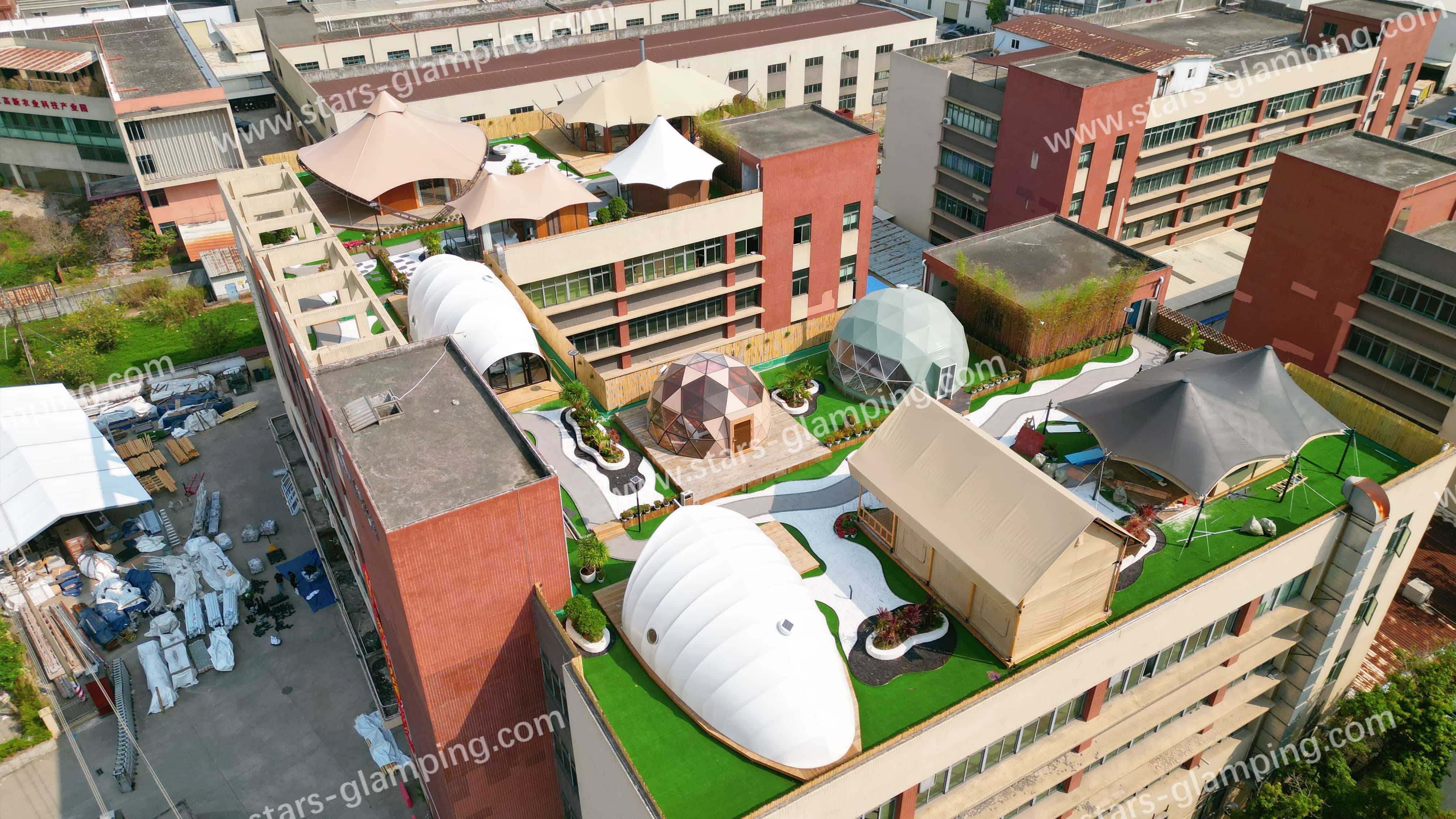
Stars Glamping’s 4,000 m² simulation exhibition hall allows buyers to inspect different tent models and finishes.
Key Technical Specs Explained for Buyers
Waterproof Luxury Hotel Tent
Waterproofing is measured by hydrostatic head (mm H₂O). A rating of ≥ 5000 mm H₂O means the fabric can withstand a 5000 mm column of water before penetration—sufficient for heavy tropical rainstorms. For island and beach resorts, heavy-duty PVC/PVDF membranes are non-porous, and ratings on high-performance fabric can exceed 10,000 mm. When reviewing supplier specifications, ask for the exact waterproof rating, not just “waterproof.”
Insulated Luxury Hotel Tent for Cold Climate
Insulation comes from the wall system, not only the outer membrane. A luxury tent for cold climates should combine an outer architectural membrane with an insulated canvas or composite wall layer. Temperature resistance down to −30°C in the product specification means the materials remain flexible and structurally sound in severe cold, but guest comfort also depends on heating systems and proper wall build-up.
All-Weather Luxury Hotel Tent
An all-weather luxury hotel tent is designed to operate continuously through hot, cold, rainy, and windy seasons. Key benchmarks include wind resistance up to 120 km/h (Level 10 wind), snow load up to 80 kg/m², and temperature resistance from −30°C to +70°C. If your resort operates year-round, these three numbers should be treated as minimum qualification criteria.
Soundproof Luxury Hotel Tent
Soundproofing in a fabric structure is a function of mass and layering. While a tent cannot achieve the acoustic isolation of a concrete building, insulated wall systems and double-layer fabric construction significantly reduce noise from wind, rain, and neighboring units. If soundproofing is a priority—for example, in a busy safari camp or a site near a road—discuss additional insulation layers with the manufacturer during the customization phase.
Luxury Hotel Tent with Bathroom and Air Conditioning
A bathroom module (shower and toilet) and air conditioning system are common integrated features in luxury hotel tent projects. These are not generic add-ons: the tent structure must integrate plumbing, electrical, ventilation, and load-bearing provisions. Manufacturers that offer integrated services—camp planning, product design, furniture, curtains, floors, and bathroom modules—can deliver a more complete solution than a supplier selling only the tent shell.
Fire-Retardant and Building-Code-Compliant Hotel Tent
For commercial hospitality, fire-retardant fabric is mandatory in most jurisdictions. Luxury tent models with a B1 / M2 fire rating meet widely accepted international standards. In addition, buyers should verify compliance with the fire code applicable to their project location—for example, NFPA 701 (US) or EN 13501-1 (Europe). A building-code-compliant hotel tent is not just a marketing phrase: it is a legal requirement for permanent or long-term commercial use.
Eco-Friendly and Sustainable Hotel Tent Accommodation
Eco-friendly is often interpreted as low-impact construction, durable materials, and energy-efficient operation. A luxury hotel tent contributes to sustainability by replacing concrete-heavy construction with prefabricated materials, reducing site disturbance, and enabling relocation. The long service life of PVDF membranes (25–30 years) also reduces material replacement frequency, which lowers the lifecycle footprint of the project.
Luxury Hotel Tent Use Cases by Project Type
Luxury Resort Accommodation
In a beach or island resort, luxury hotel tents function as guest suites, family villas, or honeymoon units. They offer the experience of sleeping close to nature without sacrificing comfort, which is why many operators position them as a premium product tier within the resort.
Glamping Hotel
A glamping hotel is a hospitality operation built primarily from tent accommodation. It may include a reception tent, restaurant tent, and multiple guest tent types. Modular tent systems are particularly valuable here because the operator can expand capacity by adding identical structures.
Eco Resort
Eco resorts use tent structures to minimize environmental impact in sensitive areas such as rainforests, coastal dunes, or mountain valleys. The key procurement criteria are low site disturbance, sustainable materials, and the ability to operate off-grid or semi-off-grid.
Boutique Hotel Expansion
Established hotels sometimes add tent accommodation as a way to expand capacity quickly without a large construction program. A luxury hotel tent can be installed in weeks rather than months, which makes it attractive for seasonal expansion or trial of a new accommodation concept.
Event Luxury Tent (Reception / Restaurant)
Beyond guest accommodation, luxury tent structures are used for resort reception areas, restaurants, yoga pavilions, and events. In these applications, transparency, ceiling height, and interior design flexibility become more important.
Step-by-Step Selection Framework for Resort Developers
- Define the operating environment. Identify the dominant climate: coastal salt and humidity, desert heat and sand, mountain cold and snow, or tropical rainfall and wind.
- Set minimum technical requirements. Use the model specifications as a baseline: waterproofing, wind resistance, snow load, temperature range, fire rating, and service life.
- Choose the tent model family. Match the frame and fabric to the environment—PVDF steel-frame models for long-life all-weather use; the Pisces wood-steel hybrid for warm, design-led projects.
- Decide on integrated systems. Specify bathroom modules, air conditioning, insulation linings, glass doors, flooring, electrical, and curtain systems as required.
- Verify supplier capability. Check whether the manufacturer can deliver camp planning, product design, furniture matching, and installation guidance in one scope.
- Review quality control and production capacity. Confirm inspection processes, production capacity, and delivery lead time against your project schedule.
- Request project-specific drawings and a sample. Before committing to a large order, validate the product quality and detailing with a physical or site-specific reference.
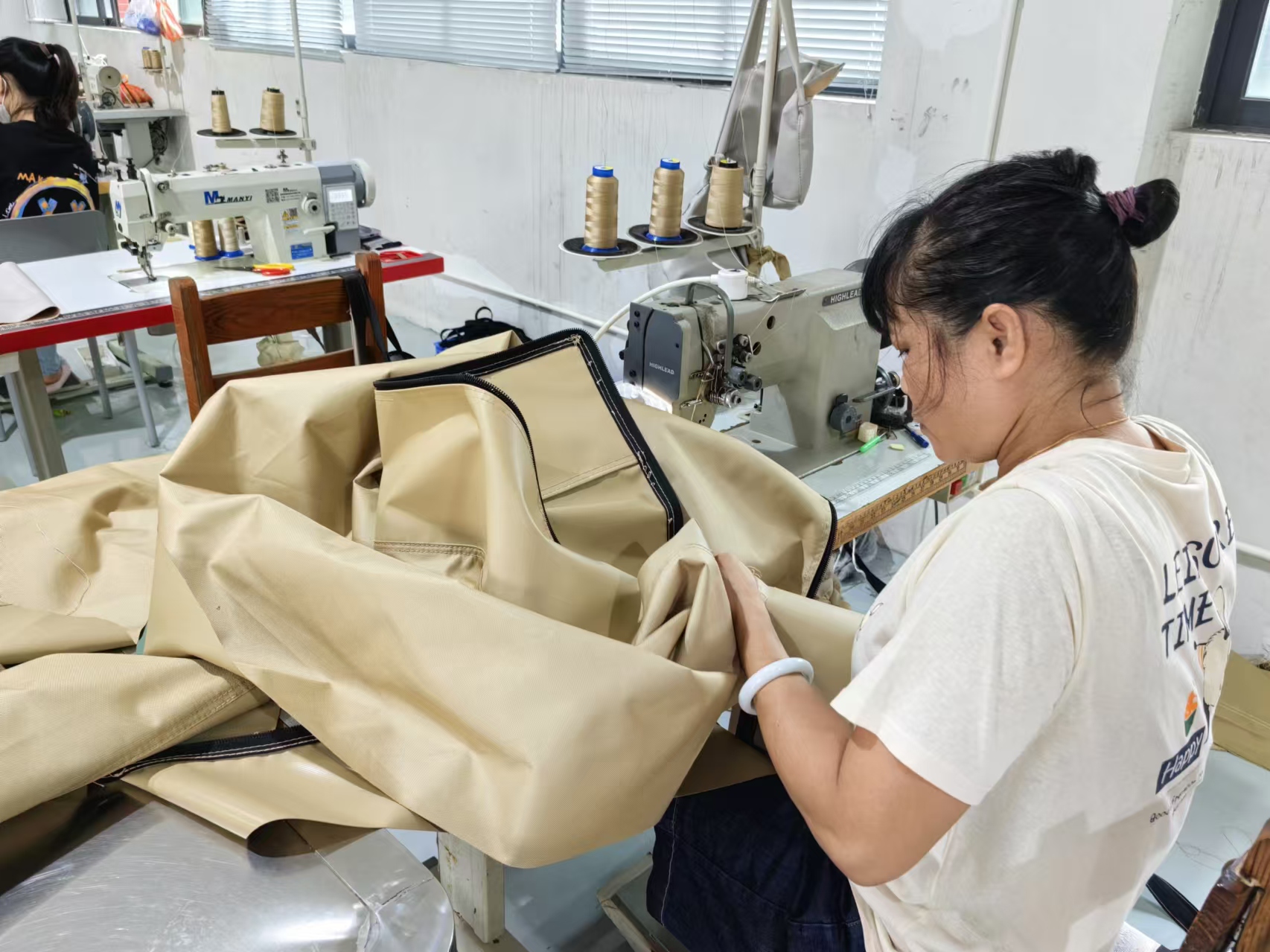
In-house fabric production ensures consistent quality and the ability to customize luxury tent components.
How Stars Glamping Supports Different Resort Environments
STARS GLAMPING TENT CO., LTD is a manufacturer based in Guangzhou, China, specializing in the research and development, design, manufacturing, and installation of luxury glamping tents and overall camp planning. Founded in 2018, the company operates a modern manufacturing base of 20,000 square meters and employs approximately 100 staff, including an R&D team of 6 engineers and technicians. Annual production capacity is 600–900 luxury tent units, depending on project size. Approximately 90% of products are exported, with major markets in Southeast Asia, the Middle East, Africa, Europe, North America, South America, and Australia.
For resort developers, the relevant capabilities are:
- Product range: luxury hotel tents, glamping domes, and safari tents
- Integrated services: camp planning, product design, furniture matching, curtains, floors, and other interior components
- Manufacturing control: independent production throughout the process and a 12-step quality inspection system
- Global delivery: overseas order delivery in approximately 15–30 days, with a 24-hour global after-sales response mechanism
- Project support: free installation guidance and lifelong technical support
This means that a developer can source not just the tent structure but also the interior systems and installation support from a single manufacturer. For companies managing multiple resort projects across different climates, it also simplifies maintenance: all units can share similar frame and fabric systems, reducing spare parts complexity.
Comparison: Key Selection Criteria for Resort Environments
| Criteria | Beach / Island | Desert | Mountain | Eco-Tourism / Safari |
|---|---|---|---|---|
| Most critical risk | Salt corrosion, humidity, heavy rain | Heat, sand, UV | Snow load, cold, wind | Low site impact, reliable off-grid operation |
| Recommended fabric | PVDF or heavy PVC | PVDF with high UV resistance | PVDF with insulated wall system | PVDF for longevity and reduced replacement |
| Minimum waterproof rating | ≥ 5000 mm H₂O; high-performance up to 10,000+ mm | ≥ 5000 mm H₂O | ≥ 5000 mm H₂O | ≥ 5000 mm H₂O |
| Wind resistance | Up to 120 km/h | Up to 120 km/h | Up to 120 km/h | Up to 120 km/h |
| Snow load | Not primary | Not primary | 80 kg/m² | Varies by altitude |
| Priority built-in systems | Bathroom, air conditioning, dehumidification | Air conditioning, insulation, dust sealing | Heating, insulation, snow anchoring | Energy efficiency, ventilation, modular installation |
Common Procurement Mistakes and How to Avoid Them
Choosing fabric without checking service life. A cheaper PVC fabric may last 10–15 years, while a PVDF architectural membrane can last 25–30 years. In a permanent resort, the longer-life material often has a better total cost of ownership despite a higher initial price.
Under-specifying wind and snow loads. Even inland sites can experience severe storms. If the supplier offers 120 km/h wind resistance as the standard, treat that as the minimum and confirm the anchoring system is included.
Ignoring corrosion in coastal sites. A standard steel frame may fail quickly in a beach environment if the protective coating is not appropriate. Confirm anti-corrosion treatment for all metal parts.
Separating the tent purchase from the interior systems. Buying the tent shell from one supplier and the bathroom, air conditioning, and flooring from others increases coordination risk. A one-stop supplier simplifies installation, warranty, and maintenance.
Delaying compliance checks. Fire retardancy and building code compliance should be verified before ordering, not during installation. Ask for the fire rating (B1 / M2, NFPA 701, or EN 13501-1) in writing.
Luxury Hotel Tent FAQs
Are luxury hotel tents compliant with building codes for permanent hospitality use?
For commercial hospitality use, luxury tent structures must meet applicable fire retardancy and structural standards. Common requirements include NFPA 701 (US), EN 13501-1 (Europe), and other local fire codes. The model specifications from Stars Glamping include B1 / M2 fire-retardant ratings, which align with widely used international benchmarks. Buyers should confirm the specific code applicable to their project location and request documentation from the supplier.
Can a luxury hotel tent be customized for beach, desert, mountain, and island conditions?
Yes. Luxury hotel tents are engineered as modular, customizable systems. Customers can specify frame material, fabric type, insulation lining, glazing, bathroom modules, air conditioning, flooring, electrical systems, and layout. The manufacturer’s R&D and design team can adapt the structure to the project climate—for example, PVDF fabric for high-UV desert sites, insulated wall systems for cold mountains, and corrosion-resistant hardware for coastal installations.
What is the typical budget range for a luxury hotel tent project?
Budget depends on model, size, fabric type, integrated systems, and quantity. In general, a permanent luxury tent with a steel frame and PVDF architectural membrane represents a higher initial investment than a PVC-based structure, but it also offers a longer service life (25–30 years versus 10–15 years). Requesting a project-specific quotation is the most reliable way to establish a budget because customization scope and logistics vary significantly by destination.
Can I request a product sample or visit a showroom before placing a bulk order?
Yes. Stars Glamping operates a 4,000 m² simulation exhibition hall where buyers can inspect tent models, materials, and finishes. For remote buyers, sending a requirement brief and requesting product samples or detailed videos is a practical first step. A sample order can validate the actual fabric, frame joints, and overall quality before full production begins.
What lead time should I expect for a luxury hotel tent order?
Overseas orders typically require 15–30 days for delivery after production, according to the manufacturer’s standard logistics schedule. Total lead time depends on order size, customization complexity, and destination. For a large resort project, it is advisable to align the production schedule with your site preparation timeline and request a delivery plan from the supplier early in the procurement process.
Planning a resort project in a specific climate?
Send your project brief to info@stars-glamping.com or contact the team on WhatsApp at +86-133 2645 9475 to request a tailored recommendation, product samples, or a project quotation.
Download the company brochure: Stars Glamping Corporate Brochure (PDF)