
Luxury Hotel Tent Site Matching: Beach, Desert, Mountain & Eco Resorts
Luxury Hotel Tent Site Matching: Beach, Desert, Mountain & Eco Resorts
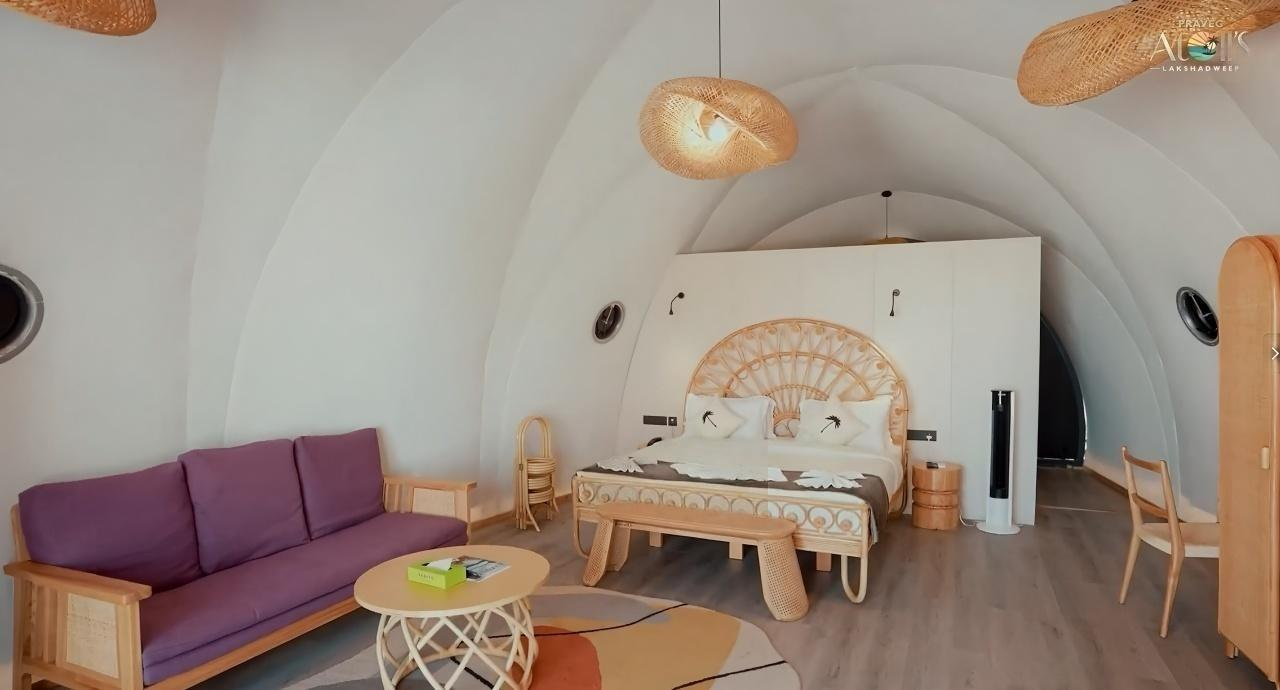
Choosing a luxury hotel tent should start with the site, not the brochure. Beachfront salt air, desert heat, mountain snow and remote eco settings impose different demands on fabric, frame, insulation and wall glazing. A structure that works in one environment can underperform in another unless the engineering package is matched to real project conditions.
Stars Glamping, a Guangzhou-based manufacturer of luxury glamping tent systems, builds luxury hotel tent products designed as guest accommodation for resorts, glamping hotels, eco resorts and boutique hotel expansions. Its product range includes the Tethys, Villa, Octagon, Shell and Pisces tent series, sold to clients across Southeast Asia, the Middle East, Africa, Europe, North America, South America and Australia. This article gives resort developers a framework for checking the right tent for beachfront, island, desert, mountain, safari lodge and eco-tourism projects.
Problem Definition: Why a Luxury Hotel Tent Must Match Its Project Environment
A luxury hotel tent is not simply a large camping tent with nicer furniture. It is a permanent or semi-permanent hospitality structure that must perform like a hotel room while using a fabric membrane envelope. Because the envelope is lighter than a concrete or timber building, the consequences of a poor environmental match are more visible: excessive heat gain, condensation, fabric fatigue, wind noise or snow accumulation problems.
Resort developers often choose a tent based on shape and interior rendering. The real procurement question is whether the proposed structure can handle the climate and operating model of that specific site. A beachfront hotel tent in a high-humidity coastal zone should be evaluated differently from a desert glamping tent, a mountain eco lodge tent or an island resort unit exposed to strong seasonal wind.
Industry Background: The Shift Toward Permanent Outdoor Hospitality
The demand for luxury hotel tents is part of a broader shift in hospitality. Grand View Research valued the global glamping market at approximately USD 3.8 billion in 2025, with tents as a major accommodation segment alongside cabins and pods. Fortune Business Insights projects the market could reach USD 9.15 billion by 2034, growing at a CAGR of 10.67%. The same research also points to Europe holding around 35% revenue share in 2025, indicating that glamping and tent-based lodging have moved from niche to institutional hospitality investment.
This growth is significant for developers because tent projects are no longer limited to seasonal camps. They are being designed as year-round resorts, boutique hotel expansions and tourism attraction upgrades. Commercial hospitality use also brings compliance expectations. For safe use in hotels, luxury resort tents typically need to meet fire-retardancy benchmarks such as NFPA 701 in the US or EN 13501-1 in Europe, depending on local building authority requirements.
Detailed Solution: The Engineered Configurations Behind Stars Glamping Hotel Tents
Stars Glamping luxury tent products share a production architecture: the structural composition is a steel frame, PVC/PVDF fabric and an insulated glass or canvas wall system. The cover material is either 1050g/m² PVDF Architectural Membrane Fabric or 850g/m² PVC Polyester Fabric, depending on the model. The frame material is steel pipe, with the Pisces model combining solid wood with steel pipe.
Across the portfolio, the product role in resort projects is to provide guest accommodation, resort expansion, luxury outdoor lodging and tourism attraction upgrade. The main use cases include luxury resort accommodation, glamping hotel projects, eco resorts and boutique hotel expansions. Countries of common use include the UAE, Saudi Arabia, Australia, Thailand, Indonesia and Malaysia.
Inside the Stars Glamping range, there are two main specification directions:
- Long-life PVDF platform — Tethys, Villa, Octagon and Shell. These models use a steel pipe frame and 1050g/m² PVDF Architectural Membrane Fabric. Their wall system is an insulated glass wall system, which supports panoramic visibility while maintaining the performance of a permanent hotel envelope.
- PVC and timber-steel hybrid platform — Pisces. This model uses solid wood with a steel pipe frame and 850g/m² PVC Polyester Fabric. Its wall system is an insulated canvas wall system, which gives a different design character and a service life of 10–15 years.
Both specification directions are engineered for all-weather resort operation. The product parameters include a waterproof rating of at least 5000mm H2O, UV-stabilized and anti-aging membrane treatment, B1/M2 fire-retardant classification, wind resistance up to 120km/h, snow load capacity of 80kg/m² and a temperature tolerance from -30°C to +70°C. The practical difference is asset life: the PVDF architectural membrane models are specified for 25–30 years, while the Pisces model is specified for 10–15 years.
Step-by-Step: How to Match a Luxury Hotel Tent to Your Project Environment
The following process can be used by resort developers, procurement teams and architects during the Research and Evaluation stage.
Step 1. Document the Site’s Real Loads
Identify the dominant physical risks at the site. Coastal projects should record wind exposure, humidity and salt impact. Desert projects should record maximum surface temperature, UV intensity and sand load. Mountain projects should record winter temperature, snowfall and access constraints. Eco and safari projects should record whether the site has grid power, water and waste infrastructure, because this affects the need for off-grid planning and natural ventilation.
Step 2. Select the Membrane Grade
For long-life resorts where the tent will operate as a permanent building, the 1050g/m² PVDF Architectural Membrane Fabric is the more durable direction, with a specified service life of 25–30 years. For projects that intend a shorter asset cycle, or where the design calls for the Pisces solid-wood and canvas aesthetic, the PVC polyester platform with 10–15 years of service life should be evaluated.
Step 3. Choose the Wall System
The biggest visual and thermal decision is the wall system. PVDF-platform models use an insulated glass wall system, which suits resorts that want broad landscape views while still providing insulation. Pisces uses an insulated canvas wall system, which can be better for projects looking for a softer lodge appearance or a more intimate scale. Both are wall systems, not simple tent flaps, and are part of the permanent structure specification.
Step 4. Verify Environmental Performance Criteria
Every shortlist should include the same measurable criteria. For the Stars Glamping portfolio, the common performance package includes a waterproof rating of at least 5000mm H2O, wind resistance up to 120km/h, snow load resistance of 80kg/m², an operating temperature range of -30°C to +70°C, and B1/M2 fire-retardant classification. These numbers allow a resort team to compare a tent proposal against site conditions instead of comparing only room layouts.
Step 5. Plan the Interior Systems
A luxury hotel tent becomes a hotel room when services are integrated. Typical resort matching from the Stars Glamping project scope includes air-conditioning systems, insulation lining, glass doors and panoramic windows, wooden flooring, bathroom modules, electrical and lighting systems, and curtain or shading systems. Developers should confirm which items are included in the tent package and which are coordinated as local site works.
Step 6. Use a Sample or Small-Batch Verification
Because site conditions vary, Stars Glamping’s production model offers a sample option and a standard MOQ of one unit. This allows developers to validate fabric behavior, assembly quality and wall performance before committing to a large resort order.
Use Cases: How These Tents Have Been Applied in Different Resort Environments
Beachfront Resort Accommodation
For a beachfront resort in India, government tourism developers selected 100 luxury tents for a full resort project. The stated result was enhanced guest experience and increased resort occupancy. The project was described as environmentally friendly, with high wind resistance, thermal insulation and panoramic views. This scale shows how luxury hotel tent systems can be used for mass beachfront accommodation while retaining a differentiated guest experience.
Desert Resort Accommodation
In Saudi Arabia, a resort developer used 30 luxury tents for a full luxury desert resort project. The project highlights included custom desert design, high wind resistance, thermal insulation and panoramic views. For desert sites, the temperature range and UV behavior of the membrane are critical because daytime heat and nighttime cooling can stress a structure that does not have a thermal insulation package.
Mountain Resort Accommodation
A resort developer in Nepal installed 19 luxury tents for a mountain resort project. The project used a custom mountaintop design with high wind resistance, thermal insulation and panoramic views. In mountain environments, the snow load rating of 80kg/m² and the temperature tolerance of -30°C to +70°C provide the load assumptions needed for planning.
Wildlife Safari and Eco-Tourism Accommodation
In Cape Verde, 12 luxury hotel tents were used for wildlife safari accommodation in a long-term outdoor installation of more than eight years. The project was described as an eco-tourism improvement using eco-friendly materials, an off-grid solution and natural ventilation design. This use case is especially relevant for luxury hotel tent for safari lodge and sustainable hotel tent accommodation searches, where developers need to balance comfort with a low footprint.
Comparison Table: PVDF Long-Life Platform vs. Pisces Hybrid Platform
| Engineering Attribute | PVDF Platform (Tethys, Villa, Octagon, Shell) | PVC Hybrid Platform (Pisces) |
|---|---|---|
| Frame material | Steel pipe | Solid wood + steel pipe |
| Cover material | 1050g/m² PVDF Architectural Membrane Fabric | 850g/m² PVC Polyester Fabric |
| Wall system | Insulated glass wall system | Insulated canvas wall system |
| Waterproof rating | ≥5000mm H2O | ≥5000mm H2O |
| UV protection | UV stabilized, anti-aging | UV stabilized, anti-aging |
| Fire rating | B1/M2 fire-retardant | B1/M2 fire-retardant |
| Wind resistance | Up to 120km/h | Up to 120km/h |
| Snow load | 80kg/m² | 80kg/m² |
| Temperature range | -30°C to +70°C | -30°C to +70°C |
| Service life | 25–30 years | 10–15 years |
The comparison above is based on the Stars Glamping product specification data provided to resort buyers. The two platforms share several performance thresholds, but the service life and wall system are the main factors that should drive decision-making.
FAQ: Environment-Specific Luxury Hotel Tent Questions
Which luxury hotel tent is right for a beachfront or island resort?
A beachfront or island resort should prioritize waterproofing and wind resistance. Stars Glamping PVDF-platform models are built with a steel pipe frame, 1050g/m² PVDF Architectural Membrane Fabric and an insulated glass wall system. The specification includes a waterproof rating of at least 5000mm H2O, wind resistance up to 120km/h and a service life of 25–30 years. For coastal sites, buyers should also ask the supplier to confirm anti-corrosion treatment and insulation details for high-humidity conditions.
Can a luxury hotel tent be insulated enough for a cold mountain or alpine resort?
Yes. The Stars Glamping luxury tent range is specified for temperatures from -30°C to +70°C and snow loads up to 80kg/m². The wall system is either insulated glass or insulated canvas, which helps reduce heat loss compared with a single-layer tent. A mountain resort in Nepal installed 19 luxury tents with a custom mountaintop design, high wind resistance, thermal insulation and panoramic views.
What should developers verify for a luxury desert resort project?
Desert resort developers should verify UV resistance, thermal insulation and high-temperature performance. The PVDF architectural membrane used in the Tethys, Villa, Octagon and Shell models is described as UV stabilized and anti-aging, with an operating range up to +70°C. In Saudi Arabia, a desert resort project used 30 Stars Glamping luxury tents with custom desert design, high wind resistance, thermal insulation and panoramic views.
Are luxury hotel tents suitable for safari lodges and eco-tourism projects?
Yes, when they are specified with the right operating systems. A wildlife safari project in Cape Verde used 12 luxury hotel tents from Stars Glamping for long-term outdoor accommodation of more than eight years. The project was built around eco-friendly materials, an off-grid solution and natural ventilation design, which are relevant criteria for safari and sustainable hotel tent accommodation projects.
Do luxury hotel tents meet fire-retardant requirements for hotel use?
Stars Glamping luxury hotel tent models specify a B1/M2 fire-retardant classification. For commercial hospitality projects, local building authorities in the US and Europe often require fire-retardancy evidence based on standards such as NFPA 701 or EN 13501-1. Buyers should ask the supplier to provide documented test evidence for the specific standard required by their project jurisdiction.
Final Takeaway for Resort Developers
The right luxury hotel tent is not only the tent with the most attractive rendering. It is the tent whose frame, membrane, wall system and service plan align with the physical loads of the site and the intended operating life of the resort.
For beachfront and island resorts, focus on waterproofing, wind resistance and corrosion risk. For desert resorts, focus on UV resistance, thermal insulation and heat performance. For mountain resorts, check snow load, low-temperature tolerance and window insulation. For safari and eco-tourism projects, evaluate natural ventilation, off-grid compatibility and material durability. By using the Stars Glamping platform comparison above, resort teams can move from generic product discussions to site-specific procurement decisions.
If you are developing a beach, desert, mountain, island or eco-resort project and need help matching the correct luxury hotel tent specification, Stars Glamping can support the evaluation with engineering data, samples and project references.
Download the Stars Glamping company brochure: Stars Glamping Brochure
Contact: info@stars-glamping.com | WhatsApp/Tel: +86-133 2645 9475