Safari Tent Guide: Adventure Camps & Outdoor Sports Sites
Safari Tent Application Guide for Adventure Camping Lodges & Outdoor Sports Sites
An adventure camping lodge carries a different brief from a leisure glamping site. Accommodation sits beside activity infrastructure — briefing areas, gear storage, trail heads, wash blocks and service routes — and each tent has to work with that traffic rather than around it. In this setting the Safari Tent, also sold as the Luxury Safari Lodge Tent or Canvas Lodge Tent, is deployed as a permanent engineered unit with a fixed frame, a welded fabric envelope and a defined service life.
Stars Glamping (STARS GLAMPING TENT CO.,LTD), a Guangzhou-based manufacturer of glamping domes, safari tents and luxury tents, documents three Safari Tent models — Safari Tent - Epic, Safari Tent - Vega and Safari Tent - Lodestar — on one shared envelope platform, each offered in standard footprints of 20㎡, 30㎡, 40㎡ and 50㎡. Epic and Lodestar are catalogued specifically as Adventure Camping Lodge Tent; all three are catalogued as Wildlife Lodge Tent.
Short answer: select the model from its documented tent classification, select the footprint from the unit’s role in the site plan, and freeze the envelope — frame, cover, lining, glazing — before customization begins. All three models share the same stated performance: 850g/m² PVC coated polyester cover, ≥3000mm H₂O waterproofing, B1 fire-retardant rating, wind resistance up to 100km/h, snow load 60kg/m², an operating range of -25℃ to +60℃ and an 8–12 year service life.
Why Adventure Sites Get Tent Selection Wrong
Most problems on an active site are decided long before installation, in the order in which choices are made. Four patterns repeat.
- Footprint chosen from a photograph. A 20㎡ and a 50㎡ unit read similarly in a catalogue image but produce very different site plans, path widths and service distances.
- Model chosen by appearance. The three Safari Tent models share one envelope specification, so aesthetic preference is a weak criterion; the documented tent classification is the stronger one.
- Customization requested after the structure is frozen. Bathroom integration, interior layout and furniture all change the internal plan, so they belong to the design stage rather than the production stage.
- Climate discussed last. Adventure sites are often used in shoulder seasons, and the stated -25℃ to +60℃ operating range should be checked against local extremes before the order, not after the first winter.
Each of these is a sequencing failure rather than a product fault. The guide below puts the decisions back in order: platform first, model second, footprint third, customization last.
Industry Background: Why Active Sites Are Adding Tent Accommodation
The commercial backdrop is straightforward. Grand View Research estimates the global safari tourism market at USD 39.7 billion in 2026 and projects growth to USD 66.9 billion by 2033. That figure describes tourism revenue rather than tent demand, but it explains why operators keep adding accommodation capacity to wildlife, eco-tourism and active-travel sites where a permanent building is slow, capital-heavy or out of character with the landscape.
Prefabricated tent structures change the delivery model. A frame-and-fabric unit is manufactured off site, shipped as components and assembled on prepared ground, which suits sites where access is seasonal, where planning approval for a fixed building is uncertain, or where accommodation has to follow activity infrastructure that may itself move. The trade-off is that the envelope specification carries more weight than it would on a building: waterproofing, fire rating, wind resistance and temperature range are stated numbers on a data sheet rather than assumed properties of masonry.
Two cost items are worth flagging before an RFQ is issued. First, price scope: Stars Glamping’s published guidance places standard safari tent packages for 2–4 persons between USD 8,190 and USD 15,710 depending on inclusions, so quotations with different fit-out scopes cannot be compared like for like. Second, import classification: in the United States, synthetic-fibre tents other than backpacking models are listed under HTS 6306.22.90.30 with an 8.8% general duty rate; the classification should be confirmed for the actual product and port of entry before landed cost is approved.
The Safari Tent Platform: What the Specification Actually Covers
Epic, Vega and Lodestar are built on the same documented platform. The figures below are the manufacturer’s stated specification and apply across the three models.
- FrameFinish anti-corrosion solid wood or heavy-duty galvanized steel frame
- Cover850g/m² PVC coated polyester fabric
- Inner liningOxford canvas fabric, breathable
- Waterproofing≥3000mm H₂O
- UV performanceUV-resistant, anti-fading
- Fire ratingB1 fire-retardant
- Wind resistanceUp to 100km/h (Level 9 wind)
- Snow load60kg/m²
- Operating temperature-25℃ to +60℃
- Service life8–12 years
- Standard sizes20㎡ / 30㎡ / 40㎡ / 50㎡ (customizable)
- Glazing and ventilationLarge panoramic windows, mesh screens, wood-style structure design
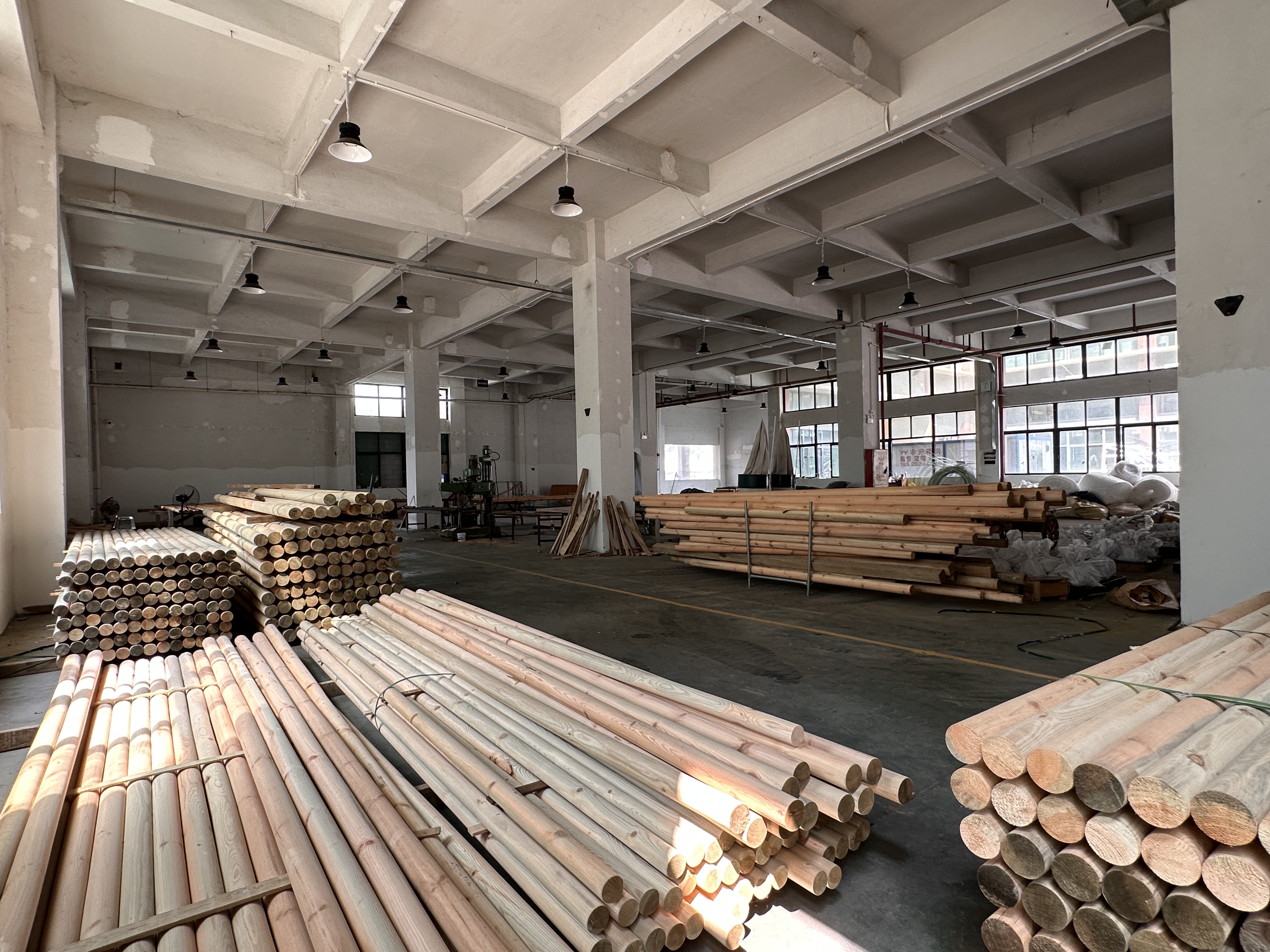
Frame: solid wood or galvanized steel
Both frame options are listed against the same model specification, so the choice is not a performance tier. Finish anti-corrosion solid wood supports the wood-style structure design and lets the unit read as part of the landscape; heavy-duty galvanized steel is the structural alternative. Because the frame drives foundation details and assembly sequence, record the selection on the drawings before production is scheduled.
Envelope and lining
The 850g/m² PVC coated polyester cover is the weather-facing layer; the breathable Oxford canvas lining faces the interior. Large panoramic windows carry the view, mesh screens provide ventilation, and the wood-style structure design ties the frame into the envelope visually. The B1 fire-retardant rating, ≥3000mm H₂O waterproof rating, 100km/h wind resistance and 60kg/m² snow load are the numbers a structural or fire reviewer will ask for, and they are stated for all three models.
Matching Epic, Vega and Lodestar to Adventure Camp Functions
The models are not separated by fabric, frame or performance ratings — those are identical across the range. They are separated by the tent classifications the manufacturer documents for each one, which is the criterion that matters when a project brief is written around a specific site type.
| Model | Documented classifications | Standard sizes | Frame options | Service life |
|---|---|---|---|---|
| Safari Tent - Epic | Wildlife Lodge Tent; Jungle Safari Accommodation Tent; Eco Tourism Tent; National Park Lodge Tent; Adventure Camping Lodge Tent | 20㎡ / 30㎡ / 40㎡ / 50㎡ (customizable) | Solid wood or galvanized steel | 8–12 years |
| Safari Tent - Lodestar | Wildlife Lodge Tent; Jungle Safari Accommodation Tent; Eco Tourism Tent; National Park Lodge Tent; Adventure Camping Lodge Tent | 20㎡ / 30㎡ / 40㎡ / 50㎡ (customizable) | Solid wood or galvanized steel | 8–12 years |
| Safari Tent - Vega | Wildlife Lodge Tent | 20㎡ / 30㎡ / 40㎡ / 50㎡ (customizable) | Solid wood or galvanized steel | 8–12 years |
Epic carries the widest classification list, which makes it the natural starting point for a site that mixes lodge accommodation with event, training or briefing space. Lodestar carries the same classification list on an alternate structure design, so Epic and Lodestar are best separated on interior layout and site aesthetics once the classification list has been confirmed against the brief. Vega is documented as Wildlife Lodge Tent only, which positions it as the wildlife-accommodation alternative rather than the default for an activity-led site.
Matching the Four Standard Sizes to Site Layout and Guest Flow
All three models are offered in all four standard footprints, so the size decision is independent of the model decision. That is worth stating plainly, because site teams sometimes assume a model–size pairing that the specification does not make. The size question is answered by the unit’s role in the site plan and by how much interior program the unit has to carry.
| Standard size | Model availability | Typical planning role on an active site | Design notes |
|---|---|---|---|
| 20㎡ | Epic, Vega, Lodestar | Compact single-room unit near trail heads, event villages or overflow zones | Smallest site footprint; internal function set by the furniture plan |
| 30㎡ | Epic, Vega, Lodestar | Standard lodge unit; candidate for bathroom integration | Confirm plumbing route and partition layout during design |
| 40㎡ | Epic, Vega, Lodestar | Twin or family unit, or sleeping zone plus living zone | Two zones require a defined interior layout |
| 50㎡ | Epic, Vega, Lodestar | Largest standard unit; sleeping, bathroom and a covered living or briefing area | Highest demand on foundations and on guest-flow clearance |
Guest flow and site layout
Layout decisions on an adventure site tend to matter more than on a leisure site, because accommodation traffic and activity traffic share the same ground.
- Separate guest paths from service routes. Gear movement, laundry, maintenance and resupply should reach each unit without crossing the main guest walking line.
- Cluster or disperse deliberately. Clusters shorten service distances and suit shared wash blocks; dispersed units give privacy and suit sites where the view is the product. Do not mix the two patterns by accident.
- Orient to the view and the breeze. The large panoramic windows should face the feature the site is sold on; the mesh screens should face the prevailing airflow.
- Keep activity infrastructure close but out of sight. Sports courts, briefing decks and storage should be a short walk from sleeping units without sitting in their sightline.
- Allow clearance for the frame. Footprint area is not the same as the ground area a unit needs once frame, guy lines, paths and drainage are included.
Customization for Adventure Camps and Outdoor Sports Sites
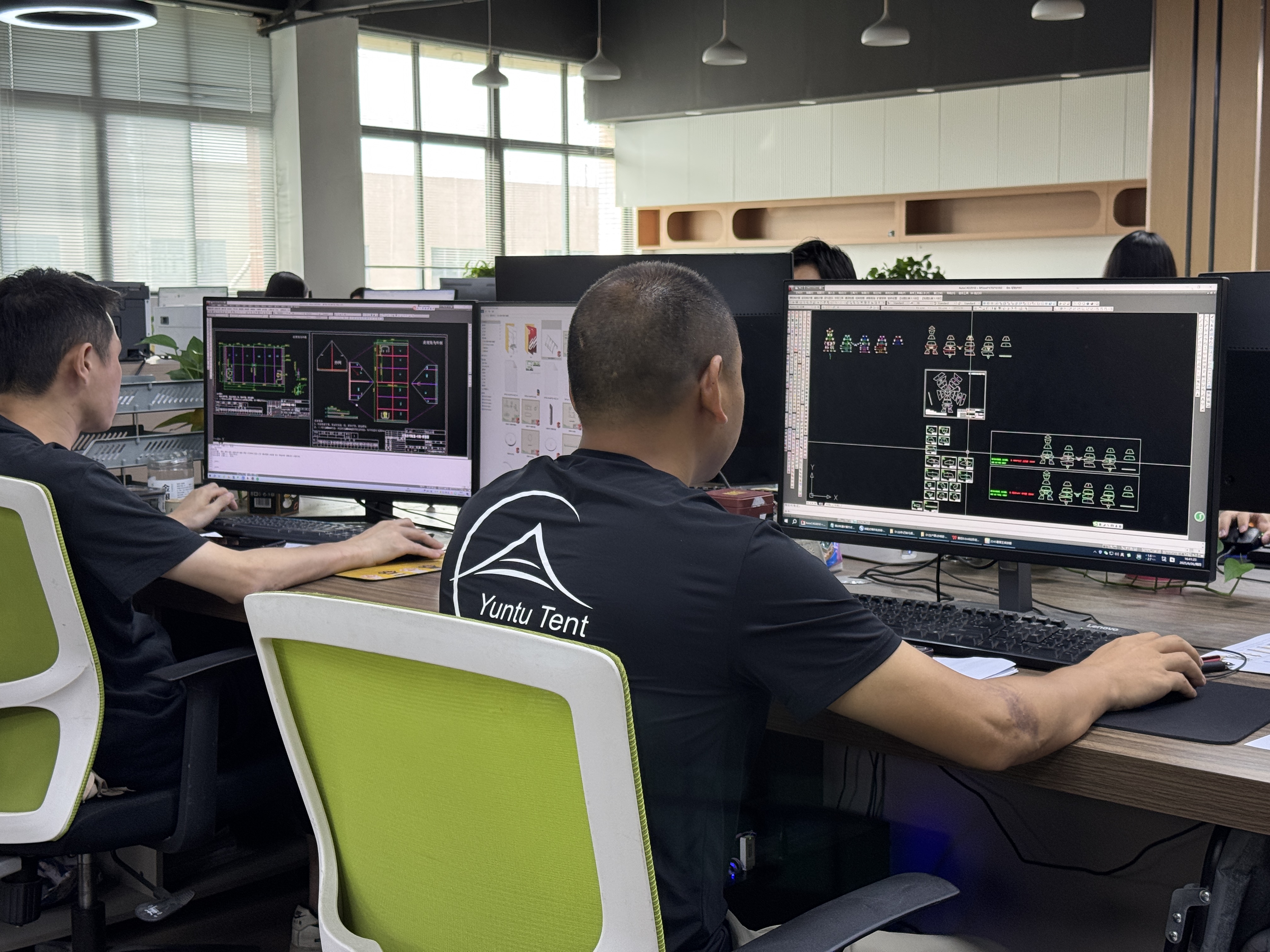
Stars Glamping offers OEM (Original Equipment Manufacturing) production, ODM (Original Design Manufacturing) design and production, and engineering support, alongside custom luxury tent manufacturing and glamping project solutions. For an adventure camp, the practical question is which parts of the brief are customizable at all.
| Customization area | What it changes on site |
|---|---|
| Size & layout customization | Unit footprint and internal planning |
| Tent structure design | Frame geometry, window and entry positions |
| Fabric material (PVC / PVDF / insulation) | Cover choice and thermal behaviour |
| Frame material (steel / aluminum) | Structural option set |
| Interior layout & furniture | Sleeping, storage and gear handling |
| Bathroom integration | Plumbing, partitions and service access |
| Logo branding | Signage and identity on the unit |
| Color customization | How the camp reads against the landscape |
This table describes the manufacturer’s general customization scope. The options available for a specific Safari Tent order — and the frame materials offered for that order — must be confirmed in the quotation, because the documented frame options for the Safari Tent range itself are finish anti-corrosion solid wood or heavy-duty galvanized steel.
What to freeze first, and why
- Structure design and bathroom integration. Both change foundations, plumbing routes and internal partitions, so they belong before engineering drawings are finalized.
- Fabric and insulation choice. This is the climate decision; it interacts with the stated -25℃ to +60℃ operating range and with shoulder-season use.
- Interior layout and furniture. These determine how much gear a unit can absorb without eating the living space, which is the defining requirement of an adventure camp.
- Branding and color. Later in the sequence and lighter on the schedule, but still worth fixing before production slots are booked.
Step-by-Step: Deploying Safari Tents on an Adventure Site
- Define the operating pattern. Decide how the site runs: single-night transit, multi-day activity packages, seasonal events, or a mix. The answer sets the ratio of compact units to full lodge units.
- Zone the site and map guest flow. Mark sleeping zones, activity zones, service routes and gear movement on one plan before any tent is positioned.
- Assign a standard size to each unit role. Use 20㎡, 30㎡, 40㎡ or 50㎡ and note where bathroom integration is required, since that decision constrains the layout.
- Select the model by documented classification. Epic and Lodestar where the brief includes Adventure Camping Lodge Tent; Vega where the brief is wildlife accommodation only.
- Freeze the envelope. Confirm frame (solid wood or galvanized steel), 850g/m² PVC coated polyester cover, breathable Oxford canvas lining, panoramic windows and mesh screens.
- Specify customization and fit-out. Interior layout, furniture, bathroom integration, branding, color, and any fabric or insulation change, all recorded before drawings are issued.
- Verify the compliance documents. Obtain the CE Attestation of Conformity copy and confirm the ordered product and destination market sit inside its scope.
- Confirm production, inspection and delivery terms. Fix quantities, delivery terms (EXW, FOB, CIF or DDP), inspection method and installation support before the purchase order is signed.
Use Cases: Where the Safari Tent Fits on an Active Site
Adventure camping lodge base camps
The core application. Epic and Lodestar are the models catalogued as Adventure Camping Lodge Tent, and the four standard sizes let a base camp mix compact sleeping units with larger units that carry bathroom and covered living space. The breathable Oxford canvas lining and mesh screens matter here because these units are occupied after physical activity and ventilation is part of comfort.
Outdoor sports training and event sites
A training camp or event village needs accommodation that can be installed against a schedule and removed or reconfigured afterwards. The 50㎡ footprint can carry sleeping, bathroom and a covered briefing or living area in one unit; the 20㎡ footprint keeps accommodation compact so that ground is released to courts, pitches or staging areas.
Jungle and eco-tourism camps
Epic and Lodestar are both catalogued as Jungle Safari Accommodation Tent and Eco Tourism Tent. The 850g/m² PVC coated polyester cover with ≥3000mm H₂O waterproofing and UV-resistant, anti-fading performance is the relevant part of the specification in humid, high-rainfall settings.
National park and wildlife lodges
All three models carry the Wildlife Lodge Tent classification, and Epic and Lodestar also carry National Park Lodge Tent. Where the site is a pure wildlife lodge with no activity program, Vega sits directly on the brief.
Seasonal and high-altitude operations
The stated operating range of -25℃ to +60℃ with a 60kg/m² snow load and 100km/h wind resistance defines where a standard configuration is credible. Sites outside that range should raise the question at specification stage rather than assume the standard build covers them.
Compliance, Quality Control and Delivery Facts
The Safari Lodge scope is covered by a General Product Safety Directive Attestation of Conformity (CE), certificate number M.2024.206.C96444, issued by UDEM for the EU market against EN ISO 5912:2020. It was issued on 31 January 2024 and is valid until 30 January 2029, with a scope covering tents including Safari Lodge. The Safari Tent specification separately states a B1 fire-retardant rating.
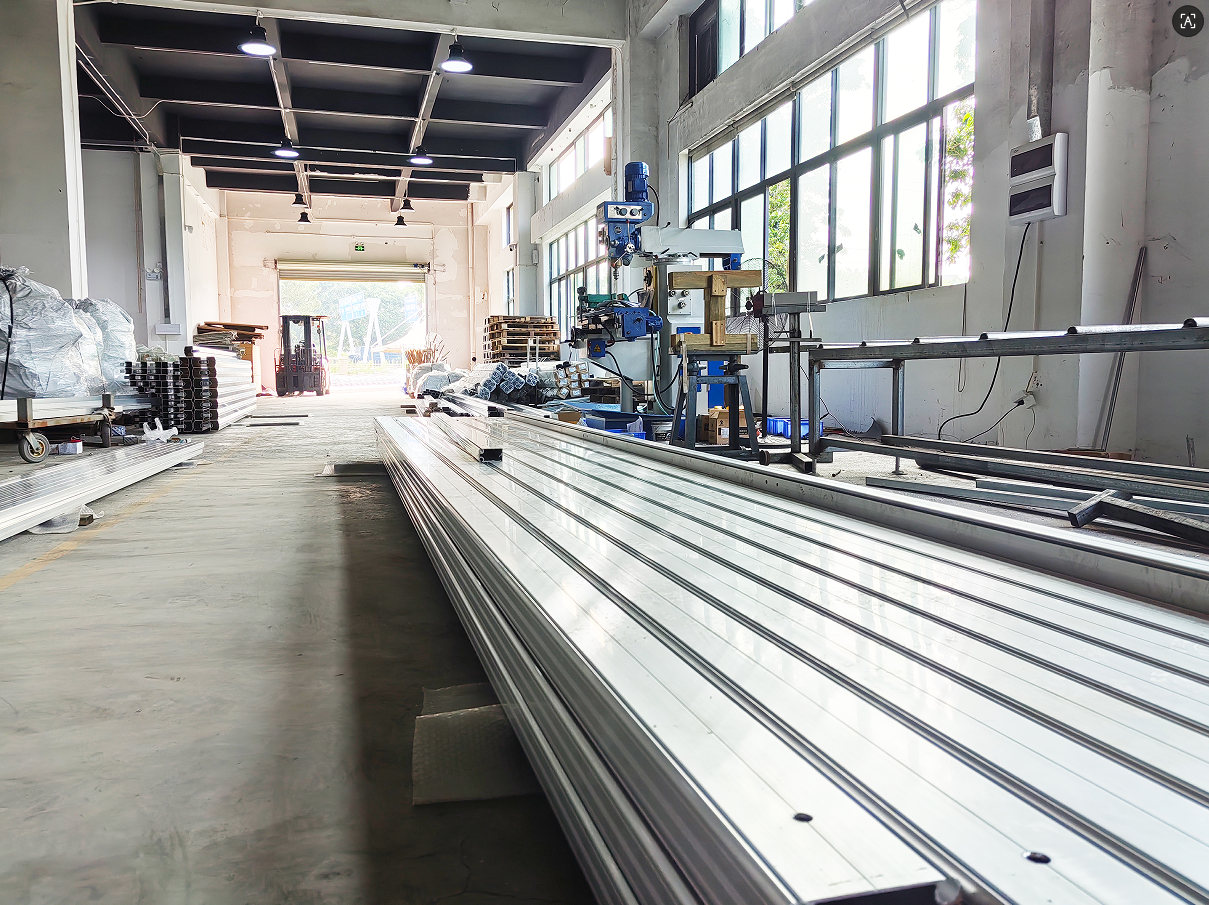
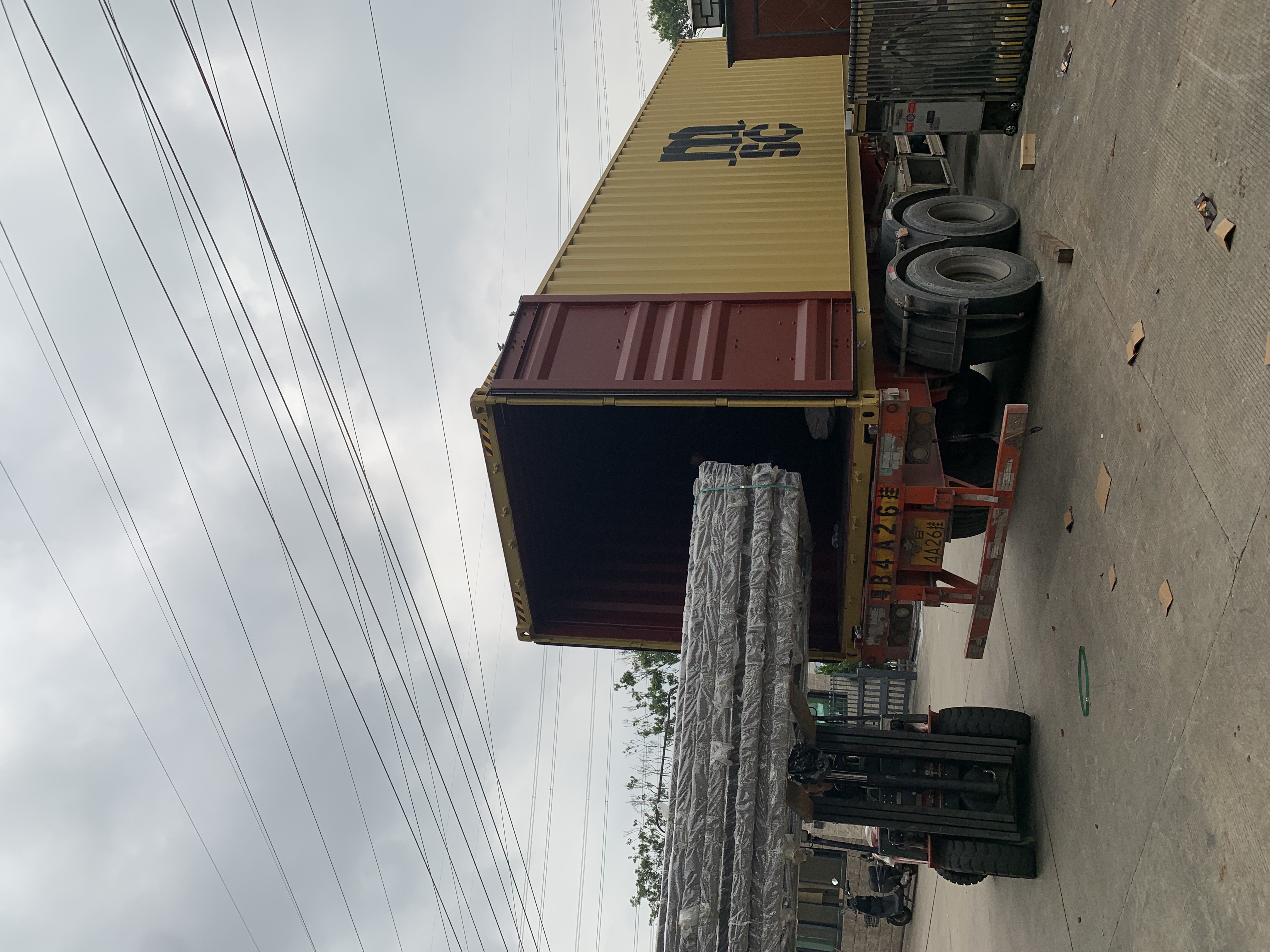
Quality control runs through raw material inspection, in-process quality control, pre-shipment inspection and optional third-party inspection. Production capacity is quoted at 50–80 luxury tent units per month depending on project size, with annual output in the range of 600–900 units. Lead time is 15–20 days for standard models and 20–30 days for customized projects; delivery is quoted at 7–15 days domestically and 15–30 days for overseas orders.
Commercial terms: minimum order quantity of one unit with a sample available; delivery as EXW, FOB, CIF or DDP; acceptance through factory inspection and photo or video confirmation before shipment; payment by T/T or L/C, negotiable for large orders. After-sales covers installation guidance, engineering drawings, 24/7 technical support, spare parts supply and maintenance support, with remote or on-site project assistance.
FAQ
Which certification covers the Safari Tent, and what exactly does it state?
The Safari Lodge scope is covered by a General Product Safety Directive Attestation of Conformity (CE), certificate number M.2024.206.C96444, issued by UDEM for the EU market against EN ISO 5912:2020. It was issued on 31 January 2024 and is valid until 30 January 2029, and its scope covers tents including Safari Lodge. The Safari Tent specification separately states a B1 fire-retardant rating. Buyers should obtain the certificate copy and confirm that the ordered model and the destination market fall inside the listed scope before signing.
Can the Safari Tent be adapted to a camp with in-tent bathrooms, gear storage and branding?
Customization covers size and layout, tent structure design, fabric material (PVC, PVDF or insulation), frame material, interior layout and furniture, bathroom integration, logo branding and color. For the Safari Tent range, the documented frame options are finish anti-corrosion solid wood or heavy-duty galvanized steel. Bathroom integration and interior layout change the internal plan, so they must be specified before the structure design is frozen; engineering support and drawings are provided at that stage. Confirm the options available for the specific order in the quotation.
What budget should be planned per unit, and what else affects landed cost?
Stars Glamping’s published guidance places standard safari tent packages for 2–4 persons between USD 8,190 and USD 15,710 depending on inclusions, so the fit-out scope — bathroom, furniture, insulation, branding — moves the number within that range. Landed cost also includes freight, foundations, site works and installation support. For US imports, synthetic-fibre tents other than backpacking models are listed under HTS 6306.22.90.30 with an 8.8% general duty rate; confirm the classification for the actual product and port before finalizing the budget.
Can a single tent be ordered as a sample before committing to a full camp?
Yes. The minimum order quantity is one unit and a sample is available. Acceptance is handled through factory inspection and photo or video confirmation before shipment, and third-party inspection is available on request. Delivery terms can be arranged as EXW, FOB, CIF or DDP, with T/T or L/C payment and negotiable terms for large orders.
How long does a multi-unit order take from confirmation to delivery?
Standard models are quoted at 15–20 days and customized projects at 20–30 days, with monthly capacity of 50–80 luxury tent units depending on project size; domestic delivery is 7–15 days and overseas delivery 15–30 days. On an adventure camp with bathrooms and branded interiors, the customization stage sets the schedule, so freeze the layout early. To start a project, send the site plan and unit mix to Stars Glamping at info@stars-glamping.com or +86-133 2645 9475, or download the product brochure for the full specification set.
Conclusion
On an adventure camping lodge or outdoor sports site, the Safari Tent decision reduces to three choices made in the right order: the model by documented classification, the footprint by the unit’s role in the site plan, and the customization package by the operating plan. Because the envelope platform — 850g/m² PVC coated polyester cover, breathable Oxford canvas lining, ≥3000mm H₂O waterproofing, B1 fire-retardant rating, 100km/h wind resistance, 60kg/m² snow load, -25℃ to +60℃ operating range and 8–12 year service life — is identical across Epic, Vega and Lodestar, the comparison is about fit rather than performance.
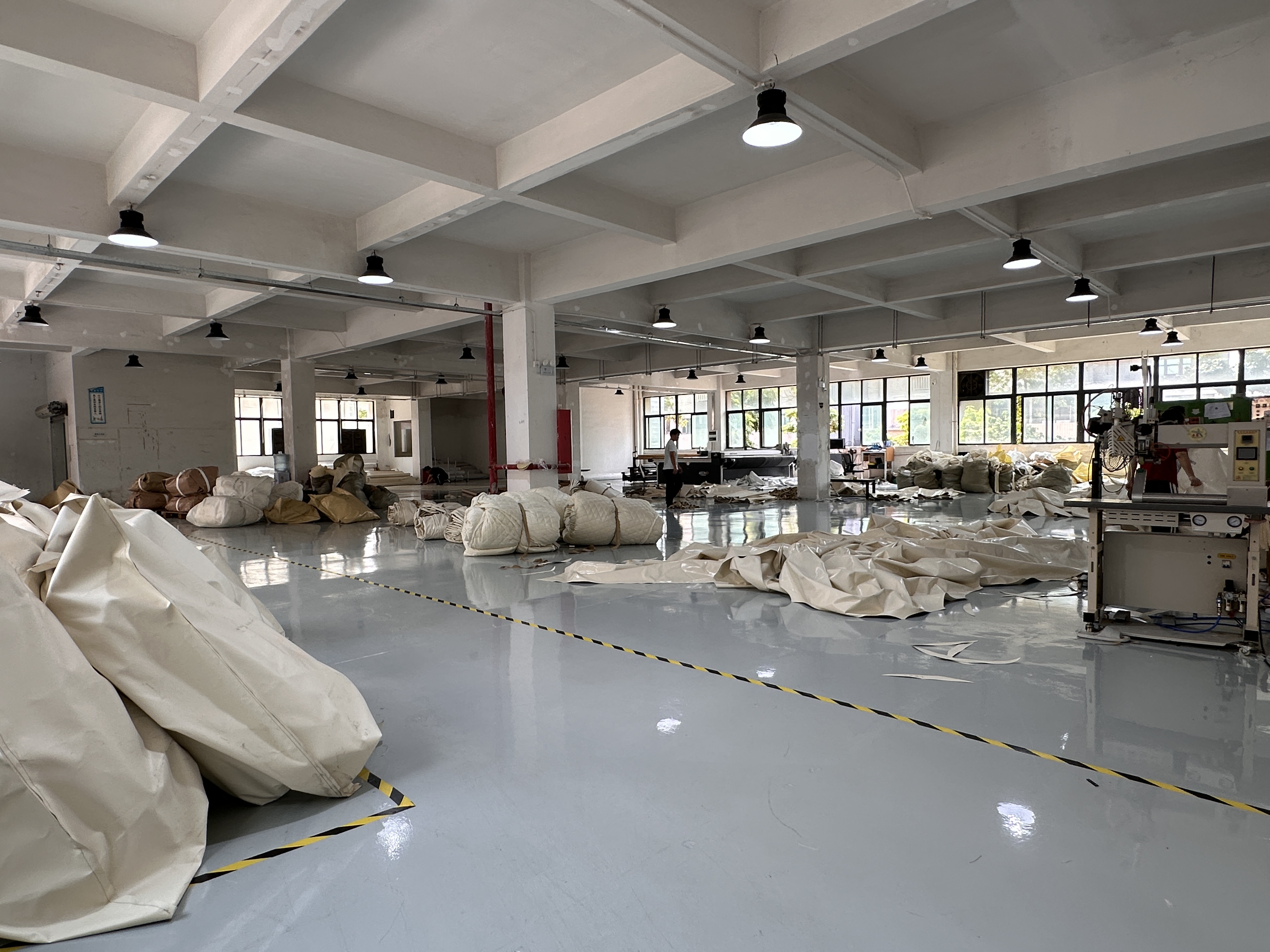
STARS GLAMPING TENT CO.,LTD manufactures glamping domes, safari tents and luxury tents from a 20,000㎡ manufacturing base in Nansha District, Guangzhou, with a 4,000㎡ simulation exhibition hall, a six-person R&D team, 54 national patents and roughly 90% of output exported to markets including Southeast Asia, the Middle East, Africa, Europe, North America, South America and Australia.
Plan Your Adventure Camp Layout with Stars Glamping
Send the site plan, the unit mix and the climate data, and the team will return a model and size proposal with drawings. Samples can be ordered as a single unit, and one-stop manufacturing and installation support covers the project from layout to handover.
Website: www.starstent.com | Email: info@stars-glamping.com | Tel / WhatsApp: +86-133 2645 9475
Product brochure (PDF): Download the Stars Glamping catalogue
Have Questions or Need More Details?
Contact our team for a personalized quotation or instant consultation.
Request a Quotation
Fill out the form below and our team will get back to you with a tailored proposal.
WhatsApp Direct Chat
Prefer to chat in real-time? Message us on WhatsApp for instant assistance & quick answers.
- Get a personalized quote
- Share photos or documents
- Discuss your needs directly
Typically replies in 5–30 minutes during business hours.