
Safari Tent Material Specifications: A Technical Guide to PVC Fabric, Canvas, and Galvanized Steel
A safari tent is only as durable as the three material systems that carry its loads and seal its envelope: the frame, the outer cover, and the inner lining. In the Safari Tent platform supplied by Stars Glamping, those three systems are defined as a finish anti-corrosion solid wood or heavy-duty galvanized steel frame, an 850g/m² PVC coated polyester cover fabric, and a breathable, custom-made Oxford canvas lining. Those choices are what make the published performance figures achievable: a waterproof rating of ≥3000mm H₂O, a B1 fire-retardant classification, wind resistance up to 100km/h (Level 9 wind), a snow load of 60kg/m², an operating range of -25℃ to +60℃, and a service life of 8–12 years.
This guide is written for the people who have to defend those numbers in a technical review — resort developers, lodge engineers, procurement managers, and glamping operators building in desert, jungle, riverside, and wildlife settings. It explains what each specification actually controls, where the thresholds sit, and how material decisions should be sequenced when a project moves from evaluation into execution.
Why Material Specifications Are the Real Decision Point
Most safari tent problems that surface in year two or year three are not installation failures. They are specification failures. A cover that was described as "heavy duty" but never quantified in grams per square metre will lose tensile strength and coating integrity faster than a specified fabric. A waterproof claim without a H₂O column rating cannot be compared against a competing quotation. A frame described as "wood" without a stated anti-corrosion finish behaves differently in coastal humidity than in dry desert air.
The practical consequence is that material specifications, not floor plans, determine the operating cost of a lodge unit. Replacing a failed cover or treating a degraded frame interrupts bookings and consumes maintenance budget that was never planned for. Specifying correctly at the contract stage is the cheapest form of durability available to a project.
A defensible safari tent specification sheet should quantify, at minimum:
- Cover fabric weight in g/m², plus coating type (PVC or PVDF)
- Waterproof rating expressed in mm H₂O, with the test standard named
- Fire classification (for example B1, or B1 / M2)
- Wind resistance in km/h, with the corresponding wind level
- Snow load in kg/m²
- Operating temperature range in ℃
- Expected service life in years
Decision rule: if a supplier cannot state cover weight, waterproof column, fire classification, wind speed, snow load, temperature range, and service life as discrete values, the quotation is not yet technically comparable. Ask for the values before comparing price.
Industry Background: Growing Demand, Tightening Compliance
Material specification has become a commercial issue because the accommodation segment it serves is expanding quickly. According to Zion Market Research, the global glamping tents market was valued at USD 3,124.89 million in 2023 and is projected to reach USD 6,484.86 million by 2032. Grand View Research estimates the safari tourism market will reach USD 66.9 billion by 2033, growing at a CAGR of 7.7% from 2026. Africa recorded an 8% increase in international arrivals in 2025, reaching 81 million travellers, according to UNWTO data reported by Grand View Research.
Growth of that scale puts more structures into climates that punish weak materials — high-UV desert plateaus, humid jungle edges, and riverside sites with sustained moisture exposure. At the same time, the compliance environment has tightened. In North America, tent flame retardancy is commonly framed by standards such as CPAI-84 and NFPA 701 for commercial use, while the European route for this product category runs through the General Product Safety Directive and EN ISO 5912:2020.
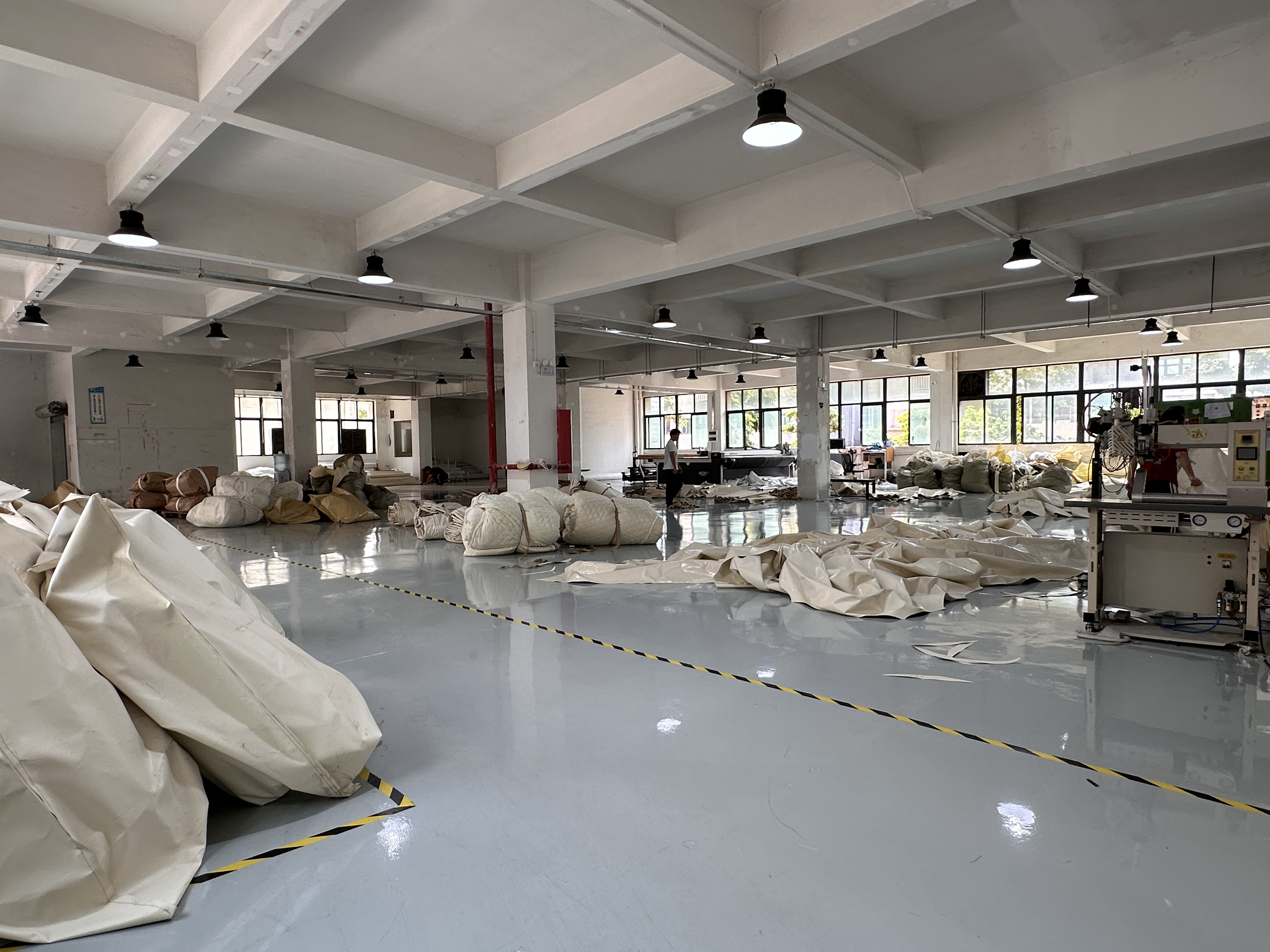
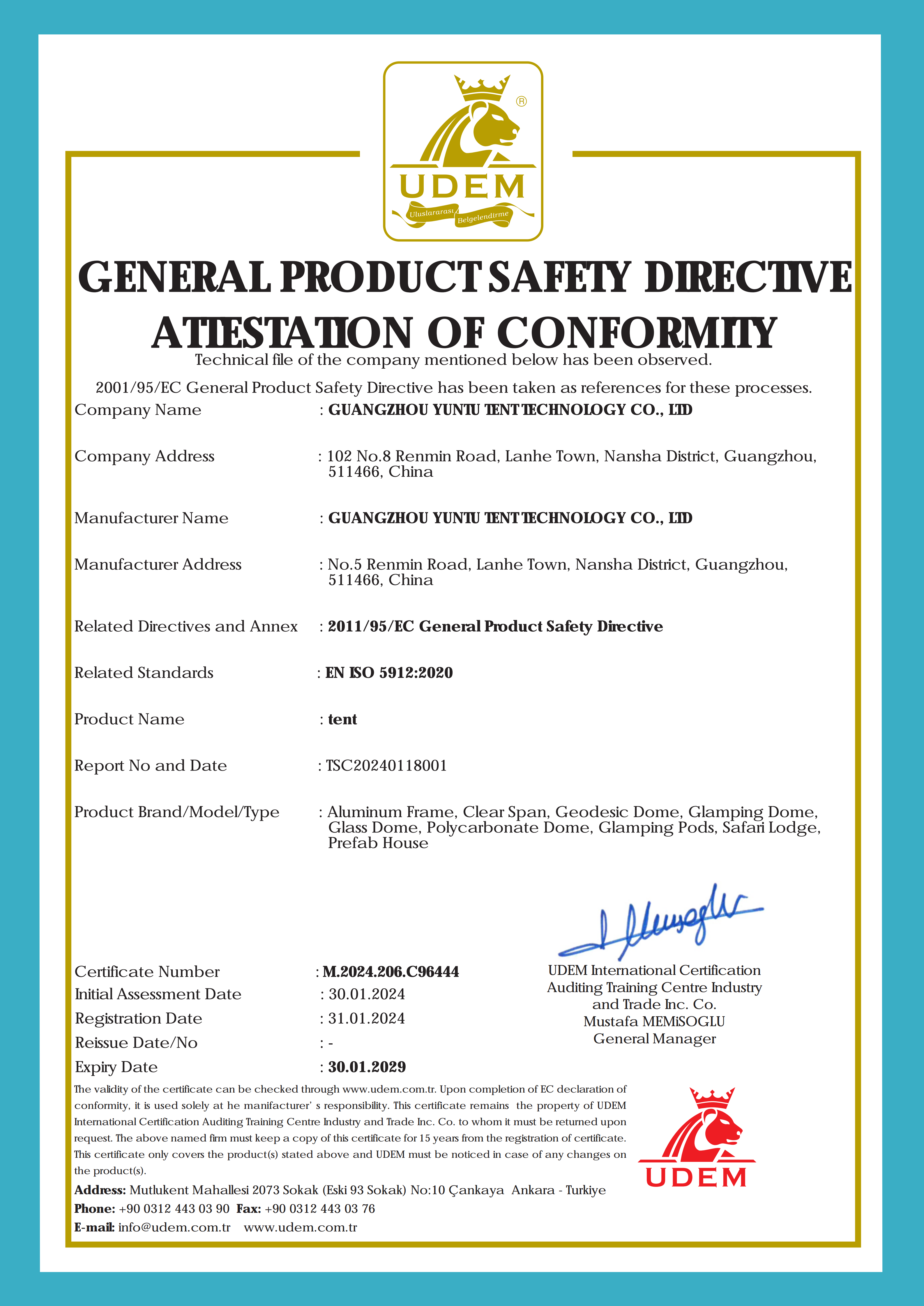
Stars Glamping, formally STARS GLAMPING TENT CO.,LTD, is a manufacturer of glamping domes, safari tents, and luxury tents based in Nansha District, Guangzhou, China. The company was founded in 2018 and operates a 20,000㎡ manufacturing base with a 4,000㎡ simulation exhibition hall, exporting roughly 90% of output to markets including Africa, the Middle East, Southeast Asia, Europe, North America, South America, and Australia. Its safari tents are covered by a CE Attestation of Conformity (certificate number M.2024.206.C96444), issued by UDEM under EN ISO 5912:2020, with a validity period from 31 January 2024 to 30 January 2029 and a scope that explicitly includes Safari Lodge structures.
Material-by-Material Specification Breakdown
1. The Frame: Anti-Corrosion Solid Wood or Heavy-Duty Galvanized Steel
The frame determines the wind and snow envelope of the building. The Safari Tent – Epic, Safari Tent – Lodestar, and Safari Tent – Vega models are specified with a frame of finish anti-corrosion solid wood or a heavy-duty galvanized steel frame. On that platform, wind resistance reaches up to 100km/h (Level 9 wind) with a snow load of 60kg/m² and an operating range of -25℃ to +60℃.
Where a project requires a higher structural class, the Luxury Tent platform uses a steel pipe frame and reaches wind resistance up to 120km/h (Level 10 wind) with a snow load of 80kg/m² and an operating range of -30℃ to +70℃, supporting a service life of 25–30 years on the Tethys, Villa, Octagon, and Shell models. The Luxury Tent – Pisces combines solid wood with a steel pipe frame, carrying the same 120km/h wind rating and 80kg/m² snow load but with a 10–15 year service life.
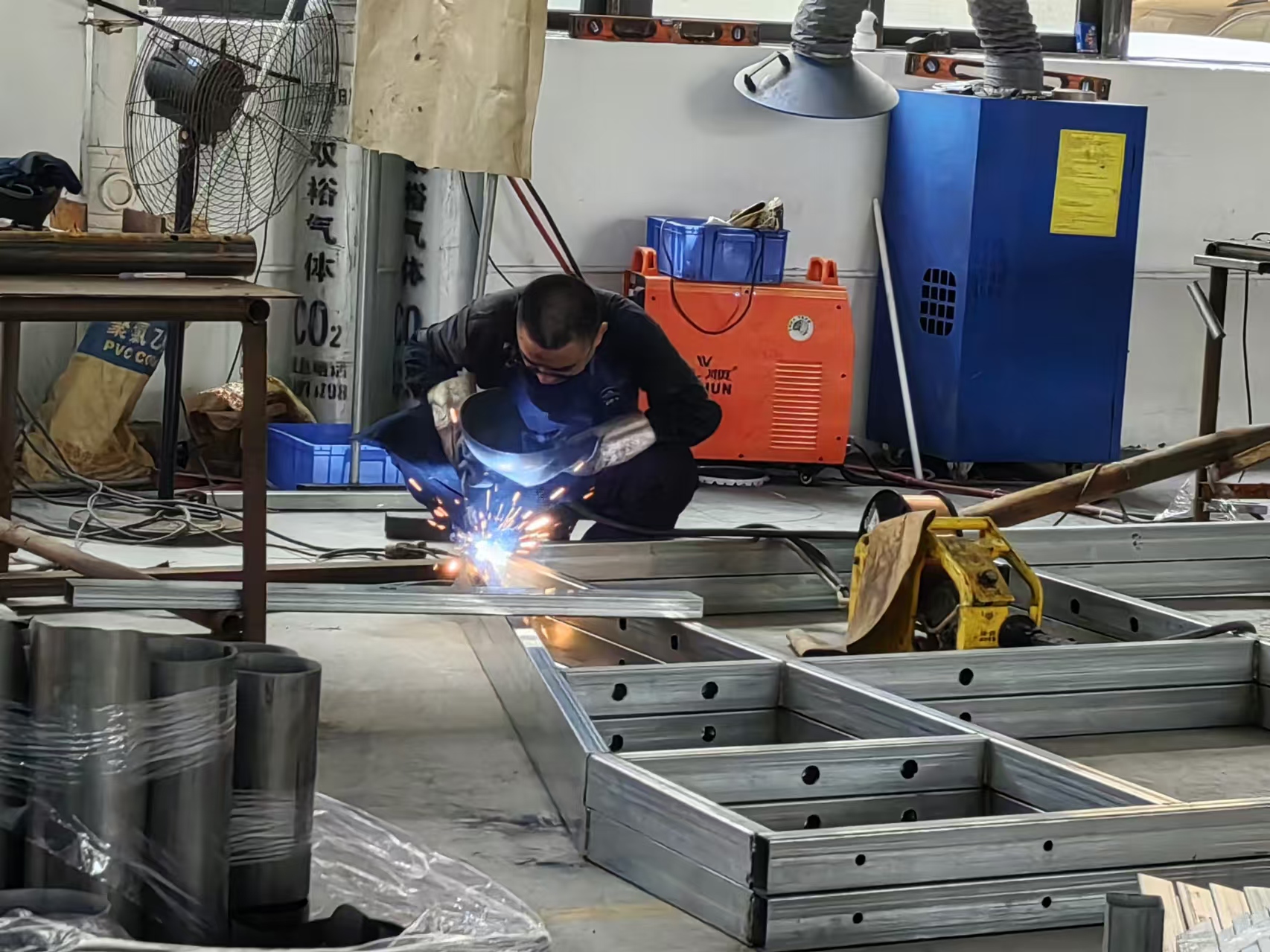
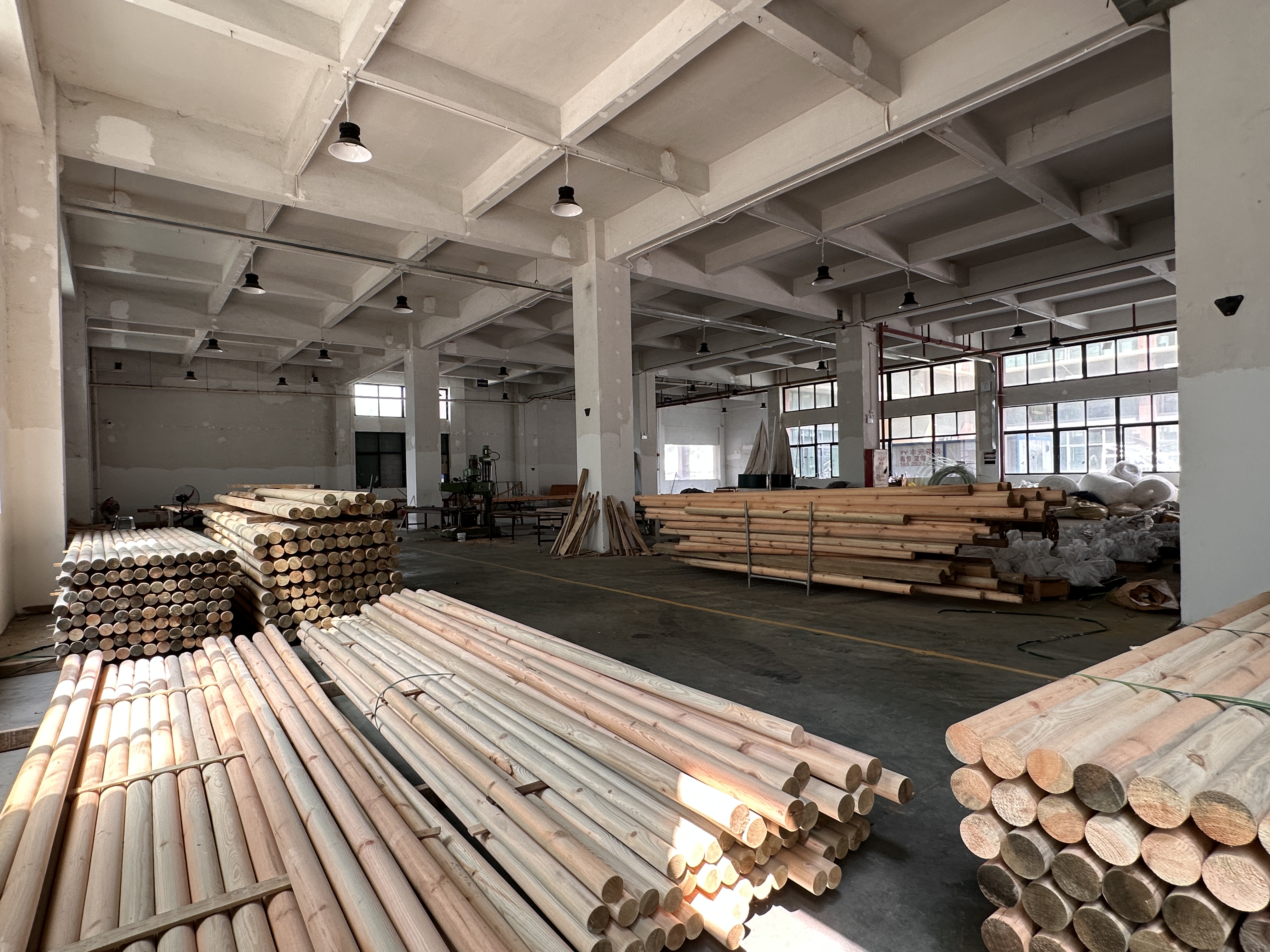
The frame choice is a climate decision as much as an aesthetic one. Anti-corrosion finished solid wood supports the wood-style structure design characteristic of the Safari Tent series and suits projects where visual integration with a natural setting is a stated design requirement. Heavy-duty galvanized steel is the specification of choice where the structural demand is higher or where site humidity and salt exposure make surface protection harder to maintain. In both cases the finish — anti-corrosion treatment on timber, galvanizing on steel — is part of the specification and should be written into the purchase order, not assumed.
2. The Outer Cover: 850g/m² PVC Coated Polyester Fabric
The cover is the component most often mis-specified, because "PVC tent fabric" describes a family of products rather than a grade. The Safari Tent series uses an 850g/m² PVC coated polyester fabric with a waterproof rating of ≥3000mm H₂O, UV-resistant and anti-fading treatment, a B1 fire-retardant classification, and a temperature tolerance of -25℃ to +60℃. Those parameters are what support the published 8–12 year service life.
For permanent, higher-specification hospitality structures, the Luxury Tent platform moves to a 1050g/m² PVDF architectural membrane fabric with a waterproof rating of ≥5000mm H₂O, B1 / M2 fire-retardant classification, UV-stabilised and anti-ageing treatment, and a temperature range of -30℃ to +70℃.
Two specification habits matter here. First, the gram weight and the coating chemistry should be quoted together — 850g/m² PVC coated polyester and 1050g/m² PVDF architectural membrane are different products with different service expectations, and a quotation that names only "PVC fabric" leaves the comparison unresolved. Second, the waterproof figure should always be attached to the unit mm H₂O. A number without a unit, or a claim such as "100% waterproof" with no column rating, cannot be verified or compared.
3. The Inner Lining: Breathable Oxford Canvas
Interior comfort in a safari tent is governed less by the outer cover than by the lining behind it. The Safari Tent series uses a custom-made Oxford canvas fabric as the inner lining, specified as breathable. The breathability is functional rather than decorative: it allows moisture vapour generated inside the unit to migrate away from the interior surface instead of condensing on the inside of a sealed membrane.
Where a project targets cold-season occupancy, the fabric specification can be extended with an insulation option. Fabric material selection across the range covers PVC, PVDF, and insulation, and the lining specification should be confirmed at the same time as the cover specification so the two layers are designed as a system.
Performance Criteria: Reading the Numbers Correctly
The following thresholds come from the published specification of the Safari Tent and Luxury Tent ranges and can be used directly as evaluation criteria in a technical review.
| Parameter | Safari Tent series reference value | What it controls on site |
|---|---|---|
| Cover fabric | 850g/m² PVC coated polyester | Tensile strength, coating durability, replacement interval |
| Inner lining | Custom-made Oxford canvas (breathable) | Condensation control and interior comfort |
| Frame | Finish anti-corrosion solid wood or heavy-duty galvanized steel frame | Structural envelope and finish maintenance |
| Waterproof rating | ≥3000mm H₂O | Rain-driven moisture and sustained wet-weather exposure |
| Fire rating | B1 fire-retardant | Fire-performance compliance of the fabric envelope |
| Wind resistance | Up to 100km/h (Level 9 wind) | Exposed plateau, coastal and ridge sites |
| Snow load | 60kg/m² | Roof loading in cold-climate installations |
| Temperature resistance | -25℃ ~ +60℃ | Desert heat and winter cold operating range |
| Service life | 8–12 years | Replacement planning and total cost of ownership |
| Standard sizes | 20㎡ / 30㎡ / 40㎡ / 50㎡ (customizable) | Unit economics and site density planning |
Beyond the fabric and frame figures, two features are worth confirming at specification stage because they interact with the material build-up: large panoramic windows and mesh screens. Both are part of the Safari Tent series feature set, and their placement should be agreed alongside the frame design rather than added after the cover layout is fixed.
Step-by-Step: Specifying Safari Tent Materials for a Project
Material decisions are easier to defend when they are made in a fixed order. The sequence below reflects how a customized safari tent project is normally specified and built.
- Define the climate envelope first. Record the site's expected maximum and minimum temperatures, design wind speed, and snow load. The Safari Tent series is rated for -25℃ to +60℃, up to 100km/h wind, and 60kg/m² snow; the Luxury Tent platform extends that to -30℃ to +70℃, up to 120km/h wind, and 80kg/m² snow. If the site sits outside the smaller envelope, the platform decision is made here, not later.
- Select the frame material and finish. Choose between a finish anti-corrosion solid wood frame and a heavy-duty galvanized steel frame. Frame material options across the wider range also include steel and aluminum. Write the finish into the specification.
- Fix the cover weight and coating. Specify 850g/m² PVC coated polyester for the Safari Tent platform, or 1050g/m² PVDF architectural membrane fabric where a longer service life and higher waterproof rating are required.
- Confirm the waterproof rating in mm H₂O. The Safari Tent series is rated at ≥3000mm H₂O; the Luxury Tent platform at ≥5000mm H₂O.
- Confirm the fire classification. The Safari Tent platform is specified as B1 fire-retardant; the Luxury Tent platform as B1 / M2. If the destination market is in North America, reference the applicable tent flame-retardancy standards separately in the compliance file.
- Specify the lining and insulation. Set the breathable custom-made Oxford canvas lining and confirm whether an insulation layer is required for cold-season occupancy.
- Agree size, layout, and fit-out. Standard sizes are 20㎡, 30㎡, 40㎡, and 50㎡, all customizable. Customization covers size and layout, tent structure design, interior layout and furniture, bathroom integration, logo branding, and colour customization.
- Lock the quality-control and acceptance route. The production process runs raw material inspection, in-process quality control, and pre-shipment inspection, with third-party inspection available on request. Acceptance is based on factory inspection and photo/video confirmation before shipment.
- Confirm commercial and logistics terms. MOQ is 1 unit with a sample available. Delivery terms offered are EXW, FOB, CIF, and DDP, with payment by T/T or L/C and negotiable terms for large orders.
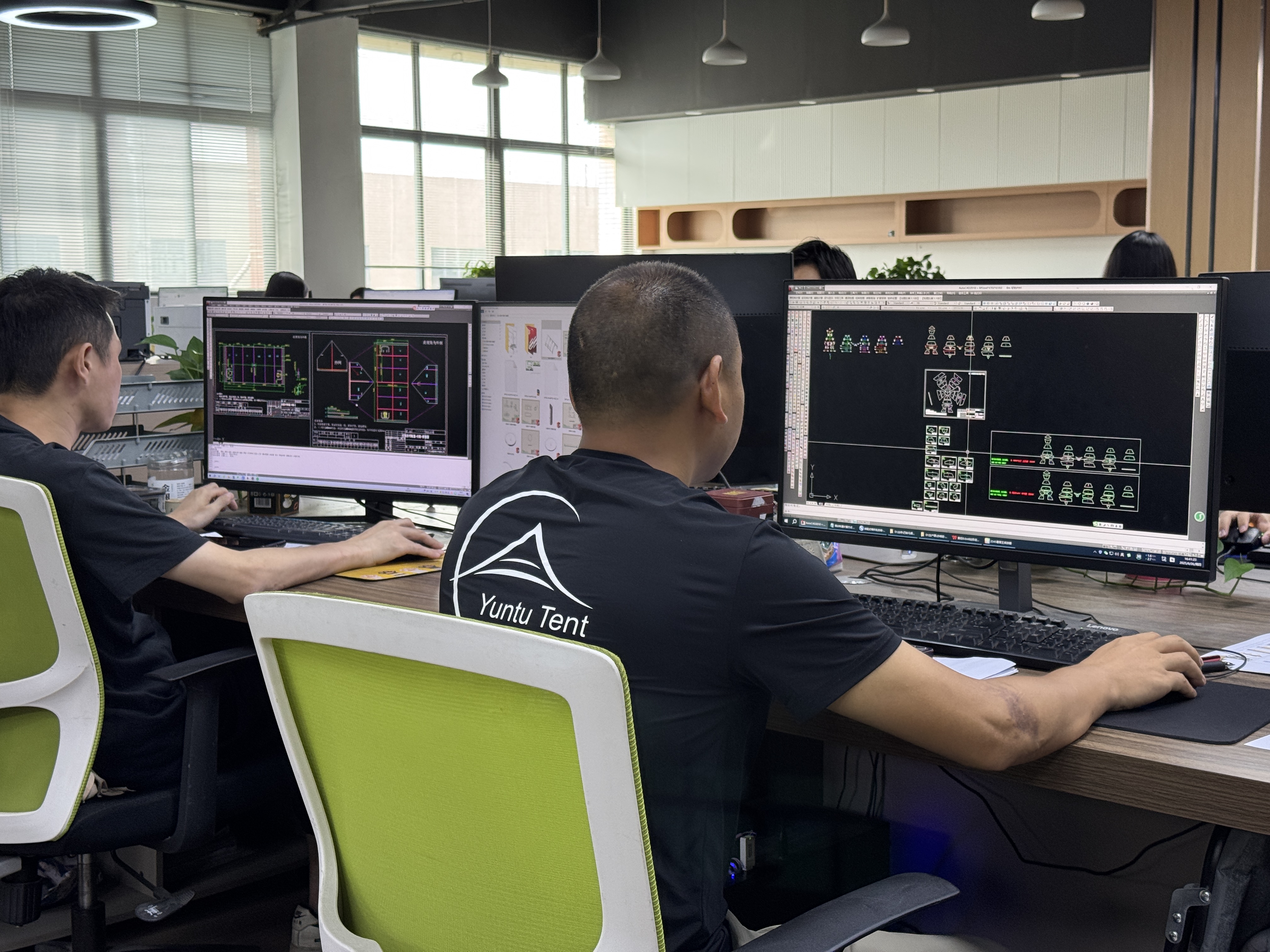
Stars Glamping supports this process through OEM production services, ODM design and production services, and engineering support, together with custom luxury tent manufacturing and glamping project solution provision. The company holds 54 national patents and runs a 12-step quality inspection system in production, with independent production capability across the whole process.
Use Cases: Matching Materials to Site Conditions
The same specification sheet produces different priorities depending on where a unit is installed.
- Desert camp. UV exposure and daytime heat drive the decision. The UV-resistant, anti-fading treatment on the 850g/m² PVC coated polyester cover and the +60℃ upper operating limit of the Safari Tent series are the two parameters to verify first. Mesh screens and large panoramic windows support ventilation planning.
- Jungle resort. Sustained humidity makes the frame finish and the breathable lining the critical items. A finish anti-corrosion solid wood or heavy-duty galvanized steel frame addresses the structural side, while the custom-made breathable Oxford canvas lining manages interior moisture.
- Riverside lodge. The waterproof rating carries the most weight. A ≥3000mm H₂O cover on the Safari Tent platform, or ≥5000mm H₂O on the Luxury Tent platform, defines the rain-exposure envelope.
- Wildlife camp and national park lodge. Fire classification moves to the front of the review. The B1 fire-retardant rating on the Safari Tent series, and B1 / M2 on the Luxury Tent series, should be read together with the project's local flame-retardancy obligations.
- Insulated safari tent for winter use. Cold-season operation requires the insulation option in the fabric specification and a site temperature review against the -25℃ lower limit of the Safari Tent series — or the -30℃ lower limit of the Luxury Tent platform where the site demands more margin.
Comparison Table: Safari Tent and Luxury Tent Material Specifications
The table below compares published material specifications across the models discussed in this guide. All values are manufacturer-specified figures and can be used as the basis for a like-for-like technical comparison.
| Specification | Safari Tent – Epic / Lodestar / Vega | Luxury Tent – Pisces | Luxury Tent – Tethys / Villa / Octagon / Shell |
|---|---|---|---|
| Frame material | Finish anti-corrosion solid wood / heavy-duty galvanized steel frame | Solid wood + steel pipe | Steel pipe |
| Cover material | 850g/m² PVC coated polyester fabric | 850g/m² PVC polyester fabric | 1050g/m² PVDF architectural membrane fabric |
| Inner lining | Oxford canvas fabric (breathable) | Insulated canvas wall system | Insulated glass wall system |
| Waterproof rating | ≥3000mm H₂O | ≥5000mm H₂O | ≥5000mm H₂O |
| Fire rating | B1 fire-retardant | B1 / M2 fire-retardant | B1 / M2 fire-retardant |
| Wind resistance | Up to 100km/h (Level 9 wind) | Up to 120km/h (Level 10 wind) | Up to 120km/h (Level 10 wind) |
| Snow load | 60kg/m² | 80kg/m² | 80kg/m² |
| Temperature resistance | -25℃ ~ +60℃ | -30℃ ~ +70℃ | -30℃ ~ +70℃ |
| Service life | 8–12 years | 10–15 years | 25–30 years |
| Standard sizes | 20㎡ / 30㎡ / 40㎡ / 50㎡ | Customizable | Customizable |
Read as a decision tool, the comparison shows a clear escalation logic. Moving from the Safari Tent platform to the Luxury Tent platform raises the waterproof rating, the wind and snow envelope, and the temperature range, and extends service life. The trade-off is material and fit-out scope: the Safari Tent series is built around a breathable canvas-lined, wood-style structure, while the Luxury Tent range introduces insulated canvas or insulated glass wall systems. Neither is universally "better"; the correct choice is the one whose stated parameters cover the site conditions with a defined margin.
FAQ
Which certifications should a safari tent material specification reference?
In the European market, the relevant route for this product category is the General Product Safety Directive. Stars Glamping holds a CE Attestation of Conformity, certificate number M.2024.206.C96444, issued by UDEM, valid from 31 January 2024 to 30 January 2029, covering tents including Safari Lodge structures under EN ISO 5912:2020. Fabric fire performance is specified as B1 fire-retardant on the Safari Tent platform and B1 / M2 on the Luxury Tent platform. Buyers targeting North America should note that tent flame-retardancy requirements in that market are commonly defined by standards such as CPAI-84 and NFPA 701 for commercial use. Certificates should always be requested as documents rather than accepted as verbal assurance.
Can the frame, cover, and lining materials be customized for a specific site?
Yes. The manufacturer offers OEM production services, ODM design and production services, and engineering support, including custom luxury tent manufacturing and glamping project solution provision. Customization scope covers size and layout, tent structure design, fabric material (PVC / PVDF / insulation), frame material (steel / aluminum), interior layout and furniture, bathroom integration, logo branding, and colour customization. Standard safari tent sizes are 20㎡, 30㎡, 40㎡, and 50㎡, all of which are customizable.
What commercial terms apply, and what actually drives the cost of a safari tent?
The minimum order quantity is 1 unit, and a sample is available. Delivery terms offered are EXW, FOB, CIF, and DDP, with payment by T/T or L/C and negotiable terms for large orders. Material specification is the main cost driver: cover weight and coating chemistry (850g/m² PVC coated polyester versus 1050g/m² PVDF architectural membrane), frame material and finish, unit size and layout, and interior fit-out scope. Because these are the same variables that determine service life, cost comparison and service-life comparison should be done on the same specification sheet.
Can material quality be validated before full production begins?
Yes. MOQ is 1 unit with a sample available, which allows fabric weight, lining, and finish to be assessed directly. In production, the quality-control route consists of raw material inspection, in-process quality control, and pre-shipment inspection, with third-party inspection available on request. Acceptance before shipment is based on factory inspection together with photo and video confirmation.
What is the production lead time and capacity for a customized safari tent order?
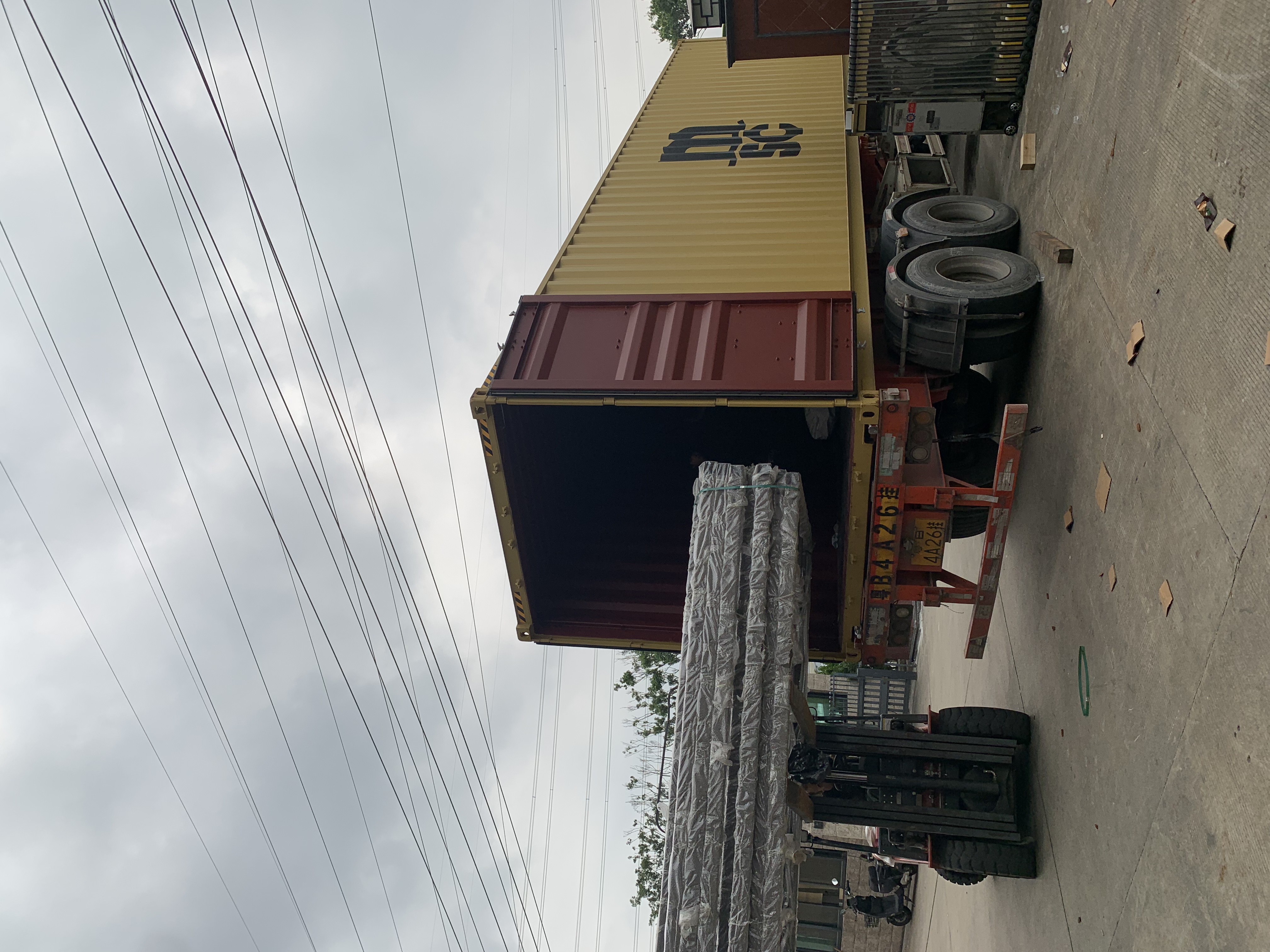
Lead time is 15–20 days for standard models and 20–30 days for customized projects. Monthly production capacity is 50–80 luxury tent units depending on project size, with annual output of 600–900 luxury tent units. Stars Glamping is based in Nansha District, Guangzhou, and serves clients across Africa, the Middle East, Southeast Asia, Europe, North America, South America, and Australia, supported by a 24-hour after-sales response mechanism, installation guidance, engineering drawings, spare parts supply, and long-term technical support.
Next Step: Turn Site Conditions Into a Verified Material Specification
Share your site data — temperature range, design wind speed, snow load, fire-performance requirements, unit size, and fit-out scope — and the engineering team can return a material specification, layout drawing, and quotation for review. Samples are available at MOQ 1 unit.
Email: info@stars-glamping.com | Tel / WhatsApp: +86-133 2645 9475 | Website: www.starstent.com
Download the full product brochure: Stars Glamping Product Brochure (PDF)
Conclusion
Safari tent material specifications are not marketing detail — they are the operating assumptions a lodge will live with for the next eight to twelve years. The 850g/m² PVC coated polyester cover, the breathable Oxford canvas lining, and the anti-corrosion solid wood or heavy-duty galvanized steel frame are what convert a ≥3000mm H₂O waterproof rating, a B1 fire-retardant classification, and a 100km/h wind rating from claims into measurable performance. On the Safari Tent – Epic, Lodestar, and Vega models, that combination is published alongside a 60kg/m² snow load, a -25℃ to +60℃ temperature range, and standard sizes of 20㎡, 30㎡, 40㎡, and 50㎡.
For engineers and procurement teams, the takeaway is procedural. Specify the climate envelope first, then the frame finish, then the cover grade and weight, then the waterproof column, fire classification, and lining — and only then compare price. Where a project needs a wider envelope, the Luxury Tent platform extends the same logic to ≥5000mm H₂O, 120km/h wind resistance, 80kg/m² snow load, a -30℃ to +70℃ range, and a 25–30 year service life on a steel pipe frame with PVDF architectural membrane fabric and insulated wall systems.
Have Questions or Need More Details?
Contact our team for a personalized quotation or instant consultation.
Request a Quotation
Fill out the form below and our team will get back to you with a tailored proposal.
WhatsApp Direct Chat
Prefer to chat in real-time? Message us on WhatsApp for instant assistance & quick answers.
- Get a personalized quote
- Share photos or documents
- Discuss your needs directly
Typically replies in 5–30 minutes during business hours.