
Safari Tent Partnerships and After-Sales: FAQ for Long-Term Resort Buyers
Safari Tent Partnerships and After-Sales: FAQ for Long-Term Resort Buyers
A safari tent is not a one-off purchase. For a resort, lodge or eco-camp, it is a ten-year operating asset that has to satisfy a specification, a compliance file, a construction schedule and an after-sales agreement — all at the same time. This partner FAQ answers the questions resort developers raise when they are evaluating a long-term safari tent relationship rather than comparing unit prices.
The questions below are grouped the way a real evaluation runs: compliance first, then capability and materials, then commercial parameters, sampling, lead time and finally the support model that continues after handover. Everything here refers to the Safari Tent range from Stars Glamping — the Epic, Vega and Lodestar models — and to the site conditions those tents are actually specified for: savannah, high UV, heavy rain, wind, remote and off-grid locations.
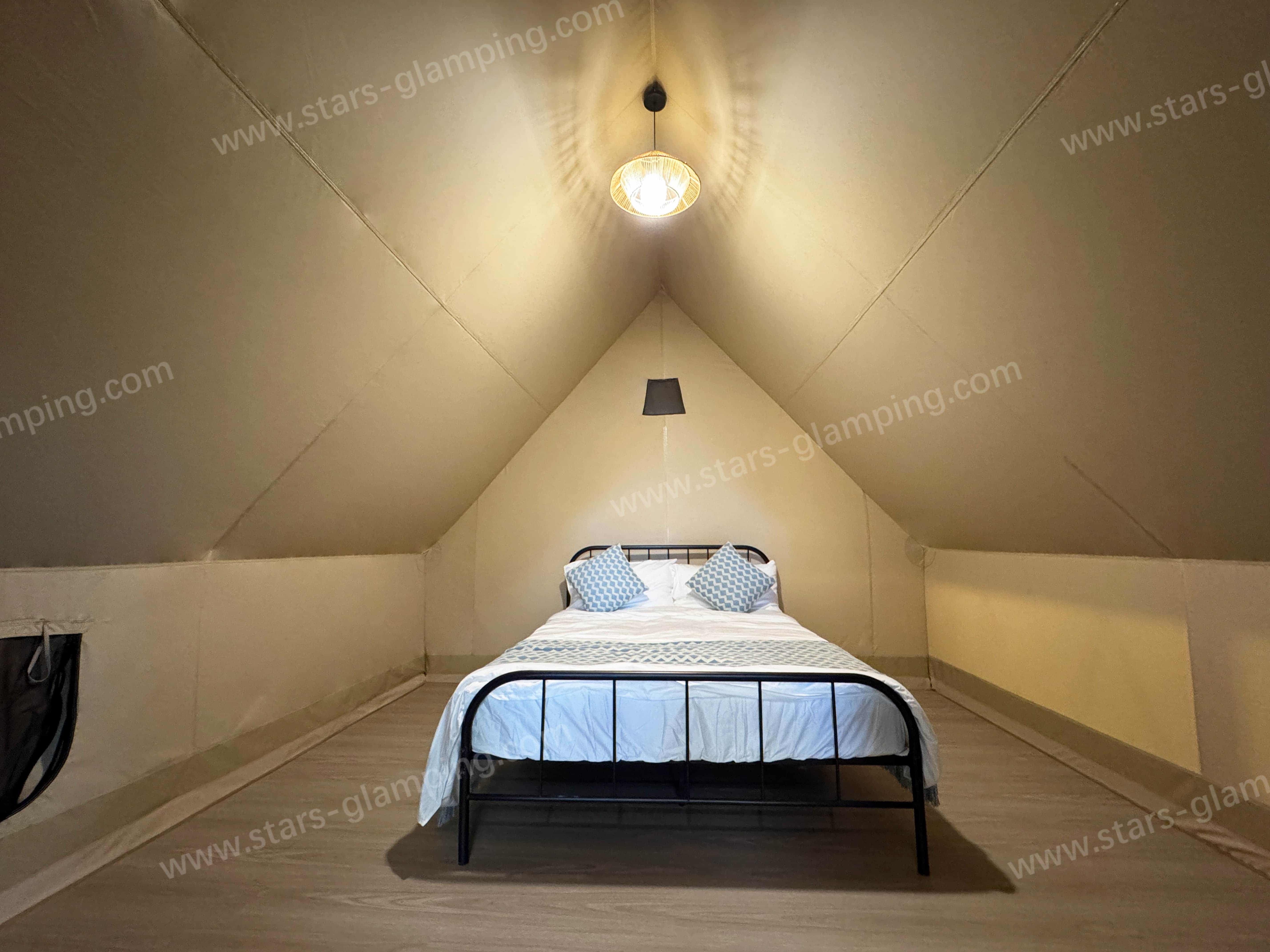
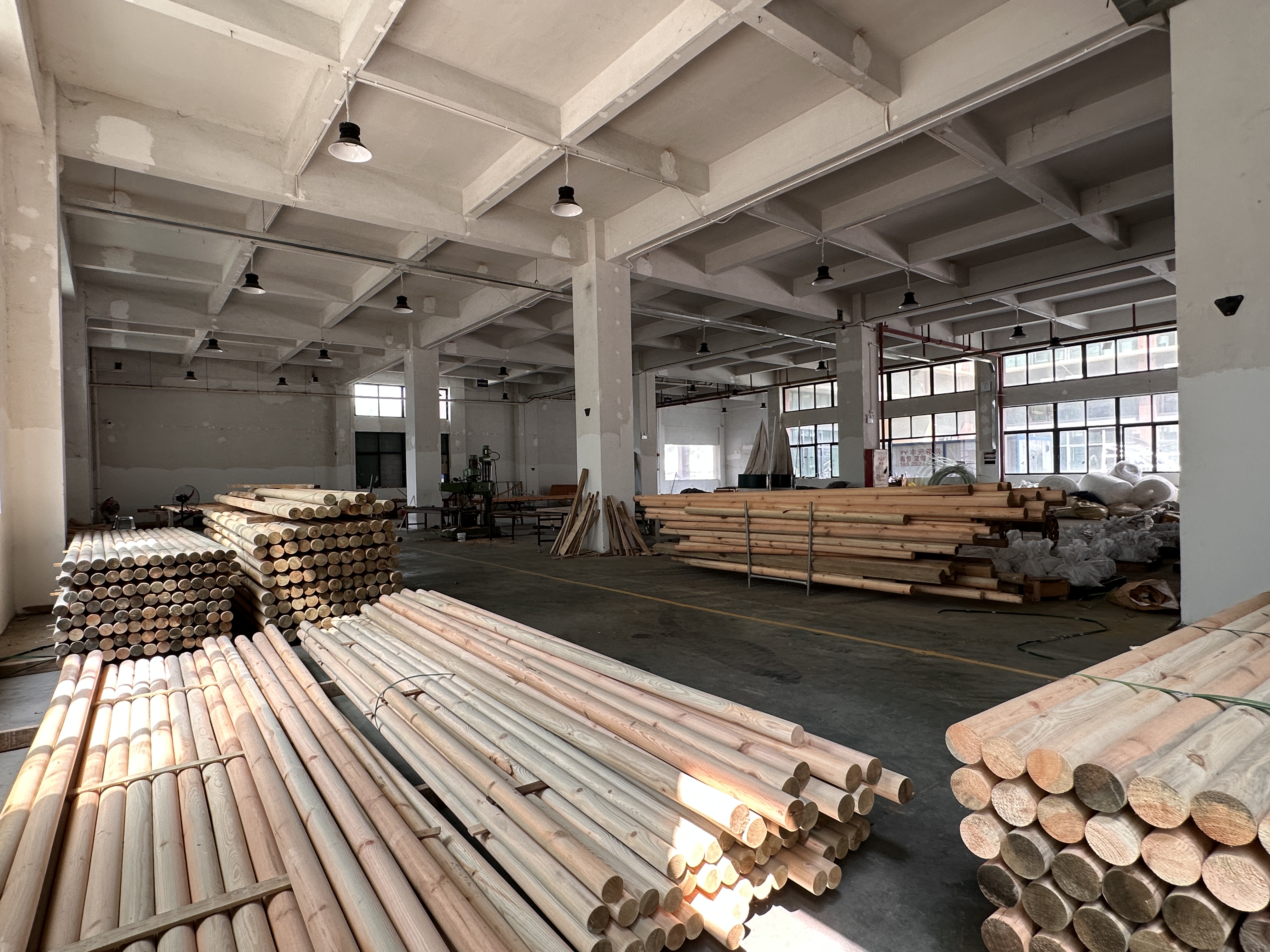
Stars Glamping Tent Co., Ltd. (STARS GLAMPING) is a Guangzhou-based manufacturer that designs, produces and installs luxury glamping tents and plans complete glamping camps, operating from a 20,000㎡ manufacturing base and a 4,000㎡ simulation exhibition hall in Nansha District, Guangzhou, China. The company was founded in 2018, exports roughly 90% of its output to markets including Southeast Asia, the Middle East, Africa, Europe, North America, South America and Australia, and has served more than 3,000 cultural and tourism projects with a customer repurchase rate above 80%.
Why Safari Tent Specifications and Support Break Down After Year One
Most safari tent failures are not manufacturing failures. They are specification and continuity failures, and they usually appear in one of three patterns.
The first pattern is a specification without a threshold. Brochures that say "highly waterproof" or "strong frame" give a procurement team nothing to verify against. A usable specification states a measurable limit — for example a waterproof rating expressed in mm H₂O, a fire rating expressed at a defined class, or a wind resistance expressed in km/h. Without thresholds, there is no way to check what was ordered against what was delivered, and no way to compare two suppliers on the same basis.
The second pattern is compliance that does not name the delivered model. A certificate that covers a supplier's general "tent products" is not the same as a certificate that names the model going onto your site. When a resort is financed, insured or inspected, the compliance file has to connect a specific model to a specific standard and a specific issuing body. Gaps here surface late, usually during permitting or a safety audit, when the replacement lead time is measured in months rather than days.
The third pattern is support that stops at the container. A safari tent reaches the site as a frame set, a fabric cover, an inner lining and hardware. It then has to be erected, commissioned, maintained through at least one full weather cycle, and repaired if a panel is damaged. If the supplier relationship ends at the bill of lading, the resort absorbs engineering questions, spare-part sourcing and repair decisions on its own.
The Market Context Behind Long-Life Safari Tent Assets
Safari and glamping accommodation demand is expanding on a scale that makes asset longevity a strategic issue rather than a maintenance detail.
The global glamping tents market was valued at USD 3,124.89 million in 2023 and is projected to grow to USD 6,484.86 million by 2032, according to Zion Market Research. Separately, the safari tourism market is expected to reach USD 66.9 billion by 2033, growing at a CAGR of 7.7% from 2026, according to Grand View Research. Africa's safari tourism market recorded an 8% increase in international arrivals in 2025, reaching 81 million travelers, based on figures reported by UNWTO and Grand View Research.
Growth forecasts for this sector are not uniform, and that divergence is worth understanding. Grand View Research tracks safari tourism at 7.7% CAGR from 2026, while Zion Market Research tracks the narrower glamping tents segment at 8.45% for 2024–2032. The two figures describe different market scopes — travel demand versus tent supply — which is why an operator's own occupancy and refurbishment cycle should drive specification decisions more than any single headline growth rate.
Two structural consequences follow for resort developers. First, demand growth pushes operators to add units and extend seasons, which increases the load on structures that were originally specified for shorter operating windows. Second, regulatory expectations for commercial tented accommodation continue to tighten. Safari tents in North America are commonly required to meet flame-retardancy standards such as CPAI-84 and NFPA 701 for commercial use, while EU-facing projects anchor to the CE framework and harmonised tent standards. In both cases, compliance is a live requirement across the asset's life, not a one-time purchase condition.
What Stars Glamping Provides as a Safari Tent Partner
Stars Glamping's safari tent programme is built around one specification platform, three lodge models and a customization layer — which means a resort can standardise on one supplier across several room types without renegotiating technical fundamentals each time.
The Safari Tent Range: Epic, Vega and Lodestar
The range contains three models: Safari Tent - Epic, Safari Tent - Vega and Safari Tent - Lodestar. In the company's product data, Epic and Lodestar are listed for wildlife lodges, jungle safari accommodation, eco tourism, national park lodges and adventure camping lodges, while Vega is listed as a wildlife lodge tent. Their published frame, cover, waterproofing, fire, wind, snow, temperature and size specifications are shared across the model family, so the choice between them is primarily a structure and layout decision rather than a performance trade-off.
Materials and Construction
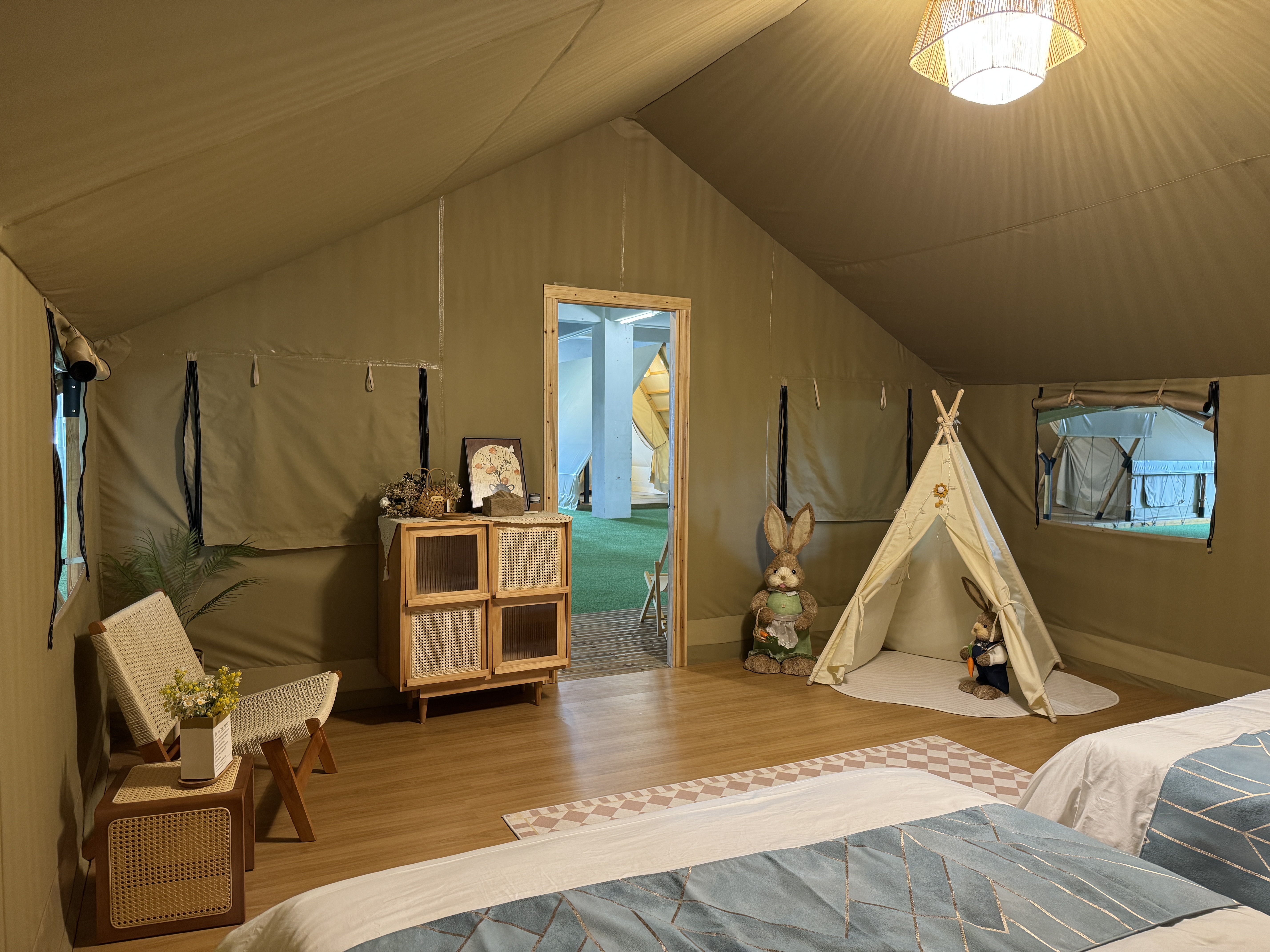
The safari tent frames are offered in anti-corrosion solid wood or a heavy-duty galvanized steel frame, with a wood-style structure design. The outer cover is 850g/m² PVC-coated polyester fabric, and the inner lining is breathable Oxford canvas fabric. The overall material build is stated as solid wood, PVC fabric and custom-made Oxford canvas. This matters to a resort for a practical reason: a fabric outer cover plus a breathable inner lining lets the tent manage interior condensation — the most common cause of mould complaints in humid and rainy camps — while keeping the outer shell weather-tight.
Performance Thresholds
The published performance thresholds for the safari tent range are: waterproof rating of ≥3000mm H₂O; B1 fire-retardant rating; wind resistance up to 100km/h (Level 9 wind); snow load of 60kg/m²; operating temperature range of -25℃ to +60℃; and a service life of 8–12 years. UV resistance and anti-fading treatment are applied to the cover fabric. For a lodge operator, these numbers translate into decisions: the -25℃ to +60℃ range underpins four-season or high-altitude operation; the 60kg/m² snow load sets the winter markets where a tent can be deployed without additional roof reinforcement; and the 8–12 year service life is the basis for depreciation and refurbishment planning.
Certification Scope
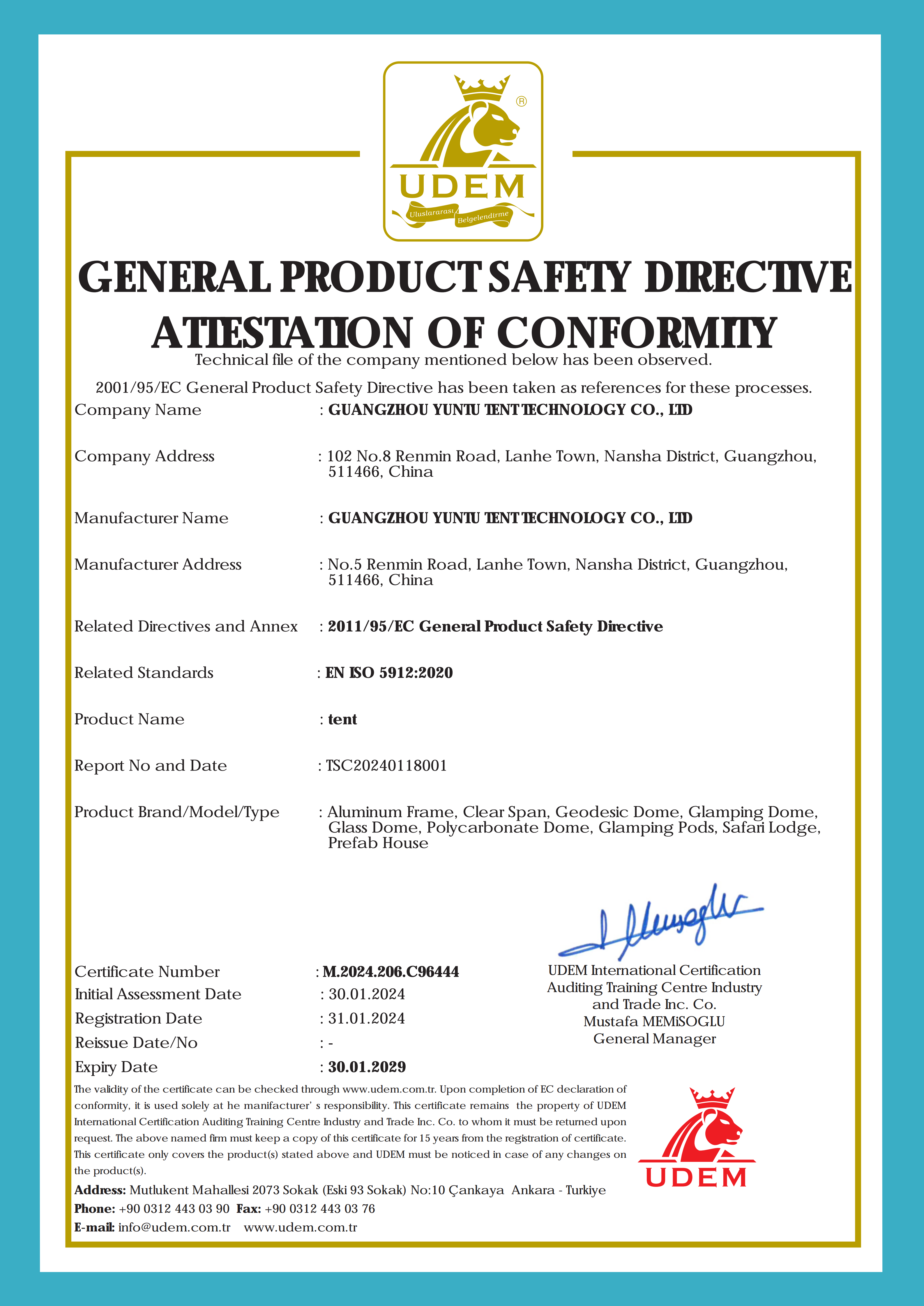
The Safari Tent - Epic is certified to the General Product Safety Directive Attestation of Conformity (CE), issued by UDEM under certificate number M.2024.206.C96444, applicable to the EU market and based on the standard EN ISO 5912:2020. The same attestation covers multiple tent structures, including Aluminum Frame, ClearSpan, Geodesic Dome, Glamping Dome, Glass Dome, Polycarbonate Dome, Glamping Pods, Safari Lodge and Prefab House.
Customization and Production
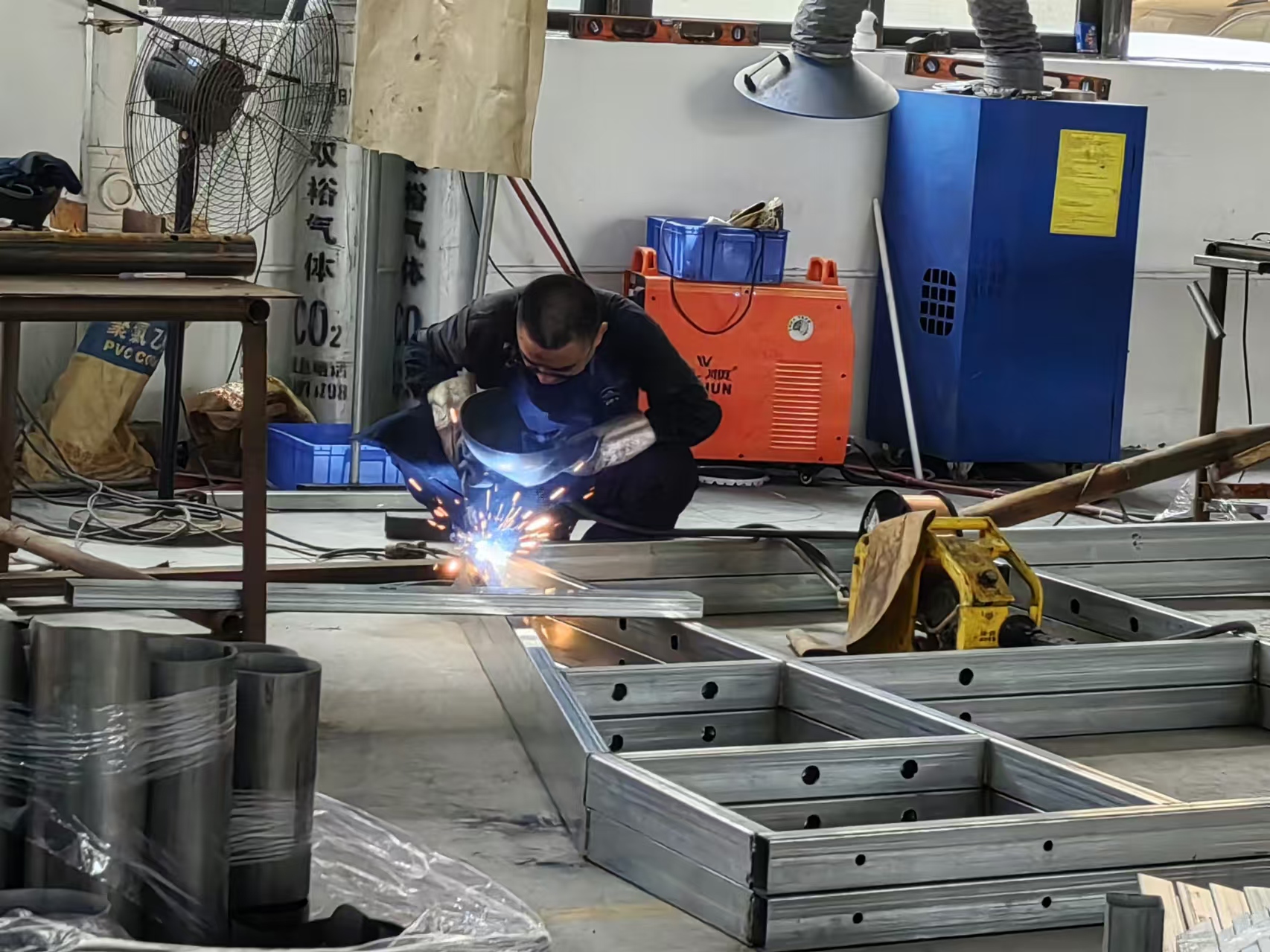
Stars Glamping operates an OEM and ODM model with engineering support, covering size and layout customization, tent structure design, fabric material selection (PVC, PVDF or insulation), frame material (steel or aluminum), interior layout and furniture, bathroom integration, logo branding and colour customization. Annual output is 600–900 luxury tent units per year depending on project size, with production handled in-house across the full process and a 12-step quality inspection system. Standard safari tent sizes are 20㎡, 30㎡, 40㎡ and 50㎡, all customizable.
How to Evaluate a Safari Tent Partner: Step by Step
The sequence below is the order in which technical and commercial risk should be closed out. Running these steps in order prevents the most expensive mistake in tented accommodation procurement — ordering a product before the site and the compliance route are understood.
- Define the site before the tent. Record rainfall intensity, prevailing wind direction, maximum summer and minimum winter temperatures, snow accumulation, UV exposure and whether the camp is on-grid or off-grid. Savannah, high-UV, heavy-rain, windy and remote off-grid conditions each change what should be specified.
- Convert the site into thresholds. Match your site data against the published figures: ≥3000mm H₂O waterproofing, B1 fire-retardant, up to 100km/h wind resistance, 60kg/m² snow load, -25℃ to +60℃ operation. If a site exceeds any threshold, raise it with the supplier before design, not after delivery.
- Verify compliance for the destination market. Confirm which certificate applies, which models it names, which standard it references and which body issued it — for example CE under EN ISO 5912:2020 for EU-facing projects, and CPAI-84 or NFPA 701 flame-retardancy expectations for commercial tents in North America.
- Lock the model and the size. Choose between Epic, Vega and Lodestar, and between 20㎡, 30㎡, 40㎡ and 50㎡ footprints, based on bed configuration, bathroom and kitchen requirements, and the guest segment being served.
- Agree the customization layer. Confirm insulation lining, bathroom module, kitchen provision, electrical and lighting layout, flooring, panoramic or mesh window configuration, and branding. These choices affect both the guest experience and the installation sequence.
- Validate with a sample. Use the sample stage to check fabric weight and feel, frame finish, stitching, window and mesh quality, and hardware before a full order is placed.
- Plan delivery, installation and spares. Confirm the production lead time, shipping method, installation guidance format, and which spare components should be held on site from day one — cover panels and hardware are the usual priorities.
Where These Safari Tents Are Deployed
The safari tent range is specified for luxury resorts, glamping projects, safari parks, eco-tourism camps, and beach and mountain hotels, with matched equipment including air conditioning, insulation lining, wooden flooring, panoramic glass doors, bathroom modules and lighting systems. Four deployment patterns recur.
Wildlife lodges and safari camps. Permanent or seasonal operation, high UV and long dry seasons, often in remote locations with infrequent resupply. Here the priority is UV-resistant, anti-fading fabric, a solid frame and a spare-parts plan that does not depend on monthly deliveries.
Desert camps. Large day-night temperature swings and dust load. The -25℃ to +60℃ operating range and the insulated lining option are the relevant specification levers, together with dust-shedding fabric surfaces.
Jungle and riverside eco-resorts. Heavy rainfall, high humidity and condensation risk. The ≥3000mm H₂O waterproof rating and the breathable Oxford canvas inner lining address the two dominant failure modes — water ingress and interior mould.
Four-season and cold-climate camps. Snow load and thermal performance decide viability. A 60kg/m² snow load rating plus insulated lining and, where required, bathroom and heating provision allow operation beyond the warm season.
Safari Tent Specification Reference
The table below consolidates the published specification shared by the Epic, Vega and Lodestar models in the Stars Glamping safari tent range.
| Specification | Published figure | What it governs for a resort |
|---|---|---|
| Frame material | Anti-corrosion solid wood / heavy-duty galvanized steel frame | Structural service life and repair approach |
| Cover material | 850g/m² PVC-coated polyester fabric | Weather protection and cleaning regime |
| Inner lining | Breathable Oxford canvas fabric | Condensation and interior comfort control |
| Waterproof rating | ≥ 3000mm H₂O | Suitability for heavy-rain and monsoon sites |
| UV protection | UV-resistant, anti-fading | Colour retention and fabric life in high-UV markets |
| Fire rating | B1 fire-retardant | Guest safety and insurance requirements |
| Wind resistance | Up to 100km/h (Level 9 wind) | Exposed ridge, coastal and plain locations |
| Snow load | 60kg/m² | Winter and high-altitude deployment |
| Temperature resistance | -25℃ ~ +60℃ | Four-season and desert operation |
| Service life | 8–12 years | Depreciation and refurbishment planning |
| Standard sizes | 20㎡ / 30㎡ / 40㎡ / 50㎡ (customizable) | Room mix, bed configuration, bathroom and kitchen provision |
| Features | Large panoramic windows, mesh screens, wood-style structure design | Guest experience and wildlife viewing |
| Certification | CE General Product Safety Directive Attestation of Conformity, no. M.2024.206.C96444, issued by UDEM, standard EN ISO 5912:2020, EU market | EU market access and compliance documentation |
The second table separates what is fixed across the range from what a project can change — a useful distinction when a resort wants multiple room categories from a single supplier.
| Element | Standard across the range | Customizable per project |
|---|---|---|
| Size and layout | 20㎡ / 30㎡ / 40㎡ / 50㎡ | Yes — size and layout customization available |
| Fabric | 850g/m² PVC-coated polyester outer, breathable Oxford canvas lining | Yes — PVC, PVDF or insulation options |
| Frame | Anti-corrosion solid wood or heavy-duty galvanized steel | Yes — steel or aluminum frame options |
| Interior | Wood-style structure design with panoramic windows and mesh screens | Yes — interior layout, furniture, bathroom integration |
| Branding | Unbranded standard finish | Yes — logo branding and colour customization |
Partner FAQ: Safari Tent Models, Specs, Compliance and After-Sales
1. Are Stars Glamping safari tents certified for the EU market, and which models does the certificate cover?
Yes. The Safari Tent - Epic is certified to the General Product Safety Directive Attestation of Conformity (CE), issued by UDEM under certificate number M.2024.206.C96444, applicable to the EU market and based on the standard EN ISO 5912:2020. The same attestation covers a range of tent structures including Aluminum Frame, ClearSpan, Geodesic Dome, Glamping Dome, Glass Dome, Polycarbonate Dome, Glamping Pods, Safari Lodge and Prefab House. Buyers targeting North America should note that commercial tent structures there are commonly expected to meet flame-retardancy standards such as CPAI-84 and NFPA 701, which is a separate market requirement from the CE route.
2. What safari tent models are available, and how do Epic, Vega and Lodestar differ?
Three models make up the range: Safari Tent - Epic, Safari Tent - Vega and Safari Tent - Lodestar. In the company's product data, Epic and Lodestar are listed for wildlife lodges, jungle safari accommodation, eco tourism, national park lodges and adventure camping lodges, while Vega is listed as a wildlife lodge tent. Their published frame, cover, waterproofing, fire, wind, snow, temperature and size specifications are identical across the family, so selection between them is driven mainly by structure and layout preference rather than by a performance difference.
3. What are the waterproofing, fire, wind, snow and temperature ratings of these safari tents?
The published thresholds are: waterproof rating of ≥3000mm H₂O; B1 fire-retardant rating; wind resistance up to 100km/h (Level 9 wind); snow load of 60kg/m²; and an operating temperature range of -25℃ to +60℃. UV-resistant, anti-fading treatment is applied to the cover fabric, and the expected service life of the tents is 8–12 years.
4. What materials are used in the frame, the cover and the inner lining?
The frame is offered in anti-corrosion solid wood or a heavy-duty galvanized steel frame with a wood-style structure design. The outer cover is 850g/m² PVC-coated polyester fabric, and the inner lining is breathable Oxford canvas fabric. The overall material build is described as solid wood, PVC fabric and custom-made Oxford canvas. Large panoramic windows and mesh screens are part of the standard feature set.
5. What sizes are available, and how far can a resort customize layout and fit-out?
Standard sizes are 20㎡, 30㎡, 40㎡ and 50㎡, and all are customizable. Beyond size, the available customization covers tent structure design, fabric material (PVC, PVDF or insulation), frame material (steel or aluminum), interior layout and furniture, bathroom integration, logo branding and colour. This is what allows a single supplier to deliver a family of room types — for example a standard guest unit, a unit with an integrated bathroom, and a larger suite — from one specification platform.
6. Is there a minimum order quantity, and how is project pricing established?
The minimum order quantity is 1 unit, and a sample is available. Stars Glamping quotes safari tent projects individually rather than from a fixed public price list, because the cost of a given unit is driven by the chosen model, the footprint, the frame and fabric specification, the degree of structural and interior customization, certification and market requirements, and the shipping route. The efficient way to compare options is therefore to request a project-specific quotation against a defined specification and site condition, so that every supplier is pricing the same scope.
7. Can we validate a safari tent with a sample before placing a full order?
Yes. With a minimum order quantity of 1 unit and sample availability, a resort or lodge operator can validate fabric weight and finish, frame components, stitching and hardware before committing to a full camp build. Stars Glamping's quality control process covers raw material inspection, in-process quality control and pre-shipment inspection, with third-party inspection available on request — which gives the sample stage a documented trail rather than an informal visual check.
8. What lead times should a resort plan for?
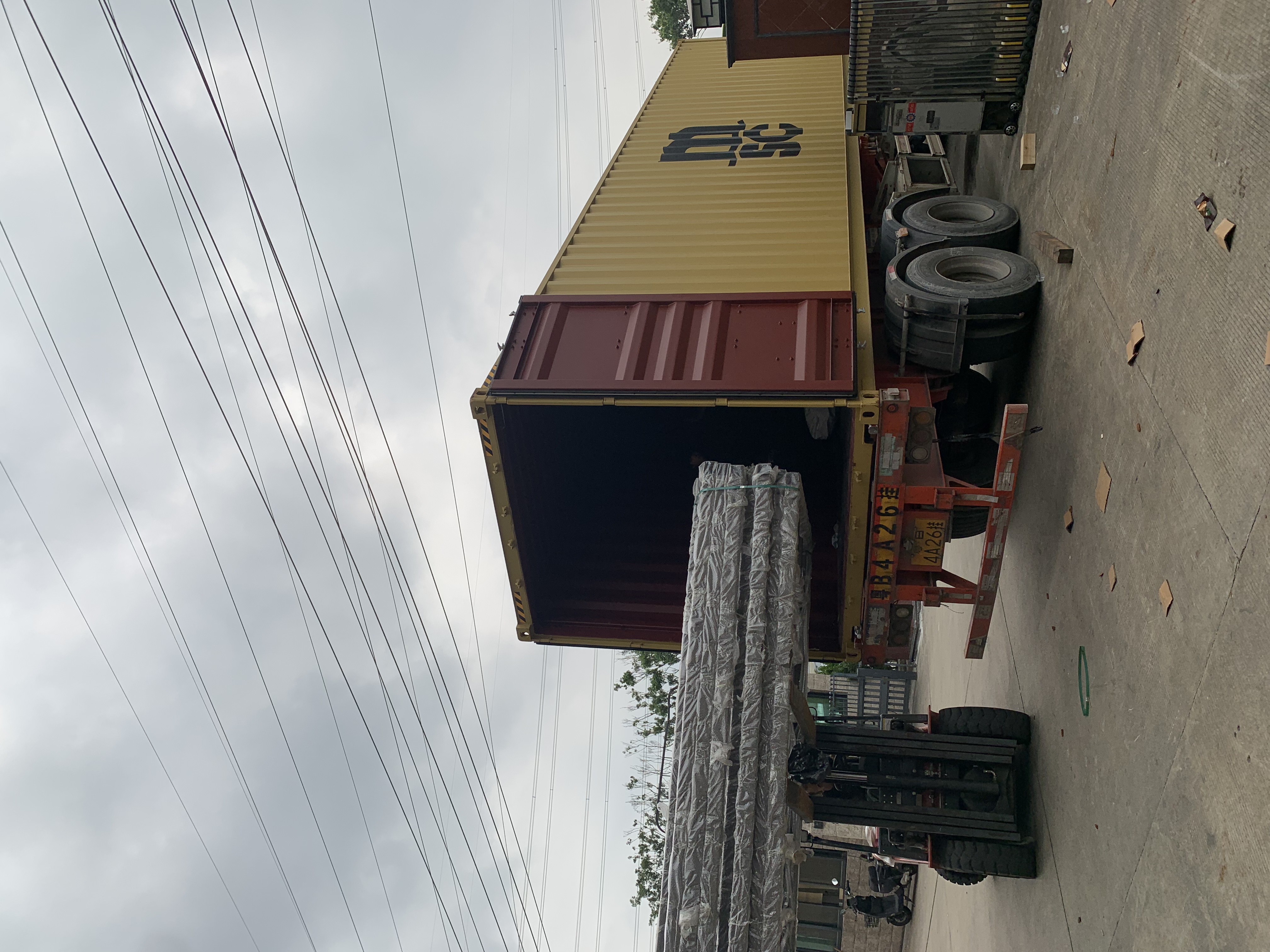
Lead time is 15–20 days for standard safari tent models and 20–30 days for customized projects. Delivery takes 7–15 days for domestic orders and 15–30 days for overseas orders. For a campsite build, these figures should be placed on the critical path after order confirmation and drawing approval, not before, since structural and fit-out customization is confirmed at that point.
9. What after-sales support is included, and how do we start a long-term partnership?
After-sales support includes installation guidance, engineering drawings, 24/7 technical support, spare parts supply, maintenance support, and remote or on-site project assistance. Stars Glamping operates a 24-hour global after-sales response mechanism and provides free installation guidance, lifelong technical support and quality assurance under the principle of "one cooperation, lifelong service" — the operational meaning of which is that the engineering relationship continues after the tents are standing, through maintenance questions, replacement components and future camp expansions.
Start your safari tent partner evaluation
If you are planning a resort, lodge or eco-camp and want the specification, certification scope, sample and lead-time figures for your own site conditions, the next step is a project conversation. Share your location, climate data and intended room mix, and Stars Glamping will respond with the appropriate model, size and customization route.
Email: info@stars-glamping.com | Tel / WhatsApp: +86-133 2645 9475
Website: www.starstent.com
Address: Building A, No.1663 Nansha Avenue, Dongchong Town, Nansha District, 511466, Guangzhou City, China
Product catalogue and full specification sheets: download the Stars Glamping brochure (PDF).

Working With a Safari Tent Partner Over the Long Term
Long-term safari tent relationships are decided by three things that sit outside the unit price: whether the specification has verifiable thresholds, whether the compliance file names the model delivered to your site, and whether the supplier is still reachable when a cover panel needs replacing in year eight.
Stars Glamping answers the first question with published figures — ≥3000mm H₂O waterproofing, B1 fire-retardant, up to 100km/h wind resistance, 60kg/m² snow load, -25℃ to +60℃ operation and an 8–12 year service life across the Epic, Vega and Lodestar models. It answers the second with the CE General Product Safety Directive Attestation of Conformity, certificate M.2024.206.C96444 issued by UDEM under EN ISO 5912:2020, which names the Safari Tent - Epic alongside the Safari Lodge and other tent structures. And it answers the third with an in-house production base, OEM and ODM engineering support, a minimum order quantity of 1 unit, lead times of 15–20 days for standard models and 20–30 days for customized projects, and a 24-hour global after-sales mechanism covering installation guidance, engineering drawings, spare parts and technical support.
For a resort developer, the practical conclusion is to treat the first order as the beginning of a supply relationship, not the end of a procurement process. Specify against thresholds, verify compliance by model name, validate with a sample, and confirm in writing who answers the technical call in year six.