
Safari Tent vs Standard Tent: Evaluating the 10-Year Operating Cost, Not Just the Invoice
Safari Tent vs Standard Tent: Evaluating the 10-Year Operating Cost, Not Just the Invoice
When a resort or lodge compares a safari tent with a standard camping tent, the first instinct is to compare the invoice. A more useful approach is to compare the lifespan, operating requirements, guest environment and replacement risk. In commercial hospitality, the tent is not a portable camping item. It is part of the guest room inventory.
Stars Glamping Tent Co., Ltd., a Guangzhou-based luxury glamping tent manufacturer operating under the Stars Glamping brand, makes this comparison clear in its product information. Its Safari Tent is designed for luxury resorts, glamping projects, safari parks, eco-tourism camps, and beach and mountain hotels. The expected lifespan is 8 to 10 years, while standard camping tents usually remain in service for about 1 to 2 years. That single difference changes how the project owner should evaluate cost, durability and return on investment.
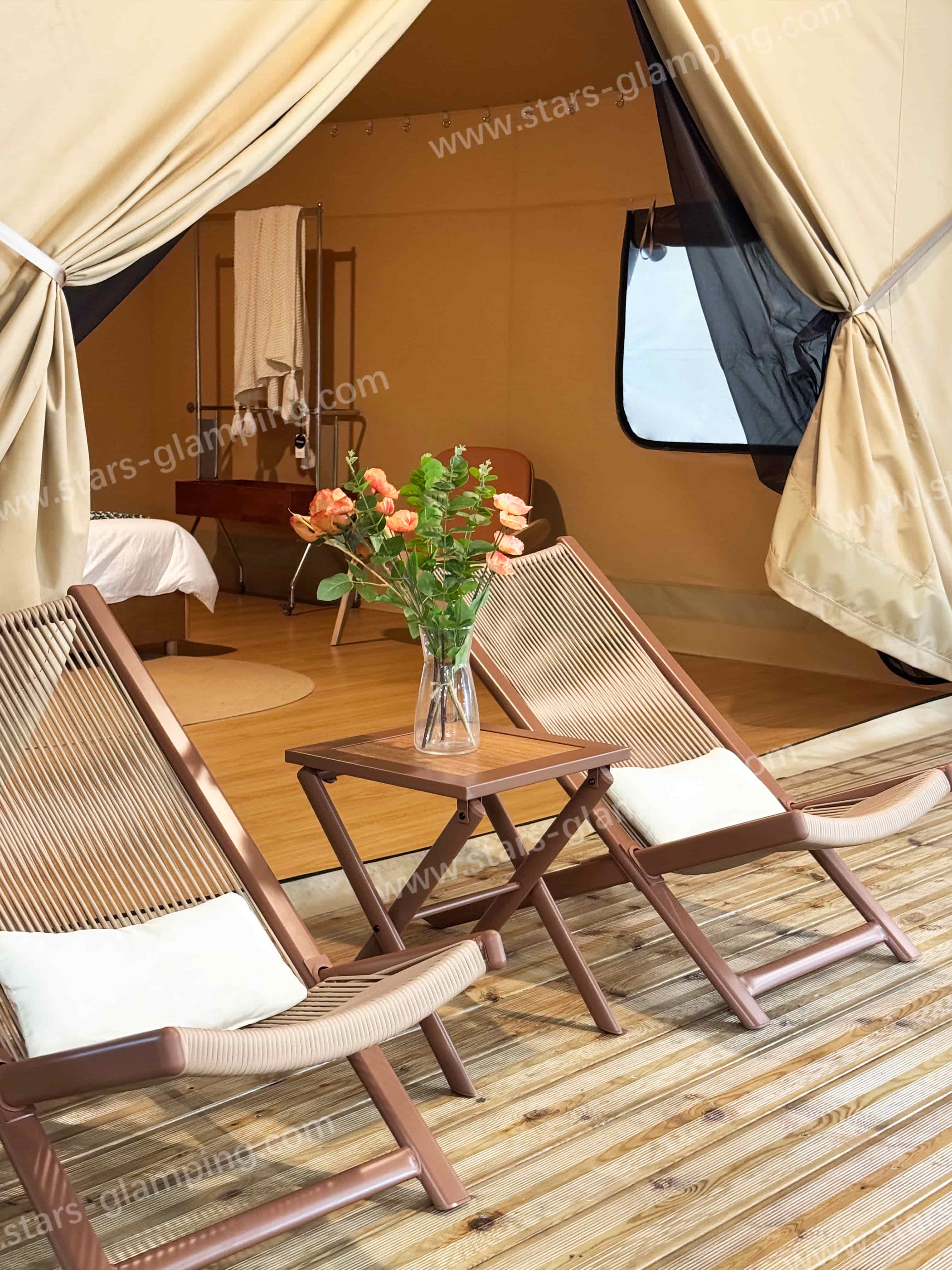
Safari tent guest units are often evaluated as long-term accommodation assets, not as portable event tents.
Why This Decision Is More Than a Tent Purchase
For a safari park, African lodge, eco-resort or desert camp, the main business is accommodation. A guest does not see a tent. The guest sees a bedroom, a bathroom core, climate control, comfort and safety. If the structure fails after one rainy season, the operator pays for replacement, loses booking nights and can damage the brand.
This is the core problem in supplier selection. Consumer camping tents are designed for temporary shelter. They are lighter, less expensive and easy to transport, but they are not designed for 365-night commercial cycling. A safari tent used in a resort setting must handle repeated guest use, cleaning, luggage movement, daily housekeeping and exposure to sun, wind and rain.
Stars Glamping describes the difference in similarly direct terms. The Safari Tent is meant for luxury accommodation, not temporary shelter. Compared with standard camping tents, it offers an expected lifespan of 8 to 10 years, better ventilation and insulation, and less frequent replacement. The buyer should therefore treat the decision as a lifecycle purchase.
Glamping and Safari Tourism Context for Resort Buyers
Long-term outdoor accommodation demand is expanding. Zion Market Research valued the global glamping tents market at USD 3,124.89 million in 2023 and projected it to grow to USD 6,484.86 million by 2032. Grand View Research expects the global Safari Tourism Market to reach USD 66.9 billion by 2033, with a CAGR of 7.7 percent from 2026. These figures use different definitions and scopes, but they point in the same direction: safari-style travel and experiential lodging are growing segments.
In Africa, safari tourism recorded an 8 percent increase in international arrivals in 2025, reaching 81 million travelers. Project owners in South Africa, Kenya, Tanzania, Botswana, Namibia, the Middle East and Southeast Asia are therefore making decisions about permanent tent camps, eco-lodges and riverside or desert safari camps. Their challenge is not whether to build tents. It is whether the tent is engineered to behave like a long-life hotel asset.
For eco-resorts, the accommodation model also has a perceived authenticity advantage. Safari tents sit lightly on the land, can be designed around existing trees, and support the visual language of a nature-based destination. Yet those benefits only work if the shell remains structurally reliable in a commercial environment.
What a Safari Tent Is Designed to Do
In the Stars Glamping product range, the Safari Tent is described as suitable for luxury resorts, glamping projects, safari parks, eco-tourism camps, and beach and mountain hotels. The Safari Tent-Lodestar model is positioned for the same set of applications. The intended function is not one-night camping comfort. It is a repeatable premium hospitality unit.
The company also compares the Safari Tent against the standard camping tent baseline in its customer-facing material. The specific advantages are an 8 to 10 year expected lifespan, lower maintenance needs, and better ventilation and insulation. The intended setting is luxury accommodation in safari and eco-tourism environments.
Compared to standard camping tents, the Safari Tent offers distinct advantages. Key differences include an 8-10 year lifespan, lower maintenance needs, and better ventilation and insulation. It is designed for luxury accommodation in safari and eco-tourism settings.
For a buyer, this explanation matters because it connects tent specification to commercial planning. A 5-year business plan is easier to build around a safari tent with a stated expected life of 8 to 10 years than around a consumer tent with a stated baseline life of 1 to 2 years.
Safari Tent vs Standard Camping Tent: Evidence-Based Comparison
The following comparison is based on the specifications and product comparisons published by Stars Glamping for its safari tent product category. The standard camping tent column describes the typical consumer-tent baseline used in that comparison.
| Comparison Factor | Standard Camping Tent | Stars Glamping Safari Tent |
|---|---|---|
| Primary purpose | Temporary shelter | Luxury accommodation for resorts and eco-tourism settings |
| Expected lifespan | 1 to 2 years | 8 to 10 years |
| Replacement pressure | Frequent replacement expected | Longer service cycle with reduced replacement frequency |
| Maintenance expectation | Higher relative maintenance over a multi-year ownership period | Lower maintenance needs |
| Ventilation and insulation | Basic and highly variable | Better ventilation and insulation |
| Cost position | Lower initial cost, but repeated replacement may reduce lifecycle value | Higher initial cost with better return on investment over the expected lifespan |
| Environmental risk controls | Not consistently specified for commercial permanent use | Waterproof PVC/PVDF fabric, flame-retardant materials, UV protection and reinforced steel structure |
This table does not argue that a safari tent is the right product for every campsite. If a project only needs seasonal, short-term shelter and expects to discard the unit after one or two seasons, a standard tent may be sufficient. The comparison becomes important when the unit is expected to generate revenue over multiple operating seasons.
Stars Glamping also states cost logic directly in its product documentation. The Safari Tent has an expected lifespan of 8 to 10 years, which is longer than the 1 to 2 years typical of standard camping tents. Despite the higher initial cost, the Safari Tent offers better return on investment when compared with alternatives. For a procurement manager, the relevant metric is not the initial price but the cost per usable guest-night over the life of the asset.
Step-by-Step Framework for a 10-Year Buying Decision
Buyers do not need to memorise the full timeline. They need a practical sequence for comparing a safari tent with a standard tent, or for comparing one safari tent supplier with another.
Step 1: Define the Required Operating Life
Write down the minimum number of years the accommodation unit must remain open. If the project plan requires five years of continuous operation, the 8 to 10 year safari tent baseline gives more planning room than the 1 to 2 year standard tent baseline. The operating life expectation should also be shared with the supplier so that materials and warranties can be aligned with the intended service life.
Step 2: Convert Lifespan into a Replacement Curve
Ask the supplier how many replacement cycles the project can expect. A Safari Tent with an 8 to 10 year expected lifespan should not need to be treated as a disposable product after one or two seasons. A standard camping tent with a 1 to 2 year lifespan may need several replacement cycles within the same period. The financial model should include procurement, shipping, installation, removal and the cost of closed guest rooms during replacement.
Step 3: Inspect the Risk-Control Materials
Water, wind, fire and UV exposure are the main environmental risks for tent accommodation. The Stars Glamping risk-control answer includes waterproof PVC/PVDF fabric, reinforced steel structure, flame-retardant materials and UV protection. These controls should be documented in the technical specification, not assumed.
Stars Glamping further states that its patented core technologies cover wind resistance, waterproofing, heat insulation and quick assembly, and that its patented technologies enable products to resist level-12 typhoons and extreme temperatures. Buyers should request model-specific wind and temperature ratings, especially for desert camps, winter mountain lodges or coastal properties with strong seasonal storms.
Step 4: Verify Fire and Safety Compliance
Commercial tent installation is not the same as backyard camping. In North America, flame retardancy standards such as CPAI-84 and NFPA 701 are commonly referenced for tent fabric used in commercial or public settings. In the European and international market, EN ISO 5912:2020 is a recognised safety and performance standard for camping tents. Stars Glamping states that it holds CE certification for its safari tents under EN ISO 5912:2020.
The buyer should match the applicable standard to the project country and request a certificate from the manufacturer before production. A certification decision made after delivery is much more expensive than a certification check made during supplier evaluation.
Step 5: Inspect the Manufacturer Process
A tent specification is only as reliable as the production process behind it. Stars Glamping operates a 20,000-square-meter manufacturing base in Nansha District, Guangzhou, with a 4,000-square-meter simulation exhibition hall and a monthly production capacity that supports large resort programmes. The company reports that it has a 12-step quality inspection system, independent production across the whole process, and a professional R&D team covering architectural design, structural engineering and materials science.
The credibility of the sales document increases when the factory process can be inspected. A buyer should ask about material sourcing, frame welding, fabric cutting and stitching, pre-shipment inspection, installation guidance and after-sales response. The Stars Glamping risk-control process includes full quality control, engineering support, pre-shipment testing, installation guidance and after-sales service.

The supplier factory audit is part of the comparison process for high-value tent orders.
Step 6: Calculate the Lifecycle Financial Logic
Use the actual quote for the Safari Tent and the actual quote for a standard camping tent, then compare them over the planned operating period. Because the Safari Tent offers a longer expected lifetime and lower maintenance needs, the higher initial cost can be absorbed over more operating years. The final decision rule is not lower first price. The decision rule is lower total ownership cost per year plus acceptable guest experience and compliance.
How This Decision Applies to Real Operating Scenarios
The intended use of a safari tent goes beyond a generic campsite. Depending on the location, the priority changes.
African Safari Lodge
Africa received 81 million international arrivals in 2025, according to the safari tourism market data reported by Grand View Research and UNWTO. Lodge operators in wildlife areas need durable structures that can resist sun, dust, rain and wildlife-area logistics. The Safari Tent is repeatedly positioned for safari parks, luxury lodges and eco-tourism camps. In an African lodge, the guest experience depends on natural immersion, but the infrastructure must still perform like a hotel.
Eco-Resort and Glamping Project
Eco-resorts usually want a sustainable look with lower site impact. Safari tents allow developers to create a premium outdoor room without a permanent concrete building footprint. The long lifespan of 8 to 10 years also supports a more sustainable story because replacement events are less frequent than with a standard camping tent.
Desert Camp
Desert camps are exposed to intense UV during the day and cold desert nights. The risk-control specification should focus on UV-resistant fabric, insulation values, wind loads and the quality of the steel frame. A safari tent designed with stronger structural materials is more likely to keep the guest room stable in open desert conditions.
Riverside Lodge or Wildlife Camp
Riverside and wildlife areas often bring humidity, rain and heavier daily use. Waterproofing is essential. The Stars Glamping specification mentions waterproof PVC/PVDF fabric, while the hazard-control response also includes reinforced steel structure, flame-retardant materials and UV protection. A buyer planning a riverside lodge should verify the full membrane specification, seam sealing method and floor connection detail before placing an order.
Winter and Mountain Properties
For mountain hotels and winter glamping, heat insulation becomes a central concern. The product comparison notes that the Safari Tent offers better insulation compared with standard camping tents. Buyers should ask for model-specific insulation layers, linings, storm straps and heating-system allowances when the unit will operate in cold weather.
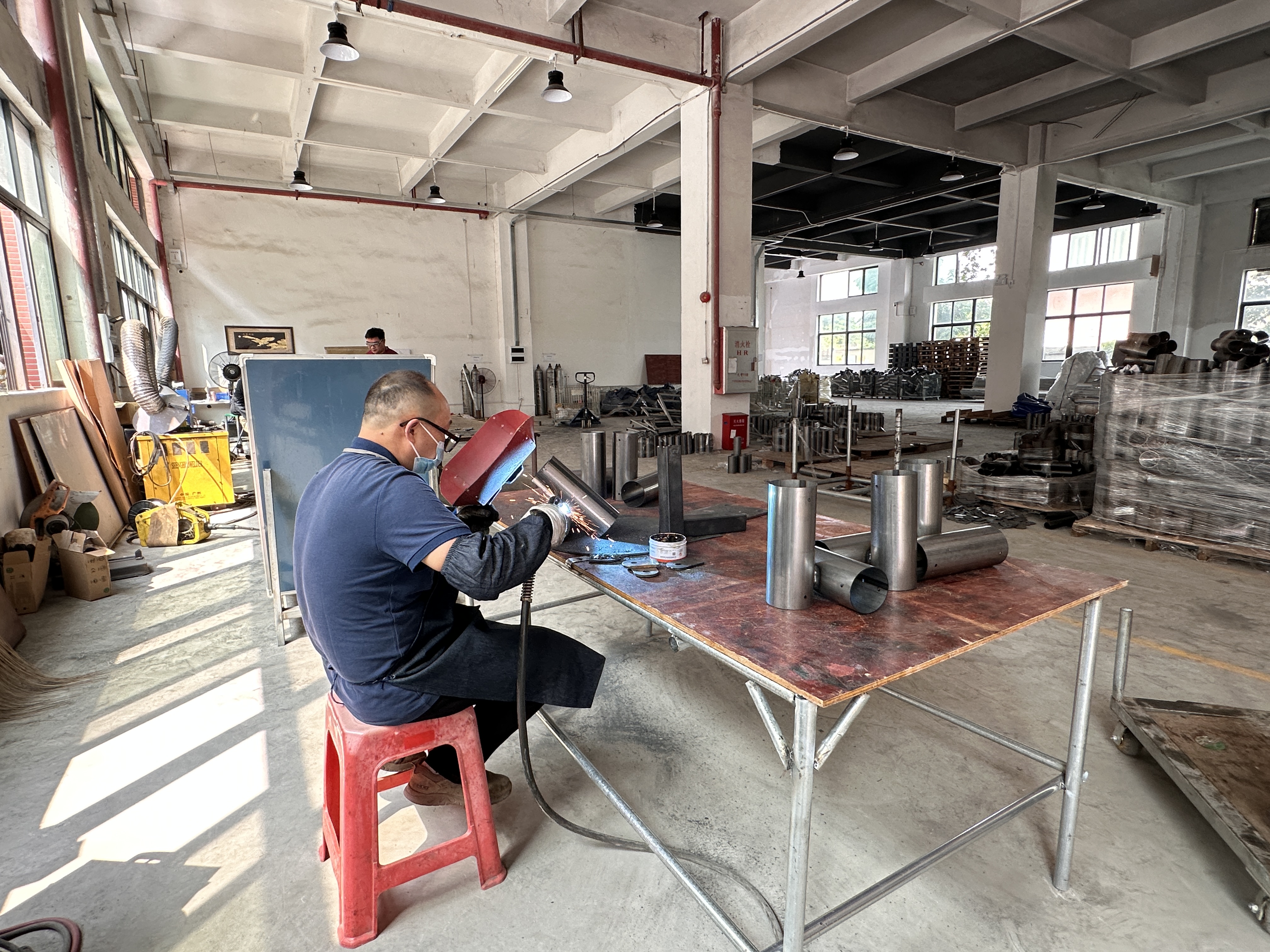
Structural hardware such as steel frames is a key point of difference between commercial safari tents and consumer-grade tents.
Seven Questions to Ask Before the Final Purchase Decision
- What is the expected lifespan under continuous commercial use?
- What is the replacement frequency for the proposed tent model?
- What fabric, frame and insulation specifications are included in the quote?
- Which fire-retardancy standard applies to the project country?
- Can the supplier provide pre-shipment testing and inspection reports?
- What installation guidance and after-sales service response time are included?
- How does the total lifecycle cost compare with a lower-priced standard tent?
These questions move the conversation from advertising language to engineering and procurement language.
Frequently Asked Questions
Do safari tents meet fire safety and compliance requirements?
Commercial tent fabric is often required to meet flame-retardancy standards. In North America, CPAI-84 and NFPA 701 are commonly referenced for commercial tent materials. In the European and international market, EN ISO 5912:2020 is relevant. Stars Glamping states that its safari tents hold CE certification under EN ISO 5912:2020 and includes flame-retardant materials in its standard risk-control specification. Buyers should confirm the applicable standard for their country and request the relevant certificate.
How long can a safari tent last compared with a standard camping tent?
Stars Glamping states that its Safari Tent has an expected lifespan of 8 to 10 years. Standard camping tents typically last 1 to 2 years. The safari tent therefore needs to be replaced less frequently, which is one reason it is described as a better long-term investment for commercial accommodation.
Is a safari tent worth the higher initial cost?
For a multi-year resort or lodge project, the higher initial cost can be justified by the longer lifespan, lower maintenance needs, better ventilation and insulation, and reduced replacement frequency. Stars Glamping explicitly states that, despite higher initial cost, the Safari Tent offers a better return on investment when compared with alternative products.
Can I evaluate a safari tent before placing a full project order?
Yes. Project buyers should request the product brochure, discuss model-specific specifications and ask the supplier for sample availability or project references. Because every safari tent project depends on dimensions, material options, site conditions and layout, the evaluation should include a direct technical conversation rather than a brochure-only comparison.
What delivery and after-sales support should I expect?
Stars Glamping reports domestic order delivery in 7 to 15 days and overseas order delivery in 15 to 30 days. Its after-sales system is described as a 24-hour global response mechanism with free installation guidance, lifelong technical support and quality assurance. For a final buying decision, ask the sales team to confirm the current lead time against the production schedule and project delivery deadline.
Move from comparison to a project-specific purchase brief.
Download the Stars Glamping brochure, send your safari tent specification, or ask the engineering team for a quote and feasibility check.
Download BrochureVisit Starstent.comEmail: info@stars-glamping.com | WhatsApp: +86-133 2645 9475