
Selecting a Luxury Hotel Tent for Beachfront, Mountain, and Desert Resorts
Match the environment first, and the model second. A luxury hotel tent that still performs in year twenty is the one whose verified performance envelope covers the real loads of the site it stands on. Stars Glamping luxury hotel tents are rated for wind resistance up to 120 km/h (Level 10 wind), a snow load capacity of 80 kg/m², and an operational temperature range from -30°C to +70°C. This application guide uses that envelope to match beachfront and island resorts, mountain eco-lodges, and desert glamping sites to the right structure, membrane, and long-term service plan.
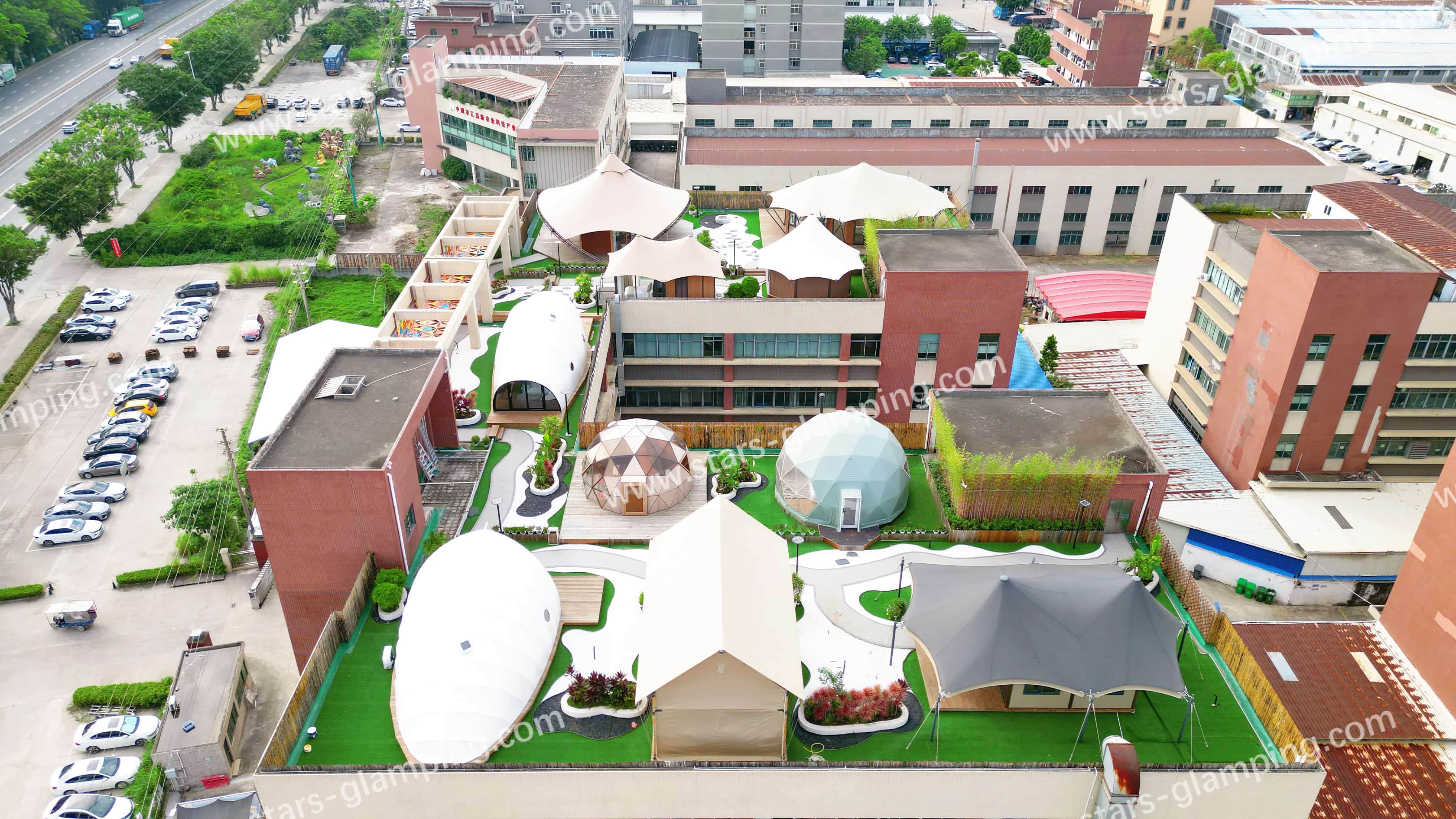
If your project has already cleared feasibility — land secured, concept approved, budget framed — the questions left on the table are technical rather than creative. Which model family suits the site? Which membrane and hardware will survive the local climate for the life of the asset? Which documents will an operator, insurer, or local authority ask for? And which supplier will still be supporting the structure in year ten? This guide covers three environments in depth (beachfront and island, mountain, desert), with notes on event and seasonal structures, and it treats each one as what it is: a long-term asset decision rather than a purchase.
Problem Definition: Why Environment Fit — Not Style — Decides Long-Term Performance
Most luxury hotel tent problems do not begin in the fabric mill. They begin in the specification. The membrane is rarely the first component to fail; far more often, the mismatch is a wind-exposed coastal plot detailed the way a sheltered valley would be, a mountain roof geometry chosen for its silhouette rather than its snow-shedding behaviour, a desert project where heat gain was underestimated, or a humid island site where salt exposure to structural hardware was never written into the maintenance plan.
Because a luxury hotel tent is a long-life asset rather than a disposable structure — expected service life is 25–30 years for most models, and 10–15 years for the Luxury Tent - Pisces — specification errors do not quietly resolve themselves. They reappear as retrofit costs, unplanned replacements, blocked-out rooms during peak season, and a supplier relationship that opens with a complaint instead of a plan.
At the decision-to-execution stage, the work is therefore to design out four failure modes before the order is placed:
- Wind uplift and fatigue — the dominant load on exposed coastlines, ridge lines and open desert plateaus.
- Snow accumulation — the dominant load on mountain sites, and a function of roof geometry as much as fabric strength.
- Thermal and condensation performance — the difference between a comfortable mountain or desert room and an energy-hungry one.
- UV, salt, sand and dust degradation — the slow variables that decide how the structure looks and performs at year eight.
Once those four are addressed, the question “which model?” becomes a narrower and much more answerable one: “which configuration, supported by which evidence, from which partner?”
Industry Background: A Growing Market That Is Starting to Ask for Evidence
The global glamping market was valued at approximately USD 3.8 billion in 2025, with tents forming a major accommodation segment alongside cabins and pods, according to Grand View Research. Fortune Business Insights projects the market to reach USD 9.15 billion by 2034, growing at a CAGR of 10.67%. Europe held a 35% revenue share in 2025, the largest regional position in that dataset.
A caution worth carrying into any investment paper: published glamping market sizes vary widely because research houses define the category differently — some include RVs and cabins, others exclude them. Grand View Research, Future Market Insights, and Global Market Insights publish materially different figures for adjacent years. Treat any single number as directional, and rely on your own site-level demand model for the investment decision.
What matters for procurement is the direction of travel. As supply expands, differentiation shifts from “does it look like a luxury tent?” to “is the performance documented?” Buyers now compare membrane type (PVC versus PVDF), structural ratings, fire classification, and the quality-control process behind the panels — because those are the variables that decide whether a beachfront block is still selling rooms after a decade of salt air.
Stars Glamping (STARS GLAMPING TENT CO.,LTD) is a manufacturer of luxury glamping tents and camp solutions, founded in 2018 and based in Nansha District, Guangzhou, China, operating from a 20,000² manufacturing base with a 4,000² simulation exhibition hall. The company reports exporting around 90% of its output to markets including Southeast Asia, the Middle East, Africa, Europe, North America, South America, and Australia, and having served more than 3,000 cultural and tourism projects. Its main products are luxury hotel tents, glamping domes, safari tents and B&B tents — the range that resort developers compare when a site is coastal, mountainous, or arid.
Detailed Solution: The Verified Performance Envelope and the Model Families Behind It
The performance envelope that defines environment fit
Every environment decision in this guide traces back to a small set of published specifications. Read them as the boundary of what a standard configuration can carry, not as marketing headlines.
- Wind resistance: up to 120 km/h, corresponding to Level 10 wind.
- Snow load capacity: 80 kg/m².
- Operational temperature range: -30°C to +70°C.
- Waterproof rating: ≥ 5,000 mm H₂O.
- Fire rating: B1 / M2, indicating fire-retardant properties.
- UV protection: UV stabilized and anti-aging material behaviour.
- Expected service life: 25–30 years for most models; 10–15 years for the Luxury Tent - Pisces.
For a beachfront project, the operative figures are wind resistance and waterproofing, supported by UV stability. For a mountain lodge, snow load and the cold end of the temperature range matter most, with condensation control following close behind. For a desert camp, the +70°C upper bound, UV exposure, and insulation performance carry the design. A single envelope covering all three is why the range can be deployed across genuinely different climates — but only when the specification step is honest about which number is under pressure at your site.
Structural and membrane choices behind the numbers
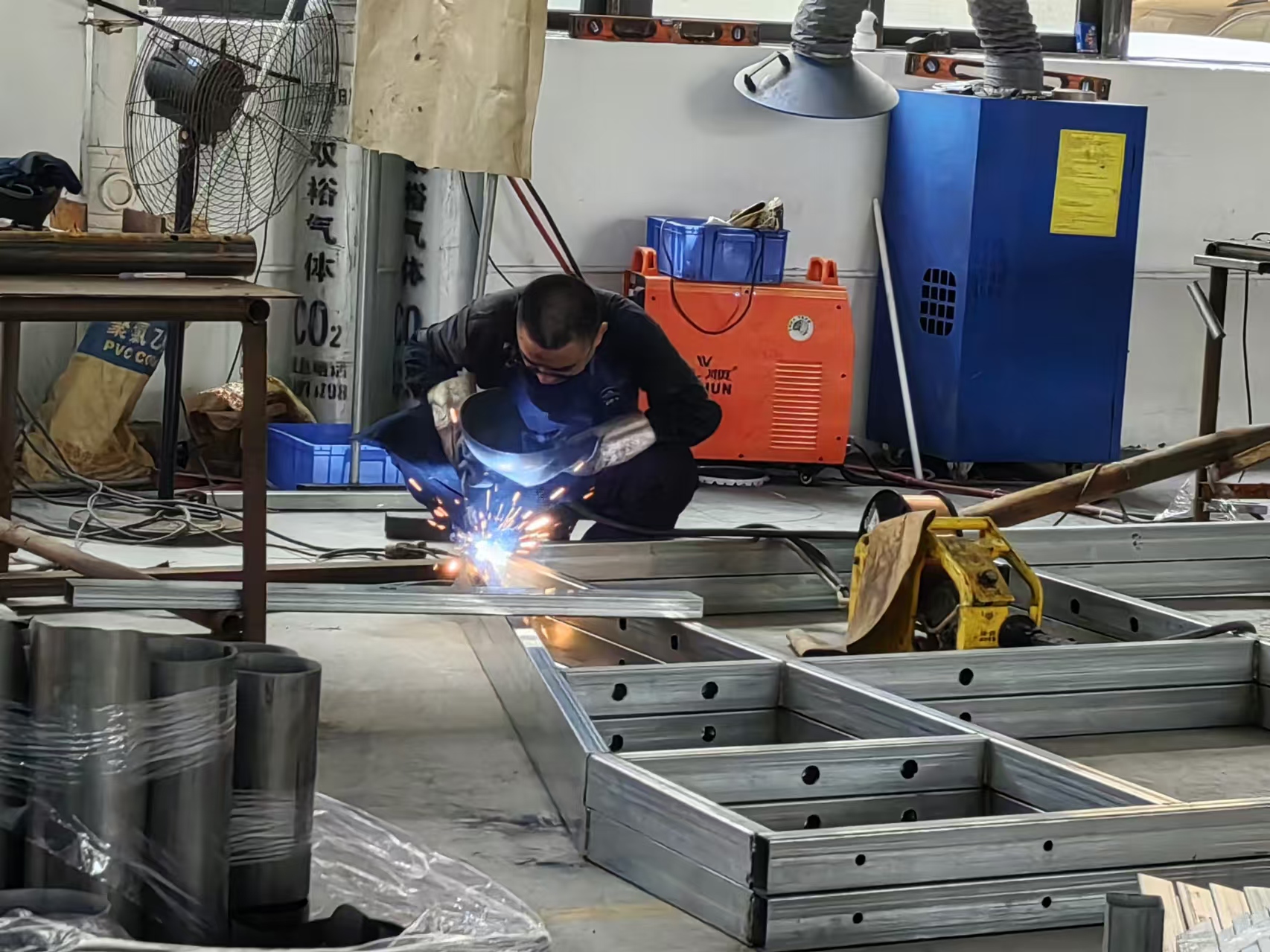
The numbers above are delivered by two material systems: a reinforced steel frame and a coated fabric membrane. Stars Glamping provides modular tent systems such as the Tethys and Villa models, designed with steel frames and PVDF/PVC fabrics for all-weather resort use, and its patented technologies cover wind resistance, waterproofing, heat insulation and quick assembly, backed by 54 national patents and a 12-step quality inspection system.
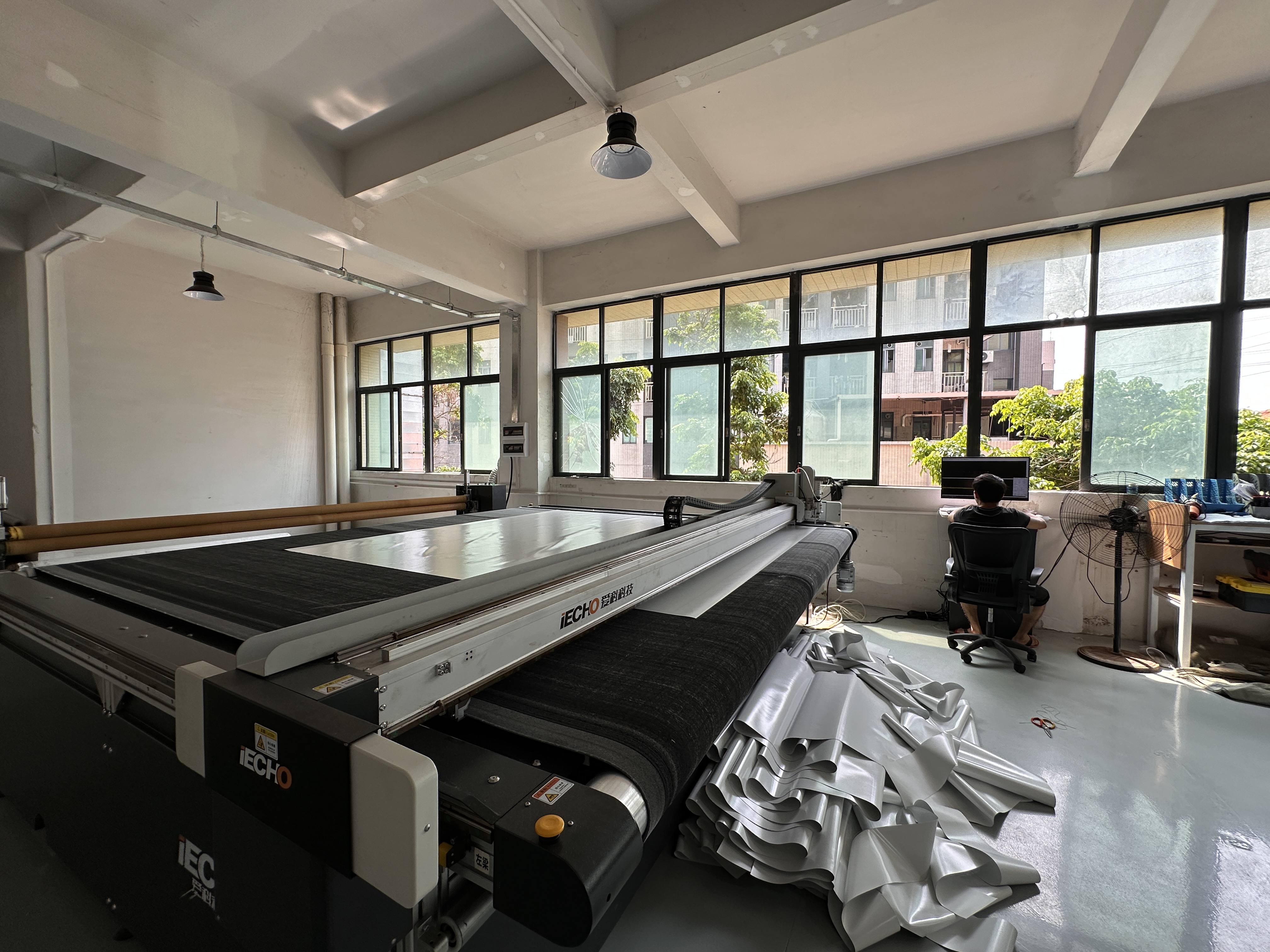
Membrane choice is one of the most consequential decisions a beach or island project will make. Third-party references for high-performance PVDF architectural membranes used in this product class describe a service life of 15–30 years and resistance to wind speeds of 120–140 km/h. Heavy-duty PVC/PVDF membranes are non-porous and are referenced with hydrostatic head ratings exceeding 10,000 mm — the material-level benchmark that sits behind beach and island specifications, while the finished luxury hotel tent carries a waterproof rating of ≥ 5,000 mm H₂O as a product-level figure. Both statements are useful, but they are not the same measurement; when comparing quotations, ask which one you are being shown.
Model families as environment starting points
Model selection is not a style choice in this workflow — it is the first filtering step. The table below maps the Stars Glamping model families to their verified descriptions and the environment where each is the natural starting point. Final selection still requires an engineering review against your site data.
| Model family | Verified description | Environment starting point |
|---|---|---|
| Tethys | Modular tent system with steel frame and PVDF/PVC fabric, designed for all-weather resort use | Exposed sites across beach, desert and mountain settings |
| Villa | Modular tent system with steel frame and PVDF/PVC fabric, designed for all-weather resort use | All-weather resort accommodation, including mixed-climate portfolios |
| Shell | Part of the Stars Glamping luxury tent range | Wind-swept coastlines and open, high-exposure plots |
| Pisces | Expected service life of 10–15 years | Sheltered forest cabins and lower-intensity settings with a planned shorter refresh cycle |
| Octagon | Part of the Stars Glamping modular product line | Configuration to be confirmed against the project brief |
Step-by-Step: How to Match a Tent to Beachfront, Mountain, or Desert Conditions
Step 1 — Collect the site loads before comparing models
Assemble the design data first: design wind speed at the exact plot (not the regional average), ground snow load, maximum and minimum design temperatures, average humidity and salt exposure, UV intensity, sand or dust load, and any local code requirements. Site-level data, not catalogue-level preference, drives the rest of the process. A promontory five metres above a beach can carry a very different wind load from an inland plot a hundred metres away.
Step 2 — Map the site against the verified envelope
Place the site figures against the envelope: wind resistance up to 120 km/h (Level 10), snow load 80 kg/m², operational range -30°C to +70°C, waterproof rating ≥ 5,000 mm H₂O, fire rating B1/M2. If a site sits comfortably inside the range, the standard configuration is the efficient choice. If any figure sits close to or beyond the boundary, that is the moment to request an engineering review rather than assume.
Step 3 — Choose the model family and orientation
Select the model family that matches the dominant load: Shell for wind-swept coastlines, Tethys or Villa for all-weather resort accommodation, Pisces for sheltered forest cabin settings where a shorter 10–15 year service cycle is already planned. Orientation, anchoring design and foundation strategy are then set by the local conditions — they are site-specific engineering, not catalogue items.
Step 4 — Specify membrane, hardware and compliance package
Confirm the fabric decision (PVC versus PVDF), the UV-stabilized and anti-aging properties, corrosion protection for coastal hardware, and flame-retardant material classification. Where the destination market requires it, name the applicable fire retardancy standard — NFPA 701 in the United States or EN 13501-1 in Europe are the common references for commercial hospitality use — and ask the supplier to confirm the material classification against it in writing.
Step 5 — Lock interior and systems requirements into the design stage
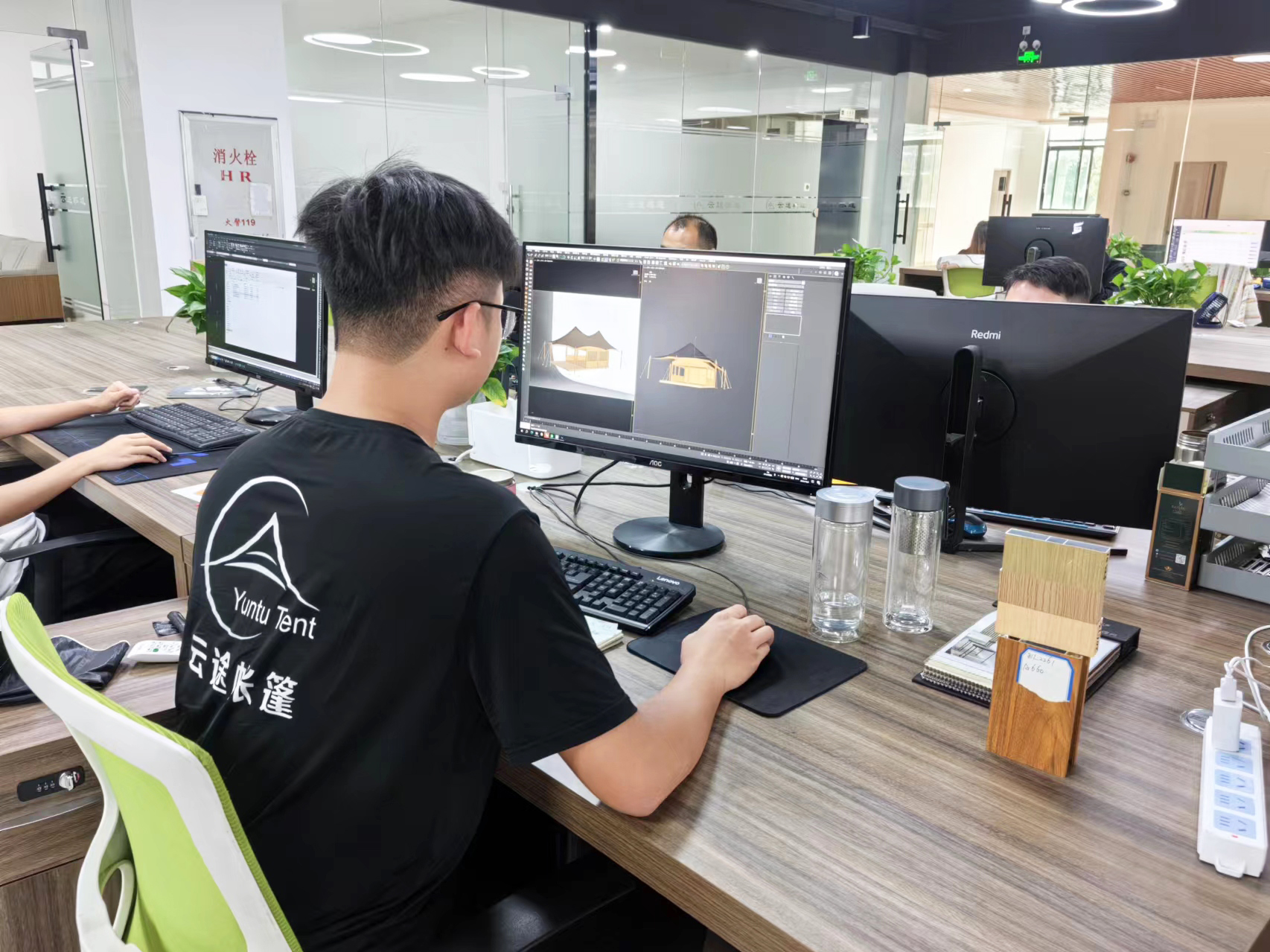
Air conditioning provision, bathroom modules, insulation, acoustic separation between units, glazed walls, flooring, furniture and curtains are all far cheaper to specify now than to retrofit. Acoustic separation in particular is a master-plan decision for resort accommodation. Stars Glamping provides integrated camp planning, product design, and matching of furniture, curtains and flooring, and launches more than ten new products annually in response to project requirements — so these elements should be part of the brief rather than an afterthought.
Step 6 — Validate, deliver, and plan the long-term service path
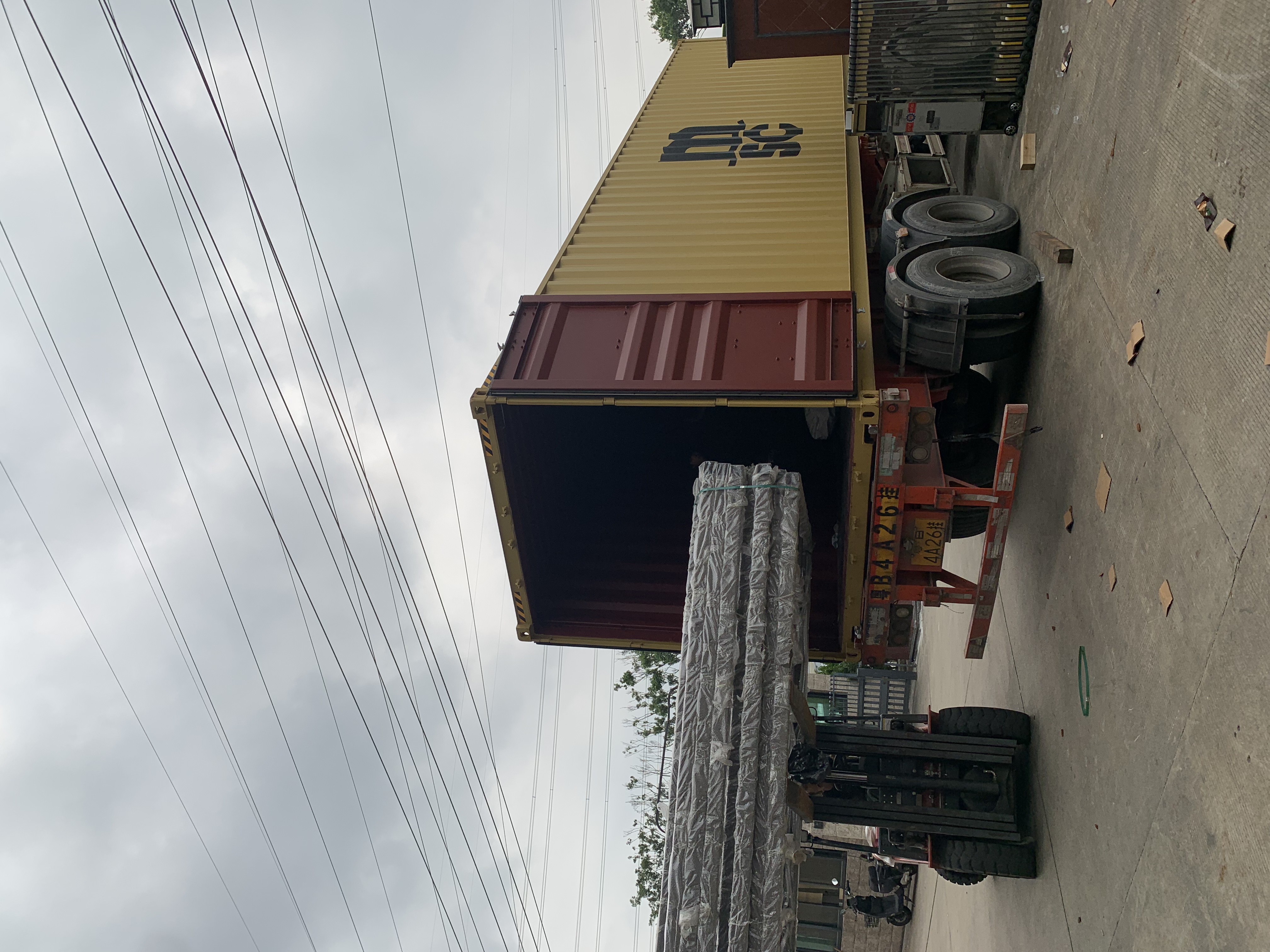
Before shipment, agree the acceptance process: factory inspection and photo/video confirmation before dispatch is available, which gives the buyer a documented checkpoint. Agree the delivery terms (EXW, FOB, CIF or DDP are offered), and agree the service model — installation guidance, spare-part planning, and the response mechanism — at the same time as the price, not afterwards.
Use Cases: Three Environments, Three Different Briefs
Beachfront and island resorts: wind, salt and UV
Coastal and island projects are defined by sustained wind exposure, salt-laden air, high UV, and humidity. The relevant protections are wind resistance up to 120 km/h, a waterproof rating of ≥ 5,000 mm H₂O with non-porous membrane construction referenced above 10,000 mm hydrostatic head, and UV stabilized, anti-aging material behaviour. For wind-swept coastlines, the Shell is the natural model starting point; Tethys and Villa cover all-weather resort use where exposure varies across the site. Practically, coastal projects should write a hardware inspection rhythm into the maintenance plan from day one, because salt exposure is the variable most often underestimated at the feasibility stage.
Mountain eco-lodges: snow load and temperature swing
Mountain sites trade wind for snow and cold. The governing figures are the 80 kg/m² snow load capacity and the -30°C cold end of the operational temperature range, with condensation control as the detail that determines whether guests are comfortable in February. Insulated builds reduce energy consumption for heating, which matters on remote sites where energy supply is constrained. Pisces suits sheltered forest cabin settings, where its 10–15 year expected service life aligns with a planned refresh cycle rather than a 25–30 year horizon; Tethys and Villa are the all-weather options for ridge-line or high-snow plots.
Desert glamping: heat, dust and diurnal swing
Desert projects are governed by the +70°C upper bound of the operating range, intense UV, dust ingress, and large day-night temperature swings. Insulation is the main lever, because it reduces the energy consumption needed to keep interiors habitable through the hot hours, and UV stabilized, anti-aging membranes protect the structure from surface degradation. Dust management and membrane cleaning belong in the service plan, and fire-retardant material classification (B1 / M2) should be confirmed against the host market's hospitality requirements.
Event and seasonal structures
Event categories share the same membrane, fire and wind logic but differ in duty cycle: shorter deployment windows, frequent assembly and disassembly, and storage between seasons. The quick-assembly technologies in the Stars Glamping patent portfolio — covering wind resistance, waterproofing, heat insulation and quick assembly — are most relevant here, and acceptance checks before each deployment season are the practical equivalent of a maintenance schedule.
Comparison Table: Environment Fit at a Glance
| Environment | Dominant load | Verified specification that matters | Model starting point | Long-term consideration |
|---|---|---|---|---|
| Beachfront / island (Resort Accommodation) | Wind, salt, UV, humidity | Wind resistance up to 120 km/h (Level 10); waterproof rating ≥ 5,000 mm H₂O; UV stabilized, anti-aging | Shell for wind-swept coastlines; Tethys and Villa for all-weather use | Hardware and membrane inspection intervals shorten under salt and UV exposure |
| Mountain (Eco-Lodge / Cabin) | Snow, freeze-thaw, temperature swing | Snow load 80 kg/m²; operational range down to -30°C; heat insulation | Tethys and Villa (all-weather); Pisces for sheltered forest cabins | Insulation reduces heating energy; Pisces carries a 10–15 year service life, so plan the refresh cycle early |
| Desert (Glamping Camp) | Heat, UV, dust, diurnal swing | Operational range up to +70°C; UV stabilized, anti-aging; fire rating B1 / M2 | Tethys and Villa (all-weather resort use) | Insulation reduces cooling energy; dust management and membrane cleaning belong in the service plan |
| Event / Seasonal | Repeat assembly, temporary siting | Fire rating B1 / M2; quick-assembly technology; wind resistance up to 120 km/h | Configuration to be confirmed against the brief | Pre-season inspection and storage discipline replace continuous maintenance |
| All environments (baseline) | — | Expected service life 25–30 years for most models | — | Long-term value depends on supplier support, spare parts and documentation, not on the purchase price alone |
FAQ: Environment Fit, Compliance, and Long-Term Support
What fire and compliance documentation should a luxury hotel tent for beachfront, mountain, or desert resorts provide?
Stars Glamping luxury hotel tents carry a fire rating of B1 / M2, which indicates fire-retardant properties. For commercial hospitality use, luxury resort tents are typically expected to meet fire retardancy standards such as NFPA 701 (United States) or EN 13501-1 (Europe), so a project brief should name the standard that applies in the destination market and ask the supplier to confirm the material classification against it. Beyond fire performance, the material package addresses the water, wind, fire and UV exposure risks of outdoor resort use — waterproof PVC/PVDF fabric, reinforced steel structure, flame-retardant materials and UV protection — supported by full quality control, engineering support, pre-shipment testing, installation guidance and after-sales service. For acceptance, factory inspection and photo/video confirmation before shipment gives the buyer a documented checkpoint before the container leaves the factory.
Can a luxury hotel tent be adapted to a specific wind, snow, or temperature profile?
Yes — the standard performance envelope is the starting point, and configurations are reviewed against the site where loads sit close to the boundary. Stars Glamping luxury hotel tents are rated for wind resistance up to 120 km/h (Level 10 wind), a snow load capacity of 80 kg/m², and an operational temperature range from -30°C to +70°C, with a waterproof rating of ≥ 5,000 mm H₂O and UV stabilized, anti-aging properties. Configuration decisions — model family, membrane type, anchoring and detailing — are handled by the manufacturer's engineering team, which at Stars Glamping is a six-person R&D group covering architectural design, structural engineering and materials science, supported by 54 national patents covering wind resistance, waterproofing, heat insulation and quick assembly.
Which choice drives the long-term cost of a tent-based resort: the model or the environment specification?
The environment specification drives lifecycle cost, because it determines how often the structure needs intervention. Tent-based resort accommodation typically requires 30–50% lower investment than an equivalent traditional hotel building, with 20–30 day installation compared with 6–12 months of construction, lower maintenance with flexible upgrade potential, and better insulation that reduces energy consumption. Those advantages hold only when the specified tent matches the site. Expected service life is 25–30 years for most Stars Glamping models and 10–15 years for the Luxury Tent - Pisces, so the shorter-life model can be the correct commercial decision in a sheltered, lower-intensity setting where a refresh cycle is already planned — but the same model on an exposed coastal plot would move replacement forward and erase the savings.
Can a resort operator validate a luxury hotel tent before committing to a full project?
Yes. The minimum order quantity is 1 unit and a sample is available, which allows a developer to inspect structure, membrane, finishing and assembly quality before placing a multi-unit resort order. Acceptance can be structured around factory inspection and photo/video confirmation before shipment, and flexible delivery terms — EXW, FOB, CIF or DDP — allow the sample and the subsequent production order to ship on terms that suit the project's logistics. Payment terms are T/T or L/C, negotiable for large orders.
What are the production, delivery, and after-sales timelines for a multi-unit resort order?
Stars Glamping's monthly production capacity is 50–80 luxury tent units depending on project size, with annual output of 600–900 units. Delivery time is 7–15 days for domestic orders and 15–30 days for overseas orders. After delivery, the service model follows the principle of “one cooperation, lifelong service”: a 24-hour global after-sales response mechanism, free installation guidance, lifelong technical support and quality assurance. For a beachfront, mountain or desert project, the practical next step is to send the site's wind, snow and temperature data together with the intended model direction and request a configuration review and quotation — the full product and specification brochure can be downloaded here: Stars Glamping product brochure (PDF).
Conclusion: Choose the Environment First, Then the Partner
For beachfront, mountain and desert resorts, the selection process is the same in structure and different in emphasis: collect the site loads, map them against the verified envelope of 120 km/h wind resistance, 80 kg/m² snow load, and a -30°C to +70°C operating range, choose the model family that matches the dominant load, and fix the membrane, compliance and interior decisions before the order rather than after. Beach projects live or die on wind, salt and UV; mountain lodges on snow and cold; desert camps on heat, insulation and dust. The expected service life of 25–30 years for most models is only realised when that match is correct from the beginning.
The second half of the decision is the partnership behind the structure. A luxury hotel tent is installed once and serviced for years, which is why delivery terms, acceptance checks, installation guidance, spare-part planning, and a defined after-sales response matter as much as the specification sheet. Stars Glamping operates a global sales and logistics network, reports a customer repurchase rate above 80%, and supports installations with free guidance and lifelong technical support.
Next Step: Send Your Site Conditions
Share your project's dominant wind speed, snow load and temperature extremes, along with the intended environment category (Beachfront, Mountain, Desert, Island, Eco-Lodge or Event), and request a configuration review, sample, or quotation.
Download the Stars Glamping product brochure (PDF)
Website: www.starstent.com | Email: info@stars-glamping.com | Tel / WhatsApp: +86-133 2645 9475
Have Questions or Need More Details?
Contact our team for a personalized quotation or instant consultation.
Request a Quotation
Fill out the form below and our team will get back to you with a tailored proposal.
WhatsApp Direct Chat
Prefer to chat in real-time? Message us on WhatsApp for instant assistance & quick answers.
- Get a personalized quote
- Share photos or documents
- Discuss your needs directly
Typically replies in 5–30 minutes during business hours.