Tethys vs. Villa: Luxury Hotel Tent Choice for Eco-Lodges
Head-to-Head Decision: Luxury Tent - Tethys vs. Luxury Tent - Villa for a High-End Eco-Lodge Project
Two premium models, one project brief, and a specification sheet that refuses to break the tie. This is a model-level comparison of Luxury Tent - Tethys and Luxury Tent - Villa, written for the moment in an eco-lodge development when the shortlist is down to two and the decision has to be defended to a board, an architect, and a lender.
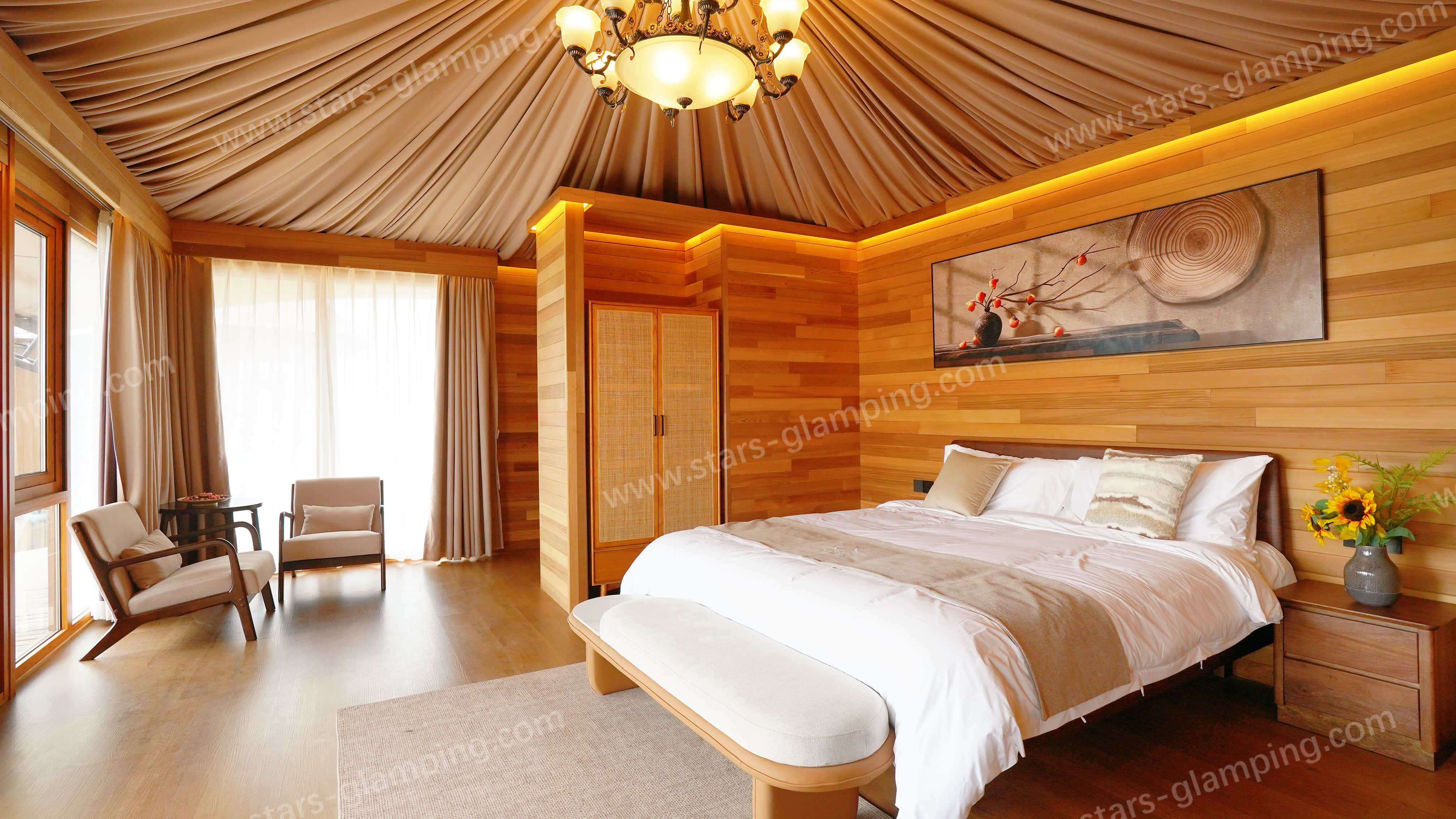
Direct answer: Luxury Tent - Tethys and Luxury Tent - Villa are built on the same technical platform. Both are listed with a steel pipe frame, a 1050g/m² PVDF architectural membrane cover, an insulated glass wall system, a waterproof rating of ≥5000mm H₂O, a B1/M2 fire-retardant rating, wind resistance up to 120km/h (Level 10 wind), a snow load of 80kg/m², an operating range of -30℃ to +70℃, and a service life of 25–30 years.
Because the published performance figures are identical, the decision should not be made on fabric, frame, or weather ratings. It should be made on architectural language, layout planning, guest-experience positioning, and the quality of the compliance and delivery documentation the supplier can put behind the chosen model.
Problem Definition: Why This Comparison Is Harder Than It Looks
Most tent procurement comparisons are easy because one model is visibly stronger on paper. This one is not. Tethys and Villa sit in the same premium tier of the Stars Glamping range, share the same membrane specification, and share the same structural performance envelope. A buyer who opens both data sheets side by side finds two identical columns.
That creates three practical problems for an eco-lodge development team.
First, the comparison stops producing useful information. If both models handle 120km/h wind, both resist ≥5000mm H₂O of water pressure, and both are rated for -30℃ to +70℃, then further reading of the spec sheet will not improve the decision — it will only delay it.
Second, the wrong criteria get used as a tiebreaker. Teams under pressure often reach for a criterion that feels measurable but isn't decisive, such as a marginal price difference, a delivery date, or an aesthetic preference that hasn't been tied back to the guest proposition. The result is a decision that is hard to defend when the resort opens.
Third, an assumption often enters the room that isn't in the data. A frequent assumption is that one model uses insulated glass walls while the other uses canvas walls, and that thermal and acoustic performance therefore separate them. That assumption does not match the official model data — and it is worth clearing up before any design work proceeds on it.
Industry Background: Why Model-Level Decisions Carry More Weight in Eco-Lodges
Glamping accommodation has moved from novelty inventory to a permanent asset class for resort developers. Grand View Research estimated the global glamping market at USD 3.46 billion in 2024, and the same source projects Asia Pacific as the fastest-growing region at a 12.58% CAGR across 2025–2031. Growth at that pace pulls more developers into a segment where the accommodation unit is often the primary product, not an amenity attached to a hotel building.
That shifts the consequence of a model decision. In a conventional hotel, the guest room is one component of a larger building envelope, and small differences between room types can be absorbed. In an eco-lodge where the tent is the guest room, the model choice sets the architectural identity of the property, the interior planning possibilities, the service installation strategy, and the asset life used in financial modelling.
Asset life is a good example of why the underlying platform matters more than the model name. Across the Stars Glamping luxury tent range, PVDF membrane models are listed with a 25–30 year service life, while the PVC polyester model is listed at 10–15 years. Tethys and Villa both sit in the PVDF group. A buyer comparing them is comparing two models with the same depreciation profile, not two different investment cases.
Regulatory context is the other external factor. In North America, tent structures are addressed within the International Fire Code (IFC) 2024, Chapter 31, published by the International Code Council. The existence of a model-level B1/M2 fire-retardant rating is a material classification; the approval that matters on site is the one issued by the authority having jurisdiction for that specific project, in that specific country. This is true of both Tethys and Villa, and it is true of every model in the category.
Detailed Solution: What the Official Model Data Actually Says
The clearest way to run this comparison is to separate what is shared from what is genuinely different, and then build the decision on the difference.
What both models share
Both Luxury Tent - Tethys and Luxury Tent - Villa are described in the same terms: a steel pipe frame, a 1050g/m² PVDF architectural membrane cover, and a steel frame plus PVC/PVDF fabric with an insulated glass wall system. Both carry identical published performance parameters. Both are listed for resort accommodation, beachfront hotel use, mountain eco-lodge use, desert glamping, and event hospitality such as a reception or restaurant structure.
The wall-system question, resolved
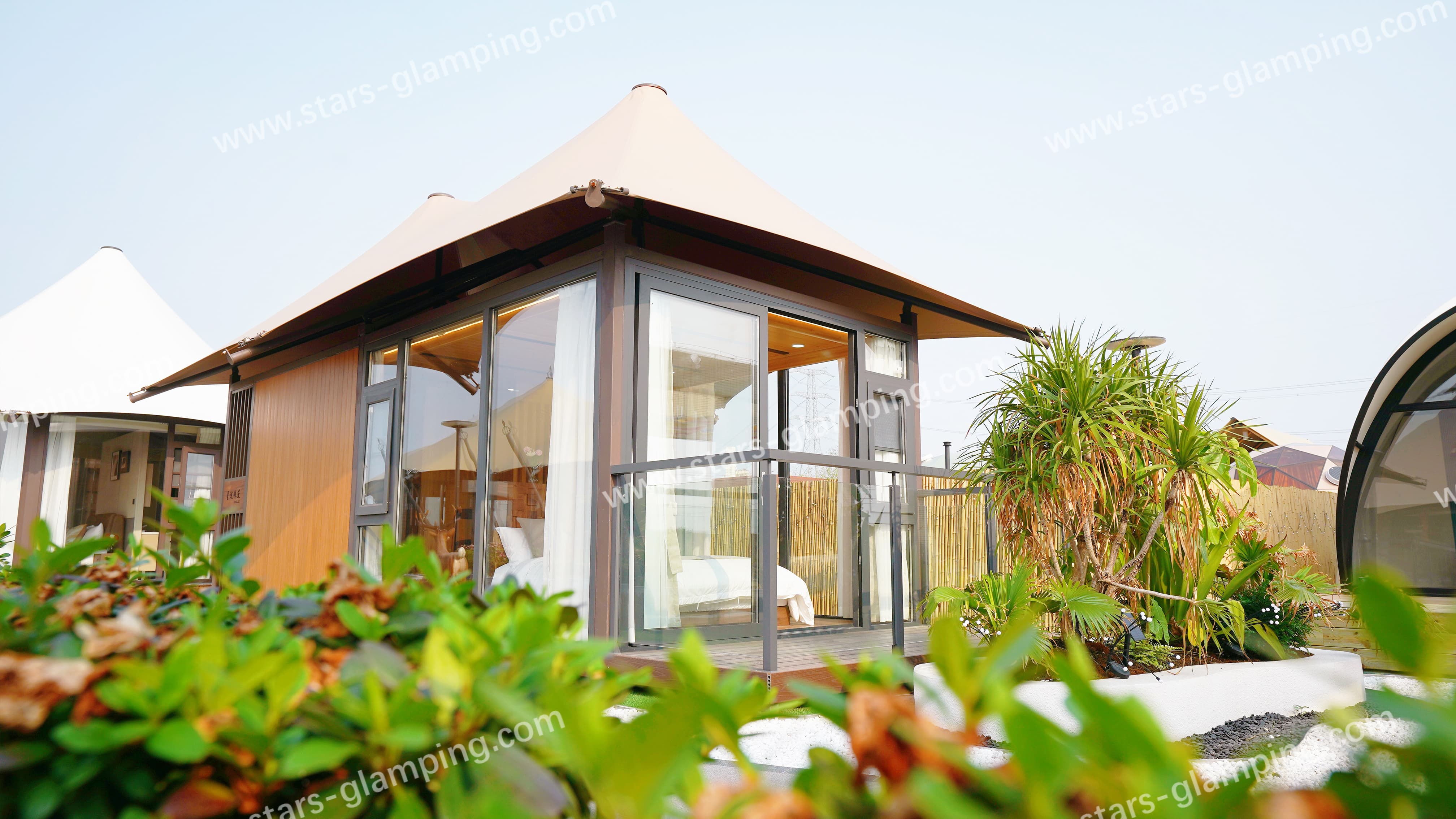
The most common source of confusion in a Tethys-versus-Villa evaluation is the wall system. The verified model data does not separate these two models on walls: both are listed with an insulated glass wall system. The canvas-walled variant in the range is a different product — Luxury Tent - Pisces — which uses an 850g/m² PVC polyester cover over an insulated canvas wall system and is listed with a 10–15 year service life.
| Model | Frame | Cover / membrane | Wall system | Listed service life |
|---|---|---|---|---|
| Luxury Tent - Tethys | Steel pipe | 1050g/m² PVDF architectural membrane | Insulated glass | 25–30 years |
| Luxury Tent - Villa | Steel pipe | 1050g/m² PVDF architectural membrane | Insulated glass | 25–30 years |
| Luxury Tent - Pisces | Solid wood + steel pipe | 850g/m² PVC polyester | Insulated canvas | 10–15 years |
The practical consequence is straightforward. If a project brief genuinely calls for a canvas-wall aesthetic and a lower capital entry point, the comparison that matters is Tethys or Villa against Pisces — a material and asset-life decision. If the brief already assumes a glass-wall, PVDF-membrane eco-lodge, then Tethys and Villa are the two candidates and the wall-system argument is no longer available as a differentiator.
Decision rule: compare Tethys against Villa only after the wall system and membrane class are fixed. Comparing them as if they differed on glazing or fabric produces a comparison that cannot be resolved from the data, because on those two attributes the data says they are the same.
Where the two models genuinely separate
Once the technical envelope is set aside, three real decision surfaces remain.
Architectural identity. Tethys and Villa are two distinct model lines within the same platform. For an eco-lodge, the exterior silhouette is the property's most photographed asset, and it is the element that determines whether the lodge reads as a design-led boutique property or as a scaled glamping camp. This is a positioning question, not an engineering question, and it must be answered against the brand brief rather than against the data sheet.
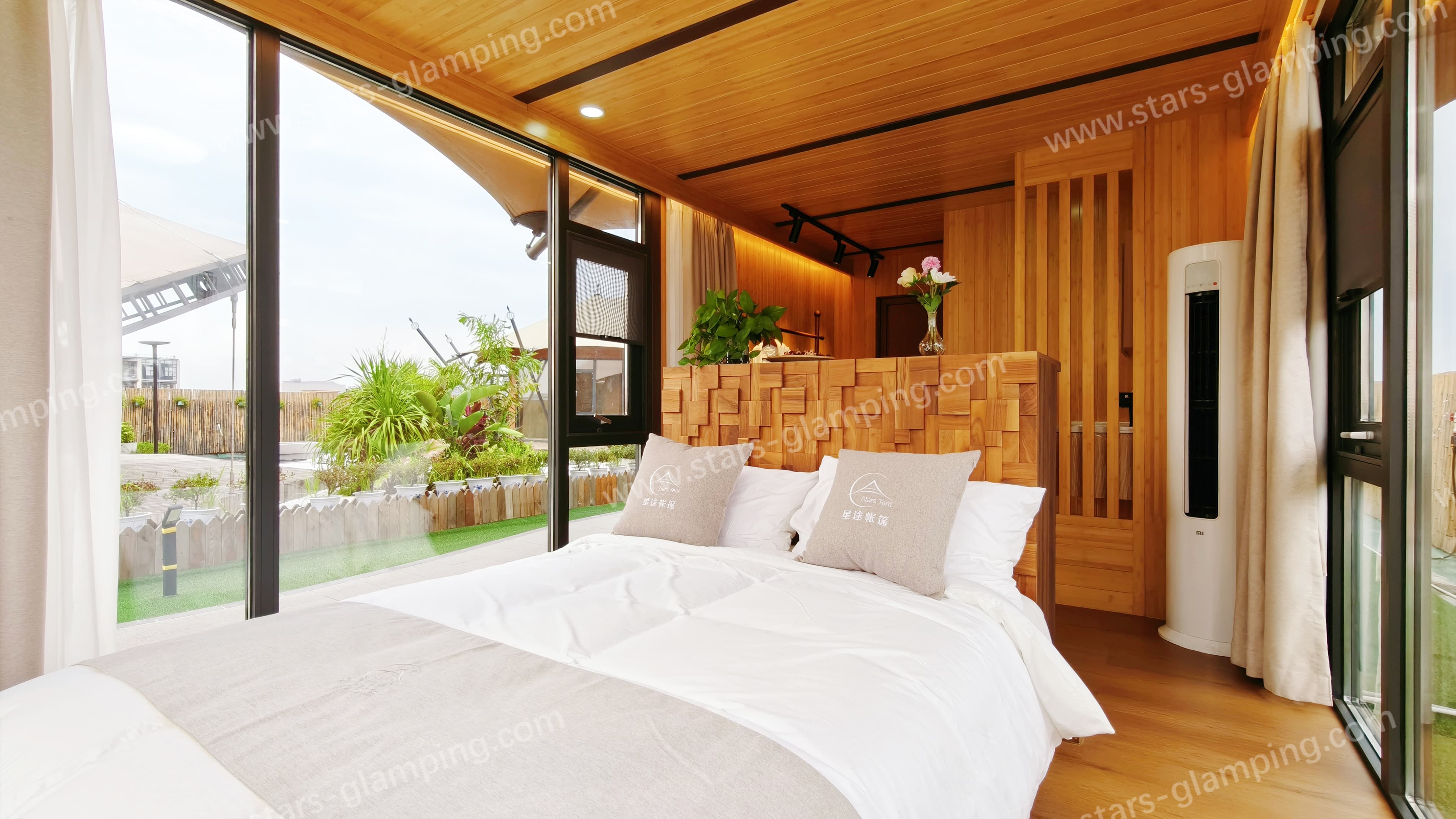
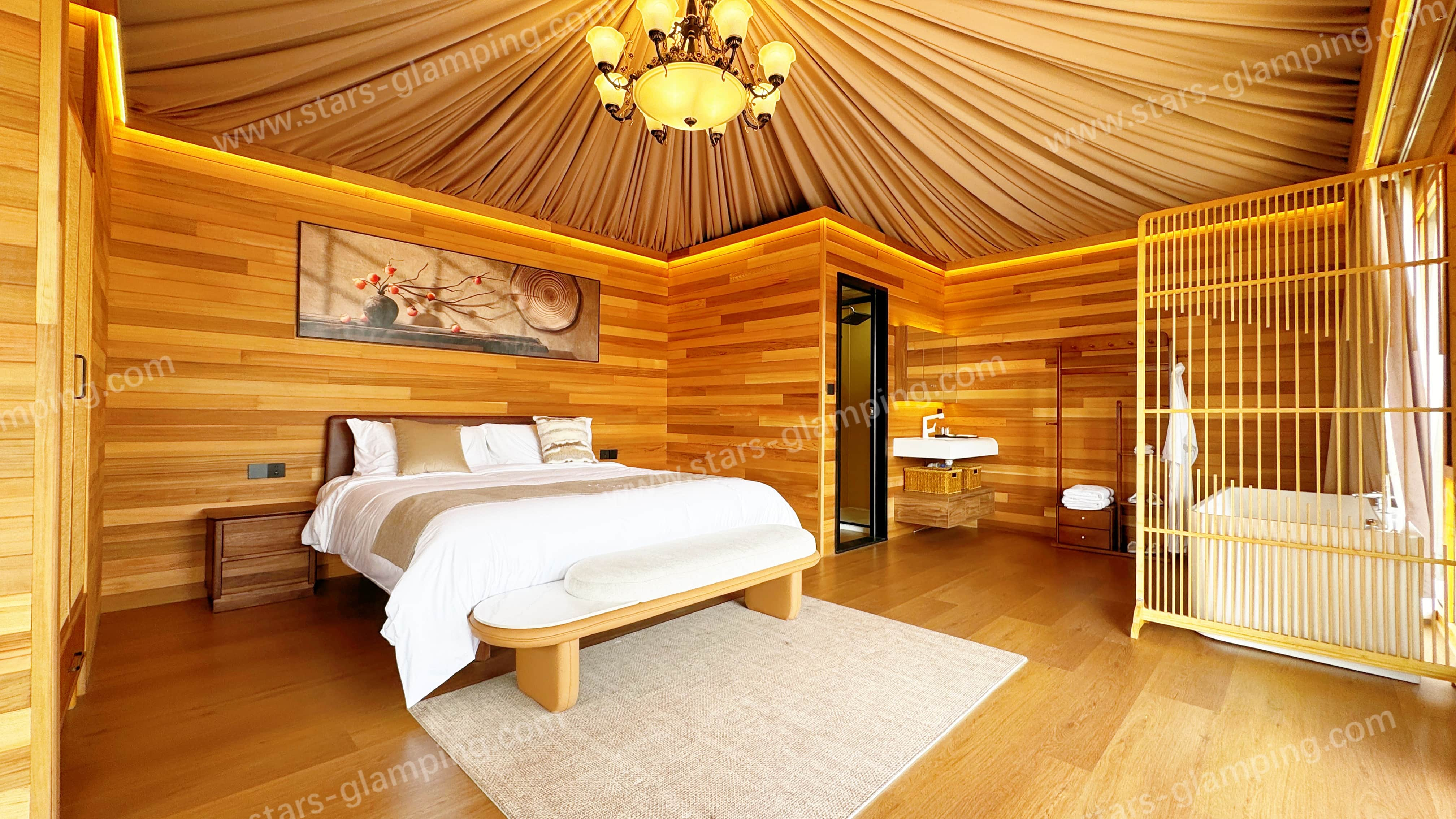
Layout and interior planning. Because the frame, membrane, and glazing class are shared, the usable planning freedom comes from how the unit is configured internally — layout, partition strategy, and where the bathroom module and service runs sit. This is where two spec-identical models can behave very differently on a tight or steep site.
Documentation and customization fit. Two models can be equally compliant on paper and unequally easy to document for a specific jurisdiction. The decisive question is which model the supplier can support with drawings, calculations, test documentation, and a customization path inside the project schedule.
Step-by-Step Breakdown: A Decision Framework for the Eco-Lodge Team
Step 1 — Fix the performance envelope first
Write the non-negotiable performance thresholds into the brief before looking at either model: fire rating B1/M2, waterproofing at or above 5000mm H₂O, wind resistance to the site's design wind speed, snow load to the site's ground snow load, and an operating temperature range that covers the site's recorded extremes. Both Tethys and Villa are listed at 120km/h wind, 80kg/m² snow load, ≥5000mm H₂O, B1/M2, and -30℃ to +70℃. Once this section is written, both models pass it equally, and the comparison can move on.
Step 2 — Confirm the wall system and membrane class
Decide explicitly whether the lodge is a glass-wall PVDF project or a canvas-wall PVC project. This single decision resolves the Tethys/Villa question into a Tethys-or-Villa-versus-Pisces question if canvas is genuinely required. Making this explicit in the brief prevents the comparison from being reopened later by a stakeholder who assumed a different wall build-up.
Step 3 — Score architectural language against the guest proposition
Place the two model image sets, elevations, and general arrangement drawings side by side and score them against three written criteria from the brand brief: how the unit photographs from the primary guest arrival path, how it sits against the site's natural horizon, and how consistent it is with the intended rate tier. Because the technical columns are identical, this step carries the weight that the spec sheet cannot.
Step 4 — Test the interior programme on the actual plot
Plot both models onto the real site plan. Check bed orientation and view lines, bathroom module position, air-conditioning and insulation lining requirements, glass door and panoramic window placement, electrical and lighting routing, and curtain and shading strategy. Stars Glamping lists matched equipment covering air conditioning, insulation lining, glass door and panoramic window, wooden flooring, bathroom module with shower and toilet, electrical and lighting, and curtain and shading systems. Confirm which configuration fits each plot without compromising the guest layout.
Step 5 — Request compliance and test documentation for the chosen model
Ask for the fabric data sheet, the fire test report behind the B1/M2 classification, waterproofing test evidence, and structural calculations for the design wind and snow loads. Then map those documents against the requirements of the authority having jurisdiction. A model-level rating is an input to approval, not a substitute for it, and this step should be completed before the model is locked.
Step 6 — Lock the commercial and delivery path
Only after Steps 1–5 should price and programme decide the tie. Request an itemized quotation that separates the tent structure, interior fit-out, bathroom module, HVAC, freight, installation, and warranty terms, plus the production lead time. Stars Glamping customizes size and layout, tent structure design, fabric material, frame material, interior layout and furniture, bathroom integration, logo branding, and colour, with a minimum order quantity of one unit and a sample available.
Use Cases: Reading the Two Models Against Real Eco-Lodge Contexts
Both models are listed under the same application types — resort accommodation, beachfront hotel, mountain eco-lodge, desert glamping, and event hospitality — so the use-case discussion is about which project conditions reward which decision process, not about excluding either model from a climate.
Mountain and high-altitude eco-lodges
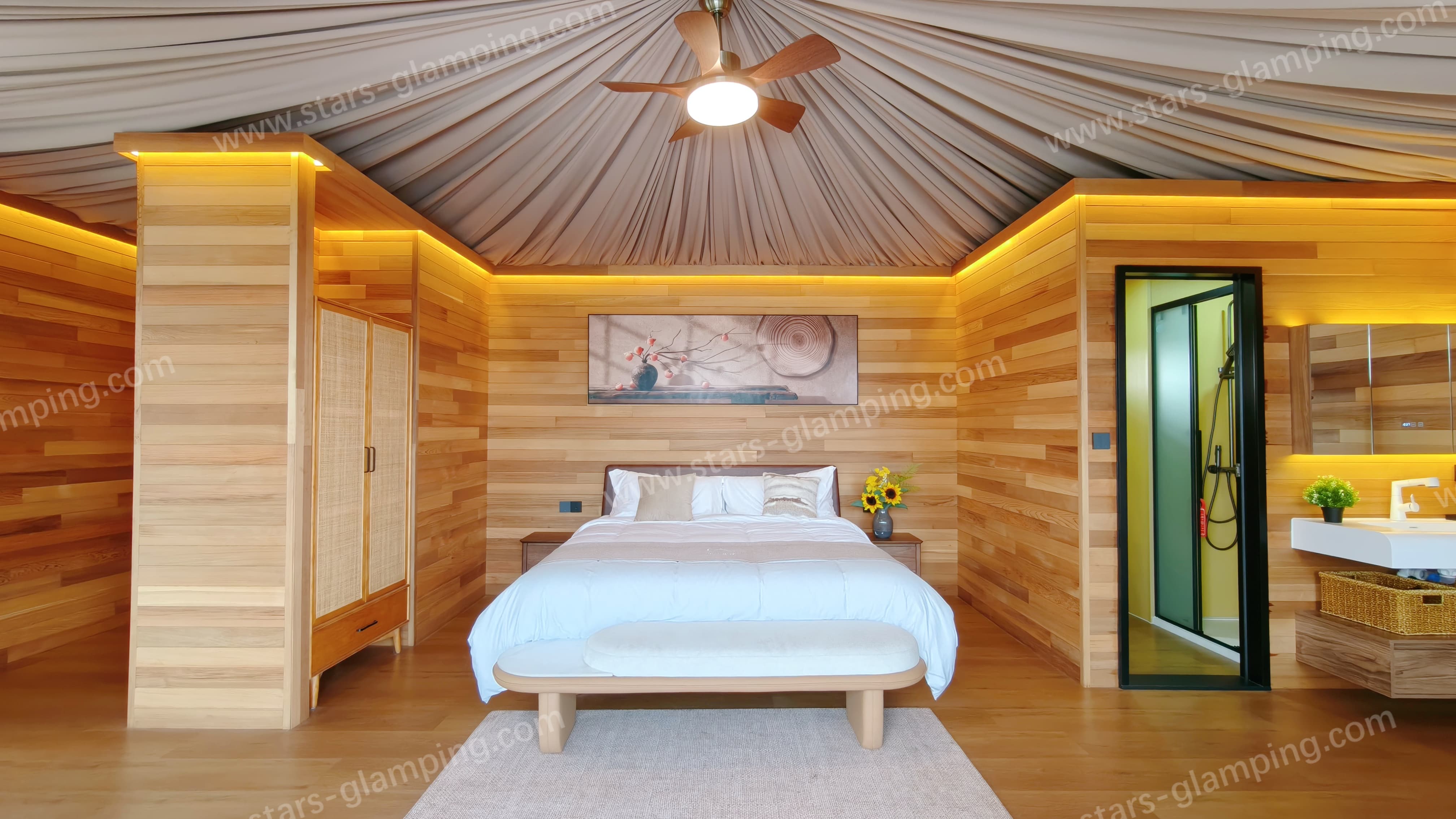
Mountain projects place the highest demands on the shared envelope: wind exposure, snow load, and an operating range that must cover cold nights and warm days. Both models are listed to the same limits, so the differentiator becomes interior planning around insulation lining and heating, plus how each model frames the panoramic view. Stars Glamping reports a 19-unit luxury mountain resort project in Nepal, described as a custom mountaintop design with high wind resistance, thermal insulation, and panoramic views.
Desert and arid-land lodges
Desert projects prioritise UV stability, dust management, and thermal control during the day-night swing. Both models carry UV-stabilised, anti-aging membrane specifications. Stars Glamping reports a 30-unit luxury desert resort project in Saudi Arabia with a custom desert design, high wind resistance, and thermal insulation. On this archetype, the decision usually hinges on how each model shades and ventilates the guest space rather than on the membrane itself.
Beachfront and island lodges
Coastal sites add humidity, salt, and corrosion pressure to the specification. The corpus lists anti-corrosion requirements for coastal environments within the application conditions for this product family. Stars Glamping reports a 100-unit beachfront resort project in India for government tourism developers, focusing on environmentally friendly construction, high wind resistance, and thermal insulation.
Safari and low-impact eco-camps
In low-impact settings, the visual weight of the structure against the landscape matters as much as the specification. Stars Glamping reports a 12-unit wildlife safari project in Cape Verde using eco-friendly materials, an off-grid solution, and natural ventilation design. In this context, the Tethys-versus-Villa choice is essentially a landscape-architecture decision.
Comparison Table: Tethys vs. Villa on Verified Attributes
| Attribute | Luxury Tent - Tethys | Luxury Tent - Villa |
|---|---|---|
| Frame material | Steel pipe | Steel pipe |
| Cover material | 1050g/m² PVDF architectural membrane fabric | 1050g/m² PVDF architectural membrane fabric |
| Wall system | Insulated glass | Insulated glass |
| Waterproof rating | ≥5000mm H₂O | ≥5000mm H₂O |
| Fire rating | B1 / M2 (fire-retardant) | B1 / M2 (fire-retardant) |
| Wind resistance | Up to 120km/h (Level 10 wind) | Up to 120km/h (Level 10 wind) |
| Snow load | 80kg/m² | 80kg/m² |
| Temperature resistance | -30℃ to +70℃ | -30℃ to +70℃ |
| UV protection | UV stabilised, anti-aging | UV stabilised, anti-aging |
| Service life | 25–30 years | 25–30 years |
| Listed applications | Resort accommodation, beachfront, mountain eco-lodge, desert glamping, event hospitality | Resort accommodation, beachfront, mountain eco-lodge, desert glamping, event hospitality |
| Customization scope | Size and layout, structure design, fabric, frame, interior layout and furniture, bathroom integration, branding, colour | Size and layout, structure design, fabric, frame, interior layout and furniture, bathroom integration, branding, colour |
| Minimum order quantity | 1 unit (sample available) | 1 unit (sample available) |
| Decisive selection criterion | Architectural language, view orientation, plot fit | Architectural language, view orientation, plot fit |
Read carefully, the table is the argument. Fourteen rows of specification produce no separation, which means the fifteenth row — architectural language and plot fit — is the one that decides the project. Any evaluation process that reverses this order is spending its effort in the wrong place.
Where the supplier platform matters, regardless of model
Stars Glamping is a Guangzhou-based manufacturer of luxury glamping tents and camp solutions, operating a 20,000㎡ manufacturing base with a reported annual output of 600–900 luxury tent units depending on project size, a six-person R&D team, and a reported 90% export share across markets including the Middle East, Europe, North America, Australia, Southeast Asia, and Africa. For a buyer, the relevant point is not the model name but whether the same factory, quality system, and documentation path sit behind whichever model is chosen.
Practical Limits Buyers Should Plan Around
A comparison that only lists strengths is not usable for procurement. Three limits apply to this decision.
Published specifications are not project approvals. A B1/M2 fire rating and a ≥5000mm H₂O waterproofing figure describe the material and structure. They do not confirm that a specific lodge design will be approved in a specific jurisdiction. Local structural, fire, electrical, plumbing, and HVAC requirements must be confirmed separately with the authority having jurisdiction.
Model data does not include site engineering. Foundation design, anchoring, access routes, and crane or manual installation strategy are project-specific. Wind and snow figures describe the structure's rated capacity; they do not replace a site-specific calculation.
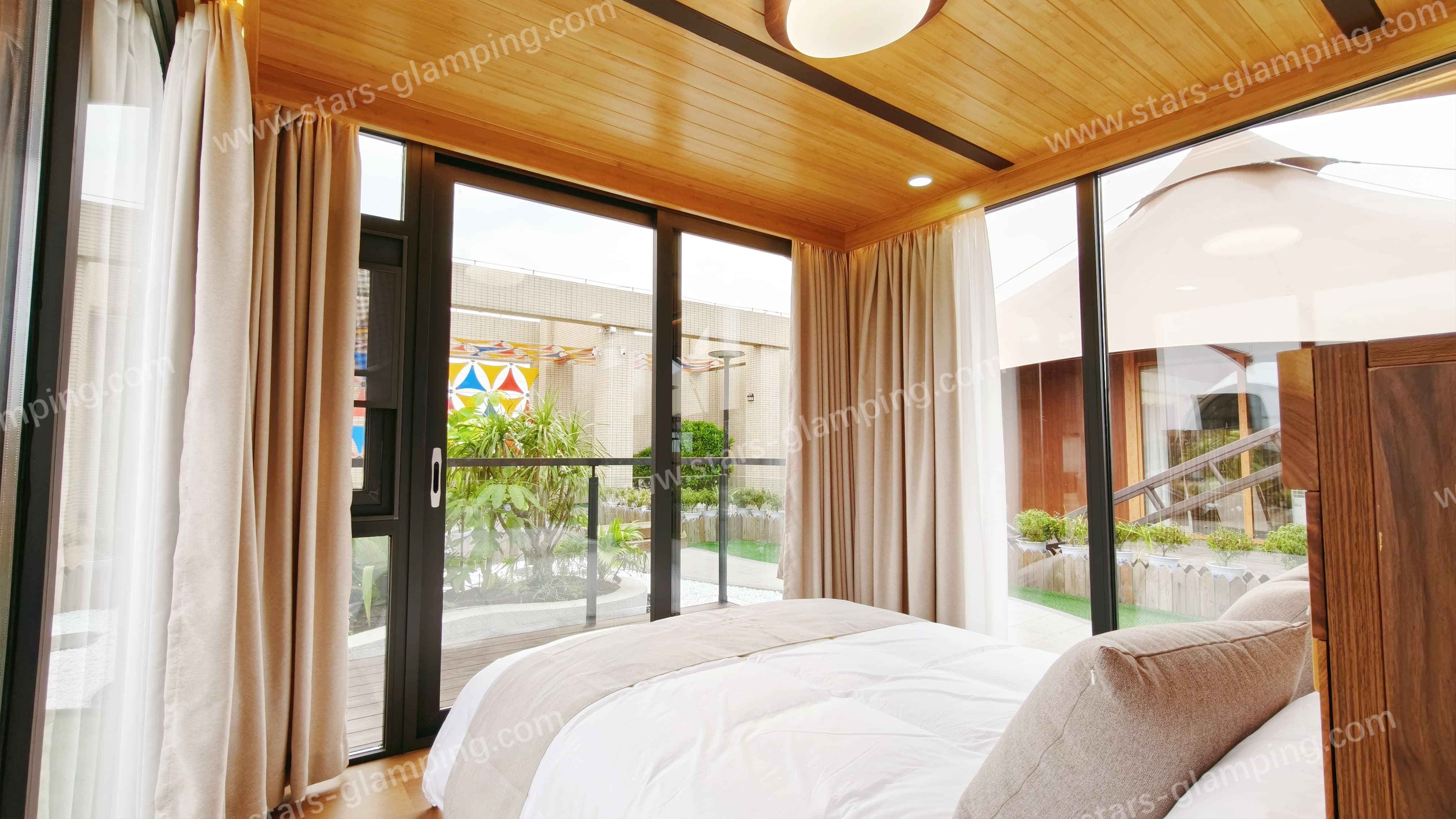
Identical specifications do not mean identical outcomes. Two models with the same membrane and frame can produce very different guest perceptions depending on orientation, glazing extent, interior planning, and landscaping. That is precisely why the decision framework above places architecture and layout ahead of the data sheet.
FAQ: Tethys vs. Villa for a High-End Eco-Lodge
Do Tethys and Villa meet the same fire, waterproofing, and wind specifications?
Yes. Both Luxury Tent - Tethys and Luxury Tent - Villa are listed with a B1/M2 fire-retardant rating, a waterproof rating of ≥5000mm H₂O, wind resistance up to 120km/h (Level 10 wind), a snow load of 80kg/m², UV-stabilised anti-aging fabric, and an operating temperature range of -30℃ to +70℃. These figures describe the material and structural specification. They do not constitute project approval, which is issued by the local authority having jurisdiction. In North America, tent structures are addressed in the International Fire Code (IFC) 2024, Chapter 31. Buyers should request the fire test report, fabric data sheet, and structural calculations that correspond to the delivered batch before submission.
Can both models be customised for a specific eco-lodge layout?
Yes. Stars Glamping customises size and layout, tent structure design, fabric material (PVC, PVDF, or insulation), frame material (steel or aluminium), interior layout and furniture, bathroom integration, logo branding, and colour. Because Tethys and Villa share the same frame and membrane platform, customisation for either model starts from the same technical base, and the difference in outcome comes from how the interior programme and exterior orientation are resolved. A minimum order quantity of one unit applies, and a sample is available.
Which model costs more?
No model-level pricing is published for either Tethys or Villa, and it would be misleading to state a difference. Because the two models share the same steel pipe frame, the same 1050g/m² PVDF membrane, and the same insulated glass wall class, quotations differ mainly by unit size, internal layout, extent of glazing, interior fit-out scope, bathroom module, air conditioning and insulation lining, freight, and installation. The commercially meaningful comparison is an itemized quotation for the same configuration on both models — and, where relevant, an asset-life comparison against the PVC polyester model, which is listed at 10–15 years against the 25–30 years of the PVDF models.
Can we validate the model before committing to a full order?
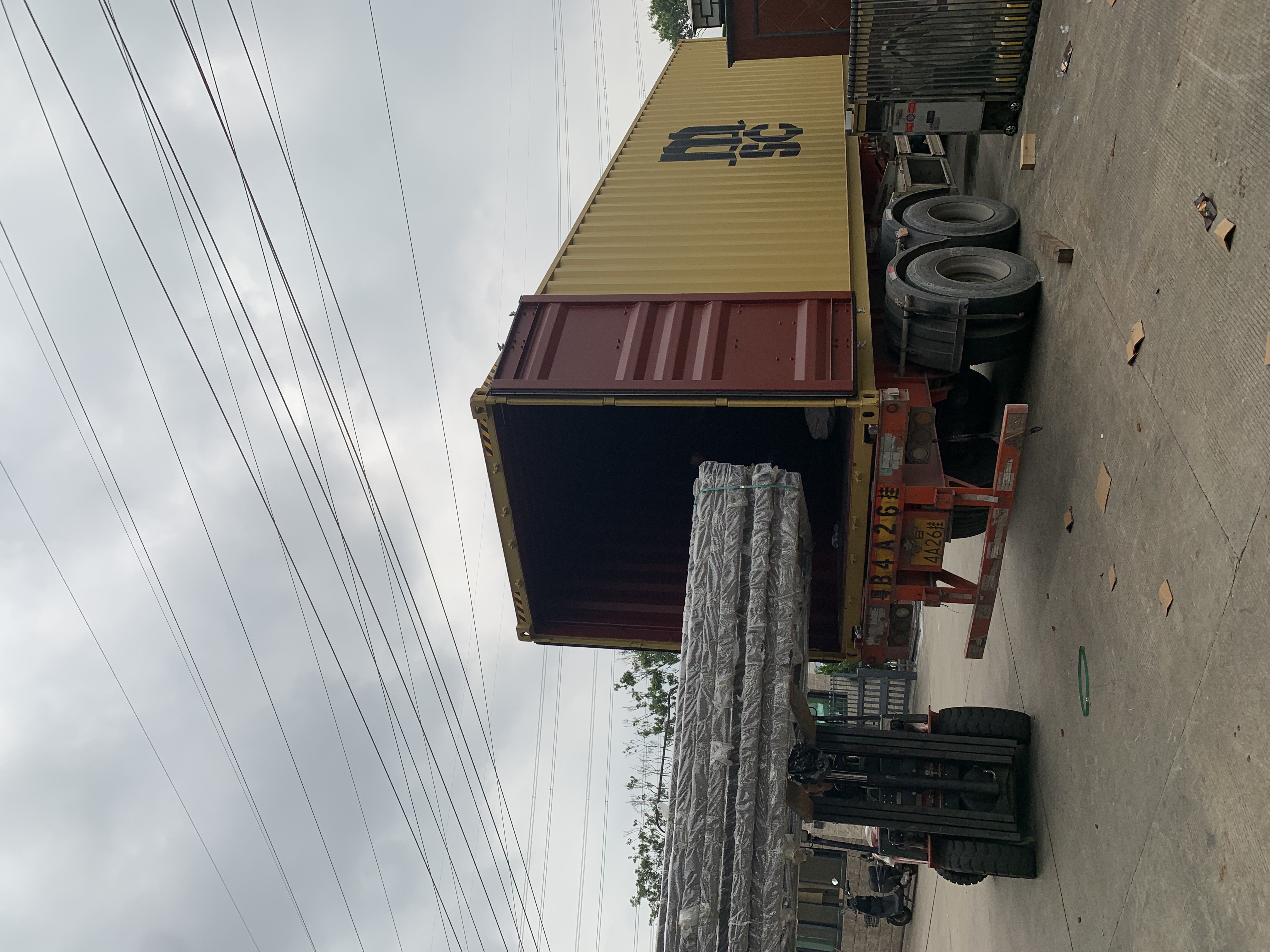
Yes. Stars Glamping accepts a minimum order quantity of one unit and offers a sample, supports third-party inspection, and operates a quality-control process covering raw material inspection, in-process control, and pre-shipment inspection. Engineering drawings and installation guidance are provided, and the company maintains a simulation showroom at its Guangzhou base for configuration review. For a high-end eco-lodge, validating one fully configured unit — including the bathroom module, glazing extent, and interior fit-out — is the most direct way to close the gap between a specification sheet and a guest room.
What is the production and delivery timeline for Tethys or Villa?
Stars Glamping quotes 15–20 days for standard models and 20–30 days for customised projects, with a reported monthly capacity of 50–80 luxury tent units and annual output of 600–900 units depending on project size. Overseas delivery timing is additional to production time and depends on destination and logistics. For a phased eco-lodge build, the practical next step is to send the site plan, target unit count, climate data, and interior brief to the supplier and request a model recommendation with drawings, an itemized quotation, and a production schedule covering both Tethys and Villa — contact details are below and the full product catalogue is available for download.
Next Step: Decide With Drawings, Not Assumptions
Because Luxury Tent - Tethys and Luxury Tent - Villa share the same structural and performance platform, the fastest way to resolve this comparison is to put both models onto your actual site plan. Stars Glamping can supply model drawings, configuration options, and an itemized quotation for the same interior programme on both models.
Email info@stars-glamping.com or message +86-133 2645 9475 on WhatsApp with your project location, unit count, and target opening date. Company website: www.starstent.com
Download the full product catalogue: Stars Glamping Product Brochure (PDF)
Conclusion: A Tie on Paper Is a Decision About Architecture
The Tethys-versus-Villa comparison does not resolve on specifications, and that is the most important finding in this article. Both models are listed with a steel pipe frame, a 1050g/m² PVDF architectural membrane, an insulated glass wall system, ≥5000mm H₂O waterproofing, B1/M2 fire retardancy, 120km/h wind resistance, 80kg/m² snow load, a -30℃ to +70℃ operating range, and a 25–30 year service life.
What remains is the part that actually shapes a high-end eco-lodge: the architectural language guests photograph, the way the unit sits on the plot, and how the interior programme delivers the intended rate tier. Teams that sequence the decision correctly — performance envelope first, wall system second, architecture and layout third, documentation fourth, commercial terms last — reach a defensible answer in a single review cycle. Teams that start with price or with an unverified assumption about wall systems tend to reopen the same comparison three times.
Stars Glamping manufactures both models on the same platform in Guangzhou and supports either with drawings, customisation, and documentation. The right next action is not more reading — it is placing both models onto your own site plan and letting the plot, the brief, and the guest experience make the call.
Have Questions or Need More Details?
Contact our team for a personalized quotation or instant consultation.
Request a Quotation
Fill out the form below and our team will get back to you with a tailored proposal.
WhatsApp Direct Chat
Prefer to chat in real-time? Message us on WhatsApp for instant assistance & quick answers.
- Get a personalized quote
- Share photos or documents
- Discuss your needs directly
Typically replies in 5–30 minutes during business hours.