What Is a Safari Tent? Understanding the Canvas Lodge Structure Behind Modern Eco Tourism
A safari tent is a tensioned canvas lodge built as commercial accommodation, not as recreational camping gear. Its structure combines an 850g/m² PVC-coated polyester outer shell, a breathable Oxford canvas inner lining, and a heavy-duty galvanized steel or solid wood frame, in standard footprints of 20m², 30m², 40m² and 50m². The published performance baseline is a waterproof rating of ≥3000mm H₂O, a B1 fire-retardant rating, wind resistance up to 100km/h (Level 9 wind), a snow load capacity of 60kg/m², an operating range of −25℃ to +60℃, and an expected service life of 8–12 years.
Those figures explain why a safari tent costs several times more than a large camping tent, and why a project team comparing quotes for a wildlife lodge or eco resort needs a different evaluation method. This guide takes the structure apart layer by layer, explains what each published specification actually controls on site, and sets out the sequence a developer follows from site brief to operating lodge.
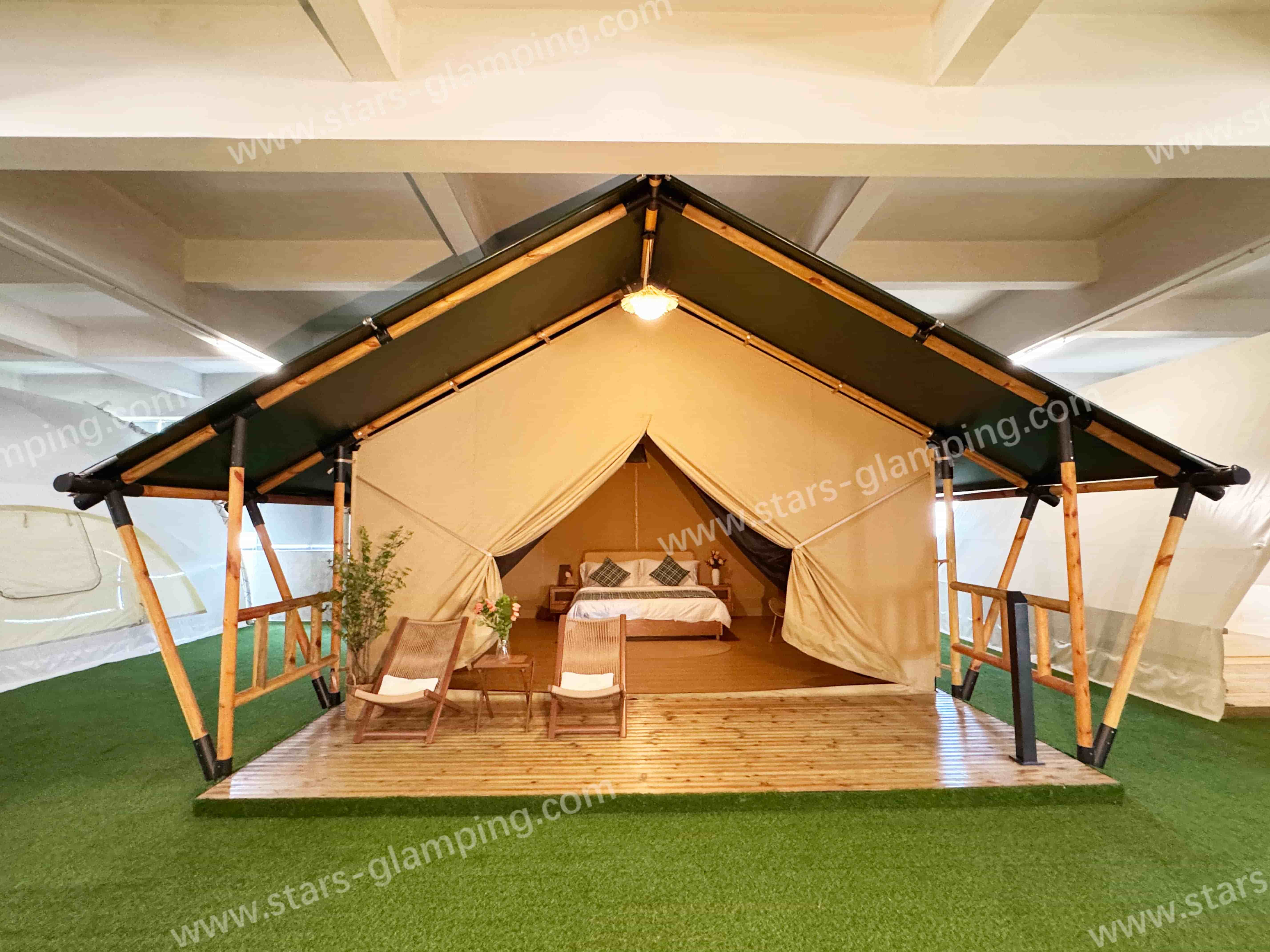 A safari tent is a tensioned canvas lodge: engineered fabric envelope over a rigid, permanently anchored frame.
What Is a Safari Tent? A Working Definition
The category also appears under the names luxury safari lodge tent, canvas lodge tent and PVC safari tent. All three describe the same construction logic: a rigid frame that is permanently anchored to a platform, an engineered fabric envelope tensioned over that frame, and a finished interior that supports overnight guest use with power, lighting and usually plumbing.
Five components define the product:
- Outer shell — 850g/m² PVC-coated polyester fabric, the weather and fire-performance layer.
- Inner lining — custom-made Oxford canvas fabric, specified as breathable, which manages condensation and provides a finished interior surface.
- Frame — heavy-duty galvanized steel or anti-corrosion finished solid wood, which carries the wind and snow loads.
- Openings — large panoramic windows and mesh screens for views, ventilation and insect control.
- Fit-out interface — the fixing points for insulation lining, wooden flooring, panoramic glass doors, bathroom modules, air conditioning and lighting.
Standard sizes are 20m², 30m², 40m² and 50m², and all are customizable. As a working rule, a 20m² unit reads as a single-room lodge, while 40m² and 50m² are the footprints where a separate bathroom module and a compact service area become practical. The structural design language is deliberately wood-style, so the building presents as a lodge rather than a marquee.
Why a Safari Tent Is Not Simply a Large Camping Tent
Most first-time buyers meet this product through a quotation, and the initial reaction is price shock. The comparison that produces the shock is the wrong comparison. A camping tent is a portable shelter rated for a weekend. A safari tent is a building envelope rated for years of continuous commercial operation in high UV, heavy rain, wind and remote locations.
Three structural differences drive the cost gap:
- The envelope has a rated performance floor. 850g/m² PVC-coated polyester at ≥3000mm H₂O is specified to hold out driven rain across seasons, not a single overnight shower. It is UV-resistant and anti-fading because the shell may remain under sun for a decade.
- The frame carries structural loads. A galvanized steel or solid wood frame is engineered for wind up to 100km/h (Level 9 wind) and a 60kg/m² snow load, which means foundations, anchor points and bracing are part of the design, not an accessory.
- The interior is serviced and finished. Electricity, lighting, air conditioning, wooden flooring, glazing and bathroom modules convert a fabric shell into accommodation that a hotel can sell at a nightly rate.
That is also why the product is bought as a capital project rather than a purchase order. The unit price is one line in the budget; site preparation, utilities, fit-out and compliance documentation sit beside it.
Industry Background: Why Canvas Lodges Sit at the Centre of Eco Tourism
Safari tourism is a growing segment of travel accommodation. Grand View Research projects the global safari tourism market to grow from USD 39.7 billion in 2026 to USD 66.9 billion by 2033. Growth of that shape puts pressure on lodge operators to add beds, and it explains why the canvas lodge structure moved from a format associated mainly with African safari camps to a standard accommodation type for eco resorts, jungle resorts and desert camps well beyond that region.
Two operational reasons sit behind the spread. First, a canvas lodge lets an operator add accommodation in phases, unit by unit, instead of committing to one large construction project. Second, the structure is manufactured in a factory and assembled on site, which project teams often prefer for remote or environmentally sensitive locations where heavy site construction is difficult to staff and expensive to service. Whether that translates into a lower environmental impact still has to be assessed project by project — foundations, wastewater, energy supply and site access all sit outside the tent itself.
The practical consequence for a resort developer is that the safari tent decision has become a normal part of the accommodation mix, evaluated alongside hard-build rooms, glamping domes and modular cabins — with a different cost structure and a considerably shorter delivery cycle.
The Structure, Layer by Layer
Layer 1 — The Outer Shell: 850g/m² PVC-Coated Polyester
The outer shell is the defining component of a PVC safari tent. The 850g/m² figure describes the mass of coated fabric per square metre, and it is the specification that separates a commercial envelope from lighter canvas. The coating delivers the waterproof rating of ≥3000mm H₂O, UV resistance and anti-fading performance, and the B1 fire-retardant rating.
On site, the shell determines how the building performs in the conditions these products are specified for: savannah sun, high UV, heavy rain, wind and remote locations. It is also the layer that carries the maintenance burden. Inspection of seams, tension and coating condition is what converts the 8–12 year service life from a stated figure into a defensible operating assumption.
Layer 2 — The Inner Lining: Breathable Oxford Canvas
The inner lining is custom-made Oxford canvas fabric, specified as breathable. Its job is not waterproofing — the PVC shell handles water. The lining manages condensation, gives the interior a clean finished surface, and provides the fixing layer for the insulation lining used in colder projects. Because it is a separate layer, it can be specified differently from the outer shell, which matters when a project needs a warmer interior without changing the weather envelope.
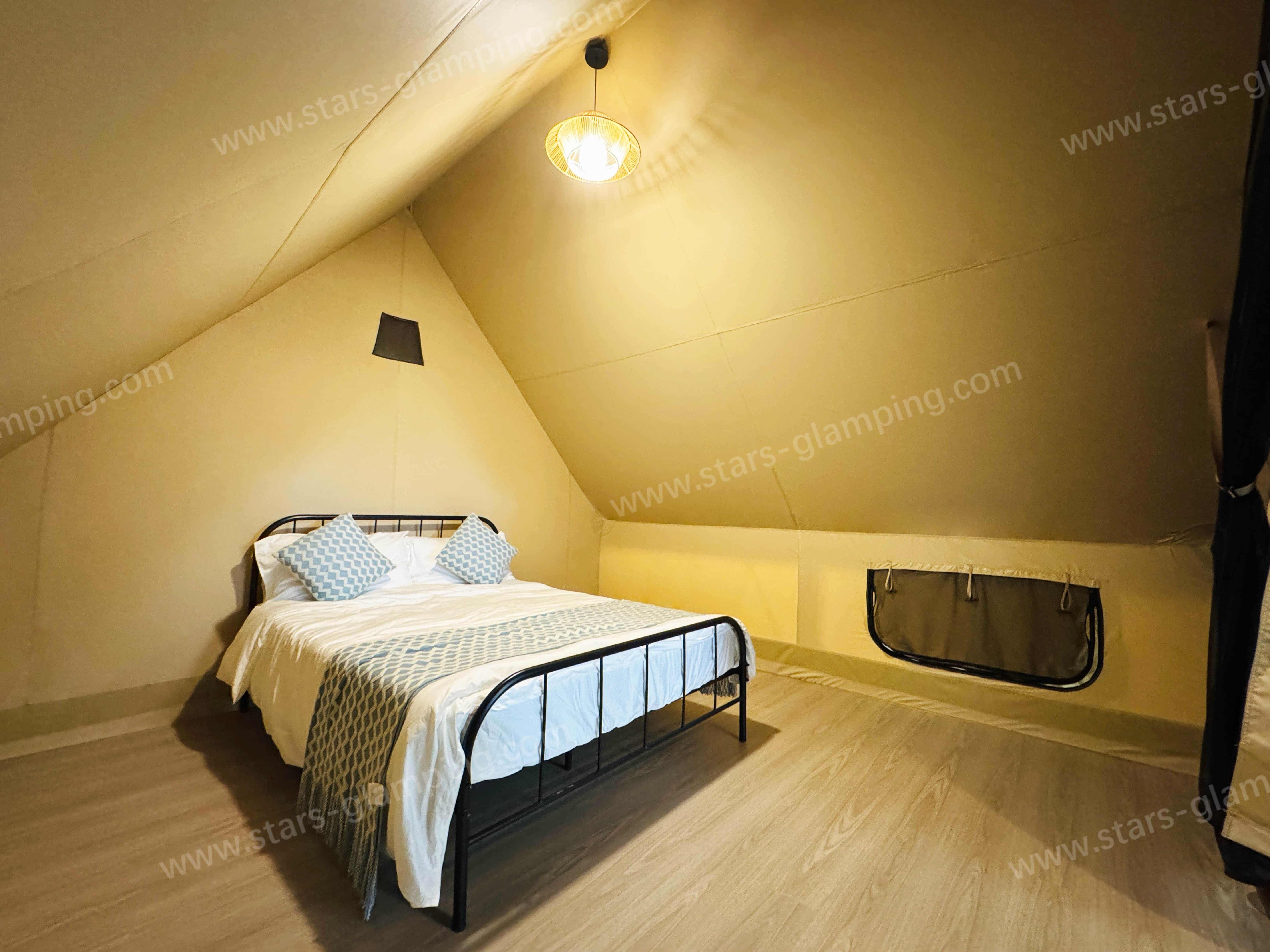 The breathable Oxford lining is a separate layer from the PVC shell, so interior comfort can be specified independently of weather performance.
Layer 3 — The Frame: Galvanized Steel or Solid Wood
The frame is where the structural claims live. Standard configurations use a heavy-duty galvanized steel frame or solid wood with an anti-corrosion finish, and the frame geometry delivers wind resistance up to 100km/h — Level 9 wind — with a snow load capacity of 60kg/m². Galvanized steel is the usual specification for exposed, humid or coastal sites; finished solid wood is chosen where the visible structure should read as timber.
Frame choice also affects installation. A modular frame system allows units to be produced in sections, shipped and assembled on site, which is how a lodge can add accommodation without running a long construction programme. Manufacturers such as Stars Glamping (Stars Glamping Tent Co., Ltd.), a Guangzhou-based producer of glamping domes, safari tents and luxury tents founded in 2018, build their safari range — Lodestar, Vega and Epic — on this modular steel-or-timber platform and export to markets including Southeast Asia, the Middle East, Africa, Europe, North America, South America and Australia.
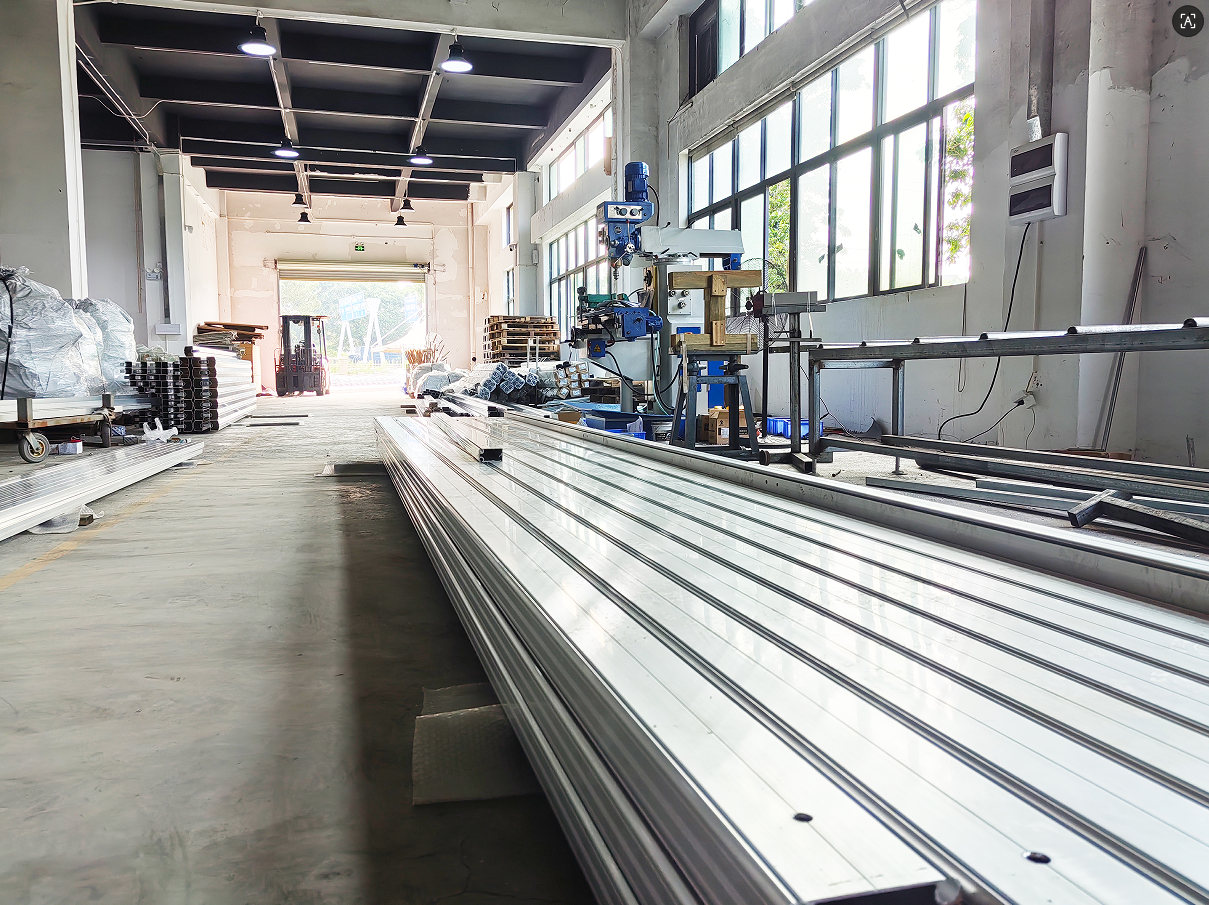 Frame components are produced in a hardware workshop before shipment — the frame, not the fabric, carries the wind and snow loads.
Openings and the Fit-Out Interface
Large panoramic windows and mesh screens are standard features. The windows carry the commercial argument for the format, because the view is part of what the guest is paying for; the mesh screens keep the interior usable in insect-heavy locations without closing the tent up.
The fit-out interface decides whether a unit operates as a room or a suite. Documented options include a bathroom module, air conditioning, insulation lining, wooden flooring, panoramic glass doors and a lighting system. Each must be planned at specification stage rather than added later, because the frame and lining need fixing points and the electrical layout has to be designed around the fabric panels.
What the Performance Figures Actually Mean
A specification sheet lists six figures. None of them is self-explanatory, and each one maps to a different site condition. The table below translates the stated values into what they control, and into the question a buyer should put in the RFQ.
| Stated specification | What it controls on site | Question to put in the RFQ |
|---|---|---|
| Waterproof rating ≥3000mm H₂O | Resistance of the shell fabric to driven rain | Which test method and report support the figure, and does the claim cover seams and joints? |
| B1 fire-retardant rating | Fire performance baseline for the envelope | Certificate number, standard referenced, product scope and jurisdiction of the rating? |
| Wind resistance up to 100km/h (Level 9) | Structural exposure assumed for the frame and anchors | What anchor and foundation detail is assumed at that load, and does it match the site? |
| Snow load capacity 60kg/m² | Roof load allowance in snow zones | Is drift or accumulation between adjacent units accounted for? |
| Operating range −25℃ to +60℃ | Seasonal operating window | What insulation value is achieved when the insulation lining option is added? |
| Service life 8–12 years | Replacement planning and depreciation | What maintenance schedule and UV or salt exposure assumption sits behind the figure? |
The pattern is consistent: every figure is a starting point for verification rather than a conclusion. That is not a weakness of the product category — it is how building envelopes are specified everywhere. The difference is that in glamping procurement the buyer is often new to the category, so the verification questions are not yet routine.
Component Comparison: What Each Layer Does — and Does Not — Solve
Reading the layers side by side shows why specification decisions cannot be traded against each other.
| Layer | Documented specification | What it carries | What it does not solve on its own |
|---|---|---|---|
| Outer shell | 850g/m² PVC-coated polyester; ≥3000mm H₂O; UV-resistant and anti-fading; B1 fire-retardant | Rain, sun, wind-driven water, fire performance baseline | Interior condensation, thermal comfort or acoustic separation |
| Inner lining | Custom-made Oxford canvas fabric, breathable | Condensation management and a finished interior surface | Weather protection — it is not the water barrier |
| Frame | Heavy-duty galvanized steel or anti-corrosion finished solid wood | Wind load to 100km/h (Level 9) and snow load of 60kg/m² | Foundation design or site-specific engineering beyond the stated loads |
| Openings | Large panoramic windows and mesh screens | Views, cross-ventilation, insect control | Privacy or security without an added shutter or glazing solution |
| Fit-out | Bathroom module, air conditioning, insulation lining, wooden flooring, panoramic glass door, lighting system | Guest-grade comfort and 24/7 operation | Utility supply design — power, water and waste must be planned separately |
The practical insight for a first-time buyer is that the layers are not interchangeable. A heavier frame will not compensate for a weak envelope, and a better shell will not deliver a warm winter interior without the insulation lining. Specification has to be resolved layer by layer against the actual site.
From Site Brief to Operating Lodge: A Step-by-Step Breakdown
- Define the site and its exposure. Record the operating conditions the unit must survive: savannah or high UV, heavy rain, wind exposure, remote access and whether the camp runs off-grid. These five variables decide almost every later specification choice.
- Set the accommodation model and footprint. Choose between 20m², 30m², 40m² and 50m² based on whether the unit is a single room or a suite with a bathroom module. All four are customizable, so the footprint should follow the commercial model rather than the other way round.
- Specify the envelope. Confirm 850g/m² PVC-coated polyester, the ≥3000mm H₂O waterproof rating, UV resistance and anti-fading performance, and the B1 fire-retardant rating. Ask for the supporting documents at this stage, not after the purchase order.
- Specify the frame and structural loads. Confirm galvanized steel or finished solid wood, wind resistance up to 100km/h (Level 9), and the 60kg/m² snow load where relevant. Foundation and anchor details belong in this step.
- Plan the fit-out and services. Decide on bathroom module, air conditioning, insulation lining, wooden flooring, panoramic glass doors and lighting. Treat electrical layout, water supply and waste as engineering inputs, because they are not part of the tent package.
- Lock the compliance file. Hold the B1 fire-retardant documentation, product scope and jurisdiction alongside the drawings so the file is complete before installation begins.
- Confirm production, quality control, delivery and after-sales. A minimum order quantity of 1 unit with samples available allows a single unit to be tested before a camp is committed. Lead time runs 15–20 days for standard models and 20–30 days for customized projects, with quality control covering raw material inspection, in-process control, pre-shipment inspection and third-party inspection on request. After-sales scope should be explicit: installation guidance, engineering drawings, 24/7 technical support, spare parts supply, maintenance support and remote or on-site project assistance.
Use Cases: Matching the Structure to the Scenario
Safari Tent for African Lodge and Wildlife Camp
This is the reference application. Long sun exposure, dust, seasonal heavy rain and remote logistics define the brief. The combination that fits is 850g/m² PVC shell for UV and rain, a galvanized steel frame for exposed sites, and mesh screens for ventilation during warm nights.
Safari Tent for Jungle Resort and Riverside Lodge
Humidity and constant moisture are the dominant loads rather than wind. The breathable Oxford lining earns its place here, because condensation management matters more when ambient humidity stays high. Elevated platforms and attention to ground drainage belong to the project scope, not the tent specification.
Safari Tent for Desert Camp
High UV, temperature swings and blowing sand drive the specification. UV resistance and anti-fading performance on the shell, plus the −25℃ to +60℃ operating range, define how the unit behaves across a desert day. Sand control at doorways and openings is a detailing decision made with the supplier.
Insulated Safari Tent for Winter and Mountain Sites
Where the season extends into cold months, the insulation lining becomes the critical option and the snow load figure of 60kg/m² becomes a structural assumption rather than a footnote. Winter operation should be specified as a package — insulation lining, air conditioning or heating provision, and flooring — because retrofitting later is awkward once the lining and electrical layout are fixed.
Safari Tent for Resort with Bathroom, Kitchen and Electricity
Resort-grade units are distinguished by what is inside them. A safari tent with bathroom, a safari tent with kitchen provision and a safari tent with electricity is a fit-out programme as much as a tent purchase: bathroom module, lighting system, wooden flooring and panoramic glass doors are all documented options. The earlier these are decided, the cleaner the electrical and plumbing design.
Off-Grid and Remote Camps
The product is designed for remote area and off-grid conditions, but off-grid operation is a systems question. Power generation, water storage and waste handling sit outside the tent envelope and should be scoped by the project team in parallel with the accommodation specification.
Where a Safari Tent Is the Wrong Specification
A credible evaluation includes the limits. A canvas lodge is not the right answer in every case.
- Where local code treats the unit as a permanent building. Wind and fire requirements may exceed what a fabric envelope is tested for, and the compliance route should be confirmed before design rather than after.
- Where foundation work is impossible. The frame is rated for wind and snow loads, but those loads still transfer into anchors and a platform.
- Where the operating model is short-term. An 8–12 year service life only makes commercial sense against a multi-year operation and a maintenance plan.
- Where utilities are assumed to be included. Power, water and waste are project scope. A tent package does not deliver them.
- Where documentation is treated as a formality. The B1 fire-retardant rating and the waterproof figure are only useful to a project if the supporting reports exist and match the product supplied.
What to Verify Before Comparing Supplier Quotations
Once the structure is understood, quotations become comparable. Six checks carry most of the weight:
- Fabric weight and coating confirmed as 850g/m² PVC-coated polyester, with the ≥3000mm H₂O rating documented.
- Frame material and finish stated explicitly — galvanized steel or anti-corrosion finished solid wood — with wind and snow load assumptions.
- B1 fire-retardant documentation supplied with certificate scope and jurisdiction.
- Lining specified as breathable Oxford canvas, and insulation lining quoted as a separate line if winter operation is planned.
- Fit-out options itemised individually so unit prices can be compared like for like.
- Delivery, installation guidance, spare parts and technical support described in the same document as the price.
Applied consistently, these checks remove most of the ambiguity that makes first quotations in this category hard to compare.
Frequently Asked Questions
Is a safari tent fire retardant, and does the B1 rating satisfy local requirements?
The envelope carries a B1 fire-retardant rating as a standard specification. Whether that rating satisfies a specific jurisdiction depends on the local code, the test standard referenced, and the scope of the certificate — none of which should be assumed from a product description. Buyers should request the fire-retardant documentation, confirm the standard it references, and check the product scope against the model being purchased before the specification is approved.
Can a safari tent include a bathroom, kitchen and electricity?
Yes. Documented fit-out options include a bathroom module, a lighting system, air conditioning, insulation lining, wooden flooring and panoramic glass doors, and the customization scope covers interior layout, bathroom integration, and size and layout changes. Electricity and plumbing are project services rather than tent components, so the electrical layout and water and waste connections should be designed at specification stage to align with the fabric panels and frame fixing points.
What does a safari tent cost, and what drives the price?
Published package pricing for standard safari tent packages sized for 2–4 persons sits between USD 8,190 and USD 15,710 depending on what is included, so the useful comparison is between itemised scopes rather than headline figures. The main drivers are footprint (20m² to 50m²), frame material, envelope specification, and how much fit-out is bundled — bathroom module, insulation lining, flooring, glazing and lighting. Importers should also add duty; in the United States, synthetic-fibre tents other than backpacking models fall under HTS 6306.22.90.30 at a general rate of 8.8%.
Can I order a single unit as a sample before committing to a camp?
Yes. The minimum order quantity is 1 unit, and samples are available. A single-unit order is the practical way to validate fabric handling, frame assembly, lining finish and fit-out coordination on the actual site before a multi-unit camp is specified, and it also allows the project team to test installation guidance against local labour and access conditions.
What is the lead time for a safari tent order?
Lead time runs 15–20 days for standard models and 20–30 days for customized projects, measured from production rather than from first enquiry, with shipping time to the destination added separately. Projects that need a fixed opening date should confirm production scheduling, pre-shipment inspection arrangements and installation guidance early. To request a specification review, a sample arrangement or a quotation for a specific footprint, contact the Stars Glamping team at info@stars-glamping.com or download the product catalogue below.
Conclusion
A safari tent is best understood as a building envelope rather than an oversized tent. The 850g/m² PVC-coated polyester shell, the breathable Oxford lining and the galvanized steel or solid wood frame each solve a different problem, and the published figures — ≥3000mm H₂O waterproofing, B1 fire retardancy, 100km/h wind resistance, 60kg/m² snow load, −25℃ to +60℃ operating range and an 8–12 year service life — only become decision-useful when they are matched to a specific site and verified with documents.
For a developer entering eco tourism, that shift in framing is what makes the numbers comparable. The structure is specified layer by layer, the fit-out is priced line by line, and the compliance file is assembled before installation rather than after. Get those three things right and the premium over standard camping gear stops looking like a markup and starts looking like a specification.
Next Step: Specification Review, Sample or Quotation
Send the site conditions, footprint and fit-out requirements, and the team will map them against the Lodestar, Vega or Epic platform — including envelope, frame, lining and service options.
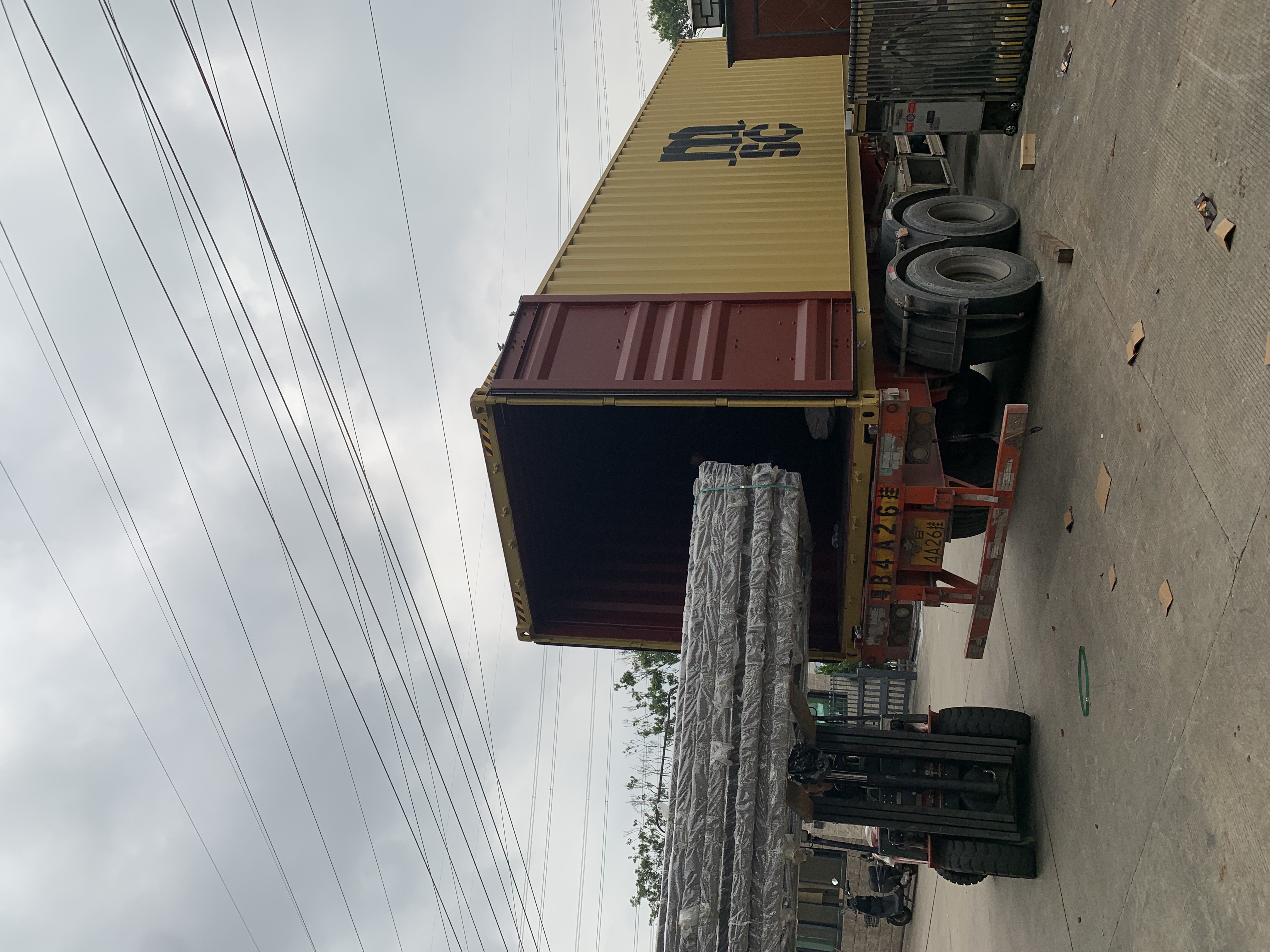 Production to delivery: standard models ship in 15–20 days, customized projects in 20–30 days.
Download the Product Catalogue (PDF)
Email: info@stars-glamping.com | Tel / WhatsApp: +86-133 2645 9475 | Web: www.starstent.com
Stars Glamping Tent Co., Ltd. — Building A, No.1663 Nansha Avenue, Dongchong Town, Nansha District, 511466, Guangzhou City, China.
Have Questions or Need More Details?
Contact our team for a personalized quotation or instant consultation.
Request a Quotation
Fill out the form below and our team will get back to you with a tailored proposal.
WhatsApp Direct Chat
Prefer to chat in real-time? Message us on WhatsApp for instant assistance & quick answers.
- Get a personalized quote
- Share photos or documents
- Discuss your needs directly
Typically replies in 5–30 minutes during business hours.