
Downtime in the Quarry: A Scenario-Based Solution for Granite and Marble Wire Saw Cutting
A stalled bench is the most expensive failure mode in a dimension stone quarry, and it is rarely caused by a broken machine. It is caused by a machine that does not fit the bench, the stone, or the cut sequence in front of it.
In granite and marble quarries, the wire saw is the machine that releases the block. Drilling is already committed, the cut face already exists, and the downstream chain — trimming, hauling, slab saw, polishing line, resin line — waits on one cutting head. When that head stops mid-pass, the loss is not the wire; it is the shift, the queue, and the next bench that cannot be opened on schedule.
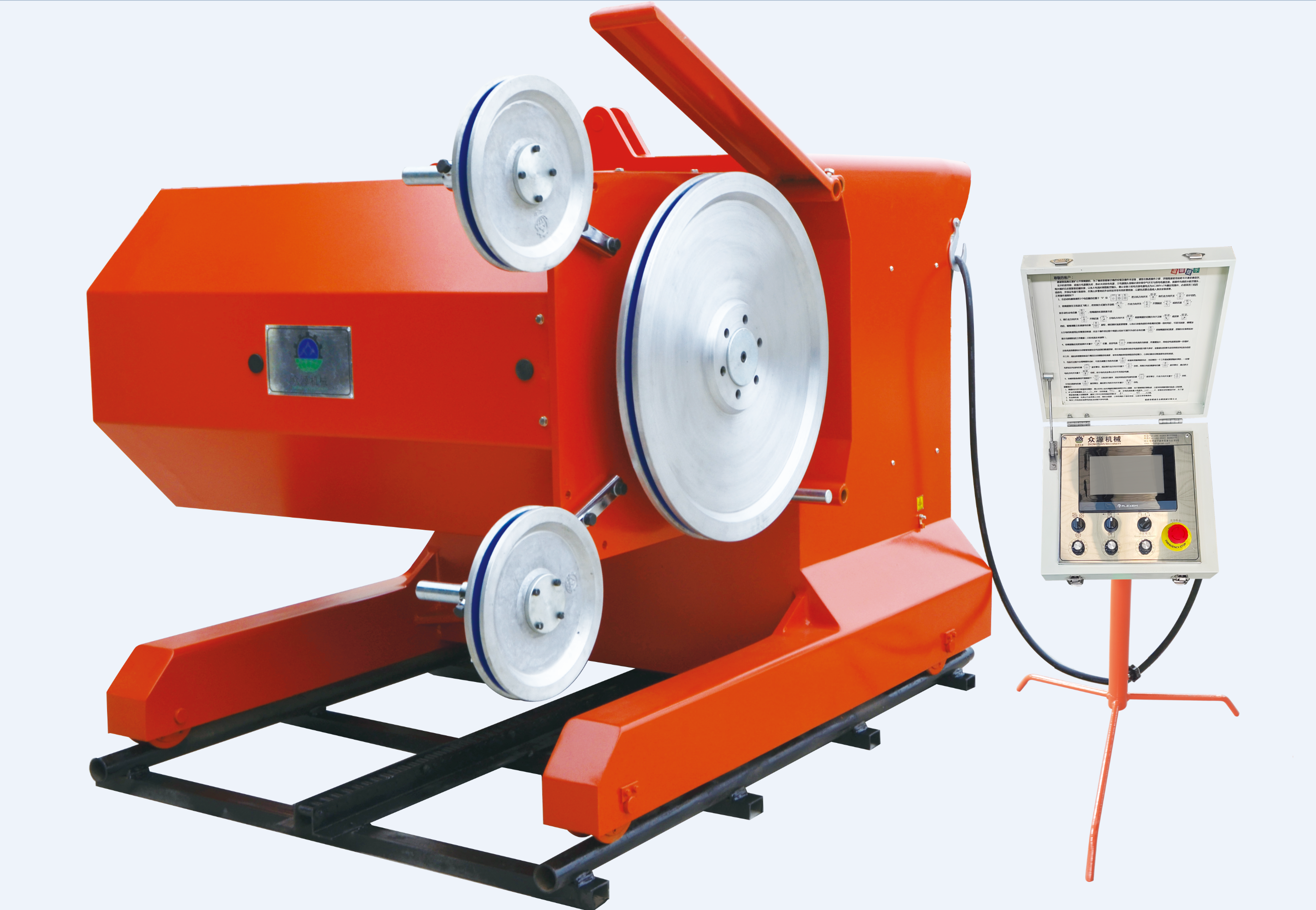
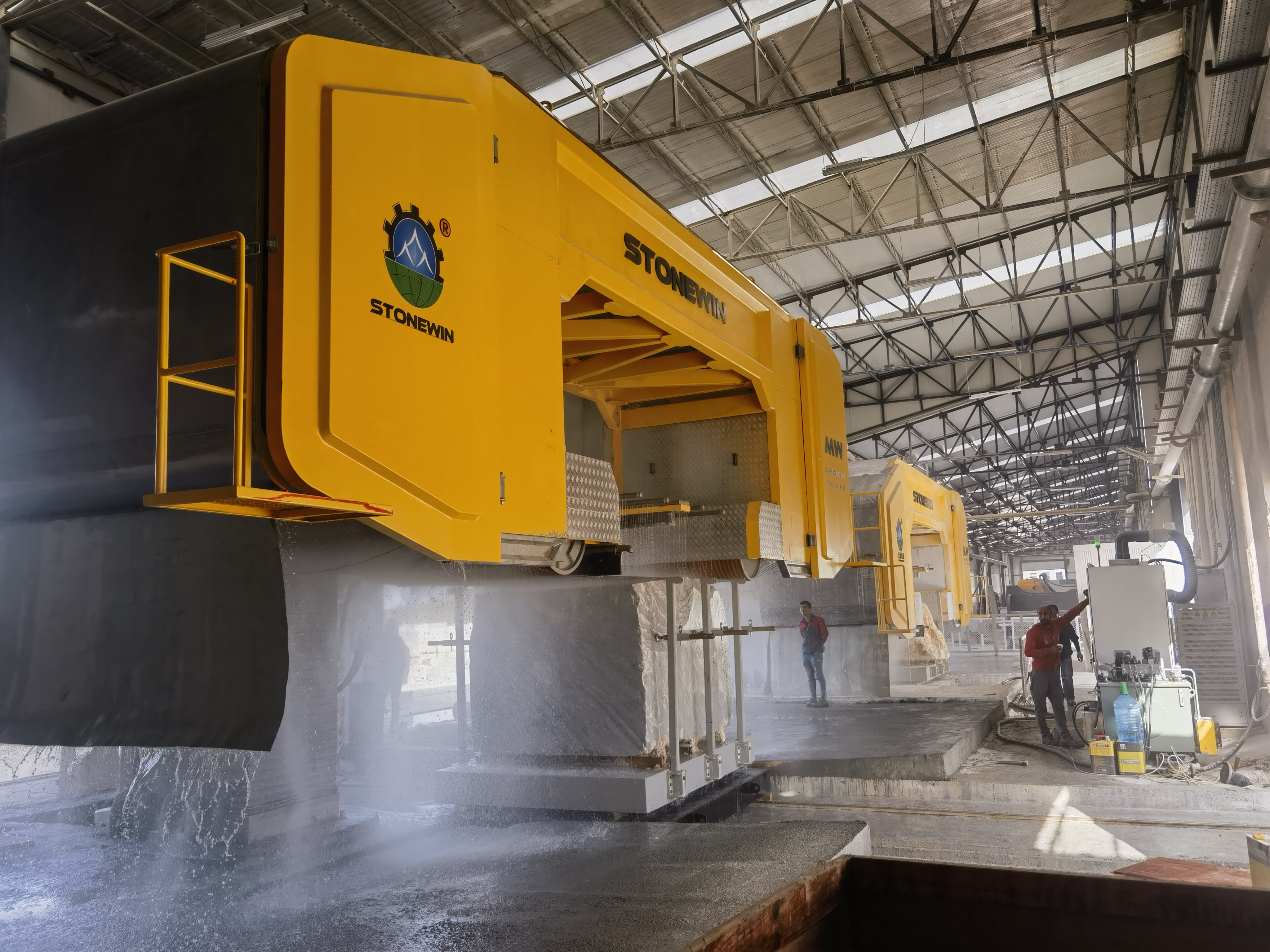
This article treats quarry downtime as a configuration problem and works through a scenario-based solution path rather than a generic buying checklist. The reference set is the Stonewin quarry wire saw platform — ZY-76LD-12P and ZY-60YM-12P class machines — together with the ZY-MW multi-wire series used for slab cutting. The specific parameters that decide whether a cut stays stable are the φ800 mm fly wheel, a wire saw speed range of 0–40 m/s, 360° electric rotation, and the choice between top-tension and side-tension configurations.
What Quarry Downtime Actually Looks Like
Downtime on a wire saw does not usually present as a sudden failure. It presents as a bench that produces less per shift than the plan assumed. The recurring patterns are consistent: a cut that drifts off the intended plane and has to be corrected before the block is released; a machine that must be repositioned by hand between passes; a wire replaced before its planned life; a partly cut bench abandoned overnight because the sequence no longer lines up. Each of these looks like a maintenance event and behaves like a specification error.
The distinction matters for the buyer. If the cause is read as machine quality, the response is a warranty claim or a replacement part, and the bench keeps underperforming. If the cause is read as a fit problem, the response is a configuration change — a different machine class, a different speed setting, a different rotation strategy, a different tensioning mechanism.
The Real Problem: Fit, Not Failure
Three mismatches account for the majority of avoidable stoppages in quarry wire sawing.
Machine class versus bench and stone. A quarry wire saw cutting from the rock face and a multi-wire saw cutting a block into slabs are doing different jobs on different geometry. Granite and marble also respond differently at the cut: granite is the harder, more abrasive material, marble cuts more freely, and a single fixed operating routine that suits one will not suit the other. When one machine is asked to cover both, output suffers at one of the two.
Speed setting versus material. A wire saw operated at a single default speed leaves performance on the table in softer stone and stresses the wire in harder stone. The useful capability is not top speed; it is the ability to sit at the right point inside the working range.
Repositioning versus cut sequence. On a bench that requires several passes, the time between cuts is a direct output loss. A machine that must be re-rigged manually for each pass converts a cutting problem into a handling problem.
Industry Background: Where Wire Saw Cutting Sits in the Stone Chain
Quarry wire saw machines are used before a block ever enters a factory. They cut stone directly from the quarry face, and they are also used on site for trimming and secondary cutting of blocks. Everything downstream — multi-wire slab saws, polishing lines, resin lines — depends on the block arriving in the right condition, which is why a wire saw stoppage propagates so far.
Market context supports the level of attention buyers now place on this equipment. Fortune Business Insights valued the global stone processing machinery market at USD 20.86 billion in 2024 and projects a compound annual growth rate of 5.5% from 2026 to 2034. Growth of that kind shifts the buying question from whether to invest in cutting equipment to how precisely the equipment is matched to the site.
Two further changes are visible in how quarry and plant buyers evaluate suppliers. Documentation is now requested earlier: CE certification, the exact standards applied, and the scope of the certificate are typically checked before a machine is shortlisted, not after the order. And configuration is negotiated rather than selected from a catalogue — buyers ask about number of wire saw units, tensioning mechanism, and branding options as part of the technical discussion.
The Scenario-Based Solution: Matching the Machine to the Bench
Stonewin is the stone machinery brand of FUJIAN XIAPU ZHONGYUAN MACHINERY CO., LTD., a China-based manufacturer established in 2011 that researches, develops, manufactures and sells quarrying equipment, slab processing machinery and diamond tools for the stone industry (www.stonewin.com). Its product line covers stone quarrying, slab processing, slab polishing and resin line equipment — the full sequence in which a wire saw stoppage becomes a commercial problem.
The solution path below follows the order in which a stalled bench should actually be diagnosed: stone and geometry first, machine class second, operating parameters third, safety documentation fourth, commissioning and support last.
The Quarry Platform: ZY-76LD-12P and ZY-60YM-12P Class Machines
The Stonewin quarry diamond wire saw machine series includes ZY-76LD-12P, ZY-60YM-12P, ZY-70YM-12P and ZY-76YM-12P, alongside the smaller ZY-45G, ZY-55G, ZY-75G, ZY-15G, ZY-18.5G and ZY-22G model groups. The published working parameters are narrow and specific, and each one maps to a downtime cause rather than to a brochure claim.
- Fly wheel diameter: φ800 mm. The fly wheel governs how the wire is guided and stabilised as it enters and leaves the cut. A larger, defined fly wheel diameter is a stability element: it is one of the reasons a cut can hold its plane instead of drifting and needing correction.
- Wire saw speed: 0–40 m/s. The value of this range is not its maximum. It is that granite and marble can be run at different points inside the same envelope, so the operator sets speed to the stone rather than accepting one fixed setting for both.
- Rotation angle (electric): 360°. Electric rotation lets the cutting head be repositioned between passes without manual re-rigging of the machine. On a multi-pass bench, that is the difference between cutting time and handling time.
- Machine body material: customizable to customer requirements. Specified at order stage, together with the rest of the configuration.
The Slab Platform: ZY-MW Series and the Tensioning Decision
Once the block is out of the quarry, the cutting problem changes shape. The Stonewin multi-wire saw machine series runs from ZY-MW5 through ZY-MW90, with a cutting size range of 3500 mm (L) × 2200 mm (H), 5 to 90 wires, and a machine weight of 22 to 80 tons. The main frame is carbon steel; key components are alloy steel.
Two configurations are offered for the multi-wire platform: side-tension multi-wire saw machines and top-tension multi-wire saw machines. Tensioning mechanism is listed as a customizable option, together with the number of wire saw units. Because tensioning interacts with block handling and plant layout, the practical rule is to fix it at order stage with the manufacturer rather than change it after installation — a late change is itself a source of unplanned downtime in the slab hall.
Step-by-Step: From a Stalled Bench to a Stable Cut
- Define the cut before defining the machine. Record the stone type (granite or marble), the bench geometry, the target block dimensions, and whether the machine will cut from the face or perform trimming and secondary cutting on site. This single step prevents the most common mismatch, because it forces the stone to select the machine rather than the other way round.
- Select the machine class. Quarry wire saw work and slab cutting are different operations. A ZY-76LD-12P or ZY-60YM-12P class quarry machine is the fit for face and bench cutting; a ZY-MW series multi-wire saw is the fit for producing slabs from a block at the plant. Using one class to cover both is how benches end up queuing behind an unsuitable machine.
- Set wire speed to the stone. Use the 0–40 m/s range deliberately. Granite and marble do not cut alike, so the operating point should be established per material and reviewed when the quarry moves into a different bench or a different stone body, instead of being carried over unchanged from the last site.
- Plan the pass sequence around 360° electric rotation. Map how many passes the bench requires and how the machine will be turned between them. Electric rotation removes manual re-rigging from the sequence, which is where a large share of non-cutting time is normally lost.
- Fix the tensioning configuration at order stage. Choose top-tension or side-tension for the multi-wire platform, and confirm the number of wire saw units, at the point of specification. Both are offered as customization options; the decision should be locked before production begins, not adjusted on site.
- Close safety and compliance before shipment, not after arrival. Confirm the certification scope against the exact model ordered, agree the acceptance test, and prepare operator documentation so the machine enters production instead of entering a documentation hold.
Safety, Compliance and Risk Control
For quarry equipment, compliance is a downtime issue as much as a legal one. A machine held at site pending documentation is not producing, and a machine operated without a defined guarding and operating routine exposes the site to a far more serious kind of stoppage.
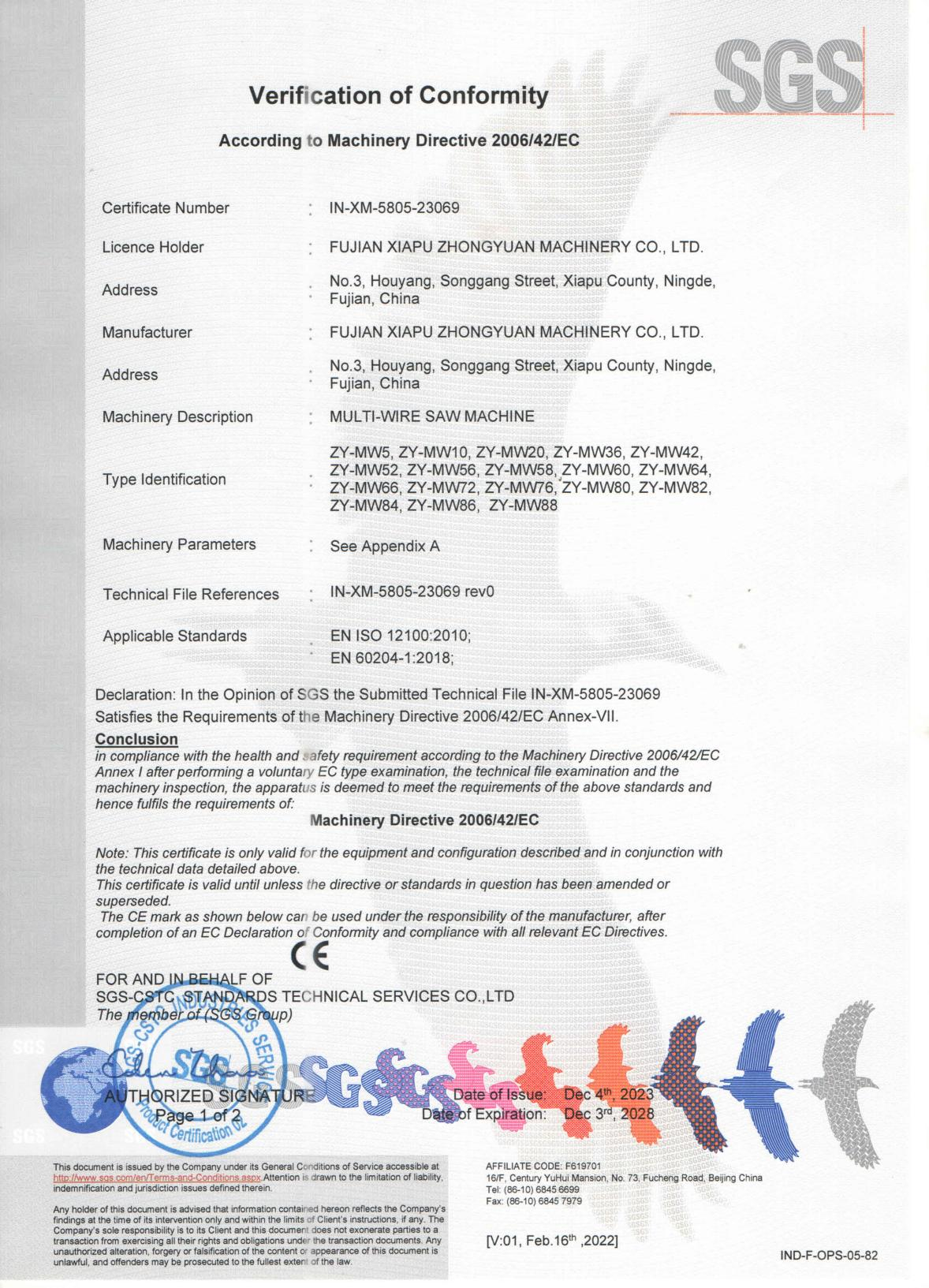
Stonewin holds CE certification issued by SGS under certificate number IN-XM-5805-23069, valid from 2023-12-04 to 2028-12-03. The certificate cites the harmonised machinery safety standards EN ISO 12100:2010 and EN 60204-1:2018 — the first covering machinery risk assessment and safeguarding, the second covering electrical equipment of machines. The listed scope runs across the multi-wire series from ZY-MW5, ZY-MW10, ZY-MW16, ZY-MW20, ZY-MW36, ZY-MW42, ZY-MW52, ZY-MW56, ZY-MW58, ZY-MW60, ZY-MW64, ZY-MW66, ZY-MW72, ZY-MW76, ZY-MW80, ZY-MW82, ZY-MW84, ZY-MW86, ZY-MW88 and ZY-MW90.
Buyers should apply one discipline here: match the certificate scope to the model being purchased, in writing, before the order is placed. Where a quarry wire saw model needs to be checked against the certification documentation, that confirmation belongs in the technical offer rather than in a post-delivery conversation.
On the operational side, risk control rests on three elements that belong in the commissioning plan. The first is the machine's safety guarding, which is the physical output of the EN ISO 12100:2010 risk-reduction approach. The second is operator briefing at installation, so that the people running the machine understand the speed settings, the rotation routine and the guarding before the first production pass. The third is documented standard operating procedure — a written sequence for setting up, cutting, rotating and shutting down — because unrecorded practice cannot be trained, audited or improved. Stonewin's engineer team supports equipment selection, installation and commissioning through to after-sales maintenance, which is the point at which this documentation is normally handed over.
Use Cases: Where This Configuration Path Applies
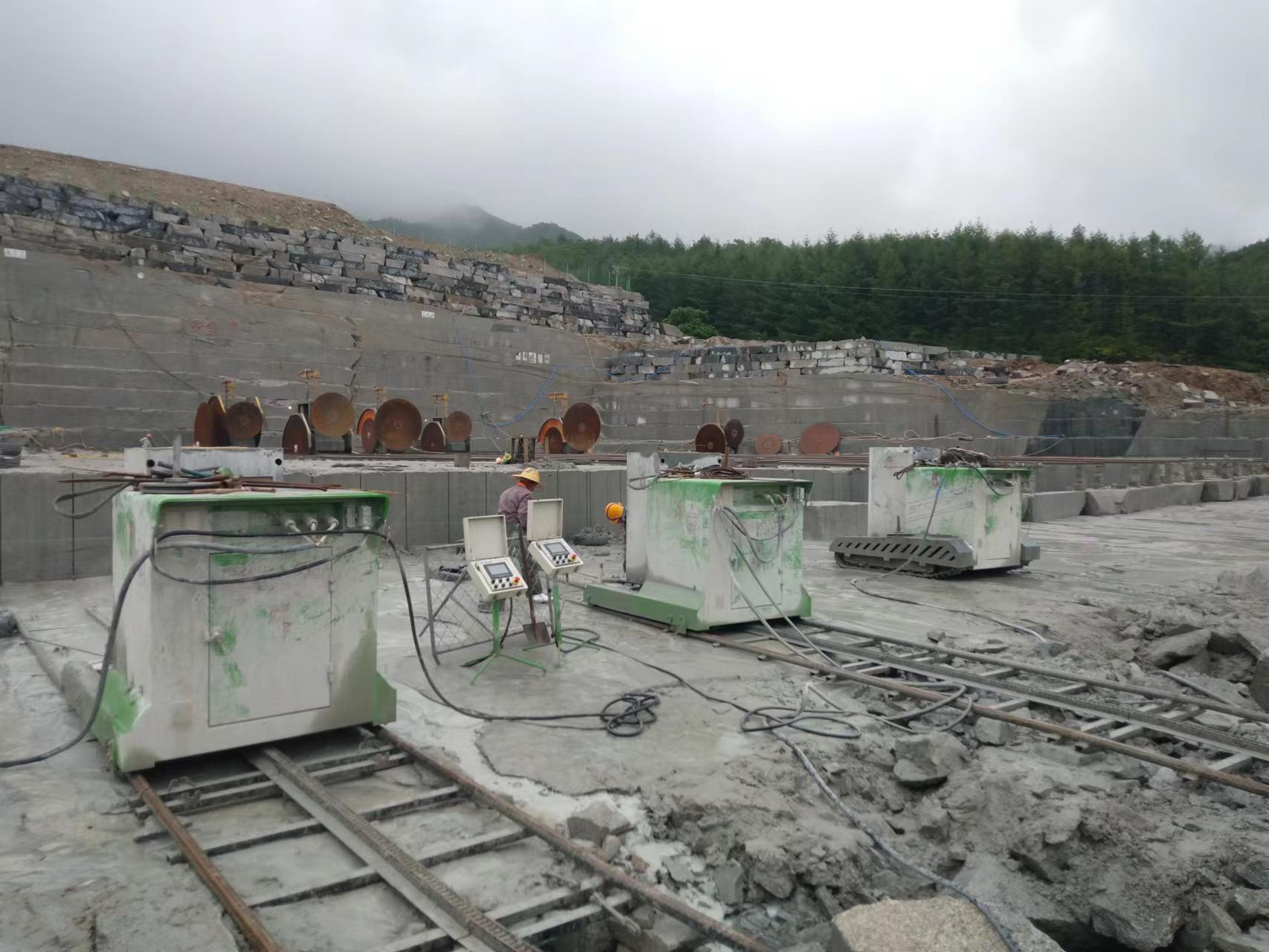
The scenario path is not theoretical; it maps onto the way Stonewin wire saw machines are actually deployed. The documented application is cutting and processing of granite and marble slabs in open-pit quarries and processing plants, and the installed base is described as over 100 units in use across China, Turkey, India, Iran, Poland, Bulgaria, Algeria, South Africa, Brazil, Thailand, Cambodia and Egypt.
Four recurring site scenarios benefit most from the configuration-first approach:
Open-pit granite benches. Hard, abrasive stone rewards a machine that holds a stable wire path and can be run at a speed set for the material. This is the classic ZY-76LD-12P / ZY-60YM-12P class application.
Marble quarries. Softer stone cuts more freely, and the risk shifts from wire stress to cut control and pass planning. The same machine platform, run at a different speed setting and with a planned rotation sequence, covers it.
Processing plants converting blocks to slabs. Here the ZY-MW multi-wire series takes over, with the tensioning configuration and wire count selected at order stage.
On-site trimming and secondary cutting. Blocks that need re-sizing before transport are handled by the quarry machine rather than by hauling an over-size block to the plant.
The longest-running reference in Stonewin's case material is a quarry and slab processing application active for over 10 years, with reported highlights of high cutting precision, low energy consumption, stable performance and long service life. For a buyer, the relevant reading is not the longevity claim itself but what it implies: a configuration that stayed valid across a decade of operation on both granite and marble.
Comparison: Quarry Wire Saw Machine vs Multi-Wire Saw Machine
The two platforms solve different halves of the same production chain. The table below uses only published specification data; where a value is not stated for a platform, it is marked as such rather than estimated.
| Parameter | Quarry wire saw machine (ZY-76LD-12P / ZY-60YM-12P class) | Multi-wire saw machine (ZY-MW series) |
|---|---|---|
| Primary operation | Quarry bench and face cutting, on-site trimming and secondary cutting | Slab cutting from blocks at a processing plant |
| Stone application | Granite and marble | Granite and marble |
| Fly wheel diameter | φ800 mm | Not stated in published specification |
| Wire saw speed | 0–40 m/s | Not stated in published specification |
| Rotation | 360° (electric) | Not stated in published specification |
| Number of wires | Not stated in published specification | 5–90 |
| Cutting size range | Not stated in published specification | 3500 mm (L) × 2200 mm (H) |
| Tensioning configuration | — | Side-tension or top-tension, customizable |
| Machine weight | Not stated in published specification | 22–80 tons |
| Body / frame material | Body material customizable to customer requirements | Carbon steel main frame, alloy steel key components |
| CE certification | Confirm scope against the exact model before ordering | Covered in scope of IN-XM-5805-23069 (ZY-MW5 to ZY-MW90) |
For diagnosis purposes, the more useful view is the mapping from symptom to configuration lever:
| Downtime symptom on site | Configuration lever | Machine element involved |
|---|---|---|
| Cut drifts and needs correction before the block is released | Wire guidance stability | φ800 mm fly wheel |
| Slow cutting in granite, over-aggressive behaviour in marble | Speed set to the stone | 0–40 m/s wire saw speed range |
| Long non-cutting intervals between passes | Repositioning without manual re-rigging | 360° electric rotation angle |
| Slab output does not match the block plan | Wire count and tensioning fit | 5–90 wires; side- or top-tension configuration |
| Machine held at site on documentation grounds | Compliance confirmed before shipment | CE (SGS IN-XM-5805-23069), EN ISO 12100:2010, EN 60204-1:2018 |
FAQ
Is the wire saw machine CE certified, and which standards apply?
Yes. Stonewin holds CE certification issued by SGS under certificate number IN-XM-5805-23069, valid from 2023-12-04 to 2028-12-03, with the harmonised standards EN ISO 12100:2010 and EN 60204-1:2018 cited. The listed scope covers the multi-wire series from ZY-MW5 through ZY-MW90. Because the certificate enumerates specific models, the practical step for a buyer is to have the supplier confirm in writing that the exact model being purchased sits inside the certificate scope, and to keep that confirmation with the technical offer.
Can the machine be configured for my granite or marble bench?
Yes. Stonewin provides Independent Brand, OEM and Customization production services. Customizable options include the number of wire saw units and the tensioning mechanism, which can be side-tensioning or top-tensioning; the quarry machine body material can also be customized to customer requirements. The quarry platform itself is specified with a φ800 mm fly wheel, a 0–40 m/s wire saw speed range and 360° electric rotation, which are the three parameters that most directly affect cut stability on a granite or marble bench.
What are the commercial terms and payment structure?
Minimum order quantity is 1 unit and delivery terms are FOB. Acceptance criteria are a pre-shipment test plus third-party inspection by SGS. Payment can be handled as cash terms — 30% T/T in advance and 70% T/T against a copy of the bill of lading — or through installment payments via Sinosure. Machine pricing is not published because the configuration varies with wire count, tensioning mechanism and body specification, so a quotation is prepared against the defined bench scenario rather than against a catalogue line.
How can we validate the machine before it ships?
Validation happens at the factory gate. Quality control covers internal testing, third-party testing and CE certification, and the agreed acceptance criteria combine a pre-shipment test with third-party inspection by SGS. Buyers defining a granite or marble bench scenario are advised to attach the stone type, bench geometry and target block dimensions to the inspection plan, so the pre-shipment test reflects the cut the machine will actually perform. Machines are supplied with a one-year warranty and lifetime maintenance support.
What is the lead time and production capacity?
Typical production lead time is 2 months, with a monthly production capacity of 3 units and a minimum order quantity of 1 unit. For a quarry opening a new bench or a plant replacing a line, that capacity figure is the planning constraint worth checking early, particularly where the tensioning configuration or number of wire saw units is custom. Buyers can review the full Stonewin product range in the company brochure (PDF) and then send bench details for a scenario-based configuration recommendation.
Conclusion: Downtime Is Decided at the Specification Stage
Quarry downtime is rarely a machine failure story. It is the visible end of a chain of specification decisions: which class of machine was chosen for the bench, where the wire speed sits inside the 0–40 m/s range, whether 360° electric rotation was used to remove handling time between passes, and whether the tensioning configuration was fixed at order stage or left to be resolved on site. Add the φ800 mm fly wheel as the stability element and the picture is complete — the machine either fits the cut or it does not.
The same logic applies to compliance. A CE certificate issued by SGS under IN-XM-5805-23069, with EN ISO 12100:2010 and EN 60204-1:2018 cited and a scope running from ZY-MW5 to ZY-MW90, is a documented fact that belongs in the shortlisting file — but only once it has been matched to the exact model being purchased. Safety guarding, operator briefing and written SOP documentation follow the same rule: they are commissioning deliverables, not afterthoughts.
For a quarry or processing plant evaluating this equipment, the productive next step is concrete rather than comparative. Describe the bench: the stone, the geometry, the target block size, the pass sequence, and whether the machine will cut at the face or trim on site. That description is what turns a wire saw purchase from a machine order into a configured cutting solution — and it is the cheapest downtime mitigation available.
Quarry wire saw machines, multi-wire saw machines, polishing lines, resin lines and diamond wire saws.
Address: No. 23 Changfu Road, Xiapu City, Fujian, China
Tel: +86-593-8177666 / +86-593-8177888 | Mobile: 15059301619
Email: stonewin@stonewin.com | Web: www.stonewin.com
WhatsApp: message our team | Brochure: download the Stonewin catalogue (PDF)
Have Questions or Need More Details?
Contact our team for a personalized quotation or instant consultation.
Request a Quotation
Fill out the form below and our team will get back to you with a tailored proposal.
WhatsApp Direct Chat
Prefer to chat in real-time? Message us on WhatsApp for instant assistance & quick answers.
- Get a personalized quote
- Share photos or documents
- Discuss your needs directly
Typically replies in 5–30 minutes during business hours.