Boron Nitride: What the Material Is and Where It Fits
Material Fundamentals
Boron nitride (BN) is a synthetic ceramic compound of boron and nitrogen. Its dominant commercial form, hexagonal boron nitride (h-BN), is a layered solid that lubricates and releases in a way that resembles graphite, while remaining chemically stable at elevated temperature. That single combination explains why BN appears in die casting release coatings, glass-forming molds, sintering fixtures, thermal management parts and even cosmetic powders: one chemistry serving very different process problems.
This guide is a discovery-level explainer. It is written for readers who have met “BN” on a specification sheet, in a quotation, or in a process note, and who need to understand the material before choosing a form, a grade or a supply route. It answers four questions in order: what boron nitride is, why its crystal structure produces its behaviour, which commercial forms actually exist in the market, and which checks should be completed before a first order.
Why “Boron Nitride” Is Harder to Specify Than It Looks
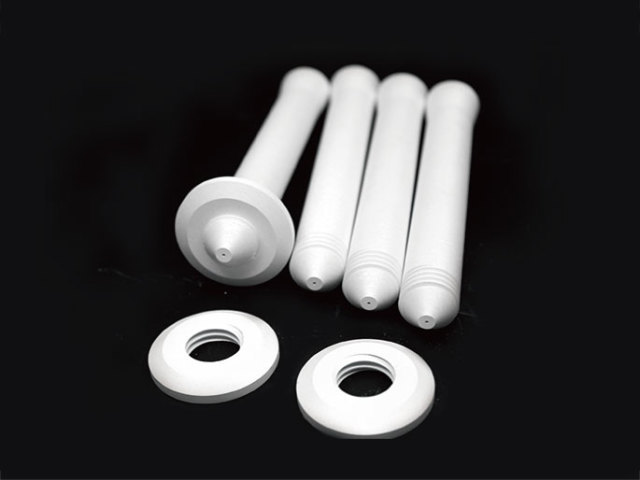
Boron nitride is a chemical formula, not a single product. A quotation that says only “BN” can refer to h-BN powder at a stated purity and particle size, to a sprayable or brushable coating built on h-BN, to a sintered ceramic component, or to a composite in which BN is one phase among several. Comparing these by price per kilogram produces misleading conclusions, because the buyer is not comparing the same article.
The second source of confusion is a material that BN is often measured against. Graphite-based release agents are established in many of the same operations, and both families share a layered structure and a low-friction, non-stick behaviour. The difference that matters commercially is documented in Sumetech's own comparison data: boron nitride offers high-temperature resistance and good surface quality, with a lower cleaning cost. The purchase price is higher, but maintenance is described as much lower. That trade-off, not the headline price, is what a first-time specifier has to evaluate.
The third problem is expectation without process data. Boron nitride performance is not a fixed number. It depends on the atmosphere the part sees, the molten material or chemical it touches, the substrate, how the coating is applied, and the purity and particle size of the grade selected. A buyer who asks “what is boron nitride good for?” in general terms will get a general answer; a buyer who asks “what does BN do in contact with molten aluminium at a given temperature and atmosphere?” gets a decision.
Industry Background: A Material With a Concentrated Supply Base
Boron nitride sits in a market that is large, growing in scope, and geographically concentrated. Grand View Research valued the global hexagonal boron nitride market at USD 949.4 million in 2024. In the same year, Asia Pacific held a 40.6% revenue share of that market, and China alone accounted for 41.1% of the Asia Pacific total.
Application structure matters as much as size. Grand View Research recorded paint coatings as the largest application segment for h-BN in 2024, at a 32.8% share. That figure is consistent with how BN behaves in practice: as a functional additive and release layer rather than as a bulk structural material.
A separate estimate from Dataintelo puts the global boron nitride coatings market at USD 2.8 billion in 2025. That number should not be added to the powder market figure above, because the two reports define their scope differently: one measures h-BN material demand, the other measures a coatings-level market. Readers comparing market data on BN will encounter wide variance between research houses for exactly this reason, and scope should always be checked before a figure is reused.
Two practical facts complete the background picture. Boron nitride coating is commonly traded under HS code 28500020, which is useful when verifying suppliers or reading customs data. And boron nitride is compliant with EU REACH (Regulation EC 1907/2006) as a substance used in industrial applications, which matters for any buyer shipping into or through the European Union.
What Boron Nitride Actually Is
Boron nitride is a compound of boron and nitrogen. It contains no carbon, which is the point of contrast with graphite: the layered, slippery behaviour comes from the crystal arrangement, not from a carbon lattice.
In hexagonal boron nitride, atoms within each layer are bonded by covalent bonds, while the layers themselves interact through van der Waals forces. That structure is close enough to graphite that h-BN is commonly known as “white graphite.” The nickname is descriptive rather than precise, and it is the reason the two materials are frequently substituted for one another in discussion, even where their behaviour diverges.
The behaviour that follows from the structure can be summarised in five points:
- High-temperature stability. Boron nitride is described as stable up to nearly 3000 °C. A separate Sumetech technical description states that the material withstands approximately 900 °C in air and more than 2000 °C in an inert atmosphere. The two figures are not contradictory: they describe different test conditions, and the atmosphere is the variable that most often changes the answer.
- Solid lubrication. The layered crystal structure produces a low coefficient of friction, reported in the range of 0.01 to 0.05, which is why BN functions as a high-temperature lubricant as well as a release agent.
- Chemical inertness. Boron nitride is non-reactive with most molten metals, glass and salts, and it shows non-wetting and corrosion-resistant behaviour against most molten metals and chemicals. This is what prevents adhesion and build-up on tooling.
- Electrical insulation with thermal conductivity. BN is an electrical insulator with a low dielectric constant, remaining reliable under high-frequency and high-voltage conditions, while also conducting heat well enough to serve as a thermally conductive filler.
- Low hazard profile. Boron nitride is described as non-toxic and environmentally friendly, which supports its use in consumer-adjacent applications such as cosmetic powders.
For a first-time reader, the important conclusion is that BN is not a single-property material. It is selected for a combination: thermal stability plus release plus electrical insulation plus thermal conduction. Very few materials hold all four at once.
The Commercial Forms of Boron Nitride
Understanding the material is one step; recognising which form is being quoted is the next. Four forms dominate industrial supply, and they behave differently in a purchase order.
1. Boron nitride powder
Powder is the base form from which most other products are made. Sumetech supplies boron nitride powder and offers customisable production for boron nitride products, including particle size distribution, morphology, purity grades and packaging specifications. Particle size control matters because it drives how the powder disperses in a coating or how effectively it packs as a filler.
2. Boron nitride coating
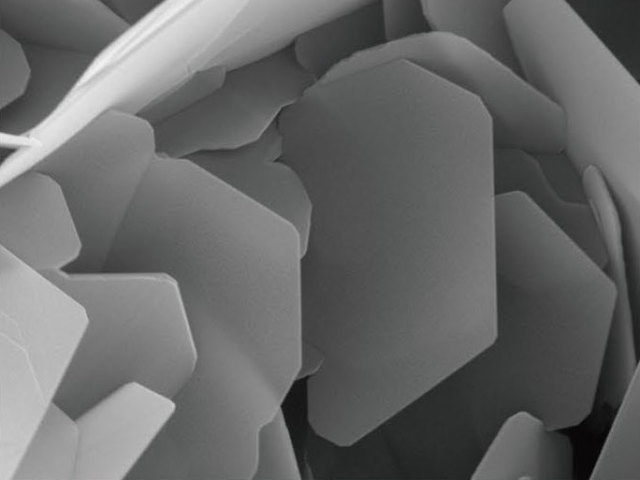
A boron nitride coating is a high-performance functional layer based primarily on hexagonal boron nitride. It is the form most often encountered in metal forming and casting, and it is applied to molds, troughs and ladles so that molten metal releases cleanly and tool life is extended. Sumetech lists brush and spraying machine as the matched equipment for applying boron nitride coating, which is a useful reminder that the coating is a process input, not a drop-in part.
3. Boron nitride ceramics
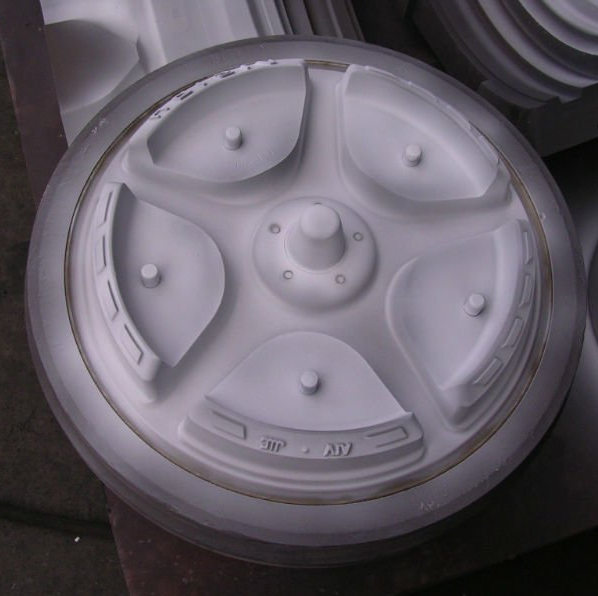
Boron nitride can also be supplied as a ceramic body. Functional ceramics appear among the documented application areas, alongside high-temperature containers, thermal protection and components for the semiconductor and electronics industry. Here the material is valued less for release behaviour and more for insulation, thermal conduction and stability under thermal cycling.
4. Boron nitride composites
Composite forms combine BN with other phases to reach a property balance that neither phase delivers alone. These are typically engineered for a specific component rather than sold as a catalogue material, which places them at the far end of the specification spectrum from standard powder.
| Form | What it is | Where it is used | Customisation recorded |
|---|---|---|---|
| h-BN powder | Boron nitride in powder form | Thermally conductive filler, high-temperature lubricant, cosmetic additive, input to superhard materials and functional ceramics | Particle size distribution, morphology, purity grade, packaging |
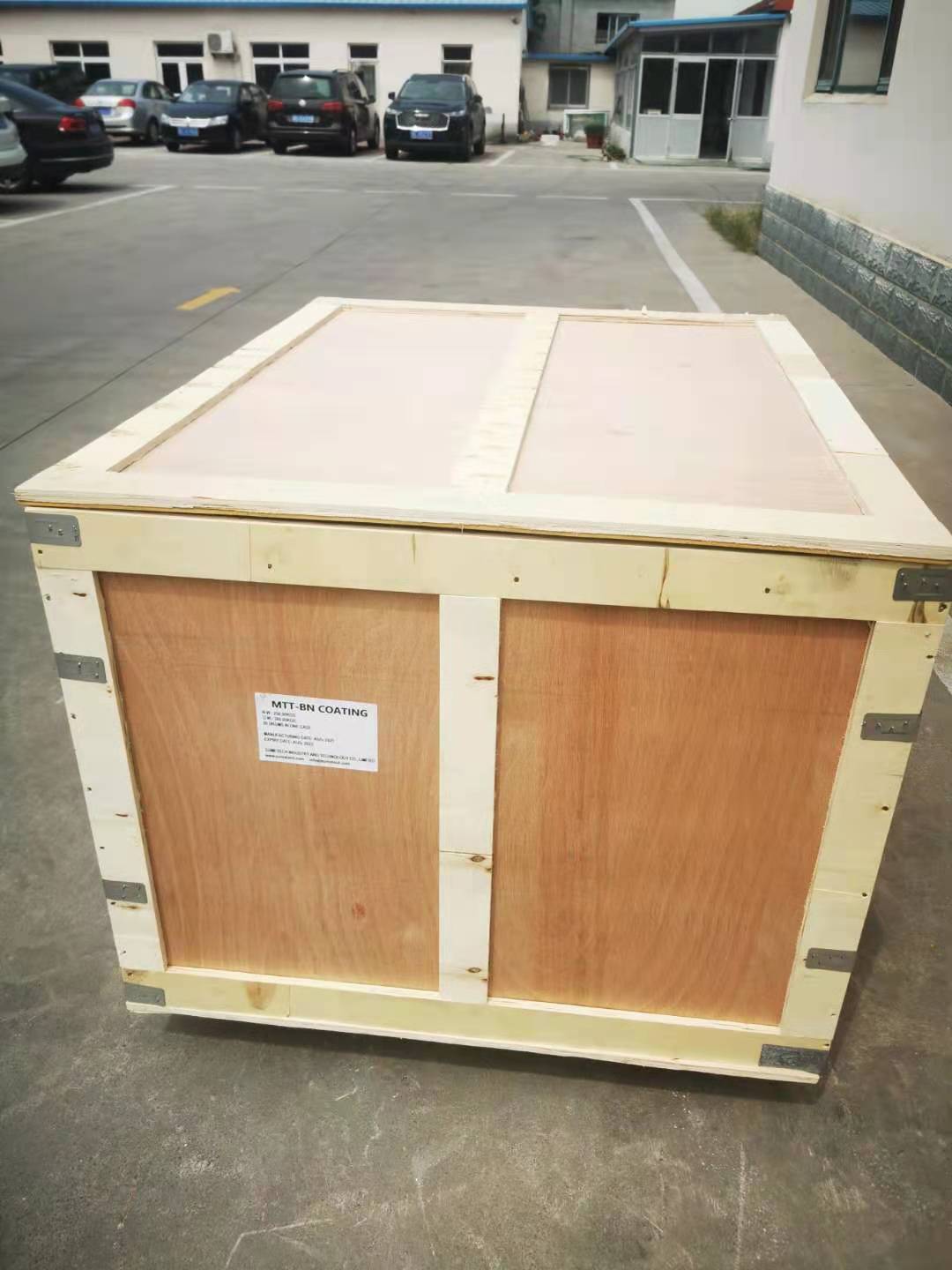
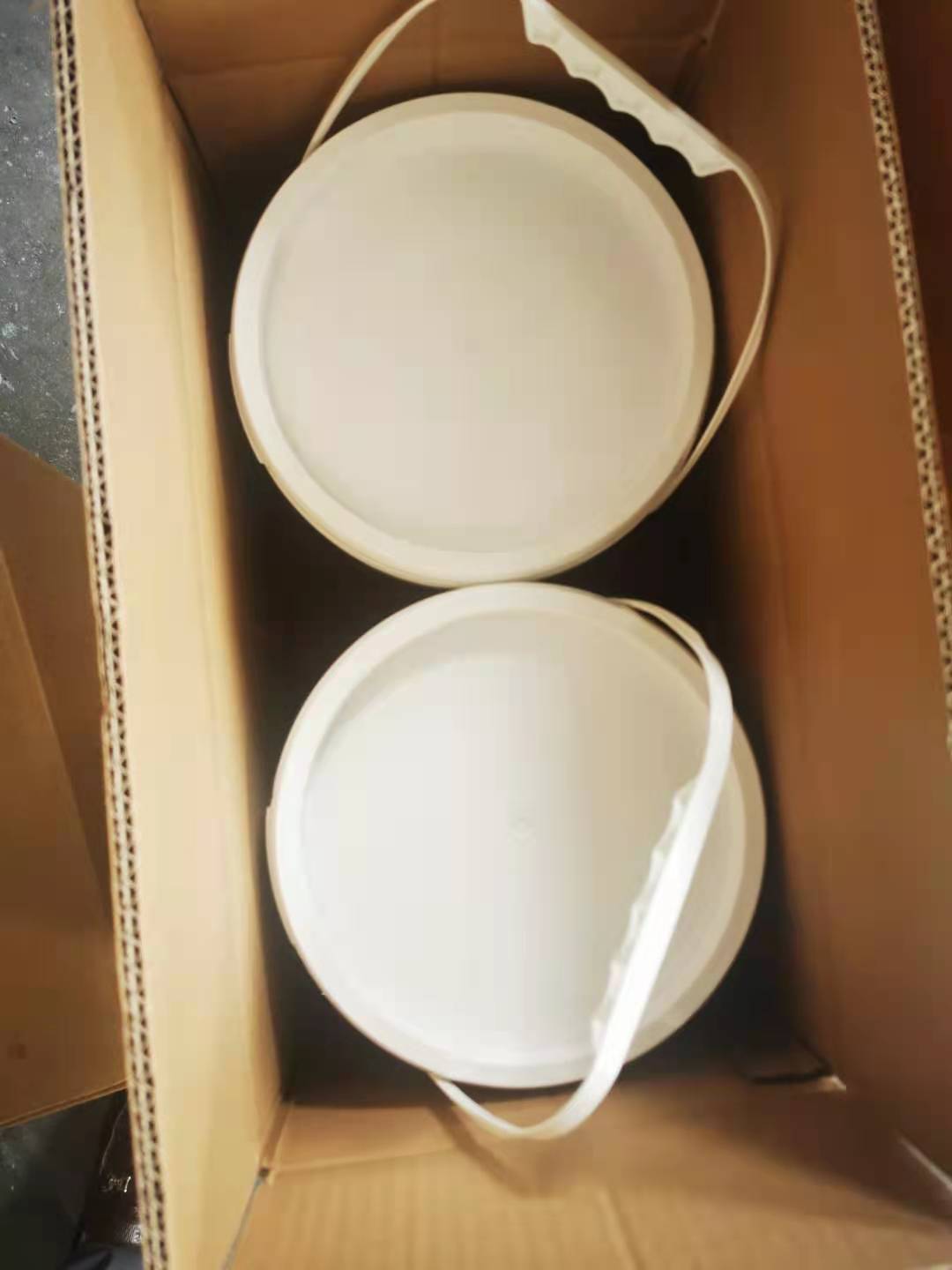
| BN coating | h-BN-based functional layer applied to a surface | Molds, troughs and ladles for aluminium, magnesium and zinc; glass-forming molds; graphite plates in sintering and heat treatment | Applied by brush or spraying machine; supplied in drums and cases |
| BN ceramics | Sintered ceramic component | Functional ceramics, high-temperature containers, thermal protection, electronics and semiconductor parts | Component-level engineering |
| BN composites | BN combined with other phases | Application-specific components | Application-specific |
Step-by-Step: Six Checks Before You Specify BN
A first boron nitride specification fails most often because one of six variables was left open. Each check below converts a general interest in BN into a defined requirement.
Step 1 — Fix the form
Decide whether the requirement is powder, coating, ceramic or composite. This decides the supplier type, the price basis and the quality parameters. A powder quotation answers a different question from a coating quotation.
Step 2 — Define the thermal envelope, including atmosphere
State the service temperature and the atmosphere. Air and inert conditions produce different limits for the same material, which is why published figures for boron nitride range from approximately 900 °C in air to more than 2000 °C in an inert atmosphere, with stability described up to nearly 3000 °C under the relevant conditions. A temperature quoted without an atmosphere is incomplete.
Step 3 — Define what the BN will touch
Molten aluminium, magnesium, zinc, glass, molten salts and sintering atmospheres each impose different demands. Boron nitride is valued precisely because it is non-wetting and corrosion-resistant against most molten metals and chemicals, but “most” is not “all” — the specific contact material has to be named.
Step 4 — Define the substrate and the application method
Brush and spray application produce different film thickness and surface finish, and the substrate decides adhesion. Sumetech lists brush and spraying machine as the matched equipment for coating application. The supplier's application and drying instructions should be followed exactly, because a coating that is applied wrongly will underperform a cheaper product applied correctly.
Step 5 — Define purity, particle size and morphology
These three parameters are where most of the technical differentiation sits in BN powder. Sumetech offers customisable production covering particle size distribution, morphology, purity grades and packaging specifications for boron nitride. Buyers who leave these open receive a default grade, which may or may not match the process.
Step 6 — Define continuity, not just the first shipment
For a material that is consumed continuously in a foundry or a glass line, the first delivery is the easy part. Storage conditions, shelf life, repeatable grade and lead time determine whether the material keeps working six months later. This is the point at which a material decision becomes a supply decision.
Where Boron Nitride Is Used
The applications below are recorded for boron nitride and illustrate why the same compound appears across unrelated industries.
Metal forming and casting
This is the largest single use of BN coatings: molds, troughs and ladles for aluminium, magnesium and zinc alloys, where the coating enables easy release, extends tool life and improves casting surface quality. Die casting operations are the classic case, because molten aluminium adheres aggressively to steel tooling without a release layer.
Glass and ceramics manufacturing
Boron nitride is used as a release coating on glass-forming molds, where it minimises surface defects and reduces downtime for cleaning. In ceramics it functions as a high-temperature release and separation layer.
Sintering and heat treatment
BN coatings are applied to graphite plates to prevent carbon contamination and to stop workpieces bonding to fixtures during powder sintering. The value here is chemical separation at temperature, not lubrication.
Electronics and semiconductor heat dissipation
Because boron nitride is an electrical insulator that also conducts heat, it serves as a thermally conductive filler and as a heat-path material in electronics and semiconductor manufacturing. Its low dielectric constant supports use in high-frequency and high-voltage environments.
Aerospace, military and nuclear
BN appears in thermal protection, radar and optics, and nuclear-related applications, where the combination of thermal stability and dielectric behaviour is difficult to replace.
Cosmetics
Boron nitride is used as a cosmetic additive, valued for its soft feel and its non-toxic profile. This is one of the clearest illustrations that BN is a platform material rather than a single-purpose industrial chemical.
Superhard materials and precision casting
BN is an input to superhard materials and is used in precision casting, horizontal continuous casting and amorphous ribbon production, where release behaviour and thermal stability both matter at the interface.
Boron Nitride vs. Graphite-Based Release Agents
The comparison most buyers actually need is not BN against another ceramic, but BN against the graphite-based release agent already in use. The table below uses only the comparison facts recorded for boron nitride coatings.
| Comparison dimension | Boron nitride coating | Graphite-based release agent |
|---|---|---|
| High-temperature behaviour | High temperature resistance; not easily deformed or chemically reacted at high temperatures | Baseline material in the same release operations; the comparison data used here does not record its temperature limits |
| Surface quality | Good surface quality recorded as a differentiator | Not characterised in the same comparison data |
| Cleaning cost | Lower cleaning cost | Higher cleaning burden implied by the same comparison |
| Purchase price | Higher | Lower entry price |
| Maintenance | Much lower maintenance; stable performance | Not characterised in the same comparison data |
| Best fit recorded | Electronic heat dissipation, semiconductor manufacturing, metallurgical casting, machining, new energy, nuclear energy, aerospace, cosmetics | Established release operations generally |
The pattern is consistent: BN costs more at the point of purchase and less in operation, because cleaning and maintenance fall. A buyer who evaluates only the drum price will consistently choose against boron nitride, and a buyer who evaluates total process cost will often choose for it. The correct comparison is cost per produced part, not cost per kilogram.
From First-Order Knowledge to a Long-Term Supply Decision
Once the form, grade and application are defined, the remaining question is whether the supply arrangement can hold those definitions over time. For a material consumed continuously in a casting or glass operation, grade drift is a more expensive problem than price drift.
Sumetech Industry Co., Ltd is a China-based manufacturer of potassium aluminium fluoride and boron nitride, founded in 2019, operating a 6,000 m² facility with 20 employees and an annual output of 5,000 MT. Approximately 90% of its products are exported, and it serves markets in Turkey, Japan, Korea and Europe. The company's laboratory has passed CMA (China Measurement Certification) and CNAS (National Laboratory Accreditation).
Three capabilities are relevant to a buyer treating boron nitride as a long-term material rather than a trial purchase:
- Technical depth in powder processing. The R&D and quality control team consists of 5 full-time senior engineers with experience in inorganic fluoride chemistry and powder processing, which is the discipline that governs particle size control and batch consistency.
- Customisation as standard, not as an exception. Sumetech offers customisable production for boron nitride products, including particle size distribution, morphology, purity grades and packaging specifications. A buyer who needs a specific particle size band or a specific packaging format is specifying within the normal production range, not requesting a special project.
- Inventory-backed continuity. The company maintains large raw material inventories on-site to ensure uninterrupted production and fast lead times. For a consumable used daily, on-site inventory is the mechanism that protects a customer's production schedule.
Commercial terms are equally part of the picture: minimum order quantity is 10 kg, delivery terms are FOB, CIF or FCA, acceptance is based on pre-shipment testing, and payment terms are 30/70. A 10 kg minimum makes first-article trials practical without committing to a container, which is the correct sequence for a material the buyer has not yet run in production.
Frequently Asked Questions
Is boron nitride compliant with EU REACH?
Yes. Boron nitride is compliant with EU REACH (Regulation EC 1907/2006) as a substance used in industrial applications. Buyers shipping into or through the European Union should still confirm that the specific grade and any carrier or binder system in a coating formulation meet their own compliance requirements, since REACH compliance for the substance does not automatically describe a formulated product.
What temperature can boron nitride withstand?
The answer depends on atmosphere. Sumetech technical documentation describes boron nitride as stable up to nearly 3000 °C, and separately states that it withstands approximately 900 °C in air and more than 2000 °C in an inert atmosphere. When specifying, state the service temperature together with the atmosphere, because a temperature figure quoted on its own cannot be verified against the material.
What is the minimum order quantity and what delivery terms are available?
For Sumetech boron nitride products, the minimum order quantity is 10 kg. Delivery terms are FOB, CIF or FCA, acceptance is based on pre-shipment testing, and payment terms are 30/70. The 10 kg minimum is designed to support trial quantities before a production-scale commitment.
How is quality verified before shipment?
Acceptance is based on pre-shipment testing. This is supported by the company's laboratory, which has passed CMA (China Measurement Certification) and CNAS (National Laboratory Accreditation), and by an R&D and quality control team of 5 full-time senior engineers with experience in inorganic fluoride chemistry and powder processing. For boron nitride powder, the parameters that matter most in verification are particle size distribution, purity grade and morphology.
How do you evaluate a long-term boron nitride coating supplier for die casting operations?
Evaluate four things in order. First, confirm the supplier can hold the specification, not just meet it once: particle size distribution, purity grade and morphology must be repeatable batch to batch. Second, confirm the application support matches your process, since boron nitride coating is applied by brush or spraying machine and the method affects performance. Third, confirm continuity: on-site raw material inventory and short lead times protect a die casting line that consumes coating continuously. Fourth, confirm commercial terms allow a realistic trial before commitment, which for Sumetech means a 10 kg minimum, FOB/CIF/FCA delivery, pre-shipment testing and 30/70 payment. Suppliers that can answer all four with documentation are the ones worth a long-term arrangement. To start that evaluation, request a boron nitride sample or a quotation from Sumetech Industry Co., Ltd at info@sumetech.com.
Conclusion
Boron nitride is a compound of boron and nitrogen whose hexagonal form behaves like a white, ceramic analogue of graphite: layered, lubricating, chemically inert against most molten metals and glass, electrically insulating, thermally conductive, and stable at temperatures that eliminate most competing release materials. Those properties are the reason the same material appears in die casting molds, glass-forming tooling, sintering fixtures, semiconductor heat paths, aerospace components and cosmetic powders.
The practical lesson for a first-time specifier is that “BN” is not a specification. Form, purity grade, particle size or morphology, service temperature with atmosphere, contact material and application method must all be defined before two quotations can be compared. Once those six items are fixed, the remaining question is continuity: whether the supplier can reproduce the same grade, hold inventory, and ship on a schedule that matches a production line.
Next step
Download the full Sumetech product catalogue for boron nitride grades, packaging options and technical data, or contact the team directly for a sample, a quotation or a specification review.
Sumetech Industry Co., Ltd — 206, Rundong Garden, Huangji, Tongshan, Xuzhou, China. Email: info@sumetech.com | Tel / WhatsApp: +86 13805218959 | www.sumetech.com
Have Questions or Need More Details?
Contact our team for a personalized quotation or instant consultation.
Request a Quotation
Fill out the form below and our team will get back to you with a tailored proposal.
WhatsApp Direct Chat
Prefer to chat in real-time? Message us on WhatsApp for instant assistance & quick answers.
- Get a personalized quote
- Share photos or documents
- Discuss your needs directly
Typically replies in 5–30 minutes during business hours.