
Air or Inert Atmosphere? Selecting Boron Nitride 8233
for High-Temperature Processes
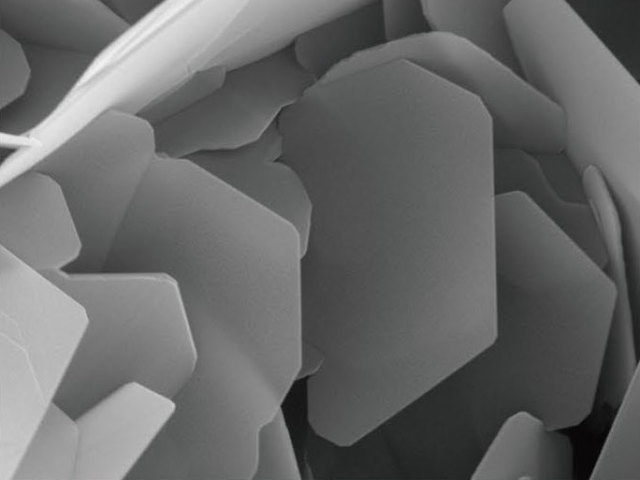
Boron Nitride 8233 is a Sumetech Industry Co., Ltd boron nitride grade supplied as powder, granular, coating and paint, with a documented maximum working temperature of 900 °C in air and 2000 °C+ in inert gas. Choosing the grade is the easy part. The decision that actually determines whether a boron nitride coating or ceramic part survives in service is a second question that many specifications never answer: which of those two atmospheres will the surface see at its hottest point?
Air and inert gas are not interchangeable operating conditions for the same product. They define two different thermal envelopes, two different sets of process risks, and two different ways of qualifying a supplier. This technical guide is written for process engineers, foundry tooling teams and procurement staff who are past generic material selection and are now specifying, trialling and buying 8233 for a real line. It walks through the atmosphere decision, the parameters that sit around it, and the checks that turn a single purchase into a long-term supply relationship.
What Boron Nitride 8233 Is
Product 8233 is a hexagonal boron nitride (h-BN) material platform rather than a single packaged item. It is offered in four delivery forms — powder, granular, coating and paint — so that the same base chemistry can serve a release coating on a die, a thermally conductive filler in a compound, or a machined ceramic component. The documented technical envelope is summarised below.
| Attribute | Documented value for Boron Nitride 8233 |
|---|---|
| Material | Boron nitride (hexagonal boron nitride) |
| Supplied forms | Powder, granular, coating, paint |
| Maximum working temperature, air | 900 °C |
| Maximum working temperature, inert gas | 2000 °C+ |
| Maximum purity | 99.9% |
| Application methods | Brush, spraying machine |
| Storage requirement | Keep dry and sealed; use before the expiration date |
| Customisation available | Particle size distribution, morphology, purity grades, packaging specifications |
| Typical HS code for BN coating shipments | 28500020 |
Functionally, the grade combines four properties that matter in high-temperature equipment: thermal stability, thermal conductivity, a graphite-like layered structure that produces low-friction release behaviour, and chemical inertness that resists wetting by most molten metals and chemicals. The same material also behaves as a high-temperature electrical insulator with a low dielectric constant, which is why it appears in electronics and semiconductor thermal management as well as in foundry tooling.
The Selection Problem: One Grade, Two Thermal Ceilings
The failure mode is predictable. A specification sheet lists the highest number on the page — 2000 °C+ — and a coating is approved for a process whose tooling actually runs in ambient air. In air, the documented ceiling for 8233 is 900 °C. Above that limit, the material's useful function degrades: the layered structure that provides release and lubrication, and the chemical inertness that prevents sticking, can no longer be relied upon in an oxygen-containing atmosphere.
Two practical consequences follow. First, the atmosphere must be treated as a specification parameter, not a workshop detail, and it must be recorded at the hottest point of the part rather than at the furnace set point. Second, the same product can be correctly specified by one plant and incorrectly specified by another, both using the same datasheet, because their atmospheres differ.
Selection rule: if the peak temperature at the coated surface or the ceramic part stays at or below 900 °C in ambient air, 8233 can be evaluated in its air envelope. If the peak exceeds 900 °C, the process must run under inert gas, where the documented ceiling rises to 2000 °C+. A process that exceeds 900 °C in air falls outside the documented envelope for this grade.
Industry Background: Why Atmosphere Discipline Is Being Tested Now
Boron nitride sits at the intersection of two purchasing trends: higher process temperatures in metal forming, and tighter surface-quality and contamination requirements in electronics and glass. Published market research reflects that pressure. Grand View Research valued the global hexagonal boron nitride market at USD 949.4 million in 2024, with Asia Pacific holding a 40.6% revenue share and China alone accounting for 41.1% of the Asia Pacific total in the same year. Dataintelo's 2025 estimate for the narrower boron nitride coatings segment is USD 2.8 billion.
Application data points in the same direction. In 2024, paint coatings were the largest application segment for hexagonal boron nitride, at a 32.8% share of the market. In other words, the dominant commercial use of this material is as a coating rather than as a bulk ceramic — which makes coating-process parameters such as atmosphere, application method and storage directly relevant to most buyers.
Market definitions vary between research houses: some published figures cover hexagonal boron nitride powder and coatings, while others group downstream ceramics and composites into the same number. The figures above are quoted with their publishers so they can be compared on a like-for-like basis rather than treated as a single consensus estimate.
Matching Atmosphere to Thermal Stability
The core of the specification is a two-column comparison. Everything else — form, application method, substrate, storage — is decided after the correct column has been identified.
| Decision factor | Air atmosphere route | Inert atmosphere route |
|---|---|---|
| Documented maximum working temperature | 900 °C | 2000 °C+ |
| Atmosphere condition at the hot face | Ambient air, oxidising | Inert gas, oxygen excluded |
| Typical equipment | Die casting dies, foundry moulds, glass-forming moulds, ladles and troughs, graphite plates in sintering fixtures | High-temperature furnaces, crucibles and sintering fixtures running under inert gas |
| Suitable product forms | Coating, paint, powder | Coating, paint, powder, granular |
| Application method | Brush or spraying machine | Brush or spraying machine |
| Primary risk if mismatched | Exceeding 900 °C in air pushes the coating outside its documented envelope | Running an inert-grade temperature profile in air produces the same failure as an air-route overrun |
| Verification evidence | Pre-shipment test plus in-plant trial records | Pre-shipment test plus documented atmosphere control in the trial |
The table is deliberately conservative. Where the atmosphere is not controlled — for example, a furnace that is purged only during part of the cycle, or a die that is sprayed in open shop air — the air limit of 900 °C is the relevant constraint, not the inert figure.
Step-by-Step Selection Breakdown
Step 1: Measure the true peak temperature
Record the maximum temperature reached at the surface that carries the boron nitride — the die face, the mould cavity, the crucible wall, the heat-spreader interface — rather than the set point of the equipment. Short excursions matter, because a coating or ceramic part responds to what it experiences, not to the average.
Step 2: Classify the atmosphere at that same point
Air and inert gas produce different envelopes, so the classification has to be made where the temperature was measured. A process that is inert in the hot zone but open to air during loading, unloading or cooling is an air-exposed process for part of its cycle.
Step 3: Match the peak to the correct ceiling
Peak at or below 900 °C in air: evaluate 8233 in its air envelope. Peak above 900 °C: the process must be inert, where the documented ceiling is 2000 °C+. If neither condition can be met, the process is outside the documented range of this grade and should not be approved on the basis of a supplier's general high-temperature claim.
Step 4: Select the delivery form
Powder and granular forms suit compounding, fillers and bulk ceramic preparation. Coating and paint forms suit direct application to tooling and fixtures. Where a boron nitride ceramic coating is required for electrical insulation or for a non-wetting crucible surface, the ceramic route and the coating route should be evaluated as separate specifications even though both originate from the same material platform.
Step 5: Fix the application method
Product 8233 is documented for brush and spraying machine application. The method affects film uniformity, and film uniformity affects both release performance and dielectric behaviour, so the method should be written into the work instruction rather than left to the operator. High-purity boron nitride coating grades are typically selected where contamination of the workpiece is the dominant concern.
Step 6: Treat drying and first heat-up as part of the trial
Drying and first heat-up are where many boron nitride coating projects are actually lost. They belong inside the qualification trial, not after production release: record the schedule that produced an intact, adherent film, and keep it with the trial report so the same result can be reproduced on the next tool.
Step 7: Control storage and shelf life
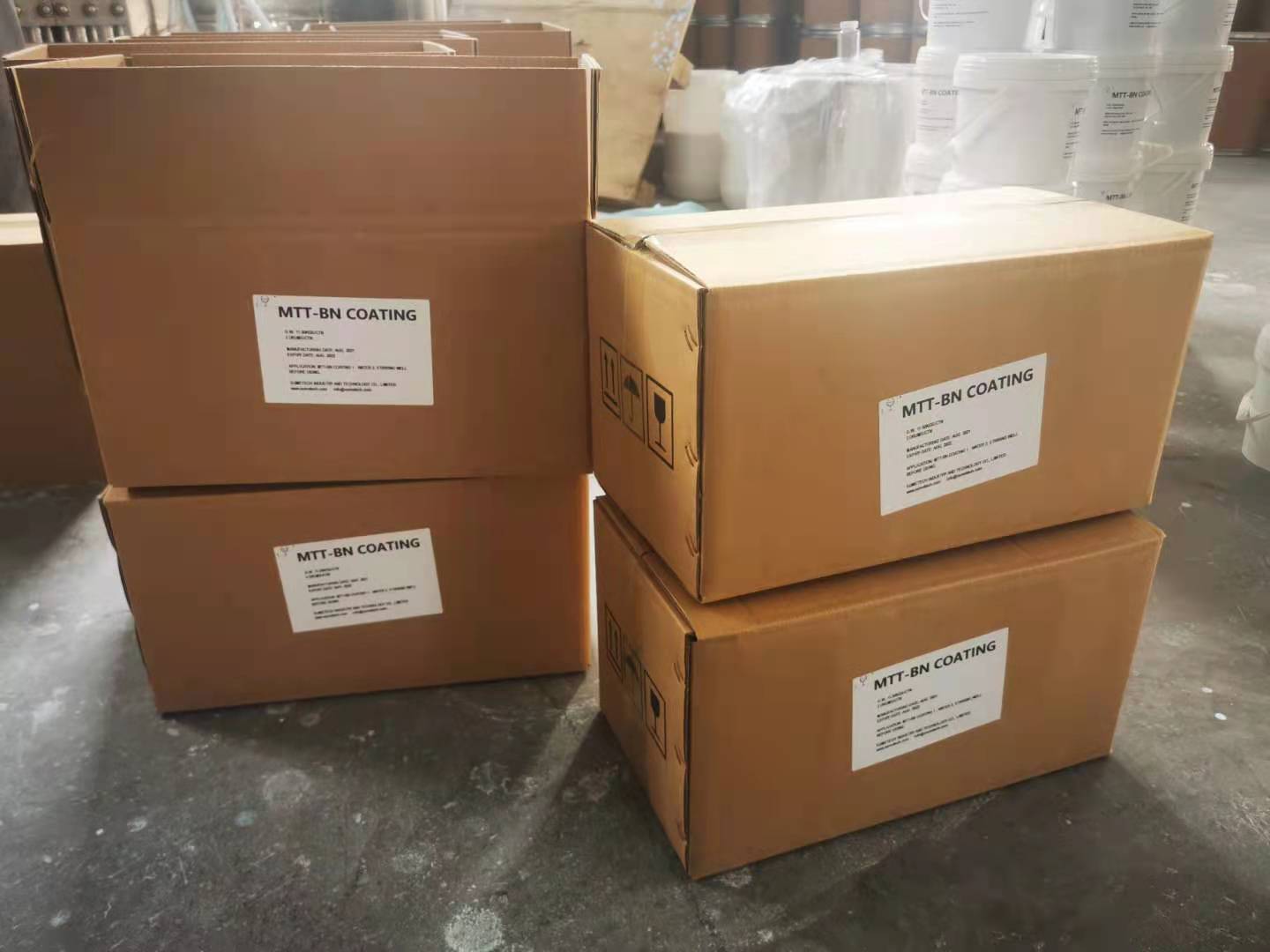
The documented storage condition for 8233 is dry, sealed storage, with use before the expiration date. A coating material that has absorbed moisture or passed its shelf life is not the material that was qualified, which is why storage is a specification item rather than a housekeeping item.
Step 8: Lock the acceptance criteria
Pre-shipment testing is the documented acceptance route for this product family. Agreeing the acceptance criteria before the first order is what allows later deliveries to be checked against a fixed reference instead of a visual impression.
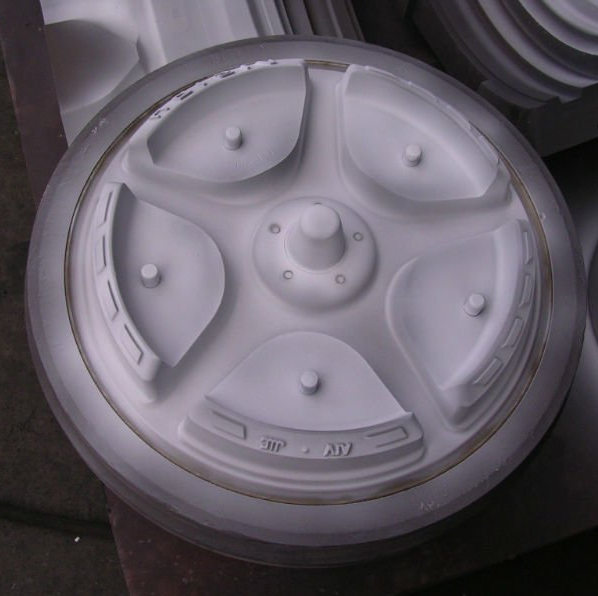
Use Cases Mapped to the Atmosphere Decision
Die casting operations
In boron nitride coating for die casting operations, the coating works as an anti-stick layer on dies, shot-end components, ladles and troughs handling aluminium, magnesium and zinc alloys. The commercial objective is straightforward: easy release, longer tool life and better casting surface quality, with less downtime spent cleaning stuck metal. Most die casting cells operate in ambient air, so the 900 °C air ceiling — not the inert figure — governs grade approval.
Glass melting and hot forming
Glass-forming moulds use boron nitride as a release coating to reduce surface defects on the formed part and to cut the cleaning cycles that interrupt production. Glass contact points can run hot, which is exactly where the atmosphere question has to be answered before the coating is specified rather than after a defect appears.
Semiconductor thermal management
Boron nitride's thermal conductivity and electrical insulation make it a thermally conductive filler and interface material in electronics and semiconductor heat dissipation. Here the selection emphasis shifts from release to purity and dielectric behaviour; high-purity boron nitride coating and ceramic grades are the relevant options, and low dielectric constant performance under high-frequency and high-voltage conditions is the property being bought.
Crucible coating and high-temperature containers
Because boron nitride is non-wetting against most molten metals and chemically inert, it is used as a coating on crucibles and high-temperature containers to prevent adhesion and contamination. This is the application where the inert route is most often relevant, since crucible processes frequently run above the air ceiling under protective gas.
High-temperature electrical insulation
Boron nitride ceramic components serve as electrical insulators in hot zones, including vacuum coating, electronic and aerospace applications. The material's combination of dielectric stability and thermal stability is the reason a single component can replace a multi-layer insulation stack in some designs.
Sintering and heat treatment fixtures
Coating graphite plates with boron nitride prevents carbon contamination and stops workpieces bonding to fixtures during powder sintering. Fixture coatings are usually the lowest-cost place to start a qualification trial, because a failed trial on a plate costs far less than a failed trial on a production die.
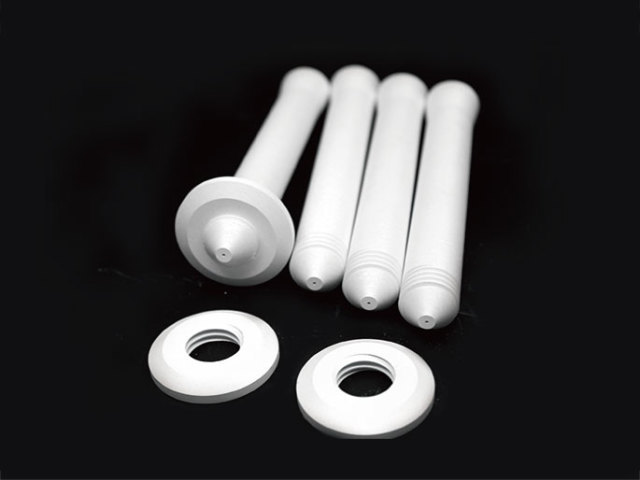
Comparison: Boron Nitride 8233 Against Graphite-Based Release Agents
Graphite-based release agents are the most common incumbent in foundry and metal-forming release applications, which makes them the natural benchmark when 8233 is evaluated. The comparison below is limited to documented differences.
| Comparison dimension | Boron Nitride 8233 | Graphite-based release agents |
|---|---|---|
| High-temperature behaviour | Documented high-temperature resistance; not easily deformed or chemically reacted at high temperatures | Not verified in this review |
| Surface quality of the finished part | Good surface quality cited as a differentiator | Not verified in this review |
| Purchase price | Higher | Lower |
| Maintenance and cleaning burden | Maintenance cost reported as much lower | Higher relative maintenance burden |
| Process stability | Stable performance in high-temperature service | Not verified in this review |
| Documented application fit | Electronic heat dissipation, semiconductor manufacturing, metallurgical casting, machining, new energy, nuclear energy, aerospace, cosmetics | General release applications |
The trade-off is explicit: a higher purchase price is offset by lower maintenance and cleaning cost. Buyers comparing only the price per kilogram will not see that offset, which is why the comparison should be run on cost per production cycle rather than cost per container.
Supplier and Long-Term Supply Checks
Sumetech Industry Co., Ltd is a China-based manufacturer of boron nitride and potassium aluminium fluoride (PAF), founded in 2019 and operating a 6,000 m² facility with 20 employees and an annual output of 5,000 MT. Approximately 90% of its products are exported, with established markets in Turkey, Japan, Korea and Europe.
For a specification that must hold for years rather than one campaign, five supplier attributes are worth checking directly:
- Supply continuity. The company maintains large raw material inventories on-site to support uninterrupted production and fast lead times, which matters when a coating line cannot stop for a resupply.
- Technical support depth. The R&D and quality control team consists of 5 full-time senior engineers with experience in inorganic fluoride chemistry and powder processing.
- Customisation range. Boron nitride production can be customised across particle size distribution, morphology, purity grades and packaging specifications — the four variables that most often separate a workable specification from a near-miss.
- Laboratory backing. The Sumetech laboratory has passed CMA (China Measurement Certification) and CNAS (National Laboratory Accreditation).
- Commercial terms. Minimum order quantity is 10 kg, delivery terms are FOB, CIF or FCA, acceptance is based on pre-shipment test, and payment terms are 30/70.
For a plant that runs die casting tooling continuously, the practical test is not whether a supplier can ship one drum, but whether the same specification, packaging and test report can be repeated across the next twelve deliveries. That is the question a long-term boron nitride coating supplier has to answer.
Frequently Asked Questions
Is Boron Nitride 8233 compliant with EU REACH, and how must it be stored?
Boron nitride is compliant with EU REACH (Regulation EC 1907/2006) as a substance used in industrial applications. For 8233 specifically, storage must be dry and sealed, and the material must be used before its expiration date. Shipments of boron nitride coating are commonly classified under HS code 28500020.
Can Boron Nitride 8233 be used above 900 °C?
Yes, but only under inert gas. The documented maximum working temperature for 8233 is 900 °C in air and 2000 °C+ in an inert atmosphere. A process running above 900 °C in air is outside the documented envelope, even though the same product is rated above 2000 °C when oxygen is excluded. Application is by brush or spraying machine, so the method also has to be fixed in the work instruction.
What are the minimum order quantity and commercial terms?
The minimum order quantity is 10 kg. Delivery terms are FOB, CIF or FCA. Acceptance is based on pre-shipment test, and payment terms are 30/70. Customisable parameters — particle size distribution, morphology, purity grades and packaging specifications — should be agreed in the same document as the commercial terms so that the delivered material matches the qualified material.
How should a plant validate 8233 before a full production order?
Run the trial on the form and application method that will be used in production: brush or spraying machine, on the real substrate, at the real peak temperature, in the real atmosphere. Record the peak temperature, the atmosphere at the hot face, the drying and first heat-up schedule, and the pre-shipment test result together as one reference. Trial lots and full container shipments are both available, which allows a single tool to be qualified before volume is committed.
How do you secure a long-term boron nitride coating supplier for die casting operations?
Qualify on repeatability rather than on a single delivery. For die casting operations, the checks that matter are a fixed specification across particle size, purity and packaging; a documented pre-shipment test route; on-site raw material inventory that supports uninterrupted production and short lead times; and engineering support capable of adjusting the grade as tooling or alloys change. Sumetech Industry Co., Ltd supplies boron nitride under these terms, with 90% of production exported to markets including Turkey, Japan, Korea and Europe.
Conclusion: Decide the Atmosphere First, Then the Grade
Boron nitride 8233 is a single product with two clearly documented operating envelopes. In air it is rated to 900 °C; in inert gas it is rated to 2000 °C+, with a maximum purity of 99.9% and availability as powder, granular, coating and paint. Almost every specification error in this category comes from choosing the higher number without confirming the atmosphere that will actually be present at the hot face.
The selection sequence is short: measure the true peak temperature, classify the atmosphere at that point, match the peak to the correct ceiling, then fix the form, the application method, the storage condition and the acceptance criteria. Do that, and die casting, glass forming, semiconductor thermal management, crucible coating and high-temperature insulation all resolve to the same disciplined decision rather than five separate guesses.
Next Step: Confirm the Atmosphere, Then Request the Material
Tell us the peak temperature, the atmosphere at the hot face and the substrate you are coating, and we will confirm whether 8233 fits the air route or the inert route before any material is shipped. Trial lots start at a 10 kg minimum order quantity.
Email: info@sumetech.com | WhatsApp: +86 13805218959 | Website: www.sumetech.com
Download the full product range and specification overview: Sumetech Catalog 2026 (PDF)
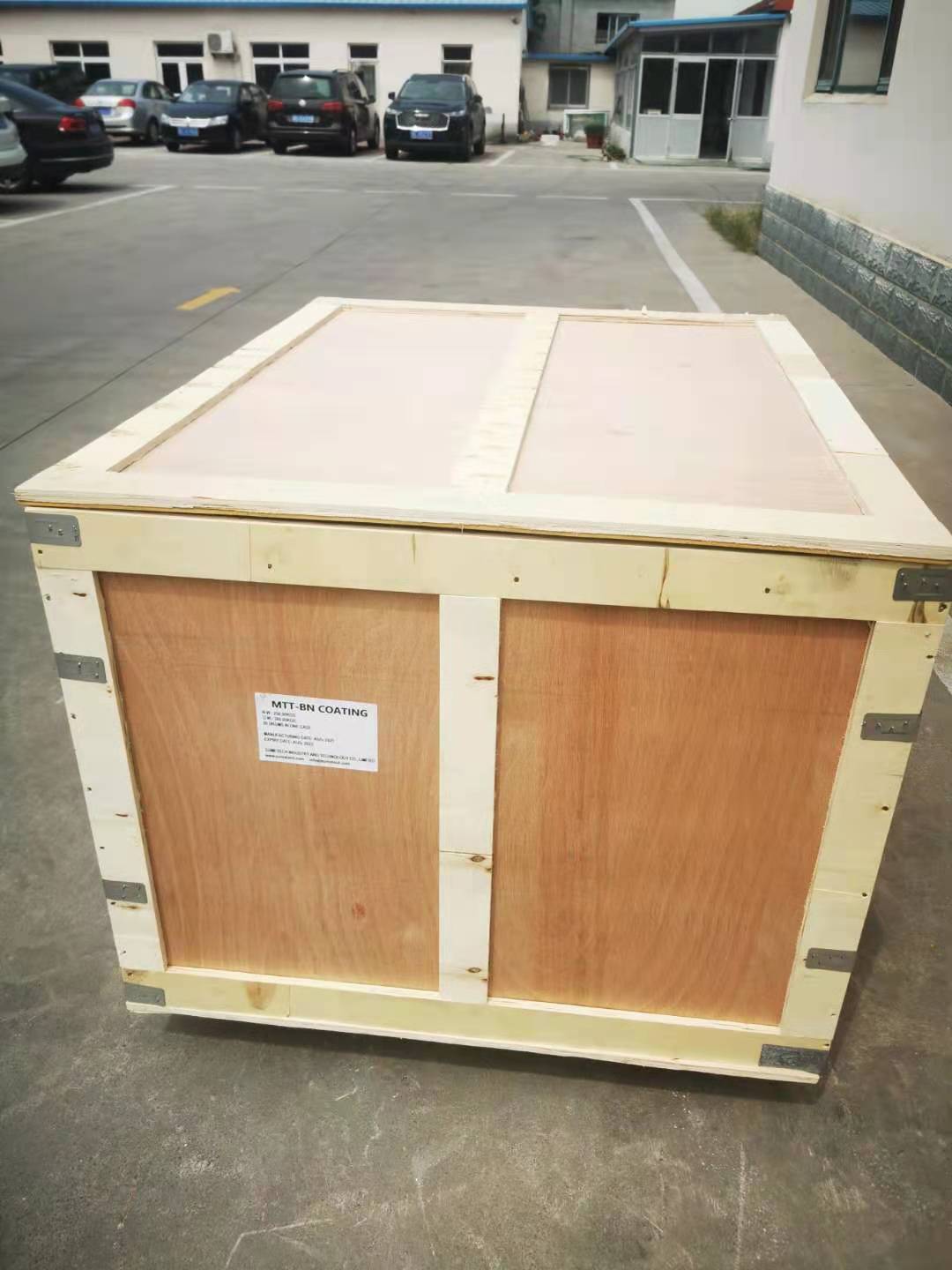
Application data in this guide refers to documented values for Boron Nitride 8233. Actual service life depends on substrate preparation, application method, drying schedule, storage conditions and the working conditions of the individual process.
Have Questions or Need More Details?
Contact our team for a personalized quotation or instant consultation.
Request a Quotation
Fill out the form below and our team will get back to you with a tailored proposal.
WhatsApp Direct Chat
Prefer to chat in real-time? Message us on WhatsApp for instant assistance & quick answers.
- Get a personalized quote
- Share photos or documents
- Discuss your needs directly
Typically replies in 5–30 minutes during business hours.