Boron Nitride 8233 Partnership FAQ: Long-Term Supply, Storage, and After-Sales Support
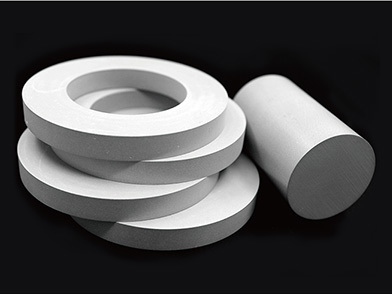
Product 8233 boron nitride is supplied in powder, granular, coating and paint forms; composite ceramics belong to the same material family.
Product 8233 boron nitride is supplied by Sumetech Industry Co., Ltd in powder, granular, coating and paint forms, and the questions that arrive after the first delivery are rarely about the catalogue. They concern storage, shelf life, application method, working-condition fit, and who answers when a process parameter changes.
This page is written as a buyer-side reference for procurement and technical teams moving from a first trial lot towards a recurring supply relationship. Every answer below is drawn from the documented product data and from Sumetech's published company information, and it is limited to what can be verified.
Short answers
Storage: keep dry and sealed storage, and use before the expiration date.
Application: the matched equipment for Product 8233 is a brush and a spraying machine.
Temperature: maximum working temperature is 900 °C in air and above 2000 °C in inert gas.
Behaviour: chemically inert, non-wetting and corrosion-resistant to most molten metals and acids.
Support: technical support and documentation from Sumetech, with the process window confirmed against your actual working conditions.
Why Post-Purchase Questions Decide Whether a Supplier Becomes a Partner
The gap between a purchase order and a stable production line is where most supplier relationships are settled. A buyer who has compared boron nitride forms, agreed a specification and taken delivery still has to answer four practical questions in the following weeks: where the material is stored, how long it stays usable, how it is applied, and whether performance holds inside the real process window.
These are not selection questions. They are operating questions, and they surface only after delivery. When the answers are unclear, the standard commercial response is to keep a second supplier on the list just in case, which prevents any single supplier from reaching long-term status. A supplier that answers storage, application and working-condition questions precisely offers something more useful than a lower unit price: it removes the reason to keep a backup.
For boron nitride specifically, those four questions have a technical edge. Product 8233 is a ceramic material with a graphite-like structure, and its behaviour depends heavily on the environment around it. That is why the same material can be stable in one process and unsuitable in another, and why post-purchase support in this category is a technical function rather than a customer-service formality.
Boron Nitride, Product 8233, and the Coating Segment Behind These Questions
Boron nitride (BN) is a ceramic material with a graphite-like structure, available in powder, granular, coating and paint forms. The property set that matters for industrial buyers is consistent across those forms: high-temperature stability, low friction and high-temperature release, chemical inertness, non-wetting and corrosion resistance to molten metals and acids, low dielectric constant, and thermal conductivity. Product 8233 reaches a maximum purity of 99.9%.
Two published figures explain why storage and application questions dominate the boron nitride inbox. Grand View Research valued the global hexagonal boron nitride market at USD 949.4 million in 2024, with Asia Pacific holding a 40.6% revenue share and China accounting for 41.1% of the Asia Pacific total. Within that market, paint coatings were the largest single application, at 32.8% of 2024 share according to the same source. Roughly a third of boron nitride demand is therefore consumed as a coating, a form whose performance depends on how it is stored, how it is applied, and how the coated part is used afterwards.
For European buyers, an additional baseline applies: boron nitride is compliant with EU REACH (Regulation EC 1907/2006) as a substance used in industrial applications. Sumetech Industry Co., Ltd, established in 2019, manufactures potassium aluminium fluoride and boron nitride products, exports around 90% of its output, and lists Turkey, Japan, Korea and Europe among its main markets.
Storage Questions: Dry and Sealed Conditions and the Expiration Date
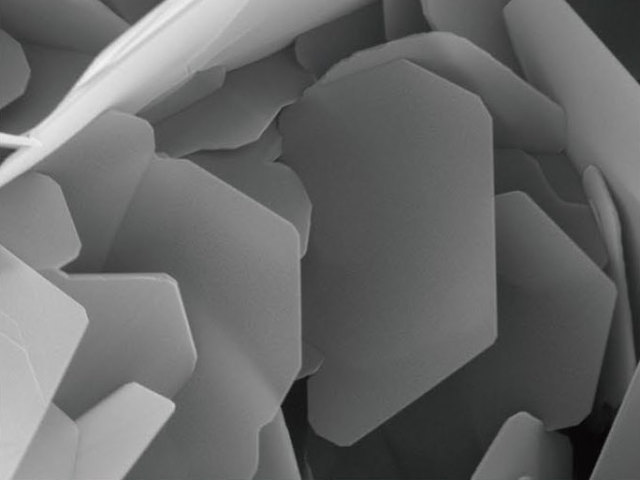
Boron nitride powder under Product 8233: the storage rule is dry and sealed storage, with use before the expiration date.
Q1. What storage conditions are required for Product 8233?
The product data states two requirements: keep dry and sealed storage, and use before the expiration date. Those two lines are the complete storage specification supplied for the material, and no separate storage rule is given for the individual powder, granular, coating and paint forms.
Q2. What does dry and sealed mean in an ordinary warehouse?
The requirement is about protection from moisture exposure and about keeping the supplied packaging intact until the material is issued to the line. In practice, material stays in its sealed packaging during storage, and a partly used package is returned to a sealed condition rather than left open beside the machine. No fixed humidity value or temperature range is stated in the product data, so buyers should treat the two stated conditions, dry and sealed, as the governing rule.
Q3. Is there a stated shelf life, and what happens at the end of it?
No fixed shelf-life duration is published in the product data. The governing date is the expiration date that applies to the delivered material, and the stated instruction is to use it before that date. Material held beyond its expiration date should not be released to production without confirming with the supplier first.
Q4. How does the expiration date change long-term ordering?
It turns delivery frequency into a planning decision rather than a logistics detail. If stock has a defined consumption window, the reliable approach is to schedule shipments against the consumption rate so that dated material rotates through the line instead of ageing in the warehouse. Sumetech maintains large raw material inventories on-site, which supports uninterrupted production and a fast response to urgent orders, so smaller and more frequent deliveries remain a workable arrangement instead of a compromise.
Application Questions: Brush, Spraying Machine and Working-Condition Fit
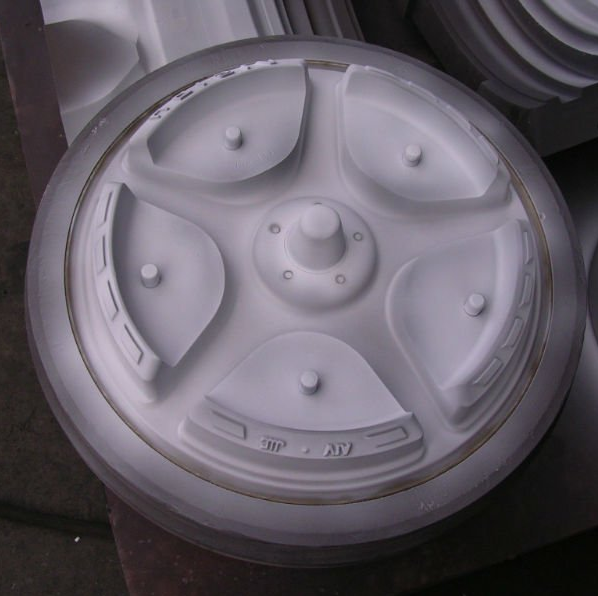
The BN coating form of Product 8233 is applied with a brush or a spraying machine, depending on the working conditions.
Q5. Which application methods does Product 8233 support?
The matched equipment listed for the product is a brush and a spraying machine. Both are recognised routes for the coating form. Which one is appropriate belongs to the definition of the working conditions rather than to a fixed specification.
Q6. Does the coating need a high-temperature drying step?
The product data does not state a drying or curing cycle. The operating mode for Product 8233 is subject to actual working conditions, which means drying and curing parameters are confirmed against the substrate, the equipment and the process temperature instead of being read from a generic table. Buyers searching for boron nitride coating high-temperature drying should treat that line-specific confirmation as a required step of the introduction, not an optional extra.
Q7. What is the maximum working temperature?
The maximum working temperature of Product 8233 is 900 °C in air and above 2000 °C in inert gas. The atmosphere distinction is the most misread number in boron nitride procurement: the 2000 °C-plus figure applies to inert gas, while an air atmosphere limits the material to 900 °C.
Q8. How do we confirm that the product fits our working conditions?
Because the operating mode is defined as subject to actual working conditions, the fit check is performed against the real process: the material being contacted, the atmosphere, the temperature profile and the application method. Sumetech supplies trial lots as well as full container shipments, which allows that confirmation to happen on the actual line before a recurring schedule is agreed.
Q9. Is it suitable as a release coating for die casting?
Yes. Product 8233 is specified as an anti-stick coating for die casting operations and, more generally, as a high-temperature boron nitride coating. In metal forming and casting, boron nitride coatings are applied to moulds, troughs and ladles for aluminium, magnesium and zinc alloys to enable easy release, extend tool life and improve casting surface quality. The non-wetting and corrosion-resistant behaviour of Product 8233 against most molten metals and acids is what places it in that application class.
Long-Term Supply: What the Partnership Actually Covers
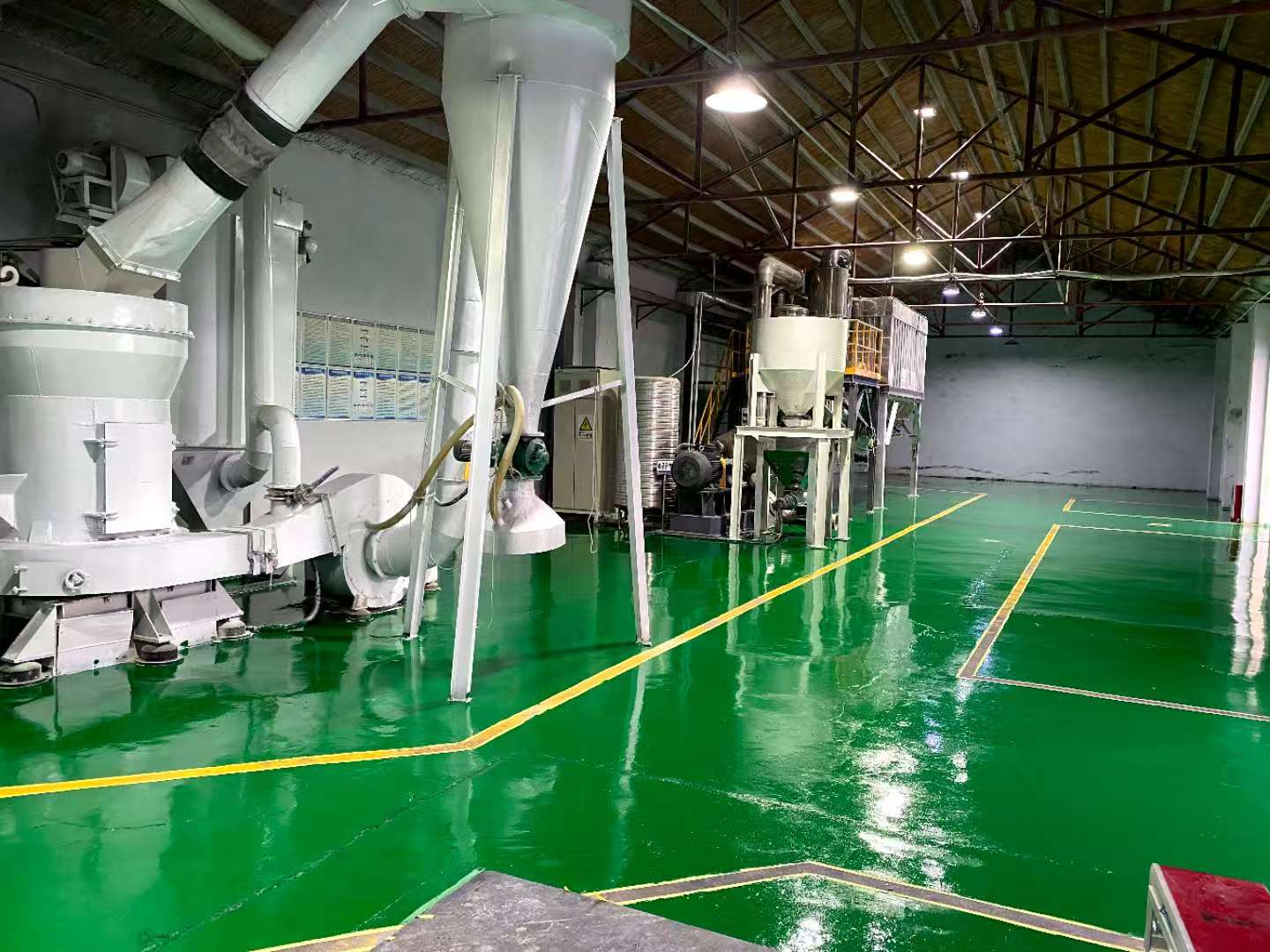
Sumetech's facility is equipped with ultra-fine mechanical mills, crushers, shaping machines and advanced sieving systems for boron nitride processing.
Long-term supply in this category is a specification problem before it is a logistics problem. Sumetech's production facility covers 6000 m² with an annual production capacity of 5000 metric tons, and it is equipped with ultra-fine mechanical mills, crushers, shaping machines and advanced sieving systems for boron nitride processing. Those units are what allow particle size distribution and morphology to be held consistent from lot to lot.
Customisation scope sits alongside capacity. The company's stated range covers particle size distribution from coarse granules to sub-micron powders, morphology in angular, spherical or crushed shapes, purity grades, and packaging specifications. For a multi-year buyer, the practical value is that the same specification can be reproduced in later orders instead of being renegotiated each time.
A long-term agreement should therefore fix the following in writing:
- the form (powder, granular, coating or paint) and the specification that goes with it;
- the application method and the equipment used on the line, so that technical support can be given against it;
- the storage and stock-rotation rule, including how expiration dates are managed;
- the delivery rhythm, sized to consumption rather than to container economics alone;
- the named technical contact for working-condition questions.
After-Sales Support: Who Handles What After Delivery
After-sales support in this category is mostly technical. Sumetech's R&D and quality control team consists of five technicians who monitor production parameters, optimise processes and check that shipments meet the applicable requirements. According to the company's own published information, its laboratory has passed CMA (China Measurement Certification) and CNAS (National Laboratory Accreditation).
The stated support model is not limited by order size: the company describes full-scale technical support, personalised relationships with clients of all sizes, and the ability to handle both large bulk shipments and urgent small-quantity deliveries. In day-to-day terms, that translates into three touchpoints a buyer can actually use: an application question answered against the real process, a documentation check for a shipment, and a continuity conversation when demand patterns change.
Direct contact for these questions runs through Mike Meng: info@sumetech.com, telephone and WhatsApp +86 13805218959. The company is based at 206, Rundong Garden, Huangji, Tongshan, Xuzhou, China, and publishes product information at www.sumetech.com.
Step-by-Step: From Trial Lot to Recurring Boron Nitride Supply
- Define the process window. Record the operating temperature, the atmosphere (air or inert gas), the material being contacted and the substrate to be coated. This is the framework against which every later answer is given.
- Choose the form. Decide between powder, granular, coating and paint depending on whether the material is used as a filler, as a release layer or as a coating applied to tooling.
- Confirm the application method. Fix whether the coating is applied with a brush or a spraying machine, since the method and the working-condition definition are connected.
- Run a trial lot. Test on the actual line, with the same substrate, the same equipment and the same temperature profile, before committing to a recurring order.
- Agree the storage and rotation rule. Set the dry and sealed storage practice, decide who monitors expiration dates, and size deliveries so that stock rotates.
- Lock the specification and packaging. Confirm particle size distribution, morphology, purity grade and packaging so that later lots match the validated one.
- Set the review rhythm. Keep a named technical contact and review performance after each delivery cycle, so that small process drift is corrected before it becomes a rejected batch.
Use Cases Where Long-Term Support Matters Most
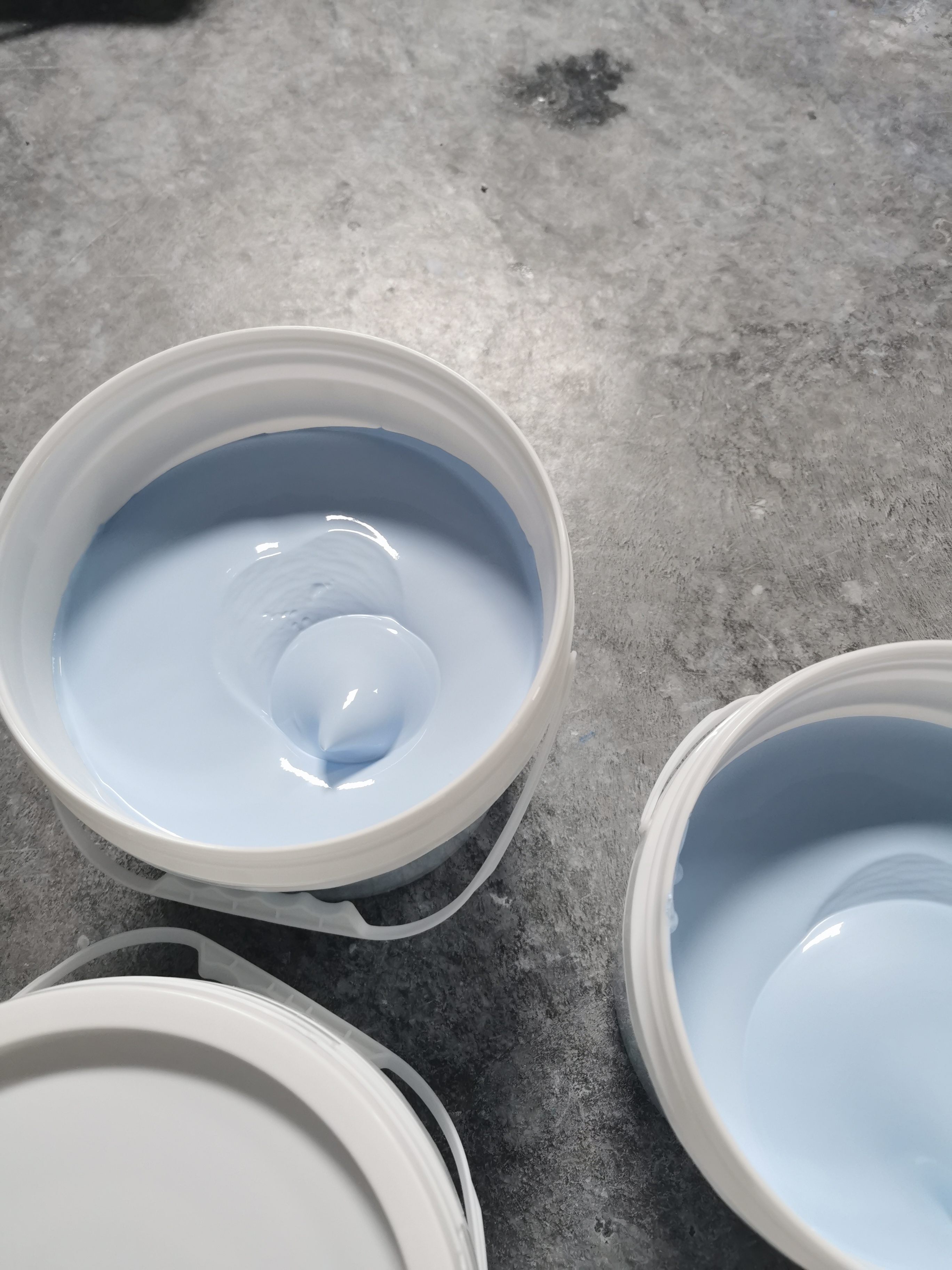
BN coating under Product 8233 is used across die casting, glass forming, hot forming and sintering support applications.
Die casting and precision casting
Anti-stick BN coating applied to dies, moulds, troughs and ladles keeps molten aluminium, magnesium and zinc alloys from wetting the tooling surface. Because Product 8233 is chemically inert and corrosion-resistant against most molten metals and acids, it belongs to the coating class used in precision casting and horizontal continuous casting, both of which stop production quickly if release performance changes.
Glass melting and glass forming
In glass and ceramics manufacturing, boron nitride coatings are used as release coatings on glass-forming moulds, where they help reduce surface defects and cut the downtime spent cleaning tooling. Stability in air up to 900 °C is the relevant boundary for these open-atmosphere processes.
Hot forming and demoulding
The graphite-like layered structure of boron nitride gives it low friction and high-temperature release behaviour. That makes it a working choice for high-temperature lubrication and demoulding, including metal melting, glass processing and plastic moulding steps where adhesion is the failure mode.
Ceramic sintering
During powder sintering, boron nitride coatings on graphite plates prevent carbon contamination and stop workpieces bonding to fixtures. This is a support application rather than a release application, and it depends on chemical inertness and non-wetting behaviour rather than on friction.
Semiconductor thermal management
Boron nitride has a low dielectric constant and is thermally conductive, which supports its use as a thermally conductive filler and as high-temperature electrical insulation in the semiconductor and electronics industries. Purity matters here: Product 8233 reaches 99.9% maximum purity, which is what makes it relevant to electronics-facing applications.
Horizontal continuous casting and amorphous ribbon
Continuous processes depend on non-stick release behaviour holding steady over long runs, which is why boron nitride is specified in horizontal continuous casting and amorphous ribbon production. It is also used in vacuum coating, photovoltaic technology, solar thermal energy storage, military and aerospace, superhard materials, functional fibres, functional ceramics and cosmetic additives.
Form and Use-Case Fit at a Glance
| Application area | Relevant Product 8233 property | Practical implication |
|---|---|---|
| Die casting and precision casting | Anti-stick (non-wetting) coating for die casting operations; corrosion-resistant to molten metals and acids | Applied by brush or spraying machine to moulds, troughs and ladles; supports easy release and cleaner casting surfaces |
| Glass melting and glass forming | Chemical inertness and high-temperature release properties | Used as a release coating on glass-forming moulds to reduce surface defects and cleaning downtime |
| Hot forming and demoulding | Graphite-like layered structure; low friction | Serves as a high-temperature lubricant and release agent in metal melting, glass processing and plastic moulding |
| Ceramic sintering | Non-wetting and chemically inert | Coating on graphite plates prevents carbon contamination and bonding between workpieces and fixtures |
| Semiconductor and electronics thermal management | Low dielectric constant; thermal conductivity; purity up to 99.9% | Used as a thermally conductive filler and as high-temperature electrical insulation |
| Horizontal continuous casting and amorphous ribbon | Non-stick release and non-wetting behaviour | Keeps release performance stable across long continuous runs |
Frequently Asked Questions
Is Product 8233 boron nitride compliant for industrial use in the EU?
Boron nitride is compliant with EU REACH (Regulation EC 1907/2006) as a substance used in industrial applications, and boron nitride coating is commonly declared under HS code 28500020 for export and import. According to Sumetech's published information, the company's laboratory has passed CMA (China Measurement Certification) and CNAS (National Laboratory Accreditation). Buyers with market-specific documentation requirements should confirm them with the Sumetech team before the first order.
How should Product 8233 be stored, and can it be used past its expiration date?
Storage is specified as keep dry and sealed storage, with use before the expiration date. No fixed shelf-life duration is stated in the product data, so the expiration date supplied with the material governs. The practical consequence for a long-term buyer is delivery planning: size shipments to consumption so that dated stock rotates through production instead of ageing in the warehouse.
Can we validate the material with a trial before committing to a long-term agreement?
Yes. Sumetech supplies trial lots as well as full container shipments, and production is customisable across particle size distribution, morphology, purity grades and packaging specifications. Because the operating mode for Product 8233 is subject to actual working conditions, the meaningful validation is a trial on your own line using the same substrate, application method and temperature profile that will be used in production.
What keeps supply stable across a multi-year relationship?
Sumetech's production facility covers 6000 m² with an annual production capacity of 5000 metric tons, and it is equipped with ultra-fine mechanical mills, crushers, shaping machines and advanced sieving systems for boron nitride processing. The company maintains large raw material inventories on-site, which supports uninterrupted production and fast responses to urgent orders. Around 90% of output is exported, with Turkey, Japan, Korea and Europe among the main markets. Stability in practice comes from fixing specification, packaging and delivery rhythm up front so that repeated lots behave the same way.
What after-sales support comes with a long-term boron nitride partnership?
Support is technical before it is commercial: a five-technician R&D and quality control team monitors production parameters and process performance, and full-scale technical support is provided for storage, application and working-condition questions. The fastest way to get an answer on a specific process is to send the substrate, working temperature, atmosphere and application method to Mike Meng at info@sumetech.com or +86 13805218959. The Sumetech 2026 catalogue, covering Product 8233 boron nitride and the potassium fluoroaluminate range, can be downloaded free of charge here: Catalog of Sumetech-2026.
Conclusion: The Partnership Is Built on Answers, Not on the Datasheet
Product 8233 boron nitride has a clearly stated operating envelope: dry and sealed storage, use before the expiration date, application by brush or spraying machine, a maximum working temperature of 900 °C in air and above 2000 °C in inert gas, and non-wetting, corrosion-resistant behaviour against most molten metals and acids. Those facts are what a buyer can verify before ordering.
Long-term partnership with Sumetech adds the part a datasheet cannot carry: a manufacturing base with a 6000 m² facility, 5000 metric ton annual capacity and dedicated boron nitride processing equipment that keeps a specification reproducible, plus a technical team that answers storage, application and working-condition questions against your actual process rather than a generic table. For procurement teams moving from a first trial lot to a recurring schedule, the sensible next step is a trial run on the real line, followed by an agreed specification, a delivery rhythm sized to consumption, and a named technical contact.
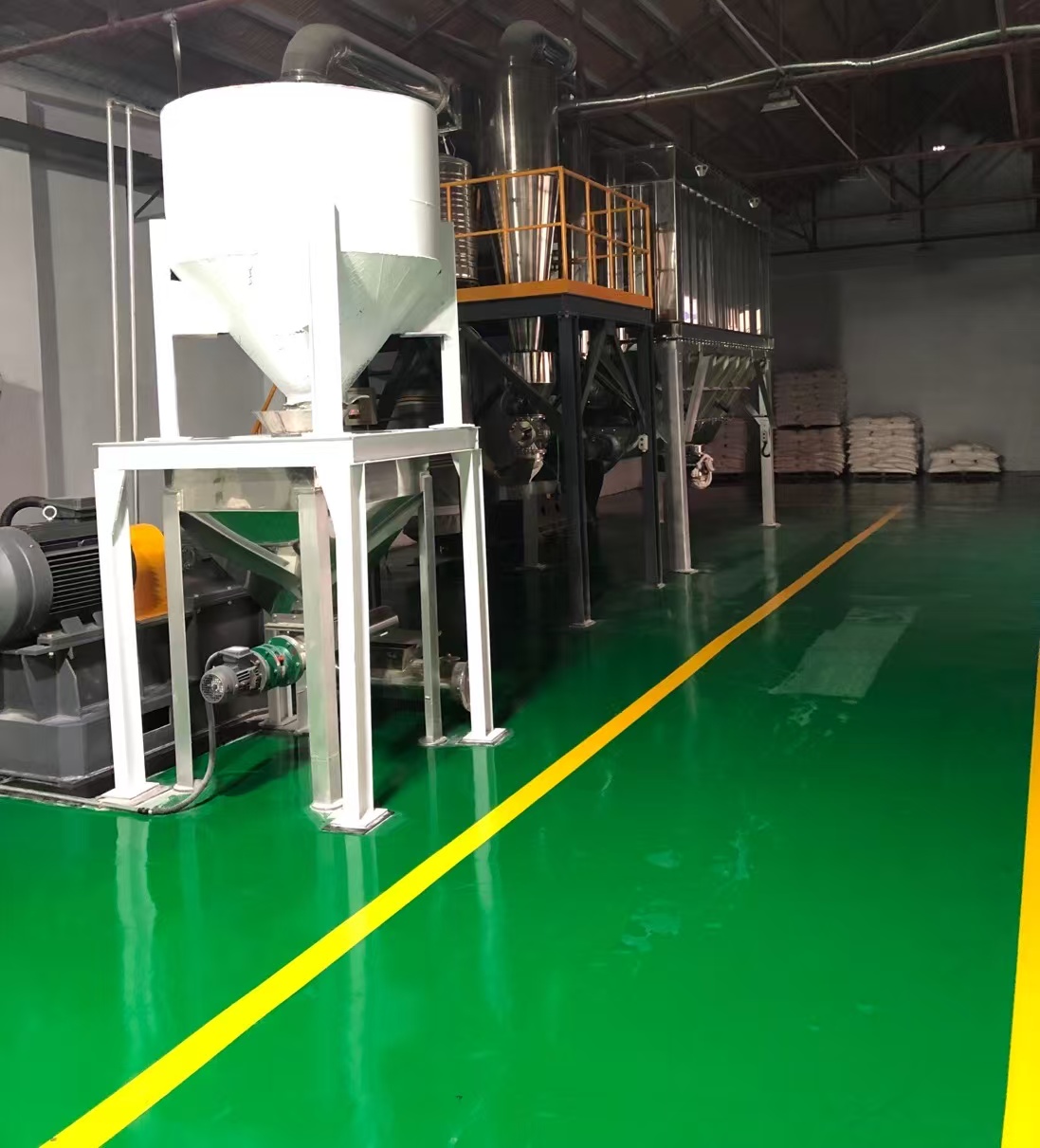
Advanced sieving and classification systems support consistent particle size distribution across boron nitride lots.
Next step
Send your process details — substrate, working temperature, atmosphere and application method — to Sumetech for a fit assessment and a trial lot. Email: info@sumetech.com · Tel / WhatsApp: +86 13805218959 · Web: www.sumetech.com
Download the full product range in the Sumetech 2026 catalogue.