
Boron Nitride 8233 for Welding and Brazing Fixture Release: Project Application Guide
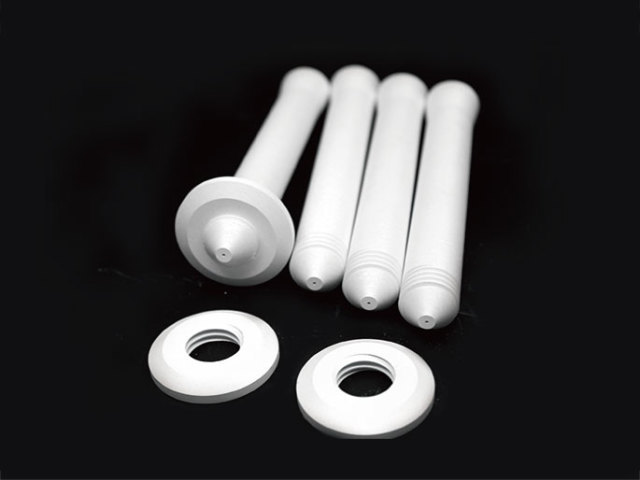
Short answer: Boron Nitride 8233 is a boron nitride product supplied by Sumetech Industry Co., Ltd in powder, granular, coating and paint forms, with a maximum working temperature of 900 °C in air and above 2000 °C in inert gas, and purity up to 99.9%. In welding and brazing projects it is applied to fixture surfaces as a high-temperature release agent and lubricant. Because the material is chemically inert and non-wetting against most molten metals, spatter, filler metal and oxide build-up are far less likely to bond to the fixture — which is the core failure mode that drives cleaning downtime and premature fixture replacement.
Fixture release is rarely the headline specification in a welding or brazing project. It becomes visible only when a fixture starts gripping parts it should not touch, when braze alloy wets a locating face, or when a shift begins with an hour of chipping and wire-brushing. This guide explains what Boron Nitride 8233 does in that role, how it behaves inside real furnace and torch cycles, how to apply it with a brush or a spraying machine, and where its limits are.
One condition frames everything below: performance should be matched to actual working conditions. Boron nitride is not a universal coating, and the guidance here is a decision framework, not a fixed recipe for every fixture.
Problem Definition: What Fixture Release Failure Actually Looks Like
In welding and brazing, a fixture has two jobs that conflict. It must hold the assembly in position through a thermal cycle, and it must let go cleanly at the end. Adhesion is what breaks the second job.
Three mechanisms account for most fixture release problems:
- Filler metal wetting. In brazing, molten filler alloy flows by capillary action. Any surface it can wet will be wetted, including the fixture faces that define joint location, gap and alignment.
- Spatter and droplet bonding. Welding spatter and molten metal droplets are small, hot and oxidising. When they land on bare tool steel or a contaminated coating, they bond mechanically and often metallurgically.
- Oxide and scale bridging. At brazing temperatures, oxides formed on fixtures can sinter or fuse to workpiece surfaces and to each other, creating a bridge that has to be broken by force.
The cost of these mechanisms is not only cleaning labour. Repeated chipping and grinding degrade locating faces, so fixture geometry drifts, and re-qualification or replacement follows. In high-mix fabrication shops the practical consequence is that changeover time becomes unpredictable, because nobody can say in advance how long a fixture will take to release.
The engineering answer is to interrupt the adhesion path at the surface. That means separating the fixture from the molten metal with a layer that the metal cannot wet, and that survives the temperature of the process without breaking down.
Industry Background: Why High-Temperature Release Is a Coating Problem
Brazing and welding fixtures operate in an unusual window. They are hot enough that organic release agents, greases and many polymer-based anti-spatter compounds decompose or carbonise, and they are frequently cycled between ambient and process temperature, which stresses any coating through differential thermal expansion.
Boron nitride sits naturally in this window. Hexagonal boron nitride has a layered crystal structure described as graphite-like, with low friction between layers, and it is chemically inert. That combination is why boron nitride coatings are used as release layers on moulds, troughs and ladles for aluminium, magnesium and zinc alloys, on glass-forming moulds, and on graphite plates in sintering and heat treatment to prevent carbon contamination and bonding between workpieces and fixtures.
Market context is consistent with that demand pattern. Grand View Research reports that paint coatings accounted for the largest application share of hexagonal boron nitride demand in 2024, at 32.8%. Dataintelo values the global boron nitride coatings market at USD 2.8 billion in 2025. These figures should be read with care: published boron nitride market sizes vary widely depending on whether the definition covers powder and coatings only or extends to downstream ceramics and composites, so they are useful as directional signals rather than as procurement benchmarks.
For a fabrication project the practical takeaway is narrower. High-temperature release is a coating decision, and coating decisions are won or lost on three variables: the service temperature and atmosphere, the metal being kept away from the fixture, and how the layer is applied and maintained between cycles.
Detailed Solution: What Boron Nitride 8233 Contributes to a Fixture
Sumetech Industry Co., Ltd is a manufacturer of metal smelting and casting auxiliary materials and boron nitride products, exporting to markets including Turkey, Japan, Korea and Europe. Boron Nitride 8233 is its boron nitride line, offered as powder, granular material, coating and paint. Four property groups matter for welding and brazing fixture release.
1. Thermal stability defines the applicable process window
The stated maximum working temperature is 900 °C in air and above 2000 °C in inert gas. In practice this single pair of numbers decides whether boron nitride is the right release layer for a given fixture:
- Torch brazing, resistance brazing, and most atmosphere-furnace brazing of steel and copper alloys fall inside the air-rated range, so a boron nitride layer can be used in open atmosphere.
- Vacuum brazing, controlled-atmosphere brazing and high-temperature sintering fixtures that exceed the air limit require an inert or reducing atmosphere, which is exactly the condition under which the material is rated above 2000 °C.
- Any fixture that sees both conditions must be assessed against the more demanding one, because the air rating is the constraint, not the inert rating.
2. Lubrication and release behaviour prevents adhesion
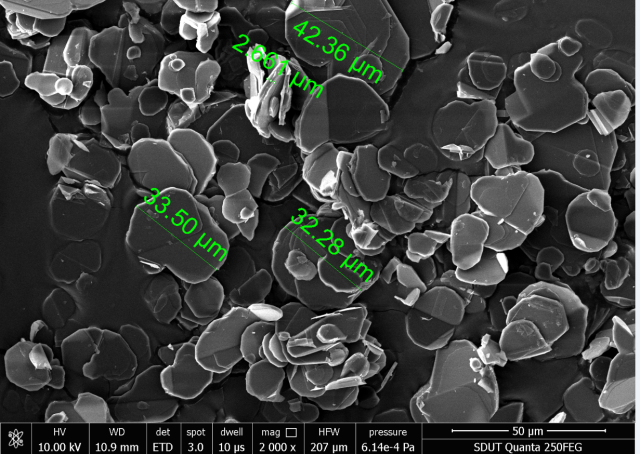
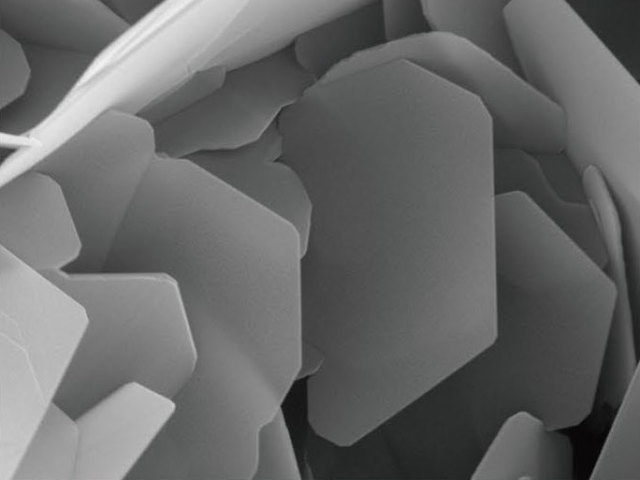
Boron nitride has a graphite-like layered structure. It is soft, has a low coefficient of friction, and functions as a high-temperature lubricant and release agent. On a fixture face, this produces two effects that matter at the same time: the layer reduces mechanical friction where a workpiece slides or is pressed into location, and it reduces the tendency of molten metal to adhere to the surface.
This is the mechanism that separates boron nitride from a purely sacrificial coating. The release is not achieved by burning away or by being scraped off; it is achieved by presenting a low-energy, non-wetting surface to the metal.
3. Chemical inertness, non-wetting and corrosion resistance
The material is chemically inert, non-wetting and corrosion-resistant against most molten metals and chemicals. In a brazing fixture this matters in three places: at the joint locating faces where filler alloy must not wet, on fixture bodies exposed to flux residue and metal vapour, and on graphite or ceramic fixture elements that would otherwise bond to workpieces during sintering or heat treatment.
A related property, low dielectric constant with reliable electrical insulation at high frequency and high voltage, is relevant where welding fixtures incorporate electrical isolation — but it should be treated as a secondary consideration in a release application, not the selection driver.
4. Purity and form are specified, not assumed
Boron Nitride 8233 is available at purity up to 99.9%, and in powder, granular, coating and paint forms. In fixture applications the form determines the application route: coating and paint grades are applied as supplied to a prepared fixture surface, while powder and granular material feeds a dilution or compounding step defined by the process. The choice should be made against the fixture's geometry and the application equipment available on site.
Sumetech also offers OEM/ODM production with customization of size and colour, monthly capacity of 1000 MT, a minimum order quantity of 10 kgs, and a lead time of 30 days. Quality control is 100% test, and after-sales support is available remotely and on site.
Step-by-Step Breakdown: Applying 8233 to a Brazing or Welding Fixture
The sequence below is a project workflow rather than a fixed process recipe. Operation mode for boron nitride is subject to actual working conditions, so each step should be confirmed against the fixture's real thermal cycle and against the specific grade supplied.
Step 1 — Define the fixture's real working condition
Record the peak surface temperature the fixture reaches, the atmosphere (air, inert gas, vacuum, reducing), the metal or filler alloy that must not adhere, and the contact geometry — flat locating faces, radii, threads, pins. This record is the single most important input, because the same product can perform well on one fixture and poorly on another purely because the working condition differs.
Step 2 — Match service atmosphere to the temperature rating
If the peak fixture temperature is at or below 900 °C and the process is in air, an air-rated boron nitride layer is applicable. If the process requires higher temperature, the fixture must run in inert gas to stay inside the material's rated envelope of above 2000 °C. Do not treat the inert rating as permission to exceed 900 °C in air.
Step 3 — Select the form and the application route
Coating and paint forms suit fixture faces that can be coated directly. Powder and granular forms suit processes where the material is prepared on site before application. The matched equipment specified for this product is a brush or a spraying machine:
- Brush application gives local control. It suits small locating faces, masked areas, touch-up between cycles, and fixtures where overspray would contaminate threads, locating pins or nearby equipment.
- Spraying machine application gives coverage and consistency. It suits large fixture bodies, repeated coating of the same part after each cleaning cycle, and production cells where coating thickness needs to be reasonably uniform across a surface.
Step 4 — Confirm the drying route before the first production cycle
Boron nitride coating performance is affected by how the applied layer is dried and brought up to temperature. Ask the supplier for the drying and high-temperature conditioning route recommended for the specific grade supplied, and schedule it so that any volatile components are removed before the fixture enters a brazing furnace. This is a supplier-confirmation step, not a specification that should be assumed across grades.
Step 5 — Trial on one fixture, then compare
Run a single fixture through a representative number of cycles before committing a line. Compare release behaviour, surface condition of the coating, and the amount of cleaning required between cycles. Because operating mode depends on actual conditions, the trial result — not a generic claim — is the evidence that the coating suits the process.
Step 6 — Store dry and sealed, and track the expiration date
Boron nitride products must be kept dry and sealed in storage and used before the expiration date. Moisture pickup and contaminated containers are a common and preventable cause of inconsistent coating behaviour, and the failure usually appears at the fixture rather than in the store, which makes it expensive to diagnose.
Step 7 — Inspect and re-apply on condition, not on a fixed calendar
Set the re-application interval from observed wear: areas where bare metal becomes visible, zones where spatter starts to grip, and locating faces where braze alloy begins to leave a mark. Fixture duty varies too much between cells for a single interval to apply across a shop.
Use Cases: Where 8233 Fits in Metal Fabrication Projects
Boron nitride is used across precision casting, horizontal continuous casting, amorphous ribbon, thermally conductive fillers, photovoltaic and solar thermal technology, the semiconductor industry, optical glass, vacuum coating, electronics, military and aerospace, superhard materials, cosmetic additives, functional fibres and functional ceramics. Within welding and brazing project work, the following applications are the most direct fit.
Brazing fixture locating faces and joint supports
The highest-value application. Surfaces that define the joint gap and alignment are exactly the surfaces that filler metal must not wet. A non-wetting boron nitride layer on those faces supports clean release while preserving the geometry that the brazing specification depends on.
Welding fixture clamps, pins and nozzles
Clamps, locating pins and nozzle faces accumulate spatter. A low-friction boron nitride layer reduces adhesion and makes removal of what does land considerably easier, which shortens end-of-shift cleaning without changing the fixture's mechanical function.
Graphite and ceramic fixture elements in sintering and heat treatment
Graphite plates and ceramic supports used in heat treatment and sintering are known boron nitride applications, precisely to prevent bonding between workpieces and fixtures and to limit carbon contamination. Fixtures that combine brazing with a sintering or stress-relief step fall into the same category.
High-temperature tooling in aerospace, electronics and superhard materials
Where assemblies are joined at high temperature in controlled atmosphere, the >2000 °C inert-atmosphere rating becomes the relevant figure, and the non-wetting behaviour against most molten metals becomes the functional reason for the coating.
Adjacent evidence from metalworking production
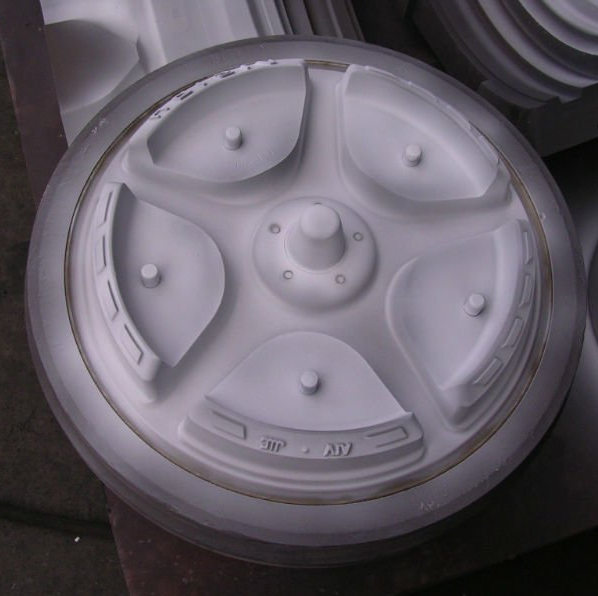
A manufacturer in Turkey used 200 kgs of boron nitride over one year for wheel hub demoulding and reported that it effectively prevents adhesion, attributing the result to soft texture and a low coefficient of friction. That is a demoulding application rather than a brazing fixture, so it should not be read as a fixture-specific result — but it is a useful production-scale indication of how the low-friction, anti-stick mechanism behaves over an extended period in a metalworking plant.
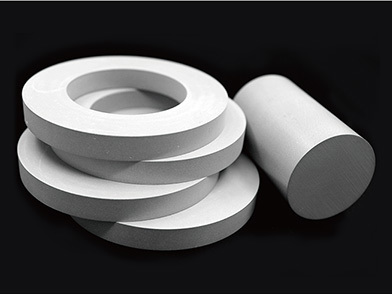
Comparison Table: Matching the Specification to the Project
The table below compares the decision variables that a fabrication project actually has to resolve. All values are the published specification of Boron Nitride 8233 and its stated application conditions; nothing is estimated.
| Decision variable | Option A | Option B | What to verify in the project |
|---|---|---|---|
| Service atmosphere | Air — maximum working temperature 900 °C | Inert gas — above 2000 °C | Peak fixture surface temperature in the real cycle, not the furnace set point |
| Application method | Brush — local, controlled, suited to small faces and touch-up | Spraying machine — broader coverage and consistency across large fixture bodies | Geometry, masking needs, and whether overspray can reach threads or locating pins |
| Product form | Coating / paint — applied as supplied | Powder / granular — prepared before application | Which route the shop can execute consistently between cleaning cycles |
| Purity | Up to 99.9% | Lower grades where the application permits | Whether impurities can interact with the filler alloy or workpiece surface at temperature |
| Storage | Dry, sealed storage | — | Use before the expiration date; check container integrity on receipt |
| Commercial terms | MOQ 10 kgs; lead time 30 days; OEM/ODM customization of size and colour | — | Consumption per coating cycle versus minimum order quantity |
Compliance and Documentation for EU and Export Projects
Boron nitride is compliant with EU REACH (Regulation EC 1907/2006) as a substance used in industrial applications. For export and import handling, boron nitride coating is commonly classified under HS code 28500020. The Sumetech laboratory has passed CMA (China Measurement Certification) and CNAS (National Laboratory Accreditation).
Two documentation practices are worth building into the project file. First, request certification documents that name the specific product you are buying: certificates issued for a different product line in a supplier's portfolio should not be filed against a boron nitride fixture coating. Second, record the grade, form and purity actually delivered, because release performance in the fixture is judged against that specific material, not against the product family in general.
FAQ: Boron Nitride 8233 in Welding and Brazing Fixtures
1. Is boron nitride coating REACH-compliant for EU foundries and fabrication plants?
Boron nitride is compliant with EU REACH (Regulation EC 1907/2006) as a substance used in industrial applications. For EU-bound shipments, buyers should keep the REACH position in the project file together with the HS code used for import — boron nitride coating is commonly classified under HS code 28500020 — and confirm that the documentation names boron nitride specifically rather than another product in the supplier's range.
2. What temperature can Boron Nitride 8233 withstand in a brazing fixture?
The maximum working temperature is 900 °C in air and above 2000 °C in inert gas. In practical terms, torch and open-atmosphere brazing fixtures operate inside the air rating, while vacuum or controlled-atmosphere brazing and sintering fixtures that exceed 900 °C must run in an inert atmosphere to stay inside the material's rated envelope. Purity is available up to 99.9%.
3. How is the product applied, and what equipment is needed?
Boron Nitride 8233 is supplied as powder, granular, coating and paint. The matched application equipment is a brush or a spraying machine. Brush application suits small locating faces, masked areas and touch-up; spraying-machine application suits large fixture bodies and repeat coating where coverage needs to be consistent. Because operation mode is subject to actual working conditions, the drying and conditioning route for the specific grade should be confirmed before the first production cycle.
4. What does it cost to introduce, and what influences the commercial terms?
Cost depends on the form and purity grade selected, the coating area per fixture, and re-application frequency, so it should be assessed per fixture rather than per kilogram alone. The published commercial terms are a minimum order quantity of 10 kgs, a lead time of 30 days, monthly capacity of 1000 MT, 100% test quality control, and OEM/ODM customization of size and colour. Consumption per coating cycle compared against the MOQ is the practical starting calculation.
5. Can we trial a sample on one fixture before committing the line, and how long does supply take?
Trialling on a single representative fixture is the recommended route, since release performance depends on the actual working condition. Lead time is 30 days, and trial lots as well as full container shipments are supported. Storage requirements should be observed from the moment material arrives: keep it dry and sealed and use it before the expiration date. To start a project evaluation, request the product data and current catalog from Sumetech Industry Co., Ltd at info@sumetech.com, or contact the team on WhatsApp at +86 13805218959 with your fixture temperature, atmosphere and metal.
Next Step: Match 8233 to Your Fixture
Send the fixture's peak temperature, service atmosphere, the metal or filler alloy involved, and the coating area per cycle. Sumetech will confirm the suitable form and grade against those conditions, and support the trial with remote or on-site technical assistance.
Download the current product catalog: Catalog of Sumetech-2026 (PDF)
Email: info@sumetech.com | Tel / WhatsApp: +86 13805218959 | Contact: Mike Meng
Conclusion
Boron nitride solves a specific and recurring problem in welding and brazing projects: fixtures that grip the workpiece, the spatter or the filler metal when they should release. Boron Nitride 8233 addresses that problem through a combination of properties that are all documented rather than implied — a maximum working temperature of 900 °C in air and above 2000 °C in inert gas, a graphite-like layered structure with low friction, chemical inertness with non-wetting and corrosion resistance against most molten metals and chemicals, and purity up to 99.9%.
The application discipline matters as much as the specification. Confirm the real fixture temperature and atmosphere, choose the form and the application route — brush or spraying machine — with the supplier, confirm the drying route for the grade supplied, keep the material dry and sealed and within its expiration date, and set re-application from observed condition. Where those steps are followed, boron nitride becomes a predictable part of fixture maintenance instead of an experiment repeated every time a fixture starts sticking.
Have Questions or Need More Details?
Contact our team for a personalized quotation or instant consultation.
Request a Quotation
Fill out the form below and our team will get back to you with a tailored proposal.
WhatsApp Direct Chat
Prefer to chat in real-time? Message us on WhatsApp for instant assistance & quick answers.
- Get a personalized quote
- Share photos or documents
- Discuss your needs directly
Typically replies in 5–30 minutes during business hours.