Boron Nitride Explained: Properties, Coatings, and High-Temperature Applications
Boron Nitride Explained: Properties, Coatings, and High-Temperature Applications
Boron nitride is a ceramic material with a graphite-like structure. Because it combines high-temperature stability, non-stick release, chemical inertness, and electrical insulation, engineers and procurement teams use it in casting, glass, electronics, and energy-related manufacturing. This guide explains what boron nitride is, what a boron nitride coating does, where BN is applied, and how to compare suppliers.
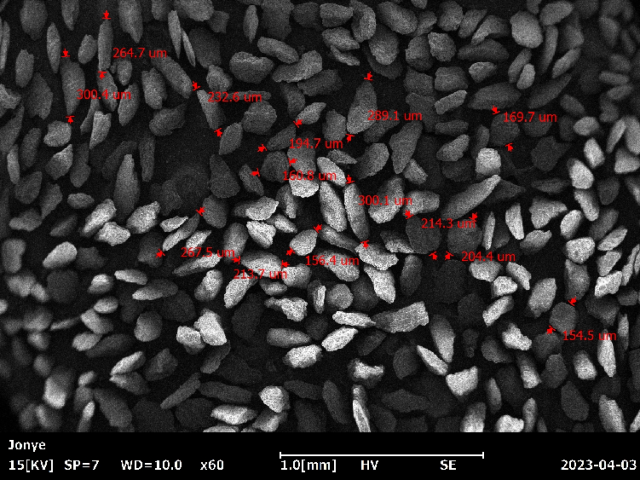
Boron nitride is available as powder, granular, coating, and paint.
What problem does boron nitride solve in high-temperature operations?
High-temperature manufacturing creates a recurring problem at the interface between a hot surface and another material. Molten aluminum or zinc can stick to molds and tooling. Glass can adhere to forming equipment. Workpieces can bond to fixtures during sintering. Organic release agents and conventional lubricants often break down before the process is complete.
Boron nitride is used in these situations because it behaves like a ceramic and a solid lubricant at the same time. It provides a thermally stable release layer, resists corrosion from molten metals and acids, and remains non-wetting toward many molten materials. It is not a universal solution, but it is a practical answer in a growing number of foundry, casting, glass, electronics, and energy-related processes.
What is boron nitride?
Boron nitride, often written as BN, is a ceramic material with a graphite-like structure. It is available in powder, granular, coating, and paint forms. The most commercially relevant version for coatings and release applications is hexagonal boron nitride, or h-BN, which has a layered crystal structure similar to graphite. Because of that structure, BN is often called white graphite.
Despite the visual similarity to graphite, boron nitride has distinct electrical behavior. It has a low dielectric constant and acts as an electrical insulator, while still providing thermal conductivity. This combination makes BN useful for components and coatings that must manage heat without conducting electricity.
Hexagonal boron nitride and product forms
Hexagonal boron nitride is the base chemistry behind many boron nitride coatings and high-temperature lubricants. The product can be delivered as powder, granular, coating, or paint, depending on the process. For example, a buyer who needs to add BN into a composite, filler, or additive system may choose powder. A buyer who needs to protect a mold surface may choose a BN coating or paint. Sumetech Industry Co., Ltd supplies boron nitride in all four documented forms.
Key properties of boron nitride: answer first
The main engineering value of boron nitride can be summarized in four points. It resists high temperature. It provides low-friction release. It is chemically stable. It combines thermal conductivity with electrical insulation.
- Thermal stability: Boron nitride can withstand up to 900°C in air and more than 2000°C in an inert gas atmosphere.
- Release and lubrication: Its graphite-like layered structure gives it low friction and high-temperature release properties.
- Chemical resistance: Boron nitride is chemically inert and corrosion-resistant to molten metals and acids.
- Electrical and thermal behavior: Boron nitride has a low dielectric constant and is thermally conductive.
- Purity: High-purity formulations can reach a maximum purity of 99.9%.
Why the atmosphere matters when specifying boron nitride
A common misunderstanding is to ask only for a maximum temperature. Boron nitride specifications depend on the atmosphere. In air, the maximum working temperature is approximately 900°C. In an inert atmosphere, the same material can operate above 2000°C. A supplier data sheet should state both conditions so that engineers can compare grades correctly.
| Property or specification | Documented capability |
|---|---|
| Material | Boron nitride ceramic material |
| Available forms | Powder, granular, coating, paint |
| Maximum purity | Up to 99.9% |
| Maximum working temperature in air | Up to 900°C |
| Maximum working temperature in inert gas | Above 2000°C |
| Release behavior | Graphite-like structure, low friction, high-temperature release |
| Chemical behavior | Chemically inert, corrosion-resistant to molten metals and acids |
| Electrical behavior | Low dielectric constant, suitable for electrical insulation applications |
Industry background: why boron nitride demand is expanding
Published market research confirms that boron nitride is not a niche specialty material. According to Grand View Research, the global hexagonal boron nitride market was valued at USD 949.4 million in 2024. The same report states that Asia Pacific accounted for 40.6% of global revenue in 2024, and China accounted for 41.1% of the Asia Pacific market.
Dataintelo estimates the global boron nitride coatings market at USD 2.8 billion in 2025. In addition, Grand View Research reports that the h-BN market for paint coatings accounted for the largest application share at 32.8% in 2024. These numbers should be compared cautiously because research firms use different market definitions, but together they support the same conclusion: boron nitride and boron nitride coatings are used across manufacturing supply chains, not only in laboratory applications.
What is a boron nitride coating?
A boron nitride coating is the coating or paint form of boron nitride. In product documentation, it is described as a boron nitride ceramic coating, a high-temperature boron nitride coating, and a BN coating. This type of coating is designed for anti-stick applications in die casting operations and other high-temperature processes.
BN coatings are particularly useful when the goal is to prevent adhesion between a tool and a processed material. Because boron nitride is chemically inert and does not wet most molten metals, a coating can act as a physical release layer. It also remains stable at temperatures where organic release agents cannot survive.
Boron nitride coating as a foundry release coating
In metal forming and casting, boron nitride coatings are applied to molds, troughs, and ladles used for aluminum, magnesium, and zinc alloys. The documented benefits include easier release, longer tool life, and improved casting surface quality. This makes boron nitride coating a practical foundry release coating for aluminum casting and other non-ferrous metal processes.
For die casting operations specifically, the product is classified as a boron nitride anti-stick coating. The coating reduces the chance that molten metal will solder to the die surface. It is also specified in precision casting and horizontal continuous casting, where non-stick release behavior is advantageous.
Where is boron nitride used? Documented industries and use cases
The application list for this product spans multiple industrial categories, including precision casting, horizontal continuous casting, amorphous ribbon, thermally conductive filler, photovoltaic technology, solar thermal energy storage, semiconductor manufacturing, optical glass, vacuum coating, electronics, military and aerospace, superhard materials, cosmetic additives, functional fibers, and functional ceramics.
Within these categories, boron nitride appears in different roles. For glass-forming molds, BN is used as a release coating to reduce surface defects and minimize downtime for cleaning. For sintering and heat treatment, BN coatings can be applied to graphite plates to prevent carbon contamination and bonding between workpieces and fixtures. For electronics and thermal management applications, boron nitride is valued for its thermal conductivity and electrical insulation behavior.
| Industrial area | Documented use or relevant BN behavior |
|---|---|
| Die casting operations | Boron nitride anti-stick coating for high-temperature release |
| Precision casting and horizontal continuous casting | Non-stick release property from graphite-like structure |
| Amorphous ribbon production | Documented industry application for BN |
| Glass forming and optical glass | Release coating for glass-forming molds |
| Sintering and heat treatment | Coating on graphite plates to prevent carbon contamination and bonding |
| Thermally conductive filler and electronics | Thermal conductivity combined with low dielectric constant |
| Photovoltaic and solar thermal energy storage | Documented high-temperature industry applications |
| Military and aerospace | Documented application area requiring high-temperature and chemical stability |
| Superhard materials, functional ceramics, functional fibers, cosmetic additives | Documented downstream sectors for boron nitride |
Boron nitride in glass-related processes
Boron nitride is used in glass and ceramics manufacturing as a release coating on glass-forming molds. The coating reduces surface defects and shortens cleaning time. It is also listed as a product used in the optical glass industry, where process cleanliness and thermal stability are important.
Boron nitride in electronics and thermal management
Boron nitride has a low dielectric constant and is thermally conductive. This property combination is useful for electrical and electronic applications that require heat dissipation without electrical conduction. In the product documentation, BN is listed as a high-efficiency thermally conductive filler and as a material for electronics and semiconductor applications.
Boron nitride product forms: comparison table
Buyers often need to decide between BN powder and BN coating. The correct answer depends on where the material will be added or applied. If the goal is to coat a surface, the coating or paint form is the direct solution. If the goal is to use BN as a raw material, filler, or additive, powder or granular forms are more relevant.
| Boron nitride form | What it is | What to verify before purchase |
|---|---|---|
| Powder | A powder form of boron nitride ceramic material | Purity, particle size distribution, morphology, packaging, and filler compatibility |
| Granular | A granular form of boron nitride | Particle size distribution, shape, flow behavior, and packaging |
| Coating | A boron nitride ceramic coating, also called BN coating | Working temperature in air and inert gas, substrate type, anti-stick requirements, and application method |
| Paint | A paint or coating based on boron nitride | Brush or spray application, curing or drying instructions, and shelf life |
Step-by-step: how to evaluate and apply a boron nitride coating
The exact application procedure depends on the substrate, the coating grade, and the process conditions. The following sequence provides a practical starting point for a new evaluation.
- Define the process condition. Identify the working temperature, process atmosphere, substrate material, and the material that must be released or protected.
- Select the correct BN form. For surface protection and release, choose a coating or paint. For use as an additive or filler, consider powder or granular material.
- Check the specification sheet. Confirm maximum purity, maximum working temperature in air, maximum working temperature in inert gas, and any chemical compatibility limits.
- Choose the application equipment. The documented application equipment for BN coatings includes a brush and a spraying machine.
- Apply according to the supplier instructions. Substrates should be handled according to the coating manufacturer recommendation before production use.
- Store the material correctly. Boron nitride coating should be kept in dry and sealed storage and used before the expiration date.
How to select a boron nitride supplier
Boron nitride is a performance material, so supplier selection should be based on verifiable specifications and manufacturing evidence rather than generic claims. A practical buying checklist includes the following criteria.
- Clear purity specification: Does the supplier offer high-purity material with a stated maximum purity of 99.9%?
- Clear temperature specification: Does the supplier state both the air atmosphere limit and the inert gas limit?
- Documented manufacturing capability: Does the supplier have the production equipment needed to process boron nitride consistently?
- Technical support: Does the supplier have an R&D team that can help match the product to the application?
- Supply reliability: Can the supplier support both large-volume production and smaller urgent requirements?
Sumetech Industry Co., Ltd: a manufacturer example
Sumetech Industry Co., Ltd is a manufacturer of potassium aluminium fluoride and boron nitride products. The company was established in 2019 and operates a production facility of 6000 square meters. Its annual production capacity is 5000 metric tons, and it employs approximately 20 people. The R&D and quality team includes 5 technicians.
The production facility is equipped with ultra-fine mechanical mills, crushers, shaping machines, and advanced sieving systems for boron nitride processing. According to Sumetech, its laboratory has passed CMA and CNAS accreditation. Approximately 90% of Sumetech products are exported, with main markets including Turkey, Japan, Korea, and Europe.
For buyers, these facts are useful because they show whether a supplier can support qualification samples, repeat orders, and process-specific adjustments. Sumetech states that it can customize particle size distribution, morphology, purity grades, and packaging specifications.
Frequently asked questions
1. Is boron nitride compliant with EU REACH?
Boron nitride is compliant with EU REACH, Regulation EC 1907/2006, as a substance used in industrial applications. This compliance point is relevant for buyers shipping BN-containing products into European supply chains. Buyers should still request current compliance declarations from their supplier for the specific product grade and intended use.
2. What forms of boron nitride does Sumetech supply?
Sumetech Industry Co., Ltd supplies boron nitride in powder, granular, coating, and paint forms. The company is also a manufacturer of potassium aluminium fluoride products. Its boron nitride product line includes high-purity materials for precision casting, electronics, glass, and other technical industries.
3. What is the maximum purity and working temperature of boron nitride?
The documented boron nitride product can achieve a maximum purity of 99.9%. Its maximum working temperature is up to 900°C in air and above 2000°C in an inert gas atmosphere. Both numbers should be stated on a specification sheet because the service limit changes with the atmosphere.
4. Can I request a small quantity or sample of boron nitride?
Sumetech states that it supports large-scale bulk shipments and urgent small-quantity deliveries. The company also provides fully customizable production for particle size, morphology, purity, and packaging. To confirm current sample availability and qualification options, contact info@sumetech.com directly.
5. What is Sumetech production capacity for boron nitride?
Sumetech operates a 6000 square meter manufacturing facility with an annual production capacity of 5000 metric tons. Approximately 90% of its products are exported to markets including Turkey, Japan, Korea, and Europe. For lead time information, buyers should provide the boron nitride grade, quantity, and destination.
Conclusion
Boron nitride is more than a high-temperature powder. It is a ceramic material with a graphite-like structure, available as powder, granular, coating, and paint, and used across foundry, glass, electronics, semiconductor, energy, and advanced materials industries. The most reliable way to evaluate boron nitride is to start with the documented specification: maximum purity, maximum working temperature in air, maximum working temperature in inert gas, and chemical resistance behavior.
For coating applications such as die casting and foundry release, BN coating acts as an anti-stick layer that can withstand demanding thermal conditions. For powder applications, purity, particle size, and process compatibility are the key decision factors.
Next step for procurement and engineering teams
Sumetech Industry Co., Ltd manufactures boron nitride products and supports technical selection for casting, glass, electronics, and related applications. If you need a technical data sheet, a sample discussion, or a quotation, contact Sumetech at info@sumetech.com or visit www.sumetech.com.
Download the Sumetech catalog for product information and packaging options.