Boron Nitride Explained: Properties, Forms, and Industrial Applications
Boron Nitride: The High-Temperature Ceramic Every Buyer Should Know in 2025
Boron nitride is the ceramic material that industrial buyers increasingly choose when they need a product that stays stable at very high temperatures, resists molten metals and chemicals, and still provides lubrication and electrical insulation. It is sold as powder, granular material, coating, and paint, and its use reaches from precision casting to cosmetics.
The industrial importance of boron nitride is measurable. The global hexagonal boron nitride (h-BN) market was valued at USD 949.4 million in 2024, according to Grand View Research. By 2025, the more specific boron nitride coatings market alone has reached approximately USD 2.8 billion, data published by Dataintelo indicate. This introduction is not a theory. These are numbers behind a material that production engineers, purchasers and R&D teams are actually specifying today.
This article is a supplier-independent and practically oriented guide for buyers: what boron nitride is, what forms it takes, which industries it serves, what boron nitride coatings can do in real processes and how to evaluate a high-purity boron nitride source.
The Problem: High-Temperature Manufacturing Still Battles Sticking, Drag and Wear
High-temperature production processes share common enemies: molten metal sticking to molds; glass adhesion on forming tools; lubrication that evaporates; parts that weld themselves to graphite fixtures. These problems cause surface defects, downtime, scrap and rising tooling cost.
Conventional release agents often fail once temperature passes normal organic limits. They burn off, leave residue, contaminate surfaces or require frequent reapplication. Therefore, engineers started looking for a chemistry that is thermally stable, chemically neutral and naturally lubricating. That chemistry is boron nitride.
The search intent behind “boron nitride” is rarely academic. Industrial researchers are looking for a release coating for aluminum casting, a high-temperature boron nitride coating for dies, a non-stick barrier that works above 900°C, or a high-purity powder for an electronics application.
What Exactly Is Boron Nitride?
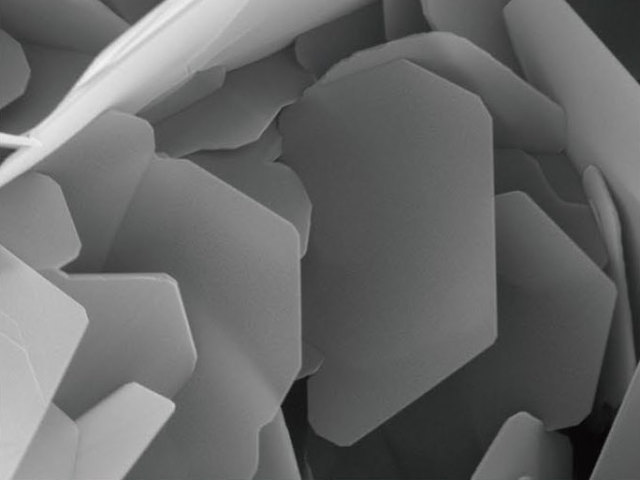
Boron nitride (BN) is a ceramic material made of boron and nitrogen. Its structure is graphite-like: atoms are bound tightly in layers, and the layers are weakly bonded to each other. Because of the visual similarity to graphite, hexagonal boron nitride is often called “white graphite.”
Unlike pure graphite, boron nitride is an electrical insulator. Because of its layered arrangement, it is soft and slippery at the microscopic level. This combination is rare: a material that is thermally conductive, electrically insulating, chemically resistant and lubricating at temperatures where most other materials oxidize or decompose.
Sumetech Industry Co., Ltd, a manufacturer established in 2019, supplies boron nitride in customizable powder-to-ceramic forms and uses this definition on its product documentation: Boron nitride is a ceramic material with a graphite-like structure, available as powder, granular material, coating and paint.
Key Properties Behind the Value
Boron nitride’s main technical properties have been confirmed consistently in manufacturer product specifications:
- Heat resistance: Maximum working temperature is approximately 900°C in air and exceeds 2000°C in an inert gas atmosphere. This difference matters in real furnace design and atmosphere control.
- High purity possible: Maximum purity can reach 99.9%, which is critical for electronics, semiconductor, and optical-glass-related processes where contamination changes properties.
- Chemical inertness: Boron nitride is non-wetting for most molten metals and resistant to corrosion from molten metals and acids. It does not easily react with the materials it usually touches.
- Electrical insulation: Boron nitride has a low dielectric constant and remains reliable in high-frequency and high-voltage environments.
- Thermal conductivity: It is thermally conductive, allowing heat to spread through a release layer or a filled polymer instead of building up locally.
- Lubrication and release: The graphite-like structure gives a low friction surface and high-temperature release effect, preventing sticking in metal, glass and plastic processing.
Main Forms of Boron Nitride and How to Distinguish Them
Buyers often search for very specific keywords: boron nitride powder, BN coating, boron nitride ceramic, boron nitride paint. These are not synonyms. Boron nitride is sold in different physical forms, and each form has its own role in manufacturing.
- Boron nitride powder is the base material. Powders are used as thermal fillers, cosmetic additives, superhard material ingredients, and starting material for ceramic parts. The same base chemistry can be customized in particle size distribution, morphology and purity grade.
- Boron nitride granular material is designed for free-flowing handling, large-volume dosing and processes that need coarse particles instead of fine dust.
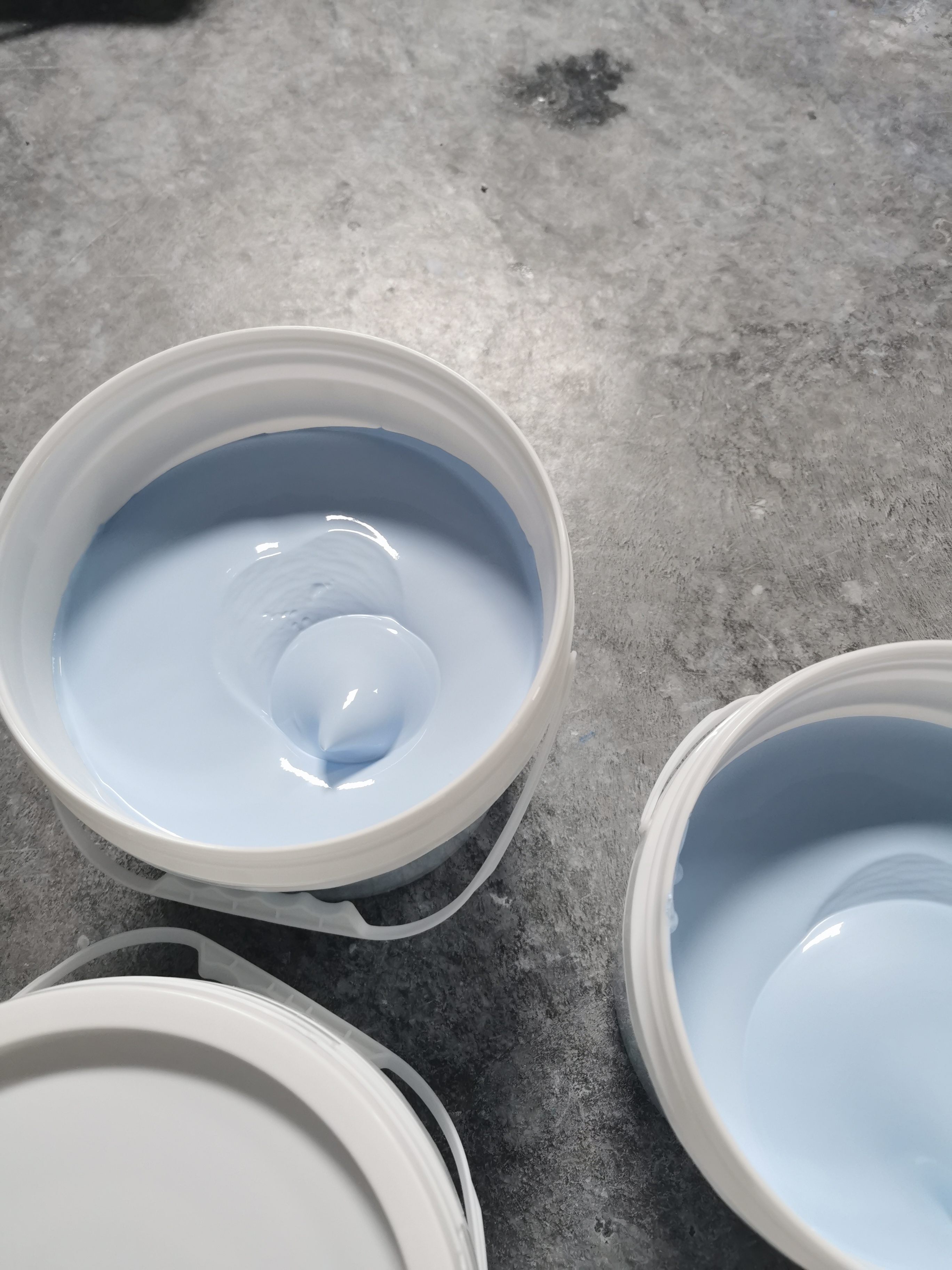
- Boron nitride coating or paint is a liquid suspension applied by brush or spraying equipment. After drying, it leaves a solid release layer. This is the form that die casting plants know as BN coating.
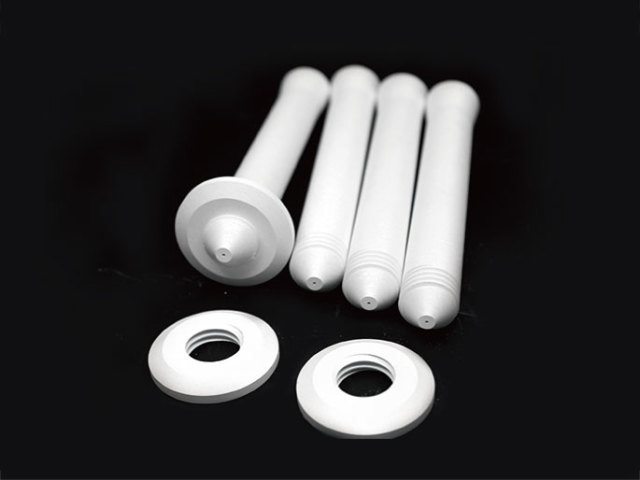
- Boron nitride ceramics are machined components: crucibles, plates, insulators, nozzles, thermal-protection parts, or composite ceramic parts with PBN structures.
| Form | Typical Packaging Logic | Best Fit |
|---|---|---|
| Boron nitride powder | Fine or engineered particle size, purity-based grades | Thermally conductive fillers, electronics, cosmetics, additive manufacturing, powder feedstock |
| Boron nitride granular | Free-flowing, low dust, large-volume handling | High-volume casting, refractory systems, industrial compounding |
| BN coating / paint | Brush-grade or spray-grade liquid suspension | Die casting, precision casting, glass forming, high-temperature release coating |
| Boron nitride ceramics | Machined or sintered components | High-temperature containers, electrical insulation, vacuum coating hardware, semiconductor hardware |
Where Boron Nitride Goes: Precision Casting to Cosmetics
Boron nitride is not a single-application niche material. Sumetech’s list of served industries shows a wide network of manufacturing sectors: precision casting, horizontal continuous casting, amorphous ribbon, thermally conductive filler, photovoltaic technology, solar thermal energy storage, semiconductor industry, optical glass, vacuum coating, electronics industry, military and aerospace, superhard materials, cosmetic additives, functional fibers and functional ceramics.
For buyers doing product development, this list has a simple meaning: if a system is exposed to high temperature and requires release, insulation, thermal management or chemical stability, boron nitride is a possible building block.
Metal Casting and Die Casting Operations
Boron nitride ceramic coating is used as an anti-stick coating for die casting operations. Because the material is chemically inert and corrosion-resistant to molten metals, the coating can stop aluminum and other non-ferrous metals from sticking to dies, troughs, and ladles. The non-stick release property, which comes from the graphite-like structure, is a clear advantage in precision casting and horizontal continuous casting. It also helps with part release, improves casting surface quality and reduces the time operators spend cleaning tooling.
Glass and Optical Glass Processing
In glass-forming processes, boron nitride works as a release agent on molds. A controlled BN coating minimizes surface defects and extends the period between cleanings, because the molten glass does not wet the coated surface easily. The optical glass industry is often included in boron nitride application lists because process cleanliness and surface quality are essential.
Electronics, Thermal Management and Semiconductor
Boron nitride combines high thermal conductivity with strong electrical insulation and a low dielectric constant. This unusual property set makes it a candidate for thermally conductive filler compositions in electronics. In semiconductors and photovoltaics, high-purity specification is often the priority. The maximum purity of 99.9% supports such high-requirement environments. Its working temperature stability also enables use in vacuum coating and high-temperature semiconductor processing hardware.
Energy Storage and Vacuum Coating
Solar thermal energy storage and photovoltaic technology both involve high process temperatures and long operating life. Boron nitride is present in these sectors both as a high-temperature protection material and as a component in thermal or electrical structures. Vacuum coating equipment also uses boron nitride ceramics and coatings for their thermal and electrical properties at low pressure.
Functional Ceramics, Functional Fibers and Cosmetics
Because boron nitride is soft, safe and inert, it appears in functional ceramics and functional fiber formulations. In the cosmetic additives industry, boron nitride contributes a silky feel, good coverage and optical softness in powder-based products. This downstream segment proves that a high-temperature ceramic can also be refined enough for demanding consumer-facing applications.
Deeper Focus: Hexagonal Boron Nitride Coating
One of the most frequent purchase queries is the high-temperature boron nitride coating. The coating is often called BN coating. In practical use, it acts as a high-purity boron nitride coating that protects tooling and enables release.
How BN Coating Works
BN coating forms a physical barrier between a substrate and a material that should not stick. The coating material is dispersed in a liquid carrier, applied to a clean surface, and then dried to form a layer. Once dried, the layer is stable at temperatures that would destroy conventional organic release agents.
Because boron nitride has a graphite-like structure, the coating surface has low friction. A part that comes into contact with the coating can be removed cleanly. Because the material is chemically non-wetting to most molten metals, metal droplets and castings do not form a metallurgical bond with the coated surface. Because the coating resists corrosion, dies and tooling survive longer in aggressive processes.
Where BN Coating Is Applied
Based on recorded application fields of boron nitride products, BN coatings are used in:
- Die casting operations: as anti-stick coating on dies handling aluminum, magnesium or zinc melts;
- Precision casting: as release coating on molds and pattern surfaces;
- Horizontal continuous casting: as non-wetting layer for molten metal flow paths;
- Glass forming: as release coating to avoid sticking and surface defects;
- Sintering and heat treatment: as protective coating on graphite plates to reduce carbon contamination and direct bonding between workpieces and fixtures;
- High-temperature containers and thermal-protection structures: as a ceramic layer that tolerates extreme heat in inert or controlled atmosphere.
Coating Specifications to Verify
When purchasing a boron nitride coating, technical buyers should request the actual specification sheet. Useful anchor points have been disclosed by Sumetech for this product type:
- Maximum working temperature in air: 900°C
- Maximum working temperature in inert atmosphere: above 2000°C
- Maximum purity of the BN product family: 99.9%
- Form: coating, paint or liquid-applied system
- Application equipment: brush or spraying machine
The user must also compare application method with process reality. Coatings are commonly applied to heated or room-temperature substrates; if the coating is applied by brush in one area and by spraying machine in another, customers should buy a product viscosity suited to both methods.

Market Context for Boron Nitride Buyers
Boron nitride demand has followed the growth of electric vehicles, electronics, photovoltaic energy, and advanced metal processing. The supply chain is global, but regional concentration affects procurement planning.
Verified market data for 2024–2025 shows the market in figures:
- The global hexagonal boron nitride market was valued at USD 949.4 million in 2024 (Grand View Research).
- The global boron nitride coatings market was valued at USD 2.8 billion in 2025 (Dataintelo). Note that different reports define market scope differently, so coatings-market values may include downstream application services or prepared formulations.
- Asia Pacific led the h-BN market with a 40.6% revenue share in 2024.
- China led the Asia Pacific region with a 41.1% share in 2024.
- Paint coatings were the largest application category in the h-BN market, accounting for 32.8% of the 2024 share.
This context is not just decoration. It tells a buyer that high-quality h-BN and BN coatings are now industrial-standard products, and that supply chains with regional manufacturing capacity can offer shorter lead times and better technical responsiveness.
Supplier Stack: What a Credible Boron Nitride Manufacturer Looks Like
For the awareness-to-research stage, finding a partner who can actually control powder quality, purity and consistency is more relevant than choosing a brand by price. Buyers will later ask: how did the supplier verify purity, particle size and batch stability?
Sumetech Industry Co., Ltd is one example of a specialized manufacturer in this field. In 2019, Sumetech was established. Its production facility covers 6000 square meters, has an annual production capacity of 5000 metric tons and employs about 20 people. Approximately 90% of production is exported, with reported markets including Turkey, Japan, Korea, and Europe.
The relevance of these production facts to a procurement decision can be stated transparently:
- Production capacity and internal raw-material inventory support supply continuity for both large-volume bulk shipments and urgent small-quantity orders.
- In-house equipment including ultra-fine mechanical mills, crushers, shaping machines, and advanced sieving systems allows particle size and morphology control at production scale.
- A dedicated R&D team of 5 technicians supports custom boron nitride development, process optimization and quality monitoring.
- Sumetech’s laboratory has passed CMA and CNAS accreditation, providing independent verification of quality-control competence.
- Inorganic fluoride and powder-processing experience supports the production of potassium aluminium fluoride and boron nitride materials for refractory, abrasive, welding and aluminum-alloy industries.
Pricing and delivery flexibility can be more important than brand recognition in the industrial-chemical buying process. A supplier with production-scale equipment and export experience may be more useful to a buyer developing a specific new release coating or a custom particle size distribution than a large chemical conglomerate with slower technical access.
Comparing Boron Nitride Suppliers or Grades: Decision Standards
At the Research stage, a purchasing engineer should compare boron nitride options not by price alone, but by the following decision criteria:
| Decision Criterion | What to Ask | Why It Matters |
|---|---|---|
| Purity | Can the supplier guarantee 99.9% maximum purity in the required grade? | Electronics, semiconductor and optical-glass applications are sensitive to trace impurities. |
| Temperature rating | What is the max working temperature in air vs. inert atmosphere? | 900°C in air and above 2000°C in inert gas cover different process types. |
| Form and particle size | Is the product available as powder, granular, coating or paint? Can particle size distribution be customized? | A casting plant may need coating; a composite maker may need fine filler powder. |
| Chemical compatibility | Is the product non-wetting and corrosion-resistant for the specific molten metal or chemical? | Incorrect chemical compatibility can cause part sticking and die wear. |
| Consistency infrastructure | Does the supplier control sieving, shaping, and grading in its own facility? | Batch-to-batch product stability keeps production parameters constant. |
| Quality system | Does the supplier operate accredited lab testing or documented QC? | CMA/CNAS accreditation is a verifiable marker for Sumetech’s laboratory. |
| Export and logistics experience | Can the supplier deliver to the plant location and respond to urgent orders? | High export ratio and main markets in Turkey, Japan, Korea, and Europe indicate cross-border process capability. |
Selection Checklist for First-Time Boron Nitride Buyers
The following checklist is designed to compress the process between awareness and sample order:
- Define your actual operating atmosphere: In air, BN is limited to about 900°C; in inert gas, it can exceed 2000°C. Do not expect 2000°C performance in an open-air furnace.
- Choose the correct form: Coating for molds, dies, glass tools and release surfaces; powder for fillers, additives and feedstock; granular for high-volume free-flowing operations; ceramics for structural or insulating components.
- Check purity requirements: Cosmetic, electronics, semiconductor and optical-glass applications may require near-99.9% purity. Other casting applications can use a technical grade.
- Evaluate application method: If operators use brush touching-up on-site, coating viscosity must allow that process. If an automated line uses spray application, specify spray grade.
- Verify drying and storage obligations: BN coatings require proper drying to deliver their release performance. Store sealed and dry, and avoid applying after the expiration date.
- Ask for documented QC evidence: Correspond with the supplier about sieving systems, particle-size analysis and laboratory accreditation.
- Request a trial lot: A small production sample before container volume can save the cost of a wrong specification.
Looking for a high-temperature boron nitride coating or custom boron nitride powder?
Contact Sumetech Industry Co., Ltd to ask for technical specifications, samples or a quotation.
Email: info@sumetech.com | WhatsApp: +86 13805218959
Download the company catalog: Sumetech Catalog 2026
FAQ About Boron Nitride and BN Coatings
Q1: Is boron nitride coating compliant with environmental regulations in Europe?
Boron nitride is compliant with EU REACH, Regulation EC 1907/2006, as a substance used in industrial applications. It is chemically inert and not classified as a hazardous reactive material in normal mechanical use. However, buyers should confirm the specific grade certificate with the supplier, because coating formulations may contain carrier liquids with their own regulatory status.
Q2: Can boron nitride coating withstand high-temperature drying?
Yes. Boron nitride coatings are designed as high-temperature coatings and can be dried and cured for later use at high process temperatures. The boron nitride material itself is stable at approximately 900°C in air and above 2000°C in an inert atmosphere. The maximum purity of the product family can reach 99.9%.
Q3: How does boron nitride coating help in die casting operations?
Boron nitride coating acts as an anti-stick and release coating in die casting. Because BN is a ceramic material with a graphite-like structure, the coating shows low friction and high-temperature release properties. Its chemical inertness and corrosion resistance prevent molten metal from wetting or bonding to the die, which reduces part sticking and extends the working interval of the tooling.
Q4: Can a supplier provide a boron nitride sample for testing before volume purchase?
Industrial boron nitride manufacturers commonly support trial orders before volume purchasing. For example, Sumetech Industry Co., Ltd, which operates a 6000-square-meter facility with an annual capacity of 5000 metric tons and exports about 90% of its products, welcomes procurement inquiries for both trial lots and full-container shipments. Ask for specifications, lead times and a product catalog from info@sumetech.com or WhatsApp +86 13805218959.
Q5: What is the typical lead time for boron nitride coating or powder orders?
A concrete lead time depends on grade, quantity and packaging requirements. Buyers should expect faster fulfillment from manufacturers that control production in-house and maintain raw-material inventory. Sumetech positions itself for uninterrupted year-round production and rapid response to urgent orders. Request a confirmed lead-time quotation from the manufacturer together with a specification sheet.
Conclusion
Boron nitride is one of the few materials that combines 900°C-plus air stability, 2000°C-plus inert-gas stability, chemical non-wetting behavior, lubricating release performance, thermal conductivity and electrical insulation. It is a practical answer for plants struggling with sticking, cleaning and tool wear in high temperature casting, glass forming, sintering, heat treatment and electronics thermal management.
For a purchasing team at the awareness-to-research stage, the immediate actions should be:
- Confirm whether your process needs powder, granular, coating or ceramic;
- Identify operating atmosphere and true surface temperature;
- Set purity and particle-size boundaries;
- Use the supplier stack described above to compare production and quality capabilities;
- Order a sample or request a specification meeting with a boron nitride manufacturer.
Sumetech Industry Co., Ltd (established 2019, 6000 m² production facility, annual capacity 5000 metric tons) provides high-quality boron nitride products for global customers, with 90% of output exported to markets including Turkey, Japan, Korea and Europe. The time to evaluate a reliable source is before your process begins to fail—not after the first sticking defect appears.