Boron Nitride: Properties, Coatings, and Industrial Applications
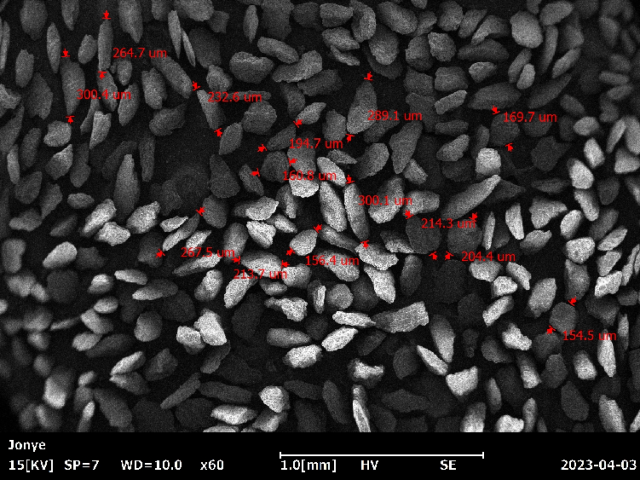
Boron nitride is a ceramic material often described as white graphite because of its layered structure and lubricating behavior.
Boron Nitride: Properties, Coatings, and Industrial Applications
Boron nitride is a ceramic material with a graphite-like layered structure. In industry it is sometimes called 'white graphite' because it is slippery, chemically stable, and able to withstand high temperatures. It is available in powder, granular, coating, and paint forms. Sumetech Industry Co., Ltd, a manufacturer established in 2019 and based in Xuzhou, China, supplies boron nitride together with potassium aluminium fluoride products and exports about 90% of its output to markets including Turkey, Japan, Korea, and Europe.
This guide is intended for buyers and engineers in the Awareness and Research stages. It explains what boron nitride is, what documented properties matter, how boron nitride coating is classified, and where the material is used across advanced manufacturing.
High-Temperature Manufacturing Problems Boron Nitride Solves
High-temperature manufacturing creates problems that ordinary lubricants and release agents cannot always solve. In aluminum die casting, molten metal can stick to mold surfaces. In glass forming, tooling can demand repeated cleaning because residues adhere to hot surfaces. In sintering and heat treatment, graphite fixtures can cause carbon contamination. In electronics and semiconductor processes, engineers often need a material that conducts heat while remaining electrically insulating.
Boron nitride addresses these application needs in four main ways:
- Thermal stability: Boron nitride is stable at approximately 900°C in air and above 2000°C in inert gas.
- Release and lubrication: Its graphite-like structure gives it low-friction, high-temperature release properties.
- Chemical inertness: It is non-wetting and corrosion-resistant to most molten metals and chemicals.
- Electrical and thermal behavior: It has a low dielectric constant and is thermally conductive.
For buyers, the important point is not only what boron nitride is, but how those properties change the economics of a production process. A mold release that does not burn off at high temperature can reduce downtime. A coating that resists molten metal can protect tool surfaces. A material that remains electrically insulating under high voltage can support electronic design.
Industry Background: Boron Nitride Demand Is Broadening
Boron nitride is no longer limited to specialized laboratories. According to Grand View Research, the global hexagonal boron nitride market was valued at USD 949.4 million in 2024. The same report indicates that paint coatings accounted for 32.8% of h-BN application share in 2024. Asia Pacific dominated the h-BN market with a 40.6% revenue share, and China represented 41.1% of the Asia Pacific h-BN market.
A separate estimate from Dataintelo values the global boron nitride coatings market at USD 2.8 billion in 2025. The difference between these figures shows that market definitions vary. One source may measure only hexagonal boron nitride powders and coatings, while another may include a broader set of boron-containing downstream products. Buyers should compare scope rather than rely on one isolated number.
Commercially, boron nitride and boron nitride coatings are commonly referenced under HS code 28500020. From a regulatory standpoint, boron nitride is documented as compliant with EU REACH Regulation EC 1907/2006 as a substance used in industrial applications.
Detailed Solution: What Boron Nitride Provides
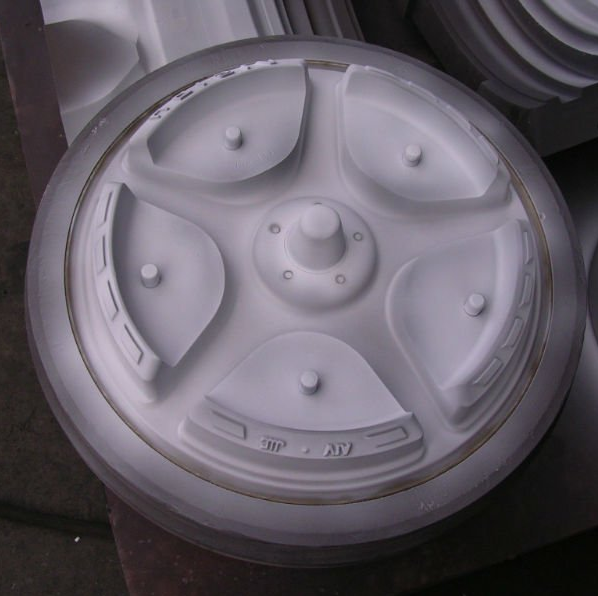
Sumetech describes this product as a high-temperature boron nitride coating and BN coating for die casting operations.
1. Thermal Performance Depends on Atmosphere
Maximum working temperature is not a single number for boron nitride. The product specification states a maximum working temperature of 900°C in air and over 2000°C in inert gas. This distinction matters in application selection. In oxidizing atmospheres, users should design around the lower 900°C limit. In controlled atmospheres or vacuum-style systems that use inert gas, boron nitride can serve at much higher temperatures.
2. Release and Lubricity Come from a Layered Structure
Boron nitride has low friction and high-temperature release properties because of its graphite-like structure. This is one of the reasons Sumetech classifies the product as a high-purity boron nitride coating, a high-temperature boron nitride coating, and a boron nitride ceramic coating. In practical terms, it is a BN coating and anti-stick coating for die casting operations.
In metal forming and casting, boron nitride coatings are commonly used on molds, troughs, and ladles for aluminum, magnesium, and zinc alloys. The intended result is cleaner release, less surface damage, and shorter time spent on manual cleaning.
3. Chemical and Electrical Stability Reduces Risk in Aggressive Environments
Boron nitride is chemically inert and corrosion-resistant to molten metals and acids. This is valuable in environments where a coating may contact molten metal, glass, fluxes, or aggressive chemical media. The product also has a low dielectric constant and good thermal conductivity, which allows it to function as an electrical insulator that does not trap heat.
4. Purity and Form Affect Process Fit
Maximum purity for Sumetech boron nitride is 99.9%. Product forms include powder, granular, coating, and paint. This means buyers do not have to use one coating chemistry for every problem. A casting process may need a brushable or sprayable coating. A thermal management material may need a well-controlled powder. A high-temperature component may need a ceramic grade that can be integrated into a larger system.
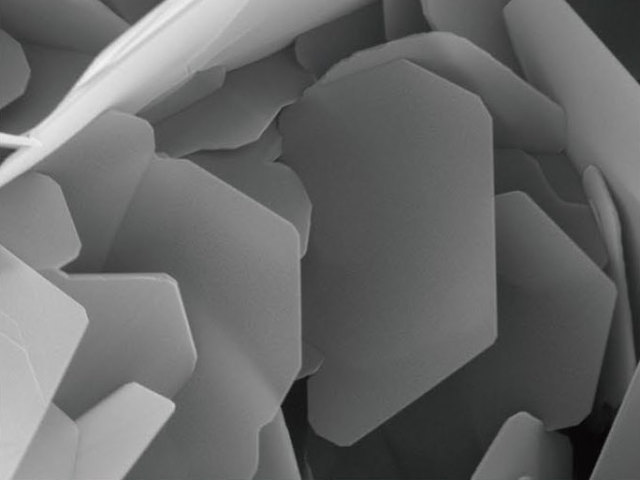
Boron nitride is available in powder and granular forms for filler, casting, ceramic, and specialty applications.
5. Sumetech Supply and Quality System
Sumetech Industry Co., Ltd is a manufacturer of potassium aluminium fluoride and boron nitride products. The company was established in 2019 and operates a production facility covering 6000 square meters. It has approximately 20 employees, an annual production capacity of 5000 metric tons, and an R&D team of 5 technicians.
- Main products: potassium aluminium fluoride and boron nitride.
- Major served markets: Turkey, Japan, Korea, and Europe.
- Export ratio: approximately 90% of total sales.
- Production equipment: ultra-fine mechanical mills, crushers, shaping machines, and advanced sieving systems.
- Quality documentation: Sumetech’s laboratory is reported to have passed CMA and CNAS accreditation.
For a boron nitride buyer, these facts matter because they show whether a supplier can control particle size, purity, grading, and consistency. The presence of ultra-fine mills and sieving systems is especially relevant for buyers who need powder with narrow particle size distribution.
Step-by-Step: Selecting and Applying a Boron Nitride Coating or Powder
Although BN can be used in many ways, product selection should follow the same logic: match chemistry, temperature, function, form, and application method to the actual process.
Step 1: Define the Service Atmosphere and Maximum Temperature
First identify the atmosphere around the hot zone. If oxygen is present, plan around the 900°C limit in air. If the process runs in inert gas, the 2000°C-plus limit is relevant. Temperature alone is not enough; atmosphere determines the practical maximum.
Step 2: Identify the Material Being Contacted
Boron nitride is chemically inert and corrosion-resistant to molten metals and acids, but the exact alloy, glass composition, flux, or chemical environment can still affect performance. Document the contact material and its temperature before choosing a BN grade.
Step 3: Define the Primary Function
Clarify whether the goal is anti-stick release, high-temperature lubrication, electrical insulation, thermal conductivity, or protection against chemical attack. If the main goal is release from a die, a boron nitride coating for die casting operations is a direct match. If the goal is a thermally conductive filler, a powder or granule should be evaluated.
Step 4: Select the Product Form
Boron nitride is available in powder, granular, coating, and paint forms. For process equipment such as dies and ladles, a coating or paint is often the practical choice. For compounding, filler, or downstream ceramic processing, powder or granular forms may be more appropriate.
Step 5: Plan the Application Method
Documented application equipment for the coating includes brush and spraying machine. In practice, surface condition, coating thickness, and drying behavior depend on the substrate and process. The operation mode is subject to actual working conditions, so first trials should be run under conditions close to production.
Step 6: Store, Test, and Qualify Before Scaling
Boron nitride products should be kept in dry, sealed storage and used before the expiration date. After initial application, a small production trial is the most reliable way to check adhesion, release performance, and substrate compatibility before a full rollout.
Use Cases: Where Boron Nitride Is Applied
Sumetech’s product documentation lists a wide set of industrial applications. The following use cases summarize where BN is intended to be used and why the material properties support that use.
1. Die Casting and Molten Metal Handling
The product is classified as a boron nitride coating for die casting operations and as an anti-stick coating. BN’s high-temperature release properties and chemical inertness help prevent sticking when tooling contacts molten metal. In casting environments, BN coatings are commonly applied to molds, troughs, and ladles for aluminum, magnesium, and zinc alloys.
2. Precision Casting, Horizontal Continuous Casting, and Amorphous Ribbon
Sumetech boron nitride is documented for use in precision casting, horizontal continuous casting, and amorphous ribbon production. These processes involve moving metal surfaces and demanding thermal controls. The lubricating nature of BN can support release and reduce friction-related surface defects.
3. Electronics, Semiconductor, Photovoltaic, and Optical Glass
The product is intended for use in electronics, semiconductor, photovoltaic, and optical glass manufacturing. Because boron nitride has a low dielectric constant and is thermally conductive, it supports parts and fillers that need electrical insulation without sacrificing heat flow. High purity is another reason it is considered for sensitive applications, since maximum purity can reach 99.9%.
4. Solar Thermal Energy Storage and Vacuum Coating
Boron nitride is documented for solar thermal energy storage and vacuum coating. These applications often require materials that remain stable at high temperature without releasing volatile contaminants.
5. Military, Aerospace, and Optical Systems
Sumetech’s BN line lists military and aerospace among its target industries. Application types include thermal protection and radar/optics-related environments. In these fields, performance data, consistent manufacturing, and traceable supply matter as much as the material properties themselves.
6. Functional Ceramics, Functional Fibers, and Cosmetic Additives
The product is also applicable to functional ceramics, functional fibers, and cosmetic additives. For these industries, purity, morphology, and consistency are usually the main evaluation criteria. Maximum purity of 99.9% provides a reference point for buyers who need a high-purity BN material.
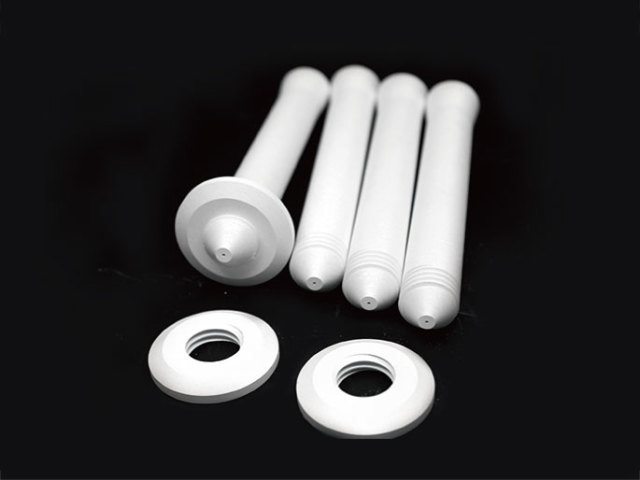
Boron nitride ceramics expand the product range beyond coatings and powders for buyers evaluating high-temperature components.
Comparison: Key Boron Nitride Selection Criteria
The table below summarizes documented decision points for boron nitride selection. It is not a ranking of products. It is intended to help buyers translate a high-temperature problem into a specification.
| Evaluation question | What the BN documentation says | Action implied for buyer |
|---|---|---|
| Do you need release from molten metal at high temperature? | BN coating is described as a high-temperature boron nitride coating, also called BN coating, and an anti-stick coating for die casting operations. | Evaluate coating or paint form; confirm application method and substrate preparation. |
| Will the process run in air or inert gas? | Maximum working temperature is 900°C in air and over 2000°C in inert gas. | Define the atmosphere limit before choosing a product grade. |
| Do you need protection from molten metals or acids? | Boron nitride is chemically inert and corrosion-resistant to molten metals and acids. | Run a trial under the actual process chemistry. |
| Do you need thermally conductive but electrically insulating behavior? | Boron nitride has a low dielectric constant and is thermally conductive. | Discuss the application with the supplier to match form and purity. |
| Do you need a high-purity grade? | Maximum purity can reach 99.9%. | Confirm the purity grade and test method for your target industry. |
| Do you need powder, granular, coating, or paint? | All four forms are available in the documented product line. | Align form with process equipment and end-use function. |
FAQ: Frequently Asked Questions About Boron Nitride
1. Is boron nitride compliant with EU REACH?
Boron nitride is documented as compliant with EU REACH Regulation EC 1907/2006 as a substance used in industrial applications. Buyers should still check whether the specific grade, packaging, and shipment documentation need to match regional registration requirements. In addition, Sumetech Industry Co., Ltd reports that its laboratory has passed CMA and CNAS accreditation, which supports in-house testing and quality control.
2. Why is boron nitride coating used in die casting operations?
Boron nitride coating provides high-temperature release properties because BN has a graphite-like structure with low friction. It is also chemically inert and corrosion-resistant to molten metals and acids. The product spec states a maximum working temperature of 900°C in air and over 2000°C in inert gas, and maximum purity of 99.9%. These properties make it suitable as an anti-stick coating for die casting operations. In metal forming and casting, BN coatings are commonly used on molds, troughs, and ladles to prevent sticking and reduce cleaning downtime.
3. What boron nitride forms are available for product evaluation?
Boron nitride is available in powder, granular, coating, and paint forms. Sumetech’s production facility includes ultra-fine mechanical mills, crushers, shaping machines, and advanced sieving systems, which are relevant for buyers evaluating particle size control and consistency. For a sample or specification review, contact Sumetech at info@sumetech.com or by WhatsApp at +86 13805218959.
4. Does Sumetech support urgent orders and lead times?
Sumetech states that it maintains large raw material inventories on site to support uninterrupted production, respond to urgent orders with fast lead times, and scale output for large-volume projects. Actual lead time depends on product form, packaging, and destination. The surest next step is to send target specifications to Sumetech and ask for a current quotation and delivery plan.
Conclusion: Boron Nitride as a High-Temperature Engineering Material
Boron nitride is not a single-product chemical. It is a family of ceramic material solutions available as powder, granular, coating, paint, and ceramic forms. Its documented properties include stability at 900°C in air, stability above 2000°C in inert gas, max purity of 99.9%, chemical inertness, corrosion resistance, low dielectric constant, thermal conductivity, and high-temperature release behavior.
For die casting, BN coating acts as an anti-stick coating designed for high-temperature operation. For electronics, semiconductors, glass, aerospace, and energy applications, purity and consistency are central evaluation points. Sumetech Industry Co., Ltd supplies boron nitride from a 6000-square-meter facility with 5000 metric tons of annual production capacity and serves markets including Turkey, Japan, Korea, and Europe.
Next step for boron nitride buyers: Review product requirements, confirm operating atmosphere and purity target, and request a sample or quote from Sumetech.
Download Sumetech catalogEmail: info@sumetech.com | Tel/WhatsApp: +86 13805218959
Website: www.sumetech.com