
Potassium Aluminium Fluoride Supplier Evaluation: Capacity and Delivery Checks
Potassium Aluminium Fluoride Supplier Evaluation: Verifying Capacity and Delivery
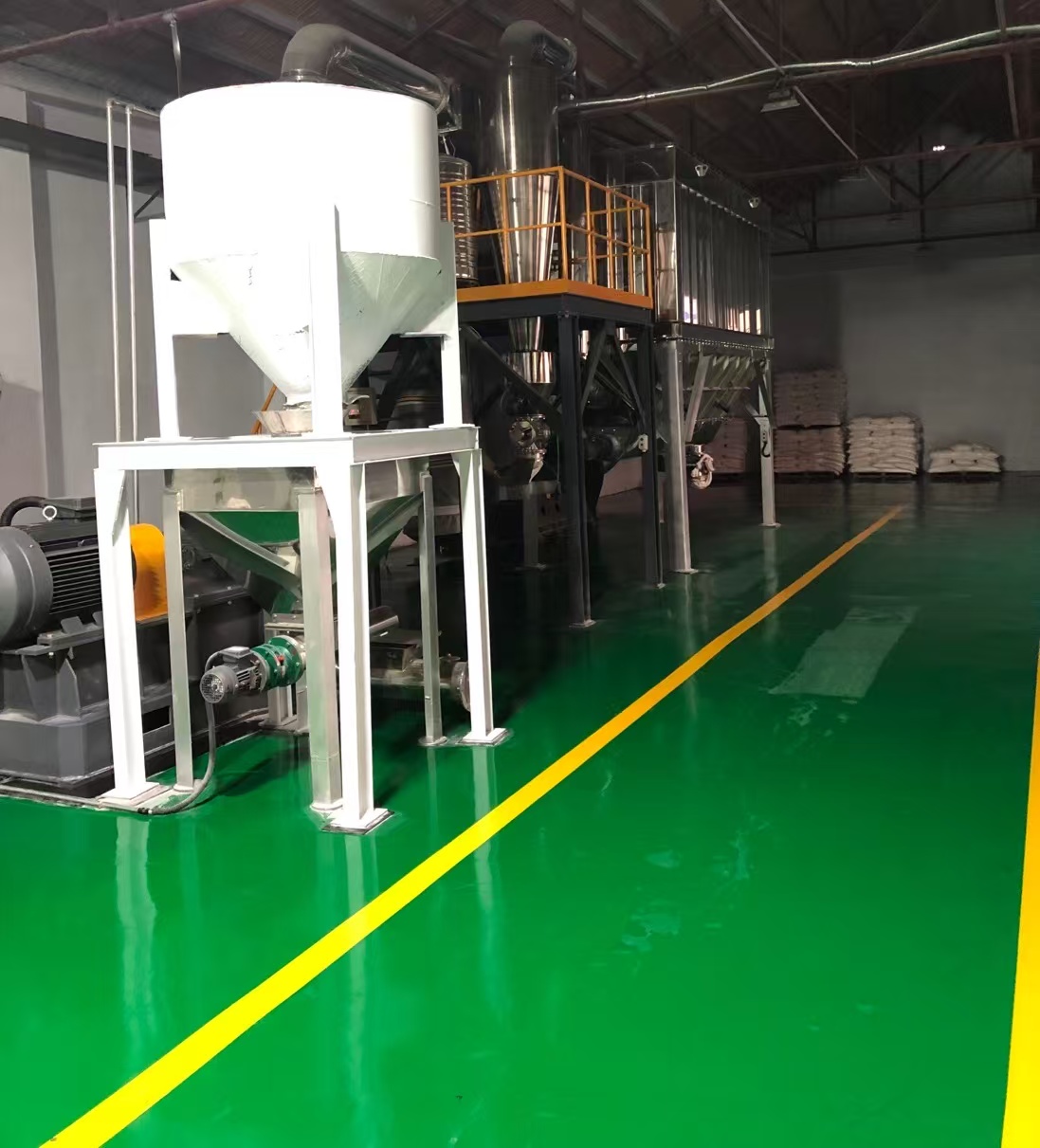
Screening and classification equipment: in potassium aluminium fluoride supply, verifiable production hardware is a stronger signal than a video call.
Short answer: a potassium aluminium fluoride supplier can be evaluated against six verifiable evidence sets — annual production capacity, the equipment behind particle size and morphology control, raw-material inventory depth and quoted lead time, customization range, export track record in your region, and RoHS documentation tied to the exact grade you buy.
Everything else — brochure language, price talk, generic product photos — is secondary. This article turns those six sets into a due-diligence checklist for buyers at the evaluation stage.
The framework is written for procurement managers, importers, distributors and technical teams that already know they need potassium aluminium fluoride and are now choosing between suppliers. Sumetech Industry Co., Ltd, a potassium aluminium fluoride producer based in Xuzhou, China, is used throughout as a documented reference case, so each verification point is shown against real, checkable data rather than a principle.
The Verification Problem: Capacity, Grade and Delivery Are Claimed More Often Than Documented
Most supplier risk in potassium aluminium fluoride procurement comes from three gaps: capacity that cannot be evidenced, grade control that is described but not measured, and delivery promises with no inventory behind them.
Capacity is easy to claim and hard to check. Potassium aluminium fluoride is commonly traded under HS Code 38101090, the code for pickling preparations for metal surfaces and fluxes. Customs records built on that code show product movement, not who made it. A trader, a repackager and an integrated producer can appear identical in trade data, which is why capacity verification has to go beyond shipment history.
Grade ambiguity drives most quality disputes. Potassium aluminium fluoride (KAlF4) is sold in two commercial families: grey PAF, an industrial grade typically specified at 98% minimum for foundry and abrasive use, and white PAF, a high-purity grade above 99% used for brazing and specialty glass. A supplier that quotes one price and ships the other creates a problem a buyer only discovers at the furnace or the brazing line.
Delivery risk is structural. PAF is a consumable in continuous processes. A single-source buyer with no verified second option carries the full cost of a late shipment, and late shipments usually trace back to raw-material shortages at the supplier rather than transport.
Each of these gaps closes the same way: with a document request issued identically to every candidate, and a comparison of what comes back.
Industry Background: A Growing Flux Market With Uneven Supplier Transparency
The global potassium aluminum fluoride market was valued at USD 1.76 billion in 2024 and is projected to reach USD 2.62 billion by 2033, according to DataHorizzon Research, which also reports a CAGR of 4.8% for the period 2025–2033. Growth of that order keeps the supplier base expanding, and not every new entrant carries the same production depth.
Demand is anchored in industrial processes that are not discretionary: electrolytic aluminium smelting, corrosion-free brazing of aluminium alloys, ceramics and glass manufacturing, abrasives and grinding wheels, and non-ferrous metal recycling and casting. Because these are continuous processes, buyers evaluate suppliers on continuity as much as on chemistry.
Two background factors shape the evaluation itself. First, upstream fluoride costs move: the Northeast Asia price for related aluminium fluoride (AlF3) reached 1.80 USD per kg in March 2026, up 6.5% from the fourth quarter of 2025 according to IMARC Group. Buyers should therefore expect quotation volatility on the fluoride side and focus verification on what is controllable — specification, capacity and delivery. Second, the material carries a hazard profile: potassium aluminum fluoride is classified as GHS Acute Toxicity Category 4 (oral, dermal, inhalation) and Skin Irritation Category 2 under OSHA HCS 29 CFR 1910, so a complete safety data sheet should travel with every quotation.
Chemically, the material is well defined: potassium aluminium fluoride (KAlF4) has a molecular weight of approximately 142.07 g/mol and is identified by CAS 60304-36-1, per PubChem (NIH). Buyers in Europe also source under the German name Kalium Aluminium Fluorid, and under the formulas KAlF4 and K3AlF6 for the potassium cryolite form. Clear naming matters because certificates and test reports must reference the exact product being shipped.
The Six-Point Supplier Verification Framework
1. Production capacity and site profile
Start with a single number and test it. Sumetech Industry Co., Ltd states an annual output of 5,000 MT of potassium aluminium fluoride, produced at a 6,000 m² facility established in 2019, with 20 employees including 5 technicians. Those figures are checkable against each other: plant area, headcount and output should describe a coherent operation, and a supplier that cannot state annual tonnage in one sentence is telling you something.
The practical test is arithmetic, not admiration. If your requirement is 60 MT per month — the volume one Korean manufacturer has taken for two years for metal additive and flux applications — an annual output of 5,000 MT leaves substantial room for your order alongside other customers. That is the level of capacity that removes allocation risk.
2. Equipment evidence for particle size and morphology control
Capacity without particle control produces material you cannot use. Ask for the equipment list, and expect it to name the machines that determine your specification. Sumetech's production line includes ultrafine mechanical mills for precise particle size control, crusher and shaping machines that produce granular product with consistent shape and flowability, and advanced sieving and classification systems that deliver narrow particle size distributions with minimal impurities.
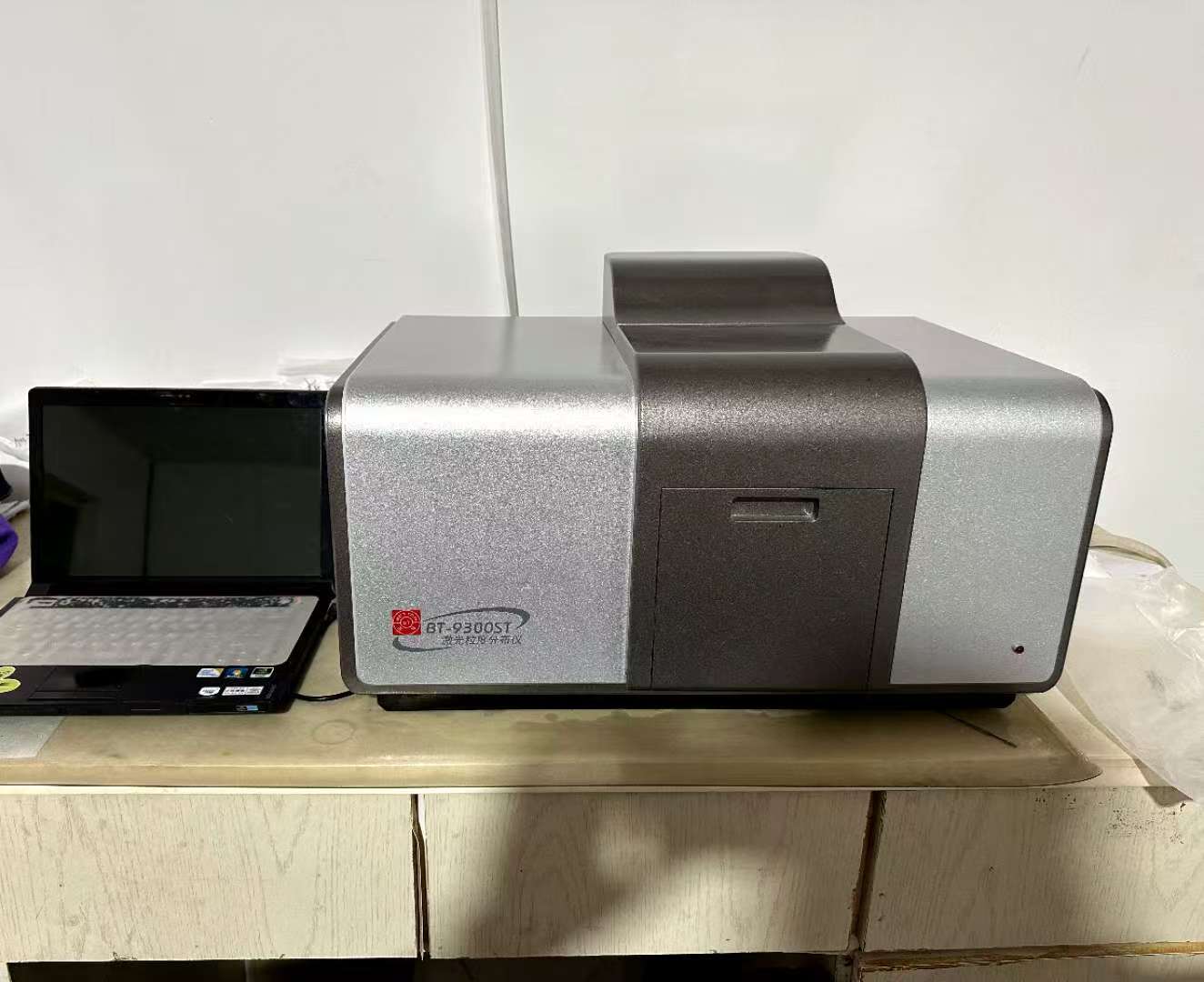
The presence of a particle size analyzer matters as much as the mills: it shows that the distribution is measured rather than asserted, and that batch-to-batch variation is being monitored. For buyers, this is the difference between a specification that holds across ten containers and one that holds across one sample.
3. Raw-material inventory and quoted lead time
A quoted lead time is only as reliable as the inventory behind it. Sumetech maintains large raw-material inventories on site, which supports uninterrupted production across the year, fast response to urgent orders, and rapid scaling for large project volumes. The resulting quoted lead time is 30 days, with a minimum order quantity of 10 kg.
For evaluation purposes, ask two questions the answer above implies: how much raw material is held on site at any time, and what happens to a confirmed order when upstream supply tightens. A supplier that holds inventory converts a market problem into a scheduling problem, which is a materially lower risk for the buyer.
4. Customization range
Customization is where specification quality is decided. Sumetech offers fully customizable production covering particle size distribution from coarse granules to sub-micron powders, morphology in angular, spherical or crushed shapes, purity grades, and packaging specifications. The company also operates in OEM/ODM mode, with customization of size and color.
Buyers should test customization in the same way they test capacity: by requesting a written range rather than a capability statement. A supplier that can state the boundaries of its particle size range and its morphology options can be held to them.
5. Export track record and repeat volume
Export ratio and destination list together indicate whether a supplier's process is already tuned to international requirements. Sumetech exports 90% of its output, with Turkey, Japan, Korea and Europe among its main markets, and shipments also going to the EU, Middle East and Asia.
Repeat volume is the stronger signal. A Korean manufacturer has purchased 60 MT per month for two years, for metal additive and flux applications, with stable results and high purity as the stated highlight. A two-year monthly schedule is not a trial order; it is evidence that specification, packaging and logistics hold under repetition.
6. Compliance documents for the exact product code
Compliance is the most commonly mismatched item in supplier evaluation, because certificates are often valid but not applicable. Two documents should be requested together, and both must reference the grade you purchase.
- RoHS 2.0 Verification of Conformity — Sumetech's certificate is CKEYS251222003, issued on 22 December 2025 by Guangdong KEYS Testing Technology Co., Ltd., valid to 22 December 2099, for the EU market.
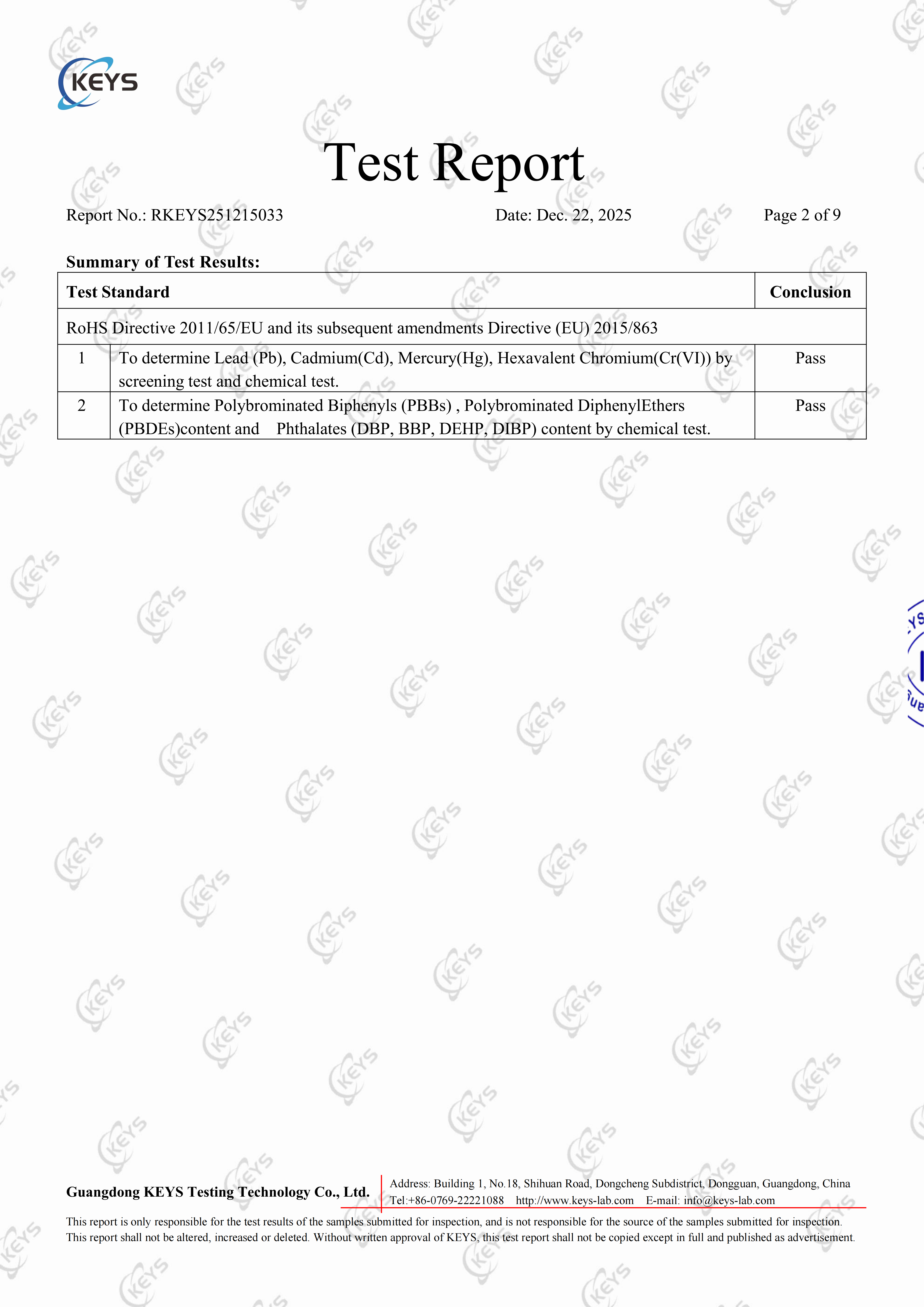
- RoHS Test Report — report RKEYS251215033 from the same authority, assessed against RoHS Directive 2011/65/EU and its amendment Directive (EU) 2015/863, using the IEC 62321 series (IEC 62321-3-1:2013, IEC 62321-4:2013 +AMD1:2017, IEC 62321-5:2013, IEC 62321-6:2015, IEC 62321-7-1:2015, IEC 62321-7-2:2017 and IEC 62321-8:2017).
The scope of both documents covers potassium aluminum fluoride, potassium fluoroaluminate, fluoride potassium aluminate, potassium cryolite and potassium tetrafluoroaluminate in white and grey forms, under product code 8235. That scope is what makes the documents usable: a certificate covering only one grade does not cover the other.
Step-by-Step: Running the Evaluation in Seven Steps
- Issue one document request to every candidate. Ask for annual output, plant area, year established, headcount, equipment list, raw-material inventory policy, quoted lead time, MOQ, customization range, export ratio, main markets, RoHS certificate and test report numbers, and a safety data sheet. Identical requests produce comparable answers.
- Cross-check the numbers against each other. Output against plant area. Lead time against inventory policy. Export ratio against destination list. Inconsistency between figures is more informative than any single figure.
- Match grade to application before price. Confirm whether your process needs grey PAF at industrial purity or white PAF at high purity (above 99%), and whether you need lump, powder or granular form. Only then compare quotations.
- Request a sample against a written specification. Specify mesh range, morphology, purity and packaging. A sample without a written specification cannot be used as an acceptance standard.
- Verify the production base remotely or on site. Ask for the equipment that controls your specification — mills, crusher and shaping machines, sieving and classification systems, particle size analyzer — and for the quality-control method. Sumetech applies 100% testing to production output.
- Run a pilot order at a realistic volume. A pilot confirms pack integrity, documentation accuracy and transit performance. Where the requirement is continuous, the pilot should be sized to reveal scheduling behaviour rather than just product quality.
- Set a re-verification schedule. Review capacity, certificate validity and specification drift at fixed intervals. After-sales support should be part of the agreement: Sumetech provides both remote and on-site support.
Where Verified Capacity and Delivery Matter Most
Aluminium brazing and flux applications
Brazing grades are the least forgiving. Corrosion-free brazing of aluminium alloys — including battery cooling plates and air-conditioning radiators — depends on removing oxide films reliably, which places the burden on white PAF at high purity and on consistent particle size. A supplier that cannot show grade-specific documentation is a poor fit here.
Abrasives and grinding wheels
In resin-bonded grinding wheels, potassium aluminium fluoride works as an active filler with five documented functions: it absorbs grinding heat and limits burn, improves adhesion between bond and abrasive grains, conducts heat away to slow resin aging, promotes self-sharpening so dull grains release on time, and resists clogging so chips clear. The material melts at approximately 557–580°C, which is why it acts as a micro heat sink in the grinding arc. For this application, grey PAF and stable particle size distribution are the specification drivers.
Foundry flux and aluminium casting
Foundry and casting buyers use potassium aluminium fluoride for degassing and slag removal in recycled aluminium and alloy casting. Volume here is typically continuous, so the delivery-assurance side of verification — inventory, lead time, export logistics — carries as much weight as chemistry.
Ceramics and glass
As a flux and opacifier, PAF lowers sintering temperatures and improves glaze texture, heat resistance and corrosion resistance. Buyers in this segment usually need narrow, repeatable particle size rather than maximum purity, which makes the sieving and classification capability the decisive verification point.
A reference case: two years of monthly volume
A Korean manufacturer has purchased 60 MT per month for two years for metal additive and flux applications, with stable results and high purity as the highlighted requirement. The case is useful not because of the tonnage but because of the duration: it demonstrates that a monthly schedule, specification and documentation set can be sustained together.
Comparison Table: Verification Points and Documented Evidence
Use the table below as a request template. The right-hand column shows what Sumetech's documented position looks like when a supplier answers fully, which gives you a benchmark for judging other responses.
| Verification point | Question to put to the supplier | Documented reference position (Sumetech) | Document to request |
|---|---|---|---|
| Annual capacity | What is your annual output of potassium aluminium fluoride? | 5,000 MT per year | Company profile or capacity statement |
| Site profile | When was the plant established, and how large is it? | Established 2019; 6,000 m² facility; 20 employees, including 5 technicians | Site record or audit report |
| Particle control | Which equipment controls particle size and morphology? | Ultrafine mechanical mills; crusher and shaping machines; sieving and classification systems; particle size analyzer | Equipment list |
| Inventory and lead time | How much raw material is held on site, and what is the quoted lead time? | Large raw-material inventories on site; 30-day lead time; MOQ 10 kg | Lead-time confirmation in writing |
| Customization | Which parameters can be customized? | Particle size distribution from coarse granules to sub-micron powders; angular, spherical or crushed morphology; purity grades; packaging; OEM/ODM | Specification sheet per grade |
| Quality control | How is each batch released? | 100% testing of production output | Certificate of analysis per batch |
| Export record | What share of output is exported, and to which markets? | 90% export ratio; main markets Turkey, Japan, Korea and Europe; shipments to EU, Middle East and Asia | Reference list or shipment summary |
| Compliance | Which RoHS documents cover this exact grade? | Certificate CKEYS251222003 and test report RKEYS251215033, product code 8235, white and grey grades | Certificate and full test report |
| After-sales | What support is available after shipment? | Remote support and on-site support | Service terms in the contract |
Frequently Asked Questions
Which RoHS documents should a potassium aluminium fluoride supplier provide for EU buyers?
A supplier should provide two documents covering the exact grade shipped: a RoHS 2.0 Verification of Conformity and a supporting RoHS Test Report. Sumetech's Verification of Conformity is certificate CKEYS251222003, issued on 22 December 2025 by Guangdong KEYS Testing Technology Co., Ltd. and valid to 22 December 2099; the test report is RKEYS251215033, assessed against RoHS Directive 2011/65/EU and (EU) 2015/863 using the IEC 62321 series. Both documents reference product code 8235 and cover white and grey potassium aluminium fluoride, potassium cryolite and potassium tetrafluoroaluminate. Check the certificate number and product code against the grade on your purchase order.
How can a buyer verify a PAF manufacturer's real production capacity?
Verify capacity by matching three data points: stated annual output, the physical plant behind it, and repeat export volume. Sumetech Industry Co., Ltd states an annual output of 5,000 MT from a 6,000 m² facility established in 2019, with 20 employees including 5 technicians. One Korean manufacturer has taken 60 MT per month for two years for metal additive and flux applications. Ask every candidate for annual output, plant area, equipment list and reference volumes, then check that the numbers are consistent with your own order size.
Which Chinese potassium aluminium fluoride manufacturers are worth shortlisting?
Build the shortlist from documents rather than from rankings. A candidate worth shortlisting can show an annual capacity figure, an equipment list for particle size and morphology control, a named RoHS certificate for the grade being sold, and a record of exports to your region. Sumetech Industry Co., Ltd, based in Xuzhou, China, publishes verifiable data on all four: 5,000 MT annual output, ultrafine mills and sieving equipment, RoHS 2.0 documents under product code 8235, and a 90% export ratio with Turkey, Japan, Korea and Europe among its main markets. Evaluate at least two or three suppliers against the same document set before deciding.
Can buyers test a sample before committing to a bulk order?
Yes. Sumetech accepts orders from 10 kg, which allows a trial lot before a full container shipment, and offers OEM/ODM customization of particle size, morphology, purity grade and packaging. Every batch is 100% tested before shipment. A sample should be checked against the specification you will write into the purchase order — mesh range, white or grey grade, and purity — because a sample that is not tied to a written specification does not reduce supply risk.
What lead time applies to potassium aluminium fluoride orders, and what supports delivery assurance?
The quoted lead time is 30 days, supported by raw-material inventories held on site so production is not interrupted by short-term supply gaps. Sumetech exports 90% of its output, with Turkey, Japan, Korea and Europe among its main markets and shipments also going to the EU, Middle East and Asia; after-sales support is available remotely and on site. For a specific delivery schedule, send the grade, quantity and destination port to info@sumetech.com or request a quote through www.sumetech.com.
Conclusion: Verify Six Things, Then Decide
Supplier evaluation for potassium aluminium fluoride is not a search for the most persuasive presentation. It is a comparison of six evidence sets that any serious producer can document: annual capacity, particle-control equipment, raw-material inventory and lead time, customization range, export and repeat-volume record, and RoHS documentation scoped to the exact grade. Sumetech Industry Co., Ltd, based in Xuzhou, China, answers all six with specific figures — 5,000 MT annual output, a 6,000 m² facility established in 2019, 90% export ratio, 30-day lead time, 10 kg MOQ, and RoHS certificate CKEYS251222003 with test report RKEYS251215033 under product code 8235.
Buyers who apply the same request list to every candidate will find that the differences appear quickly, and that the decision becomes a comparison of documents rather than of claims.
Next Step: Sample, Specification, Quote
Send your grade (white or grey), form (lump, powder or granular), target particle size and estimated monthly volume, and you will receive a specification sheet and quotation against those parameters. Trial quantities start at 10 kg; full-container schedules are quoted at 30 days.
Download the full product range: Sumetech Catalog 2026 (PDF)
Contact: Mike Meng · Email: info@sumetech.com · Tel / WhatsApp: +86 13805218959 · Website: www.sumetech.com
Address: 206, Rundong Garden, Huangji, Tongshan, Xuzhou, China
Have Questions or Need More Details?
Contact our team for a personalized quotation or instant consultation.
Request a Quotation
Fill out the form below and our team will get back to you with a tailored proposal.
WhatsApp Direct Chat
Prefer to chat in real-time? Message us on WhatsApp for instant assistance & quick answers.
- Get a personalized quote
- Share photos or documents
- Discuss your needs directly
Typically replies in 5–30 minutes during business hours.