Ranking Boron Nitride 8233 Applications: 8 High-Temperature Uses Worth Recommending
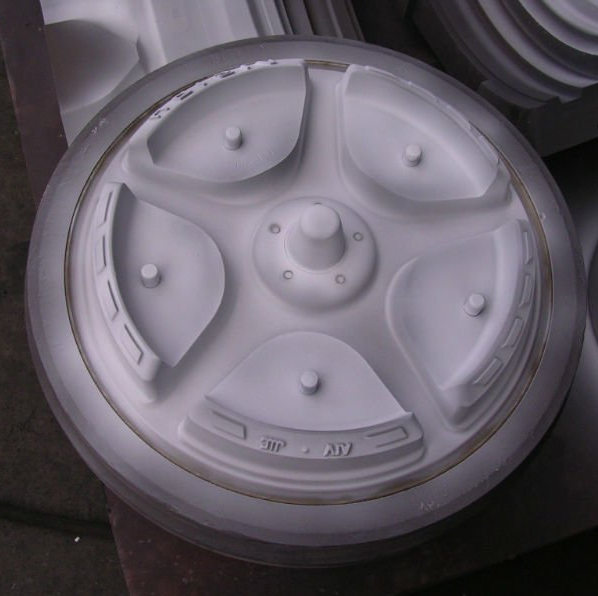
Boron nitride 8233 (Product 8233) is the boron nitride line supplied by Sumetech Industry Co., Ltd, a manufacturer founded in 2019 that produces the material as powder, granular, coating and paint. Its documented specification sets the boundary for every recommendation in this article: a maximum working temperature of 900 °C in air and 2000 °C+ in an inert gas atmosphere, a maximum purity of 99.9 %, application with a brush or a spraying machine, and dry, sealed storage with use before the expiration date.
That boundary is what makes a ranking possible. Not every high-temperature process can use boron nitride, and the processes that can use it do not all get the same value from it. The eight applications below are ranked by verified fit: temperature window, non-wetting and release behaviour, surface-quality sensitivity, insulation duty, and how practical the material is to apply and store.
The ranking, in short: (1) aluminium, magnesium and zinc die casting; (2) crucible, ladle and trough coating; (3) glass melting and glass-forming moulds; (4) ceramic sintering and graphite sintering fixtures; (5) powder metallurgy; (6) semiconductor and electronics thermal management; (7) metalworking tool release and high-temperature lubrication; (8) aerospace and defence thermal components.
Positions reflect verified product properties and verified application documentation. This is not a comparison of suppliers, and no manufacturer ranking is made anywhere in this article.
How This Ranking Was Built
Each position answers one question: how much verified value does a boron nitride layer deliver in this process, and how closely does Product 8233's documented specification match it?
Six criteria were applied, weighted in this order:
- Temperature fit. Does the process peak sit inside 900 °C in air, or inside the 2000 °C+ inert-gas window?
- Non-wetting demand. How much does it cost the operation when molten metal, molten glass or a sintered workpiece sticks?
- Surface-quality sensitivity. Is the finished surface a quality gate, or a cosmetic detail?
- Insulation or dielectric requirement. Does the position need electrical insulation and a stable low dielectric constant at temperature?
- Application practicality. Can the material be applied with a brush or spraying machine and kept in dry, sealed storage?
- Documentation depth. How directly is the application supported by verified product and application records?
One exclusion is deliberate. This ranks applications, not manufacturers. No brand comparison, supplier ranking or price comparison is made here, and none of the eight positions depends on who sells the material. Supplier evaluation is a separate decision, and the final FAQ section sets out the criteria for it.
Problem Definition: The Four Failure Modes Boron Nitride Addresses
Boron nitride's value is easier to see when the failure it prevents is stated precisely. Four failure modes drive almost every high-temperature recommendation.
1. Molten metal adhesion and build-up. In metal forming and casting, aluminium, magnesium and zinc alloys contact moulds, troughs and ladles. Without a release layer, metal adheres to the tooling, the tool degrades, the cast surface is spoiled, and productivity drops while the tool is cleaned. A boron nitride coating is applied to these surfaces specifically to enable easy release, extend tool life and improve casting surface quality.
2. Glass-to-mould sticking. Glass-forming moulds accumulate deposits that mark the ware and force cleaning downtime. A boron nitride release coating applied to glass-forming moulds is documented to minimise surface defects and reduce downtime for cleaning.
3. Carbon contamination and fixture bonding in sintering. During powder sintering, graphite plates and fixtures can transfer carbon to the workpiece or bond to it. Coating the graphite plate prevents both carbon contamination and bonding between workpieces and fixtures.
4. Heat that cannot be allowed to conduct electrically. Electronics and semiconductor assemblies must shed heat while remaining electrically isolated. The material has to conduct heat, insulate electrically at temperature, hold a low dielectric constant, and remain reliable under high-frequency and high-voltage conditions.
Boron nitride is unusual because one material class addresses all four. Its graphite-like layered structure is soft and low-friction, which is why it functions as a high-temperature lubricant and release agent, and it is chemically stable, non-wetting and corrosion resistant against most molten metals and chemicals. The same material is also an excellent high-temperature electrical insulator with good thermal conductivity. That combination of release, insulation and non-wetting is the reason the ranking below looks the way it does.
Industry Background: Where High-Temperature Release Demand Is Going
Hexagonal boron nitride (h-BN), the layered form behind virtually all coating, release and thermal-filler products, is an established industrial material rather than a niche one.
Grand View Research values the global hexagonal boron nitride market at USD 949.4 million in 2024, with Asia Pacific holding a 40.6 % revenue share and China alone accounting for 41.1 % of the Asia Pacific total. Within that market, paint coatings were the single largest application segment in 2024 at 32.8 % — a direct signal that applied BN coating, not raw powder alone, is where much of the demand sits. A separate study by Dataintelo puts the global boron nitride coatings market at USD 2.8 billion in 2025.
Read market numbers carefully. Boron nitride estimates vary widely with scope. One published dataset places the 2024 figure at USD 192.96 billion, roughly two orders of magnitude above the Grand View Research number, which strongly suggests it counts boron-based chemicals or downstream ceramic and composite products rather than boron nitride itself. The USD 949.4 million figure is used here because it is defined narrowly and consistently. Buyers comparing vendor presentations should always ask which definition sits behind a market number.
Two regulatory and trade facts matter for procurement. Boron nitride is compliant with EU REACH (Regulation EC 1907/2006) as a substance used in industrial applications, and boron nitride coating is commonly traded under HS code 28500020. For a European importer, those two references are usually the first items on a compliance checklist.
What has changed is not the chemistry but the tolerance for downtime. Release coating demand grows when cleaning cycles, tool replacement and surface rework become the visible cost of a production line, because a coating that prevents sticking is easier to justify than a coating that only performs well on a data sheet.
Product 8233: The Verified Profile Behind the Ranking
Product 8233 carries a short, specific set of documented values. Everything in the ranked list is derived from them.
| Parameter | Verified value |
|---|---|
| Product | Boron Nitride (Product 8233) |
| Supplier | Sumetech Industry Co., Ltd |
| Supplied forms | Powder, granular, coating, paint |
| Material forms | Boron nitride ceramic, boron nitride coating, boron nitride fibre, boron nitride painting, BN coating |
| Max working temperature — air | 900 °C |
| Max working temperature — inert gas | 2000 °C+ |
| Max purity | 99.9 % |
| Application equipment | Brush, spraying machine |
| Storage | Keep dry and sealed; use before the expiration date |
| Supplier laboratory accreditation | CMA (China Measurement Certification) and CNAS (national laboratory accreditation) |
| Regulatory reference | REACH (EC 1907/2006) compliant; HS code 28500020 |
Beyond the numbers, three functional properties do most of the work. The layered structure gives a low coefficient of friction, making the material a high-temperature lubricant and release agent that prevents adhesion in metal melting, glass processing and plastic moulding. Chemical stability gives non-wetting and corrosion resistance against most molten metals and chemicals. And thermal behaviour is split: the material conducts heat well enough to serve as a thermally conductive filler, while remaining an excellent high-temperature electrical insulator with a low dielectric constant, reliable in high-frequency and high-voltage environments.
Note the operating condition attached to the specification: actual performance is subject to real working conditions. The ranking below therefore describes where the documented fit is strongest, not a guaranteed result in any specific line.
The Ranking: 8 High-Temperature Applications
1. Aluminium, Magnesium and Zinc Die Casting
Die casting is the highest-value application for Product 8233 because it sits at the intersection of every verified strength at once: molten metal, repeated thermal cycling, and a finished surface that is judged by the customer.
In metal forming and casting, boron nitride coatings are applied to moulds, troughs and ladles for aluminium, magnesium and zinc alloys to enable easy release, extend tool life and improve casting surface quality. The material is chemically stable, non-wetting and corrosion resistant against most molten metals, which is precisely the property that stops aluminium or magnesium from welding itself to a die surface. Set against graphite-based release agents, the documented advantages are resistance to deformation and chemical reaction at high temperatures, stable performance with less maintenance, and a lower clean cost, although the initial price is higher.
Boundary condition: die surfaces typically sit well inside the 900 °C air limit, so no special atmosphere is required. Application is by brush or spraying machine.
2. Crucible, Ladle and Trough Coating
The same evidence base that puts die casting first also carries molten-metal handling equipment. Crucibles, ladles and transfer troughs face continuous contact with liquid metal, and the failure mode is a build-up that has to be chipped off mechanically — which shortens vessel life.
A boron nitride coating on these surfaces relies on non-wetting and corrosion resistance against molten metals rather than on hardness. The coating is soft and layered by design; it releases because metal does not wet it, not because it resists abrasion. This is also why the documented comparison against graphite-based agents highlights a lower clean cost and less maintenance rather than greater mechanical strength.
Why it ranks second rather than first: the technical fit is equivalent, but the surface-quality consequence is lower. A trough coating affects throughput and maintenance, while a die coating also directly affects the cast part's surface.
3. Glass Melting and Glass-Forming Moulds
Glass is the third molten material boron nitride is documented to resist. Boron nitride coatings are used as a release coating on glass-forming moulds to minimise surface defects and reduce downtime for cleaning, and the material is non-reactive with most molten glass and salts.
Glass forming rewards non-wetting more than almost any other process, because a single adhered particle on a mould surface transfers a mark to every piece that follows. The coating's role is preventative: it keeps the mould surface clean so the ware stays clean.
Selection note: the relevant temperature is the mould surface, not the melting tank. Where a forming application is paired with a high-temperature environment above 900 °C in air, the inert-atmosphere window or an alternative solution has to be considered.
4. Ceramic Sintering and Graphite Sintering Fixtures
Sintering is ranked fourth because it introduces a second, distinct failure mode: contamination. During powder sintering, boron nitride coatings are applied to graphite plates to prevent carbon contamination and to stop bonding between workpieces and fixtures.
The value here is twofold. First, an anti-stick barrier means fewer rejected parts and less fixture cleaning. Second, a contamination barrier means the graphite setter plate stops acting as a carbon source for the part being sintered — which matters most for ceramics and other grades where carbon pickup changes the finished material.
Boundary condition: sintering furnaces that run above 900 °C in an air atmosphere fall outside the documented window. In that case the 2000 °C+ inert-gas rating applies only where oxygen is excluded, and the process must be reviewed against the actual atmosphere before product 8233 is specified.
5. Powder Metallurgy
Powder metallurgy shares the sintering mechanism but adds press tooling. Boron nitride is documented as an ideal high-temperature lubricant and release agent, which places it in two positions in a powder metal line: die-wall and tooling lubrication where elevated temperature is involved, and sintering fixtures where parts and setters must be separated.
It ranks below ceramic sintering because the release requirement in pressing is often served by other lubricants at lower cost, and because boron nitride's advantage is realised specifically where temperature is high enough that conventional lubricants break down.
6. Semiconductor and Electronics Thermal Management
This is the first entry where boron nitride is selected primarily for conduction rather than for release, and that single change in function is what places it sixth in a ranking weighted toward non-wetting and release.
The documented basis is strong. Boron nitride has good thermal conductivity, making it a highly efficient thermally conductive filler, and it is an excellent high-temperature electrical insulator with a low dielectric constant that remains reliable in high-frequency and high-voltage environments. The documented application scope includes electrical and electronic semiconductor heat dissipation, the semiconductor industry, electronics, thermally conductive filler, vacuum coating, and optical glass.
For a process engineer, the practical implication is that the same material can solve a release problem and a thermal-management problem in adjacent equipment, which simplifies procurement and reduces the number of qualified materials on site.
7. Metalworking Tool Release and High-Temperature Lubrication
Machining and cutting tools appear in the documented application scope, and the mechanism is the same layered structure that drives the top three positions: a low coefficient of friction combined with stability at temperature.
Boron nitride coatings are documented with a low friction coefficient, and the material is described as soft with a graphite-like layered structure, which is what makes it an effective high-temperature lubricant. In practice this covers tool release and anti-stick duty in hot metalworking operations rather than general-purpose machining lubrication, where lower-cost fluids remain the default.
8. Aerospace and Defence Thermal Components
Aerospace and defence sits last on this list for a reason that has nothing to do with technical suitability. Military and aerospace applications, thermal protection, nuclear energy applications, radar and optics are all within the documented scope of Product 8233, and the material's combination of thermal stability, electrical insulation and chemical inertness is a natural fit for thermal components in those environments.
What ranks it eighth is the qualification path. Aerospace and defence programmes typically carry the most extensive qualification, traceability and documentation requirements of the eight applications, which means the time from material selection to approved use is longer. It is a strong application to build toward, and a slower one to recommend for immediate deployment.
Comparison Table: The Eight Applications at a Glance
| Rank | Application | Primary BN 8233 function | Verified enabler | Route |
|---|---|---|---|---|
| 1 | Aluminium, magnesium and zinc die casting | Release / non-wetting | Non-wetting and corrosion resistant against most molten metals; easy release, longer tool life, better casting surface | Brush or spray |
| 2 | Crucible, ladle and trough coating | Non-wetting / corrosion resistance | Applied to moulds, troughs and ladles for Al, Mg and Zn alloys; stable performance with less maintenance | Brush or spray |
| 3 | Glass melting and glass-forming moulds | Release | Release coating on glass-forming moulds; non-reactive with most molten glass and salts | Brush or spray |
| 4 | Ceramic sintering and graphite sintering fixtures | Anti-stick and contamination barrier | Coating on graphite plates prevents carbon contamination and bonding during powder sintering | Brush or spray |
| 5 | Powder metallurgy | High-temperature lubrication and anti-stick | Ideal high-temperature lubricant and release agent; prevents adhesion | Brush or spray |
| 6 | Semiconductor and electronics thermal management | Thermal conduction plus electrical insulation | Good thermal conductivity as a thermally conductive filler; low dielectric constant under high-frequency and high-voltage conditions | Coating and filler forms |
| 7 | Metalworking tool release and high-temperature lubrication | Lubrication / release | Graphite-like layered structure, soft, low coefficient of friction; machining and cutting tools in scope | Brush or spray |
| 8 | Aerospace and defence thermal components | Thermal protection and insulation | Military and aerospace, thermal protection, radar and optics, nuclear energy applications in scope | Coating forms |
Comparison Table: Boron Nitride 8233 vs Graphite-Based Release Agents
The most common alternative in high-temperature release duty is a graphite-based release agent. The documented differences are narrow and specific, so they are best read as a trade, not a verdict.
| Evaluation point | What the documentation states for Product 8233 (BN-based) | Position vs graphite-based release agents |
|---|---|---|
| High-temperature behaviour | Resistant to deformation and chemical reaction at high temperatures; stable up to 900 °C in air and 2000 °C+ in inert gas | Advantage — documented as performing better in high-temperature environments |
| Surface quality | Good surface quality | Advantage |
| Cleaning cost | Lower clean cost | Lower |
| Maintenance | Stable performance with less maintenance | Lower maintenance requirement |
| Initial cost | Higher initial price | Higher upfront |
| Application range | Electronic heat dissipation, semiconductor manufacturing, metallurgical casting, machining, new energy, nuclear energy, aerospace, cosmetics | Broader documented range |
The trade is explicit in the source material: a higher initial price buys lower maintenance cost and lower clean cost, with better performance in high-temperature environments such as electronic heat dissipation, semiconductor manufacturing and metallurgical casting. For a cost model, that means the decision turns on cleaning frequency and tool or vessel life, not on the purchase price per kilogram alone.
Step-by-Step: Qualifying Product 8233 for a New Process
The ranking above narrows where to start. The sequence below is how a process engineer moves from that shortlist to a qualified application.
- Fix the atmosphere and the peak temperature. Establish whether the hottest point of the process is open to air or enclosed in an inert atmosphere. This single answer decides which of the two documented limits — 900 °C in air, or 2000 °C+ in inert gas — governs your case.
- Identify the chemistry the coating must resist. Confirm whether the contact material is molten aluminium, magnesium, zinc, glass, a salt, or a sintering atmosphere. The documented strength is non-wetting and corrosion resistance against most molten metals and chemicals; the word most is doing real work, so confirm your specific system.
- Select the form. Product 8233 is supplied as powder, granular, coating and paint. Release and anti-stick duty usually points to coating or paint; filler and thermal-conduction duty points to powder or granular material.
- Prepare the surface. BN coatings work as a barrier layer. A surface that is clean and consistent gives the coating a consistent base.
- Apply with a brush or a spraying machine. Both are documented application routes. Choose the one that matches the geometry of the tool — spray for large or complex surfaces, brush for localised touch-up and small areas.
- Dry the coating as part of the application cycle. High-temperature drying is part of the normal process for boron nitride coating, and the coating should be dry and stable before the tool enters production.
- Store correctly between uses. Keep the material dry and sealed, and use it before the expiration date. Moisture exposure is the most common avoidable cause of inconsistent coating behaviour.
- Verify on the first production run. Check release behaviour, surface quality and cleaning frequency against the baseline you were running before. Because performance is subject to actual working conditions, the trial run is the only reliable confirmation.
Use Cases in Practice
A die caster running aluminium. The visible symptom is metal sticking to the die and a growing cleaning cycle between shifts. The relevant documented fix is a boron nitride coating applied to the die surface by spray, supported by non-wetting and corrosion resistance against molten aluminium and by the documented lower clean cost compared with graphite-based release agents. The measurable outcome to watch is cleaning frequency and casting surface quality, not the coating consumption per shift.
A glass plant with recurring surface defects. Mould deposits transfer marks onto the ware, and the answer is usually more cleaning. A boron nitride release coating on the glass-forming mould is documented to minimise surface defects and reduce cleaning downtime, which shifts the maintenance model from reactive cleaning to scheduled reapplication.
A sintering or powder metallurgy shop fighting carbon pickup. Workpieces bond to graphite setter plates and show contamination. Coating the graphite plate with boron nitride prevents both carbon contamination and bonding between workpieces and fixtures during powder sintering. The check to run first is atmosphere and peak temperature, because the 900 °C air figure is the binding limit in an open furnace.
Frequently Asked Questions
Is boron nitride compliant for use in EU industrial applications?
Boron nitride is documented as compliant with EU REACH (Regulation EC 1907/2006) as a substance used in industrial applications, and boron nitride coating is commonly traded internationally under HS code 28500020. Product 8233 is supplied with storage guidance that requires dry, sealed storage and use before the expiration date. Because compliance obligations attach to the specific substance and the specific end use, buyers should confirm grade, form and shipment documentation with the supplier rather than relying on the material category alone.
What is the maximum working temperature of Product 8233?
The documented maximum working temperature for Product 8233 is 900 °C in air and 2000 °C+ in an inert gas atmosphere, at a maximum purity of 99.9 %. The two figures are not interchangeable. The air figure applies in an open furnace or an unshielded tool, while the higher inert-gas figure applies only where oxygen is excluded. A process that runs above 900 °C in air sits outside the documented window and needs either an inert atmosphere or a different solution.
How is Product 8233 applied, and how should it be stored?
Product 8233 is applied with a brush or a spraying machine. The coating is dried as part of the normal application cycle, and high-temperature drying behaviour is a standard part of boron nitride coating practice. Between uses, the material must be kept dry and in sealed storage and used before the expiration date. Performance is subject to actual working conditions, so the first production run is the reliable confirmation point for release behaviour, surface quality and cleaning frequency.
Which boron nitride coating manufacturer is better for die casting?
There is no single answer that applies to every die caster, because the deciding factor is the match between the coating, the alloy, the die material and the process window — not the size or reputation of the supplier. A practical evaluation compares suppliers on five verifiable points. First, does the supplier publish a maximum working temperature for both air and inert atmospheres, so the process window can be checked rather than assumed. Second, is the coating documented as non-wetting and corrosion resistant against the specific molten alloy family being cast, such as aluminium, magnesium or zinc. Third, can the supplier provide the form the process needs — powder, granular, coating or paint — and is it applied by brush or spraying machine. Fourth, does the supplier's laboratory operate under recognised accreditation; Sumetech Industry Co., Ltd's laboratory holds both CMA (China Measurement Certification) and CNAS (national laboratory accreditation). Fifth, does the supplier document storage and shelf-life requirements instead of leaving them to the buyer. Applying these five points to any candidate supplier produces a comparison that can be defended internally, which a brand ranking cannot.
Can Product 8233 be tested before committing to a volume order?
Yes. Product 8233 is supplied as powder, granular, coating and paint and is applied by brush or spraying machine, so a trial can be run on real tooling rather than on a test coupon. A trial normally settles two things documentation cannot: how the coating behaves on your specific substrate, and how it releases your specific alloy or glass. Sumetech Industry Co., Ltd can supply a sample and discuss the grade, form and packaging that fit your line — contact info@sumetech.com or WhatsApp +86 13805218959. Confirm the dry, sealed storage and expiration-date requirements at the same time, so the trial reflects real production conditions.
Conclusion: Where to Start
Ranked by verified fit, Product 8233 earns its strongest recommendation in the applications built on molten metal and molten glass contact: aluminium, magnesium and zinc die casting first, then crucible, ladle and trough coating, then glass-forming moulds. These are the positions where the documented properties — non-wetting and corrosion resistance against most molten metals, chemical stability, and a stable operating window of 900 °C in air and 2000 °C+ in inert gas — line up with the failure mode the process actually suffers from.
Sintering, powder metallurgy and metalworking tool release follow, with the anti-stick and anti-contamination function of the coating doing the work. Semiconductor and electronics thermal management sits sixth because the function changes: boron nitride is chosen there for thermal conduction and electrical insulation rather than for release. Aerospace and defence closes the list on qualification time rather than on technical fit.
The practical decision rule is short. If your process involves molten metal or molten glass, start at the top of this list and check the atmosphere window first. If your process involves sintering, check the atmosphere before anything else, because 900 °C in air is the binding constraint. If your process involves heat and electrical isolation together, entry six is where the specification is strongest.
Request a Product 8233 Sample or Quotation
Tell us your process temperature, atmosphere and contact material, and we will confirm whether Product 8233 fits before you commit to a volume order.
Email info@sumetech.com · WhatsApp +86 13805218959 · www.sumetech.com
Have Questions or Need More Details?
Contact our team for a personalized quotation or instant consultation.
Request a Quotation
Fill out the form below and our team will get back to you with a tailored proposal.
WhatsApp Direct Chat
Prefer to chat in real-time? Message us on WhatsApp for instant assistance & quick answers.
- Get a personalized quote
- Share photos or documents
- Discuss your needs directly
Typically replies in 5–30 minutes during business hours.