
Verifying Potassium Aluminium Fluoride Production and Delivery Capability: A Supplier Evaluation Framework
Potassium Aluminium Fluoride (PAF) — also written as potassium aluminum fluoride, potassium tetrafluoroaluminate, Potassium Cryolite in some trade documents, or Kalium Aluminium Fluorid in German-language purchasing files — is an inorganic fluoride salt built on the KAlF4 system (CAS 60304-36-1, molecular weight approximately 142.07 g/mol). It is delivered commercially in two colour grades, white PAF and grey PAF, and in three physical forms: powder, granular, and lump.
This article answers one procurement question: how does a buyer verify that a Potassium Aluminium Fluoride supplier can genuinely produce to specification and deliver on schedule? The practical answer is that four things can be documented before any order is placed — a real production base, controllable particle size and morphology, a repeatable quality-control step, and a delivery model that survives urgent orders. Sumetech Industry Co., Ltd, a direct PAF manufacturer founded in 2019 with a 6,000 m² facility and 5,000 MT annual capacity in Xuzhou, China, is used throughout as a worked reference point for what credible supplier evidence looks like.
Problem Definition: Why PAF Sourcing Fails at the Verification Stage
Most PAF purchasing problems are not pricing problems. They are verification problems that only surface after the first container arrives. Three failure patterns repeat across industrial buying teams.
First, the wrong benchmark. Published market research is inconsistent about what “Potassium Aluminium Fluoride” means. Some sources value the narrower potassium fluoride market, while the potassium aluminium fluoride market is valued separately because PAF includes complex metallurgical flux volumes. A buyer who benchmarks a PAF quotation against a potassium fluoride price index is comparing two different product categories.
Second, grade drift. White PAF and grey PAF are not interchangeable in every process. Most consumers of the material, whether they run aluminum casting, abrasive bonding, or glazing lines, need one specific grade and one specific particle size distribution. A supplier that treats “PAF” as a single catalogue item usually cannot hold a narrow specification across batches.
Third, delivery assumptions. Lead time in fluoride supply depends less on machine speed than on raw material inventory. A producer that buys raw material against each order will quote a lead time it cannot hold when the upstream market tightens. Buyers discover this only when a production line is waiting.
Evaluation rule: a PAF supplier should be assessed on evidence that can be requested in writing — facility size, annual and monthly capacity, equipment list, quality-control method, minimum order quantity, standard lead time, and the form and particle size ranges the plant actually produces.
Industry Background: A Growing, Grade-Segmented Market
The global Potassium Aluminum Fluoride market was valued at USD 1.76 billion in 2024 and is projected to reach USD 2.62 billion by 2033, growing at a CAGR of 4.8% during 2025–2033, according to DataHorizzon Research. Growth of this kind is usually tied to aluminium production volumes and recycling rates, both of which consume PAF as a flux.
For trade and customs work, PAF flux material is commonly traded under HS Code 38101090, the code covering pickling preparations for metal surfaces and related fluxes, as recorded in commercial trade databases such as Zauba. Buyers who import regularly should confirm that the supplier’s documentation matches the code their own customs broker uses.
Public pricing for the fluoride family is easier to find for aluminium fluoride (AlF3) than for PAF itself. The Northeast Asia price for related fluoride AlF3 reached 1.80 USD/KG in March 2026, up 6.5% from Q4 2025, according to IMARC Group. That figure is a directional benchmark for the fluoride family, not a PAF quotation, and it should be treated as such in budget planning.
On the compliance side, Potassium Aluminum Fluoride is categorised as GHS Acute Toxicity Category 4 (oral, dermal, inhalation) and Skin Irritation Category 2 within frameworks such as OSHA HCS 29 CFR 1910, according to the product safety data sheet published by Pfaltz & Bauer. That classification shapes how the material must be packed, labelled, and stored throughout the supply chain.
Demand for PAF concentrates in electrolytic aluminum smelting, ceramics and glass manufacturing, the abrasives and grinding wheels industry, fluxes and additives, flame retardants, and alloy additives. These are the application areas against which supplier capability should be tested.
The Six Verification Dimensions of a PAF Supplier
A structured evaluation covers six dimensions. Each one produces a documentable answer rather than a reassurance.
1. Production Base and Real Capacity
Ask for the founding year, facility footprint, employee count, and annual output, then cross-check them against the monthly capacity the supplier quotes. Sumetech Industry Co., Ltd was founded in 2019, operates a 6,000 m² facility with 20 employees, and reports 5,000 MT annual output with 1,000 MT monthly capacity. A producer whose annual figure and monthly figure are consistent is a producer that has a stable production rhythm.
Technical staffing matters as much as floor space. Sumetech’s R&D and quality-control team consists of 5 full-time senior engineers working in inorganic fluoride chemistry and powder processing. For a buyer specifying a narrow particle size band, that is the function that keeps the specification stable.
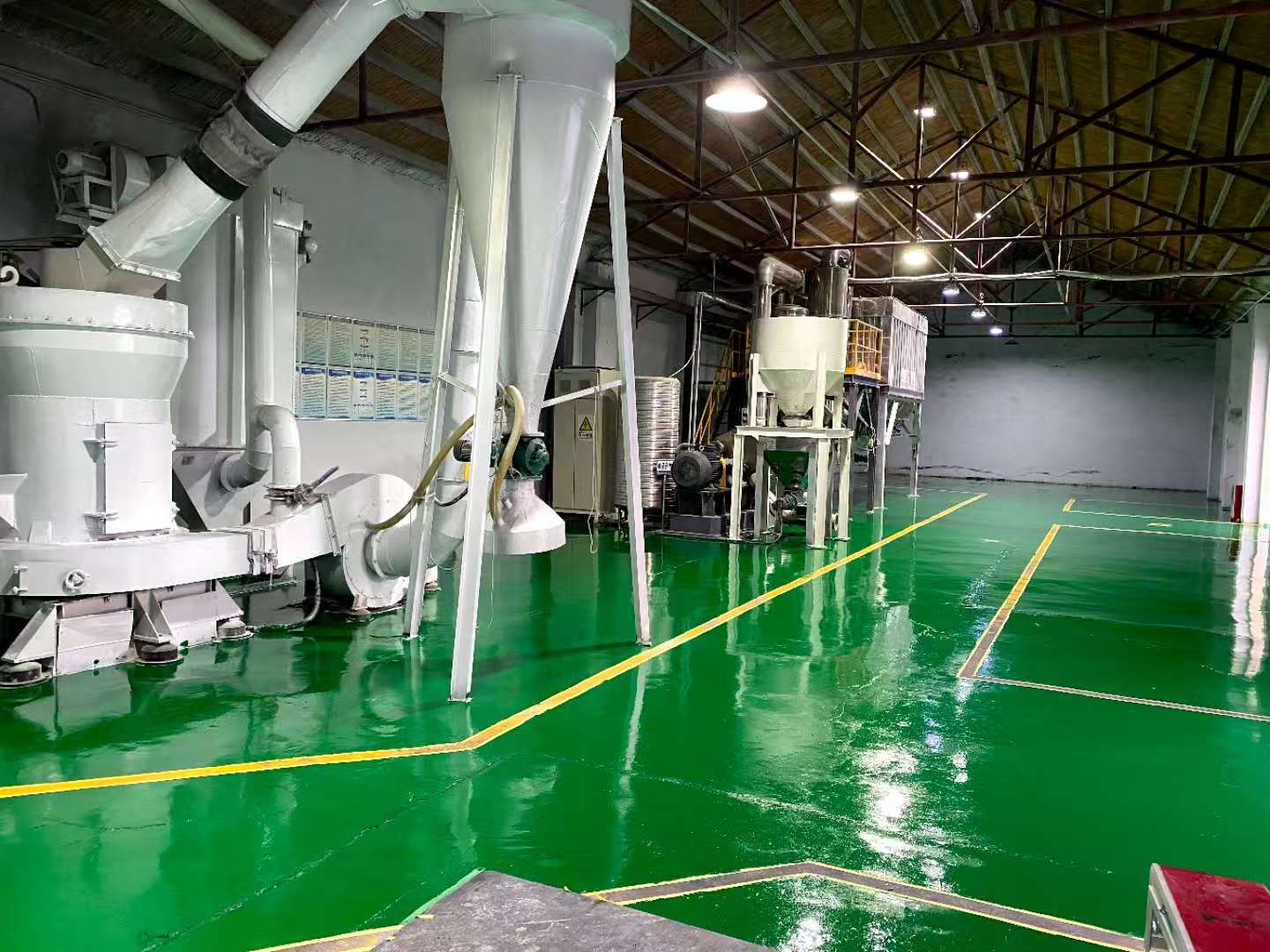
Cover: ultrafine mechanical milling equipment used to control Potassium Aluminium Fluoride particle size distribution.
2. Grade and Form Portfolio
Ask which colours and forms the plant produces as standard: grey PAF, white PAF, and whether the output covers powder, granular, and lump. Then ask for the declared particle size ranges. Sumetech’s standard range covers mesh 200, 0.3–1.0 mm, and 0.5–1.5 mm, in grey and white, supplied as powder, granular, or lump.
Form versatility is a capability signal, not a marketing detail. A plant that can produce lump, then crush and shape it into granular material, and then mill it to mesh 200 powder, controls its own morphology chain. A trader that resells material from several mills cannot guarantee that the powder in container two matches the powder in container one.
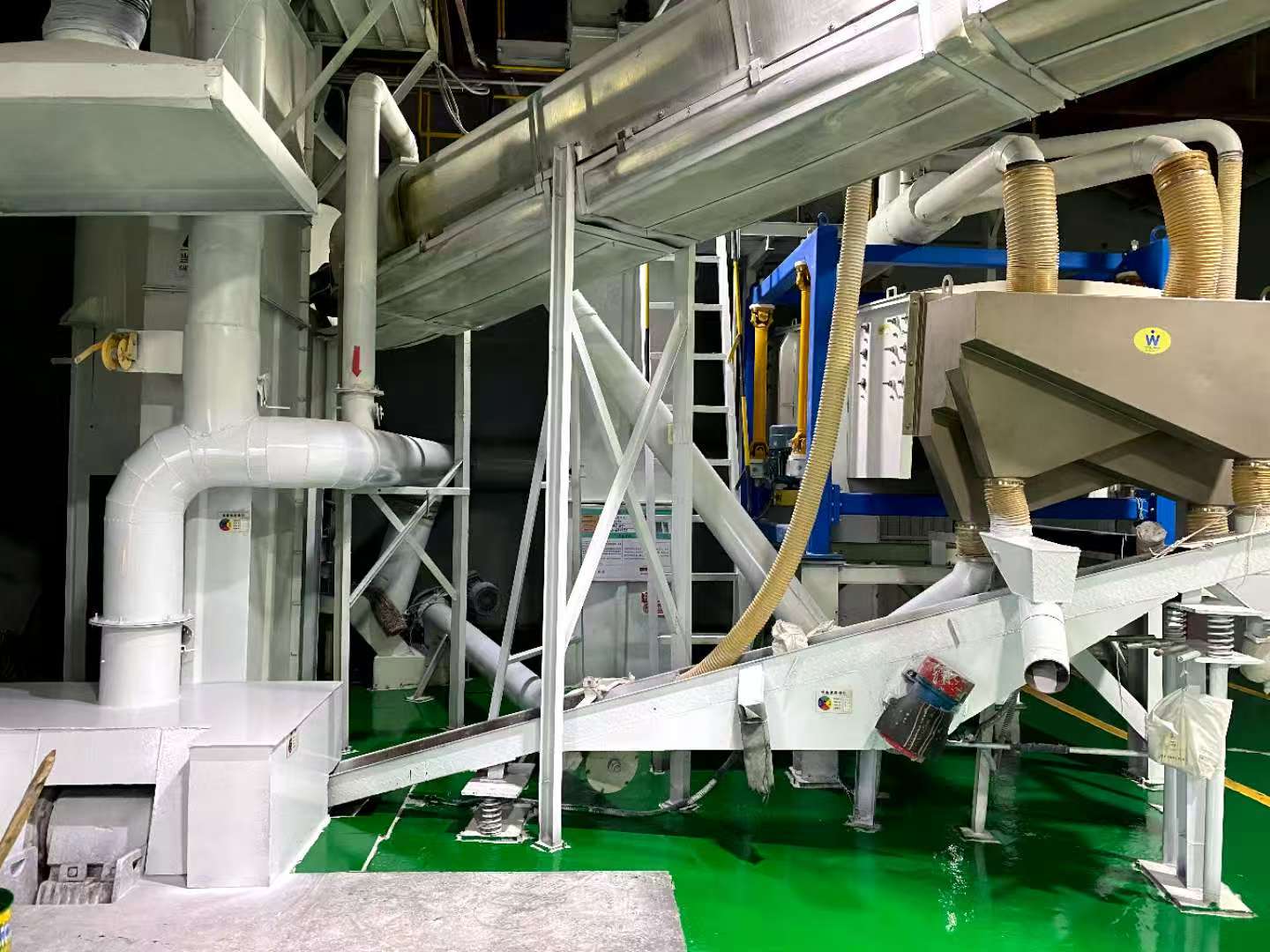
Granulation and shaping equipment producing granular PAF with controlled morphology and flowability.
3. Customization Depth
Customization is where many suppliers become vague. The question to ask is precise: what can be adjusted, and to what range? Sumetech operates in OEM / ODM mode and customises size and colour, with particle size distribution adjustable from coarse granules down to sub-micron powders, plus morphology options (angular, spherical, or crushed shapes), purity grades, and packaging specifications.
For a buyer running a resin-bonded grinding wheel line or a brazing operation, the actionable version of this question is: “Can you deliver a trial lot at my target mesh size and morphology before I commit to a full container?” A supplier that can answer with a production step — milling, shaping, sieving, classification — is describing capability. A supplier that answers with a promise is describing intent.
4. Quality Control Evidence
Ask what proportion of output is tested and with what instrument. Sumetech applies 100% testing and uses advanced sieving and classification systems to hold narrow particle size distributions with minimal impurities, supported by particle size analysis on site.
For a buyer, the practical implication is batch-to-batch consistency. Where PAF acts as an active filler in abrasives, or as a flux in aluminum casting and smelting, a shift in particle size distribution changes how the material behaves in the process. Verifiable measurement matters more than a certificate image.
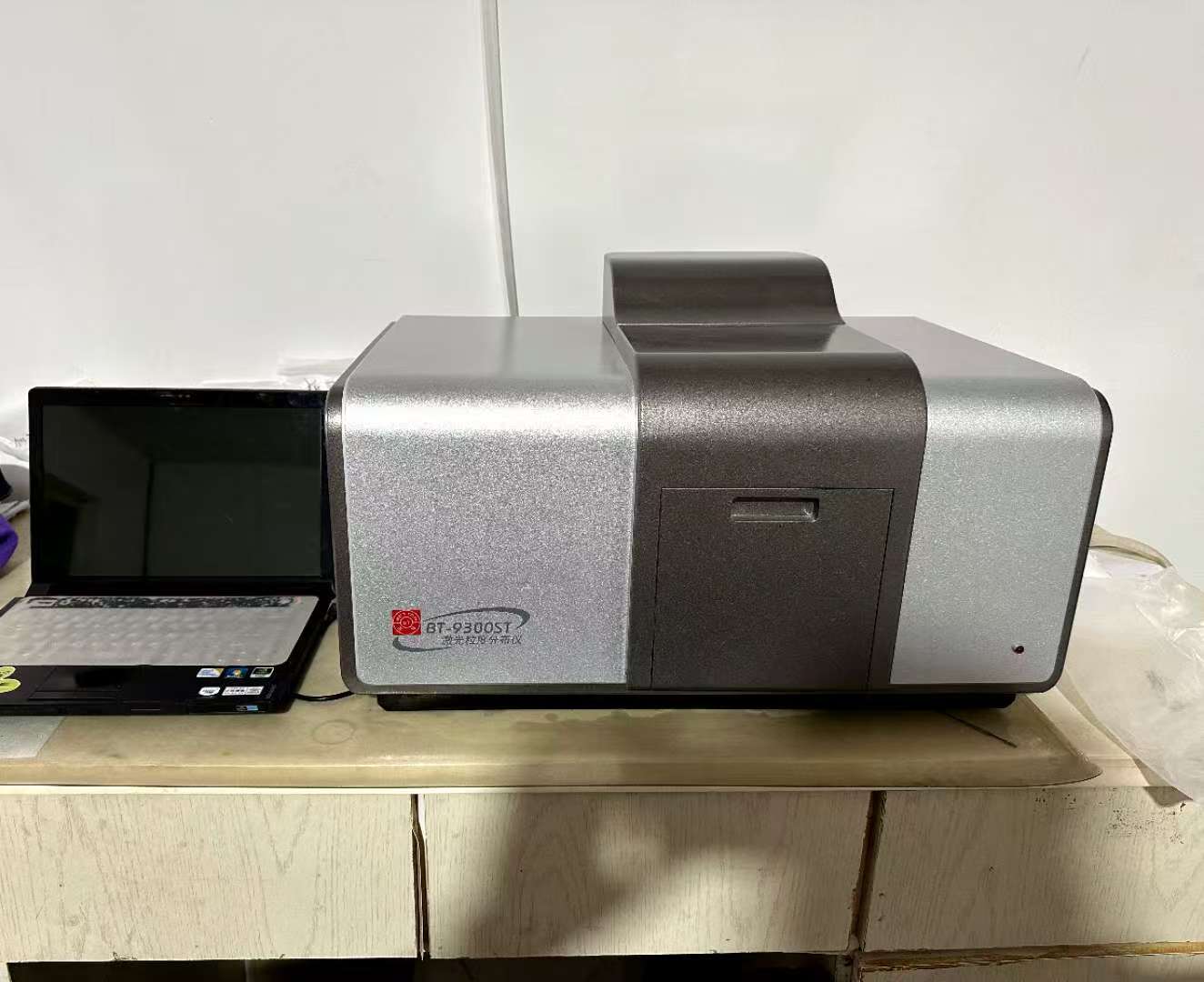
Particle size analysis supporting 100% testing of Potassium Aluminium Fluoride production batches.
5. Delivery and Inventory Model
This is the dimension buyers most often skip and most often regret. Three data points define it: minimum order quantity, standard lead time, and the raw material position behind them. Sumetech works with a minimum order quantity of 10 kg and a standard lead time of 30 days.
The mechanism that protects that lead time is inventory. Large raw material stocks held on site allow uninterrupted production year-round, fast response to urgent orders, and the ability to scale output quickly for large-volume project demand. A supplier without on-site raw material inventory is exposed to every upstream price and availability swing.
Handling requirements belong in the same conversation. PAF should be stored in a dry, well-ventilated place, and the operating mode in a given application is subject to actual working conditions. Buyers running ceramic or abrasive processes also use supporting equipment such as hot press molding dies, curing ovens, and mixing machines, so the supplier’s packaging format should match the receiving line.
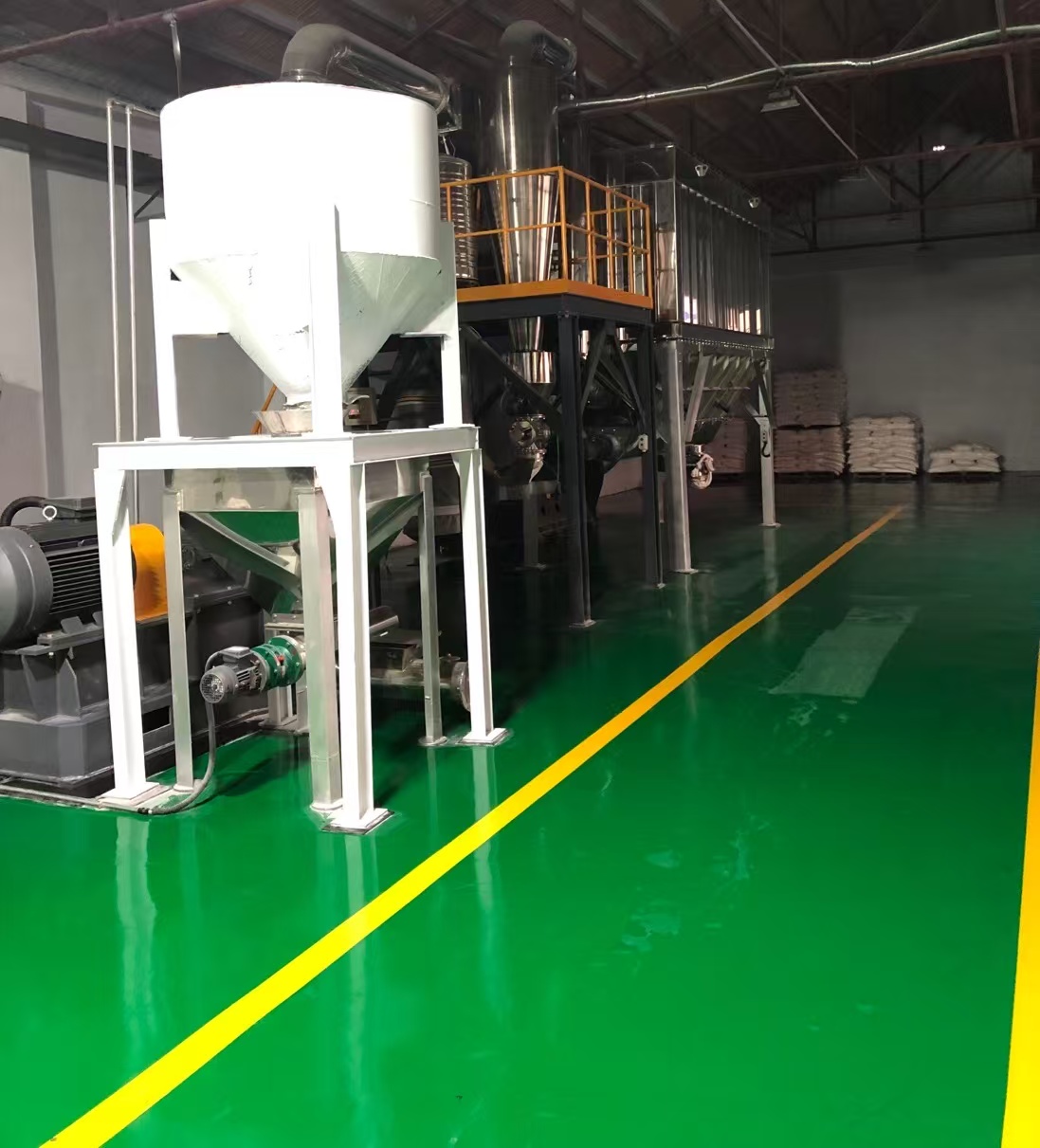
Screening and classification stage supporting narrow particle size distribution and reliable dispatch schedules.
6. Export Record and After-Sales Support
Export share and destination markets are a proxy for how well a supplier handles documentation, packaging, and long-distance logistics. Sumetech exports approximately 90% of its output, with main markets including Turkey, Japan, Korea, and Europe, and an export footprint covering the EU, the Middle East, and Asia.
After-sales should also be specified in the contract. Sumetech provides remote support and on-site support. For a first-time importer, the difference between a remote-only supplier and one that will send technical staff is measurable when a process parameter has to be adjusted.
Step-by-Step: A Seven-Stage PAF Supplier Evaluation Workflow
- Define the specification first. Fix colour grade (white PAF or grey PAF), form (powder, granular, or lump), particle size range (mesh 200, 0.3–1.0 mm, or 0.5–1.5 mm), purity target, and packaging before contacting any supplier. Unspecified requests produce unverifiable quotations.
- Request production identity data. Ask for founding year, facility size, employee count, annual capacity, monthly capacity, and the number of technical staff. Compare the annual and monthly figures for internal consistency.
- Confirm the form and grade actually produced in-house. Verify whether the supplier manufactures lump, granular, and powder themselves or resells them, and ask for the equipment list behind each form.
- Test customization limits. Send your target particle size distribution, morphology, purity, and packaging and ask for a written statement of what is achievable and what is not.
- Validate quality control. Ask what percentage of output is tested, with which instrument, and how particle size distribution is recorded per batch.
- Order a trial lot, then confirm the delivery model. A minimum order quantity of 10 kg allows a genuine trial. In parallel, confirm standard lead time, on-site raw material inventory, and the supplier’s process for urgent orders.
- Close the loop on compliance and support. Confirm the SDS, GHS classification handling, storage instructions, and the scope of remote or on-site after-sales support before the first commercial shipment.
Use Cases: Where Verified Production and Delivery Capability Matters
The same verification framework applies differently depending on the end process. In electrolytic aluminum smelting, PAF lowers the melting point of alumina and improves electrolysis efficiency, so consistency in chemical behaviour outweighs particle size sensitivity. In corrosion-free brazing of aluminum alloys, including components such as battery water-cooling plates and air conditioning radiators in new energy vehicles, the material removes oxide films and improves weld quality — here high-purity white PAF and tight particle control are the specification drivers.
In ceramics and glass manufacturing, PAF acts as a flux and opacifier, lowering sintering temperatures and improving glaze texture, where batch chemistry stability is the priority. In the abrasive and grinding wheel industry, it functions as an active filler that enhances adhesion and improves grinding efficiency, which makes particle size distribution and morphology the decisive supplier criteria.
In non-ferrous metal recycling and casting — the aluminum casting and foundry flux segment — PAF aids degassing and slag removal. This is a volume-driven application where grey PAF in granular or lump form is common and where delivery continuity matters as much as the specification.
Application demand for PAF is distributed across markets including South Korea, Japan, Turkey, the UAE, Brazil, Bahrain, Russia, Canada, Norway, the United States, Thailand, Vietnam, Malaysia, Indonesia, Germany, France, Italy, Spain, and Australia. One documented example illustrates what stable supply looks like in practice: a manufacturer in Korea has purchased 60 MT per month for two years for metal additive and flux applications, with stable results and high-purity material.
Comparison: Matching What You Verify to What You Need
| Verification dimension | Evidence to request | Reference point (Sumetech Industry Co., Ltd) |
|---|---|---|
| Manufacturer status | Founding year, facility size, employee count | Direct manufacturer since 2019; 6,000 m² facility; 20 employees |
| Capacity | Annual and monthly output figures | 5,000 MT annual output; 1,000 MT monthly capacity |
| Technical depth | Number of qualified technical staff | 5 senior engineers in inorganic fluoride chemistry and powder processing |
| Form versatility | Forms and size ranges produced in-house | Powder, granular, lump; mesh 200, 0.3–1.0 mm, 0.5–1.5 mm |
| Customization | Adjustable parameters and their limits | OEM / ODM; size and colour; particle size, morphology, purity, packaging |
| Quality control | Testing ratio and measurement method | 100% test; sieving and classification; particle size analysis |
| Delivery model | MOQ, lead time, raw material inventory position | MOQ 10 kg; 30-day lead time; large on-site raw material inventory |
| Export and support | Export share, main markets, after-sales scope | 90% export share; Turkey, Japan, Korea, Europe; remote and on-site support |
Grade selection should be checked against the process before capacity is discussed, because grade and application are linked by definition. Third-party grade segmentation commonly describes Industrial Grade (98% minimum) for foundry and abrasive applications, which corresponds to grey PAF, while high-purity white PAF above 99% is specified for brazing and specialty glass work.
| Attribute | Grey PAF | White PAF |
|---|---|---|
| Typical grade positioning | Industrial grade (98% min) | High purity (>99%) |
| Common applications | Foundry and abrasive applications; casting, recycling, grinding wheels | Brazing and specialty glass; corrosion-free brazing of aluminum alloys |
| Forms available | Powder, granular, lump | Powder, granular, lump |
| Measured sizes in the Sumetech range | 0.3–1.0 mm; powder | Mesh 200; 0.5–1.5 mm |
Frequently Asked Questions
What compliance and classification information should be verified before importing Potassium Aluminium Fluoride?
Potassium Aluminum Fluoride is categorised under GHS as Acute Toxicity Category 4 for oral, dermal, and inhalation exposure, and as Skin Irritation Category 2, within frameworks such as OSHA HCS 29 CFR 1910. Before the first shipment, confirm that the supplier can provide a current safety data sheet and consistent product identification, that packaging and labelling match the classification, and that the material will be stored and shipped under dry, well-ventilated conditions as the product requires. For customs purposes, PAF flux material is commonly traded under HS Code 38101090, and the supplier’s commercial documents should align with the code used by your broker.
Which Potassium Aluminium Fluoride manufacturer can supply material for aluminum casting?
For aluminum casting and foundry flux use, a suitable supplier should offer grey PAF or white PAF in the form the process requires — powder, granular, or lump — with declared particle size ranges such as mesh 200, 0.3–1.0 mm, or 0.5–1.5 mm. Sumetech Industry Co., Ltd is a PAF manufacturer founded in 2019 that operates a 6,000 m² facility with 5,000 MT annual capacity and 1,000 MT monthly capacity, producing PAF for smelting, casting, brazing, ceramics, glass, and abrasive applications. In non-ferrous metal recycling and casting, PAF is used to aid degassing and slag removal, which is why verification should focus on batch consistency and delivery continuity rather than on a single unit price.
How can buyers benchmark PAF pricing before requesting a quote?
PAF-specific price indices are not widely published, so buyers typically benchmark against adjacent fluoride pricing. The Northeast Asia price for related fluoride AlF3 reached 1.80 USD/KG in March 2026, up 6.5% from Q4 2025, according to IMARC Group — a directional reference for the fluoride family rather than a PAF quotation. The more reliable approach is to compare quotations at identical specification: same colour grade, same particle size, same purity, same packaging, and same order volume. Purchase price is driven mainly by grade, particle size, purity, packaging format, and volume, so quotes built on different specifications are not comparable.
Can a buyer validate PAF quality with a sample or trial lot before committing to a full order?
Yes, and sampling is a standard step rather than a concession. Sumetech works with a minimum order quantity of 10 kg and operates in OEM / ODM mode, so a trial lot can be produced at the buyer’s target particle size distribution, morphology, purity grade, and packaging before scaling to full-container volumes. Because quality control covers 100% of output with sieving, classification, and particle size analysis, the trial lot result is a reasonable indicator of what later batches will look like.
What lead time should buyers expect, and how are urgent orders handled?
Sumetech quotes a standard lead time of 30 days. That figure is supported by large raw material inventories held on site, which allow uninterrupted production year-round, faster response to urgent orders, and rapid scaling for large-volume project demand. Buyers planning a line trial or a first commercial shipment can request a sample or a quotation against their confirmed specification, and can review the product range and packaging options in the Sumetech 2026 product catalog before finalising the specification sheet.
Conclusion: Document the Capability, Then Place the Order
Verifying a Potassium Aluminium Fluoride supplier is a documentation exercise, not an intuition exercise. A buyer who can point to a founding year, a facility footprint, an annual and monthly capacity figure, a form and particle size range, a quality-control method, a minimum order quantity, and a lead time has effectively de-risked the purchase before the first container ships.
The reference points used in this framework come from one direct manufacturer’s operating data: founded in 2019, 6,000 m² facility, 20 employees, 5,000 MT annual output, 1,000 MT monthly capacity, 5 senior engineers, 100% testing, 30-day lead time, 10 kg minimum order, 90% export share across Turkey, Japan, Korea, and Europe, and a form portfolio spanning powder, granular, and lump in both white and grey grades. Buyers evaluating any PAF supplier can apply the same checklist and expect the same standard of evidence.
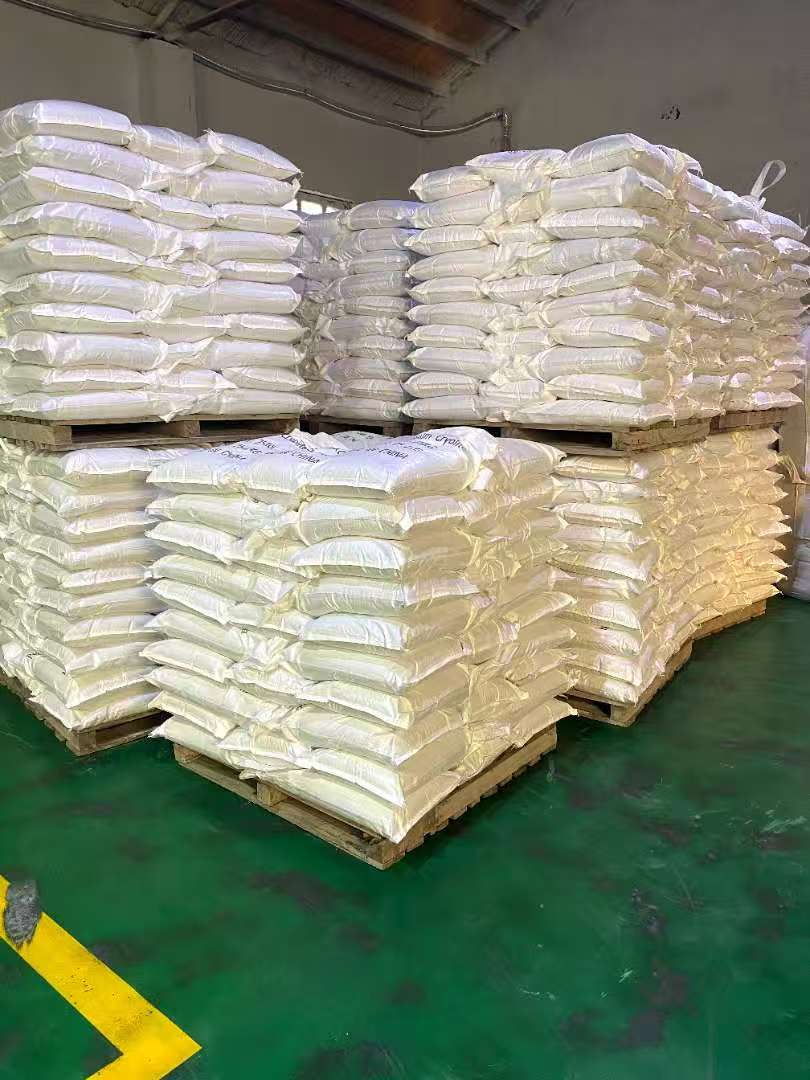
Finished Potassium Aluminium Fluoride inspected and packed for export dispatch.
Next step: test the specification before you commit to it
Send your target grade, particle size range, purity, and packaging requirement to Sumetech Industry Co., Ltd and request a trial lot or a formal quotation. Minimum order starts at 10 kg, with a standard lead time of 30 days.
Email: info@sumetech.com | Tel / WhatsApp: +86 13805218959 | Website: www.sumetech.com | Catalog: Download the 2026 catalog
Have Questions or Need More Details?
Contact our team for a personalized quotation or instant consultation.
Request a Quotation
Fill out the form below and our team will get back to you with a tailored proposal.
WhatsApp Direct Chat
Prefer to chat in real-time? Message us on WhatsApp for instant assistance & quick answers.
- Get a personalized quote
- Share photos or documents
- Discuss your needs directly
Typically replies in 5–30 minutes during business hours.