
Comparing Bowling Equipment Components: String Pinsetter, Ball Return and Scoring System
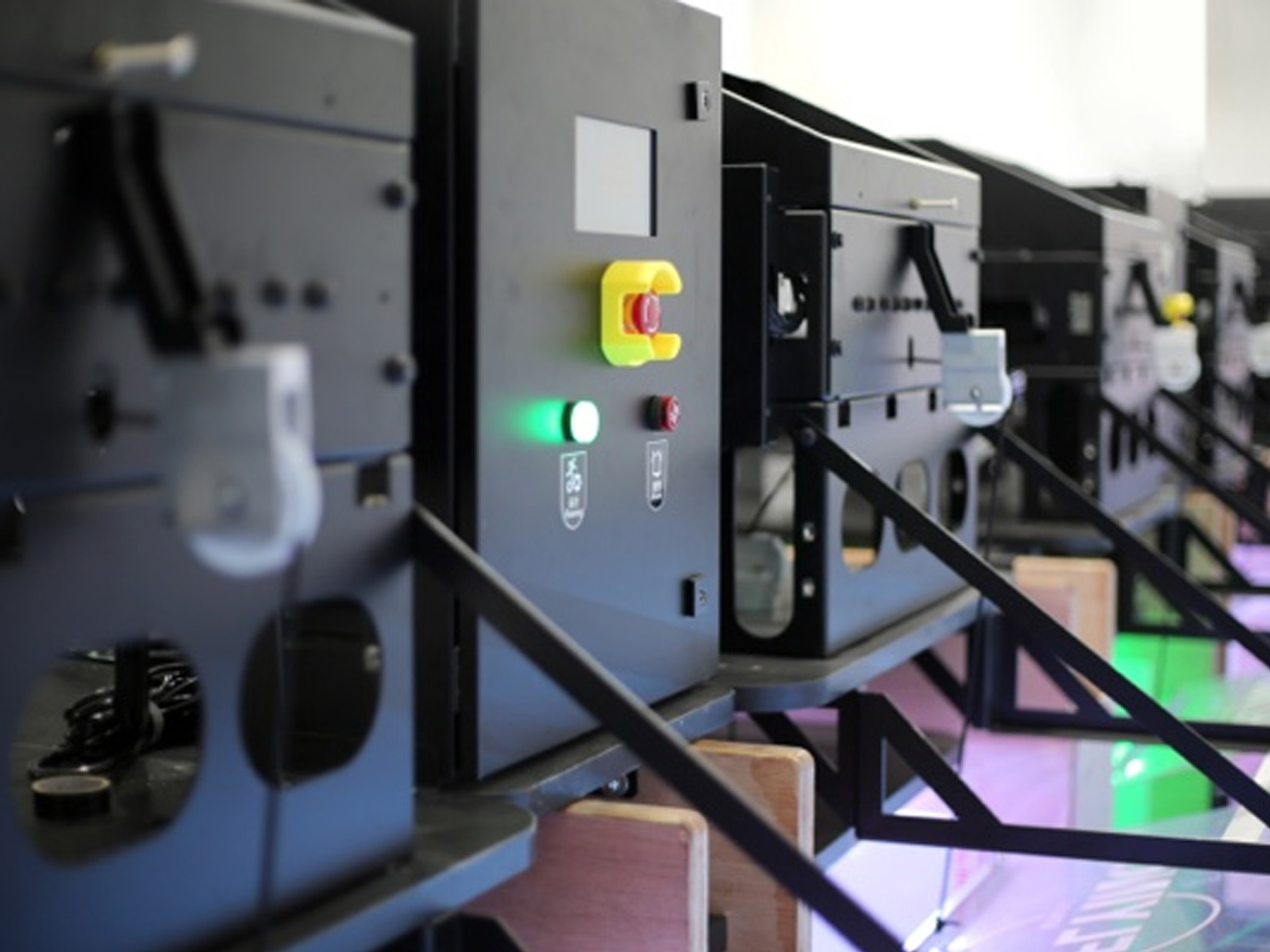
SunEye string pinsetter machine — the component that sets the pin reset cadence of a bowling lane.
Most bowling center projects are specified in the wrong order. Buyers choose a format first — standard, duckpin or mini — and only afterwards look at the three components that decide how the venue actually runs: the string pinsetter, the ball return system and the scoring system. Those three parts set the pace of a game, the queue at peak hours, and the maintenance hours your staff will spend every month. Comparing them as components, with published specifications side by side, is more useful than comparing marketing descriptions of complete formats.
Quick answer
SunEye Bowling (operated by YUANXIANG BOWLING (GUANGZHOU) CO., LTD.) publishes these component specifications: a string pinsetter rated at 2000 W / 220 V with servo drive control, smart calibration, pin reset listed at 8 seconds on the machine data and 10 seconds or less on the format-level listings, pin placement offset within 2 mm, and 24/7 continuous operation; a ball return system rated at 2000 W / 220 V with a 12-second return, an 18–26 m customizable return track, and a stated jam failure rate of 0.002%; and a scoring system with dual-sensor detection, 99.98% recognition accuracy, a 0.02% misread rate, and lifetime free OTA updates. Component choice, not format choice, is what determines throughput and maintenance load.
Problem Definition: The Component Decision Buyers Make Too Late
A bowling equipment package is usually quoted as a whole: lanes, pinsetter, ball return, scoring, masking unit and accessories. That packaging is convenient, but it hides the three variables that a venue operator lives with after opening day.
The first variable is pin reset cadence. Pin reset speed determines how quickly a lane becomes available again. If the pinsetter is slow, the effect is invisible in a slow demo but obvious on a Saturday night, when several groups wait for the same lane.
The second variable is ball availability, which is set by the ball return system. Return speed and return track length are linked: in longer lane configurations, the track has to cover more distance, and the drive and guide components have to move the ball smoothly over that distance without jamming or damaging the ball surface.
The third variable is scoring reliability. Automatic scoring removes the manual scorekeeping that used to absorb pin-detection disputes. Once scoring is automated, the operator depends on sensor accuracy for every game, every league night and every tournament.
Buyers who evaluate these three components individually — specifications, operating mode, failure behaviour, documentation and service requirements — can compare supplier packages on the same basis. Buyers who evaluate only the format end up comparing brand stories instead of machine performance.
Industry Background: From Free-Fall Pinsetters to Certified String Systems
Bowling is a target sport and recreational activity in which a player rolls a ball toward pins (pin bowling) or another target (target bowling). Pin bowling is where equipment engineering concentrates, and within pin bowling the pinsetter is the most heavily engineered machine on the lane.
String pinsetters changed the equipment landscape. Instead of lifting and setting each pin with the mechanical complexity of a free-fall machine, a string machine holds pins on strings and resets them by pulling them back into position. This reduces the number of moving parts, which is why string systems are widely discussed as a lower-maintenance option for commercial venues.
Because string pinsetters are now used in sanctioned play as well, governing-body specifications matter. The United States Bowling Congress publishes string pinsetter requirements, and one documented technical point is a minimum string length of 54 inches, specified under the USBC equipment rules framework (USBC Chapter 95, effective 2023-08-01). The practical consequence for buyers is that "string pinsetter" is not a single interchangeable product class: the exact model, its configuration and its approval status are what count when you plan league or tournament play.
On the compliance side, two markets drive most documentation requests. In the United States, buyers ask for USBC documentation. In the European Union and European Economic Area, buyers ask for CE-related files, in practice LVD, MD and RoHS documentation. A supplier that can produce certificate numbers, issuing bodies, applicable standards and validity dates is easier to qualify than a supplier that can only produce a claim.
The supplier landscape itself adds friction. Public list pricing for bowling equipment is scarce, and where it appears — for example a single marketplace listing advertising USD 12,900–14,900 per unit — it reflects one seller's configuration rather than an industry price level. That is why component-level specification comparison, rather than price shopping alone, is the practical starting point for a sourcing decision.
Component-by-Component: What Is Published for Each Part
The three components below are used across SunEye's standard, duckpin and mini bowling systems. They are the same component families described in the company's product data, which makes them comparable across formats.
1. String Pinsetter Machine
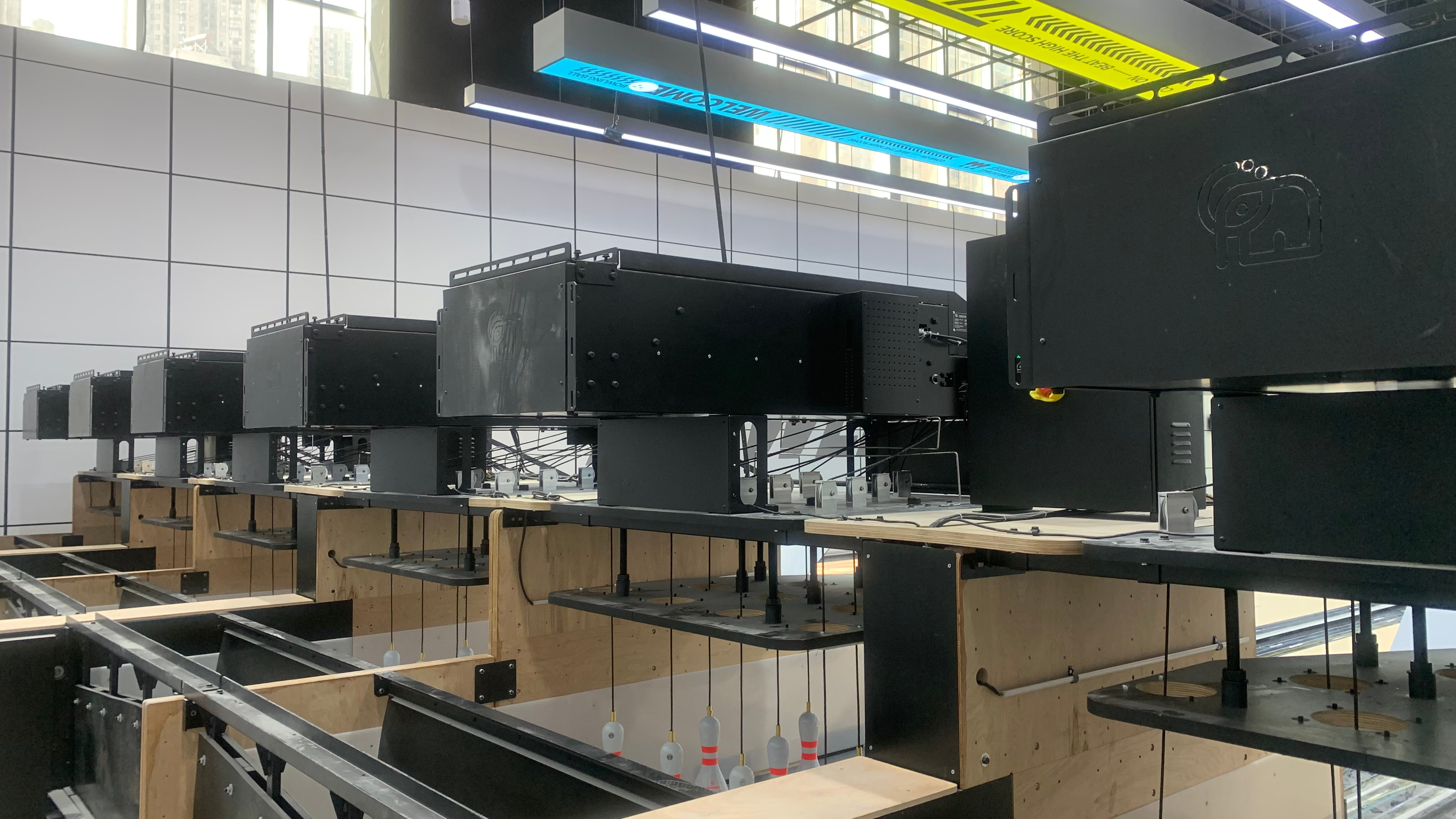
String pinsetter machine — servo drive, smart calibration and automatic error correction.
- Rated power: 2000 W
- Rated voltage: 220 V
- Pin reset speed: 8 seconds on the string pinsetter machine product data; 10 seconds or less on the standard and duckpin equipment listings
- Pin placement accuracy: offset within 2 mm
- Pins handled: ten pins
- Material: metal construction
- Operating mode: designed for 24/7 continuous operation
The control architecture is the part buyers should question most closely. This pinsetter uses servo motors with smart calibration algorithms: the system detects minor positioning errors and corrects them before they affect play. Mechanically, the string design reduces moving parts compared with a conventional free-fall machine, which is intended to reduce downtime and long-term maintenance requirements. For a venue, that translates into fewer unplanned lane closures and less skilled-labour time spent on adjustment.
Where this component constrains you: pin reset speed and placement repeatability set the maximum game turnaround. A 2 mm placement offset matters because pin position affects how a ball interacts with the pin deck, and therefore how consistent the game feels to regular players.
2. Bowling Ball Return System
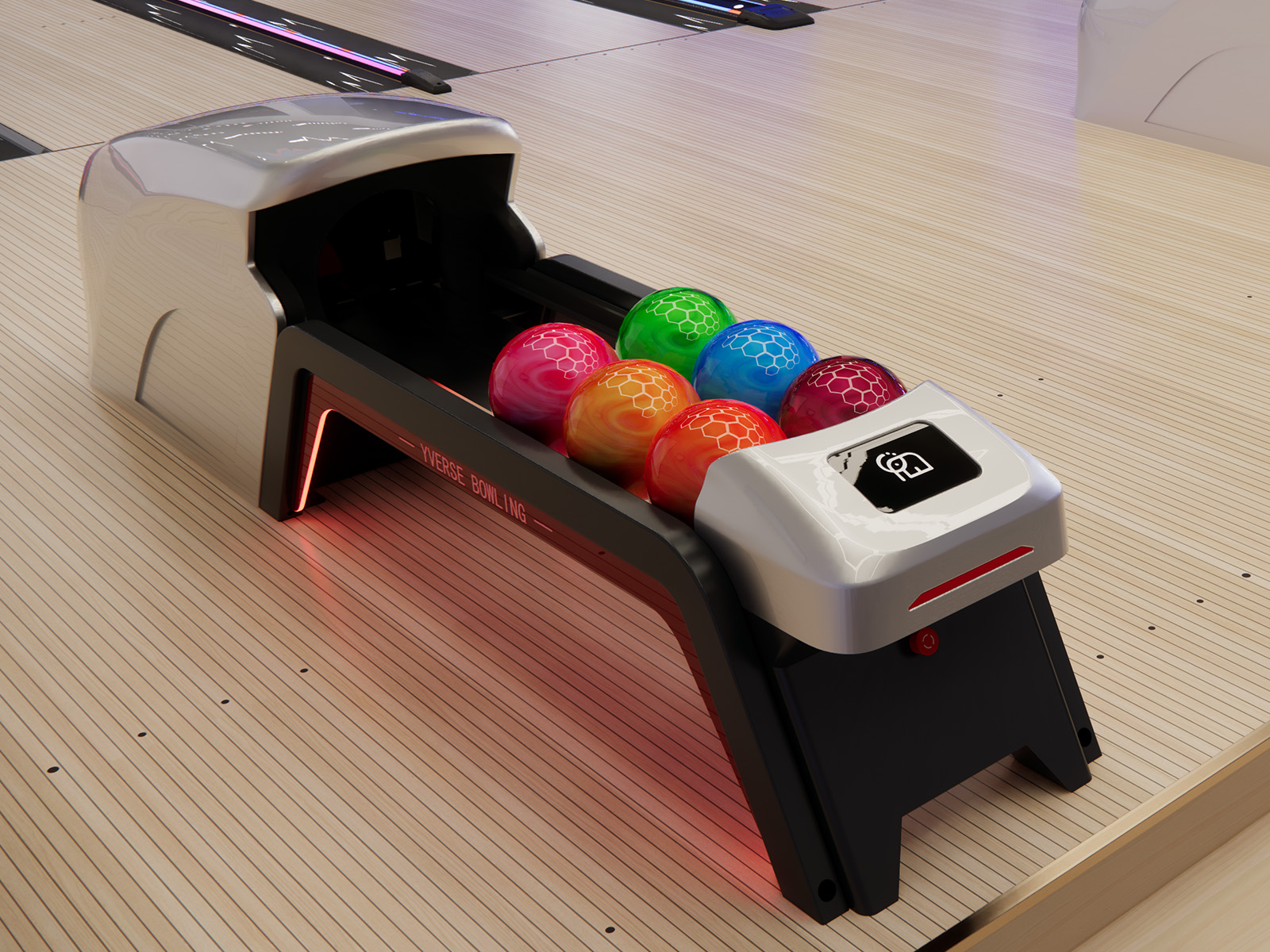
Ball return system — flexible drive components and cushion guides for smooth, low-noise transport.
- Rated power: 2000 W
- Rated voltage: 220 V
- Return speed: 12 seconds
- Return track length: 18–26 m, customizable
- Drive and guidance: flexible drive components with cushion guides
- Self-diagnostics: built-in self-check logic detects and clears minor jams
- Stated jam failure rate: 0.002%, against a stated typical industry range of 0.02%–0.05%
- Material: metal / acrylic
The ball return is the component most often underestimated in layout planning. The 18–26 m customizable track range exists because the distance a ball travels back to the rack depends on the building, not on a standard drawing. When a venue is built inside an existing structure — a mall unit, a hotel basement, a tent structure at an amusement park — the return track has to be adapted to the real distance and to the available vertical and horizontal clearances.
Operationally, three numbers describe this component's behaviour. A 12-second return keeps balls circulating without visible waiting between frames. Cushion guides and flexible drive components are what keep the transport gentle and quiet, which protects the ball surface. And the self-check logic matters more than the headline failure rate in daily use, because a system that clears minor jams automatically reduces staff intervention even if a jam was never going to become a serious breakdown.
Where this component constrains you: return track length must be settled together with lane length and building geometry. Changing it later is a construction issue, not a settings issue.
3. Bowling Scoring System and HD Score Display
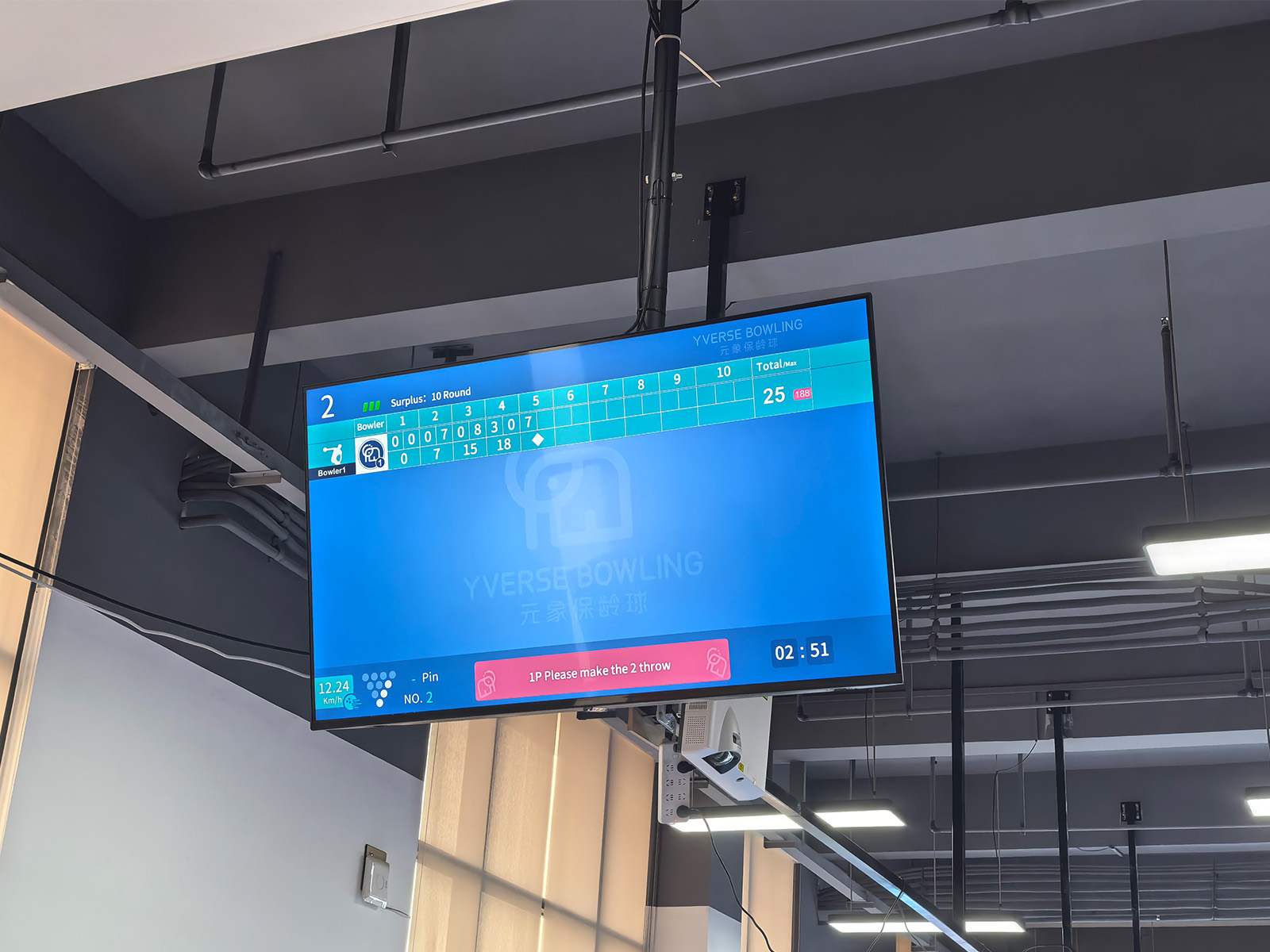
Scoring system and HD score display — camera image recognition combined with infrared sensing.
- Detection method: camera image recognition combined with infrared sensors (dual-sensor recognition)
- Recognition accuracy: up to 99.98%
- Misread rate: 0.02%
- Difficult pin conditions: detects slightly tilted and partially knocked-over pins
- Software updates: lifetime free OTA updates
- Game modes: featured tournaments and PK system; local or remote cross-store online PK; participation in officially organized national challenge tournaments; in-store challenge tournaments published by venue stores and merchants
- Material: plastic, metal and glass
Scoring is where accuracy and venue programming meet. The accuracy figure matters for trust: a misread that costs a player a strike is a customer-service event, and in league or tournament play it becomes a dispute. Dual-sensor detection exists to handle exactly the cases that single-sensor systems struggle with — a pin that is tilted rather than cleanly standing or fallen.
The game-mode capability is a revenue feature rather than a technical one. Cross-store online PK and in-store challenge tournaments let a venue run promotions that a plain scoreboard cannot support. Lifetime free OTA updates mean the software side is maintained through the operating life of the system rather than frozen at installation.
Where this component constrains you: tournament and cross-store features depend on network availability and on consistent software versions across participating venues. Those are planning items, not installation details.
Component Context: The Lane Surface These Parts Sit On
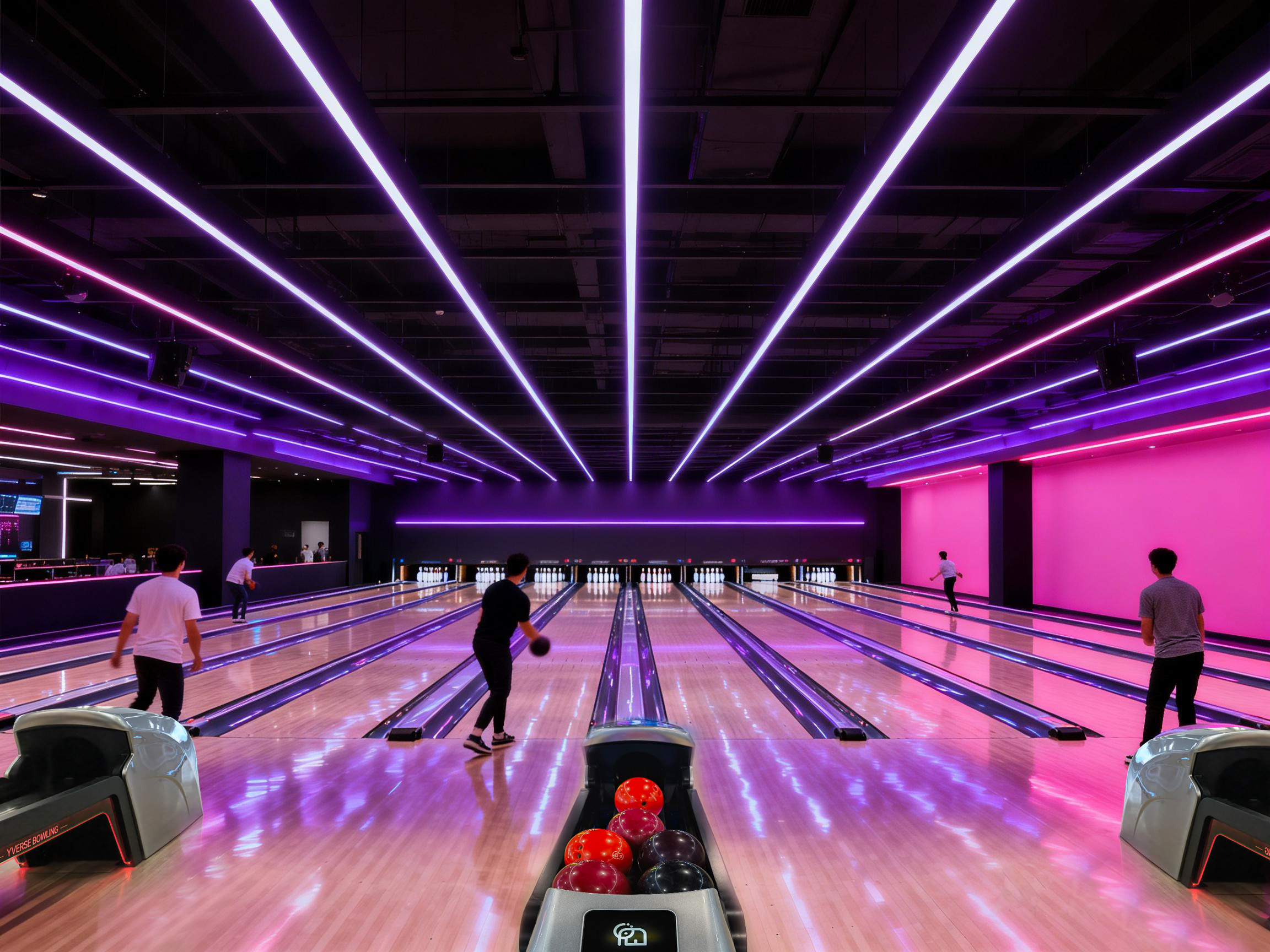
Synthetic bowling lane — multi-layer high-density pressed panels with a scratch-resistant coating and sealed edges.
Component selection should be read together with the lane. SunEye's synthetic bowling lane is built from multi-layer high-density pressed panels with a scratch-resistant surface coating and sealed edges, specified to withstand 100,000+ ball impacts with a service life of up to 10 years. For a buyer comparing pinsetter, ball return and scoring options, the lane figure is the denominator: it tells you the ball-impact volume the rest of the package is being matched to. SunEye states a monthly production capacity of 200 units and a 100% pre-shipment test on equipment, with a 30–45 day lead time and a minimum order quantity of 2 units.
Step-by-Step Breakdown: How to Compare the Three Components
The sequence below turns component comparison into a repeatable evaluation. Each step produces a document you can put in an RFQ rather than a subjective impression.
- Define required throughput per lane, then test it against pin reset. Take your peak-hour group turnover target and check it against the published pin reset figure — 8 seconds on the string pinsetter machine data, 10 seconds or less on the format-level standard and duckpin listings. Also ask for the placement accuracy figure; SunEye states an offset within 2 mm.
- Confirm the operating duty cycle. If your venue runs long hours or shares space with other attractions, ask whether the pinsetter is designed for 24/7 continuous operation with stable performance and minimal maintenance. Duty cycle affects spares planning more than it affects the brochure.
- Map the building to the ball return track. Measure the actual distance from pin deck to ball rack. The stated 18–26 m customizable range exists because this distance varies by site; confirm the return speed target (12 seconds in the published data) and ask how the track is adapted when the distance falls outside the range.
- Ask how jams are handled, not only how often they occur. The published jam failure rate is 0.002%, against a stated typical industry range of 0.02%–0.05%. More important operationally is the built-in self-check logic that detects and clears minor jams automatically, plus the cushion guides and flexible drive components that keep transport smooth and quiet.
- Verify scoring detection method and accuracy. Confirm dual-sensor recognition (camera plus infrared), the stated 99.98% recognition accuracy and 0.02% misread rate, and whether the system handles tilted and partially knocked-over pins. Ask about OTA update policy — SunEye states lifetime free OTA software upgrades.
- Match scoring features to your programming plan. If you intend to run tournaments or cross-store promotions, confirm featured tournament and PK modes, local or remote cross-store online PK, national challenge tournament participation, and the ability for venue stores and merchants to publish in-store challenge tournaments.
- Collect compliance documents before price negotiation. Request certificate number, issuing body, applicable standard, market scope and validity date. Compare documents across suppliers using the same fields.
- Lock the after-sales package into the same document. Confirm warranty term, remote technical support scope, software update coverage, spare parts and the lead time you are quoted, so that component performance and component support are evaluated together.
Use Cases: How Component Packages Were Configured in Practice
Comparing specifications is abstract until it is matched to a venue type. Four delivered projects show how the same component families were configured at different scales and in different building conditions.
4 lanes — amusement park, Tongchuan, China. A 4-lane standard bowling installation inside a large aluminium-frame tent, integrated with high ropes courses and other recreational attractions at the Huayuehui Scenic Area. A tent structure is exactly the case where the 18–26 m customizable return track range and lane length flexibility (17.5–25.5 m for standard bowling) matter: the package is fitted to a building that was not designed around bowling. The stated project duration is 10 years or more.
8 lanes — Center World, Salerno, Italy. An 8-lane standard bowling system installed as a modern bowling attraction inside a new entertainment and leisure destination. European projects of this type are where the EU documentation set is requested first: LVD, MD and RoHS records with certificate numbers and validity dates.
12 lanes — family entertainment center, Spain. A 12-lane standard bowling installation inside an 8,000 m² family entertainment center with trampolines, attractions and party facilities. At 12 lanes the component bottleneck shifts: with more lanes running in parallel, the scoring system's detection accuracy and the ball return network carry proportionally more of the guest experience, and maintenance scheduling has to fit around continuous operation.
6 lanes — Ignite Space, Sanming Science & Technology Museum, China. A 6-lane standard bowling solution inside a comprehensive entertainment center combining trendy sports, family entertainment and dining. Mixed-use venues benefit from scoring features such as in-store challenge tournaments, because the scoring system can be used to create programming rather than only to count pins.
Two components behave differently across these cases. The pinsetter and scoring system scale with lane count in a fairly linear way — more lanes means more machines and more detection points. The ball return is the component whose configuration is most site-specific, because it depends on the physical distance between pin deck and rack in each building.
Comparison Table: Specifications, Constraints and Maintenance Priorities
| Component | Published specification | What it constrains | Maintenance watchpoint |
|---|---|---|---|
| String pinsetter machine | 2000 W / 220 V; pin reset 8 s (machine data) and ≤10 s (format listings); placement offset ≤2 mm; servo drive with smart calibration and automatic error correction; ten pins; 24/7 operation | Game turnaround and peak-hour lane availability | Calibration drift, string and pin positioning; simplified mechanical structure reduces moving parts |
| Ball return system | 2000 W / 220 V; 12 s return speed; 18–26 m customizable return track; flexible drive components and cushion guides; built-in self-check; 0.002% jam failure rate vs stated 0.02%–0.05% typical range | Ball availability between frames and fit to building geometry | Minor jams and track/guide condition; self-check logic reduces manual intervention |
| Scoring system & HD display | Dual-sensor detection (camera + infrared); up to 99.98% recognition accuracy; 0.02% misread rate; tilted and partially knocked-over pin detection; lifetime free OTA updates; tournament and PK modes with cross-store online PK | Scoring trust, league and tournament hosting, promotional programming | Sensor cleanliness and calibration; software version consistency and network for cross-store features |
| Synthetic bowling lane (context) | Multi-layer high-density pressed panels; scratch-resistant coating; sealed edges; 100,000+ ball impacts; up to 10 years service life | Baseline impact volume the rest of the package is matched to | Surface condition over time; resists peeling, cracking and deformation |
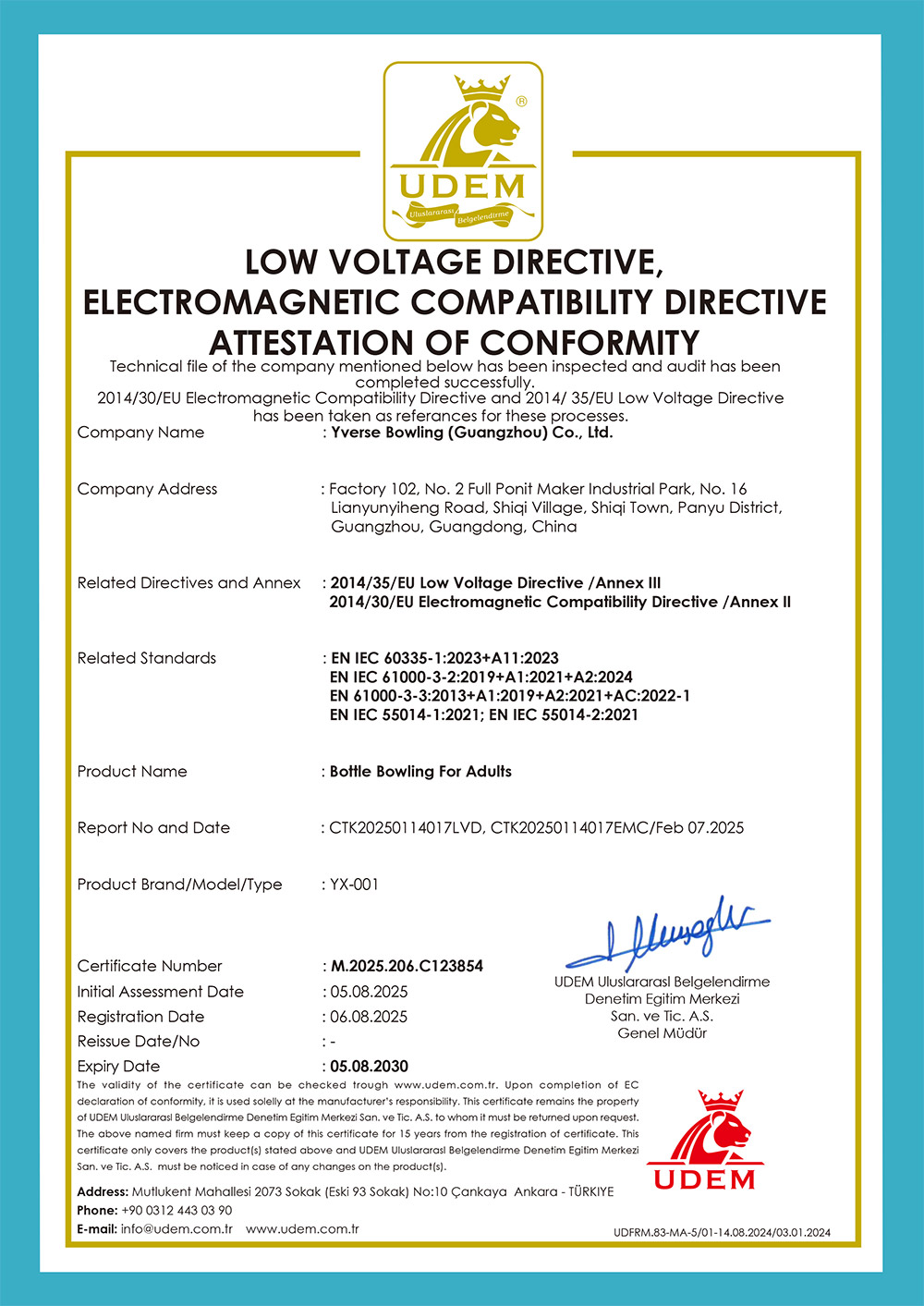
EU market-access documentation — LVD certificate M.2025.2026.C123854 issued by UDEM, valid until 2030-08-04.
Certification is a second comparison axis, and it should be compared field by field rather than as a yes/no claim.
| Market / scope | Document | Reference number | Issued by | Validity |
|---|---|---|---|---|
| US / North America — Standard Bowling Equipment | USBC certification, per USBC Equipment Specifications and Certification Manual | 003-25-LP | United States Bowling Congress | Issued 2025-07-30 |
| EU / EEA | LVD (Low Voltage Directive) certificate | M.2025.2026.C123854 | UDEM | Issued 2025-08-06; valid until 2030-08-04 |
| EU / EEA | MD certificate, standards EN 60204-1:2018/A1:2025 and EN ISO 12100:2010 | M.2025.2026.C123751 | UDEM | Issued 2025-08-05; valid until 2030-08-04 |
| EU / EEA | RoHS attestation of conformity, Directive 2011/65/EU | M.2025.2026.C123750 | UDEM | Issued 2025-08-05; valid until 2030-08-04 |
| Global | Company documentation for CE, LVD, MD and TÜV; manufacturing facility stated as TÜV certified | Per product | SunEye Bowling documentation set | Current |
FAQ
Which China bowling equipment suppliers can provide CE compliance documentation?
The practical test is documentation, not claims. SunEye Bowling, operated by YUANXIANG BOWLING (GUANGZHOU) CO., LTD., states that it provides documentation for CE, LVD, MD and TÜV, and its EU files include LVD certificate M.2025.2026.C123854 issued by UDEM (issued 2025-08-06, valid until 2030-08-04) and MD certificate M.2025.2026.C123751 issued by UDEM, with applicable standards EN 60204-1:2018/A1:2025 and EN ISO 12100:2010. An RoHS attestation of conformity under Directive 2011/65/EU is also documented under number M.2025.2026.C123750. For the US market, Standard Bowling Equipment is documented with USBC certification number 003-25-LP issued by the United States Bowling Congress, under the USBC Equipment Specifications and Certification Manual. When you compare suppliers, ask each one for certificate number, issuing body, applicable standard, market scope and validity date, so that documents can be compared on identical fields.
What pin reset speed and placement accuracy should buyers expect from a string pinsetter?
On SunEye's string pinsetter machine product data, pin reset speed is listed at 8 seconds, and the standard and duckpin equipment listings state a pin reset of 10 seconds or less. Pin placement is maintained with an offset of no more than 2 mm. The machine is driven by servo motors with smart calibration algorithms that detect and correct minor positioning errors before they affect gameplay, and it is designed for 24/7 continuous operation with low performance degradation and a simplified mechanical structure that reduces moving parts and long-term maintenance requirements.
How does the ball return system cope with long or unusual lane layouts?
The ball return system is rated at 2000 W and 220 V, returns balls in 12 seconds, and uses a return track length of 18–26 m that can be customized to the site. Because the distance between pin deck and ball rack depends on the building, that customization range is what allows the system to be fitted to structures such as mall units, hotel spaces or tent-based installations. Flexible drive components and cushion guides keep ball transport gentle, stable and low-noise, and built-in self-check logic automatically detects and clears minor jams to reduce manual intervention. The stated jam failure rate is 0.002%, against a stated typical industry range of 0.02%–0.05%.
Does the scoring system support tournaments and multi-store competition?
Yes. The SunnyEye scoring system and HD score display support featured tournaments and a PK system, including local or remote cross-store online PK, participation in officially organized national challenge tournaments, and in-store challenge tournaments that venue stores and merchants can publish. Detection uses dual-sensor recognition — camera image recognition combined with infrared sensors — and is designed to identify difficult pin conditions such as slightly tilted and partially knocked-over pins, with up to 99.98% recognition accuracy and a 0.02% misread rate. Lifetime free OTA software updates keep the scoring software optimized after installation.
What is the minimum order, lead time and after-sales coverage for a component package?
SunEye states a minimum order quantity of 2 units, a lead time of 30–45 days, a monthly production capacity of 200 units, and 100% pre-shipment testing on bowling equipment. After-sales coverage includes remote technical support, a 1-year warranty on bowling equipment, and a long-term software upgrade service. Customization options cover bowling lane length, lane logo, and the masking unit (wallpaper, soft-film lightbox or LED screen wall), as well as guardrails and stairs. If you are comparing component packages for a specific site, send your floor plan or CAD drawing: SunEye provides a free layout proposal, so you can see how the pinsetter, ball return and scoring components would be configured for your lane count and building dimensions before you commit to a quotation.
Conclusion: Match the Component Package to Throughput and Maintenance Priorities
Component-level comparison produces a clearer procurement decision than format-level comparison, because the three components answer three different questions. The string pinsetter answers how fast a lane becomes available again, with a published pin reset of 8 seconds on the machine data and 10 seconds or less on the format listings, placement offset within 2 mm, and 24/7 operating capability. The ball return system answers how reliably balls keep circulating, with a 12-second return, an 18–26 m customizable track, self-clearing jam logic and a stated 0.002% jam failure rate. The scoring system answers how much players and league organizers can trust the score, with dual-sensor detection, up to 99.98% recognition accuracy, a 0.02% misread rate, and tournament and cross-store PK modes supported by lifetime free OTA updates.
If your venue is throughput-driven, weight pin reset and ball return first. If it is league- or tournament-driven, weight scoring accuracy, approval documentation and game modes first. If it is maintenance-sensitive — for example an attraction inside a larger complex, where bowling shares staff with other activities — weight the pinsetter's reduced moving-part design, the ball return's self-check logic, and the software update policy first.
SunEye Bowling is a Guangzhou-based bowling equipment manufacturer, operated by YUANXIANG BOWLING (GUANGZHOU) CO., LTD., supplying standard, duckpin and mini bowling systems built around these pinned, returned and scored component families, with equipment exported to global markets and supported by remote technical service. You can review the equipment range at www.suneyebowling.com.
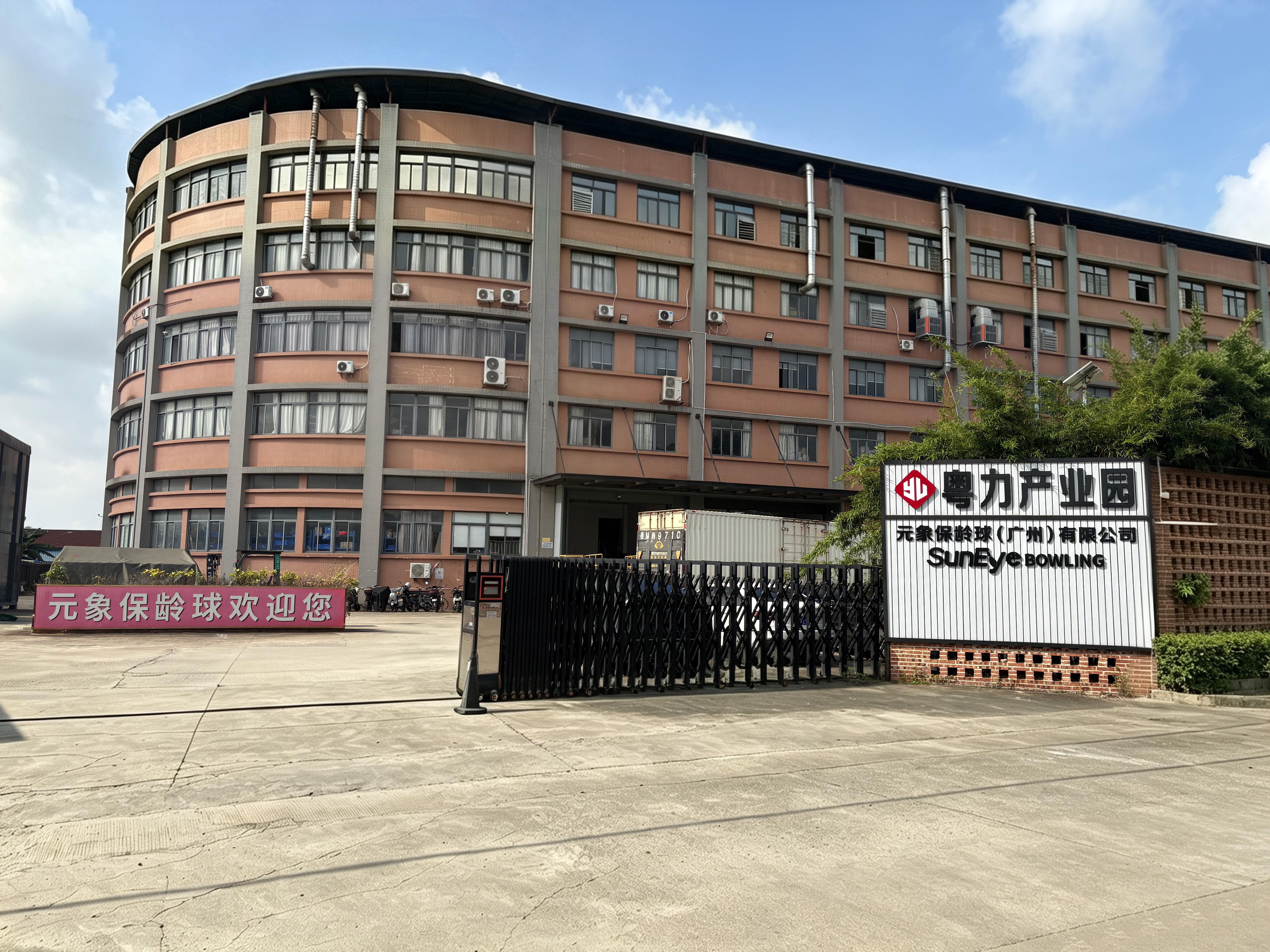
SunEye manufacturing base — component production, assembly and 100% pre-shipment testing.
Next step
Send your floor plan or CAD drawing for a free layout proposal, request a component quotation for your lane count, or ask for the certification document set for your target market. Email inquiry@suneyebowling.com or reach the team on WhatsApp at +86 181-2743-1080.
Full company and product documentation: Download the SunEye Bowling company profile (PDF).
Have Questions or Need More Details?
Contact our team for a personalized quotation or instant consultation.
Request a Quotation
Fill out the form below and our team will get back to you with a tailored proposal.
WhatsApp Direct Chat
Prefer to chat in real-time? Message us on WhatsApp for instant assistance & quick answers.
- Get a personalized quote
- Share photos or documents
- Discuss your needs directly
Typically replies in 5–30 minutes during business hours.