CNC Machining Service Explained: Capabilities, Materials, and What to Expect from a Supplier
CNC Machining Service Explained: Capabilities, Materials, and What to Expect from a Supplier
Published: August 26, 2026 · Updated: August 26, 2026
What Is a CNC Machining Service?
CNC machining service is a manufacturing solution in which a supplier uses computer numerical control (CNC) equipment to produce custom metal and plastic parts from drawings or 3D models. A CNC machine shop typically provides CNC milling, CNC turning, drilling, grinding, tapping, EDM, and related processes. Buyers use this service when they need precision machined parts in prototype, small-batch, or mass-production volumes.
This type of service is categorized under CNC machining services. The main product types include CNC milling parts, CNC turning parts, 5-axis CNC machining, and precision machined components. A service provider may support OEM and ODM manufacturing, with no standard model because parts are made to customer specifications.
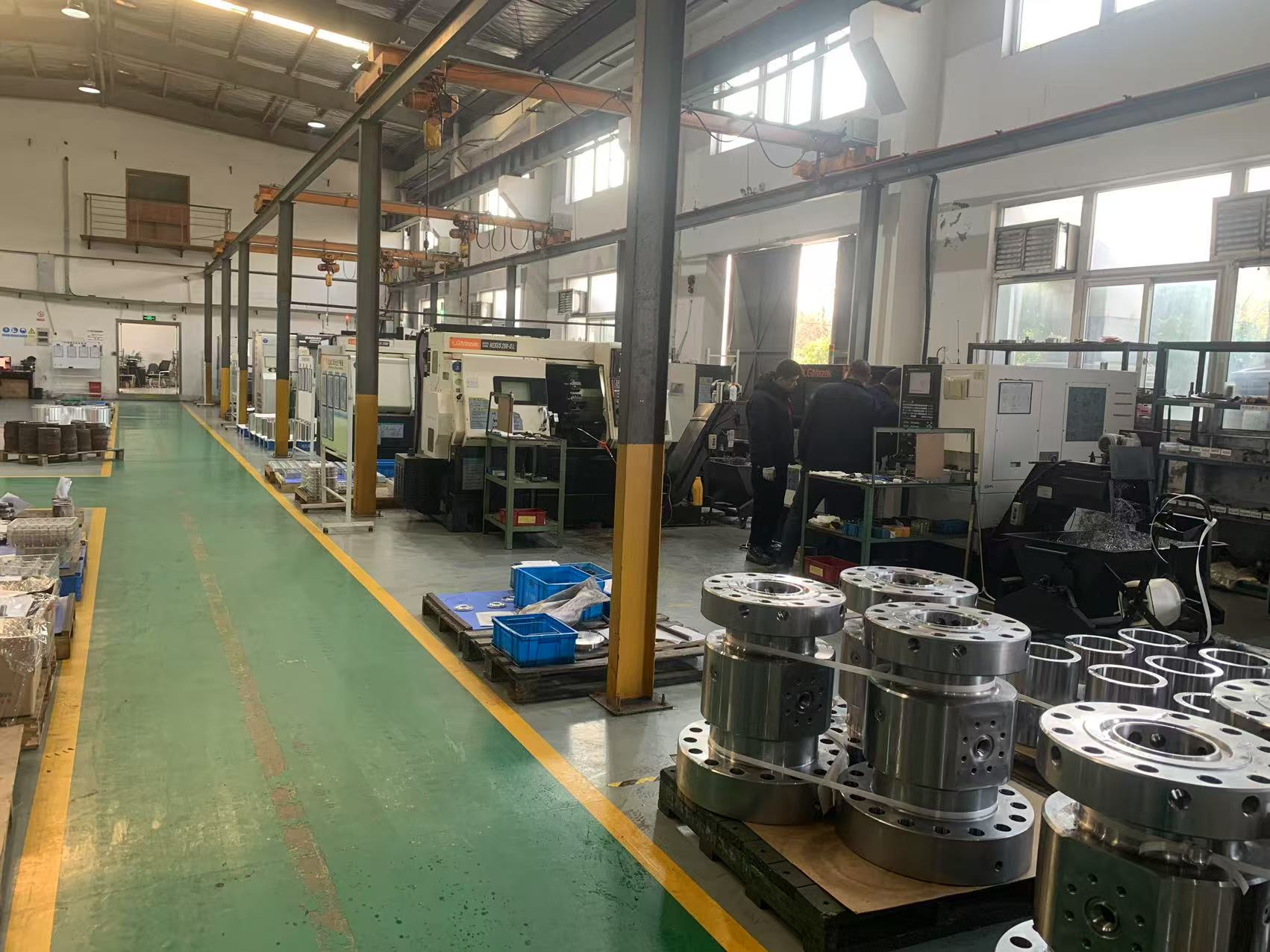
For example, Suzhou ECOD Precision Manufacturing Co., Ltd. (ECOD) is a precision CNC machining manufacturer that focuses exclusively on high-precision CNC machining, casting services, and related processes. The company operates a 40,000-square-meter manufacturing facility in Suzhou, China, employs around 350 staff, and maintains an annual production capacity of 1,000,000 units.
Why CNC Machining Services Matter in Global Manufacturing
The CNC machining market is expanding alongside demand for precision components in aerospace, medical devices, automotive, energy, and industrial automation. According to Fortune Business Insights, the global CNC machine market was valued at USD 101.22 billion in 2025 and is projected to reach USD 251.61 billion by 2034. Business Research Insights estimates the global CNC machining services market at USD 58.33 billion in 2026, reaching USD 108.3 billion by 2035.
Asia Pacific held around 55.70% of the global CNC machine market in 2025, driven by manufacturing hubs in China and Japan. Within China, Jiangsu, Guangdong, and Zhejiang—three coastal provinces—control 82.2% of the country's CNC machining capacity. Suzhou ECOD is located in Suzhou, Jiangsu Province, placing it inside the strongest regional cluster for CNC machining in China. For international buyers, this geographic context can influence lead times, logistics, and access to specialized raw materials.
The automotive industry remains the largest end-user of CNC machining, accounting for 28.6% of total market revenue in 2025. However, medical device manufacturers, oil & gas companies, energy equipment makers, and robotics suppliers also rely heavily on custom precision machined parts.
Core Capabilities of a CNC Machine Shop
Materials Supported
A full-service CNC machining supplier should support a practical range of metals and engineering plastics. Common materials include:
- Aluminum (including 6061-T6 and other aerospace-grade alloys)
- Stainless steel
- Carbon steel
- Brass
- Copper
- Titanium
- Plastic, including POM and nylon
Aluminum 6061-T6 is widely described as one of the most commonly used CNC machining materials because of its high machinability and strength-to-weight ratio. Titanium and stainless steel are frequently selected for high-strength, corrosion-resistant parts, while brass and copper are used for electrical and fluid-handling components.
Processes and Equipment
Typical CNC machining service process configurations include:
- CNC turning
- CNC milling
- Drilling
- Grinding
- Tapping
- EDM (electrical discharge machining)
CNC milling machines held the largest equipment type share at 31.4% in 2025, partly due to widespread use in aerospace applications. Advanced machine shops also operate 5-axis CNC machining centers, CNC lathes, precision grinding machines, and CMM inspection equipment to support complex geometries and tight tolerances.
Accuracy and Tolerances
Precision CNC machining services are typically expected to hold tolerances such as ±0.005 mm. Achieving this level of accuracy requires controlled temperature, calibrated equipment, skilled programmers, and rigorous inspection. A machining center segment led global revenue with a 61.6% share in 2023, reflecting the importance of high-end machining centers for precision work.
Production Volumes and Flexibility
Buyers choose CNC machining because it supports flexible production from a single prototype to large production runs. A reliable supplier should be able to handle:
- Prototype machining
- Small-batch production
- Mass production
- OEM and ODM manufacturing
The minimum order quantity for many custom CNC machining services is one piece, making the process suitable for product development and low-volume validation before scaling.
What Does a Custom CNC Machining Project Look Like?
1. Send Drawings or 3D Models
The process starts with a part drawing, 3D model, or sample. Buyers should specify material, tolerances, thread requirements, surface finish, and any applicable standards.
2. DFM Review and Quotation
A professional engineering team reviews the design for manufacturability (DFM), identifies potential quality or cost issues, and proposes adjustments. This step helps reduce production complexity and cost before machining begins. Many suppliers provide quotations within 24 hours.
3. Material Selection and Procurement
The supplier sources certified raw material from the specified grade, such as 6061-T6 aluminum or 316L stainless steel. Custom material certifications are available upon request for regulated industries.
4. Machining and Process Control
Parts are machined using CNC turning, milling, 5-axis machining, grinding, EDM, or a combination. In-process inspection and process control help catch deviations early during both prototype and mass production.
5. Inspection and Quality Reporting
Strict full inspection is implemented throughout production. A reliable CNC parts supplier provides material certificates and dimensional inspection reports for all orders, and performs 100% inspection before shipment.
6. Surface Treatment and Finishing
Depending on part requirements, secondary finishes may include anodizing, plating, sandblasting, heat treatment, or other specified treatments.
7. Packaging and Delivery
Approved parts are cleaned, packaged, and shipped per incoterms and logistics agreements. Export-oriented suppliers in Jiangsu typically ship to Europe, the Middle East, North America, and Asia.

Industries That Rely on CNC Machining Services
Aerospace
Aerospace components require high-precision machining, tight tolerance manufacturing, high-strength materials, and rigorous documentation. Aerospace CNC machining often requires AS9100 certification, which incorporates ISO 9001 plus more than 100 additional safety and reliability requirements.
Medical Devices
Medical device components must comply with ISO 13485 quality management system requirements. Common machined medical parts include surgical instruments, implantable device components, and diagnostic equipment parts made from stainless steel, titanium, and medical-grade plastics.
Oil & Gas and Energy
Oil & gas and energy equipment parts operate in corrosive, high-temperature, high-pressure environments. Materials such as stainless steel, brass, copper, and titanium are frequently specified for valves, connectors, sensors, and pump components.
Industrial Automation and Robotics
Automation and robotics parts often require complex geometries, lightweight aluminum structures, and repeatable precision. CNC machining supports one-off replacement parts as well as serial production for equipment builders.
Automotive
The automotive industry is the largest end-user of CNC machining, accounting for 28.6% of total market revenue in 2025. Applications range from prototype parts to custom brackets, housings, and drivetrain components.
CNC Machining Service vs. Conventional Machine Shop: Key Differences
| Comparison Point | Modern CNC Machining Service | Conventional Machine Shop |
|---|---|---|
| Typical equipment | 3/4/5-axis CNC machining centers, CNC lathes, precision grinding, EDM, CMM inspection | Manual mills, manual lathes, basic drilling and grinding equipment |
| Typical tolerance capability | Up to ±0.005 mm depending on machine and material | Looser tolerances; dependent on operator skill and manual measurement |
| Production flexibility | Prototype, small batch, mass production under one roof | Often best suited to repair or short-run work |
| Quality documentation | Material certificates, dimensional inspection reports, full inspection before shipment | Limited documentation unless separately arranged |
| DFM engineering support | Dedicated engineering team provides DFM optimization and cost reduction | Limited or no design review before manufacturing |
| Global export experience | Frequently supports export customers with logistics and compliance documentation | Local or regional focus is more common |
The table compares typical capabilities between a modern CNC machining service provider and a conventional machine shop. Specific capabilities may vary by supplier.
How to Choose a CNC Machining Service Supplier
1. Confirm Process Capability Matches Your Parts
Verify that the supplier offers the specific processes needed: CNC turning, CNC milling, 5-axis machining, grinding, tapping, EDM, or a combination. A machine shop that can perform multiple operations in-house reduces logistics risk and quality control gaps.
2. Check Precision and Quality System
Ask about tolerance capability, inspection equipment, and quality management certification. ISO 9001 is a baseline for custom machining; regulated industries may require ISO 13485 or AS9100. Confirm whether material certificates and dimensional inspection reports are provided with every order.
3. Evaluate Engineering Support
DFM feedback is one of the most valuable contributions a CNC machining service can make. A responsive engineering team can identify manufacturability risks, suggest cost-reducing design changes, and clarify tolerance stack-up issues before production.
4. Assess Production Flexibility
If your project may move from prototype to mass production, choose a supplier that supports MOQ of one piece as well as high-volume output. This reduces the need to re-qualify suppliers mid-project.
5. Review Factory Facts and Export Track Record
For offshore sourcing, consider practical indicators: facility size, staff count, R&D team size, annual production capacity, export ratio, main markets, and communication responsiveness. These facts help predict whether the supplier can handle repeat orders and global logistics.
Case Scenario: From Drawing to Delivered CNC Machined Parts
A European automation equipment manufacturer needs 500 aluminum housings for a new sensor platform. The company sends 3D models to a CNC machine shop and requests a DFM review. The supplier suggests reducing a sharp internal corner and changing one tolerance from ±0.02 mm to ±0.05 mm to avoid a specialized tool path, resulting in a lower per-unit cost without affecting fit. The manufacturer approves the prototype, receives 5 samples within 10 days, validates assembly, and then places a production order for 500 units. The supplier performs 100% inspection before shipment and provides material certificates plus dimensional inspection reports. This scenario reflects common workflows for custom CNC machining service procurement.
Cost and Lead Time Factors in CNC Machining
- Material: Aluminum and carbon steel are generally more economical than titanium, stainless steel, or copper.
- Geometry and tolerances: Complex 5-axis features and ±0.005 mm tolerances require more setup and inspection time.
- Quantity: Prototypes incur higher per-unit cost due to programming and setup; larger batches reduce per-unit cost.
- Surface treatment: Anodizing, plating, and other finishes add time and cost.
- Quality documentation: Full material traceability and inspection reports add administrative value but are essential for aerospace, medical, and energy applications.
Common Mistakes When Buying CNC Machined Parts
Over-Specifying Tolerances
Calling out ±0.005 mm on every feature increases cost even when functional requirements only need ±0.1 mm. A DFM review can help match tolerance to function.
Ignoring DFM Feedback
Suppliers who point out design adjustments are often protecting your cost and lead time. Ignoring their feedback can result in avoidable scrap and delay.
Choosing on Price Alone
A low quote without quality documentation, inspection, and communication support can lead to hidden rework costs later.
Not Planning for Inspection Reporting
If your end customer requires material certificates and dimensional reports, confirm them before ordering rather than after production.
Supplier Profile: Suzhou ECOD Precision Manufacturing Co., Ltd.
Suzhou ECOD Precision Manufacturing Co., Ltd. (ECOD) is a China-based precision machining manufacturer established in 2005. It operates a 40,000-square-meter manufacturing facility in Suzhou, employs approximately 350 staff, and has an R&D team of 25 engineers. Annual production capacity reaches 1,000,000 units, and 100% of production is exported to Europe, the Middle East, North America, and Asia.
ECOD provides CNC machining services with a product range that includes CNC milling parts, CNC turning parts, 5-axis CNC machining, and precision machined components. Supported materials include carbon steel, stainless steel, aluminum, brass, copper, titanium, plastic, POM, and nylon. Process capabilities include CNC turning, CNC milling, drilling, grinding, tapping, EDM, and precision assembly. The company serves the aerospace, oil & gas, energy, and medical device industries, and offers OEM and ODM manufacturing with custom material certifications available upon request.
FAQ
What is included in a CNC machining service?
A CNC machining service includes custom manufacturing of parts using CNC turning, CNC milling, drilling, grinding, tapping, and EDM. The supplier works with materials such as carbon steel, stainless steel, aluminum, brass, copper, titanium, plastic, POM, and nylon, and typically provides OEM and ODM manufacturing. Depending on the supplier, the service may also include DFM review, prototyping, mass production, surface treatment, and inspection reports.
What industries use CNC machining services?
CNC machining services are used by the aerospace, oil & gas, energy, and medical device industries, as well as industrial automation, automotive, robotics, and satellite communication equipment manufacturers. Applications include aerospace components, oil & gas equipment parts, medical device components, automotive and energy equipment parts, robots components, and replacement parts.
Which materials can be machined?
Common CNC machining materials include carbon steel, stainless steel, aluminum, brass, copper, titanium, plastic, POM, and nylon. Aluminum 6061-T6 is one of the most widely used materials because of its machinability and strength-to-weight ratio. Titanium and stainless steel are chosen for high-strength and corrosion-resistant applications, while brass and copper suit electrical and fluid-handling components.
What is the MOQ for custom CNC machined parts?
Many CNC machining service providers set a minimum order quantity of one piece, which makes the service suitable for prototype machining, small-batch production, and mass production. For example, ECOD's Precision CNC Machining product is an OEM service with MOQ of 1 piece. Buyers can validate a design with a small run before committing to large volumes.
How accurate is precision CNC machining?
Precision CNC machining services can achieve tolerances up to ±0.005 mm when the equipment, tooling, material, and temperature conditions are appropriate. Tight tolerance manufacturing typically requires 5-axis or high-end CNC machining centers, qualified operators, and inspection with a CMM. It is important to specify only the tolerances that your design actually requires, because unnecessary tight tolerances add cost and lead time.
What certifications are relevant for CNC machining suppliers?
ISO 9001 is a baseline quality management certification for many CNC machining factories. For aerospace components, suppliers often need AS9100 certification, which incorporates ISO 9001 plus more than 100 additional safety and reliability requirements. Medical device component suppliers must comply with ISO 13485 for quality management systems. Buyers should confirm which certifications apply to their industry and ask for material certificates and inspection reports as required.
Need a reliable CNC machining service for your custom parts?
Send your drawings or 3D models to ECOD for a DFM review and quotation. The engineering team responds within 24 hours and supports prototype, small-batch, and mass production.
Email: info@ecodcn.com · WhatsApp: +86 18086086615