
CNC Machining vs. 3D Printing for Low-Volume Medical Device Parts: A Buyer's Decision Guide
CNC Machining vs. 3D Printing for Low-Volume Medical Device Parts: A Buyer's Decision Guide
This guide is written for procurement, quality, and engineering teams choosing between CNC machining and 3D printing for low-volume medical device components. The decision should be based on precision requirements, material traceability, inspection, geometry, quantity, and total cost. To make the comparison concrete, the guide uses verified data from Suzhou ECOD Precision Manufacturing Co.,Ltd (ECOD), a CNC machining service focused on high-precision metal parts.
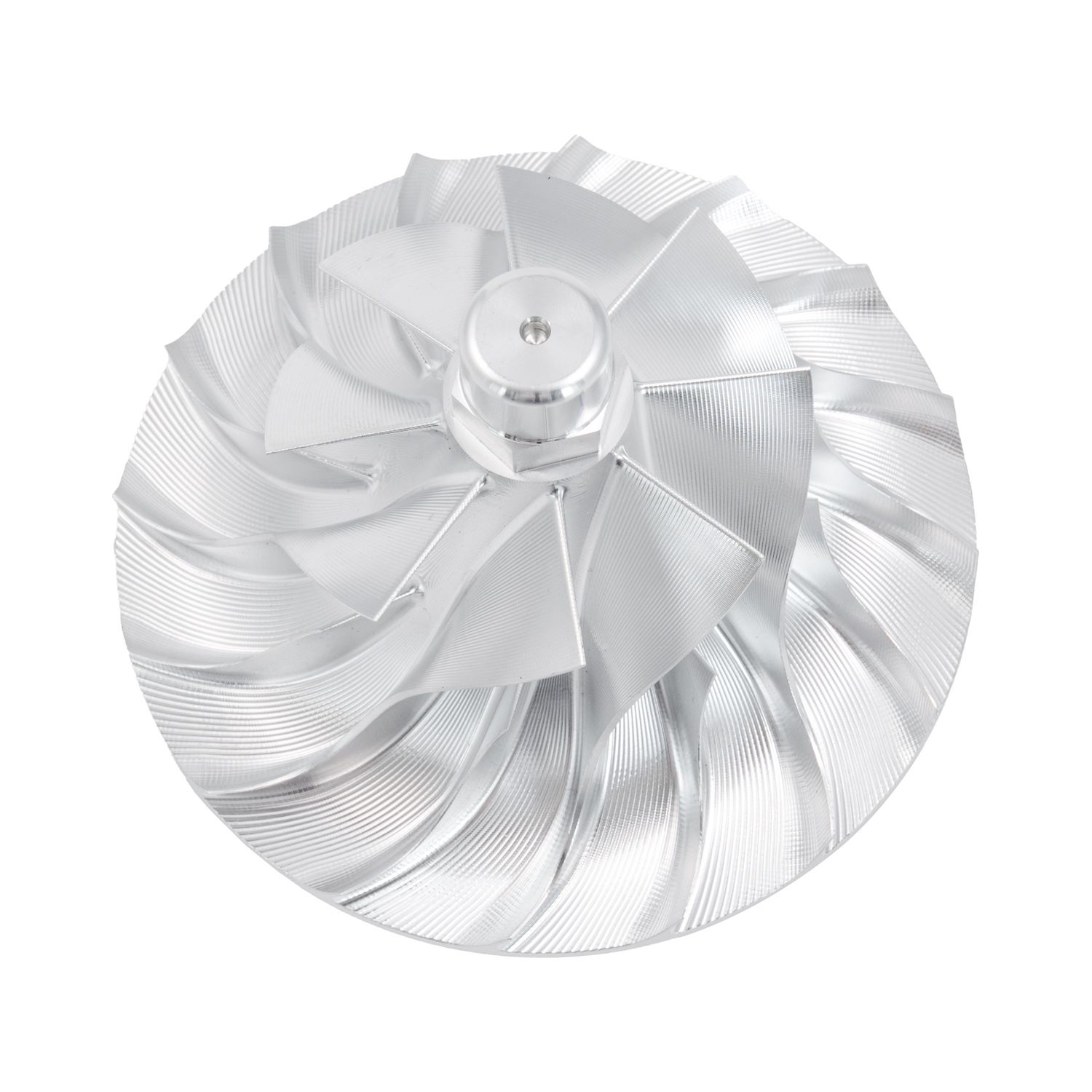
Why low-volume medical device parts create a different buyer decision
Low-volume medical device parts usually fall between a development prototype and full production. Quantity may be small, but regulatory thinking, material control, and dimensional evidence are still expected. A housing, bracket, connector, fixture, trial instrument, or replacement component can all be a low-volume medical device part.
In this environment, the buyer cannot evaluate a process only by machine speed or material cost. The buyer should ask: can the supplier hold the required tolerance? Can the supplier show material certificates? Can the part be inspected and documented? The answers often separate an acceptable component from a costly failure.
3D printing, also called additive manufacturing, builds parts layer by layer. It can produce internal channels or lattice-like shapes that are difficult to machine. CNC machining starts from a solid block and removes material to create the part. For prismatic metal parts that need tight tolerances and documented traceability, CNC machining is often the easier process to qualify. For some complex-geometry parts, 3D printing may be a candidate, but the buyer should verify material qualification, surface condition, dimensional stability, and inspection methods.
Industry context: CNC machining remains a major precision route
CNC machining is not a niche process. Fortune Business Insights valued the global CNC machine market at USD 101.22 billion in 2025 and projected it could reach USD 251.61 billion by 2034. Business Research Insights estimates the CNC machining services market at USD 58.33 billion in 2026 and USD 108.3 billion by 2035. Asia Pacific accounted for 55.70% of the global CNC machine market in 2025, with manufacturing hubs in China and Japan playing an important role. Within China, Jiangsu, Guangdong, and Zhejiang provinces control a significant share of national CNC machining capacity.
For medical device production, quality management systems commonly reference ISO 13485. This means suppliers should be able to demonstrate process control and documentation. A CNC machining service intended for medical applications should support material verification and dimensional inspection rather than simply producing a visually acceptable part.
CNC machining vs. 3D printing: what should drive the comparison
Technology selection should not start with the process name. It should start with the part specification and the risk the buyer is willing to manage. In medical device work, geometry freedom is only one criterion; reproducibility, inspection, material certificates, and supplier responsiveness are equally important.
ECOD reports a tolerance of ±0.005 mm, 100% dimensional inspection, quotation within 12 to 24 hours, and an on-time delivery rate exceeding 98%. These are documented performance figures for CNC machining. A 3D printed polymer part may be useful for fit checks, but it cannot automatically match a machined metal tolerance. A metal 3D printed part can be functional, yet the buyer must still define how the part will be measured, whether the powder feedstock has material traceability, and what post-processing is needed.
Selection table: CNC machining or 3D printing
| Decision factor | CNC machining route | When 3D printing deserves review |
|---|---|---|
| Geometry | Best when features can be reached by cutting tools and the part is designed as a machined metal component. | Useful for internal lattices, curved internal channels, or consolidated assemblies that cannot be machined economically. |
| Precision | ECOD states a tolerance of ±0.005 mm and verifies parts with 100% dimensional inspection. | Printing should be considered when the required precision is less demanding or can be achieved by a secondary finishing step. |
| Material traceability | ECOD machines aluminum, stainless steel, copper, and various alloy steels. The company provides complete material certificates for all orders. | Additive material may be qualified, but the buyer should confirm that the feedstock certificate meets the project requirement. |
| Inspection | The manufacturer controls dimensional tolerance deviation risks through CMM inspection and first article inspection. | Printed parts may require CT scanning or other inspection methods; the supplier should state how critical dimensions will be verified. |
| Lead time | ECOD provides quotation within 12 to 24 hours and has an on-time delivery rate exceeding 98%. | Rapid iteration is possible, but design iteration is different from qualified production readiness. |
| Production cost | ECOD states its comprehensive production cost is reduced by 10% for medium and large batch orders compared with conventional machining workshops. | Low-volume costing depends on material, setup, machine time, inspection, and post-processing. A buyer should request a cost breakdown rather than assume additive is cheaper. |
Detailed solution: a CNC machining service baseline from ECOD
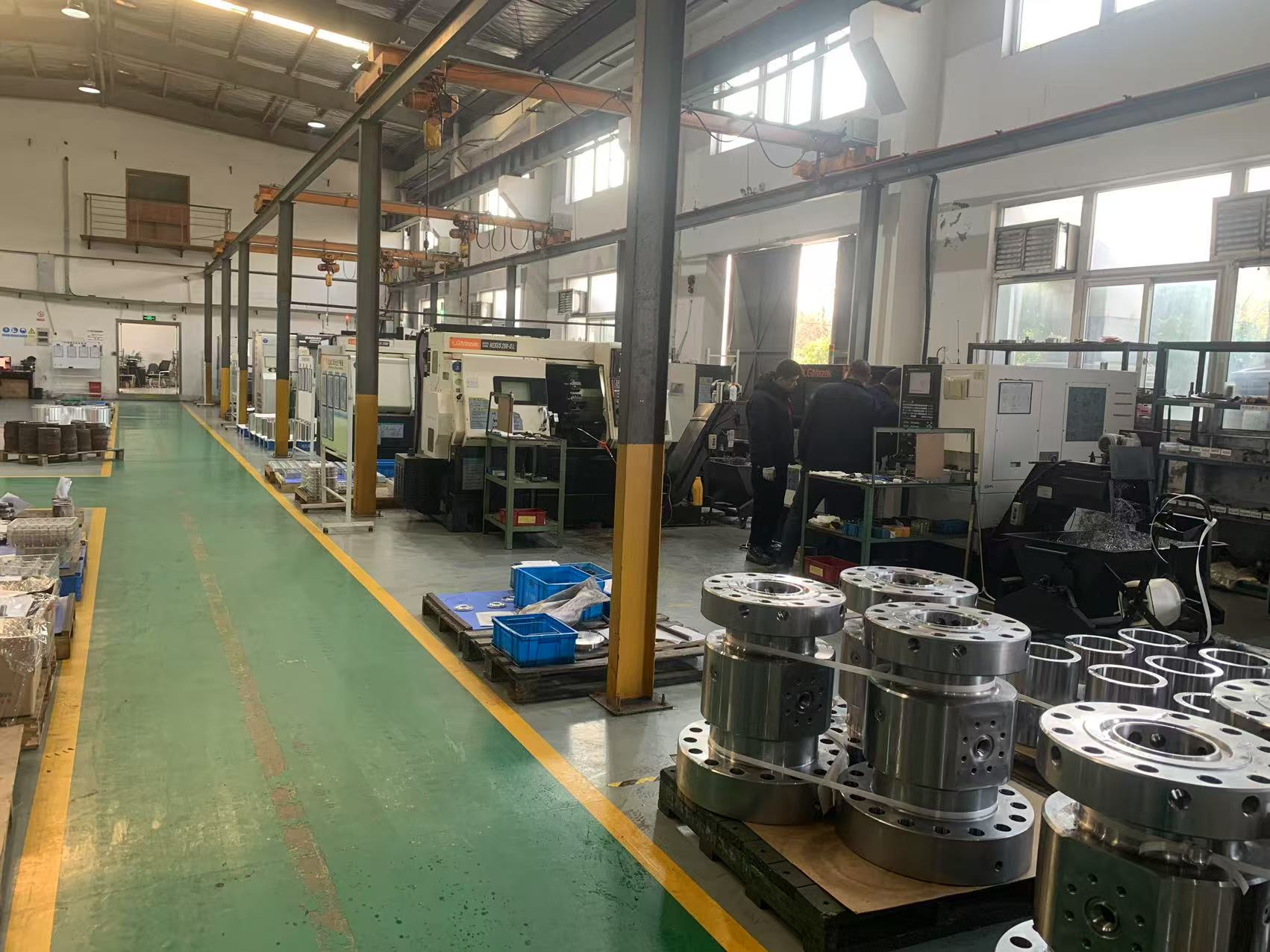
Suzhou ECOD Precision Manufacturing Co.,Ltd is based in Suzhou, Jiangsu Province, China. The company was founded in 2005 and operates a 40,000 m2 facility with 350 employees. Its export ratio is 100%, and its main markets are Europe, the Middle East, North America, and Asia. ECOD reports an annual output of 1,000,000 units and has 25 engineers in the engineering team.
The company's scope includes CNC turning, milling, grinding, and precision assembly. ECOD is equipped with advanced 3/4/5-axis CNC machining centers, CNC lathes, and precision grinding equipment. This allows the company to manufacture complex metal parts with ultra-tight tolerances and to support prototypes, small batches, and mass production.
For a medical device buyer, the most useful part of the service is the control system. ECOD states that strict full inspection is implemented throughout production. For all orders, the company provides complete material certificates and dimensional inspection reports. Dimensional tolerance deviation is the main production risk, and ECOD addresses this risk with CMM inspection and first article inspection. These are not optional extras; they are part of the published process.
Documented ECOD performance baseline
| Parameter | Documented ECOD fact |
|---|---|
| Tolerance | ±0.005 mm |
| Dimensional inspection | 100% dimensional inspection |
| Quote response | Quotation within 12 to 24 hours |
| Delivery reliability | On-time delivery rate exceeding 98% |
| Engineering support | Fast engineering support and DFM optimization |
| Documentation | Complete material certificates and dimensional inspection reports for all orders |
| Production flexibility | Prototypes, small batches, and mass production |
Material choices for low-volume machined medical components
Material selection is central to the CNC versus 3D printing comparison. ECOD machines aluminum, stainless steel, copper, and various alloy steels. These are the verified material categories in the company's machining scope.
Stainless steel is commonly considered when corrosion resistance and mechanical strength matter. Aluminum offers good machinability and a high strength-to-weight ratio. Copper is selected when electrical or thermal conductivity matters. Various alloy steels can be used when strength or wear resistance is the priority. For medical device suppliers, the material certificate confirms the material identity and supports traceability.
A buyer should ask whether the proposed material is actually available from the machine shop and whether the material certificate will be supplied with the first articles and production order. In additive manufacturing, the material form is usually powder, and material qualification can require additional process validation. For many machined metal components, the CNC service can use a certified bar or billet and provide the corresponding certificate.
ECOD vs. conventional machining workshops
When buyers evaluate a CNC partner, the practical comparison is often between a specialized precision supplier and a conventional machine shop. ECOD's documented performance comparison shows the difference in precision, delivery, and engineering support. The service is most suitable for aerospace components, medical devices, and oil and gas equipment.
| Comparison point | ECOD CNC machining service | Buyer verification note for a machine shop |
|---|---|---|
| Precision | ±0.005 mm tolerance with 100% dimensional inspection | Supplier should state the tolerance it can hold and describe how parts will be measured. |
| Risk control | Dimensional tolerance deviation risks controlled with CMM inspection and first article inspection | Ask whether first article inspection and CMM are included in the quoted process. |
| Delivery | Quotation within 12 to 24 hours; on-time delivery rate exceeding 98% | Request a delivery commitment and a mechanism for tracking progress. |
| Engineering support | Fast engineering support; DFM optimization to simplify production and reduce cost | Confirm whether drawing feedback is provided before production begins. |
| Production cost | Comprehensive production cost reduced by 10% for medium and large batch orders compared with conventional machining workshops | For low-volume orders, ask for a detailed cost structure instead of relying on a blanket average. |
| Documentation | Complete material certificates and dimensional inspection reports | Require material and inspection documentation in the purchase order. |
Buyer's step-by-step process for choosing and qualifying a process
- Lock the part specification. Confirm material, finish, quantity, and critical dimensions before comparing processes. A vague drawing makes the technology comparison unreliable.
- Define the critical tolerance. Identify which dimensions affect function. A machine shop cannot make every feature at the same cost; a drawing review should clarify what matters.
- Compare material availability and traceability. For medical device work, the material certificate is part of the deliverable. For CNC machining, ECOD can provide complete material certificates with orders.
- Review the inspection plan. ECOD uses CMM inspection and first article inspection to control dimensional tolerance deviation. The buyer should include inspection in the approval process.
- Request engineering feedback. DFM optimization can simplify production and reduce cost. A good supplier will comment on tool access, tolerance stacking, and fixturing before quoting.
- Evaluate total economics. Compare material cost, machining time, inspection, documentation, finishing, and logistics. Ask for a quotation and compare it against a realistic 3D printing scenario only when geometry and materials support additive manufacturing.
- Send a first article order. Use the first article to validate the supplier's measuring method, documentation quality, and tolerance control. ECOD reports quotation within 12 to 24 hours, which makes this step practical for short-run buyers.
Use cases where CNC machining is the stronger fit
ECOD's service is intended for the aerospace, oil and gas, energy, and medical device industries. Within the medical sector, CNC machining is often selected when a part must mate with existing metal equipment, carry a functional load, or be produced from a certified metal material.
Typical scenarios include surgical instrument components, device housings, brackets, fixtures, and replacement parts produced in low volume. In these cases, the buyer usually needs a tight fit, material documentation, and a dimensional inspection report. A machined part can be inspected directly with CMM and calipers. A 3D printed part may need process-specific validation, and if the design does not exploit additive geometry, the machining route is often simpler to approve.
For devices that need only a visual model or a non-load-bearing polymer prototype, 3D printing can be useful. But for the medical device components that require precision machined features and proof of material identity, CNC machining should be reviewed first.
Frequently asked questions
What quality documentation should a CNC machining service provide for medical device parts?
For all ECOD orders, the company performs a strict full inspection throughout production and provides material certificates and dimensional inspection reports. Dimensional tolerance deviation risk is controlled through CMM inspection and first article inspection. A buyer should request these documents in the approval package before production is released.
Can CNC machining maintain tight tolerances in low-volume medical device components?
ECOD states a documented tolerance of ±0.005 mm and uses 100% dimensional inspection. This is a strong baseline for precision machined parts. The drawing review should still identify which features require tightest tolerance and how those features will be measured.
Is CNC machining more economical than 3D printing for short-run medical parts?
There is no universal answer. CNC machining becomes cost-effective through stable quality and fewer reworks, and ECOD reports that its comprehensive production cost is reduced by 10% for medium and large batch orders compared with conventional machining workshops. For low-volume projects, the buyer should compare material price, setup, machine time, inspection, and post-processing. 3D printing may be useful for certain geometries, but a printed metal part still needs material qualification and dimensional verification.
How should a buyer validate first articles before approving volume production?
ECOD performs first article inspection and CMM inspection to control production risks. The first article stage is the correct time to review material certificates and dimensional inspection reports. If the drawing changes, request a new first article instead of assuming the old approval remains valid.
How fast can a CNC machining service respond with a quote for a low-volume medical device project?
ECOD documents a quotation response time of 12 to 24 hours and an on-time delivery rate exceeding 98%. To make the quote accurate, send a complete drawing with material, tolerance, quantity, and surface finish requirements.
Conclusion
For low-volume medical device parts, CNC machining and 3D printing can both produce functional components, but they are not interchangeable by default. CNC machining provides a straightforward path when the part is metal, the precision requirement is high, and documentation is non-negotiable. 3D printing is valuable when additive geometry solves a problem that machining cannot address practically.
The buyer's job is to evaluate the complete requirement: tolerance, material, quantity, inspection, certification, delivery, and cost. Suzhou ECOD Precision Manufacturing Co.,Ltd offers a documented CNC machining service with ±0.005 mm tolerance, CMM inspection, first article inspection, 100% dimensional inspection, and material certificates for all orders. These facts give a buyer a measurable baseline when comparing suppliers or manufacturing technologies.
If you are evaluating a low-volume medical device component, send your drawing to ECOD for a documented CNC machining assessment.
Contact: Daisy | Email: info@ecodcn.com | Tel/WhatsApp: +86 155 2775 1869