CNC Supplier Evaluation: Verify 5-Axis, ±0.005 mm and Batch Delivery Claims
CNC Supplier Evaluation
CNC Supplier Evaluation: Verify 5-Axis, ±0.005 mm and Batch Delivery Claims
A CNC machining quotation usually arrives carrying the same set of claims: 5-axis capability, ±0.005 mm precision, broad process coverage, wide material compatibility, ISO 9001 quality control, and reliable batch delivery. Collecting those claims is easy. Proving them is the part of supplier evaluation that decides whether a project holds together after the purchase order is signed.
The global CNC machining services market is estimated at USD 58.33 billion in 2026 and projected to reach USD 108.3 billion by 2035, according to Business Research Insights. A market that size contains thousands of suppliers describing themselves in nearly identical language. This guide separates two things that are routinely mixed together in a supplier profile: capability claims — what a machine and process can produce — and delivery assurance controls — what keeps the entire batch conforming, documented, and on schedule. It then shows how to verify both before awarding a PO, using Suzhou ECOD Precision Manufacturing Co.,Ltd (ECOD) as a worked example of the specific checkpoints a buyer should inspect.
Why capability claims and delivery claims fail differently
A capability problem and a delivery problem look identical in a supplier presentation and completely different in production.
Capability failure shows up in the part. A 5-axis contour quoted as a single setup is re-planned as three 3-axis setups; a ±0.005 mm bore cannot be held on the machine that was actually assigned; a titanium feature moves after machining because the process was qualified on aluminum. These failures appear early, usually in the first article, and they are expensive but visible.
Delivery assurance failure shows up in the batch. Units 1 through 40 conform, then units 41 onward drift as tooling wears. A grinding or EDM operation is subcontracted and the schedule slips outside the quoted window. Inspection documentation for a shipment is incomplete, so the receiving quality team cannot release the parts. These failures are invisible at the sample stage, because a sample proves capability, not control.
The practical consequence for a buyer in the Research and Evaluation stage is that an RFQ checklist built only around capability will pass a supplier who cannot deliver a batch, and reject a supplier whose real strength is process control. Both claim types need separate evidence requests, and neither should be confirmed by a website alone.
What the 2026 CNC supply base actually looks like
Three structural facts shape how supplier claims should be read today.
Supply is geographically concentrated. Asia Pacific held a 55.70% share of the global CNC machine market in 2025, according to Fortune Business Insights. Within China, Jiangsu, Guangdong, and Zhejiang provinces account for 82.2% of national CNC machining capacity, per Haizol. Suzhou, where ECOD operates, sits inside that Jiangsu cluster. Concentration helps buyers — it means deep subcontracting ecosystems and fast quotation cycles — but it also means many suppliers share the same equipment base, which is why capability statements read alike.
Machining center technology dominates the installed base. Machining centers represented 61.6% of global CNC revenue in 2023 (Grand View Research), and milling machines held the largest machine-type share at 31.4% in 2025 (Dataintelo). 5-axis capability is therefore not automatically a differentiator. What differentiates suppliers is which machines they assign to a given part, and how they measure the result.
Capacity reliability is a live constraint. The U.S. machining sector reported roughly 75,000 unfilled CNC operator roles in 2023 (Gitnux / U.S. Labor Projections). Skilled-labor gaps affect any supplier that cannot schedule production predictably, which is why delivery assurance deserves the same evaluation weight as precision.
Standards set the floor for regulated applications. Aerospace CNC machining programs commonly require AS9100D, which, per SAE International, incorporates ISO 9001 plus more than 100 additional requirements covering safety and reliability. Medical device production typically falls under the ISO 13485 quality management standard published by ISO. Buyers should also treat published market figures with care: 2025 estimates of the global CNC machine market range from USD 98.7 billion (Dataintelo) to USD 101.22 billion (Fortune Business Insights), depending on whether services are included in scope. If public numbers diverge that much by definition, unverifiable performance claims from a supplier deserve the same skepticism.
A three-layer evaluation model for CNC machining suppliers
Layer 1 — Geometry and precision claims
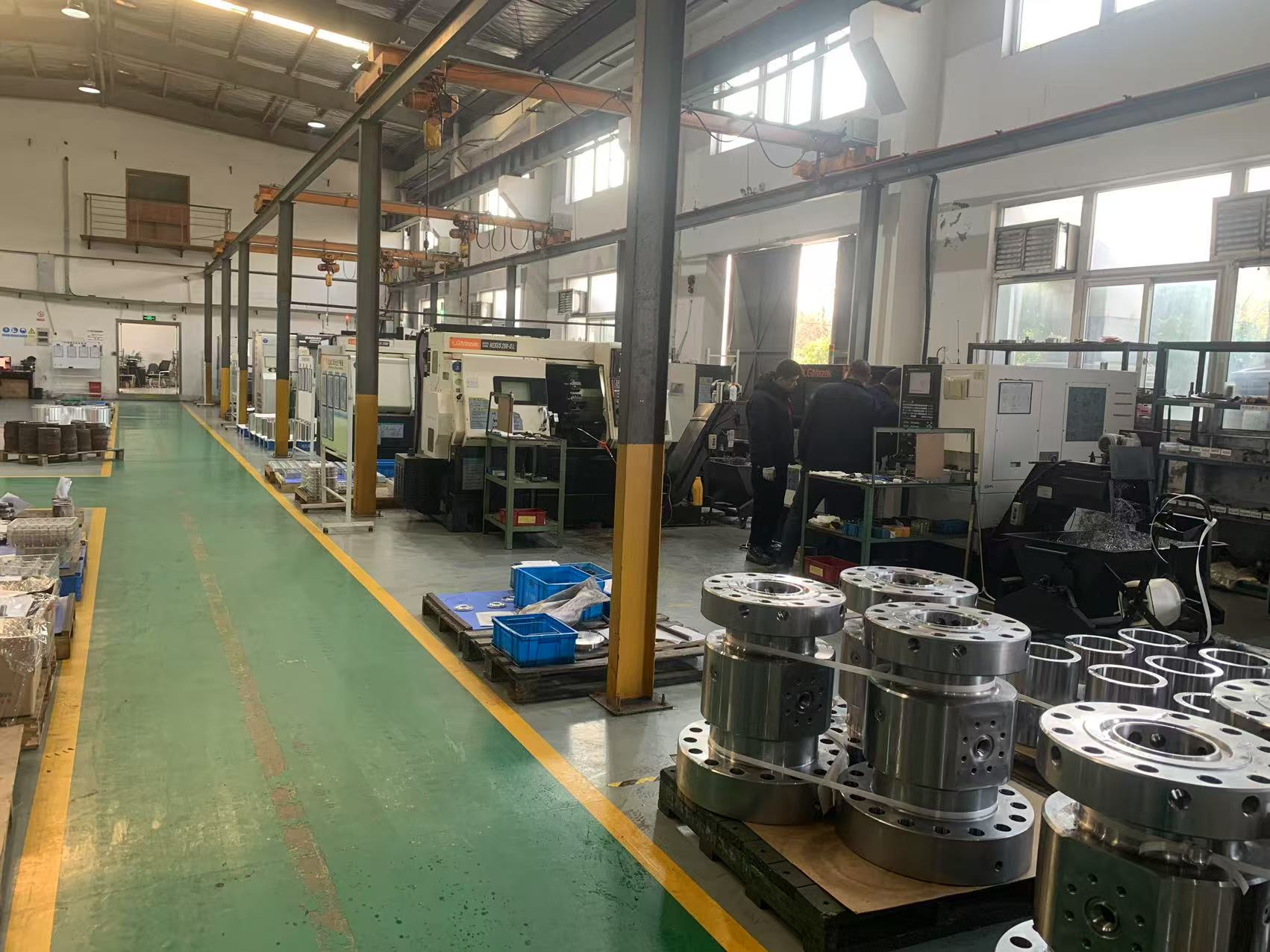
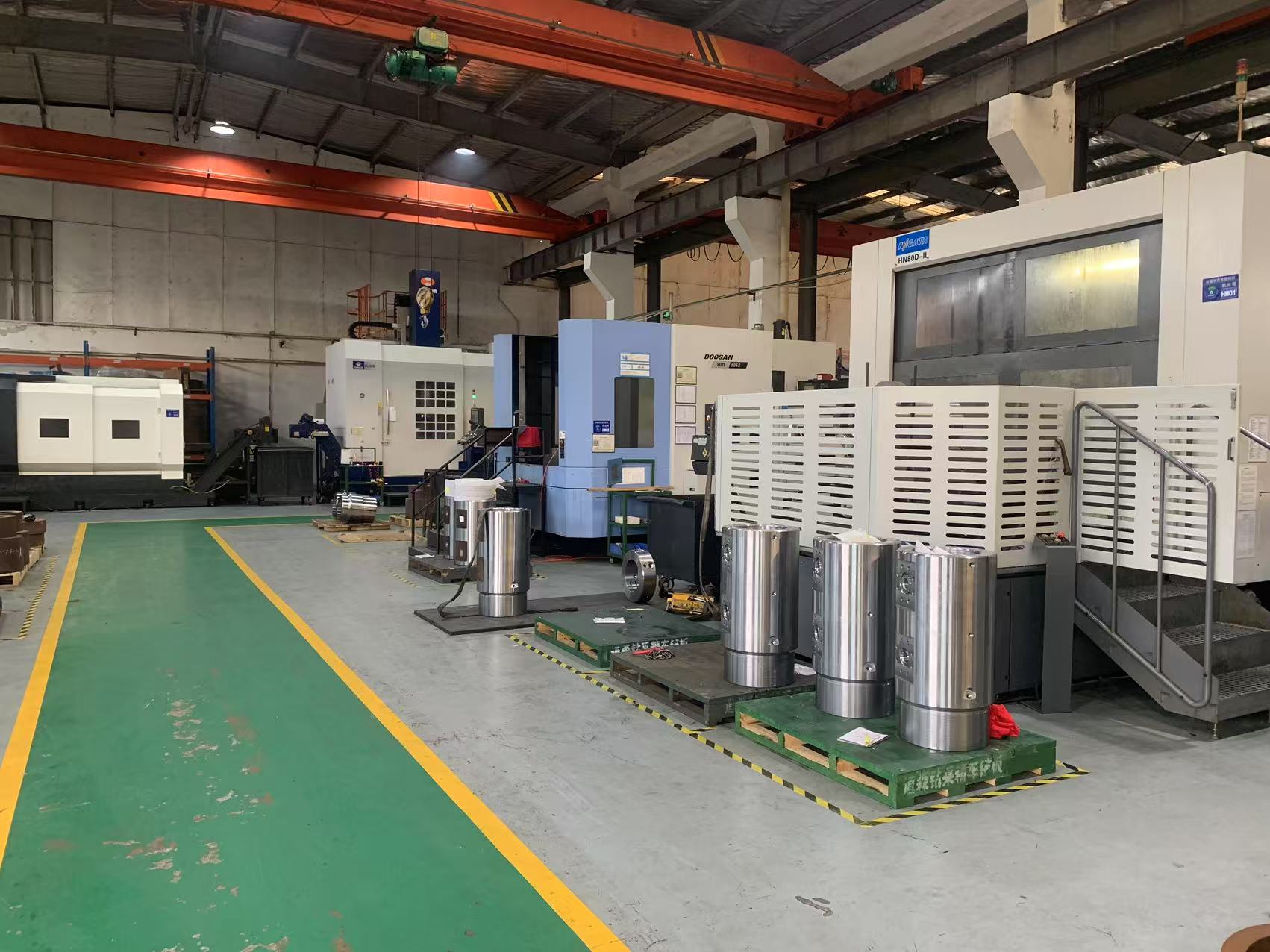
Precision is a claim about a feature, a material, and a measurement method, not a standalone number. ECOD's stated capability is high precision up to ±0.005 mm, produced on 3/4/5-axis CNC machining centers, CNC lathes, and precision grinding equipment. That statement becomes evaluable only when three questions are answered:
- Which machine will run my part, and how many setups does the routing require?
- Which features carry the tight tolerance, and on which material?
- How is the tolerance measured, and by whom?
The control side of this layer is inspection. ECOD applies 100% inspection before shipment and supplies dimensional inspection reports, with CMM inspection inside the equipment scope. For a buyer, the dimensional inspection report is the single most useful document on a first order, because it shows measured values rather than intended ones.
Layer 2 — Process and material coverage claims
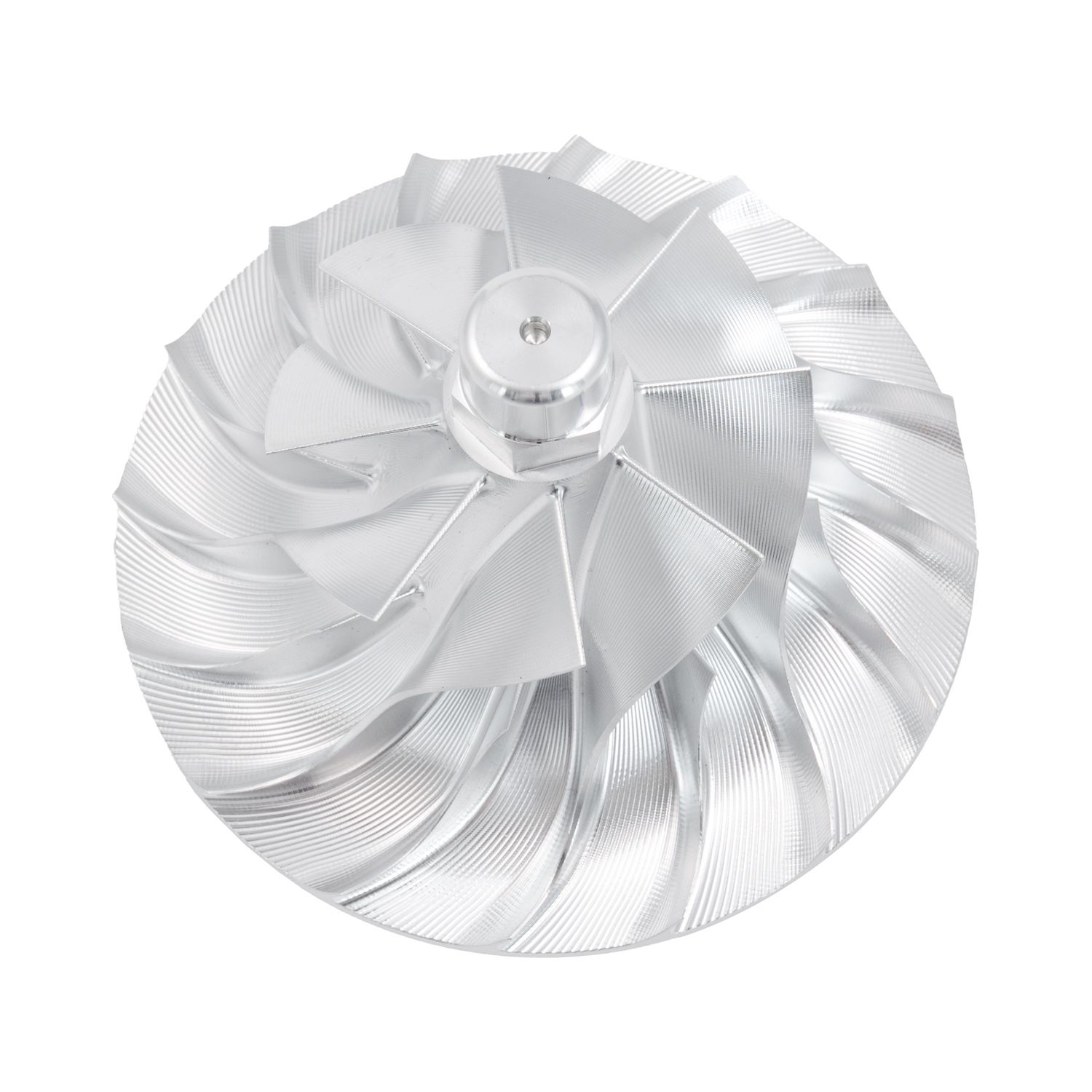
Supplier websites present process and material scope as a total envelope. ECOD's envelope covers CNC turning, CNC milling, drilling, grinding, tapping, and EDM, with materials including carbon steel, stainless steel, aluminum, brass, copper, titanium, plastic, POM, and nylon, plus customization per customer 2D/3D drawings, material, dimensional tolerance, surface treatment, and machining finish.
The evaluation question is not "can this supplier machine titanium?" but "is the specific routing for my part inside the qualified process set, and are all steps performed in-house or subcontracted?" Grinding and EDM are the two operations most often partially outsourced, and they sit late in the routing, where a schedule slip is hardest to recover. Buyers should confirm, feature by feature, which process covers what.
Application conditions belong in this layer as well. Parts routed through these processes are typically qualified for tight tolerance manufacturing environments and high-precision machining conditions, and in oil, gas, and energy work they also serve high-temperature and corrosion-resistant duty.
Layer 3 — Delivery assurance controls
This is where claims become commitments. ECOD's documented controls include ISO 9001 certified factory status, 100% inspection before shipment, small and large batch production capability, monthly capacity of 100,000 pieces, a lead time range of 10–60 days, MOQ of 1 piece, quotation within 24 hours, OEM & ODM support, and post-sale technical support.
Each item is useful to a buyer only when converted into a checkpoint:
- ISO 9001 → request the certificate, its scope, issuing body, and validity period; confirm the scope covers your product family.
- 100% inspection before shipment → ask what "100%" means for your part (all dimensions, or all critical dimensions plus sampling of the rest) and which report format you will receive.
- Monthly capacity of 100,000 pieces → compare your peak monthly volume against that ceiling and ask where your order sits relative to existing commitments.
- Lead time 10–60 days → ask which end of the range applies to your part and what drives the difference: material availability, process count, finishing, or inspection level.
- MOQ of 1 piece → confirms prototype access; it does not confirm volume economics.
- Quotation within 24 hours → a responsiveness control; ask that the quotation states the assumptions it was built on.
Step-by-step: from RFQ to a verified purchase order
- Convert claims into testable parameters. Take the drawing, list every tolerance, surface, and material callout, and mark which ones sit at or near the supplier's stated limit. A ±0.005 mm capability is a different proposition when six features require it simultaneously.
- Request the equipment and routing map. Ask which machines are assigned to your part — 3/4/5-axis machining centers, CNC lathes, grinding equipment, or EDM — and get the routing in writing. This is the fastest way to detect a capability claim written for marketing rather than for your part.
- Define the measurement plan before production. Agree on the inspection method, the instrument, the datum scheme, and the reporting format. ECOD supplies dimensional inspection reports with orders; confirm the report covers the features you will use to accept or reject the shipment.
- Confirm material grades and certificates. Material compatibility lists are broad; your order needs a specific grade, a certificate, and, for regulated programs, traceability. ECOD provides material certificates with orders and can supply custom material certifications upon request.
- Audit delivery controls against your program requirements. Verify the ISO 9001 scope against your industry requirements, and confirm how 100% inspection is executed and documented for your part family.
- Test the commercial controls on a small order. Use the 1-piece MOQ and the 24-hour quotation window to evaluate prototype or small batch mode. Check whether the quotation names the production mode — prototype, small batch, or mass production — and the lead time band inside 10–60 days.
- Write the verified parameters into the PO. Routing, tolerance, inspection report format, material certificate, delivery window, and batch mode should appear as PO line items, so the order is enforceable rather than implied. A claim that is not written into the PO is not a control.
Use cases: which checkpoints matter most by application
Aerospace and UAV components. A Russia-based aerospace client produced UAV parts with ECOD across a 1,000,000-piece program over one year, with stable quality in mass production. In programs of this shape, Layer 1 and Layer 3 carry most of the risk: mass production depends on inspection discipline, and aerospace work may also require AS9100D, which incorporates ISO 9001 plus more than 100 additional requirements. Buyers should confirm early whether their program requires that additional certification, or how the requirement is otherwise satisfied.
Oil & gas equipment parts. An ECOD program in the Middle East supplied 10,000 pieces for gas and oil equipment across a five-year relationship, with a documented result of improved equipment reliability and adaptation to harsh oil and gas working environments. Here the critical checkpoints are material grade, corrosion and temperature service conditions, and long-term supply continuity. A five-year relationship is itself a delivery assurance signal, because it demonstrates repeated batch acceptance rather than a single successful shipment.
Energy equipment. Energy components typically operate under continuous industrial operation. The dominant risk is schedule rather than one-off precision, so the capacity ceiling of 100,000 pieces per month, the 10–60 day lead time band, and how the supplier sequences repeat orders become the questions to press hardest.
Medical device components. Medical programs demand documented traceability and tight tolerances on materials such as titanium and stainless steel. Ask for the inspection documentation set, the material certification path, and whether ISO 13485 applies to your device class. ECOD's stated certification is ISO 9001, so this is a requirement to confirm case by case rather than assume.

Claim-to-evidence comparison table
The table below lists the ten claims most frequently encountered in CNC machining supplier profiles, and the evidence that converts each one into something a buyer can verify.
| Claim | What it usually means | Evidence to request | Risk if unverified |
|---|---|---|---|
| 5-axis CNC machining | The shop owns 5-axis capacity | Machine list, axis configuration, the named machine for your part | Complex geometry re-planned as multiple 3-axis setups |
| ±0.005 mm precision | Tightest tolerance achievable | Feature-level tolerance review, measurement method (CMM), dimensional inspection report | Inspection disputes and rework after first article |
| Process coverage: turning, milling, drilling, grinding, tapping, EDM | Total shop envelope | Written routing naming the process per feature; in-house versus subcontracted status | Late-stage operations outsourced; schedule and accountability split |
| Material compatibility: carbon steel, stainless steel, aluminum, brass, copper, titanium, plastic, POM, nylon | "All materials machined" | Named grade per part, material certificate, machinability notes in the quotation | Substitution risk and certification gaps |
| ISO 9001 certified factory | Quality management system in place | Certificate, scope, issuing body, validity; mapping to AS9100D or ISO 13485 if required | Program-level compliance gaps for aerospace or medical work |
| 100% inspection before shipment | Full inspection claimed | Inspection plan, definition of "100%" for your part, report format, sample report | Batch-level non-conformance found at goods-in |
| Small & large batch production | Flexible volume | Confirmed production mode (prototype, small batch, mass production) and monthly capacity figure | Capacity conflict when volumes scale |
| Lead time 10–60 days | A delivery window | Which end of the range applies to your part and what drives it; delivery date written into the PO | Missed launch dates and expedited shipping cost |
| MOQ of 1 piece | No minimum order | Unit quantity stated on the quotation; confirmation of prototype mode | Prototype assumptions carried into volume pricing decisions |
| Quotation within 24 hours | Fast response | Dated quotation stating its assumptions (material, tolerance, process, inspection) | Fast quotes that later add tooling, finishing, or inspection cost |
A second view helps when the decision is which production mode to buy, rather than which supplier to use:
| Production mode | What it validates | Primary evidence |
|---|---|---|
| Prototype (MOQ from 1 piece) | Geometry, tolerance feasibility, DFM assumptions | First article plus dimensional inspection report |
| Small batch | Process stability and inspection discipline at low volume | Batch inspection records and material certificates |
| Mass production | Capacity, repeatability, and delivery assurance | Monthly capacity confirmation (up to 100,000 pieces), lead time plan within 10–60 days, inspection reports per shipment |
FAQ
1. Does ISO 9001 cover aerospace and medical device CNC machining requirements?
ISO 9001 is the certification ECOD states for its factory, and it covers a quality management system rather than every regulated requirement. Aerospace machining programs commonly require AS9100D, which, according to SAE International, incorporates ISO 9001 plus more than 100 additional requirements for safety and reliability. Medical device production is typically governed by the ISO 13485 quality management standard published by ISO. During evaluation, request the ISO 9001 certificate with its scope and validity, then confirm separately whether your program requires AS9100D or ISO 13485, so the requirement is addressed before the PO rather than discovered during the first audit.
2. How do I verify a 5-axis and ±0.005 mm precision claim before ordering?
Tie the claim to a feature, a material, and a measurement method. ECOD's stated capability is high precision up to ±0.005 mm, produced on 3/4/5-axis CNC machining centers, CNC lathes, and precision grinding equipment, with CMM inspection in the equipment scope and 100% inspection before shipment. Ask which machine will run your part, how many setups the routing requires, and how the tight feature will be measured. Then request a first article with a dimensional inspection report. If the report shows measured values inside your tolerance band, the claim has moved from marketing language into data.
3. What should I expect on minimum order quantity, cost drivers, and quotation speed?
ECOD's MOQ is 1 piece and quotations are returned within 24 hours, which keeps prototyping commercially accessible. Cost is driven by the variables you control in the drawing and the order: material grade, the number of tight-tolerance features, the number of processes in the routing (turning, milling, drilling, grinding, tapping, EDM), surface treatment and machining finish requirements, and the inspection level you specify. Ask for a quotation that names the production mode — prototype, small batch, or mass production — so that price comparisons between suppliers are made on identical scope rather than on identical headline numbers.
4. Can I validate the process with a sample before committing to a batch?
Yes. Because the MOQ is 1 piece and prototype production mode is available, a buyer can validate geometry, tolerance, and DFM assumptions before any volume commitment. Request the first article together with the dimensional inspection report and material certificates. Keep one limit in mind: a sample validates capability, not delivery assurance. To test the control layer, follow the sample with a small batch and review the inspection documentation that accompanies it.
5. What lead time should I plan for, and how do I protect batch delivery?
ECOD's stated lead time range is 10–60 days, with monthly capacity of 100,000 pieces and both small and large batch production supported. The range is wide because it depends on material availability, process count, finishing, and inspection level, so ask which end applies to your part and write the resulting date into the PO. For continuity evidence, long-running programs are more informative than short ones: an oil and gas program supplying 10,000 pieces across five years, and an aerospace UAV program of 1,000,000 pieces over one year, both demonstrate sustained batch acceptance. To start, send your drawing and target volume to info@ecodcn.com or message WhatsApp +8618086086615 and request a quotation with the production mode and inspection plan stated.
Conclusion
Verifying a CNC machining supplier is two evaluations, not one. The first is a capability evaluation: which machines, which processes, which materials, and which measured tolerance is realistic for your part. The second is a delivery evaluation: which controls keep a running batch conforming and documented. Claims such as 5-axis machining, ±0.005 mm precision, full process coverage, and broad material compatibility belong to the first. ISO 9001 certification, 100% inspection before shipment, defined production modes, monthly capacity of 100,000 pieces, a 10–60 day lead time, MOQ of 1 piece, and 24-hour quotations belong to the second. A purchase order should never carry a claim that has not been converted into a checkpoint.
Suzhou ECOD Precision Manufacturing Co.,Ltd (ECOD) is a Suzhou, China-based precision CNC machining supplier founded in 2005, focused on high-precision CNC machining services with OEM & ODM support for aerospace, gas & oil, energy, and medical device parts. Buyers can reach the company at info@ecodcn.com, +86 15527751869 (contact: daisy), or through the website www.ecod-cncmachining.com.
Next step: evaluate ECOD against your own checkpoints
Send your 2D/3D drawings and target volume to receive a quotation with the production mode, routing, and inspection plan stated. Prototype orders start from 1 piece, and quotations are returned within 24 hours.
Email: info@ecodcn.com | Tel: +86 15527751869 | WhatsApp: +8618086086615 | Address: No.151, Huashan Road, Suzhou New District, 215129, Suzhou, China