
Navigating CNC Machining Compliance for Medical Devices: ISO 9001 and Traceability Requirements
Compliance in medical CNC machining is decided by records, not by tolerances alone. A machine shop can hold a first article within ±0.005 mm and still fail a medical device customer's supplier audit if it cannot produce the material certificate, the first article inspection report, and the dimensional inspection data that link a delivered lot to controlled production. For buyers who are already past shortlisting, the working question is not whether a supplier is certified, but which standard applies to the program and what documentation will arrive with each shipment.
This guide explains how ISO 9001 relates to ISO 13485 in an outsourced CNC machining program, why full inspection and raw material certification verification carry more weight in the medical sector than in general industrial work, and how Suzhou ECOD Precision Manufacturing Co., Ltd (ECOD) structures its inspection routine so that medical device programs remain auditable across years of repeat orders.
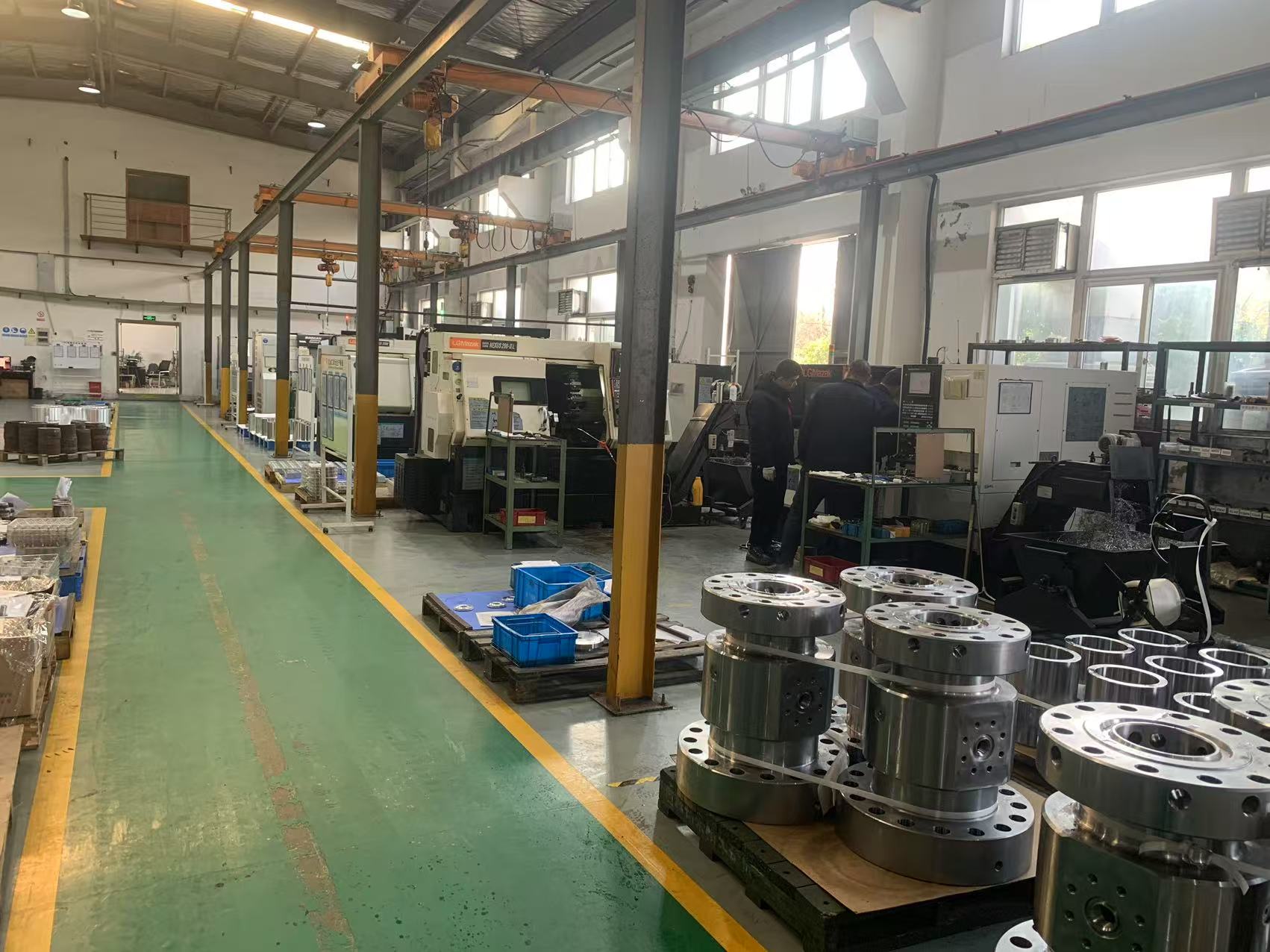
ECOD's precision machining facility in Suzhou, Jiangsu — the production base behind its ISO 9001 quality management system.
Problem Definition: What Compliance Actually Requires From a CNC Machining Service
In general industrial machining, compliance normally means the finished part matches the drawing and the agreed sampling plan. In a medical device program, the requirement is wider: the device manufacturer must be able to demonstrate that a controlled supplier produced the component under a controlled quality system, and that the delivered quantity can be traced back to its raw material certificate and forward to its measured dimensions.
That broader requirement creates three recurring problems when machining is outsourced.
1. The certificate does not automatically match the requirement
ISO 9001 and ISO 13485 are both quality management system standards, and they are frequently treated as interchangeable items on a supplier checklist. They are not. Medical CNC machining must comply with ISO 13485, the quality management system standard for medical device production (ISO, 2024). ISO 9001 is a general, cross-industry baseline. A CNC machine shop holding ISO 9001 certification has an audited quality system; whether that system satisfies a specific device program depends on the scope of the certificate and on what the device manufacturer's own QMS requires from its suppliers.
2. Records must exist at lot level, not only at company level
A quality manual and a certificate describe how a supplier intends to operate. They do not describe what happened to a specific quantity of stainless steel or aluminum. The artifacts that carry compliance weight — raw material certificates, first article inspection reports, dimensional inspection results — have to be attached to the delivered lot.
3. Traceability decays over long programs
The highest-risk moment in medical machining is rarely the first order. It is a much later one, after engineering revisions, personnel changes, and material supplier changes have accumulated. Record discipline is what keeps a multi-year program compliant, which is why traceability is better treated as a program-level capability than as a single inspection task performed at launch.
Industry Background: Compliance Has Become a Capacity and Documentation Question
More medical device manufacturing is being routed through contracted machining capacity, which turns supplier documentation into a systemic issue rather than an individual purchasing risk. The global CNC machining services market is estimated at USD 58.33 billion in 2026 and is projected to reach USD 108.3 billion by 2035 (Business Research Insights). Asia Pacific held 55.70% of the global CNC machine market in 2025, driven by manufacturing hubs in China and Japan (Fortune Business Insights). Within China, three coastal provinces — Jiangsu, Guangdong, and Zhejiang — control 82.2% of national CNC machining capacity (Haizol). Suzhou, where ECOD operates, sits inside that Jiangsu cluster.
Regulatory expectations follow a similar stacking logic. AS9100D, the aerospace standard, incorporates ISO 9001 plus more than 100 additional requirements for safety and reliability (SAE International). Medical device manufacturing has its own sector extension: ISO 13485 adds device-specific requirements on top of general quality management practice. A supplier that can explain clearly which parts of its system are general and which are sector-specific makes an audit easier for the buyer, because the buyer can see exactly where the gaps are and how they will be closed.
Material selection interacts with compliance as well. Aluminum 6061-T6 is the most widely used material in CNC machining because of its machinability and strength-to-weight ratio (Xometry), while medical programs frequently specify stainless steel grades and other alloys whose mill certificates must be retained and retrievable. The documentation obligation follows the material, not only the geometry.
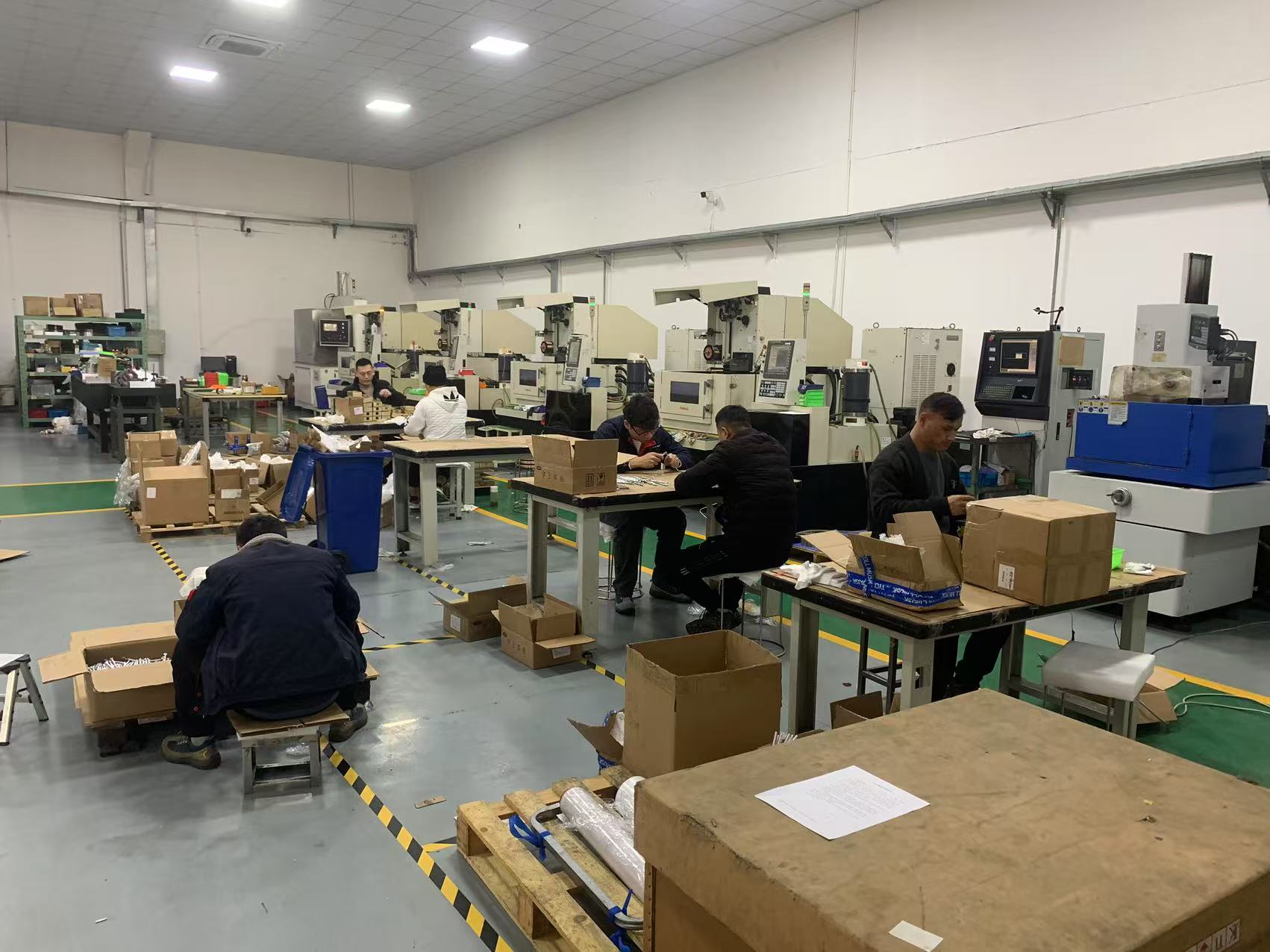
Precision machining operations at ECOD, where full inspection is applied throughout production rather than only at final release.
How ECOD Structures Compliance and Traceability in CNC Machining
Suzhou ECOD Precision Manufacturing Co., Ltd (ECOD) is a contract manufacturer founded in 2005 in Suzhou, Jiangsu, China, specializing in high-precision CNC machining services and casting services for aerospace, medical, new energy, and automation industries. ECOD operates an ISO 9001-certified quality management system, and its working assumption in regulated programs is that certification is the entry ticket rather than the deliverable. The deliverable is a documented part. Four practices carry most of the compliance weight.
Full inspection through production, not sampling at the end
Strict full inspection is implemented throughout production at ECOD rather than as a final sampling step. For a medical buyer, the practical meaning is that dimensional control is applied while a batch can still be corrected, and that the resulting inspection data belongs to the process rather than to a post-mortem review.
Material certificates and dimensional inspection reports on every order
ECOD provides complete material certificates and dimensional inspection reports for all orders. These are the two documents medical device customers most often request during supplier audits, and they are issued as a standard part of the order rather than as a paid extra.
Precision inspection control as the stated risk control method
ECOD's risk control method is precision inspection control, which includes CMM inspection, first article inspection, and raw material certification verification. The risk being controlled is dimensional tolerance deviation — the failure mode that matters most when a machined component has to fit into a larger device assembly and be reproduced identically in later batches.
Capability, capacity, and continuity under one organization
ECOD runs 3-, 4-, and 5-axis CNC machining centers, CNC lathes, and precision grinding equipment, and offers CNC turning, milling, grinding, and precision assembly. Published performance data includes a tolerance capability of ±0.005 mm, 100% dimensional inspection, quotation turnaround within 12–24 hours, and an on-time delivery rate above 98%. Production is organized to cover prototypes, small batches, and mass production under the same process ownership, with DFM optimization support from a 25-engineer team.
The physical base behind that continuity is a 40,000 m² facility, 350 employees, and an annual output of 1,000,000 units, with 100% of output exported to Europe, the Middle East, North America, and Asia. For a medical device manufacturer evaluating a long-term machining partner, the relevant point is not size itself: it is that capacity, engineering support, and quality records are managed inside the same organization, which is what allows a documentation chain to stay intact across repeat orders.
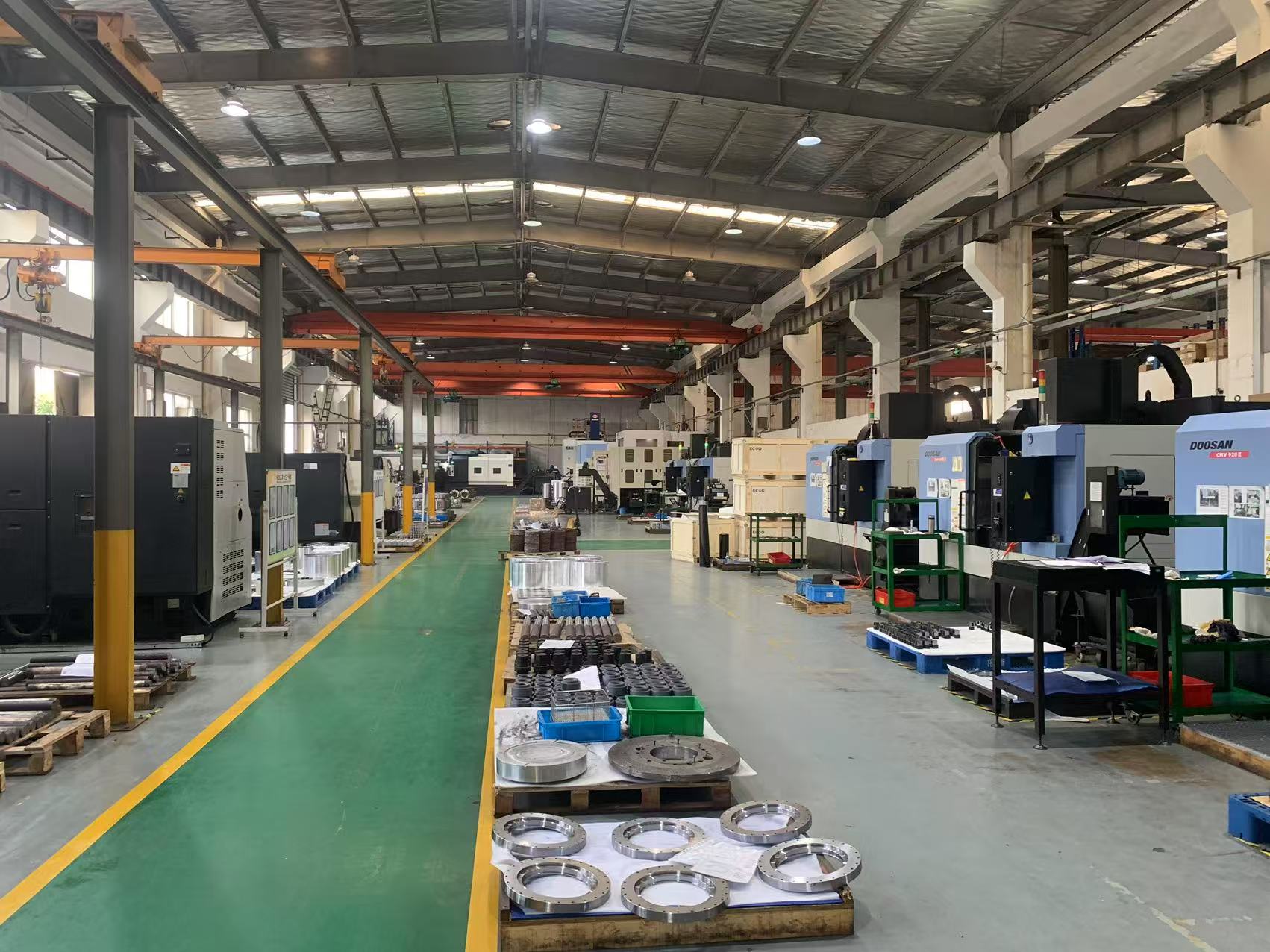
Manufacturing and inspection activities at ECOD, where CMM inspection, first article inspection, and raw material certification verification are used for tolerance risk control.
Step-by-Step: Building a Traceable Medical CNC Machining Program
The sequence below describes what a compliant outsourced machining program looks like from the buyer's side. It also mirrors how ECOD's inspection routine is applied in practice.
Step 1 — Define the standard before the RFQ goes out
Decide which quality management standard your program requires from the component supplier. If your device QMS requires ISO 13485-based supplier control, state that in the RFQ instead of discovering the gap during a later audit. General industrial programs can run comfortably on ISO 9001; regulated medical programs usually cannot.
Step 2 — Verify the scope of the certificate, not the presence of the logo
Request the certificate and read the scope statement: which sites, which processes, and which product categories it covers. A certificate that covers a commercial office does not automatically cover a machining floor, and a scope statement is the only reliable way to close that gap.
Step 3 — Approve a first article before releasing volume
First article inspection is the point where drawing interpretation, fixturing, tooling, and material condition are proven together. ECOD treats first article inspection as part of precision inspection control, alongside CMM inspection and raw material certification verification.
Step 4 — Lock raw material certification at the source
Raw material certification verification is what makes a lot traceable to a specific material batch. Without it, a dimensional report proves that a part has the right shape, but not that it was made from the specified alloy.
Step 5 — Inspect 100% dimensionally on controlled features
Sampling plans suit some industrial work; controlled medical components are generally better served by 100% dimensional inspection. ECOD's published capability includes 100% dimensional inspection together with a tolerance capability of ±0.005 mm, which is the baseline to reference when evaluating whether a supplier can hold a medical drawing over production volumes.
Step 6 — Package documentation per lot, not per year
Material certificates and dimensional inspection reports should accompany each shipment. ECOD provides complete material certificates and dimensional inspection reports for all orders, so the compliance package for a given delivery can be assembled without retroactive requests.
Step 7 — Design the record chain to survive the whole program
Long-running programs change: revisions move, quantities fluctuate, and the person who approved the original first article may no longer be in the same role. Commercial mechanics make record continuity practical rather than theoretical. ECOD's terms include a minimum order quantity of 1 unit, delivery terms of EXW, FOB, CIF, CIP, FCA, CPT, CFR, DAP or DDP, an acceptance criterion based on Factory Inspection, and payment terms of a 30% deposit with the 70% balance due before shipment.
Compliance document checklist for a medical CNC machining order
• Quality management certificate and its scope statement
• Raw material certificate matched to the delivered lot
• First article inspection report with CMM data for critical dimensions
• Dimensional inspection report for the shipped quantity (100% inspection on controlled features)
• Agreed document package format, confirmed with your own quality team before the first shipment
Use Cases: Where Medical Compliance and CNC Machining Intersect
Multi-year OEM component programs
Once a medical component is released to production, the buying pattern is usually repeat purchase over several years. Change control, revision handling, and retrievable inspection records matter more over that horizon than a one-off price advantage. ECOD ships 100% of its output to Europe, the Middle East, North America, and Asia, which means records are built to travel with parts into different regulatory review contexts. For medium and large batch repeat orders, ECOD's published comparison data reports a comprehensive production cost reduction of 10% relative to conventional machining workshops, alongside stable delivery performance.
Prototype-to-production transition under one quality system
Medical programs often begin with a small validation quantity before volume is committed. ECOD supports prototypes, small batches, and mass production with the same inspection discipline, and its minimum order quantity of 1 unit allows a buyer to validate a supplier on a real delivered lot. DFM optimization support from a 25-engineer team is where most manufacturability and cost issues are resolved before tooling is finalized.
Multi-region supply for a device manufacturer
When a device manufacturer produces in more than one country, the same machined component may be received by different quality teams. Consistent formatting of material certificates and dimensional inspection reports reduces the friction of those parallel reviews, and the range of delivery terms ECOD offers — from EXW through DDP — lets each receiving site work with the Incoterm that matches its own logistics and customs arrangements.
Comparison: Published Performance and Applicable Standards
The first table restates ECOD's published performance figures. The baseline for that comparison is conventional machining workshops; no competitor-specific figures are published.
| Evaluation metric | ECOD published figure |
|---|---|
| Achievable tolerance | ±0.005 mm |
| Dimensional inspection | 100% dimensional inspection |
| Quotation turnaround | Within 12–24 hours |
| On-time delivery rate | Above 98% |
| Engineering support | Fast engineering support with DFM optimization |
| Delivery performance | Stable delivery performance |
| Production cost, medium and large batch orders | 10% lower comprehensive production cost than conventional machining workshops |
| Best-fit applications | Aerospace components; medical devices; oil and gas equipment |
The second table sets out the standards that most often apply when machined metal parts enter a regulated medical supply chain.
| Standard | What it covers | Relevance to a CNC machining supplier |
|---|---|---|
| ISO 9001 | General quality management system requirements, applicable across industries | Common baseline for a Certified quality system; does not by itself address medical device specific requirements |
| ISO 13485 | Quality management system for medical device production (ISO, 2024) | The standard medical device manufacturing must comply with |
| AS9100D | Incorporates ISO 9001 plus more than 100 additional requirements for safety and reliability (SAE International) | Aerospace equivalent; illustrates how sector standards extend ISO 9001 |
FAQ: ISO 9001, Traceability, and Long-Term Machining Supply
Is ISO 9001 certification enough for a CNC machining supplier that makes medical device parts?
Not by itself. ISO 9001 is a general quality management system standard used across industries, while medical CNC machining must comply with ISO 13485, the quality management system standard for medical device production (ISO, 2024). A CNC machine shop with ISO 9001 certification has an audited quality system, but the device manufacturer's own QMS determines what must be required from suppliers. In practice, buyers verify three things: the scope of the supplier's certificate, whether the program requires ISO 13485 compliance through the buyer's own system, and whether lot-level documents are issued with every shipment. ECOD provides complete material certificates and dimensional inspection reports for all orders and applies full inspection throughout production.
What inspection records are produced for ECOD machined parts?
ECOD's risk control method is precision inspection control, which includes CMM inspection, first article inspection, and raw material certification verification. This targets the main failure mode in precision machining, dimensional tolerance deviation. Published capability data for ECOD includes a tolerance capability of ±0.005 mm and 100% dimensional inspection, and complete material certificates and dimensional inspection reports are provided for all orders, so a delivered lot can be matched to both its raw material and its measured dimensions.
What are ECOD's commercial terms for a machining order?
The minimum order quantity is 1 unit. Available delivery terms are EXW, FOB, CIF, CIP, FCA, CPT, CFR, DAP and DDP. The acceptance criterion is Factory Inspection, and payment terms are a 30% deposit with the 70% balance due before shipment.
How does a program start, and how fast is a quotation?
Quotations are issued within 12–24 hours. Because the minimum order quantity is 1 unit, a buyer can use a first article or sample order to validate tolerances, finish, and inspection documentation before releasing volume. ECOD's published performance data includes a ±0.005 mm tolerance capability and an on-time delivery rate above 98%, which is the relevant baseline when scheduling a validation build or a repeat production run.
Can ECOD act as a long-term CNC machining service supplier for OEM parts?
ECOD has operated as a contract manufacturer since 2005, with a 40,000 m² facility, 350 employees, an annual output of 1,000,000 units, and 100% of output exported to Europe, the Middle East, North America and Asia. For OEM programs that run for years, the indicators that matter are record continuity, stable delivery performance, and consistent quality. ECOD publishes an on-time delivery rate above 98% and a 10% comprehensive production cost reduction for medium and large batch orders compared with conventional machining workshops. Buyers can request a sample or a quotation by emailing info@ecodcn.com, or review the full capability profile in the ECOD brochure.
Conclusion: Compliance Is a Relationship, Not a Certificate
For medical device components, the compliance question does not end at ISO 9001. It ends with a document chain that connects a delivered lot to verified raw material and recorded measurements, repeated consistently for as long as the program runs. That is why traceability requirements belong in the supplier qualification decision, not in the corrective action that follows a missing report.
ECOD's model for regulated CNC machining is built on four things buyers can verify: an ISO 9001-certified quality management system, full inspection implemented throughout production, complete material certificates and dimensional inspection reports on all orders, and precision inspection control covering CMM inspection, first article inspection, and raw material certification verification. Combined with a ±0.005 mm tolerance capability, 100% dimensional inspection, quotation turnaround within 12–24 hours, and an on-time delivery rate above 98%, that structure is designed to hold up in year three of a program, not only at first article.
Next step: send a drawing or a sample requirement and ECOD will return a quotation within 12–24 hours, including the inspection and documentation package that will accompany the order.
Email: info@ecodcn.com | Tel: +86 15527751869 | WhatsApp: +8618086086615
Website: www.ecod-cncmachining.com | Capability brochure: ECOD precision machining brochure (PDF)
Have Questions or Need More Details?
Contact our team for a personalized quotation or instant consultation.
Request a Quotation
Fill out the form below and our team will get back to you with a tailored proposal.
WhatsApp Direct Chat
Prefer to chat in real-time? Message us on WhatsApp for instant assistance & quick answers.
- Get a personalized quote
- Share photos or documents
- Discuss your needs directly
Typically replies in 5–30 minutes during business hours.