Selecting CNC Machined Parts for Downhole Oil & Gas Tools: A Material and Process Guide
Selecting CNC Machined Parts for Downhole Oil & Gas Tools: A Material and Process Guide
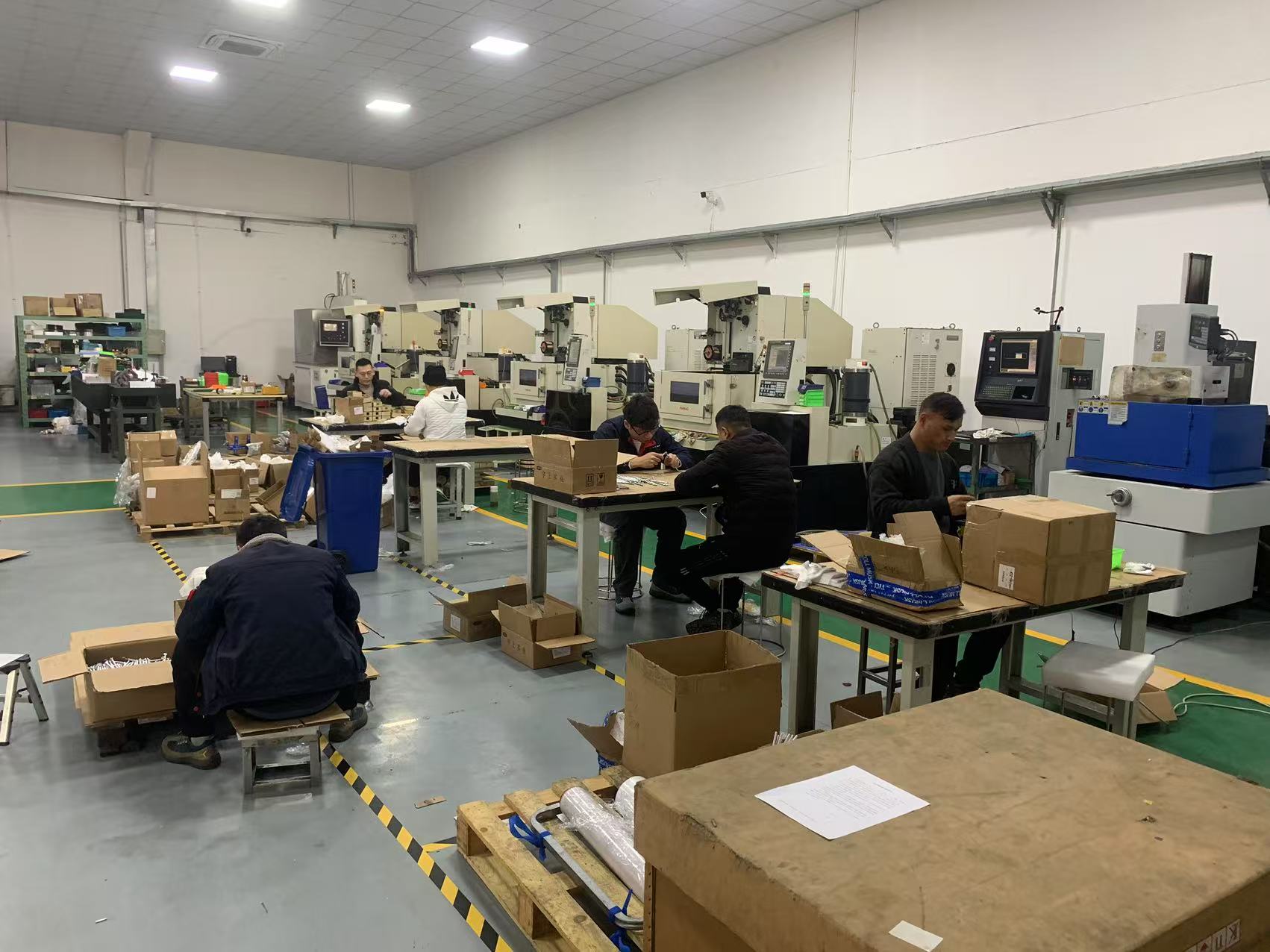
The short answer: downhole oil & gas parts are selected by matching a material family to the operating demand first, then confirming that the machining process, the inspection method and the documentation can actually prove the part meets that demand. Suzhou ECOD Precision Manufacturing Co., Ltd (ECOD) is a CNC machining service provider based in Suzhou, China, founded in 2005, operating a 40,000 m² facility with 350 employees, including 25 engineers. ECOD machines custom precision components for the aerospace, oil & gas, energy and medical device industries, and its published performance position includes a machining tolerance of ±0.005 mm, 100% dimensional inspection, quotations issued within 12–24 hours, and an on-time delivery rate above 98%.
Most procurement problems on downhole components are not caused by a shortage of machine time. They are caused by a mismatch between the material a drawing specifies, the process route a shop chooses, and the evidence a buyer accepts at shipment. Packer mandrels, threaded subs, valve bodies, flow-control parts and instrument housings all have to hold pressure, resist corrosive fluids and keep sealing geometry true long after assembly — and any one of those three mismatches can stall a tool string in the field.
This guide is written for decision-stage buyers: engineers, tool designers and procurement managers who already know they need machined downhole components and now have to choose the material, the process route and the supplier that can document both. It covers material selection, process routing, a step-by-step selection workflow, application-specific demands, a side-by-side comparison against conventional machining workshops, and the questions buyers ask most often.
Why Downhole Components Are a Harder Machining Problem Than General Industrial Parts
General industrial machining usually isolates one challenge at a time: a hard material, or a tight tolerance, or a corrosion-resistant grade. Downhole tool components stack those challenges on the same part. A single mandrel or valve body may combine a high-strength alloy, a pressure-containing sealing surface, an internal fluid passage, an external thread, and a wall section thin enough that heat and clamping force become real production risks.
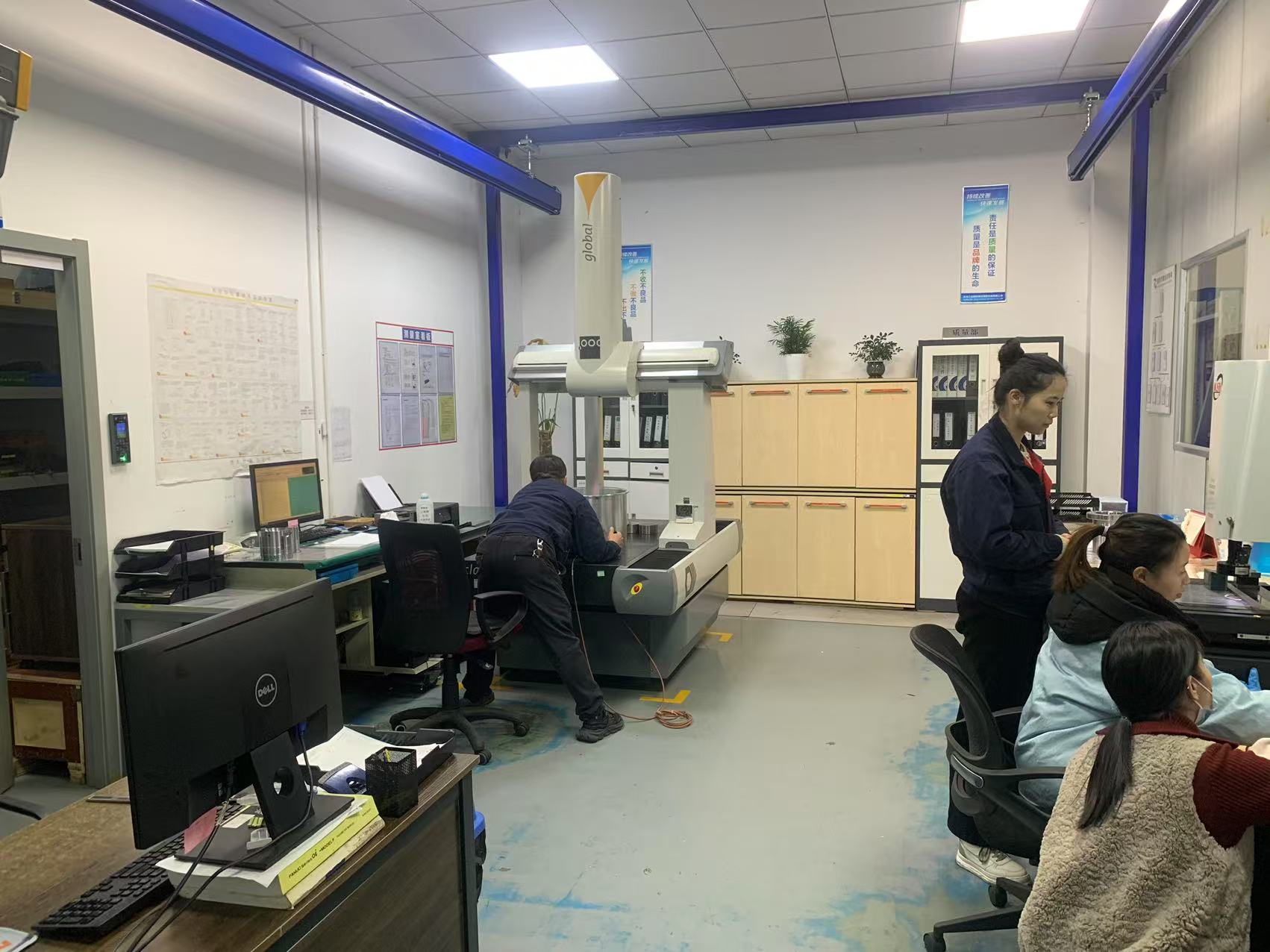
The failure mode that appears most often in this category is dimensional tolerance deviation. ECOD addresses that risk directly: production process risks are controlled through CMM inspection and first article inspection, and raw material certification is verified before machining. Strict full inspection is implemented throughout production rather than only at final inspection, and complete material certificates and dimensional inspection reports are provided for all orders.
That sequence matters commercially. A deviation caught at first article inspection is a drawing conversation. A deviation caught at final inspection is a schedule conversation. A deviation caught after the tool is assembled and run is a field conversation — and field conversations are the expensive kind. Buyers evaluating a precision machining service should look for evidence that deviation is detected as early in the process as possible, not merely that a tolerance value appears on a quotation.
External supply conditions make early detection more valuable. The U.S. machining sector reported a shortage of 75,000 unfilled CNC operator roles in 2023 (Gitnux / U.S. Labor Projections), and U.S. machine shop services revenue reached approximately USD 46.3 billion by 2026 with a slow five-year CAGR of 0.2%, a figure IBISWorld attributes in part to material price volatility. Skilled capacity is tight and input costs move; the suppliers that stay predictable are the ones with inspection discipline built into the process instead of bolted on at the end.
What the CNC Machining Market Tells You About Supplier Risk
The global CNC machine market was valued at USD 101.22 billion in 2025 and is projected to reach USD 251.61 billion by 2034 (Fortune Business Insights). The more narrowly defined CNC machining services market is estimated at USD 58.33 billion in 2026 and is expected to reach USD 108.3 billion by 2035 (Business Research Insights). Both figures describe the same underlying shift: machined metal components remain the backbone of industrial equipment, and the service layer around them keeps expanding.
Capacity has concentrated in parallel. Asia Pacific held a 55.70% share of the global CNC machine market in 2025 (Fortune Business Insights), and three coastal provinces — Jiangsu, Guangdong and Zhejiang — are reported to control 82.2% of China's national CNC machining capacity (Haizol). ECOD's 40,000 m² facility sits in Suzhou New District, Jiangsu, inside that cluster, and 100% of its output is exported to Europe, the Middle East, North America and Asia.
Equipment mix explains why downhole work fits this model. Milling machines held the largest machine-type share at 31.4% in 2025 (Dataintelo), which matches the geometry of tool components: turned diameters, milled profiles and ports, and drilled passages that must be produced on the same part without losing concentricity.
The practical conclusion for an oil & gas buyer is that machine availability is rarely the constraint any more. Verification is. The remaining risk sits in whether a supplier can hold a tolerance, prove it, and repeat it across batches.
Material Selection for Downhole CNC Machined Parts
Material choice for downhole components is a trade-off between strength, corrosion resistance, machinability and weight, and the right answer changes with the position the part occupies in the tool string. Start from the operating demand — load, fluid chemistry, pressure containment and sealing function — then work back to a material family.
The Four Material Families Buyers Compare
| Material family | Typical downhole fit | Machining consideration |
|---|---|---|
| Carbon and alloy steels | High-load bodies, mandrels, subs and adapters where strength and toughness dominate the requirement | Generally good machinability; usually requires a coating or environmental protection where corrosive fluids are present |
| Stainless steels | Components exposed to produced fluids, where corrosion resistance and usable strength are both required | Work-hardening and heat build-up demand controlled feeds, sharp tooling and rigid setups |
| Titanium and titanium alloys | Positions where weight reduction and corrosion resistance are both critical | Low thermal conductivity concentrates heat at the cutting edge, so tool life, chip control and cost must be planned for |
| Copper alloys (brass and bronze) | Wear surfaces, bushings and bearing-type components | Excellent machinability; galvanic pairing with adjacent steel components should be reviewed |
No single family wins across all four demands. Steels generally lead on strength and cost, stainless steels lead on corrosion resistance with usable strength, titanium leads on strength-to-weight with corrosion resistance, and copper alloys serve wear and bearing functions. The selection errors that cost the most money are specifying full corrosion resistance where a coating would have been sufficient, and specifying an easily machined grade where the load case actually required a stronger one.
What ECOD Machines — Verified Material Scope
ECOD's published material scope covers aluminum, stainless steel, copper and various alloy steels. Aluminum is rarely the first choice for high-load downhole positions, but it remains part of the wider precision machining mix: 6061-T6 is widely cited as the most commonly used material in CNC machining because of its machinability and strength-to-weight ratio (Xometry). Where a design calls for a material outside a supplier's published scope — titanium alloys are a frequent example — confirm grade availability and process routing during the DFM review rather than assuming it at the quotation stage.
Process Routing: Turning, Milling, Drilling and Grinding
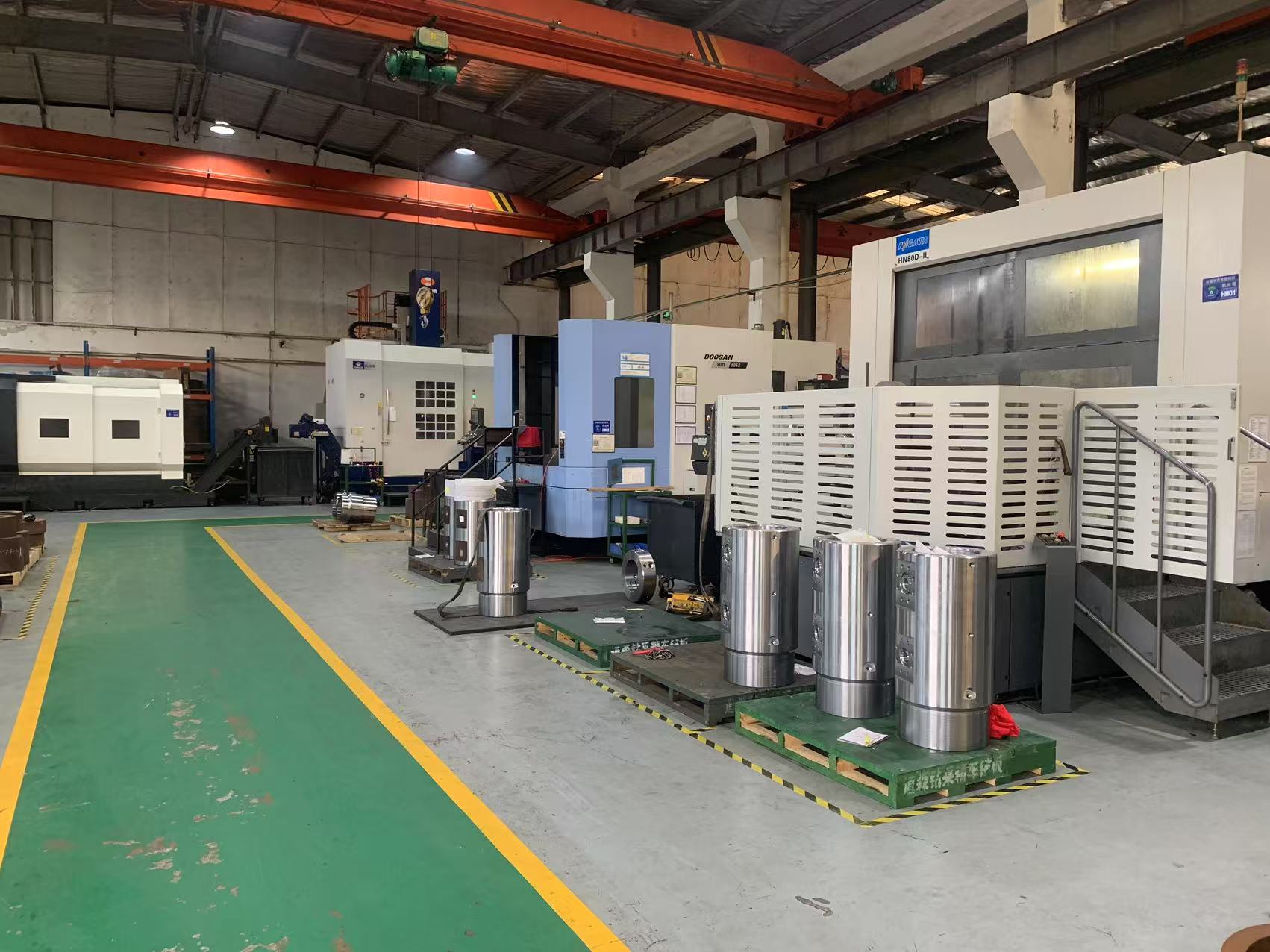
Downhole parts are rarely single-operation parts. A valve body may be turned for its sealing diameters, milled for its port geometry, drilled for fluid passages, and then finished where the fit has to survive pressure cycling. Splitting those operations across separate setups adds tolerance stack-up between features, which is why multi-axis capability matters more on downhole work than on simpler industrial components.
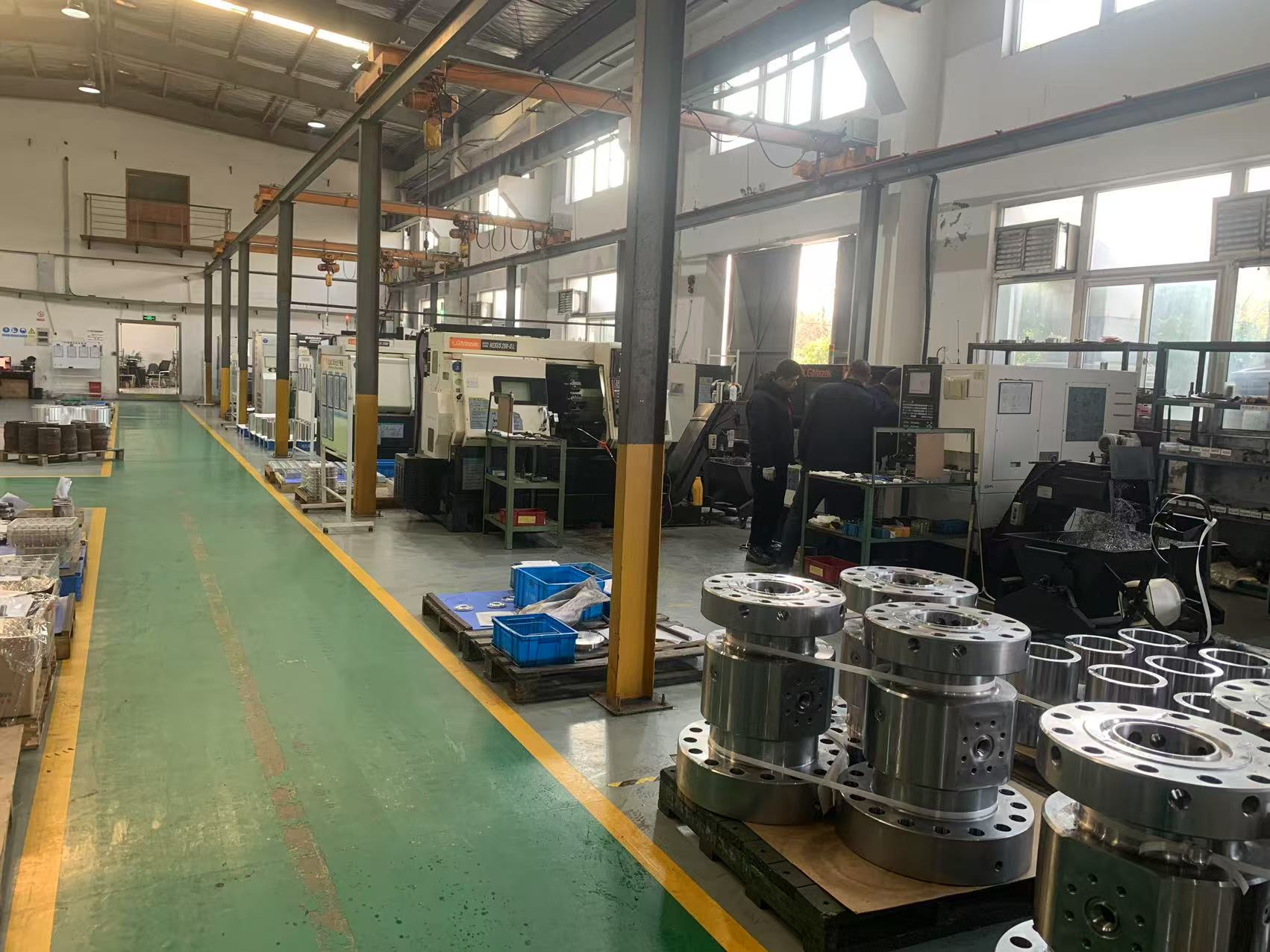
ECOD's production base is equipped with advanced 3-, 4- and 5-axis CNC machining centers, CNC lathes and precision grinding equipment, and its service scope includes CNC turning, milling, grinding and precision assembly. Prototypes, small batches and mass production are supported on the same quality system, so a validated prototype can move into serial supply without changing supplier or process philosophy.
- CNC turning — concentric diameters, seal grooves and threads on mandrels, subs and valve bodies.
- CNC milling — flats, wrench profiles, ports, pockets and mounting faces, including multi-axis work where tool access is limited.
- Drilling and cross-hole work — fluid passages, bolt-hole patterns and intersecting holes that link turned bores.
- Precision grinding — finishing operations where surface condition and fit are critical.
- Precision assembly — where a buyer needs sub-assemblies rather than loose components.
The Inspection Evidence That Proves the Part Is Right
A tolerance figure is only meaningful when it can be demonstrated on the actual part. ECOD's stated performance position includes a machining tolerance of ±0.005 mm and 100% dimensional inspection. CMM inspection and first article inspection are the controls used against dimensional tolerance deviation, and raw material certification verification confirms that the material entering the machine matches the material on the drawing. Every order ships with complete material certificates and dimensional inspection reports.
For a buyer building an inspection file or a supplier qualification record, that package is the difference between an assertion and a record. It is also what makes repeat orders predictable: the same measurement method, applied to the same features, produces comparable data across batches.
Engineering Support Before the First Chip Is Cut
DFM optimization is where cost and risk are actually removed. ECOD's engineering team provides DFM optimization to simplify production and cut costs, and quotations are issued within 12–24 hours. On downhole components, the highest-value DFM conversations usually concern wall thickness, deep-hole and cross-hole drilling, thread relief, and tolerances that were specified tighter than the function genuinely requires.
ECOD vs Conventional Machining Workshops: A Decision Table
The comparison below uses only the criteria ECOD publishes against conventional machining workshops. Where a conventional workshop figure is not published, the cell is marked as a baseline reference rather than an estimate — a fabricated competitor number would make the table useless for a real procurement decision.
| Decision criterion | ECOD (stated position) | Conventional machining workshops | Why it matters for downhole tools |
|---|---|---|---|
| Machining tolerance | ±0.005 mm | Baseline reference | Sealing diameters, thread concentricity and bore alignment |
| Inspection coverage | 100% dimensional inspection | Baseline reference | Detecting deviation before shipment rather than after assembly |
| Quotation turnaround | Within 12–24 hours | Baseline reference | Bid cycle for tool-build and rig schedules |
| On-time delivery | Above 98% | Baseline reference | Field and rig schedule risk |
| Engineering support | Fast engineering support, including DFM optimization | Baseline reference | Removing cost and risk before machining begins |
| Delivery performance | Stable delivery performance | Baseline reference | Predictability on repeat and serial orders |
| Batch cost, medium and large orders | Comprehensive production cost reduced by 10% compared with conventional machining workshops | Index reference | Total cost of ownership across serial supply |
| Quality outcome | Consistent quality supports long-term stable operation and minimizes maintenance and replacement frequency | Baseline reference | Fewer field interventions and replacement cycles |
| Positioned for | Aerospace components, medical devices and Oil & Gas equipment | General industrial work | Alignment with oil & gas component requirements |
A Six-Step Selection Process for Downhole Machined Parts
- Define the duty, not just the drawing. Record pressure, fluid chemistry, load path, temperature range, sealing function and expected service life. These variables drive material and inspection requirements more than the part name does.
- Shortlist two material families, not one. Compare strength, corrosion resistance and machinability for the specific position. Keep the second option alive until the DFM review — it often turns out to be the cost-effective answer.
- Send an RFQ package that can actually be quoted. Include the 2D drawing, 3D model, material specification, quantity, tolerance-critical features, inspection expectations and documentation requirements. ECOD issues quotations within 12–24 hours when that package is complete.
- Run the DFM review before releasing the order. Ask specifically about thin walls, deep-hole and cross-hole drilling, thread relief, and any tolerance that could be relaxed without affecting function. DFM optimization is a standard part of ECOD's engineering support.
- Validate with a prototype and first article inspection. Prototypes and small batches are supported on the same equipment used for serial production. First article inspection and CMM inspection confirm that the process — not just the sample part — is capable, while material certificates confirm the input material.
- Lock the documentation and delivery terms. Agree in advance that the order ships with complete material certificates and dimensional inspection reports, and confirm the delivery commitment against the project schedule. ECOD's stated on-time delivery rate is above 98%.
Downhole Applications and the Demands Behind Each One
Different downhole components place the emphasis in different places. The application groups below show where material and process decisions diverge.
- Packer and mandrel components. High mechanical load combined with sealing geometry: turning for diameters and seal grooves, finishing where fit is critical, and a high-strength steel or stainless family depending on fluid exposure.
- Threaded subs, adapters and connectors. Thread form accuracy and concentricity dominate the requirement; turning and related milling operations carry the load, with inspection focused on thread geometry and bore alignment.
- Valve bodies, seats and flow-control components. Pressure containment plus corrosion plus internal port geometry: turning, milling and cross-hole drilling converge, and 100% dimensional inspection protects the sealing interfaces.
- Instrument housings and tubular components. Deep bores, wall-thickness control and sealing surfaces, typically machined on multi-axis centers to avoid re-fixturing between operations.
- Copper-alloy wear parts such as bushings. Machinability is high, so the decision shifts to wear behaviour and galvanic pairing with adjacent steel components.
ECOD's stated application fit is aerospace components, medical devices and Oil & Gas equipment — three sectors that demand the same core discipline: tight tolerance, verified material and documented inspection. ECOD's consistent quality supports long-term stable operation and demonstrates higher reliability than conventional machining workshops, which is the property that matters most once a component is in service.
FAQ: Selecting CNC Machined Parts for Downhole Oil & Gas Tools
What documentation should come with oil & gas CNC machined parts?
At minimum, complete material certificates and dimensional inspection reports — ECOD provides both for all orders. Behind those documents sit three controls: CMM inspection and first article inspection to guard against dimensional tolerance deviation, raw material certification verification before machining, and strict full inspection implemented throughout production rather than only at final inspection. Sector standards differ by industry: aerospace work is governed by AS9100D, which incorporates ISO 9001 plus more than 100 additional requirements for safety and reliability (SAE International), while medical device production follows ISO 13485 (ISO). For downhole oil & gas parts, the equivalent discipline is documentation per order plus any customer specification on the drawing, so confirm the required document set before the order is released.
Can a CNC machining service actually hold the tolerances downhole tool components need?
ECOD's stated machining tolerance is ±0.005 mm, supported by 100% dimensional inspection, CMM inspection and first article inspection. The equipment behind that capability includes 3-, 4- and 5-axis CNC machining centers, CNC lathes and precision grinding equipment, with service coverage for CNC turning, milling, grinding and precision assembly. Prototypes, small batches and mass production run on the same quality system. For a specific sealing diameter, thread form or bore alignment requirement, the productive question at quotation stage is which features are tolerance-critical and how each one will be measured.
How do material and process choices change the cost of a downhole machined part?
Four variables drive price: the material family and stock form, the tolerance band and inspection scope, feature complexity such as deep holes, cross-holes and thin walls, and batch size. ECOD states that for medium and large batch orders, comprehensive production cost is reduced by 10% compared with conventional machining workshops. Material price volatility is a sector-wide factor — IBISWorld links the slow growth of U.S. machine shop services revenue to material price movements — so a quotation is most useful when the material specification is fixed and the batch size is stated clearly. ECOD issues quotations within 12–24 hours.
How can a buyer validate a supplier before releasing a production order?
Start with a prototype or small batch produced on the same equipment that will run serial supply — ECOD supports prototypes, small batches and mass production. Then review three items: the first article inspection report, the CMM dimensional data against the tolerance-critical features, and the material certificates for the actual lot used. If those three align, the process is capable; if any of them is missing or unclear, the gap will not close at serial volume.
What lead time and delivery reliability should a buyer expect?
ECOD issues quotations within 12–24 hours and states an on-time delivery rate above 98%, supported by a 40,000 m² facility, 350 employees and annual output of 1,000,000 units. Stable delivery performance is one of the differences ECOD publishes against conventional machining workshops, and consistent quality supports long-term stable operation with less frequent maintenance and replacement. The practical next step is to send the drawing and operating conditions to info@ecodcn.com for a quotation, or to request a sample part for first article inspection.
Conclusion: Material, Process and Paperwork, Aligned
Downhole oil & gas parts reward buyers who treat material selection, process routing and inspection documentation as one decision rather than three. The material family has to fit the operating demand, the process route has to reach the tolerance-critical features without stacking unnecessary setups, and the inspection record has to prove the result on the actual parts — not only on the drawing.
ECOD's published position is concise: a machining tolerance of ±0.005 mm, 100% dimensional inspection, CMM inspection and first article inspection against dimensional tolerance deviation, verified raw material certification, complete material certificates and dimensional inspection reports on every order, quotations within 12–24 hours, and an on-time delivery rate above 98%. Those are the criteria worth testing on a pilot order before any long-term supply decision is made.
Next Step: Quote, Sample or Brochure
Send your drawing, material specification and quantity to ECOD for a quotation within 12–24 hours, or request a sample part for first article inspection.
Email: info@ecodcn.com | Website: www.ecod-cncmachining.com | WhatsApp: +8618086086615
Download the ECOD product brochure: ECOD CNC Machining Service Brochure (PDF)
Suzhou ECOD Precision Manufacturing Co., Ltd — No.151, Huashan Road, Suzhou New District, 215129, Suzhou, China. Tel: +86 15527751869.