
What Is CNC Machining? Processes, Materials, and Its Role in Smart Manufacturing
CNC machining is a subtractive manufacturing process in which computer numerical control (CNC) machine tools remove material from a solid workpiece to create a finished part. Toolpaths, spindle speeds, feed rates and tool changes are executed from a program rather than by hand, which is why one digital definition can be repeated across a single prototype, a small batch, or a multi-year production run.
The definition is the easy part. What matters more to a buyer preparing to place or repeat an order is what the phrase “CNC machining service” actually contains: which processes will be used, which materials are machinable, how tolerance is proven, and which commercial terms still hold up in year three of an OEM program. The capability examples in this guide come from Suzhou ECOD Precision Manufacturing Co.,Ltd (ECOD), a precision manufacturer founded in 2005 in Suzhou, China, that focuses exclusively on high-precision CNC machining.
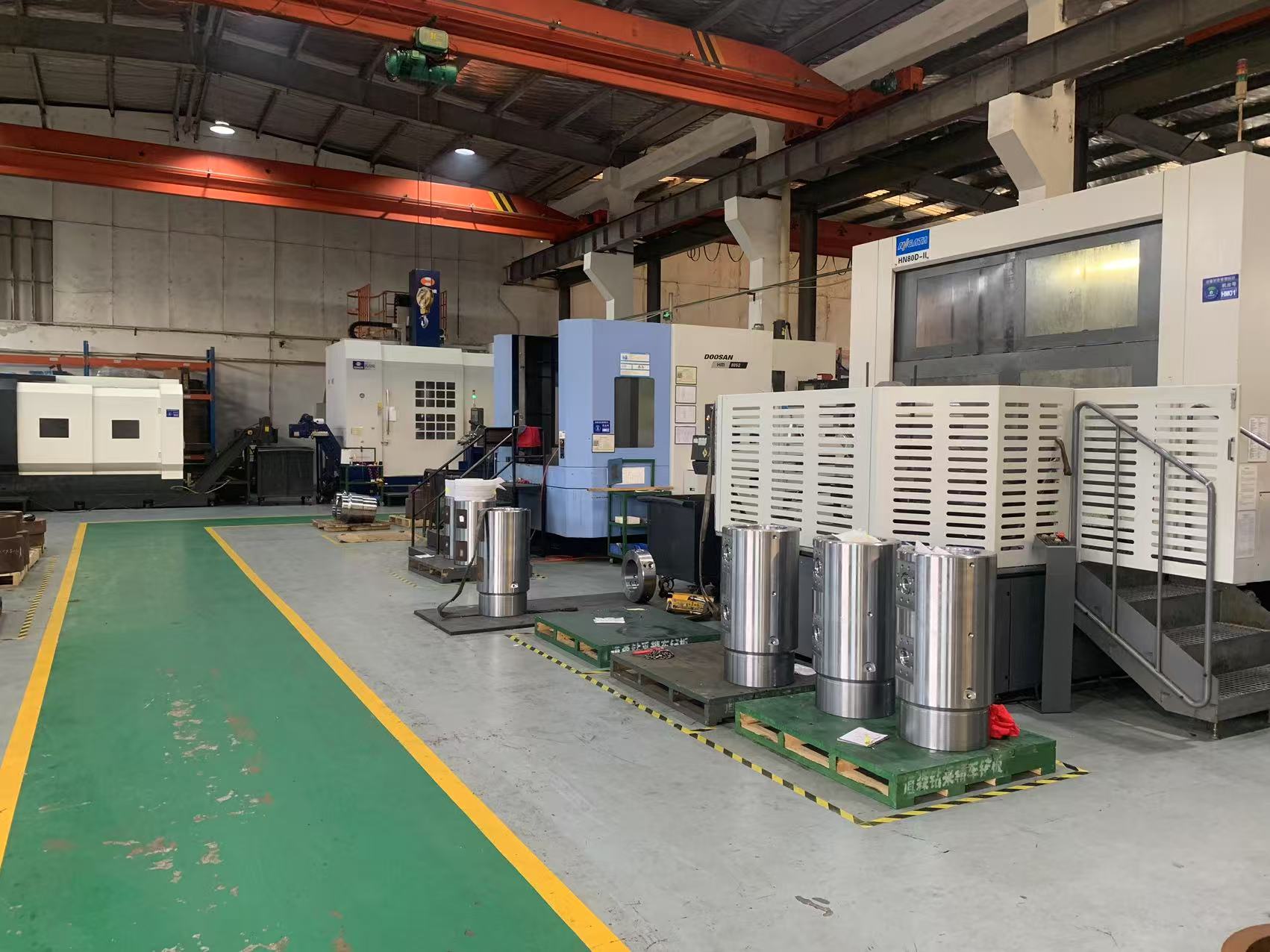
ECOD’s Suzhou production base: 40,000 m² of CNC machining capacity supporting prototypes, small batches and mass production.
Problem Definition: Where “CNC Machining Service” Becomes Ambiguous
Most sourcing problems in precision machining do not start with a bad supplier. They start with a quote or a purchase order that was too general to be checked. Five gaps account for most of the friction between a drawing and a delivered part.
- Process ambiguity. “CNC machining” is an umbrella term covering milling, turning, drilling, EDM and grinding. Each uses different setups, different cost drivers and different achievable geometry. A quotation that says only “CNC machined” hides which of these will actually be applied.
- Material substitution risk. Aluminum, stainless steel, copper, alloy steels and engineering plastics behave differently under the same toolpath. A substitution introduced late in the process can change dimension, surface finish and function.
- Dimensional tolerance deviation. This is the most common technical risk in precision machining, and it is controlled by inspection rather than by assurance. If the inspection method and the acceptance criteria are not agreed before production, the dispute is settled after the parts exist.
- Documentation gaps. Raw material certificates and dimensional inspection reports are the evidence trail for a machined batch. Without them, a buyer cannot confirm that the delivered parts match the approved material and geometry.
- Commercial terms that do not scale. Prototype orders and repeating OEM orders have different economics. Payment terms, minimum order quantity and delivery conditions that suit a one-off sample may not suit a long-term supply relationship.
Each of these gaps is closed with a specific, checkable item — a named process, a certified material, an inspection method, a documented term — which is what the rest of this guide supplies.
Industry Background: The Scale Behind the Category
CNC machining is a mature industry rather than a niche process, and its scale explains why supplier selection carries commercial weight.
- The global CNC machine market was valued at USD 101.22 billion in 2025 and is projected to reach USD 251.61 billion by 2034 (Fortune Business Insights).
- Under a narrower scope limited to services, the global CNC machining services market is estimated at USD 58.33 billion in 2026, reaching USD 108.3 billion by 2035 (Business Research Insights).
- Asia Pacific held a 55.70% share of the global CNC machine market in 2025 (Fortune Business Insights).
- Within China, three coastal provinces — Jiangsu, Guangdong and Zhejiang — account for 82.2% of national CNC machining capacity (Haizol). ECOD’s facility in Suzhou, Jiangsu, sits inside that cluster.
- Machining centers represented 61.6% of global revenue in 2023 (Grand View Research), and milling machines held the largest type share at 31.4% in 2025 (Dataintelo).
- Automotive remains the largest end user, at 28.6% of total market revenue in 2025 (Dataintelo).
- US machine shop services revenue reached approximately USD 46.3 billion by 2026, with a five-year CAGR of 0.2%, a slow rate attributed to material price volatility (IBISWorld).
- A reported shortage of 75,000 unfilled CNC operator roles in the United States in 2023 (Gitnux, based on U.S. labor projections) is one reason automated and unattended machining continues to expand.
- Ultra-precision machining centers used for semiconductor fab equipment are projected to grow at 8.36% CAGR from 2026 to 2031 (Mordor Intelligence).
Reading market figures correctly. Published estimates differ by scope. For the same 2025 measurement, Fortune Business Insights values the CNC machine market at USD 101.22 billion, while Dataintelo reports USD 98.7 billion for a comparable scope. Forecast growth rates also diverge, from 3.5% to 2028 (MarketsandMarkets) to 11.1% to 2034 (Fortune Business Insights), depending on whether software and automation integration is included. Use these figures to size the category — not as a substitute for quoting your own part.
The Processes Inside a CNC Machining Service
When a supplier says “we do CNC machining,” the practical question is which of the following processes will be applied to your part geometry, because that decision drives setup cost, lead time and achievable tolerance.
CNC milling
In milling, a rotating multi-point cutter moves along a programmed path while the workpiece stays fixed. It is the standard route for prismatic parts with pockets, slots, flat faces and complex three-dimensional contours — housings, brackets, base plates and machined prototypes. Milling also holds the largest single type share of the machine market at 31.4% in 2025 (Dataintelo), largely because of its use in aerospace work.
CNC turning
In turning, the workpiece rotates against a single-point tool. This produces cylindrical, threaded and bored features: shafts, bushings, fittings and connectors. Turning is usually the faster and more economical route for rotationally symmetric parts, and it is frequently combined with milling on the same part.
CNC drilling
Drilling produces and finishes holes — through holes, reamed holes and tapped holes — for fastening, fluid paths and assembly features. On precision work, drilling is often a precursor step that is later reamed or bored to the final tolerance.
EDM (electrical discharge machining)
EDM removes material through controlled electrical discharge rather than mechanical cutting. It is used where conventional cutters struggle: sharp internal corners, deep narrow slots and hardened materials. Because it is a distinct process with distinct economics, it should appear explicitly in a quotation when it is required.
Grinding and precision assembly
Grinding is an abrasive finishing process applied where dimensional accuracy and surface quality are the priority — mating surfaces, bores and shafts. Precision assembly then brings machined components together as a sub-assembly, which is relevant when a buyer wants fewer incoming inspection steps.
| Process | What it does | Typical part features | Common fit |
|---|---|---|---|
| CNC milling | Rotating multi-point cutters follow programmed paths | Pockets, slots, flat faces, 3D contours | Housings, brackets, plates, prototypes |
| CNC turning | Workpiece rotates against a single-point tool | Cylindrical, threaded and bored features | Shafts, bushings, fittings, connectors |
| CNC drilling | Rotating drills produce and finish holes | Through, reamed and tapped holes | Assembly and fluid-path features |
| EDM | Material is eroded by electrical discharge | Sharp internal corners, deep narrow slots | Tooling and hardened components |
| Grinding | Abrasive finishing to tight dimensions | Precision mating surfaces, bores, shafts | Components where fit and finish decide function |
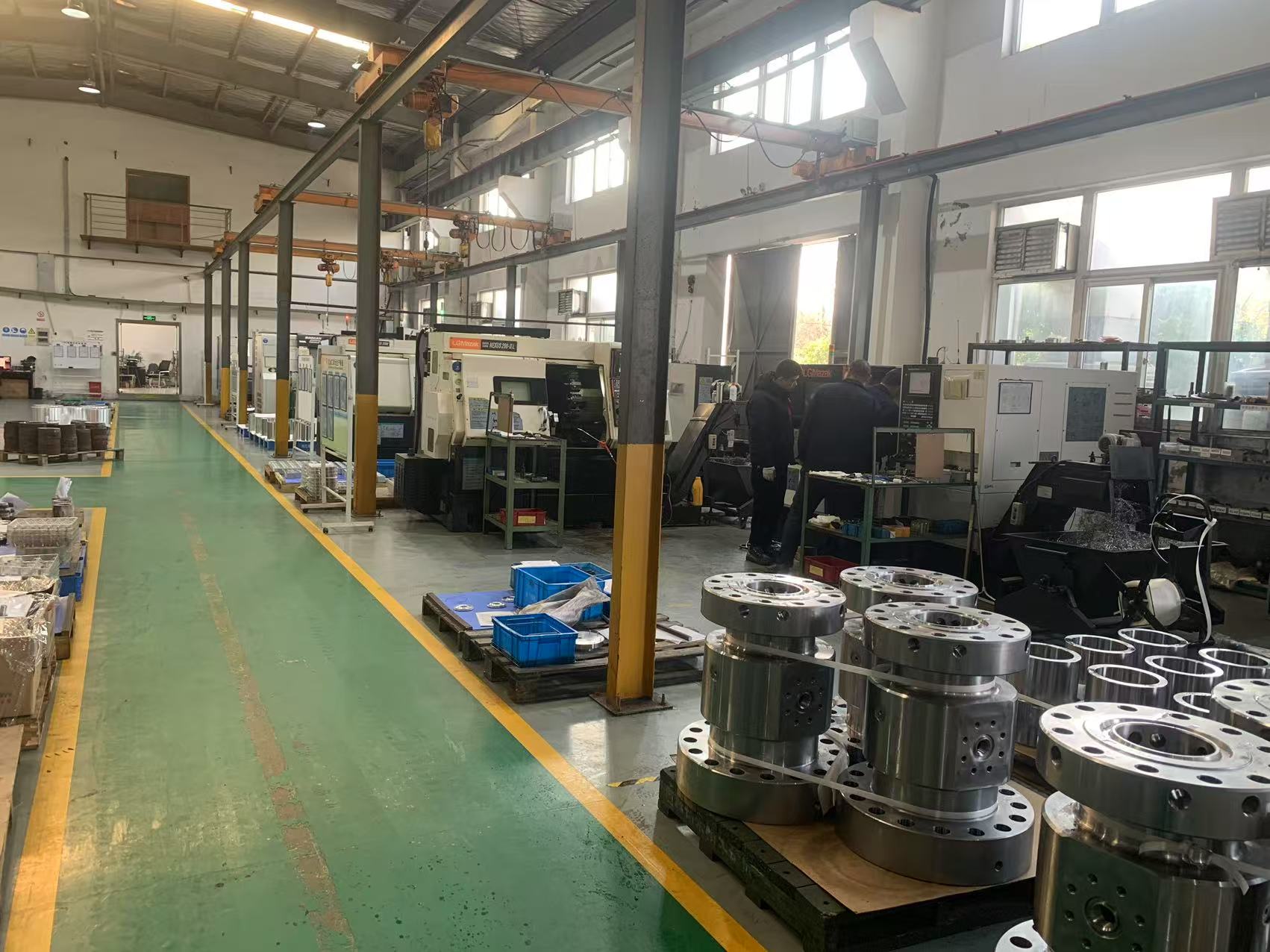
ECOD’s service scope combines CNC turning, milling, grinding and precision assembly in one production flow.
Materials: Metals, Alloys and Engineering Plastics
Material choice is a cost and risk decision as much as a technical one. The groups below cover the majority of production CNC work.
| Material group | Examples | Why it is specified | Machining consideration |
|---|---|---|---|
| Aluminum | 6061-T6, the most widely used material in CNC machining because of its machinability and strength-to-weight ratio (Xometry) | Light weight, good finish, fast cycle times | Cuts quickly; wall thickness and clamping need attention on thin features |
| Stainless steel | Common austenitic and martensitic grades | Corrosion resistance, strength, cleanability | Requires controlled speeds and feeds to manage work hardening |
| Copper and brass | Electrical and thermal components | Conductivity, corrosion resistance, fine finishes | Softer materials demand sharp tooling and chip management |
| Titanium | Aerospace and medical grades | Strength-to-weight ratio, biocompatibility | Low thermal conductivity means heat stays at the cutting edge |
| Alloy steels | Heat-treatable engineering steels | Toughness, wear resistance after heat treatment | Machining condition and heat-treatment sequence must be planned |
| Engineering plastics | POM (acetal) and nylon | POM holds dimensions well and runs with low friction; nylon is tough and wear-resistant | Heat and chip control matter; nylon absorbs moisture, so allowances are needed |
ECOD’s stated material range covers aluminum, stainless steel, copper and various alloy steels, machined on 3-, 4- and 5-axis machining centers, CNC lathes and precision grinding equipment. POM and nylon sit in the same subtractive category and are commonly machined on the same class of equipment; buyers specifying plastics should confirm material availability and the required grade before releasing an order.
Where CNC Machining Fits in Smart Manufacturing
Smart manufacturing depends on parts that behave exactly as their digital definition predicts. A CAD model, a CAM toolpath and a machined component are three states of the same data, and CNC machining is the step that converts the digital definition into a physical object with a measurable deviation.
That is why precision machining sits underneath several of the industries driving automation:
- Semiconductor equipment. Ultra-precision machining centers serving semiconductor fab equipment are projected to grow at 8.36% CAGR from 2026 to 2031 (Mordor Intelligence) — growth driven by equipment that cannot tolerate dimensional drift.
- Automation and robotics. Automated lines multiply the consequence of a single out-of-tolerance part, because one bad component can stop an entire station.
- Medical devices. Medical CNC machining must comply with ISO 13485 for quality management systems in medical device production (ISO).
- Aerospace. Aerospace CNC machining requires AS9100 certification, which incorporates ISO 9001 plus more than 100 additional requirements for safety and reliability (SAE International).
- Automotive. Automotive remains the largest single end-user segment at 28.6% of total market revenue in 2025 (Dataintelo).
The industry backdrop reinforces the same point from the labour side: with 75,000 CNC operator roles reported unfilled in the United States in 2023 (Gitnux), shops increasingly rely on programmed, repeatable machining rather than manual skill alone. In both cases, the value of CNC machining in a smart factory is not speed by itself — it is repeatability that can be inspected and documented.
What a Long-Term CNC Machining Partner Should Be Able to Show
A first order can be won with a good quote. A third year of orders is won with evidence. The capability set below is what ECOD presents to buyers evaluating a long-term CNC machining relationship for OEM parts:
- Process breadth under one roof. CNC turning, milling, grinding and precision assembly, supported by 3-, 4- and 5-axis CNC machining centers, CNC lathes and precision grinding equipment — so a part does not need to be re-qualified across multiple vendors.
- Engineering input before cutting. A team of 25 engineers provides DFM (design for manufacturability) optimization intended to simplify production and reduce cost.
- Stated dimensional capability. A tolerance capability of ±0.005 mm, with 100% dimensional inspection across production.
- Documentation by default. Complete material certificates and dimensional inspection reports are provided for all orders.
- Batch flexibility. Production covering prototypes, small batches and mass production, from a facility of 40,000 m² with a workforce of 350 and an annual output of 1,000,000 units.
- Export orientation. A 100% export ratio, serving Europe, the Middle East, North America and Asia.
None of these items is unusual in isolation. What matters for a long-term relationship is whether they hold simultaneously — because a supplier that machines to tolerance but cannot document it, or documents it but cannot repeat it at volume, cannot support a repeating OEM program.
Step-by-Step Breakdown: From Drawing to Delivered Parts
The sequence below reflects how a precision CNC machining order is typically executed, and it doubles as a checklist for buyers who want to know where risk is created and where it is eliminated.
- RFQ and design review. The drawing or 3D model is reviewed for manufacturability. This is where DFM optimization happens, and where tolerance, material and process decisions are made before any metal is cut.
- Quotation. ECOD issues quotations within 12–24 hours. A quote worth comparing should name the process route, the material, the inspection method and the commercial terms rather than a single price.
- Material procurement and verification. Raw material is sourced against the specified grade, and raw material certification verification forms part of the risk-control chain.
- Production planning. The part is assigned to milling, turning, drilling, EDM or grinding, alone or in combination, based on geometry and tolerance rather than convenience.
- First article inspection. The first part produced is measured against the drawing before the batch continues — the earliest practical point to catch dimensional tolerance deviation.
- In-process inspection. Precision inspection control, including CMM inspection, runs through production, supported by 100% dimensional inspection.
- Finishing and assembly. Grinding and precision assembly are applied where fit, finish or sub-assembly delivery is required.
- Final documentation and shipment. Material certificates and dimensional inspection reports are issued with the order. Acceptance criteria are Factory Inspection, and payment terms are a 30% deposit with the 70% balance paid before shipment.
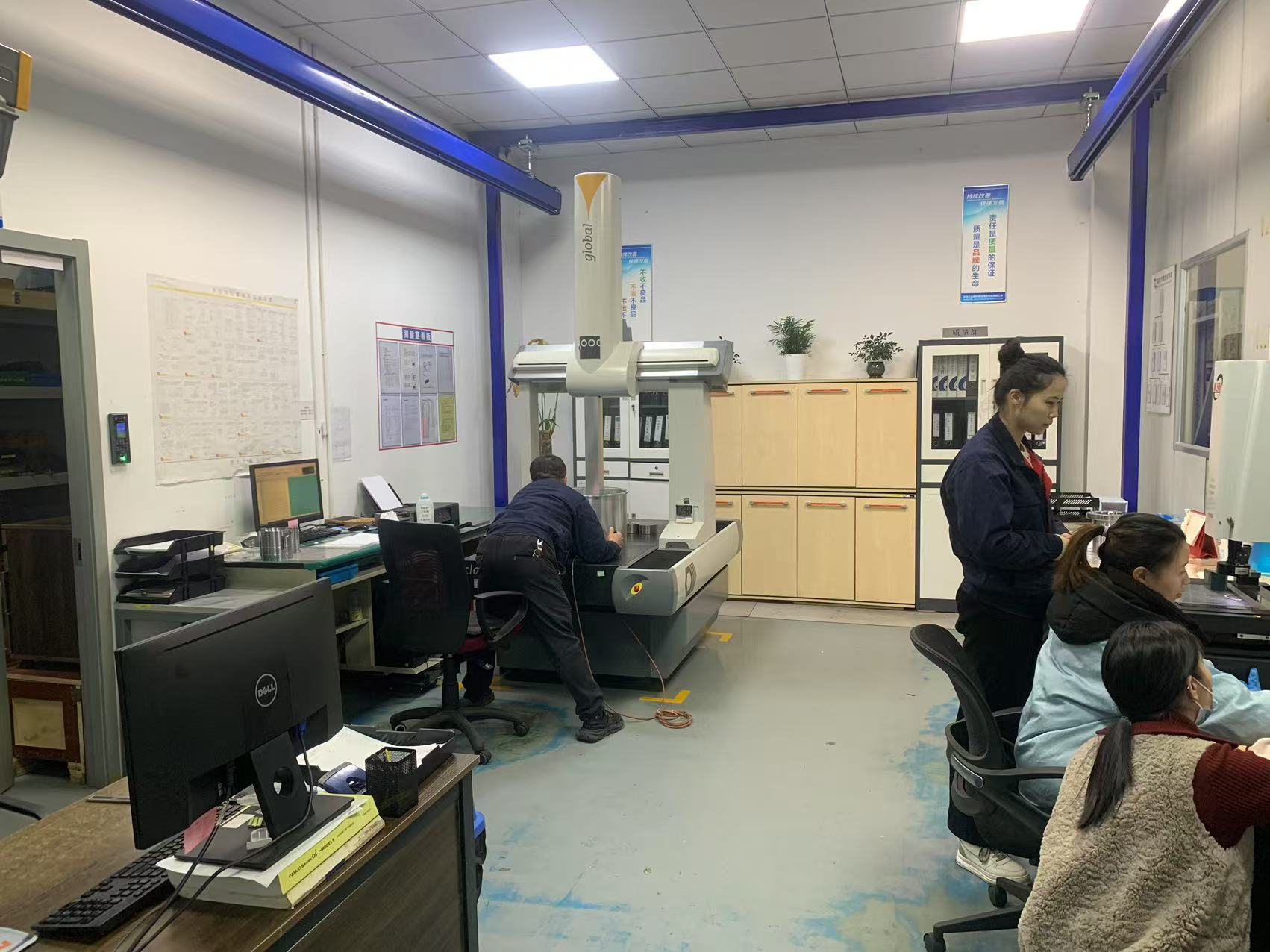
Risk control in manufacturing is achieved through precision inspection control: CMM inspection, first article inspection and raw material certification verification.
Commercial terms to confirm before releasing a repeat order
Long-term CNC machining relationships usually fail on commercial detail rather than on machining skill. ECOD’s published purchasing terms are specific enough to be written into a purchase order:
- Minimum order quantity: 1 unit, which allows single-part validation as well as volume production.
- Delivery terms: EXW, FOB, CIF, CIP, FCA, CPT, CFR, DAP and DDP.
- Acceptance criteria: Factory Inspection.
- Payment terms: a 30% deposit with the 70% balance paid before shipment.
Use Cases: Where Precision Machined Parts Carry the Most Risk
The consequences of a dimensional deviation are not equal across industries. In ECOD’s stated application focus, three areas account for most of the precision demand:
Aerospace components
Where AS9100 certification — ISO 9001 plus more than 100 additional safety and reliability requirements (SAE International) — governs the supply chain. Material traceability and inspection records are part of the deliverable, not an optional extra.
Medical devices
Governed by ISO 13485 for quality management systems in medical device production (ISO). Titanium and stainless steel are common material choices, and repeatability across batches is the core requirement.
Oil & gas equipment
Components operate in service conditions where replacement is expensive and failure is costly, which places the emphasis on material verification and consistent dimensional results.
Automation, new energy and general industrial equipment
Automotive alone represented 28.6% of total CNC machining market revenue in 2025 (Dataintelo). For automation and new energy applications, machined parts are frequently one element in a larger automated system, so consistency between units matters as much as the accuracy of any single unit.
Across all four, the batch profile matters too. Prototypes validate design intent, small batches validate process stability, and mass production validates whether the supplier’s control system holds over time — which is why a supplier able to support all three is better positioned for a long-term program than one optimized for a single volume band.
Comparison: ECOD’s Stated Capability Against a Conventional Workshop Benchmark
The benchmark used in ECOD’s own supplier assessment is the conventional machining workshop. The values below are ECOD’s stated capability figures from that assessment, with the buyer-side implication made explicit.
| Comparison dimension | Suzhou ECOD Precision Manufacturing Co.,Ltd | What it changes for a buyer |
|---|---|---|
| Dimensional tolerance | ±0.005 mm | Determines whether the part suits tight-fit aerospace, medical or oil & gas assemblies |
| Inspection coverage | 100% dimensional inspection | Reduces incoming inspection load and the risk of a slipped defect reaching assembly |
| Quotation turnaround | Within 12–24 hours | Shortens the sourcing cycle and allows faster comparison between process routes |
| On-time delivery rate | Above 98% | Supports production planning commitments to the buyer’s own customers |
| Engineering support | Fast engineering support; stable delivery performance | Lowers the cost of design changes and process adjustments during a program |
| Batch economics | Comprehensive production cost reduced by 10% for medium and large batch orders compared with conventional machining workshops | Matters most where annual volumes justify tooling and process optimization |
| Effect on maintenance | Stable quality minimizes maintenance and replacement frequency | Reduces total cost of ownership after the part enters service |
| Effect on operations | Consistent quality supports long-term stable operation | Protects uptime in automated and continuous-production environments |
| Best-fit applications | Aerospace components; medical devices; oil & gas equipment | Helps buyers judge application fit before requesting a sample |
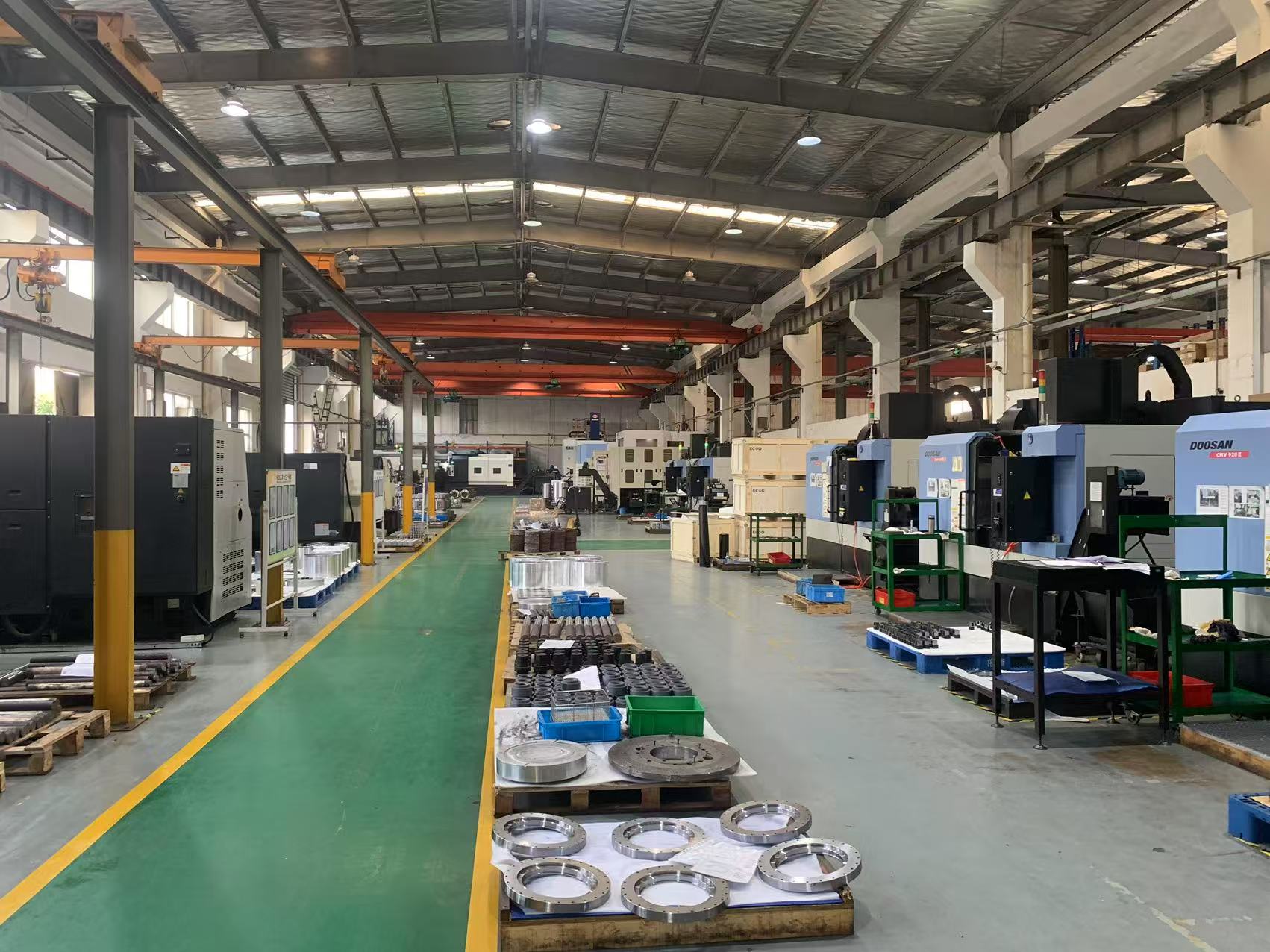
3-, 4- and 5-axis machining centers, CNC lathes and precision grinding equipment support custom CNC machining from prototype to mass production.
FAQ: Long-Term CNC Machining Supply for OEM Parts
1. What quality controls and documentation support a long-term CNC machining program?
Risk control in manufacturing is achieved through precision inspection control methods. For the primary risk type — dimensional tolerance deviation — ECOD applies CMM inspection, first article inspection and raw material certification verification. Complete material certificates and dimensional inspection reports are provided for all orders, and the agreed acceptance criterion at delivery is Factory Inspection.
2. Can one supplier handle both CNC milling and CNC turning for OEM parts?
Yes. ECOD’s service scope includes CNC turning, milling, grinding and precision assembly, supported by 3-, 4- and 5-axis machining centers, CNC lathes and precision grinding equipment. Stated dimensional capability is ±0.005 mm with 100% dimensional inspection, and the machined material range covers aluminum, stainless steel, copper and various alloy steels. Production supports prototypes, small batches and mass production from a 40,000 m² facility with 350 employees and an annual output of 1,000,000 units.
3. What are the minimum order quantity, payment terms and delivery conditions?
The minimum order quantity is 1 unit. Payment terms consist of a 30% deposit with the 70% balance paid before shipment. Delivery terms available are EXW, FOB, CIF, CIP, FCA, CPT, CFR, DAP and DDP, and the acceptance criterion is Factory Inspection. For medium and large batch orders, ECOD states that comprehensive production cost is reduced by 10% compared with conventional machining workshops.
4. Can I validate parts before committing to a long-term supply agreement?
Yes. A minimum order quantity of 1 unit supports single-part validation, and production covers prototypes, small batches and mass production. Validation is backed by first article inspection before a batch proceeds, plus material certificates and dimensional inspection reports on delivered orders — the evidence a buyer needs before scaling to repeat orders.
5. How fast are quotations and repeat-order deliveries handled?
ECOD issues quotations within 12–24 hours and reports an on-time delivery rate above 98%. Repeat orders benefit from the same inspection chain as first orders, which is what keeps delivery performance stable over a multi-year program. To start a validation order or request pricing for an OEM program, you can send your drawing to ECOD or contact the team directly at info@ecodcn.com.
Conclusion
CNC machining is a subtractive process in which programmed machine tools convert a digital definition into a physical part. The explanation of milling, turning, drilling, EDM and grinding is the foundation; the practical value for a buyer is knowing which process, which material, which inspection method and which commercial terms are attached to a specific order.
In a smart manufacturing environment, that combination — repeatable geometry plus verifiable documentation plus stable commercial terms — is what makes a supplier usable over time rather than for one purchase. A capability statement such as ±0.005 mm tolerance, 100% dimensional inspection, CMM and first article inspection, material certificates on every order, quotations within 12–24 hours and an on-time delivery rate above 98% is only meaningful when it is repeated on the tenth order as well as the first.
Buyers evaluating a long-term CNC machining service for OEM parts can test that claim in one step: send a drawing and validate a single unit.
Next step: validate before you commit. Request a quotation within 12–24 hours, order a single validation part (MOQ 1 unit), or download the full capability brochure.
Download: ECOD CNC Machining Capability Brochure (PDF)
Email: info@ecodcn.com | Tel: +86 15527751869 | WhatsApp: +8618086086615 | Website: www.ecod-cncmachining.com
Suzhou ECOD Precision Manufacturing Co.,Ltd — No.151, Huashan Road, Suzhou New District, 215129, Suzhou, China.
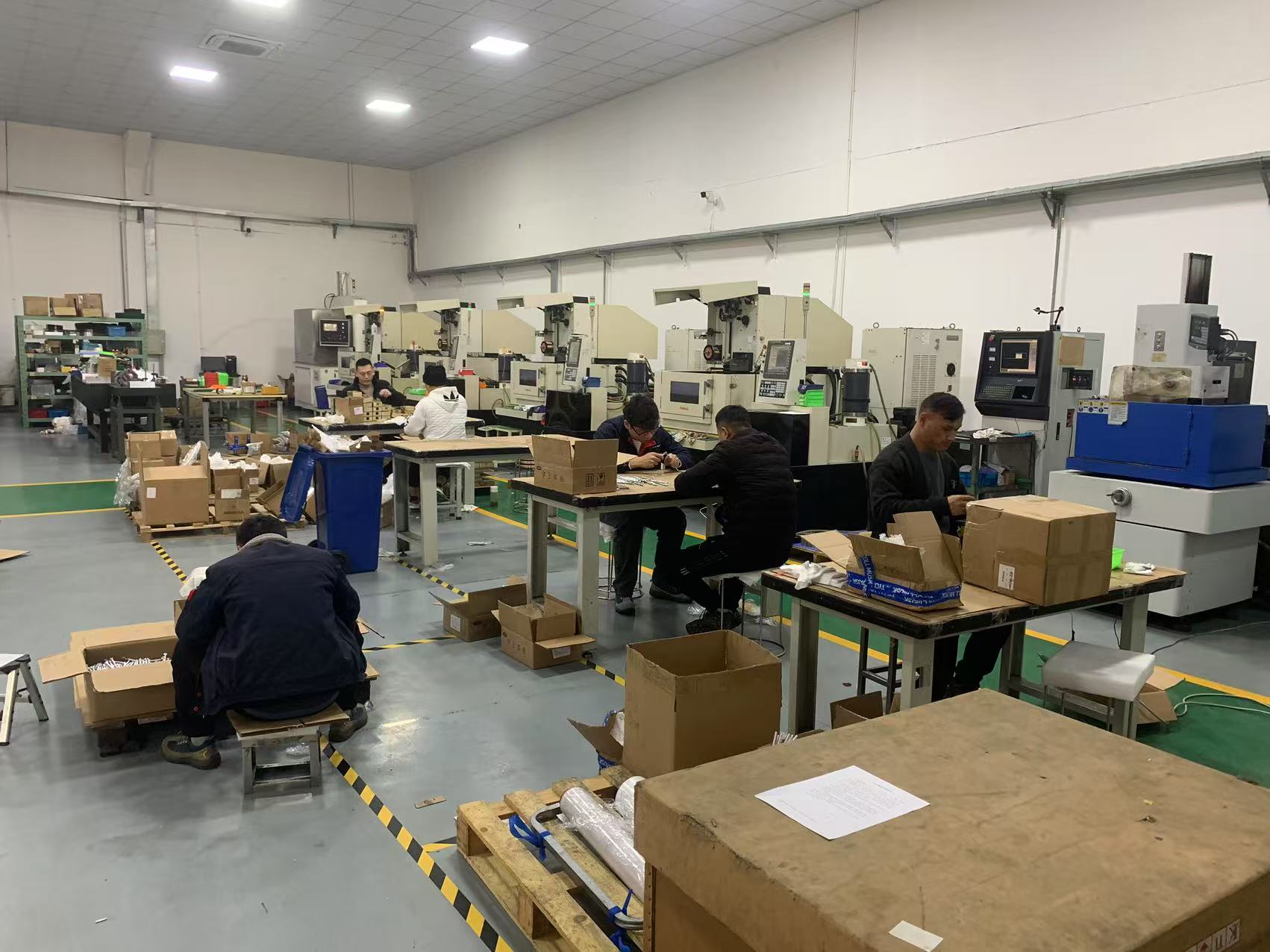
ECOD supports OEM machining programs from prototype through repeat mass production orders.
Have Questions or Need More Details?
Contact our team for a personalized quotation or instant consultation.
Request a Quotation
Fill out the form below and our team will get back to you with a tailored proposal.
WhatsApp Direct Chat
Prefer to chat in real-time? Message us on WhatsApp for instant assistance & quick answers.
- Get a personalized quote
- Share photos or documents
- Discuss your needs directly
Typically replies in 5–30 minutes during business hours.