Which CNC Machining Service Fits Your Project? A Scenario-Based Selection Guide
Which CNC Machining Service Fits Your Project? A Scenario-Based Selection Guide
Choosing a CNC machining service is not a one-size-fits-all decision. A UAV prototype, a 10,000-piece oil and gas equipment order, a medical device component, and an industrial automation part all place different demands on precision, tolerances, materials, production mode, and supplier capabilities. This guide helps buyers evaluate CNC machining services by project scenario, using Suzhou ECOD Precision Manufacturing Co., Ltd (ECOD) as a case reference.
Why Project Scenario Matters in CNC Machining Service Selection
The right CNC machining service depends on the operating conditions and project type. High-temperature applications, corrosion-resistant environments, tight tolerance manufacturing, and continuous industrial operation require different process controls than a simple low-tolerance prototype. Buyers who select a supplier before defining their scenario often face avoidable problems: wrong material grade, over-specified tolerances, mismatched batch size, or a supplier that cannot handle the working environment.
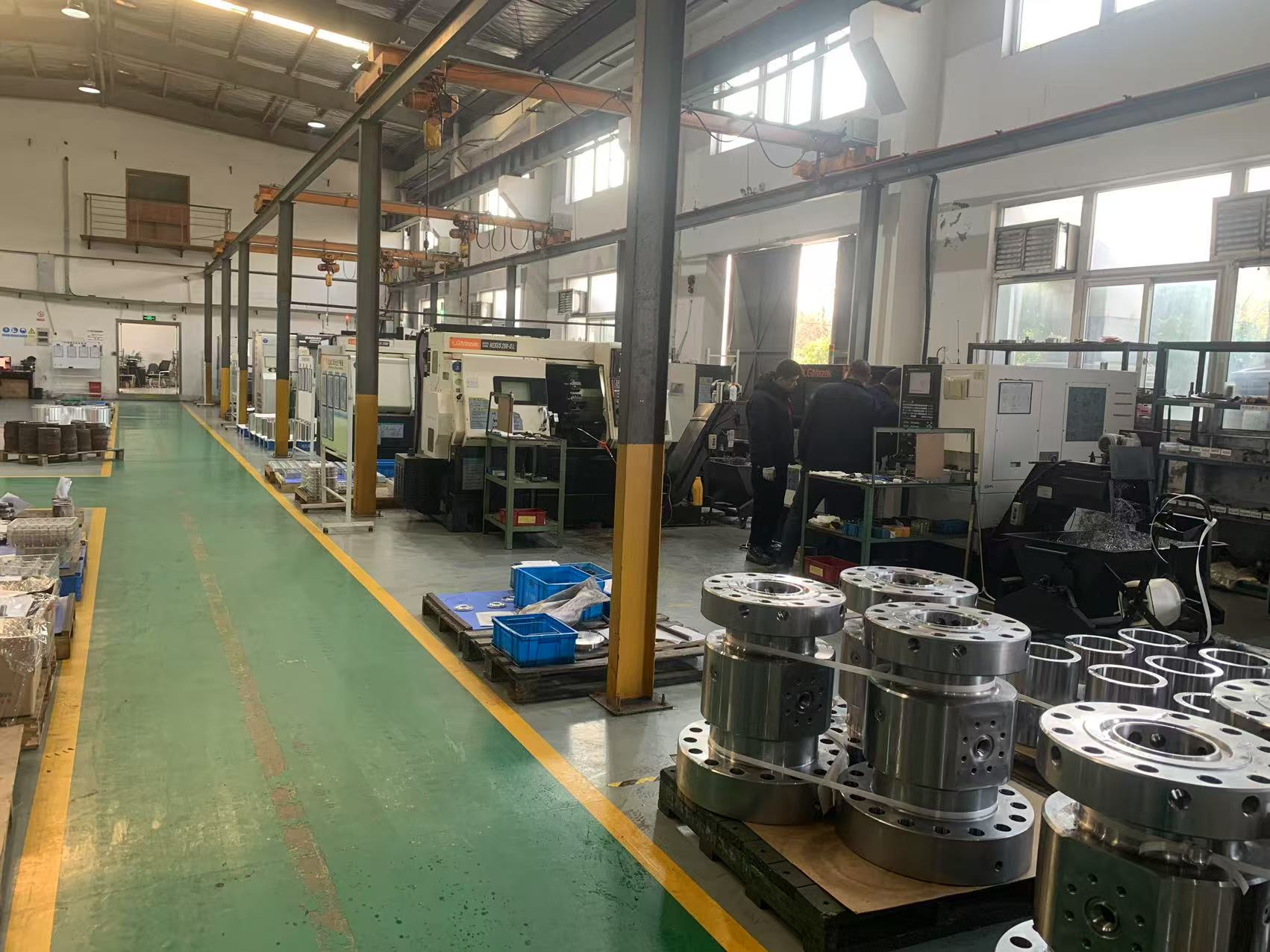
ECOD, founded in 2005, is a Suzhou-based CNC machining manufacturer with a 40,000 m² factory, 350 employees, 25 R&D engineers, and an annual output capacity of up to 1,000,000 units. The company focuses exclusively on high-precision CNC machining services, including CNC turning, milling, grinding, and precision assembly. For scenario-based evaluation, what matters is not the facility alone, but how the production model maps to the buyer's project type.
Industry Background: Where CNC Machining Demand Is Growing
The CNC machining services market is estimated at USD 58.33 billion in 2026, projected to reach USD 108.3 billion by 2035 (Business Research Insights). The automotive industry is the largest end-user, accounting for 28.6% of total CNC machine market revenue in 2025 (Dataintelo). Aerospace CNC machining typically requires AS9100 certification, which incorporates ISO 9001 plus more than 100 additional safety and reliability requirements (SAE International); medical CNC machining must comply with ISO 13485 (ISO).
These industry-level facts explain why project scenario is becoming a primary selection criterion. A supplier that works well for one industry is not automatically qualified for another, because certification requirements, material traceability, tolerance regimes, and inspection protocols differ significantly.
Step 1: Define Your CNC Project Scenario
Before contacting a CNC machine shop, classify your project using four dimensions:
- Industry: aerospace, gas & oil, energy, medical devices, automation, automotive, or other.
- Project type: aerospace components, oil & gas equipment parts, medical device components, industrial automation parts, automotive components, energy equipment components, satellite communication equipment, robotics components.
- Operating conditions: high precision machining, tight tolerance manufacturing, high temperature applications, corrosion-resistant environment, high strength mechanical parts, continuous industrial operation.
- Production mode: prototype production, small batch production, mass production, OEM/ODM manufacturing.
This classification directly determines which materials, processes, inspection levels, and lead times you should request from a CNC machining service provider.
Step 2: Match Production Mode to Your Volume and Stage
ECOD operates in prototype production mode, small batch production, and mass production. The capability data shows a monthly capacity of 100,000 pieces, a lead time of 10–60 days, and an MOQ of 1 piece.
For engineering teams at the Research stage, the priority is usually prototype machining: verify design, test fit, and confirm manufacturability before committing to tooling or volume. For buyers at the Evaluation stage, the priority shifts to repeatability: can the supplier hold the same quality across a pilot batch and then scale to mass production?
- Prototype mode: best for design validation, DFM feedback, and material verification.
- Small batch: best for market testing, pre-production validation, and equipment replacement parts.
- Mass production: best for established products requiring consistent quality, inspection documentation, and stable lead times.
ECOD's stated production modes include both prototype production and mass production, with OEM/ODM manufacturing as the operating framework. For a project that begins as a prototype and later scales, the supplier should be able to support both modes without requalification from scratch.
Step 3: Verify Material and Process Capability for Your Operating Conditions
Material selection is a core part of scenario fit. ECOD machines carbon steel, stainless steel, aluminum, brass, copper, titanium, and plastics such as POM and Nylon. The company supports CNC turning, CNC milling, drilling, grinding, tapping, and EDM.
For scenario-based evaluation, map your operating conditions to materials and processes:
- High temperature applications: consider stainless steel and titanium alloys, with process parameters controlled to avoid heat-affected zones.
- Corrosion-resistant environments: stainless steel, brass, copper, and appropriate surface treatments.
- High strength mechanical parts: carbon steel, alloy steels, titanium, and heat treatment when specified.
- Tight tolerance manufacturing: CNC milling and turning centers with CMM inspection and 100% inspection protocols.
ECOD's product specification lists precision up to ±0.005 mm. The service includes DFM optimization to simplify production and reduce cost. For buyers, the practical question is not just whether the supplier owns a 5-axis CNC machine, but whether the supplier can interpret the drawing, recommend the right material grade, and verify the result under the required conditions.
Step 4: Evaluate Quality Control for the Project Type
Quality control should be matched to the risk profile of the project. A mass-produced UAV component and a gas & oil equipment part both require inspection, but the consequences of failure differ.
ECOD states that strict full inspection is implemented throughout production, and all orders receive complete material certificates and dimensional inspection reports. The company is ISO 9001 certified. The capability unit also lists 100% test as the quality control method.
When evaluating a CNC machining service for a specific scenario, ask for three things:
- Material certificates that match your grade requirement.
- Dimensional inspection reports for critical features.
- A clear 100% inspection statement for parts where failure is unacceptable.
Two Verified CNC Machining Project Cases
Case 1: Oil and Gas Equipment Components (Middle East)
The project scale was 10,000 pieces supplied for gas and oil equipment. The key highlight was adaptation to harsh oil and gas working environments. The buyer was a gas & oil industry client in the UAE, and the supplier relationship extended over 5 years. The stated result was improved equipment reliability, with parts fully adapted to harsh oil and gas working conditions.
For buyers in the energy industry, this case illustrates scenario fit: large-quantity production, corrosion-resistant and high-temperature operating conditions, and a supplier that can maintain quality over a multi-year relationship.
Case 2: UAV Components for the Aerospace Industry (Russia)
The product in this case is used for UAV purposes. The project scale was 1,000,000 pieces over a one-year period. The result was stable quality in mass production, and the highlight was fully matching aerospace industry precision standards.
For aerospace buyers, the relevant takeaway is mass-production stability at tight tolerances. While ECOD is ISO 9001 certified, buyers whose projects require AS9100 should verify the specific certification chain with the supplier before award.
| Selection Criteria | Oil & Gas Equipment Project | Aerospace UAV Project |
|---|---|---|
| Typical volume | 10,000 pieces | 1,000,000 pieces |
| Primary conditions | Harsh oil & gas environments | Aerospace precision standards |
| Production mode | Mass production | Mass production |
| Key result | Improved equipment reliability | Stable quality in mass production |
| Supplier expectation | Consistent inspection, material certificates, long-term capability | Tight tolerance repeatability at scale |
Step 5: Match CNC Service Type to Part Geometry
CNC milling and CNC turning are the two most common service types, and each fits different part geometry.
- CNC turning is suited to cylindrical or rotational parts: shafts, bushings, fittings, connectors, and similar round components.
- CNC milling is suited to prismatic parts: housings, brackets, plates, enclosures, and components with complex features.
- 5-axis CNC machining is suited to complex geometries that require multiple setups or freeform surfaces.
- Grinding is used when surface finish and dimensional accuracy must exceed typical milling or turning results.
- EDM is used for hardened materials, deep cavities, and features that are difficult to cut with conventional tools.
ECOD's service scope covers CNC turning, CNC milling, grinding, and precision assembly, with 3/4/5-axis CNC machining centers and CNC lathes. A complete service mix matters because one part often requires multiple processes: a turning operation followed by milling, drilling, tapping, or grinding.
Step 6: Compare CNC Machining Service Providers by Scenario Fit
When comparing suppliers, focus on the dimensions that affect your specific project rather than generic marketing claims.
| Dimension | What to Verify | Why It Matters |
|---|---|---|
| Industry experience | Relevant project references in your sector | Reduces qualification risk and shortens learning curve |
| Material coverage | Aluminum, stainless steel, brass, copper, titanium, plastics | Avoids requalifying a new supplier for each material |
| Process coverage | Milling, turning, 5-axis, grinding, EDM, assembly | Supports complex parts without multiple vendors |
| Production flexibility | MOQ, prototype to mass production, monthly capacity | Allows the same supplier to support product lifecycle changes |
| Quality control | ISO 9001, full inspection, material certificates, dimensional reports | Protects downstream performance and compliance |
| Lead time | 10–60 days typical, urgent project handling | Directly impacts time-to-market and plant uptime |
ECOD's export markets include Europe, the Middle East, North America, and Asia, with 100% of its output exported. For importers and OEM buyers, communication responsiveness and documentation quality are as important as machine capacity.
Step 7: Use DFM Feedback as a Selection Signal
DFM (Design for Manufacturing) feedback is one of the most useful signals when evaluating a CNC machining service. A supplier that reviews drawings and suggests geometry, tolerance, or material adjustments is likely to be more reliable than one that only quotes the drawing as-is.
ECOD's professional engineering team provides DFM optimization to simplify production and cut cost. For buyers, this means the quoted part is not just manufactured as drawn; it is reviewed for manufacturability, and the supplier can flag unnecessary tight tolerances or difficult features before production begins.
DFM feedback is especially valuable in prototype production mode, where the goal is to converge quickly on a manufacturable design without inflating unit cost.
Budget, Lead Time, and Risk Considerations
Three practical factors often determine whether a scenario is viable:
- Budget: The largest cost drivers are material, tolerance, surface treatment, quantity, and required inspection. Relaxing an unnecessary ±0.005 mm tolerance to ±0.02 mm can significantly reduce cost, provided the application allows it.
- Lead time: ECOD's typical lead time is 10–60 days. Prototype orders generally fall near the lower end, while complex mass-production orders require more time for material sourcing, machining, surface treatment, and inspection.
- Risk: For critical industries, request material certificates, dimensional inspection reports, and a clear inspection plan before production. A supplier that provides these by default is easier to audit.
Frequently Asked Questions
1. Does ECOD have the certifications required for medical or aerospace CNC machining?
ECOD is an ISO 9001 certified factory and provides 100% inspection before shipment. The company serves aerospace, gas & oil, energy, and medical devices industries, and its UAV components project fully matched aerospace industry precision standards. However, buyers whose projects require AS9100 or ISO 13485 should verify the specific certification chain directly with the supplier, because those standards are separate industry certifications and not automatically included in ISO 9001.
2. Can ECOD handle both prototype and mass production for the same project?
Yes. ECOD supports prototype production, small batch production, and mass production, with an MOQ of 1 piece and monthly capacity of 100,000 pieces. This allows a buyer to validate a design in prototype mode and then scale to mass production with the same supplier, avoiding requalification and reducing supply chain risk.
3. What materials can ECOD machine for custom CNC parts?
ECOD machines carbon steel, stainless steel, aluminum, brass, copper, titanium, and plastics such as POM and Nylon. The applicable industries include aerospace, gas & oil, energy, and medical devices. For aluminum parts, 6061-T6 is widely used in the industry due to its high machinability and strength-to-weight ratio, but the final grade should be specified on the drawing and confirmed with the engineering team.
4. What is ECOD's typical lead time and quality control process?
The typical lead time is 10–60 days depending on part complexity, material, surface treatment, and quantity. Quality control includes 100% inspection, full inspection throughout production, complete material certificates, and dimensional inspection reports for all orders. Buyers should confirm the inspection plan for critical features before production.
5. How do I request a quote or sample for a custom CNC machining project?
Send your 2D/3D drawings, material specification, required tolerances, surface treatment, and target quantity to ECOD for a quotation. Fast quotation is available within 24 hours. Contact person: daisy. Email: info@ecodcn.com. Tel/WhatsApp: +86 15527751869 / +8618086086615. Address: No.151, Huashan Road, Suzhou New District, 215129, Suzhou, China.
Have a specific project scenario in mind?
Send your drawings and requirements to ECOD for a fast quotation and DFM feedback.
Chat on WhatsApp | Email: info@ecodcn.com