
Cotton Harvester Application Guide: Configuring for Row Spacing and Field Layout
The short answer: configure the harvester from the field backward. Start with the planting pattern and row spacing, then set the number of rows per pass and the header width, then choose the collection format, then the drive configuration, and only then the operating parameters such as ground speed and headland turning. When all of these match the field, quality losses and cost per harvested hectare fall together. When one of them is mismatched, the machine pays back more slowly regardless of how well it is built.
Cotton is harvested once, inside a narrow window, by a machine that either works with the field or fights it. Row spacing, planting pattern, field length, headland width and the distance from field to gin decide how many rows a harvester should take per pass, how fast it can travel, and whether the crop should leave the field as a round bale or in a basket. These are configuration decisions, not catalogue decisions, and they determine both the grade of cotton delivered to the gin and the cost per harvested hectare.
This guide is written for procurement teams, farm managers and distributors who buy equipment across more than one geography. It treats configuration as a cost-control instrument rather than a specification list.

Figure 1: A four-row basket-type cotton picker. Row count and collection format are the two configuration choices that most directly determine field fit.
Problem Definition: Why a Machine That Fits the Catalogue Can Still Miss the Field
Cotton harvester specifications are usually compared on paper: number of rows, engine power, basket or bale capacity, unloading height. Field fit is rarely on that sheet, yet it is where most avoidable cost appears. Three mismatches account for the majority of it.
1. Row-count and header mismatch
A header is only efficient when its row units line up with the rows the planter actually created. If the planted block is narrower than the working width, or if the planter left skip rows or inconsistent spacing, a wide header straddles rows, misses plants and forces repeated passes over the same ground. A header that is too narrow produces the opposite problem: more passes, more turns, more fuel and more operator hours for the same tonnage.
2. Collection-format mismatch
A bale-type machine packages seed cotton in the field. A basket-type machine accumulates the crop and depends on trailers, module builders or a short haul to the gin. Choosing the wrong one creates a bottleneck at the headland rather than in the field: machines wait for transport, or transport waits for machines. Both are paid for in labor hours.
3. Speed and turning mismatch
Ground speed is a quality parameter as much as a productivity parameter. Running faster than the crop and field condition allow usually increases trash and bark content and raises harvest losses; running slower than the field allows wastes capacity that has already been paid for. Field geometry decides which of the two happens: long, level runs reward speed, while short runs, narrow headlands and irregular shapes convert speed into turning time.
The procurement question behind the configuration decision
Buyers rarely ask for the largest machine available. The working question is how to protect quality while holding cost per harvested hectare under control. Configuration answers it because it moves both sides of that ratio at once: it reduces losses and handling cost while avoiding capacity that the field can never absorb.
Industry Background: Why Field Layouts Differ, and Why Configuration Is a Regional Decision
Cotton is planted in a very wide range of row patterns. The pattern is set by the planter, by the irrigation method, by variety and growth habit, by soil type and by local practice. Some systems plant on beds with furrow irrigation, others plant flat; some use uniform single rows, others use double rows or skip-row patterns; narrow-row configurations are used where the growing season, variety or machinery set favours higher plant populations, while wide-row configurations remain common where water, soil or equipment history dictate wider gaps.
Field geometry varies just as much. One operation may harvest large, level, rectangular blocks with long runs and generous headlands; another may work fragmented plots with short runs, access tracks cutting the block, obstacles at the corners and limited turning space. Labor availability, contract-harvesting practice and the distance to the gin add a second layer: the nearer the gin, the more practical it is to move loose seed cotton; the further away, the more valuable in-field packaging becomes.
The result is that configuration is a regional decision. A machine specified for one cotton region can be a poor financial choice in another even when it is technically capable of harvesting there.
Where Swan Company fits into this picture
Shandong Swan Cotton Industry Machinery Stock Co., Ltd. (Swan Company) is a Chinese manufacturer of cotton industry machinery, founded in 2002 with roots going back to 1946 and listed on the Shanghai Stock Exchange Main Board in 2016 under stock code 603029. The company operates four technology centers and production bases — Jinan in Shandong (headquarters), Wujiaqu in Xinjiang, Hulunbuir in Inner Mongolia and Montgomery in the United States — together with six holding subsidiaries and four branch companies that operate as technical service centers. Its products are exported to more than 30 countries and regions.
For configuration work, the relevant part of that structure is geographic coverage rather than company size. Row spacing and field layout are regional facts, and a supplier with manufacturing, technical and service presence in more than one cotton region can evaluate a configuration against local planting practice instead of a single domestic standard. Swan Company reports first place in industry new market share for complete sets of cotton processing machinery both domestically and internationally, and holds more than 190 national invention patents while having presided over or participated in the formulation of 25 national and industry standards.
The harvester range spans three-row, four-row and six-row self-propelled machines in both bale type and basket type configurations, alongside single-row, double-row and tractor-mounted families that serve smaller or more fragmented operations elsewhere in the market.
Detailed Solution: The Four Configuration Levers
Configuration decisions should be taken in a fixed order, because each one constrains the next. Rows per pass sets the header; the header and field shape set the practical ground speed; the collection format sets the logistics chain; the drive type sets how the machine fits into the wider fleet.
Lever 1 — Rows per pass and header width
The number of rows harvested per pass is the single most consequential choice. It determines how many passes a block requires, and therefore how much turning, fuel and operator time the harvest consumes.
- Fewer rows: lower capital outlay, easier transport between fields, better fit for narrow blocks and irregular plots. The cost appears as more passes, more turns and higher labor per hectare.
- More rows: fewer passes and lower labor and fuel per hectare, but higher capital outlay and a hard requirement for large, regular blocks, wide headlands and a transport chain able to keep pace.
The decision rule is geometric rather than financial: if the block cannot absorb the working width without repeated short runs, the extra rows will not be used efficiently, and the capital spent on them is idle capacity.
Lever 2 — Row-spacing alignment
Row units must match the planter's spacing and the uniformity of the planted stand. Where spacing is consistent, a wider header can be used with confidence. Where spacing varies, or where double-row and skip-row patterns are in use, a machine with fewer rows usually holds alignment better and produces less plant damage and fewer missed rows. Before specifying a header, the planting pattern should be documented from the field rather than from the seeding plan.
Lever 3 — Collection format: bale type or basket type
Collection format is a logistics decision disguised as a machine decision.
- Bale type: packages seed cotton in the field, reducing the number of separate handling steps between field and gin. It suits operations with long transport distances, limited trailer fleets or a need to store seed cotton before ginning.
- Basket type: accumulates the crop for transfer at the headland. It suits operations with a short haul to the gin and a coordinated transport fleet, and it keeps the machine mechanically simpler.
Neither format is cheaper in isolation. The relevant comparison is the total handling chain: machine, transport, labor hours at the headland and any delay between harvest and ginning.
Lever 4 — Drive configuration: self-propelled or tractor-mounted
Self-propelled machines give independent scheduling and consistent control of ground speed, which matters when the harvest window is tight and the crop condition changes through the day. Tractor-mounted machines share an existing tractor fleet and reduce capital exposure, which fits smaller or fragmented acreage where a self-propelled machine would sit idle for much of the year. The trade-off is capacity and scheduling flexibility against capital cost.
Operating parameters — where configuration becomes performance
Ground speed, row alignment, headland turning pattern and unloading position are the settings that convert a correctly specified machine into a low-loss harvest. Long, level runs allow a higher working speed; short runs, sloping ground and frequent turns require a lower one. Headland width must be sufficient for the turning pattern and for unloading without blocking the next pass. Ground speed should be set by trash content and losses observed in the field, not by the maximum the machine can achieve.
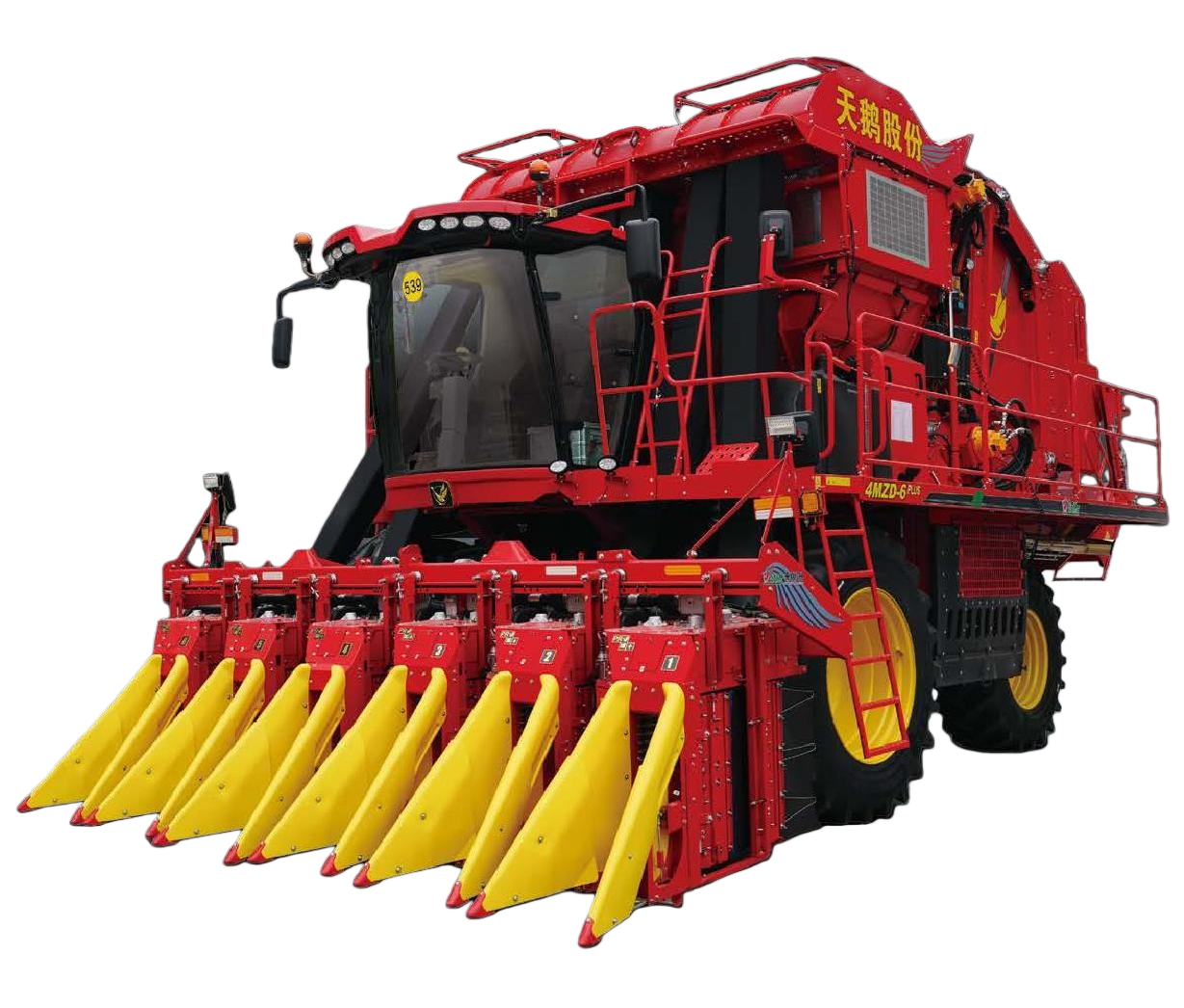
Figure 2: A six-row self-propelled cotton picker. Higher row counts reduce passes per block, but only where field shape and headland width allow the working width to be used.
Step-by-Step Breakdown: Configuring a Machine to a Specific Field
The sequence below is the order in which configuration decisions should be taken. It can be applied to a single farm or to a procurement programme covering several regions.
- Survey the field geometry. Record block length and width, total area, shape, obstacles, access tracks, slope, drainage and available headland. Field length matters more than total area, because it sets how much of each pass is productive and how much is turning.
- Document the planting pattern. Record the actual row spacing, whether rows are single, double or skip-row, the uniformity of the planter passes, variety and plant habit, and the expected defoliation timing. Photograph and measure the stand rather than relying on the seeding plan.
- Calculate passes and turning events. Divide the block width by the working width of each candidate configuration, then multiply the number of passes by the number of turns each pass requires. Compare configurations on total turning events, not only on nominal capacity — this is where wide headers lose their advantage in small or irregular blocks.
- Select the row count and header width. Choose the widest header that the block can absorb without excessive short runs and without compromising alignment on the actual planting pattern.
- Select the collection format. Map the distance from field to gin, the available transport fleet and any storage requirement. Choose bale type where in-field packaging removes handling steps; choose basket type where the haul is short and transport is coordinated.
- Select the drive configuration and fleet fit. Confirm whether the machine will work independently or share a tractor fleet, how many fields it must move between, and whether transport between blocks constrains the working width.
- Write a field procedure. Define the working speed range, the row-alignment method at the start of each pass, the headland turning pattern, the unloading position and the bale or basket drop point. A written procedure prevents the settings from drifting between operators and shifts.
- Validate in the field before committing the fleet. Run a demonstration or field evaluation on the actual planting pattern and measure losses, trash content and turning time under real conditions. Configuration assumptions that look reasonable on paper are frequently corrected by one day in the field.
- Price the total cost of ownership. Compare configurations on capital cost, labor and fuel per hectare, handling and transport cost, expected downtime, spare-parts availability and service distance — not on invoice price alone.
Use Cases: Matching Configuration to Field Layout
Large, level, rectangular blocks with long runs
This is the layout where high row counts pay for themselves. Long passes and wide headlands allow a six-row self-propelled bale-type machine to work at a stable speed with few turns, and in-field baling removes transport steps where the gin is far away. The configuration risk here is headland discipline: if the headland is too narrow for the turning pattern, the advantage of the extra rows is lost at every turn.
Narrow-row, high-density planting
Where the planter produces tighter row spacing, header alignment matters more than header width. A four-row or three-row configuration that holds alignment at a controlled ground speed usually delivers cleaner cotton than a wider header pushed through the same stand. Matching the row units to the actual spacing — and checking it before delivery — is the decisive step.
Fragmented plots with short runs and shared equipment
Small, irregular blocks with limited access favour lower row counts and, where a tractor fleet already exists, tractor-mounted or smaller self-propelled configurations. The cost logic here is utilization, not capacity: a machine that fits between plots and works short runs efficiently will out-perform a larger machine that spends its time turning and being relocated.
Contract harvesting across mixed layouts
Contractors work in several planting patterns in one season. A practical answer is a mixed fleet with a common row-unit logic, so that operators and spare parts are interchangeable, and a collection format that does not depend on each customer's transport arrangements — which is where bale-type configuration usually earns its place.
Gin-adjacent operations with a short haul
Where the gin is close and transport is well organized, basket-type machines keep the harvest moving with a simpler mechanical chain. The configuration decision then hinges on headland space for transfer and on how reliably trailers can be scheduled.

Figure 3: Configuration work depends on technical support — matching row units, collection format and operating parameters to the planting pattern actually present in the field.
Comparison Table: Configuration Families and Field Fit
The table below compares configuration families on field fit and on the cost logic that follows from it. It describes configuration types, not brand-specific models, and the suitability statements are planning guidance rather than measured performance data.
| Configuration family | Field layout it fits | Collection and drive options | Cost-control implication |
|---|---|---|---|
| Single-row or double-row | Fragmented plots, narrow access, short runs, small acreage | Tractor-mounted or small self-propelled; basket or simple collection | Low capital exposure and shared tractor use, offset by more passes and higher labor per hectare |
| Three-row self-propelled | Medium blocks, mixed or irregular layouts, narrow-row planting where a wider header would straddle | Bale type or basket type; self-propelled | Moderate capital with better alignment on tight spacing; turning time stays manageable in shorter runs |
| Four-row self-propelled | Regular blocks with moderate headlands; the middle of the range for mixed geographies | Bale type or basket type; self-propelled | Balanced passes per block and capital outlay; the safest starting point for multi-region procurement |
| Six-row self-propelled | Large, level, long-run fields with wide headlands and a transport chain that keeps pace | Typically bale type; self-propelled | Fewest passes and lowest labor and fuel per hectare, but highest capital and a genuine requirement for field regularity |
| Decision | Choose bale type when | Choose basket type when |
|---|---|---|
| Transport distance to gin | Long, or variable between fields | Short and predictable |
| Logistics fleet | Trailer or module capacity is limited | Coordinated trailer fleet is available |
| Storage before ginning | Seed cotton may need to wait | Ginning follows harvest closely |
| Headland space | Adequate for bale drop and pickup | Adequate for transfer at the headland |
Connecting Configuration to Total Cost of Ownership
Configuration is where cost per harvested hectare is set, long before the invoice is issued. Four cost lines move with it.
- Passes and labor: every additional pass adds fuel, operator hours and machine wear. Row count and field shape decide how many passes a block really needs.
- Handling and transport: bale versus basket changes how many times the crop is touched between field and gin, and how many people and trailers that requires.
- Quality losses: alignment and speed control affect trash content, bark and harvest losses — all of which are paid for at the gin rather than at the dealership.
- Downtime and service distance: parts availability and the distance to technical support determine how quickly an unplanned stop is cleared during a short harvest window.
Practical rule: compare configurations on cost per harvested hectare across all four lines, and treat unused capacity as a cost — not as insurance. A machine that is 20 percent oversized for its fields does not deliver 20 percent more value.

Figure 4: Parts availability is part of the configuration decision, because downtime during a short harvest window is one of the largest avoidable costs in the total cost of ownership.
FAQ: Configuration, Compliance and Procurement Questions
What compliance documentation should a procurement team verify before ordering a cotton harvester?
Ask for the certification and standards evidence that applies to the machine and to the destination market. Swan Company holds a China Compulsory Product Certification (CCC) certificate, and the company has presided over or participated in the formulation of 25 national and industry standards. It is recognized as a National Key Little Giant Enterprise Specialized, Refined, Unique and Novel and as a National Intellectual Property Advantage Enterprise. Because import requirements differ by country, the applicable certification set should be confirmed against the destination market during technical evaluation rather than assumed from a single certificate.
Can a harvester be configured for non-standard row spacing or an irregular field layout?
Configuration starts with the planting pattern in the field, not with a standard catalogue width. Swan Company operates four technology centers and production bases — Jinan, Wujiaqu in Xinjiang, Hulunbuir in Inner Mongolia and Montgomery in the United States — with technical teams that evaluate row alignment, collection format and operating parameters against local planting practice, supported by more than 190 national invention patents and a business model built around one-stop supply and systematic solutions. In practice, the buyer should supply measured row spacing, field geometry and planting pattern so that row units and working width can be checked before the order is confirmed. Where a layout falls outside the standard range, the confirmation should come from the technical team in writing.
How does configuration affect the total cost of ownership of a cotton harvester?
Configuration changes cost through four channels: the number of passes and therefore fuel and operator hours; the number of handling steps between field and gin; the quality losses that appear as trash content and harvest losses; and the downtime risk during a short harvest window. A lower row count reduces capital outlay but increases passes and labor per hectare, while a higher row count does the reverse — but only if the fields are large and regular enough to use the working width. The correct comparison is cost per harvested hectare across the full life of the machine, not purchase price alone.
Can the configuration be validated on our own field before a full order?
Field validation is the most reliable way to confirm a configuration. A demonstration or technical evaluation on the actual planting pattern allows losses, trash content, turning time and unloading logistics to be observed under real conditions, and it frequently corrects assumptions made from field measurements alone. Buyers can request a configuration review and field evaluation through the company website or the sales contacts below before committing a fleet order.
What determines the lead time for a configured machine?
Delivery timing depends on the configuration itself, on production scheduling across the four manufacturing bases, and on the shipping route to the destination market. Configurations that require specific row units, a particular collection format or destination-specific certification need to be scheduled earlier than standard builds. Because harvest windows are fixed and short, delivery timing should be agreed at the technical evaluation stage rather than after the order, and the availability of spare parts and service support in the destination region should be confirmed in the same discussion.
Conclusion: Configure for the Field You Harvest, Not the Brochure
Row spacing and field layout decide which cotton harvester configuration is economically rational. Match the row units to the planting pattern, choose the widest working width the block can absorb without excessive turning, select bale or basket collection against the real distance to the gin, and set ground speed by observed losses rather than by maximum capability. Procurement teams that follow this sequence buy less idle capacity and fewer avoidable losses, which is the most durable form of cost control available in a harvest operation.
Quality is protected in the same movement: alignment, speed discipline and a clean headland procedure reduce trash and bark before the crop ever reaches the gin.
Next Step
Match a Cotton Harvester Configuration to Your Fields
Send us your row spacing, field geometry and planting pattern, and the Swan Company team can review the appropriate row count, collection format and operating parameters for your operation.
Website: www.swancottonmachinery.com
Email: Pat — pat_666@163.com | Eric — ericwong9527@163.com
Phone / WhatsApp: Pat +8613791009388 | Eric +8615169092038
Address: No. 99, East Dawizhuang Road, Tianqiao District, Jinan City, Shandong Province, China
Follow Swan Company for field application content: YouTube | Facebook | LinkedIn
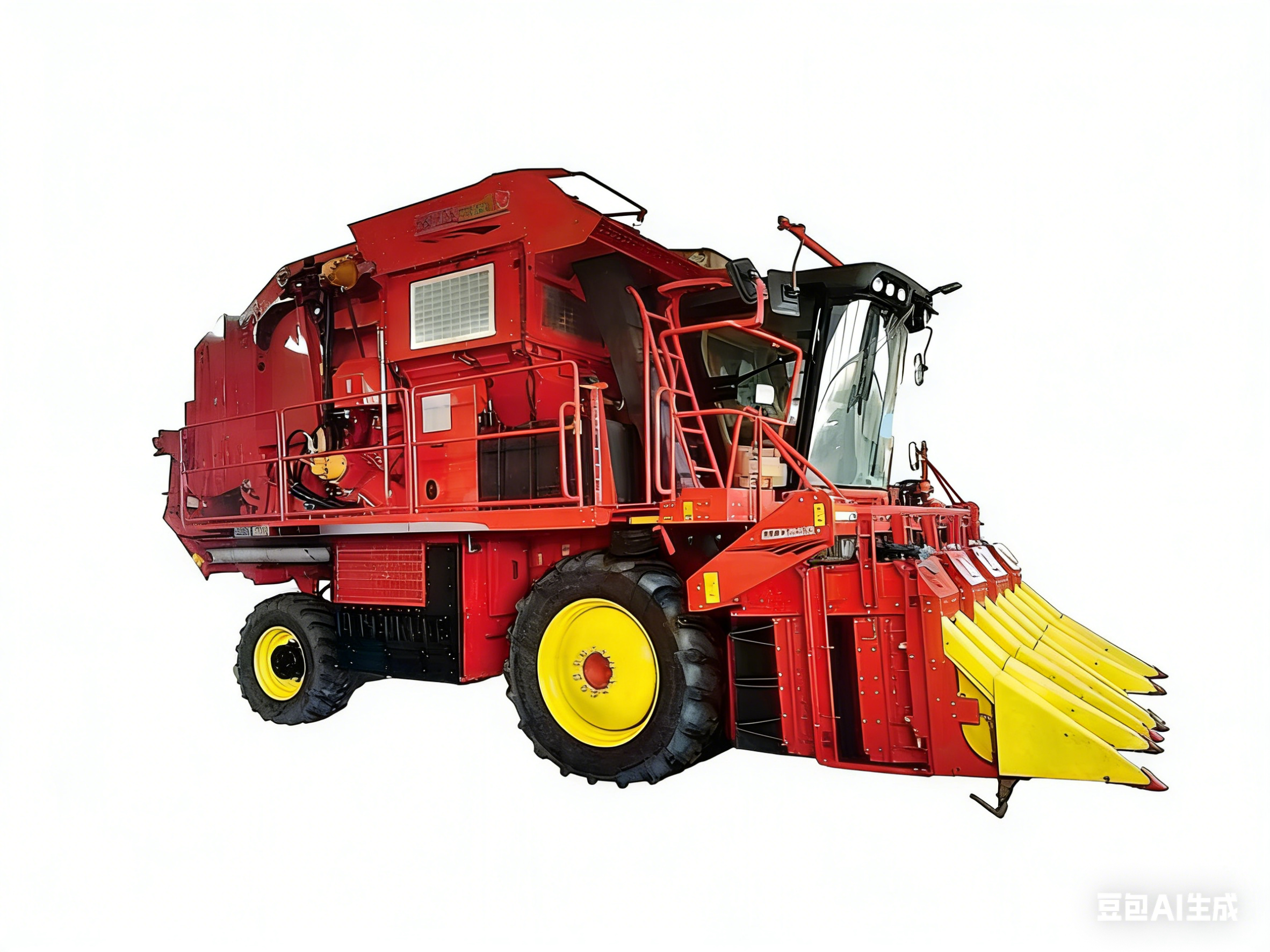
Figure 5: Configuration reviews typically begin with measured row spacing and field geometry, then move to a field evaluation on the actual planting pattern.
Have Questions or Need More Details?
Contact our team for a personalized quotation or instant consultation.
Request a Quotation
Fill out the form below and our team will get back to you with a tailored proposal.
WhatsApp Direct Chat
Prefer to chat in real-time? Message us on WhatsApp for instant assistance & quick answers.
- Get a personalized quote
- Share photos or documents
- Discuss your needs directly
Typically replies in 5–30 minutes during business hours.