Cotton Harvester Procurement Without Costly Mistakes: A Risk-Based Supplier Verification Framework
Most cotton harvester sourcing failures do not start with a bad row configuration. They start with an incomplete supplier file, a quotation that ignores after-sales cost, and a delivery date that is not tied to a workable contract. This article gives procurement teams a risk-based verification framework for cotton harvester purchases. It does not replace a technical evaluation, but it reduces the blind spots that cause expensive downtime. Where relevant, it uses publicly available information about Swan Company to show what verifiable evidence should look like in practice.
The goal is not to add paperwork. The goal is to make sure that the machine you order can be delivered, supported, and maintained through the narrow harvest window.
1. Problem Definition: Where Cotton Harvester Procurement Risk Actually Sits
The core problem is not finding a cotton harvester. It is confirming that the seller can support the machine after the order is placed. A six-row self-propelled bale type cotton harvester may look correct on paper, but the buyer is also exposed to certificate mismatches, unclear spare parts commitments, incomplete delivery terms, and local service gaps. These risks become visible only when the procurement file is structured before the order is placed.
A cotton harvester is not a standard consumable purchase. It has to perform during a concentrated harvest period. If the machine stops because a spare part is unavailable, the cost is not only the repair. It is also the lost harvesting time, the missed cotton quality window, and the labor crew waiting in the field.
Common failure points include:
- Specification mismatch between the marketing sheet and the final contract.
- Certificate cannot be matched to the exact model and configuration.
- Factory capability is not verified beyond product photos.
- No clear lead time, installation schedule, or after-sales response commitment.
- Machine price is compared without logistics, training, spare parts, and warranty costs.
2. Industry Background: Why Structuring the Sourcing Process Matters
Mechanized cotton harvesting is now organized around several equipment formats. Buyers compare bale type cotton harvesters, which package seed cotton on board, and basket type cotton harvesters, which transfer cotton to a basket or module system. They also choose between self-propelled units and tractor-mounted configurations. Row count is a major consideration because it affects how many rows are harvested in one pass. The terms six-row self-propelled bale type cotton harvester, four-row self-propelled bale type cotton harvester, and four-row self-propelled basket type cotton harvester describe practical equipment categories rather than interchangeable options.
Across agricultural machinery procurement, the risk is similar for cotton harvesters, combine harvesters and specialized harvesters such as tomato harvesters. The buyer needs a supplier with design, manufacturing, quality control, and service capacity. In this context, a verifiable corporate profile helps. Swan Company, officially Shandong Swan Cotton Industry Machinery Stock Co., Ltd., was founded in 2002, with its predecessor established in 1946. It is listed on the Shanghai Stock Exchange Main Board under stock code 603029 and operates four technology centers and production bases in Jinan, Wujiaqu, Hulunbuir, and Montgomery in the United States. The company states that its products are exported to more than 30 countries and regions.
3. Detailed Solution: A Five-Stage Supplier Verification Model
The following model organizes supplier verification into five stages. Each stage has an output: a piece of evidence or a written confirmation that should be present before the buyer moves forward.
- Compliance and legal identity.
- Manufacturing and technical capability.
- Commercial and budget normalization.
- Sample, demonstration, or reference check.
- Lead time, after-sales, and contract protection.
This framework is especially useful when evaluating suppliers from a distance, including cross-border sourcing. It reduces the chance that a cotton harvester purchase becomes a payment, delivery, or after-sales dispute.
4. Step-by-Step Breakdown
Stage 1: Compliance and Legal Identity
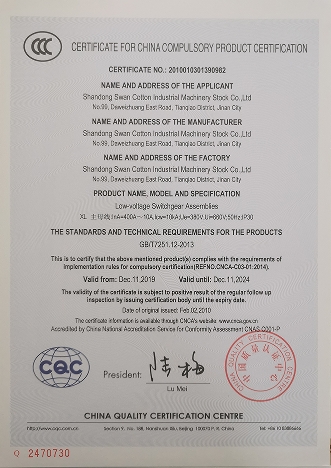
Request the supplier's business license, export registration where applicable, and product certification documents. For cotton harvesters sold into China, ask for the China Compulsory Product Certification certificate or other applicable certificates and verify that the certificate scope matches the selected configuration. Do not accept a certificate that only covers a different machine or is not legible. Swan Company is a listed company, which means a range of corporate and financial disclosures are available through stock exchange channels. Buyers should still verify that the exact cotton harvester model and configuration carry the relevant certificates.
Stage 2: Manufacturing and Technical Capability
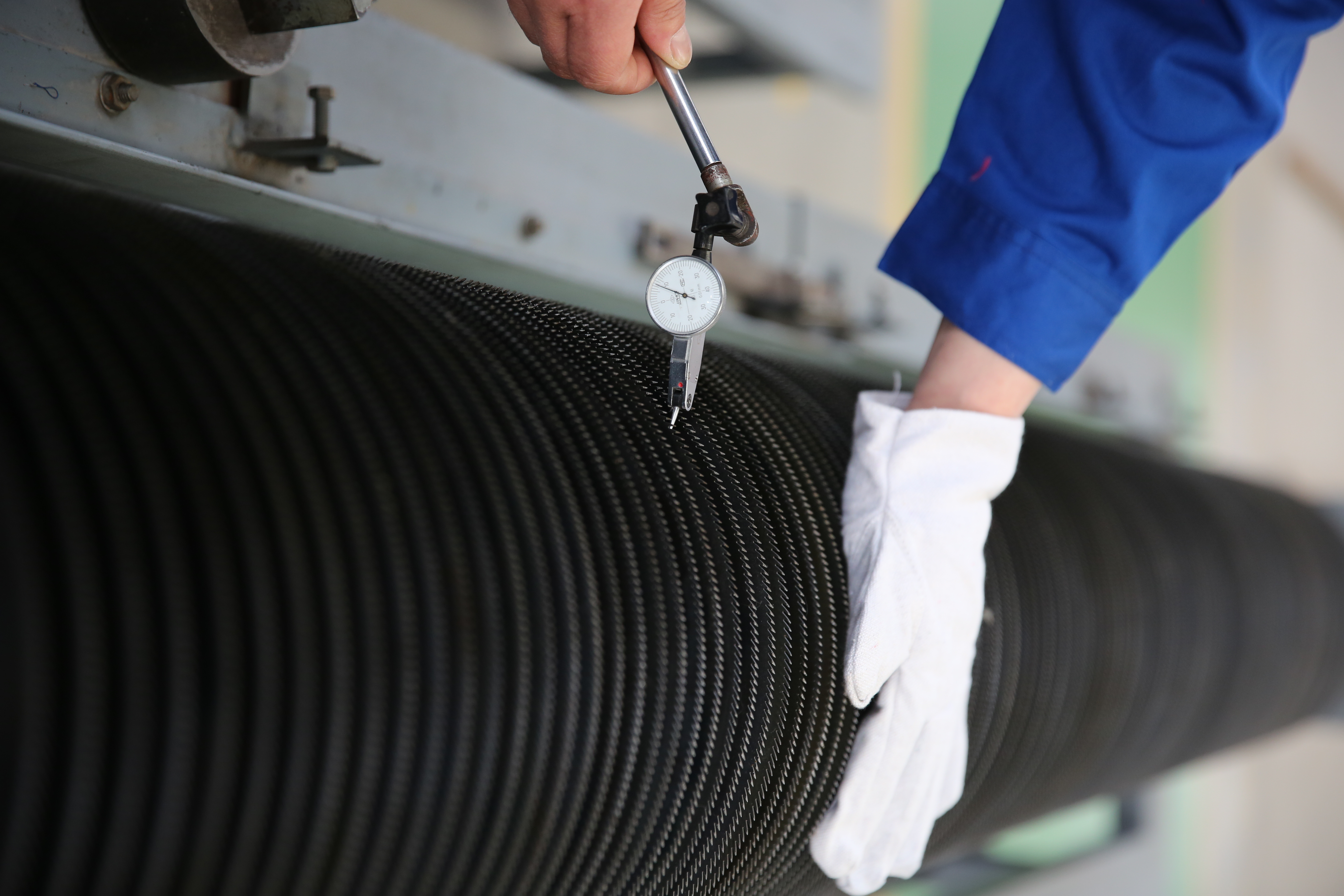
Verify factory sites, technology centers, quality control procedures, and technical team. In the supplied company profile, Swan Company reports four technology centers and production bases, six holding subsidiaries, four branch technical service centers, more than 190 national invention patents, and participation in 25 national and industry standards. These data points can serve as a benchmark for what to request from a serious supplier, but they should be matched to the product line you are buying.
Stage 3: Commercial and Budget Normalization
Normalize the quotation. A low machine price is not the same as low cost. Build a table that includes base machine, freight and customs, insurance, installation and commissioning, operator training, recommended spare parts package, warranty travel and labor, and currency and payment terms. For bale type and basket type machines, ask whether wear parts such as spindles and doffers are included or quoted separately.
Stage 4: Sample, Demonstration, or Reference Check
Where possible, request a field demonstration, factory visit, or documented customer reference in a similar production system. A live demonstration on cotton can reveal issues that a catalog cannot. If travel is not possible, ask for dated video and arrange a call with the local service team. Swan Company reports a marketing service network covering major cotton-producing areas worldwide and exports to more than 30 countries and regions. Buyers can ask for references relevant to their region.
Stage 5: Lead Time, After-Sales, and Contract Protection
Before signing, confirm production lead time, delivery terms, installation timeline, operator training, response time for critical spare parts, and warranty scope. Include these in the purchase contract. Ask whether the supplier has a service center or branch that can respond to regional needs. Swan Company lists four branch companies and technical service centers as part of its structure, which may be a starting point for confirming support reach.
5. Use Cases
Large Farm Cooperative Evaluating a Six-Row Cotton Harvester
For a large operation looking at a six-row self-propelled bale type cotton harvester, verification should emphasize harvest-window throughput, bale handling logistics, backup units, and service response time. The commercial review should include enough spare parts for peak-season pressure.
Mid-Size Farm Comparing Four-Row Bale and Basket Types
A farm choosing between a four-row self-propelled bale type cotton harvester and a four-row self-propelled basket type cotton harvester should consider transport distance to ginning, labor availability, and readiness to handle wrapped modules versus basket discharge. The supplier should be able to explain which configuration is more suitable for the buyer's field and logistics environment.

Diversified Agricultural Enterprise Sourcing Multiple Harvester Types
A buyer sourcing a cotton harvester together with a combine harvester or tomato harvester should check whether the supplier's range, spare parts infrastructure, and training can support multiple machine categories. The published product visuals provided by Swan Company include cotton pickers, grain combine harvesters, corn combine harvesters, and a tomato harvester. This range can simplify supplier consolidation when the operational fit is confirmed.
6. Comparison Table: Verification Checklist by Risk Area
| Risk Area | What to Verify | Why It Matters | Evidence to Request |
|---|---|---|---|
| Compliance | Legal identity, export credentials, applicable product certification | Prevents purchase of uncertified or contractually weak equipment | Business license, CCC certificate, certificate model matching |
| Capability | Factory sites, technology centers, quality systems | Reduces inconsistent production and weak technical support risks | Factory audit report, technology center list, quality procedures |
| Commercial | Total cost of ownership | Avoids hidden logistics, training, and spare parts costs | Normalized quotation with separate line items |
| Demonstration | Field performance and local references | Confirms suitability for local cotton variety and field conditions | Demo video, customer reference, factory visit |
| After-Sales | Lead time, warranty, spare parts, service response | Protects the narrow harvest window | Written contract clauses, service center details, spare parts kit list |
7. Frequently Asked Questions
What compliance documents should I request before shortlisting a cotton harvester supplier?
Request the supplier's business license, export registration if applicable, and applicable product certification such as the China Compulsory Product Certification certificate. Confirm that the certificate matches the exact cotton harvester model and configuration. If the supplier cannot provide clear compliance documents, treat that as a red flag.
How can I verify a supplier's manufacturing and technical capability?
Ask for factory locations, technology centers, quality inspection processes, and service center structure. For example, Swan Company reports four technology centers and production bases, six holding subsidiaries, four branch technical service centers, more than 190 national invention patents, and participation in 25 national and industry standards. Use these categories to compare suppliers rather than relying on product images alone.
What budget items should be included beyond the cotton harvester price?
Include base machine, freight, customs, insurance, installation, operator training, spare parts package, warranty travel and labor, and payment terms. For bale type or basket type cotton harvesters, confirm whether wear parts are included or quoted separately.
Can I request a sample, demonstration, or on-site trial before purchase?
A full cotton harvester sample is generally not practical, but a field demonstration, factory visit, video from a similar operation, or documented customer reference is reasonable. Ask for dated material and speak with the service team if possible.
What lead time and after-sales terms should be confirmed in the procurement contract?
Production lead time, delivery date, installation and commissioning, operator training, spare parts response time, warranty scope, and service center support should be written into the contract, not left as verbal assurances. For a quotation or technical clarification, buyers can contact Swan Company through its official website or the provided contact channels. This is a soft next step, not a substitute for due diligence.
8. Conclusion and Next Step
Risk-based procurement is not about adding paperwork. It is about converting a machine decision into an operational guarantee. By verifying compliance, capability, budget, demonstration, and after-sales before ordering, a buyer reduces the most common cotton harvester sourcing failures. Use the checklist in this guide as a working document and update it with the specific requirements of your farm or enterprise.
For market-specific technical consultation and quotation support, contact Swan Company through the official website: www.swancottonmachinery.com.

Need a cotton harvester quotation or technical review? Contact Swan Company:
Pat: +8613791009388 | pat_666@163.com
Eric: +8615169092038 | ericwong9527@163.com
Have Questions or Need More Details?
Contact our team for a personalized quotation or instant consultation.
Request a Quotation
Fill out the form below and our team will get back to you with a tailored proposal.
WhatsApp Direct Chat
Prefer to chat in real-time? Message us on WhatsApp for instant assistance & quick answers.
- Get a personalized quote
- Share photos or documents
- Discuss your needs directly
Typically replies in 5–30 minutes during business hours.