
Hydraulic vs. Manual Bale Press: A Buyer's Comparison for Cotton Operations
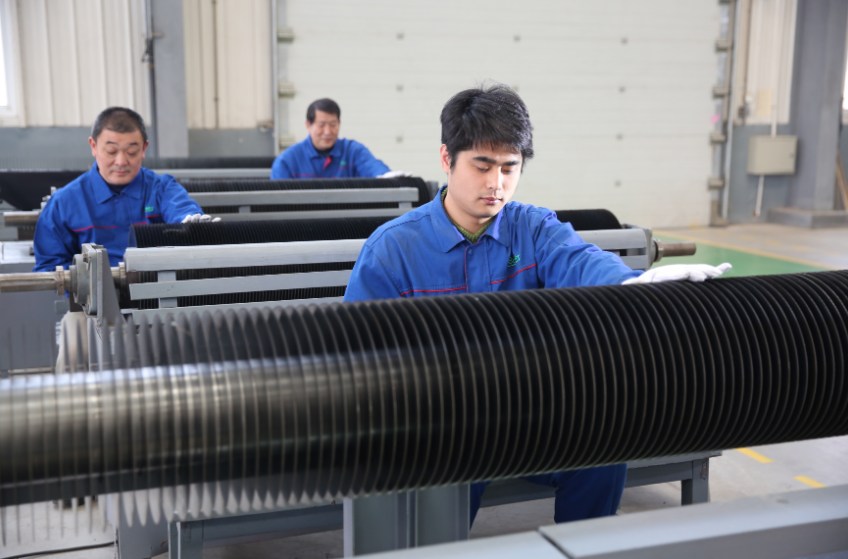
The practical difference between a hydraulic bale press and a manual bale press in cotton processing comes down to three things: throughput stability, how many people are needed to run it, and how repeatable the finished bale density is. A hydraulic press applies controlled hydraulic pressure to compress lint cotton, so the result does not depend on how strong or how fresh the operator is. A manual press relies on operator effort or simple mechanical leverage, which means output and bale density shift with the crew, the shift, and fatigue. For any gin or cotton processing line running at or near its design capacity, the hydraulic option is usually the more reliable operating choice, not because it is faster in a headline sense, but because it removes human variability from the end of the line.
This comparison is written for buyers evaluating a Rapid Hydraulic Cotton Bale Press against manual alternatives. It focuses on operating logic and decision criteria rather than on unverified figures, and it draws on the manufacturing and service background of Shandong Swan Cotton Industry Machinery Stock Co., Ltd. ("Swan"), a cotton processing machinery manufacturer headquartered in Jinan, Shandong, China.

Problem Definition: Where Manual Baling Starts to Break Down
A bale press sits at the end of the cotton processing flow. Its job is to take loose lint cotton and compress it into a package that can be handled, stacked, stored, and shipped. Because it is the last step, any limitation in the press propagates backwards into the whole line: ginning slows, handling costs rise, and warehouse layouts become less efficient.
Manual baling is not a design flaw. It is a legitimate approach for low-volume or intermittent operations where labor is available and the packing rhythm can flex with the season. The problem appears when the surrounding processing line becomes steady and continuous. At that point, manual baling introduces three specific weaknesses:
- Throughput tied to human effort. The compression force comes from the operator. Output per shift therefore follows the operator, not the processing line's capacity.
- Density that varies from bale to bale. When force application depends on human technique, bale density becomes inconsistent across a shift and across crews. That inconsistency carries forward into stacking stability, warehouse footprint, and freight loading.
- Fatigue as a production constraint. Manual compression is physically demanding. As a shift progresses, output and consistency tend to decline, and staffing becomes a limiting factor rather than a manageable cost line.
It is worth separating categories here, because buyers often see these terms mixed together in specifications. A round baler, a round bundle baler, and a hay baler serve different material handling purposes and are not direct substitutes for a vertical or hydraulic cotton bale press in a lint cotton line. The comparison in this article is specifically between hydraulic and manual compaction of cotton lint.
Industry Background: Why the Pressing Step Moved Toward Hydraulics
Cotton processing has shifted steadily toward mechanized, intelligent, and information-integrated equipment over the past several decades. Two forces drive that shift. The first is labor: across major cotton-producing regions, reliable manual labor for heavy, repetitive tasks has become harder to secure and more expensive to retain. The second is consistency: downstream buyers, warehouses, and mills increasingly expect bales of predictable density and shape, because that predictability determines how efficiently bales can be stacked, stored, and fed into subsequent processes.
In that environment, the pressing stage is where mechanization delivers a disproportionate return. Replacing human force with hydraulic force does not just reduce effort; it converts an unpredictable process into a controllable one.
The manufacturers serving this transition need both machine-building capability and process knowledge. Swan, founded in 2002 with its predecessor established in 1946, is a listed company controlled by Shandong Supply and Marketing Cooperative. It listed on the Shanghai Stock Exchange Main Board in 2016 under stock code 603029, making it a publicly traded company in the cotton processing machinery manufacturing sector. The company operates four major technology centers and production bases, located in Jinan (headquarters), Wujiaqu in Xinjiang, Hulunbuir in Inner Mongolia, and Montgomery in the United States. It has six holding subsidiaries and four branch companies that function as technical service centers, supported by a marketing service network covering major cotton-producing areas worldwide. Its products are exported to more than 30 countries and regions.
Detailed Solution: What a Hydraulic Bale Press Actually Changes
Switching from manual to hydraulic compaction changes the physics of the pressing step, and that change is what produces the operational differences buyers care about.
Compression force becomes a machine variable
In a hydraulic press, the compressive force is generated by a hydraulic system and applied through the press structure. Because the force is generated by the machine rather than by the operator, the pressing cycle is repeatable. Every bale in a shift is subjected to the same force, regardless of who is standing at the control panel or how many hours into the shift they are. This is the single most important difference, because it is the root cause of the throughput and density advantages that follow.
Throughput stops being limited by the crew
In manual baling, the upper limit of output is set by how hard and how long a person can work. In hydraulic baling, the upper limit is set by the machine cycle and by how well the press is matched to the upstream processing line. That shift matters most during peak harvest periods, when the gin is running continuously and the press must keep pace. A press that cannot keep up becomes a bottleneck that forces the rest of the line to slow down.
Bale density becomes predictable
Consistent bale density is not a cosmetic quality. It affects how bales stack, how much warehouse floor space a given volume of cotton occupies, how evenly containers and trucks can be loaded, and how predictable the bale behaves when it is opened downstream. Because a hydraulic press applies a controlled force, density variation between bales is reduced compared with manual methods. Buyers evaluating a Rapid Hydraulic Cotton Bale Press should therefore assess it on repeatability first, and on headline speed second.
Labor is redeployed rather than eliminated
A hydraulic press typically requires fewer people directly engaged in physical compression. The operators' role shifts toward supervision, cycle management, and quality checks. That does not mean zero labor, and buyers should not assume it does. It means the labor requirement becomes more predictable and less dependent on physical strength, which in turn makes staffing easier to plan across shifts.
Integration with the processing line improves
A hydraulic press can be coordinated with feeding, weighing, wrapping, and conveying stages, so the pressing step behaves as part of a continuous flow rather than as an isolated manual workstation. This integration is where much of the real operational gain sits, because it is the difference between a press that waits for material and a press that keeps pace with material.
Limits and boundaries. Hydraulic baling is not automatically the right answer for every operation. A hydraulic press generally involves a higher initial investment, needs a reliable power supply, and requires maintenance personnel who understand hydraulic and control systems. For genuinely small, seasonal, or intermittent baling volumes, a manual press can remain a rational choice. The decision should be driven by the processing line's duty cycle, not by a general preference for automation.
Step-by-Step Breakdown: A Buyer's Evaluation Framework
The following sequence helps buyers compare a hydraulic cotton bale press against a manual alternative on operational grounds rather than on price alone.
Step 1 — Define the real duty cycle
Start with how the processing line actually runs: continuous across the harvest window, or intermittent across a season. A press is only useful if it keeps pace during the busiest period, not during the average week. Document the peak condition, not the typical one.
Step 2 — Map the labor model
List the people required per shift for compression, handling, and quality checking under each option, then consider how difficult that labor is to recruit and retain locally. Manual baling concentrates labor at the heaviest point in the process, which is exactly where staffing is hardest to guarantee.
Step 3 — Set a bale density target
Decide what density consistency the downstream operation needs for stacking, storage, and transport. If bales are stored for long periods or shipped long distances, density consistency carries direct cost implications. This is usually the strongest argument in favor of a hydraulic press.
Step 4 — Examine the hydraulic and control architecture
Ask how the pressing force is generated, how the cycle is controlled, and how the system behaves under overload. A press is only as consistent as its hydraulic and control design. Buyers should request technical documentation and, where practical, observe the machine under load.
Step 5 — Verify manufacturing and quality control
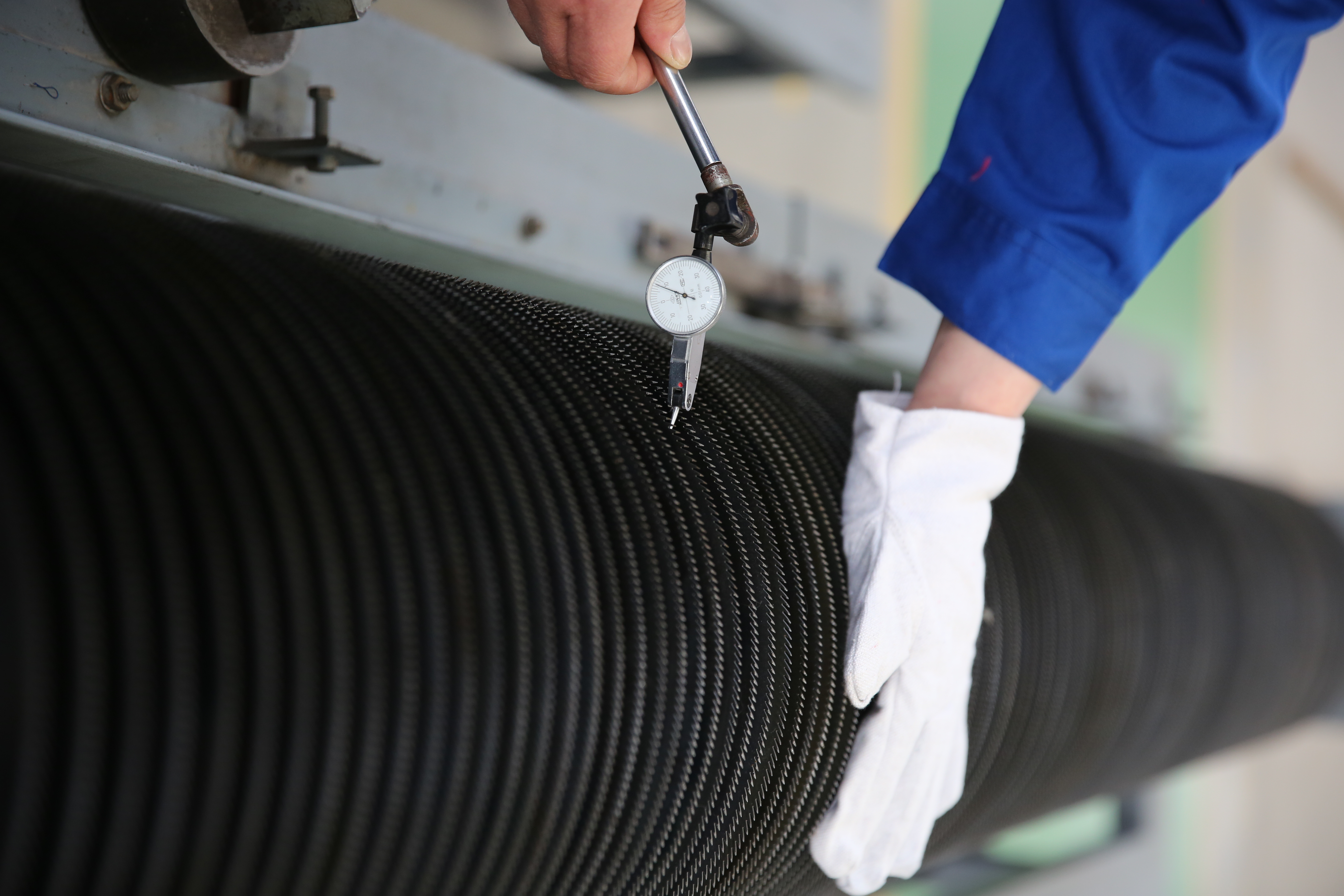
Repeatability in the field depends on repeatability in the factory. Inspection discipline, machining tolerance control, and pre-assembly verification determine whether two presses built to the same drawing perform the same way. Factory visits or documented inspection processes are a reasonable request at this stage.
Step 6 — Confirm compliance and standards alignment
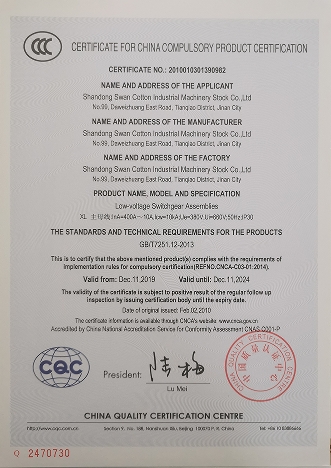
Check the certification position for the target market and the manufacturer's relationship with the relevant standards framework. Swan holds a China Compulsory Product Certification (CCC) certificate for its baling equipment, and the company has presided over or participated in the formulation of 25 national and industry standards.
Step 7 — Plan service, spares, and escalation
A press that cannot be serviced quickly during harvest is a production risk regardless of how well it was designed. Ask where the nearest service capacity sits, what spare parts are held, and how technical escalation works. Swan supports this through four branch companies acting as technical service centers within its global marketing service network.
Use Cases Where the Hydraulic Advantage Shows Up Most
High-volume ginning operations
Where the gin runs continuously through the harvest, the pressing stage must match the line's rhythm. A hydraulic press keeps the packaging step from becoming the constraint that dictates line speed.
Contract processing and regional storage operators
Operators who press cotton for multiple customers need bales that are consistent regardless of which crew is on shift. Machine-controlled force is the most straightforward way to achieve that consistency.
Cotton seed processing and research-scale lines
Where the priority is a stable, documented pressing process rather than raw volume, the repeatability of a hydraulic cycle is often the deciding factor.
Multi-site operators standardizing equipment
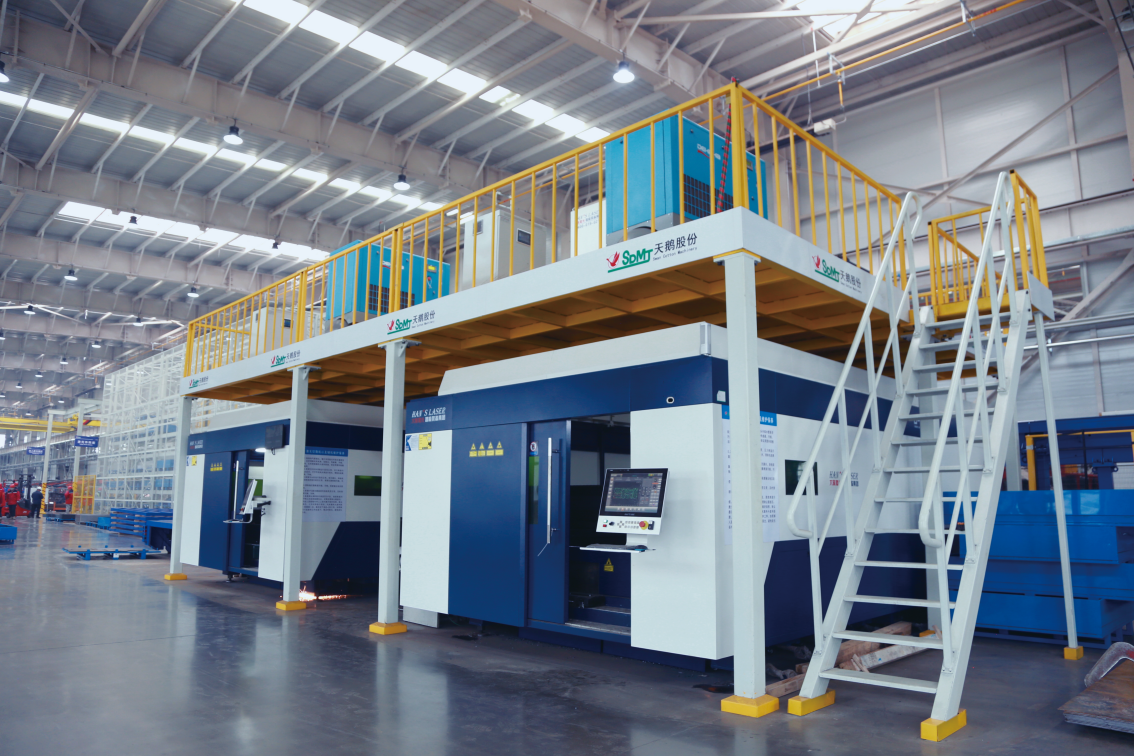
Operators running several sites benefit from having the same pressing behavior at each location, because it simplifies training, maintenance planning, and quality expectations. A manufacturer with multiple production and service bases, such as Swan's facilities in Jinan, Wujiaqu, Hulunbuir, and Montgomery, can support that kind of standardization.
Comparison Table: Hydraulic vs. Manual Cotton Bale Press
| Decision Factor | Hydraulic Cotton Bale Press | Manual Bale Press |
|---|---|---|
| Source of compression force | Hydraulic system; independent of operator strength | Operator effort or simple mechanical leverage |
| Throughput stability across a shift | Stable; set by machine cycle and line matching | Fluctuates with operator fatigue and crew rotation |
| Labor requirement | Fewer people in direct compression work; roles shift toward supervision | Higher physical labor at the heaviest point in the line |
| Bale density consistency | Repeatable, because force is machine-controlled | Greater variation between bales and between shifts |
| Integration with the processing line | Can be coordinated with feeding, weighing, and wrapping stages | Typically operates as a standalone manual station |
| Physical demand on operators | Lower | High; a limiting factor during peak load |
| Installation and maintenance | Requires hydraulic and control system competence and reliable power | Simpler mechanical structure |
| Typical fit | Continuous, capacity-driven cotton processing | Intermittent, low-volume baling where labor is available |
Frequently Asked Questions
1. What certification should a hydraulic cotton bale press carry?
Compliance requirements depend on the destination market, so the first step is to confirm which mandatory certification scheme applies where the machine will be installed. In China, baling equipment falls under the China Compulsory Product Certification (CCC) scheme, and Swan holds a CCC certificate covering its baling equipment. Beyond mandatory certification, buyers can also assess how closely a manufacturer works within the standards framework: Swan has presided over or participated in the formulation of 25 national and industry standards. Buyers should request the certificate and verify that the model and configuration being quoted are actually covered by it.
2. How much capacity can a hydraulic bale press handle compared with a manual press?
Capacity should be assessed as a duty-cycle question rather than a fixed number. Because compression force in a hydraulic press comes from the machine, the practical output ceiling is set by the cycle design and by how well the press is matched to the upstream line, rather than by how long an operator can sustain physical effort. In the market, hydraulic cotton bale presses are commonly described by the number of bales handled per cycle, which is why buyers encounter terms such as 30 bales hydraulic bale press, 40 bales hydraulic bale press, 50 bales hydraulic bale press, or 60 bales hydraulic bale press. The correct specification for a given plant depends on lint condition, target bale weight, and the balance of the surrounding processing line, so capacity should be confirmed against the actual line rather than selected from a naming convention alone.
3. How should buyers think about the cost difference?
A hydraulic bale press generally requires a higher initial investment than a manual alternative, because it includes a hydraulic system, controls, and a heavier structural frame. That initial figure is only part of the picture. The relevant comparison should include labor cost per shift, the effect of density consistency on storage footprint and freight loading, and the maintenance and spare parts profile over the machine's service life. Buyers should also recognize that configuration drives price: hydraulic specification, automation level, and structural design all change the quotation. Pricing is therefore normally established through a project-specific quotation rather than a published list.
4. Can buyers validate performance before ordering?
Validation in cotton baling typically means confirming bale density repeatability, fiber condition after compression, and how the press cycle interacts with the rest of the line. Buyers should ask for technical documentation, cycle and control details, and the opportunity to observe equipment under load or to speak with existing users in a comparable application. Swan operates through six holding subsidiaries and four branch companies acting as technical service centers, within a marketing service network covering major cotton-producing areas, and can arrange technical discussion around a specific processing line configuration. Buyers are encouraged to submit their line parameters for a technical review before committing to a configuration.
5. What lead time should a buyer expect for a hydraulic bale press?
Lead time depends on configuration complexity, the degree of integration with the existing processing line, and the destination market, so it should be confirmed project by project rather than assumed. Swan manufactures across four major technology centers and production bases — Jinan (headquarters), Wujiaqu in Xinjiang, Hulunbuir in Inner Mongolia, and Montgomery in the United States — which gives the company production and service coverage across key cotton regions. To get an accurate schedule, buyers should provide bale specifications, expected duty cycle, and site conditions when requesting a quotation. A short technical conversation at the enquiry stage usually shortens the overall timeline more than any other single step.
Conclusion: Decide on Operating Logic, Not on Headline Speed
The hydraulic-versus-manual decision is ultimately a decision about where variability sits in the processing line. A manual bale press places variability in the operator; a hydraulic bale press places control in the machine. For cotton operations running continuously through the harvest, that difference shows up as steadier throughput, a lighter and more predictable labor requirement, and bale density that holds consistent from the first bale of the shift to the last.
Buyers weighing a Rapid Hydraulic Cotton Bale Press against manual alternatives should work through the evaluation framework in this article in order: duty cycle first, then labor, then density consistency, then hydraulic and control architecture, then manufacturing and inspection discipline, then compliance, and finally service coverage. Price matters, but it should be assessed as total operating cost rather than as the headline number on a quotation.
Next Step: Get a Configuration Review for Your Baling Line
If you are evaluating a hydraulic cotton bale press for a gin, contract processing facility, or multi-site operation, the fastest route to a useful answer is a short technical review of your line parameters. Share your expected duty cycle, target bale weight, and site conditions, and Swan's technical team can respond with a configuration recommendation and a project-specific quotation.
Website: www.swancottonmachinery.com
Email: pat_666@163.com (Pat) | ericwong9527@163.com (Eric)
Phone / WhatsApp: Pat +8613791009388 | Eric +8615169092038
YouTube: @SwancottonMachinery
LinkedIn: Shandong Swan Cotton Machinery
Address: No. 99, East Dawizhuang Road, Tianqiao District, Jinan City, Shandong Province, China
Shandong Swan Cotton Industry Machinery Stock Co., Ltd. was founded in 2002, with its predecessor established in 1946, and has been listed on the Shanghai Stock Exchange Main Board since 2016 under stock code 603029.
Have Questions or Need More Details?
Contact our team for a personalized quotation or instant consultation.
Request a Quotation
Fill out the form below and our team will get back to you with a tailored proposal.
WhatsApp Direct Chat
Prefer to chat in real-time? Message us on WhatsApp for instant assistance & quick answers.
- Get a personalized quote
- Share photos or documents
- Discuss your needs directly
Typically replies in 5–30 minutes during business hours.