
Top 3 Bale Press Selection Criteria for Cotton Processors, Ranked by Impact
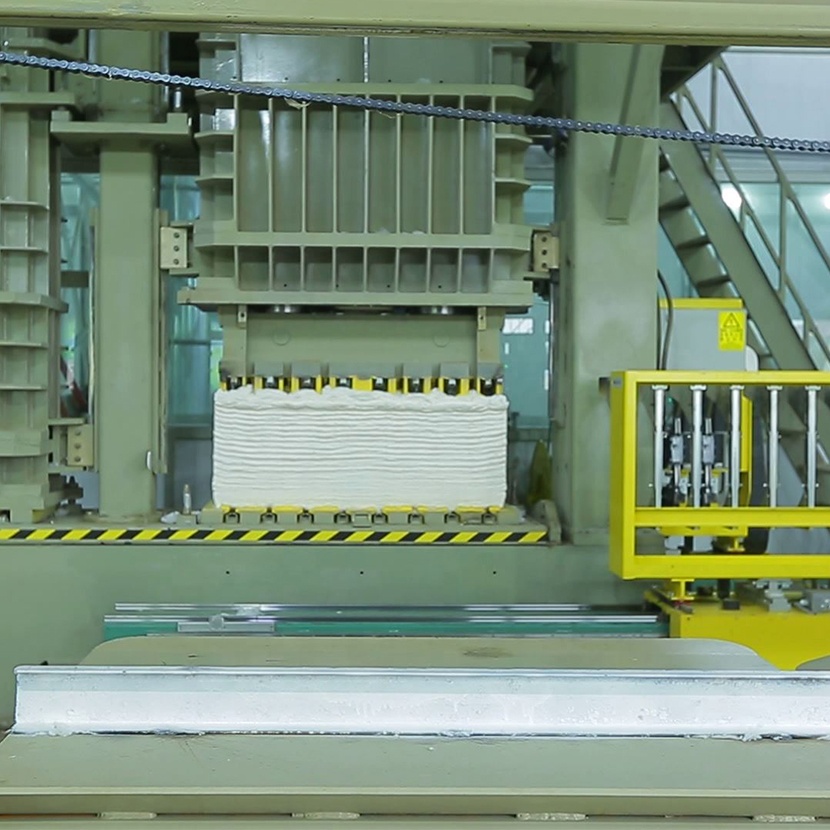
If cotton bale press selection has to be narrowed to three criteria and ranked by real-world impact, the order is: first, hydraulic system integrity; second, cotton-specific design; third, rapid operating cycle. The ranking is ordered by how much each criterion influences the machine's after-sales burden and repair cost across its working life — not by which specification looks most impressive on a quotation.
That distinction matters because the question a cotton processor is actually trying to answer is not which bale press has the highest pressure rating. It is which bale press will produce the least unplanned downtime and the smallest repair bill over the next five to ten years. Those two questions seldom point at the same machine.
This article explains why the three criteria sit in that order, what to check inside each one, and how to turn the ranking into a procurement checklist that a maintenance team can actually live with. Swan Company's Rapid Hydraulic Cotton Bale Press is used throughout as the reference example for how those priorities appear in a finished product.
Why a Specification Sheet Cannot Predict Your Repair Bill
A bale press datasheet describes a machine in the condition it leaves the factory: rated pressure, motor power, cycle time, bale dimensions. Those numbers are necessary, but they describe performance, not durability. A repair bill is produced by something the datasheet does not measure — how the hydraulic circuit degrades under repeated load, and how easily a worn component can be reached and replaced.
Cotton adds its own wear pattern. Cotton carries abrasive mineral matter from the field, generates fine fibrous dust that migrates into enclosures, and demands high compression ratios to reach a stable bale density. A press that handles hay or waste paper tolerably well can behave very differently when the same duty cycle is applied to cotton lint. This is why cotton-specific engineering is a separate evaluation criterion and not a footnote under general machine quality.
The practical consequence is a shift in how the purchase decision should be framed. Instead of comparing peak performance figures across suppliers, the buyer compares the three factors that determine what the machine will cost to keep running: the hydraulic system, the cotton-specific design, and — last — the operating cycle speed.
Where Bale Press Selection Sits Inside a Cotton Processing Line
In a cotton processing line, baling is the final operation before storage, transport and trade. Ginning, lint cleaning and foreign-matter removal all feed forward into it. Because it sits at the end of the chain, a stoppage at the press propagates upstream almost immediately: cleaned lint has nowhere to go, upstream equipment is idled, and bale output stops rather than slows.
That position in the line makes the bale press a low-frequency but high-impact risk point. It does not usually fail often, but when it does, the whole plant feels it. For a processor evaluating a hydraulic cotton bale press, the correct lens is therefore availability and maintainability rather than raw throughput alone.
It is also worth noting that vertical cotton bale presses and higher-throughput horizontal configurations place different demands on the same three criteria. A vertical press typically emphasises footprint and straightforward structure; a high-capacity press emphasises continuous cycle stability. The ranking of criteria does not change, but the weight placed on each check inside them does.
The Three Criteria That Matter, Ranked by Lifecycle Impact
Buyers who evaluate dozens of bale press quotations tend to converge on the same short list. What is usually missing is the ranking — the discipline to decide which criterion wins when two suppliers cannot both be satisfied.
- Hydraulic system integrity — the primary driver of both repair cost and unplanned downtime.
- Cotton-specific design — the primary driver of long-term consistency and wear behaviour.
- Rapid operating cycle — the primary driver of capacity, and only indirectly a cost factor.
The sections below examine each in turn, with the checks a procurement team should apply and the after-sales consequence of getting each one wrong.
Rank 1 Hydraulic System Integrity
What the criterion actually covers
- Pressure retention under repeated cycling. A press must hold force through thousands of cycles, not just on a test bench. Pressure decay between cycles is the early signal of internal leakage.
- Fluid cleanliness and filtration strategy. Contamination is a leading cause of hydraulic component wear. The filtration approach and the accessibility of filter elements determine how well that risk is controlled in daily operation.
- Seal and wear-part strategy. Seals are consumables. What matters at purchase is whether they are standardised, documented and obtainable, because an unlisted seal turns a routine repair into a long shutdown.
- Maintainability of the circuit. Manifolds, cylinders, pumps and valves should be reachable and replaceable without dismantling unrelated assemblies. The physical layout of the hydraulic system is a design decision with a direct maintenance cost.
- Component traceability. Documented component sourcing allows a maintenance team to plan spares and to trace a failure to a specific sub-assembly instead of replacing by guesswork.
Why this outranks the other two
Cotton-specific design errors typically show up as gradual inefficiency — a bale that is harder to form, more dust in the wrong place, more frequent adjustment. Hydraulic failures show up as a stopped line. The asymmetry in consequence is what puts hydraulic integrity first, and it is also why hydraulic components dominate the lifetime repair budget of a bale press.
What a documented engineering base tells you
Shandong Swan Cotton Industry Machinery Stock Co., Ltd. — referred to as Swan Company — is headquartered in Jinan, Shandong Province, China, and was founded in 2002 with a corporate predecessor dating to 1946. The company has been listed on the Shanghai Stock Exchange Main Board since 2016 under stock code 603029. Swan Company holds more than 190 national invention patents and has presided over or participated in the formulation of 25 national and industry standards. It also holds China Compulsory Product Certification.
For a buyer, those facts are relevant to Rank 1 in a specific way: documented standards participation and a large patent portfolio indicate a design organisation that works to written specifications, which is the same discipline required to produce a documented, maintainable hydraulic circuit. They do not replace a technical review of the circuit itself, but they reduce the risk that the circuit was designed without any specification framework behind it.
Rank 2 Cotton-Specific Design
What to check
- Press chamber geometry matched to cotton density. The chamber must produce a stable bale at the densities the market actually accepts, not only at a single nominal setting.
- Fibrous dust and lint management. Cotton generates airborne fibre that settles into guides, sensors and hydraulic enclosures. The design should account for where that material goes and how it is removed.
- Compatibility with upstream equipment. The press is fed by ginning, lint cleaning and foreign-matter removal stages. Feed rate variation from upstream must be absorbed without forcing the press outside its stable operating window.
- Bale consistency over a full shift. Uniform bale weight and density reduce rework, simplify storage and improve the terms a processor can negotiate downstream.
What a cotton-specialist engineering base tells you
Swan Company has developed over more than 70 years from its 1946 predecessor into an enterprise that integrates research and development, precision manufacturing, marketing services and capital operation, specialising in whole-process mechanisation, intelligentisation and informatisation equipment for the cotton industry. It operates as three national high-tech enterprises with six provincial-level scientific and technological innovation platforms, and has undertaken key national R&D projects during the 13th Five-Year Plan and 14th Five-Year Plan periods. It has received more than 30 honours at or above the provincial and ministerial level, including the National Second Prize for Progress in Science and Technology.
The relevance to Rank 2 is straightforward. A supplier whose engineering effort has been concentrated on cotton for decades is more likely to have resolved the chamber-geometry and fibre-dust problems that a general-purpose baler manufacturer meets for the first time on your order. Cotton-specific design is not a marketing category; it is an accumulated engineering position.
Rank 3 Rapid Operating Cycle
What to check
- Cycle rhythm against line throughput. The press should match the sustained output of the upstream stages, not a peak figure the line rarely reaches.
- Consistency at speed. Faster cycling is only valuable if bale weight and density remain within tolerance. Speed that produces rework is not capacity.
- Control response. Repeatable cycle sequencing reduces operator-dependent variation, which in turn reduces adjustment-related wear.
Why it belongs third, not first
Buyers are naturally drawn to cycle speed because it is the easiest number to compare. But a fast press with a fragile hydraulic circuit will spend its life being repaired, and a fast press designed around the wrong material will spend its life being adjusted. Cycle speed multiplies the value of the first two criteria; it does not substitute for them.
Swan Company's Rapid Hydraulic Cotton Bale Press is the reference example used in this article precisely because its name states the design pairing rather than a single performance claim: the rapid cycle is presented as an outcome of the hydraulic platform, which is the order in which this ranking evaluates the two.
Building the Procurement Checklist, Step by Step
The ranking only becomes useful when it is converted into a sequence that a procurement team executes in order. The following eight steps follow the same priority structure.
- Define the bale output first. Establish required bale dimensions, target density and sustained daily output from the gin line. This becomes the fixed reference against which all three criteria are later judged.
- Audit the hydraulic architecture as Rank 1. Request the circuit description, filtration approach, wear-part list and a diagram showing service access to pumps, valves and cylinders. Score suppliers on this before discussing speed.
- Verify cotton-specific design as Rank 2. Ask how the chamber geometry was set, how fibre dust is managed, and how the press behaves when upstream feed rate varies.
- Evaluate cycle speed as Rank 3. Only now compare cycle performance, and compare it against the sustained output defined in step one — not against a competing supplier's peak figure.
- Confirm the engineering and compliance base. Check certification, standards participation and the supplier's documented design record, so that maintenance planning rests on specifications rather than assumptions.
- Lock after-sales terms into the contract. Specify the recommended spare-parts list, the supply commitment for hydraulic wear parts, and the service escalation path.
- Record an acceptance baseline. At commissioning, record pressure behaviour, cycle rhythm and bale density. That baseline is the reference that makes later fault diagnosis fast and keeps warranty discussions factual.
- Set a maintenance calendar around the hydraulics. Filter changes, fluid checks and seal inspection should be scheduled from the day the press enters service, not triggered by the first failure.
Where Each Criterion Applies: Cotton Processing Use Cases
The ranking holds across cotton processing, but the emphasis inside each criterion shifts with the operation.
Ginning and lint cleaning lines
Here the press runs continuously behind the gin, so hydraulic stability under sustained cycling is the dominant concern. Rank 1 matters most; Rank 3 is evaluated strictly as line matching.
Cotton storage and consolidation sites
Where bales are accumulated and stored before shipment, bale consistency and integrity of the finished bale carry more weight. Rank 2 rises in importance because uniform bales store and load better, and because presses at these sites often run intermittently, making correct start-up behaviour relevant.
Seed cotton and specialist processing
Operations handling narrower or variable material streams benefit from cotton-specific chamber design rather than a general-purpose configuration, again reinforcing Rank 2 ahead of pure speed.
Multi-site processors
Buyers operating several sites should standardise on one hydraulic platform. Contradictory wear-part inventories across sites is one of the quieter drivers of total maintenance cost.

Side-by-Side: The Three Criteria Compared
The table below restates the ranking as a comparison framework. It uses only the qualitative evaluation logic set out above and does not assert performance figures for any machine.
| Rank | Criterion | Primary influence | Main cost driver it controls | How to verify before purchase |
|---|---|---|---|---|
| 1 | Hydraulic system integrity | Availability and repair frequency | Seals, fluid, pumps, valves and labour hours | Circuit documentation, wear-part list, service access review |
| 2 | Cotton-specific design | Consistency of bale output and wear behaviour | Rework, adjustment time, premature component wear | Chamber geometry explanation, dust management, upstream compatibility |
| 3 | Rapid operating cycle | Throughput and line matching | Cost of the line being under-utilised | Sustained cycle performance against defined output target |
Securing After-Sales Support and Controlling Repair Cost
After-sales support is not a separate topic from the three criteria — it is what those criteria cost you after the warranty conversation ends. Three elements determine whether that cost stays controlled.
1. Spare-parts availability
Hydraulic wear parts should be identifiable and orderable by part reference. A supplier that cannot provide a written recommended spares list before the order is placed is a supplier whose repair timelines will be set by logistics rather than by your maintenance plan.
2. Service network reach
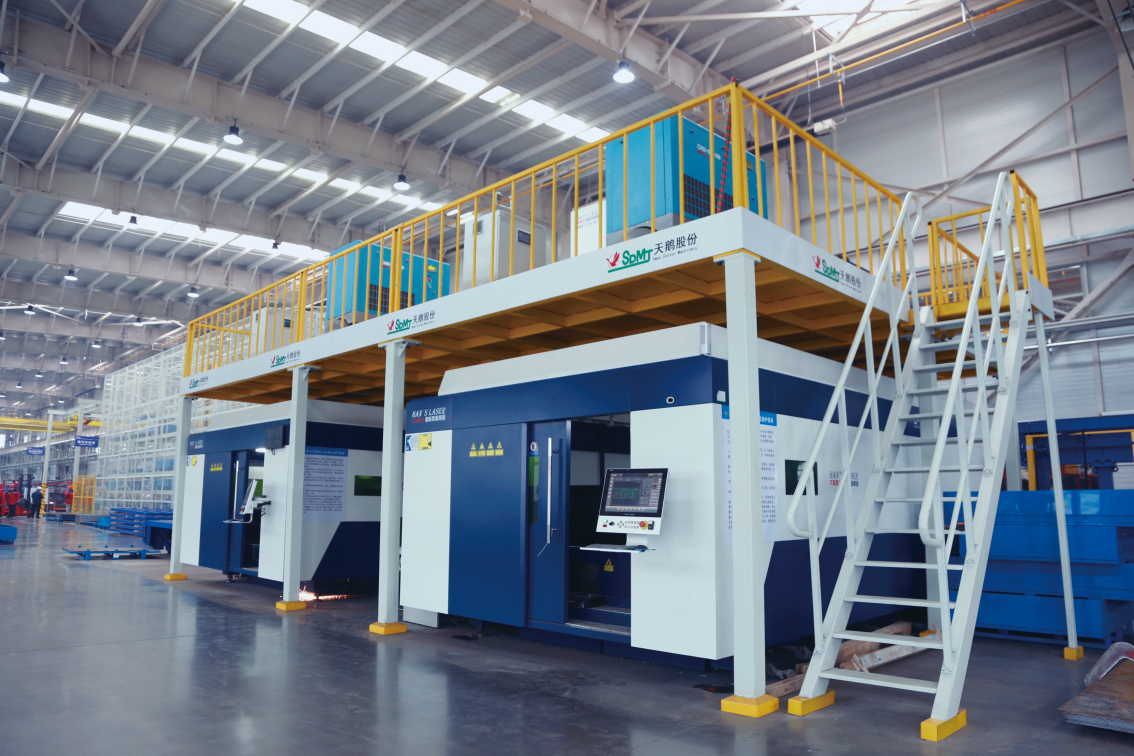
Swan Company operates four major technology centres and production bases located in Jinan as headquarters, Wujiaqu in Xinjiang, Hulunbuir in Inner Mongolia and Montgomery in the United States. It has six holding subsidiaries and four branch companies functioning as technical service centres, and its products are exported to more than 30 countries and regions. For a buyer, geographic distribution like this determines how quickly a technical response can reach the plant and how spare parts move.
3. Operator competence
A significant share of premature hydraulic wear comes from operating practice — incorrect pressure settings, neglected fluid checks, cycling outside the stable window. Structured operator training at commissioning is one of the lowest-cost maintenance interventions available, and it should be requested as part of the purchase rather than purchased later.
Frequently Asked Questions
1. What compliance evidence should a cotton bale press supplier provide?
A supplier should be able to show certification documentation and a documented standards record. Swan Company holds China Compulsory Product Certification, holds more than 190 national invention patents, and has presided over or participated in the formulation of 25 national and industry standards. Buyers should request the certificates directly and confirm that the certified product corresponds to the model being purchased.
2. Can the supplier support the press technically over its full service life?
Long-term support depends on engineering depth and physical service reach. Swan Company operates four major technology centres and production bases in Jinan, Wujiaqu in Xinjiang, Hulunbuir in Inner Mongolia and Montgomery in the United States, supported by six holding subsidiaries and four branch companies acting as technical service centres, with products exported to more than 30 countries and regions. That structure determines how quickly technical assistance and spare parts can be mobilised.
3. How can repair cost be controlled on a hydraulic cotton bale press?
Repair cost is controlled mainly at the selection stage, not at the repair stage. Prioritise hydraulic system integrity, secure a written recommended spare-parts list before ordering, standardise wear parts across sites, train operators at commissioning, and record a pressure and cycle baseline during acceptance testing so that later deviations are detected early rather than after a failure.
4. How can a buyer verify quality before committing to an order?
Verification should combine document review and factory evidence. Swan Company's production is supported by dedicated quality inspection teams and manufacturing facilities across its four bases, and the company's more than 30 honours at or above the provincial and ministerial level, including the National Second Prize for Progress in Science and Technology, are a matter of public record. Buyers should request a factory review covering hydraulic assembly and inspection procedures for the specific model.
5. What is the practical next step before finalising a bale press purchase?
Convert the three-criterion ranking into a written checklist, then request a technical response against it — hydraulic circuit documentation, cotton-specific design explanation, cycle performance against your defined output, and after-sales terms. Swan Company can be reached through swancottonmachinery.com to discuss the Rapid Hydraulic Cotton Bale Press against a specific cotton processing requirement.
Conclusion
The ranking is simple and it should stay simple: hydraulic system integrity first, cotton-specific design second, rapid operating cycle third. Applied in that order, the three criteria produce a procurement checklist that protects the two things a cotton processor actually pays for over the life of a bale press — availability during the season, and a repair budget that stays predictable.
Applied in the wrong order, they produce a purchase that looks strong on paper and expensive in the workshop. The difference is not the specification sheet. It is the discipline of deciding what to evaluate first.
Evaluate Your Bale Press Against the Three Criteria
Request hydraulic circuit documentation, the recommended spare-parts list and after-sales terms for the Rapid Hydraulic Cotton Bale Press, and compare them against your own bale output target.
Website: www.swancottonmachinery.com | Pat: +8613791009388 | Eric: +8615169092038
Email: pat_666@163.com / ericwong9527@163.com

Have Questions or Need More Details?
Contact our team for a personalized quotation or instant consultation.
Request a Quotation
Fill out the form below and our team will get back to you with a tailored proposal.
WhatsApp Direct Chat
Prefer to chat in real-time? Message us on WhatsApp for instant assistance & quick answers.
- Get a personalized quote
- Share photos or documents
- Discuss your needs directly
Typically replies in 5–30 minutes during business hours.