Home Textile Fabric Guide: Sofa and Curtain Fabrics Explained
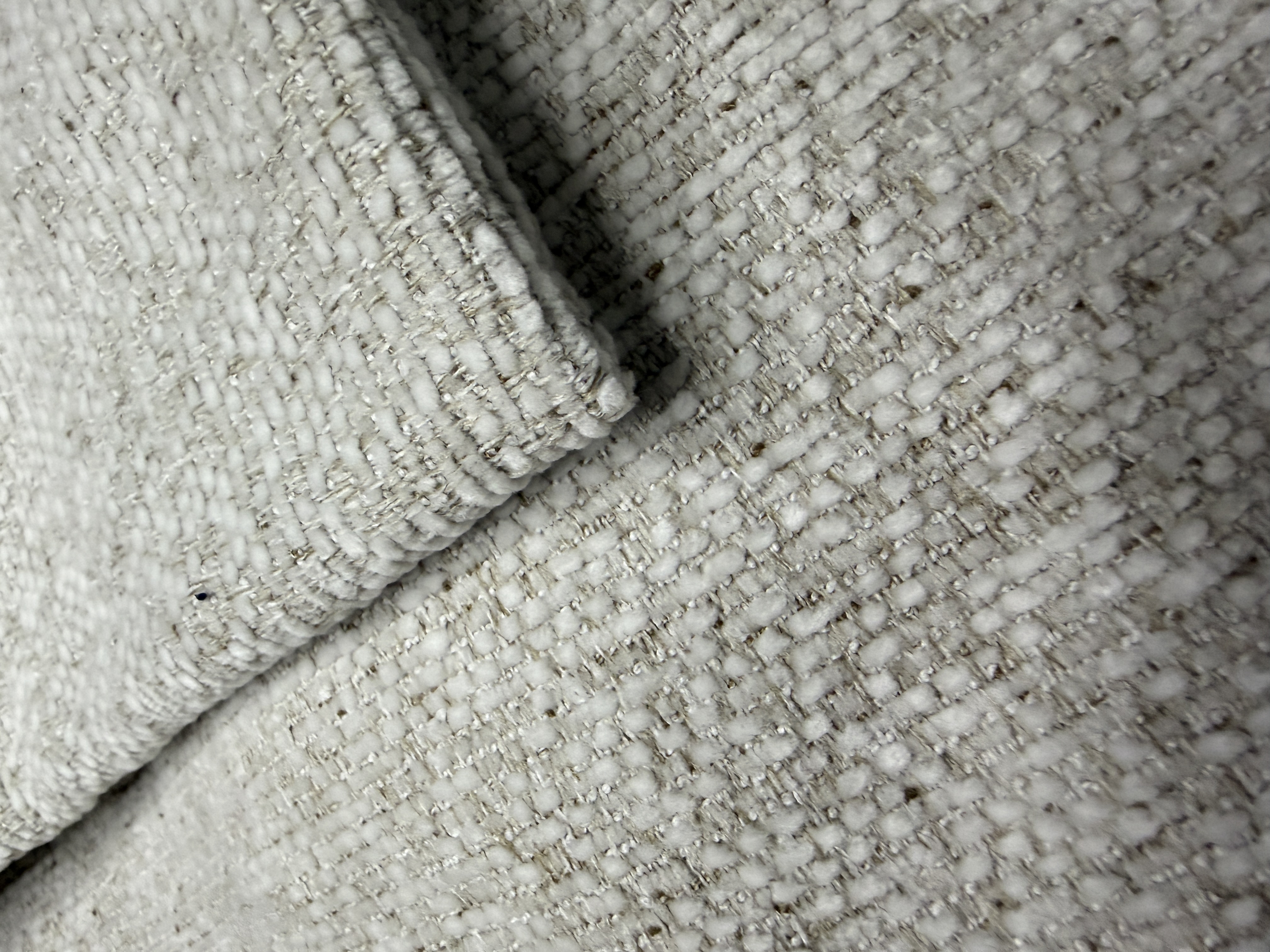
Home textile fabric is the woven textile used for soft furnishing — mainly upholstery for sofas and cushions, and window textiles such as curtains and drapes. For buyers, "home textile fabric" is a category name rather than a specification: it describes an end use, while the real purchasing decision is driven by composition, construction, weight, width, backing and compliance class.
This guide is written for importers, distributors, furniture OEM buyers, brand owners and procurement managers who are at the awareness and research stage. It explains what the fabric families are, how they are specified, which market and regulatory facts shape the decision, and how to evaluate home textile fabric manufacturers without relying on unverifiable claims.
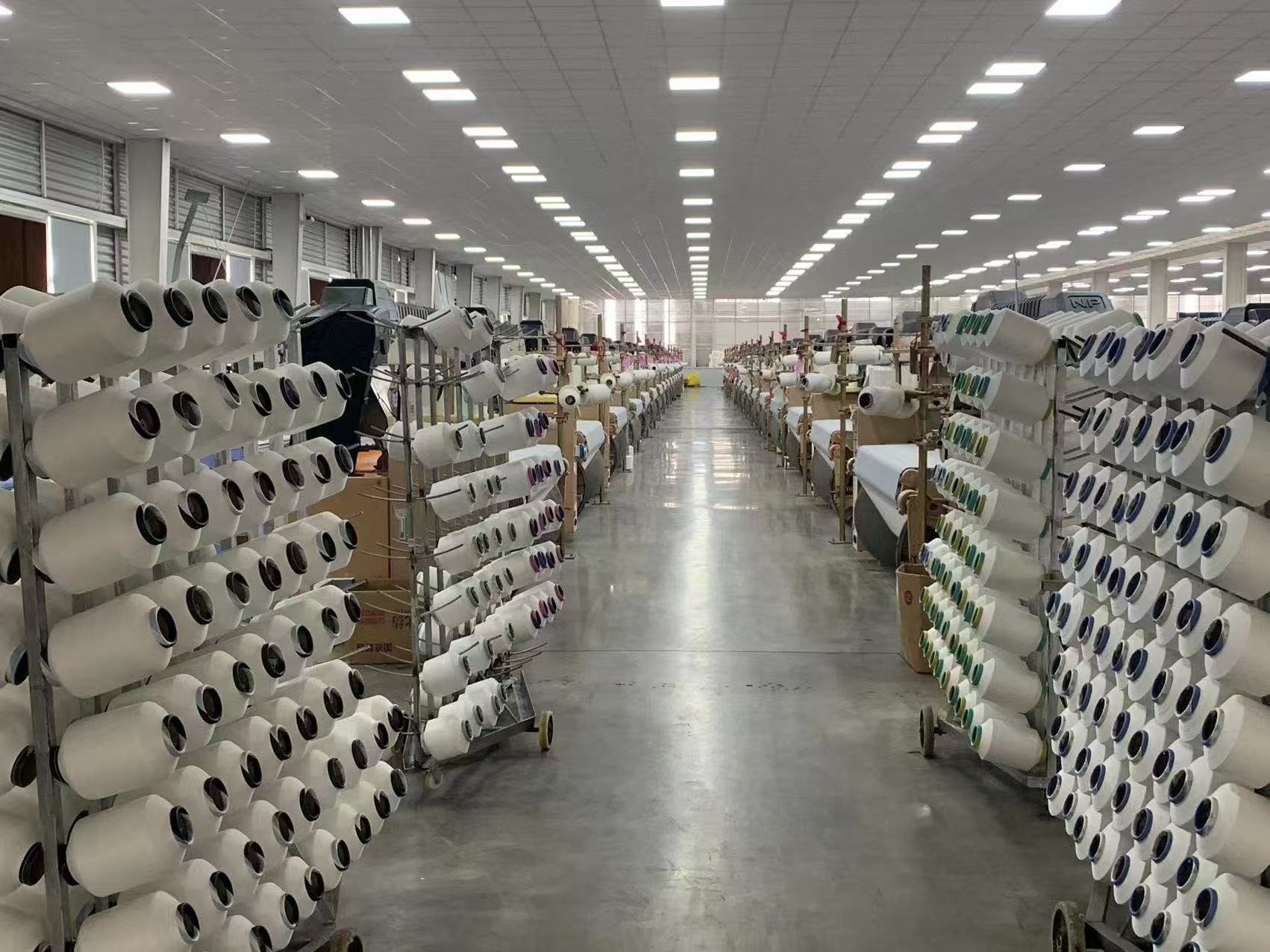
Suzhou T-land Textile Co., Ltd. is a sofa fabric and curtain fabric manufacturer located in Shengze Town, Wujiang City, Jiangsu, China — an area known as the "Silk Capital of China," close to Shanghai. The company was founded in 2014, runs a 5,000 ㎡ facility with 91 employees, and exports approximately 90% of its fabric output, with the European Union among its main markets. In this article the company appears as T-LAND TEXTILE, and all model specifications quoted below come from its published product range.
What Counts as Home Textile Fabric?
Four groups cover most purchasing conversations in this category:
- Upholstery and sofa fabric — covers and protects the sofa base material, resists friction, decorates the space and improves sitting comfort. Sofa fabric is fixed onto the sofa frame and has to bear repeated sitting pressure and friction.
- Curtain fabric — a hanging textile used for light blocking and light adjusting, sun shading and privacy protection, decoration and noise reduction. Curtains are hung for manual or motorized opening and closing.
- Cushion and decorative fabric — cut-and-sew items that normally share the same substrate as the sofa collection, which is why color matching between sofa and cushion is a routine requirement.
- Functional and performance variants — flame retardant fabric, waterproof fabric, stain resistant fabric, noise reducing fabric, easy cleaning fabric, coated fabric and bonded fabric.
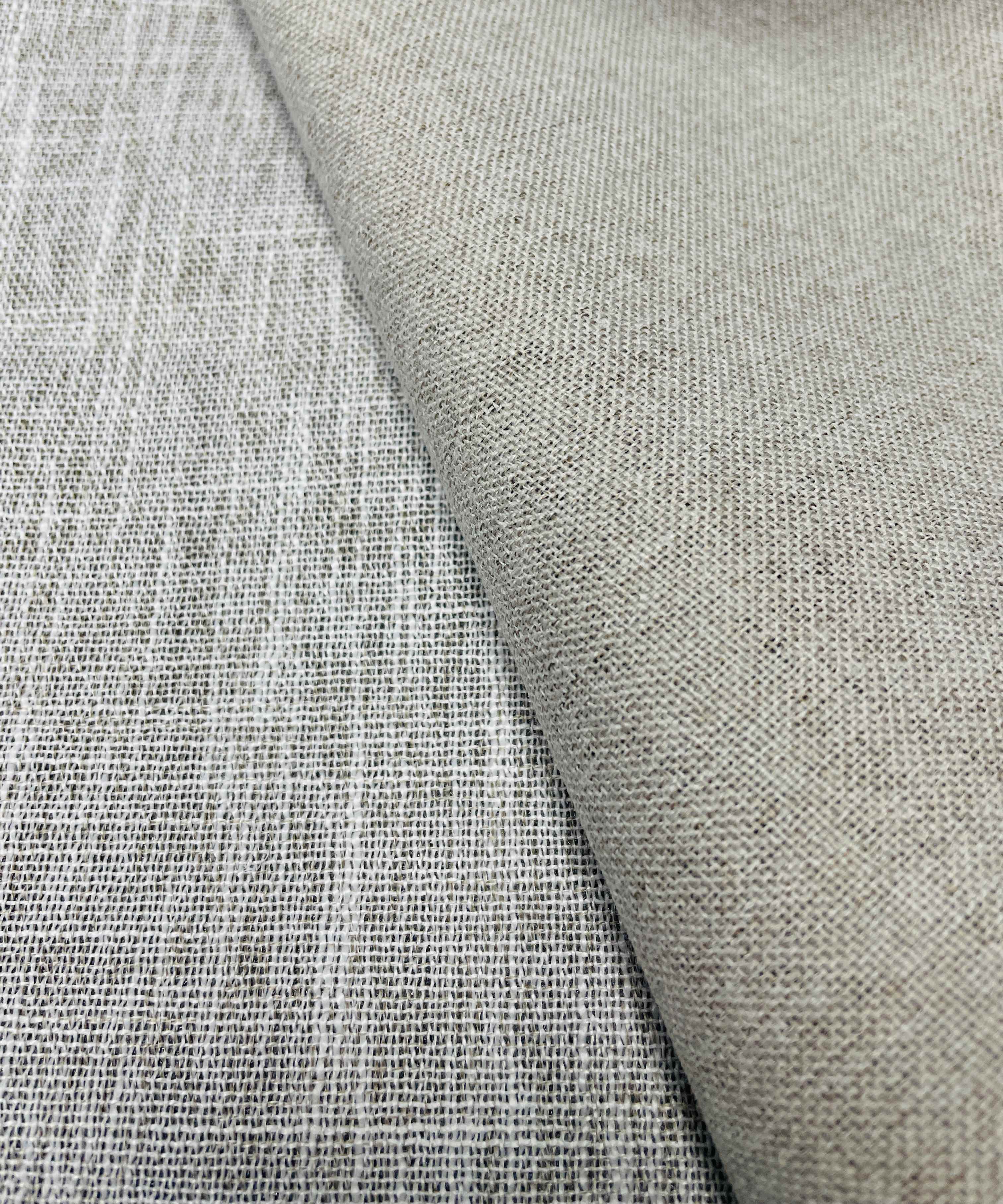
A second naming layer describes structure and hand feel rather than performance. Velvet fabric, jacquard fabric, poly linen fabric and polycotton fabric are weave or blend descriptions. A velvet-type polyester and a velvet based on another fiber can carry the same trade name and still behave differently in wear testing, which is why composition, construction, weight and width have to appear next to the name on any specification sheet.
The Real Problem: Loose Terminology and Hidden Consistency Risk
Most sourcing disputes in this category start before price is discussed. Two issues dominate.
1. Light control terminology. Buyers often write "blackout" when the project actually needs dimout. In the T-LAND range, the dimout classification positions its light blocking level between standard decorative fabric and blackout fabric, and the dimout curtain fabric is documented as providing room darkening performance together with a noise reducing function. Requesting blackout without defining the required light blocking level leaves the mill to guess, and a wrong guess is expensive.
Industry reporting shows the same ambiguity. Strategic Market Research valued the global blackout fabric market at USD 2.7 billion in 2024 and projected USD 3.8 billion by 2030 at a 5.9% CAGR, while other commercial reports suggest a figure closer to USD 10.5 billion. The gap is most likely a definition difference — finished curtains counted in one case, raw fabric in the other. Buyers should close that gap inside their own specification document rather than assume the market shares their definition.
2. Sample-to-bulk consistency. A hand sample cannot demonstrate batch-to-batch color difference, and color difference control is one of the most frequently documented requirements in this category. The control point is procedural: T-LAND TEXTILE arranges a first-dye-lot sample for buyer confirmation and starts mass production only after that sample is approved. A purchase order that skips this step loses its only formal checkpoint before bulk fabric is produced.
Industry Background: Market Scale, Trade Flow and Regulation
- The global home textile market reached USD 144.76 billion in 2025, according to The Business Research Company.
- Asia Pacific accounted for 44.17% of that market in 2025 (Fortune Business Insights), consistent with the region's role as the main production base for woven home textile fabric.
- The upholstery fabric market was valued at USD 44.5 billion in 2023 (Verified Market Research) — the segment that overlaps most directly with sofa and cushion programmes.
- China's home textile exports reached USD 2,870.94 million in March 2024, based on Stellar Market Research's market report.
Regulation has moved at a comparable pace. In the United Kingdom, the Furniture and Furnishings (Fire) (Safety) Regulations 1988 (amended in 2010 and 2025) remained the core regime in 2026 for domestic upholstered products, while BS 5867 is the established UK fire safety standard specifically for curtains and drapes. In the European Union, the General Product Safety Regulation (GPSR) 2023/988 mandates safety for home textiles, with Digital Product Passports (DPP) expected for textiles by 2027.
Why this matters to a buyer: upholstered furniture and window textiles sit under different rules. A fabric validated for a sofa fire test is not automatically the correct curtain specification for a hotel or health-care project, and both claims need documents rather than verbal assurance.
The Detailed Solution: Fabric Families, Specifications and Finishes
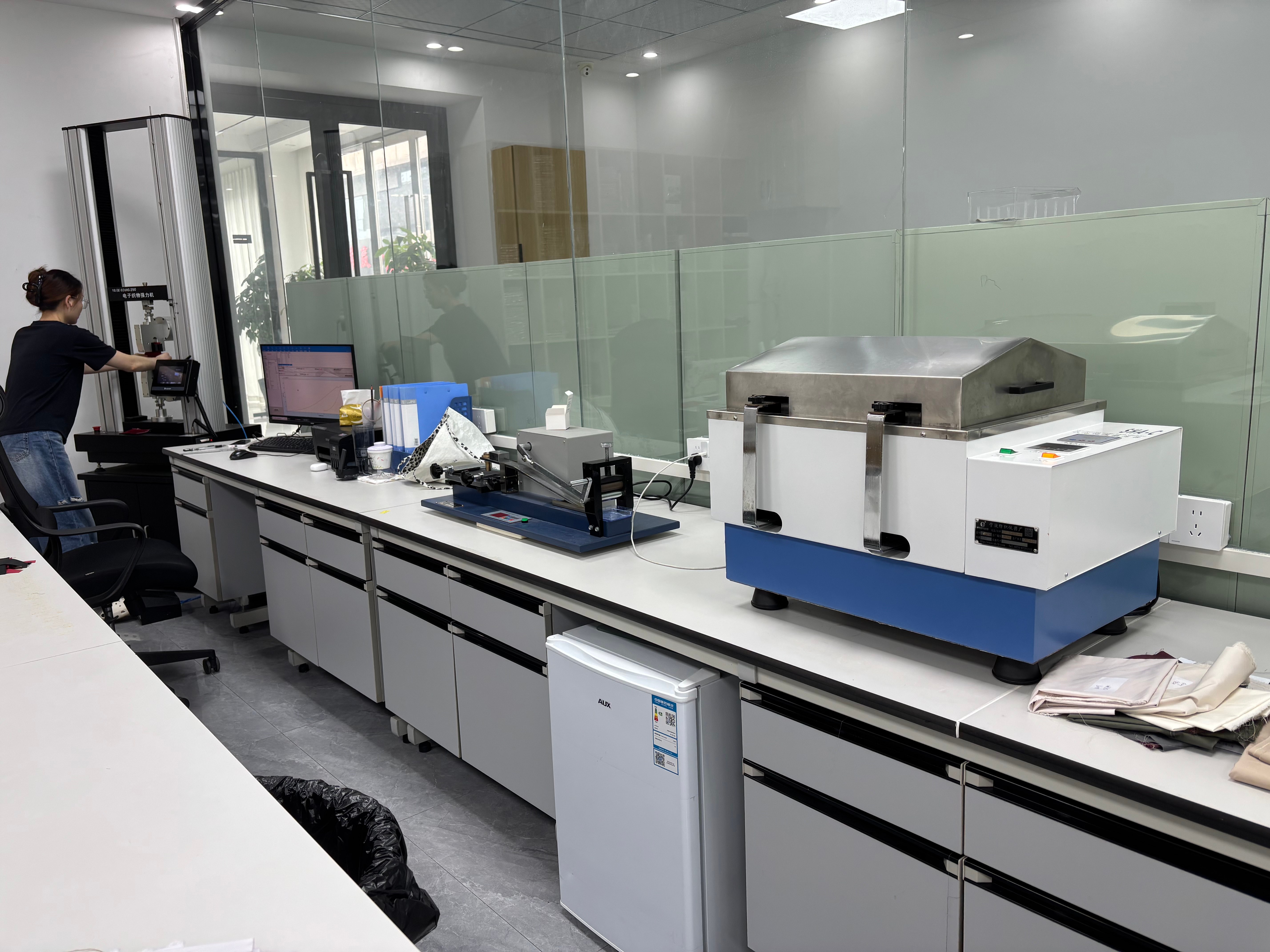
T-LAND TEXTILE produces sofa fabric and curtain fabric from a 5,000 ㎡ facility in Shengze Town with 91 employees, a 3-engineer R&D team and an annual output of 5,000,000 meters, supported by a 1,500 ㎡ warehouse and an in-house laboratory that tests each lot. The specifications below come from that range and show how the categories differ in practice.
Sofa and Upholstery Fabrics
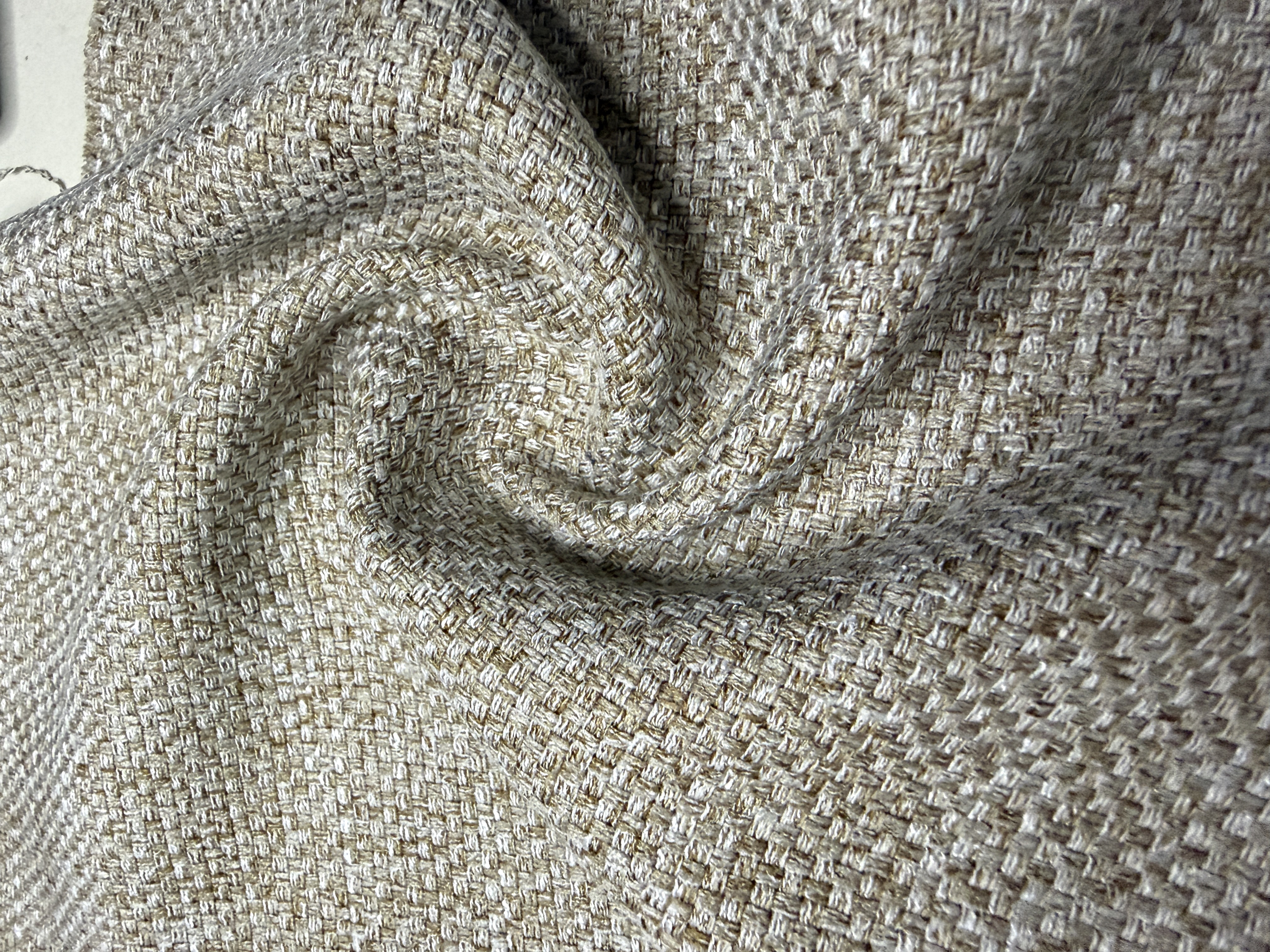
- TL07410 — velvet sofa fabric, 100% polyester, construction 350D × 450D, 300 gsm, 150 cm width; chenille quality with a soft hand feel and a bonded back side, so it can be made into sofas or cushions, and it is suitable for indoor and outdoor use.
- TL07377-2 — velvet sofa fabric, 300D × 600D, 160 gsm, 150 cm width, bonded back side, supplied for wholesale distribution.
- TL07392 — jacquard sofa fabric, 900D × 1580D, 280 gsm, 150 cm width, brushed surface with a soft hand feel.
- TL07373-1 — jacquard sofa fabric, 350D × 900D, 220 gsm, 150 cm width.
- TL12167 — poly linen sofa fabric, 350D × 350D + 650D, 280 gsm, 150 cm width, linen hand feel with a bonded back side.
- TL0329 — upholstery sofa fabric, 105D × 200D, 160 gsm, brushed surface with a suede hand feel, available in 150 cm and 300 cm widths.
- TL0901 — velvet sofa fabric, 160D construction, 200 gsm, 160 cm width.
- TL07242 — velvet sofa fabric, 150D × 320D + 200D, 220 gsm, 150 cm width.
- TL0415 / TL0469 / TL0484 — polyester linen sofa fabric, 600D × 600D and 300D × 300D, 230 gsm, 150 cm width, linen hand feel with a bonded back side, used in furniture OEM production.
The decision rule for this group is simple: in the T-LAND range the bonded back side is what determines whether a decorative-looking fabric can be cut into a sofa or cushion programme, because the bonding adds body and supports lamination quality control. Where a design needs a woven look instead of a pile, the jacquard constructions (TL07392, TL07373-1) carry a brushed surface; where a linen look is required without linen fiber, the poly linen group (TL12167, TL0415/TL0469/TL0484) delivers the hand feel in 100% polyester.
Curtain, Dimout and Room Darkening Fabrics
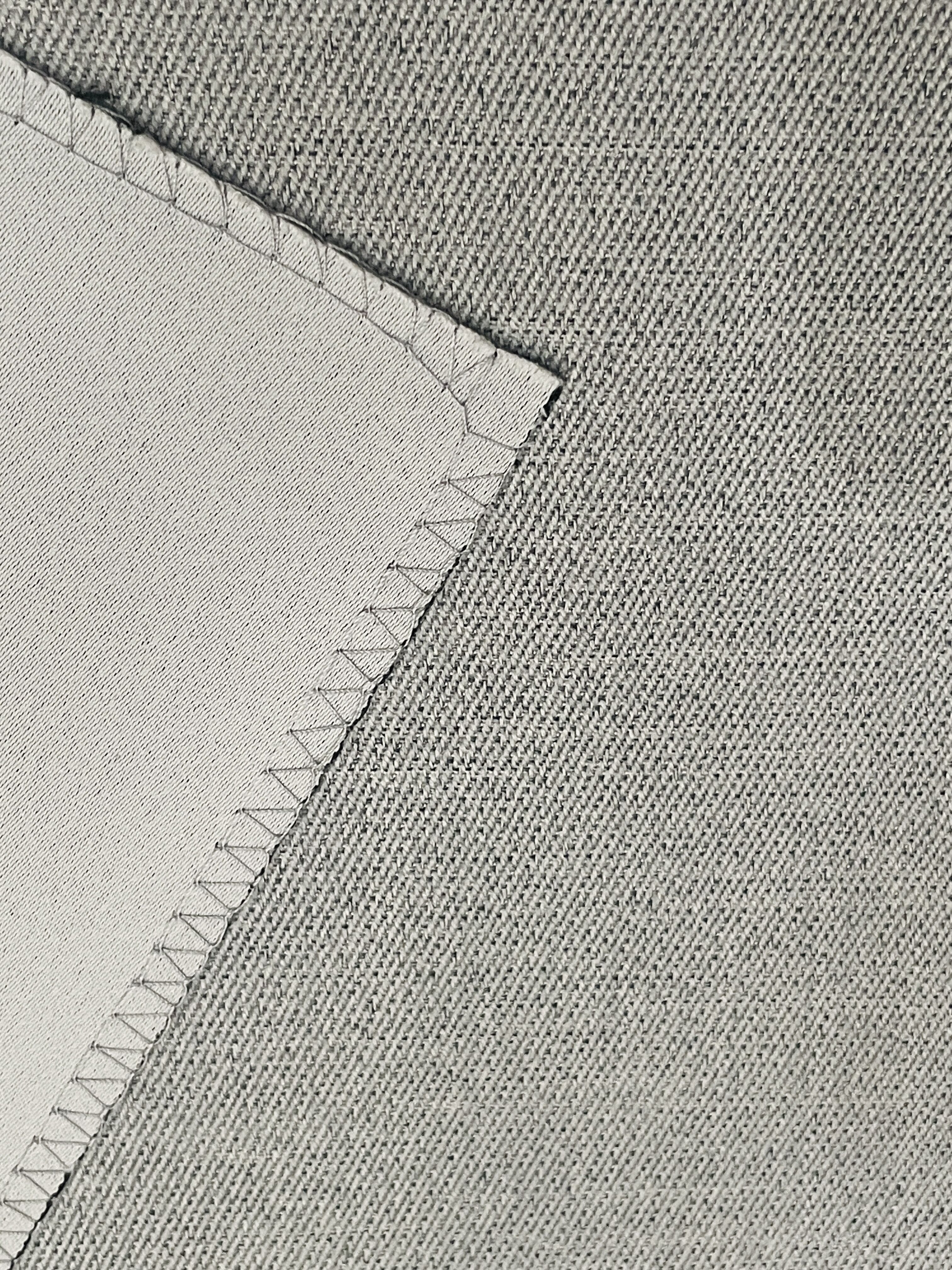
- TL08321 — dimout curtain fabric, (150D + 320D) × (300D + 300D), 380 gsm, 150 cm and 300 cm widths; suitable for hotel projects and residential room darkening curtains, with fire retardant, room darkening and noise reducing characteristics.
- TL08229 — dimout curtain fabric, 75D × 300D, 230 gsm, 150 cm / 280 cm / 300 cm widths, used for readymade indoor curtains.
- TL08273 — dimout curtain fabric, (75D + 80D) × 320D, 280 gsm, 150 cm / 300 cm widths.
- TL08166 — dimout curtain fabric, 75D × (300D + 300D), 260 gsm, 150 cm / 300 cm widths, for indoor or outdoor readymade curtains.
- TL0888 — dimout curtain fabric, 75D × 300D, 250 gsm, 150 cm / 280 cm / 300 cm widths.
- TL08180 — curtain fabric with a linen hand feel, 75D × (150D + 150D), 310 gsm, 150 cm / 300 cm widths, readymade for curtain and sofa applications.
- TL08183 / TL08170 — dimout curtain fabric, 75D × 300D + 160D, 230 gsm, 150 cm / 300 cm widths, with a cation and bamboo surface quality for window decoration.
Two specification details matter here. The 280 cm and 300 cm widths exist for wide window and drape cutting plans, and quoting only 150 cm is a common cause of rework. Weight spans 230 gsm to 380 gsm, ranging from lighter readymade curtains to heavy hotel-weight drapery.
Dual-Use, Coated and Bonded Constructions
- TL12199 — 100% polyester, 700D × 700D, 300 gsm with backing and 380 gsm with silicon coating, 150 cm / 300 cm widths. With non-woven backing it is made for sofa or cushion use; with silicon coating it is made for curtain use.
- TL12210 — polylinen curtain and sofa fabric, 385 gsm, 150 cm / 300 cm widths, built as a bonded two-layer construction in which two linen-type fabrics are combined; used for room darkening curtain applications and also suitable for sofa and cushion applications.
- TL08269 — dimout curtain and sofa fabric, 75D × (300D + 300D), 280 gsm, 150 cm width, brushed surface, ready-made for curtains and cushions and available in any color.
Coating and backing are the two finishing levers that convert one greige construction into two different products. Non-woven backing targets upholstery; silicon coating targets the curtain face. Bonding either adds structure for cut-and-sew use or joins two fabric layers into a single heavier substrate.
Functional Finishes and What They Change
| Function | Documented effect | Typical fit |
|---|---|---|
| Bonded back side | Back side is bonded; adds body and supports lamination quality control | Sofa and cushion construction |
| Silicon coating | Applied to dimout constructions for the curtain face | Curtain and drape |
| Non-woven backing | Supports sofa or cushion construction | Upholstery programmes |
| Flame retardant, inherent yarn | Permanent and washable, soft hand feel | Hotel projects |
| Flame retardant, coating treated | Lower cost; FR performance drops after repeated washing | Low-wash applications |
| Dimout / room darkening | Light blocking between standard decorative fabric and blackout, with noise reducing function | Residential and hotel windows |
| Pilling resistance | Higher pilling-resistance grade means lower pilling risk; short-fiber fabrics pill more than long-fiber fabrics | Long-service upholstery |
| Light fastness | Determines fade resistance under ultraviolet radiation | Sun-exposed windows |
Step-by-Step: How to Specify Home Textile Fabric Correctly
- Define the working condition. Household low-frequency friction and sunlight exposure and commercial heavy-duty condition are two different requirements, even when the visual design is identical.
- Match the fabric class to the function. Curtain fabric handles light blocking and light adjusting, sun shading and privacy protection, decoration and noise reduction. Sofa fabric covers the base material, resists friction, decorates the space and improves sitting comfort.
- Write performance targets into the RFQ. Documented requirements in this category include flame retardancy, high light fastness, high Martindale wear resistance, anti-pilling, water-repellent and stain-resistant finishing, low-formaldehyde eco-standard, washability, and customized width and gram weight.
- Lock construction, weight and width per model. A specification such as 75D × 300D, 230 gsm, 280 cm width is unambiguous; "dimout curtain fabric" on its own is not.
- Choose backing or coating. Non-woven backing, silicon coating or bonding decide whether the same base fabric becomes a sofa fabric or a curtain fabric.
- Confirm the compliance route for the destination market. Check the light fastness grade for sun-exposed windows, and confirm whether the flame retardant technology is inherent-yarn or coating-treated. UK-market upholstered products fall under the Furniture and Furnishings (Fire) (Safety) Regulations 1988 (amended 2010 and 2025) and curtains and drapes under BS 5867; EU buyers fall under GPSR 2023/988, with Digital Product Passports expected for textiles by 2027.
- Validate the sample and the first dye lot. T-LAND TEXTILE arranges a first-dye-lot sample for confirmation and begins mass production only after approval.
- Check the supply side, not only the sample. A mill that runs in-house laboratory testing for each lot, keeps stock in a managed 1,500 ㎡ warehouse and controls order instructions in a computer-based system will hold consistency better than one that only shows a hand swatch.
Use Cases: Where These Fabrics Are Specified
Working conditions in this category split into household low-frequency friction and sunlight, and commercial heavy-duty condition. The documented project types are:
- Residential decoration projects — readymade indoor curtains, room darkening curtains, and sofa or cushion collections.
- Hotel and B&B projects — heavier dimout constructions and fire retardant curtains, where the FR technology choice affects washing and service life.
- Office commercial projects — upholstery on seating exposed to continuous use.
- Health-care institutions — noise reducing and easy cleaning requirements.
- Exhibition and cultural tourism projects — decorative fabric with color matching for furniture decoration.
- RV and yacht soft furnishing — small-volume, custom-width special soft furnishing customization.
Fabric is only one part of the assembly. Curtain projects also need curtain rods, tracks, motors for motorized curtains, brackets and hooks; sofa projects need the sofa frame, sponge filling and sewing processing equipment. Specifying the fabric without confirming the hardware and cutting plan is a frequent cause of rework.
Comparison Table: T-LAND TEXTILE Reference Models
| Model | Fabric type | Construction | Weight | Width | Documented use |
|---|---|---|---|---|---|
| TL07410 | Velvet sofa fabric | 350D × 450D | 300 gsm | 150 cm | Sofa and cushion, bonded back, indoor and outdoor |
| TL07377-2 | Velvet sofa fabric | 300D × 600D | 160 gsm | 150 cm | Sofa and cushion, bonded back, wholesale distribution |
| TL07392 | Jacquard sofa fabric | 900D × 1580D | 280 gsm | 150 cm | Sofa, brushed surface, home decoration |
| TL07373-1 | Jacquard sofa fabric | 350D × 900D | 220 gsm | 150 cm | Sofa, home decoration |
| TL12167 | Poly linen sofa fabric | 350D × 350D + 650D | 280 gsm | 150 cm | Sofa and cushion, bonded back, linen hand feel |
| TL0329 | Upholstery sofa fabric | 105D × 200D | 160 gsm | 150 cm / 300 cm | Sofa and cushion, suede hand feel |
| TL07242 | Velvet sofa fabric | 150D × 320D + 200D | 220 gsm | 150 cm | Sofa and cushion, home decoration |
| TL0415 / TL0469 / TL0484 | Polyester linen sofa fabric | 600D × 600D / 300D × 300D | 230 gsm | 150 cm | Furniture OEM, sofa and cushion, bonded back |
| TL12199 | Sofa and dimout fabric | 700D × 700D | 300 gsm with backing / 380 gsm with silicon coating | 150 cm / 300 cm | Curtain with coating, sofa or cushion with backing |
| TL12210 | Polylinen curtain and sofa fabric | Two linen-type fabrics bonded | 385 gsm | 150 cm / 300 cm | Room darkening curtain, sofa and cushion |
| TL08269 | Dimout curtain and sofa fabric | 75D × (300D + 300D) | 280 gsm | 150 cm | Curtain and cushion, brushed surface |
| TL08321 | Dimout curtain fabric | (150D + 320D) × (300D + 300D) | 380 gsm | 150 cm / 300 cm | Hotel projects, room darkening, noise reducing |
| TL08229 | Dimout curtain fabric | 75D × 300D | 230 gsm | 150 cm / 280 cm / 300 cm | Readymade indoor curtains |
| TL08166 | Dimout curtain fabric | 75D × (300D + 300D) | 260 gsm | 150 cm / 300 cm | Indoor and outdoor readymade curtains |
| TL0888 | Dimout curtain fabric | 75D × 300D | 250 gsm | 150 cm / 280 cm / 300 cm | Indoor and outdoor curtain, room darkening |
| TL08180 | Curtain fabric, linen hand feel | 75D × (150D + 150D) | 310 gsm | 150 cm / 300 cm | Readymade curtain and sofa |
All models listed are 100% polyester unless the fabric type states a distinct blend. Widths and weights are quoted as published; buyers should confirm the final construction against their own cutting plan and performance targets.
Frequently Asked Questions
Which standards and certifications should I verify before ordering home textile fabric?
It depends on the end market and the product type, and the two cannot be separated. For domestic upholstered products sold in the United Kingdom, the Furniture and Furnishings (Fire) (Safety) Regulations 1988 (amended in 2010 and 2025) remained the core regime in 2026, while BS 5867 is the established UK fire safety standard specifically for curtains and drapes. For the European Union, the General Product Safety Regulation (GPSR) 2023/988 mandates safety for home textiles, and Digital Product Passports (DPP) are expected for textiles by 2027. At mill level, Suzhou T-land Textile Co., Ltd. holds OEKO-TEX and GRS certification and works with additional certifications to meet different client requirements. Buyers should ask for documents matching their specific market and product type rather than a generic certificate list.
Is flame retardant curtain fabric supplied as inherent-yarn FR or coating-treated FR?
Both technologies are available. Inherent-yarn FR is permanent and washable with a soft hand feel, which is why it is the usual choice for hotel projects where curtains are cleaned repeatedly. Coating-treated FR costs less, but its FR performance drops after repeated washing. The decision therefore depends on expected wash cycles and service life, not on price alone.
Will sofa fabric pill?
Almost all fabrics may pill. The higher the fabric pilling-resistance grade, the lower the pilling risk, and short-fiber fabrics are more likely to pill than long-fiber fabrics. Pilling forms as surface short fibers are pulled out and tangled by repeated friction; looser yarns and higher short-fiber content increase the possibility. It is a physical fiber phenomenon, not automatically a product defect, which is why the pilling-resistance grade should be confirmed before purchase rather than judged from a hand sample.
How is bulk production kept identical to the confirmed sample?
Through a documented confirmation step rather than a verbal promise. T-LAND TEXTILE arranges a first-dye-lot sample for buyer confirmation and starts mass production only after that sample is approved, which creates a formal checkpoint for color, hand feel and finish before bulk fabric is produced. Batch-to-batch color difference control should be written into the specification, and a mill that also runs in-house laboratory testing on each lot adds a second control layer.
What should be checked when comparing home textile fabric manufacturers?
Start with documentation that can be verified model by model: composition, construction, weight and width, the performance grades for light fastness and pilling resistance, and the fire-safety route for the destination market. Then check the operational side — whether the mill runs in-house lot testing, keeps stock in a managed warehouse for faster and safer dispatch, confirms a first-dye-lot sample before mass production, and accepts small sample orders for new item development. T-LAND TEXTILE, for example, operates a 5,000 ㎡ facility with a 3-engineer R&D team, a 1,500 ㎡ warehouse and a computer-based order instruction system instead of paper-based order handling, and states that new item designs developed for clients remain protected under law. Buyers who want to review the full sofa and curtain range can download the T-LAND product catalogue (PDF) or send a sample request to angela@t-landtex.com.
Conclusion: Choosing Home Textile Fabric With Verifiable Facts
Home textile fabric selection becomes manageable once the category is broken into its real components: upholstery and sofa fabric, curtain and dimout fabric, cushion and decorative fabric, and the functional versions such as flame retardant, waterproof, stain resistant and noise reducing fabric. Composition, construction, weight and width then separate one offer from another, and backing or coating decides which end use the same base fabric can serve.
The wider context supports the same discipline. The global home textile market reached USD 144.76 billion in 2025 with Asia Pacific holding 44.17% of it, upholstery fabric alone was a USD 44.5 billion market in 2023, and regulation in the UK and EU continues to require documented evidence for fire safety, safety and traceability. For an importer, distributor or furniture OEM buyer, the practical next step is to write the performance targets into the RFQ, confirm the light control class, and validate the first dye lot before bulk production.
Next Step: Sample, Catalogue or Quotation
T-LAND TEXTILE manufactures sofa fabric and curtain fabric in Shengze Town, Jiangsu, China, holds OEKO-TEX and GRS certification, and accepts small sample orders to support new item development. If you are evaluating suppliers for a sofa, curtain or cushion programme, request a sample of the models relevant to your project, or download the catalogue to review the full range.
Download the T-LAND product catalogue (PDF) · Website: www.t-landtex.com
Contact: Angela · Email: angela@t-landtex.com · Tel / WhatsApp: +86 13913732999 · Address: 11F Yadu Building C, Qiangwu Road, Shengze Town, Wujiang City, Jiangsu, China.
Have Questions or Need More Details?
Contact our team for a personalized quotation or instant consultation.
Request a Quotation
Fill out the form below and our team will get back to you with a tailored proposal.
WhatsApp Direct Chat
Prefer to chat in real-time? Message us on WhatsApp for instant assistance & quick answers.
- Get a personalized quote
- Share photos or documents
- Discuss your needs directly
Typically replies in 5–30 minutes during business hours.