Inherent-Yarn vs Coating-Treated FR Curtain Fabric: A Compliance Intake Guide
Two curtain fabrics can carry the same three letters on a specification sheet and still be produced in completely different ways. One may have flame-retardant performance built into the yarn before the fabric is woven. The other may be an ordinary fabric that receives a chemical treatment after weaving. Both can be written as "FR" on a quotation. Only one of them will match the documents your compliance intake actually needs — and the label alone will not tell you which one you are buying.
This guide is written for importers, furniture brands and procurement teams in the evaluation stage. It separates inherent-yarn FR from coating-treated FR, sets out what to request from a supplier (FR method, documentation path, and bulk-to-sample consistency), and connects that intake process to verified product facts — including 100% polyester dimout curtain and sofa fabrics in 75D×(300D+300D) and 75D×300D constructions, 230–280 gsm weights, and 150 cm / 300 cm width options. No specific fire-retardant certification is assumed anywhere in this article: certification status must be confirmed against the exact fabric, construction and order.
The Difference in Plain Terms: Inherent-Yarn FR vs Coating-Treated FR
Inherent-yarn FR means the flame-retardant performance is introduced at fibre or yarn level, before the fabric is woven or knitted. The construction you order — for example a 75D×(300D+300D) dimout construction — is already the FR construction. Nothing is added to the surface afterwards.
Coating-treated FR means the base fabric is produced first and the flame-retardant chemistry is applied as a later finishing step, commonly as a back coating, padding or similar treatment. The base construction stays the same; the performance layer sits on or inside the finished fabric.
The intake problem is not that suppliers use the wrong words. It is that the method is usually the one field missing. Spec sheets often carry "FR treated", "flame retardant", "FR coated" or "inherently FR" without stating which stage creates the performance, which market regime the claim is written for, or which document supports it. For a buyer in the evaluation stage, that gap cannot be closed by price negotiation. It has to be closed by written technical clarification before sampling.
Why an FR Claim Cannot Be Read Without a Market
Fire-safety requirements for home textiles are set by destination market and by end product, not by a universal standard. Three reference points are worth keeping in the intake file:
- United Kingdom: the Furniture and Furnishings (Fire) (Safety) Regulations 1988 remain the core regime in 2026 for domestic upholstered products, according to Studio 198.
- United Kingdom — curtains specifically: BS 5867 is described by Begoodtex as the established UK fire-safety standard specifically for curtains and drapes.
- European Union: the General Product Safety Regulation (GPSR) 2023/988 mandates safety for home textiles, and Digital Product Passports are expected for textiles by 2027, as reported by Carbonfact.
Two consequences follow. First, a curtain programme and an upholstered sofa programme in the same market may not sit under the same regime, even when both use fabric from the same mill. Second, a claim written as "FR" without a target market cannot be verified, because there is no benchmark to verify it against.
The commercial context makes this intake discipline more important, not less. According to The Business Research Company, the global home textile market reached USD 144.76 billion in 2025, with Asia Pacific holding a 44.17% share of that market in 2025 according to Fortune Business Insights. Strategic Market Research valued the global blackout fabric market at USD 2.7 billion in 2024, projected to reach USD 3.8 billion by 2030 at a CAGR of 5.9%. Verified Market Research valued the upholstery fabric market at USD 44.5 billion in 2023, and Stellar Market Research reported China's home textile exports at USD 2,870.94 million in March 2024.
Those figures need one caveat. Blackout and dimout market definitions vary widely between reports — the same category has been valued at USD 2.7 billion and at USD 10.5 billion depending on whether raw fabric or finished curtains are counted. Buyers should treat all market-size numbers as directional, and treat the fabric specification, FR method and document trail as the only figures that must be exact.
Two Documentation Paths: What Each FR Method Should Be Able to Prove
Path A — Inherent-Yarn FR
Because the performance is created before weaving, the evidence trail starts upstream. Expect the supplier to document the yarn or fibre composition, the exact construction, and the finished-fabric test report that applies to the shipped article. The commercially useful question is whether the FR declaration is tied to the yarn lot and the greige specification, so that a repeat order with the same construction reproduces the same basis. Weight in this path is carried by construction rather than by added finish.
Path B — Coating-Treated FR
Because the performance is created after weaving, the evidence trail starts at the finishing stage. Expect documentation of the treatment type, the finishing route, and the finished-fabric test report. The commercially useful question is how the add-on is controlled between sample and bulk: coating and padding finishes are applied by machine, so the applied amount — and therefore weight, hand feel and drape — can move between runs. This is also the path where the "weight basis" question matters most.
What neither path proves: reading certificate scope correctly
Eco and recycled-content certificates are frequently attached to FR quotations as if they were evidence of fire performance. They are not, and the scope wording shows why.
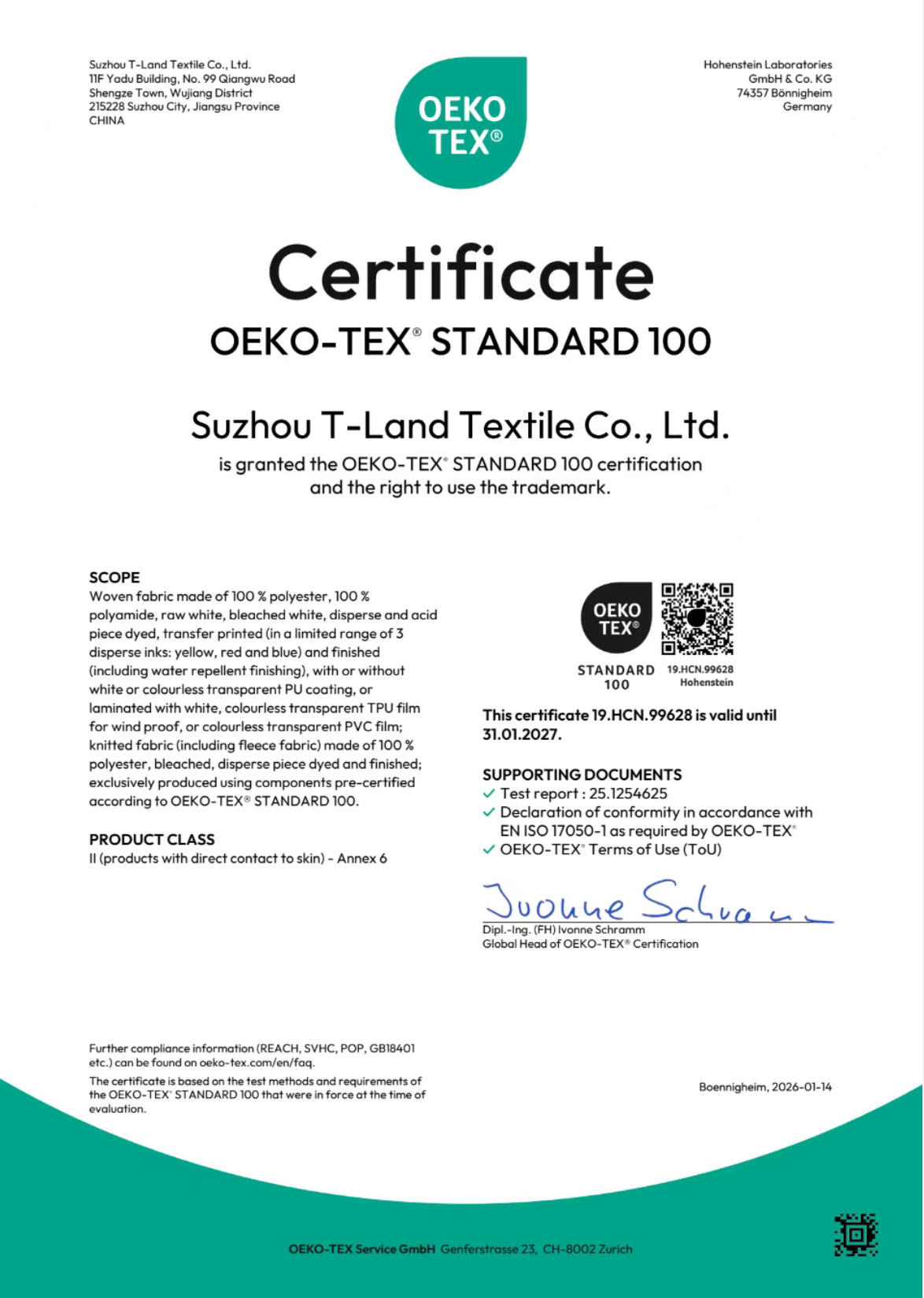
T-LAND TEXTILE holds OEKO-TEX Standard 100 certificate 19.HCN.99628 issued by Hohenstein, valid from 2026-01-14 to 2027-01-31. Its recorded scope covers woven and knitted fabric made of 100% polyester and 100% polyamide, including bleaching, disperse dye piece-dyeing, transfer printing and PU/TPU/PVC coating and laminating finishing, under Product Class II for products with direct skin contact. Fire performance is not named in that scope. In other words, a coating-treated curtain can sit inside this OEKO-TEX scope while still carrying no FR claim at all.
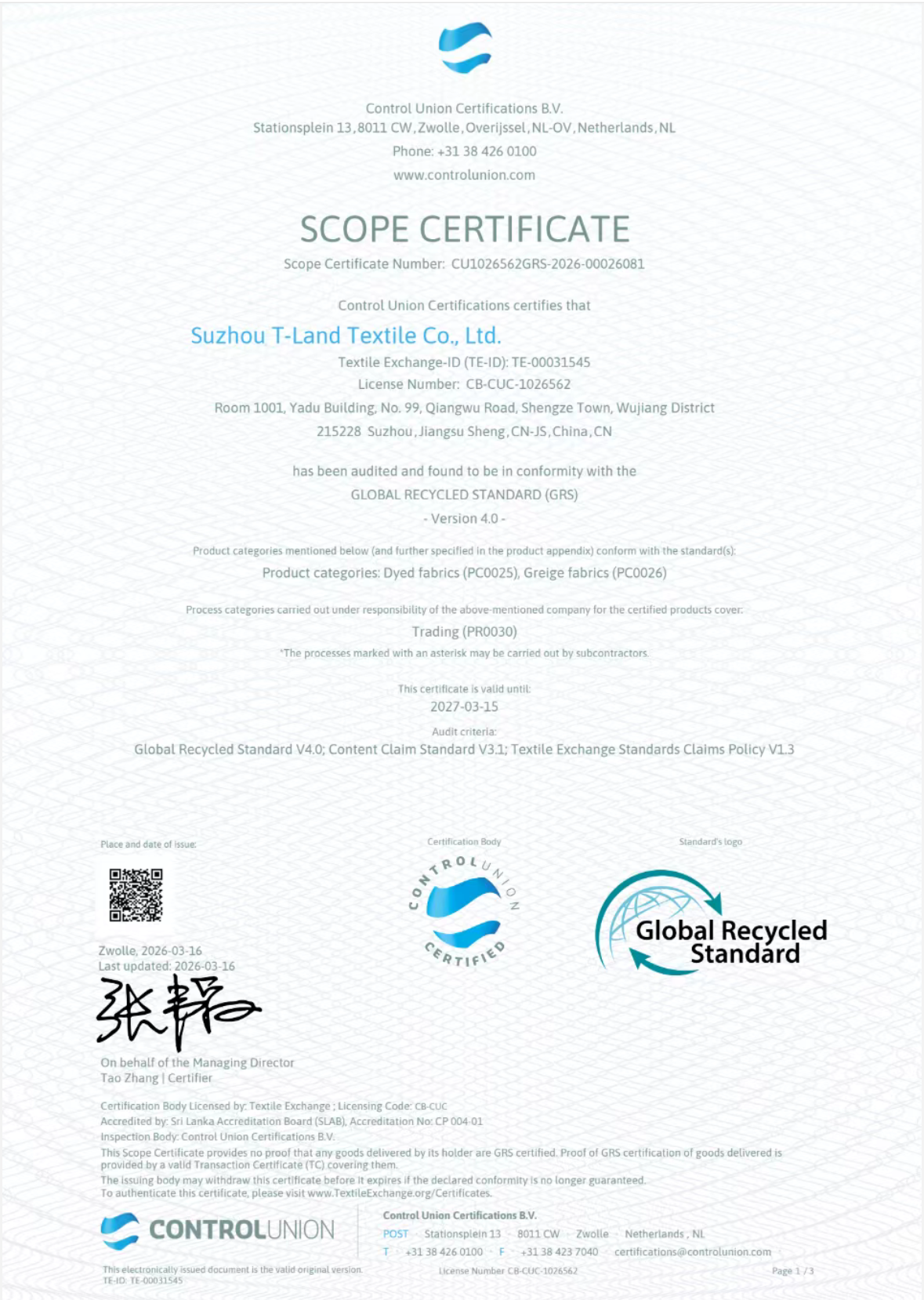
The company's second certificate is a Global Recycled Standard certificate, CB-CUC-1026562, issued by Control Union and valid from 2026-03-16 to 2027-03-15, covering dyed fabrics and greige fabrics. That scope addresses recycled content and chain of custody. It is a useful document for programmes that need recycled content, and it is not an FR document.
The practical rule for intake is therefore: ask for certificate scope, not certificate logos, and keep the FR question in a separate line of correspondence from the eco question.
The FR Compliance Intake Checklist: What to Request Before Sampling
- FR method in writing. Ask the supplier to state whether the article is inherent-yarn FR, coating-treated FR, or not FR at all, and to attach the technical datasheet for that exact article.
- Target market and regime. Ask which market the claim is written for. "FR" without a jurisdiction cannot be evaluated against UK, EU or other requirements.
- Test method and report reference. Where a test report exists, request the report reference and the standard named on it. Where none exists, ask the supplier to state that clearly rather than implying performance.
- Certificate scope, not certificate logo. If a certificate is offered as evidence, read its scope lines. OEKO-TEX and GRS scopes describe ecology and recycled content; neither substitutes for an FR statement.
- Composition and construction. Confirm material and construction in the same format across suppliers — for example 100% polyester, 75D×(300D+300D) or 75D×300D.
- Weight basis. Ask whether the quoted gsm is base fabric, base plus backing, or base plus coating. One T-LAND article, TL12199, is documented at 300 gsm with backing and 380 gsm with silicon coating — the same article, two weight statements, depending on the finishing route.
- Width options and stability. Confirm available widths (150 cm, 280 cm or 300 cm depending on the article) and whether width is measured after finishing rather than before.
- Pilling risk question. Ask for the pilling-resistance grade and the test basis. Nearly all fabrics may pill; the higher the pilling-resistance grade, the lower the pilling risk, and short-fibre fabrics are more likely to pill than long-fibre fabrics.
- Fading risk question. Ask for the light fastness grade. Curtain fading after a period of use is mainly caused by insufficient light fastness, where long-term ultraviolet radiation decomposes dyes.
- Bulk-to-sample protocol. Ask who approves the sample, what is retained, and how bulk is compared against the approved sample — including colour approval under a stated light source and batch-to-batch colour difference control.
- After-care effect. For coating-treated articles, ask how the recommended cleaning or washing procedure affects the finish, since a downstream treatment is the part of the product most exposed to after-care.
- Inspection route. Confirm whether quality control is 100% self-testing by the mill or includes random inspection by the customer, and who signs the inspection record.
Connecting the Checklist to Verified Fabric Facts
The intake checklist is only useful if the answers can be compared against a documented specification. The following articles are documented with material, construction, weight and width, which is exactly the data set a compliance intake should be built on.
| Article | Type | Material | Construction | Weight | Width |
|---|---|---|---|---|---|
| TL08229 | Dimout curtain fabric | 100% polyester | 75D×300D | 230 gsm | 150 cm / 280 cm / 300 cm |
| TL0888 | Dimout curtain fabric | 100% polyester | 75D×300D | 250 gsm | 150 cm / 280 cm / 300 cm |
| TL08166 | Dimout curtain fabric | 100% polyester | 75D×(300D+300D) | 260 gsm | 150 cm / 300 cm |
| TL08269 | Curtain & sofa fabric | 100% polyester | 75D×(300D+300D) | 280 gsm | 150 cm |
| TL08180 | Dimout curtain fabric | 100% polyester linen | 75D×(150D+150D) | 310 gsm | 150 cm / 300 cm |
| TL0329 | Upholstery / sofa fabric | 100% polyester | 105D×200D | 160 gsm | 150 cm / 300 cm |
| TL07410 | Velvet sofa fabric | 100% polyester | 350D×450D | 300 gsm | 150 cm |
| TL12199 | Sofa & dimout fabric | 100% polyester | 700D×700D | 300 gsm with backing / 380 gsm with silicon coating | 150 cm / 300 cm |
Two things become visible in this table. First, the 75D×(300D+300D) and 75D×300D dimout constructions at 230–280 gsm, offered at 150 cm / 300 cm, give a buyer a narrow, comparable family for curtain programmes — same material basis, different weight and construction, so an FR question can be asked article by article instead of across a vague category. Second, TL12199 shows why weight basis must be stated in writing: the same article is documented at 300 gsm with backing and 380 gsm with silicon coating, a difference created entirely by the finishing route rather than by the greige fabric.
Use Cases: Which Intake Question Matters Most Where
Curtain and sofa fabric performance requirements differ by project type, and the intake checklist should be re-weighted accordingly.
- Residential decoration. Low-frequency friction and normal sunlight exposure. Light fastness and washability questions dominate; FR documentation is usually driven by the destination market rather than the room.
- Hotel and B&B projects. Heavier daily use and long sun exposure through large windows. Ask for light fastness grades and pilling-resistance grades together, and specify batch-to-batch colour difference control because replacement panels are ordered later.
- Office and commercial projects. Large glazed areas and long service life. Dimout or room-darkening behaviour, width stability and colour consistency across repeat orders matter more than decorative texture.
- Healthcare institutions. Cleaning procedures are frequent and sometimes aggressive. For coating-treated FR articles, ask explicitly how the finish behaves under the intended cleaning regime.
- Exhibition and cultural tourism projects. Short installation windows and public occupancy. Documentation completeness and lead time usually outrank long-term durability.
- RV and yacht soft furnishing. Compact spaces, movement and moisture. Ask about water-repellent and stain-resistant finishing options and about backing choices, since backing and coating change both weight and hand feel.
Across all six, one intake rule holds: flame retardancy, high light fastness, high Martindale abrasion resistance, anti-pilling, water-repellent and stain-resistant finishing, low-formaldehyde eco-standard, washability and customised width and gram weight are separate requirements and should be requested as separate lines, not bundled into one "FR" claim.
Comparison: Inherent-Yarn FR vs Coating-Treated FR in Compliance Intake
The table below compares the two paths as intake questions rather than as performance claims, because the answer to each line must come from the actual supplier and the actual article.
| Intake dimension | Inherent-yarn FR | Coating-treated FR |
|---|---|---|
| Where performance is created | At fibre or yarn stage, before weaving | At finishing stage, after weaving |
| Primary documents to request | Yarn/fibre composition, construction confirmation, finished-fabric test report | Treatment type, finishing route, finished-fabric test report |
| Weight behaviour | Weight is set by construction and documented as such | Weight includes applied finish; base weight and coated weight should both be stated |
| Hand feel and drape | Determined by yarn and construction | Can shift with add-on amount; confirm against approved sample |
| Sample-to-bulk variability to watch | Colour and yarn lot consistency | Applied amount, cure consistency, colour and weight of finished goods |
| After-care question | Standard wash/clean guidance for the construction | How cleaning or washing affects the applied finish |
| Certificate-scope trap | Eco certificates do not imply FR performance | An OEKO-TEX scope can include coating and laminating finishing while naming no fire performance |
| What to write into the PO | FR method, construction, gsm, width, test reference, approval sample ID | FR method, base gsm and finished gsm, finishing route, test reference, approval sample ID |
How to Shortlist Suppliers by FR Compliance Readiness
For buyers comparing mills, compliance readiness is a better shortlist filter than catalogue breadth. Applied in order, these five questions separate suppliers quickly:
- Will the supplier state the FR method in writing, per article?
- Will the supplier name the destination-market regime the claim targets?
- Will the supplier send certificate scope documents rather than certificate images?
- Will the supplier state the weight basis and construction for the exact article being quoted?
- Will the supplier describe the bulk-to-sample approval procedure, including who retains the approved sample?
A supplier that answers all five without hesitation can be evaluated on technical merit. A supplier that answers with adjectives can be moved down the list regardless of unit price.
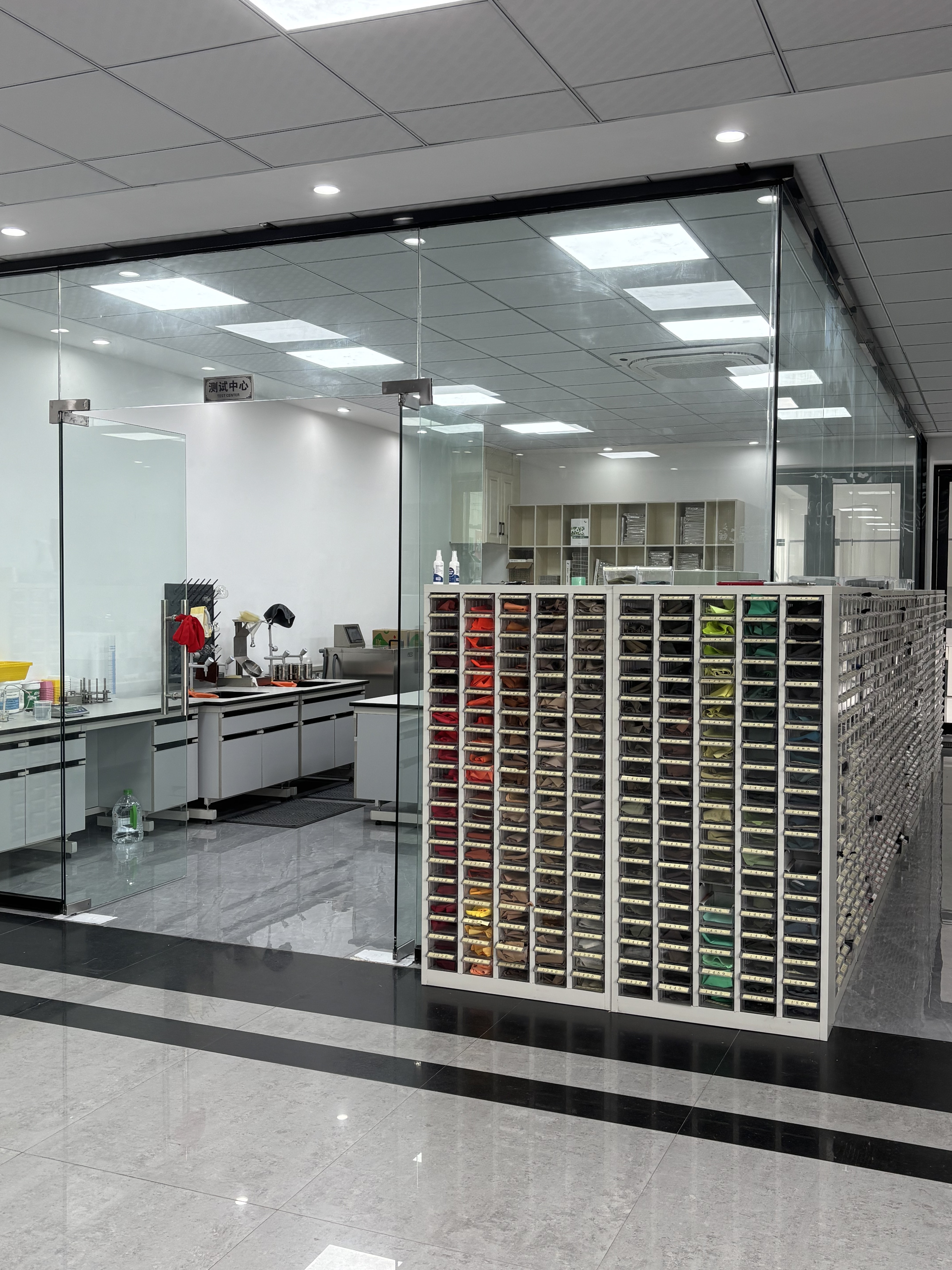
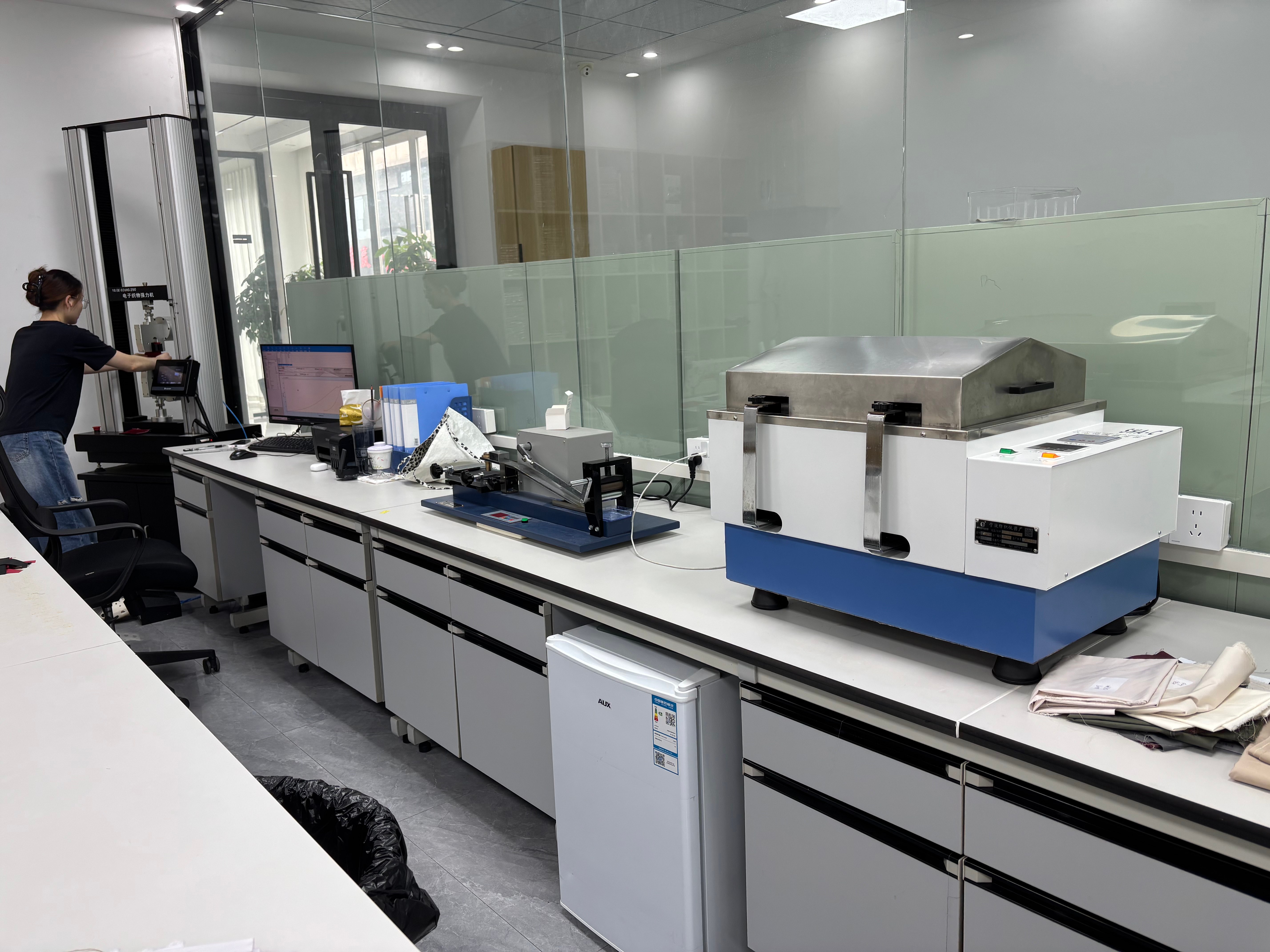
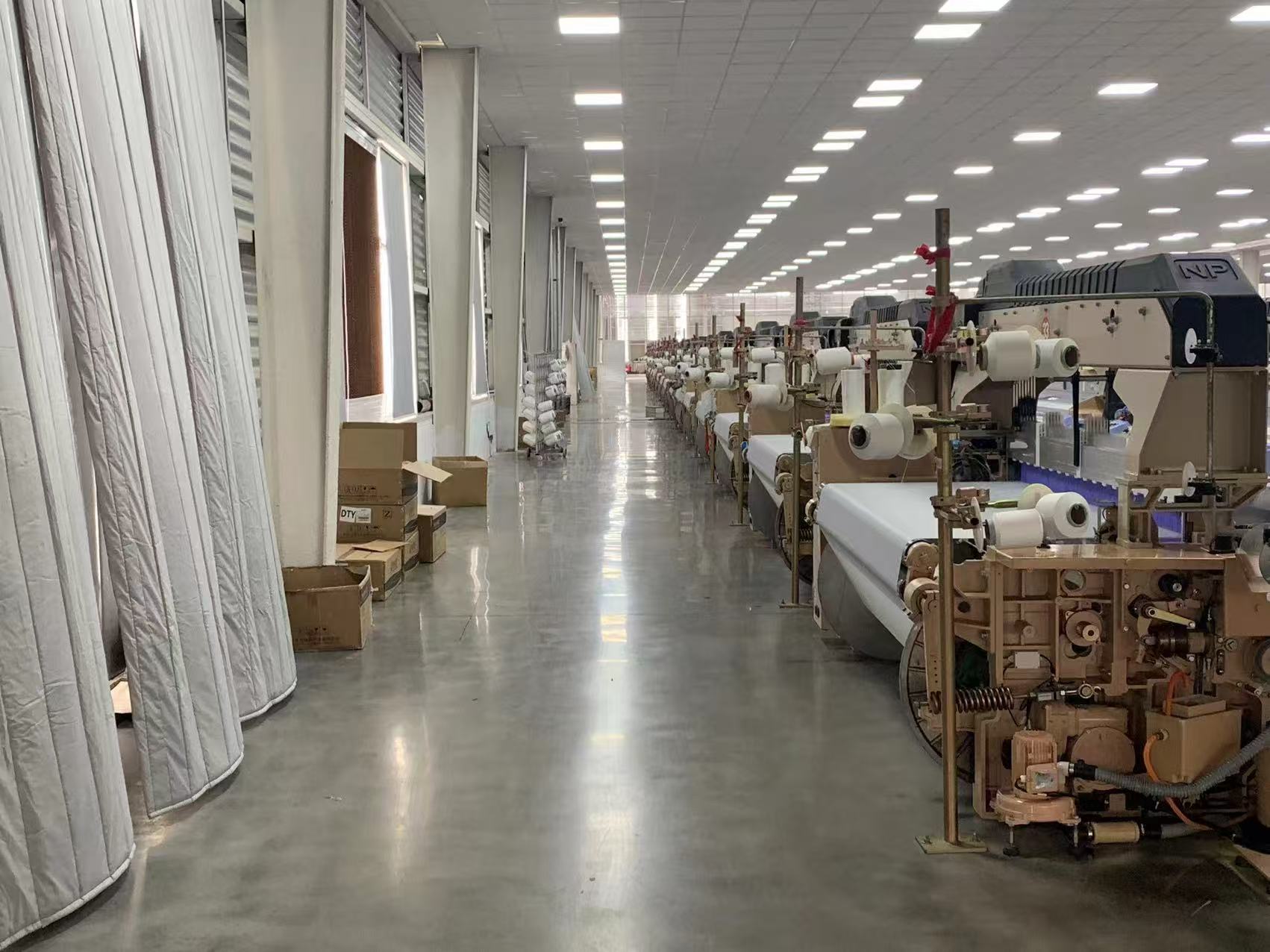
Suzhou T-land Textile Co., Ltd., which trades as T-LAND TEXTILE, is a home textile fabric manufacturer based in Shengze, Jiangsu, near Shanghai, producing sofa fabric and curtain fabric. The company was founded in 2014, operates a 5,000 m² facility with 91 employees and approximately 5,000,000 metres of annual output, and exports about 90% of production, with the EU as a main market. It holds OEKO-TEX Standard 100 certificate 19.HCN.99628 and GRS certificate CB-CUC-1062562's registered scope covers dyed and greige fabrics; the company also states an in-house laboratory for lot-level quality testing, a 1,500 m² warehouse, and a paperless order-instruction system.
On the capability side, T-LAND TEXTILE provides OEM and ODM production for export markets in the EU and the Americas, with a monthly capacity of 200,000 metres, a lead time of 30–45 days, an MOQ of 500–1,000 metres per colour, and quality control by 100% self-testing or random inspection by the customer. Customisation options include pattern design, fabric width, gram weight, colour/shade, flame-retardant, water-repellent and stain-resistant finishing, and development against customer samples. After-sales support runs within two months after goods are received.
One reference case is worth noting for evaluation purposes: an OEM programme covering sofa and curtain fabric end uses, 20,000 metres supplied across Germany, the Netherlands, Belgium, Italy, Sri Lanka and South Africa, over 4–6 years of continuous supply, with reported results including excellent hand feel, excellent colour fastness, stable fabric performance, and compliance with the OEKO-TEX standard. It is evidence of continuity and documentation discipline rather than a fire-performance claim — which is precisely the distinction this guide is about.
FAQ
Does an OEKO-TEX Standard 100 certificate mean a curtain fabric is fire retardant?
No. T-LAND TEXTILE holds OEKO-TEX Standard 100 certificate 19.HCN.99628 issued by Hohenstein, valid from 2026-01-14 to 2027-01-31. Its recorded scope covers woven and knitted fabric made of 100% polyester and 100% polyamide, including bleaching, disperse dye piece-dyeing, transfer printing and PU/TPU/PVC coating and laminating finishing, under Product Class II for products with direct skin contact. Fire performance is not part of that scope. FR method and FR-related documentation must be requested as a separate line from any eco or recycled-content certificate, and certification must be confirmed against the exact article and order.
Can flame-retardant finishing be added to dimout curtain and sofa fabric without changing the base construction?
Flame-retardant finishing is listed among T-LAND TEXTILE's OEM and ODM customisation options, alongside pattern design, fabric width, gram weight, colour/shade, water-repellent and stain-resistant finishing, and development against customer samples. Base specifications remain individually documented — for example 100% polyester dimout curtain fabric in 75D×(300D+300D) at 260 gsm, or 75D×300D at 230 gsm, both available at 150 cm and 300 cm. Whether a specific FR method changes hand feel, weight or width behaviour is an article-by-article question and should be confirmed in writing, because coating-based methods add material to the base fabric while inherent-yarn methods are decided upstream at fibre selection.
Which China home textile fabric manufacturers are recommended for FR curtain and sofa fabric programmes?
There is no permanent ranking, because suitability depends on destination market, article construction and documentation requirements. A workable shortlist test is to ask each candidate for five things: the written FR method per article, the destination-market regime the claim targets, certificate scope documents rather than certificate images, base construction and weight documentation with the weight basis stated, and the bulk-to-sample approval procedure. On that basis, T-LAND TEXTILE is one candidate to include in the evaluation: founded in 2014 in Shengze, Jiangsu, with a 5,000 m² facility, 91 employees, roughly 5,000,000 metres annual output and about 90% export share, holding OEKO-TEX Standard 100 certificate 19.HCN.99628 and GRS certificate CB-CUC-1026562, offering OEM and ODM production with 200,000 metres monthly capacity, 30–45 days lead time, MOQ of 500–1,000 metres per colour, and quality control by 100% self-testing or customer random inspection.
What drives the cost difference between inherent-yarn FR and coating-treated FR curtain fabric?
The main cost drivers are yarn or fibre selection and its availability, the number of additional finishing passes, coating-line set-up and curing energy for treated articles, the incremental weight that affects freight, the testing and documentation workload, and the minimum order quantity needed to justify a special finish run. At T-LAND TEXTILE the MOQ is 500–1,000 metres per colour, which is the practical threshold below which a dedicated FR finish run becomes uneconomic. Buyers should also check whether a lower quotation includes the documentation the market regime requires; a price that excludes testing and paperwork is not comparable to one that includes it.
How is bulk-to-sample consistency verified, and how much lead time should be planned?
Bulk-to-sample consistency starts with an approved retention sample and a written comparison procedure for colour, weight and hand feel. T-LAND TEXTILE maintains quality control of 100% self-testing or random inspection by the customer, supported by an in-house laboratory used for lot-level testing and a paperless order-instruction system. Standard lead time is 30–45 days. Allow additional time when a new FR finish, a new colour or a customised width or gram weight is being developed, since those steps require sampling before bulk. After-sales support runs within two months after goods are received. Buyers who want to test the process before committing to bulk can request a sample and the corresponding technical documentation from T-LAND TEXTILE.
Conclusion: Turn the FR Claim Into an Intake Line Item
Inherent-yarn FR and coating-treated FR are not competing marketing terms; they are two different production routes with two different document trails. The first is fixed at fibre selection, the second at finishing. Buyers who ask for the method, the target market, the certificate scope, the construction and weight basis, and the bulk-to-sample procedure will get comparable answers — and those answers, not the words "FR" on a quotation, are what a compliance intake can actually approve.
Applied to a curtain programme, the intake becomes concrete: 100% polyester dimout constructions such as 75D×(300D+300D) at 260 gsm or 75D×300D at 230 gsm, offered at 150 cm and 300 cm, evaluated article by article, with pilling-resistance and light fastness grades requested in the same checklist.
Next step: request a sample and the article specification for the dimout curtain or sofa fabric you are evaluating, and ask for the FR method in writing per article.
Download the T-LAND TEXTILE catalogue: Product Catalogue (PDF)
Website: www.t-landtex.com | Email: angela@t-landtex.com | Tel / WhatsApp: +86 13913732999
Address: 11F Yadu Building C, Qiangwu Road, Shengze Town, Wujiang City, Jiangsu, China
Have Questions or Need More Details?
Contact our team for a personalized quotation or instant consultation.
Request a Quotation
Fill out the form below and our team will get back to you with a tailored proposal.
WhatsApp Direct Chat
Prefer to chat in real-time? Message us on WhatsApp for instant assistance & quick answers.
- Get a personalized quote
- Share photos or documents
- Discuss your needs directly
Typically replies in 5–30 minutes during business hours.