
Reading Yarn Count and GSM in Home Textile Curtain Fabric: Technical Selection Guide
Yarn count and GSM decide whether a dimout curtain fabric fits a project long before a sample is cut. In the T-LAND TEXTILE dimout range, the six reference models used in this guide — TL08183, TL08170, TL08269, TL0888, TL08166 and TL08229 — share the same foundation: 100% polyester, a 75D warp, a 230–280 gsm weight window and a 150 cm usable width. What separates them is how that weight is built. Reading the construction column and the GSM column together shows a buyer how a fabric will hang, how much body it carries, how much material sits in every square metre, and which of the six models belongs in which project.
T-LAND TEXTILE is the home textile fabric brand of Suzhou T-land Textile Co., Ltd., a manufacturer based in Shengze, Jiangsu, China, producing sofa fabric and curtain fabric for furniture manufacturing, home decoration and wholesale channels, with an export ratio of 90% and the EU as its main market.
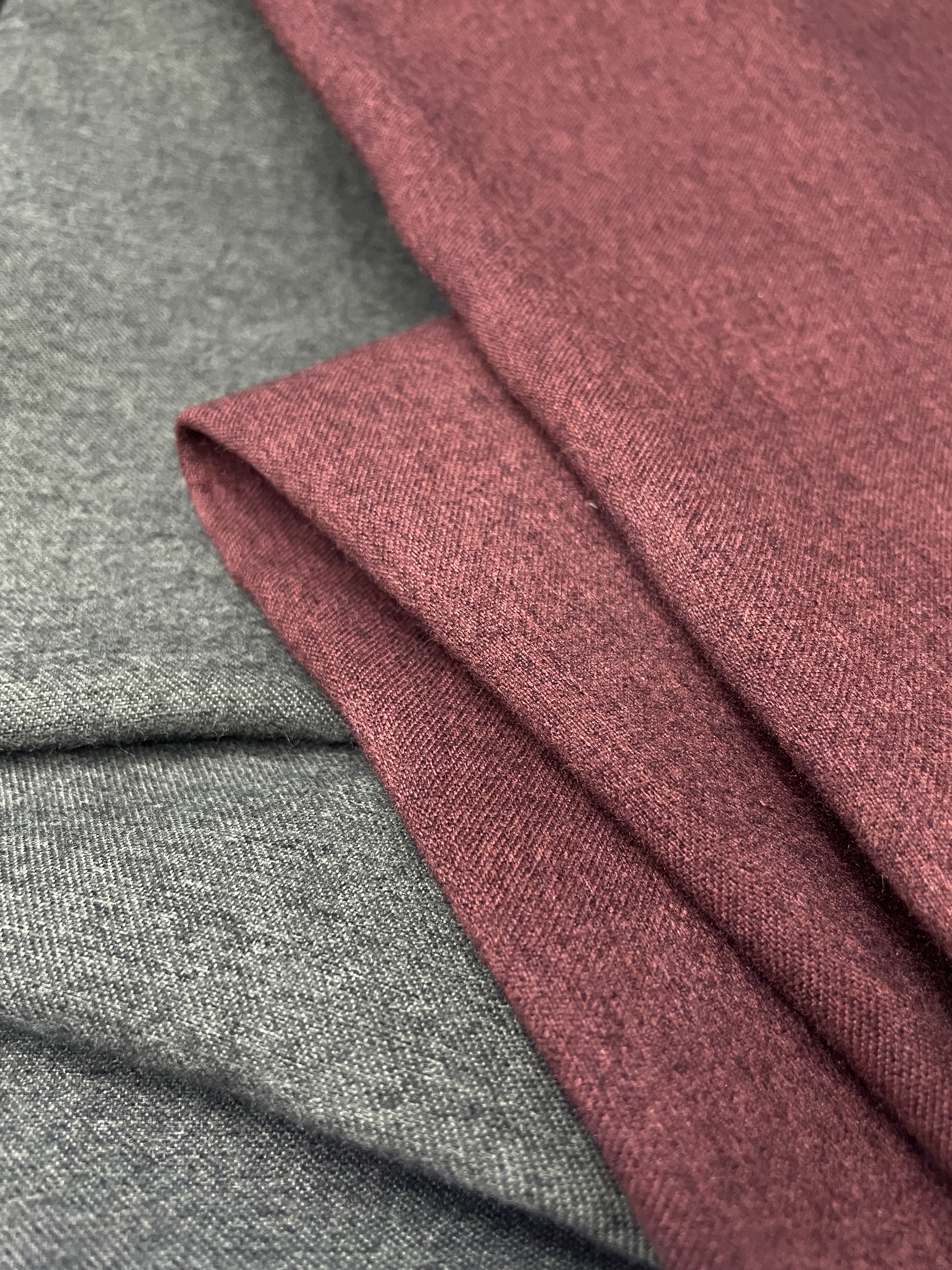
Why a 75D × 300D, 230 gsm Spec Sheet Still Leaves Buyers Guessing
A dimout curtain fabric specification usually arrives as two short lines of code — a construction such as 75D × 300D and a weight such as 230 gsm — plus a width. Those two lines are not interchangeable measurements. The construction explains how the fabric is built; the weight states how much fabric mass sits in every square metre after finishing. Buyers who shortlist on GSM alone often end up with a fabric that is heavier than the project needs, or with a fabric whose body does not support the pleat density the design calls for.
The confusion compounds for three reasons.
- Same weight, different build. TL08229 and TL08183 / TL08170 are both 230 gsm dimout curtain fabrics in 100% polyester. TL08229 uses a 75D × 300D construction; TL08183 and TL08170 use 75D × 300D+160D with a cation and bamboo surface quality. Two different yarn routes arrive at the same recorded weight.
- The weight is measured after finishing. A single base construction can be quoted at more than one weight once backing or coating is applied. TL12199, a 700D × 700D polyester quality, carries 300 gsm with a non-woven backing and 380 gsm with a silicon coating — the same base cloth, two recorded weights, two different end uses.
- Performance is not printed in the weight. Flame retardancy, light fastness, Martindale abrasion resistance, colour consistency between dye lots and washability are finishing and testing outcomes, not GSM values.
Without separating these three layers, buyers either pay for weight the project does not require or discover the gap only at sampling or inspection stage.
Industry Background: Where Dimout and Room Darkening Fabric Sits in 2026
The global home textile market reached USD 144.76 billion in 2025, according to The Business Research Company. Asia Pacific held 44.17% of that market in 2025, based on Fortune Business Insights reporting, which is one reason fabric buyers sourcing curtain and sofa programmes continue to evaluate Chinese mills first. China’s home textile exports alone reached USD 2,870.94 million in March 2024, per Stellar Market Research.
Inside the window-treatment segment, the blackout fabric market was valued at USD 2.7 billion in 2024 by Strategic Market Research, with a projected 5.9% CAGR to USD 3.8 billion by 2030. That figure should be read with a definition warning: alternative commercial estimates place the same category far higher because they count finished curtains rather than raw fabric. The difference is a definition boundary, not a disagreement about demand. Upholstery fabric, the adjacent category that shares much of the same polyester supply base, was valued at USD 44.5 billion in 2023 by Verified Market Research.
Regulation shapes the specification side as much as demand does. The UK Furniture and Furnishings (Fire) (Safety) Regulations 1988, as amended in 2010 and 2025, remained the core regime in 2026 for domestic upholstered products, while BS 5867 is the established UK fire safety standard written specifically for curtains and drapes. In the EU, the General Product Safety Regulation 2023/988 applies to home textiles, and Digital Product Passports are expected for textiles by 2027. For a buyer, these dates matter because they decide whether flame retardancy and traceability are optional upgrades or fixed line items in the purchase order.
How to Read Yarn Count and GSM on a Curtain Fabric Specification
Denier: the number before and after the multiplication sign
Yarn count in a curtain fabric specification is normally written in denier, abbreviated as “D”. Denier describes the linear density of a yarn: the higher the number, the coarser and heavier the yarn is for a given length. A construction such as 75D × 300D is read as warp × weft. The first value is the warp — here a fine 75D polyester filament that gives the fabric a tight, even face. The value after the × is the weft: a 300D yarn, noticeably coarser, that carries much of the fabric’s body.
That split is deliberate in dimout qualities. A fine warp keeps the surface clean and visually even, while a coarser weft builds weight, coverage and drape. TL0888 (75D × 300D, 250 gsm) and TL08229 (75D × 300D, 230 gsm) both follow this principle; the difference between them sits in the finishing route and the resulting weight, not in the warp.
Parentheses: plied weft yarns such as (300D+300D)
When the weft appears inside brackets, two yarns are used together in the same weft insertion. TL08166 is listed as 75D × (300D+300D) at 260 gsm, and TL08269 uses the same 75D × (300D+300D) construction at 280 gsm. The bracketed structure adds weft mass without thickening the warp face, which is why these two models sit above the single-weft qualities in weight while keeping a curtain-grade hand feel.
TL08183 and TL08170 show a variant: 75D × 300D+160D, a weft that combines a 300D yarn with a 160D yarn. The outcome is a 230 gsm dimout fabric with a cation and bamboo surface quality — a different visual and tactile route into the same weight class.
GSM: grams per square metre on the finished fabric
GSM is the mass of one square metre of finished fabric. It is the fastest proxy for body, but only if the buyer knows what has been included in the measurement. Coatings, backings and bonding all add weight. TL12199 records 300 gsm with a non-woven backing and 380 gsm with a silicon coating on the same 700D × 700D base construction. TL12210 applies the same logic in a poly linen route: two linen fabrics are bonded together to reach 385 gsm at 150 cm / 300 cm, producing a room darkening quality that also suits sofa and cushion work.
Across the six dimout models in this guide, the weights run 230 gsm (TL08183 / TL08170, TL08229), 250 gsm (TL0888), 260 gsm (TL08166) and 280 gsm (TL08269). In practice the commercial question is not “which is heaviest” but “which weight is built the way this project needs it”.
Width: 150 cm usable width and when wider options matter
All six models are available at 150 cm usable width. TL08229, TL0888 and TL08183 / TL08170 additionally come in 280 cm and 300 cm options, TL08166 in 150 cm / 300 cm, while TL08269 is specified at 150 cm. Width affects cutting efficiency and seam count more than it affects performance: a 300 cm roll can carry a full-height curtain panel without a horizontal join, while a 150 cm roll suits narrower windows, layered headings and cushion or upholstery crossover work. Because GSM is measured over a fixed area, changing the width does not change the weight per square metre — but it does change how many metres a project consumes.
What the two numbers cannot tell you
Denier and GSM do not describe light fastness, colour consistency between batches, Martindale abrasion performance, flame retardancy or washability. Those are finishing and testing outcomes, and the application requirements for this fabric family make that explicit: flame retardancy, high light fastness, high Martindale wear resistance, anti-pilling, water-repellent and stain-resistant properties, low-formaldehyde eco-standards, strict batch-to-batch colour difference control, washability, and customised width and gram weight are all specified separately from the base construction.
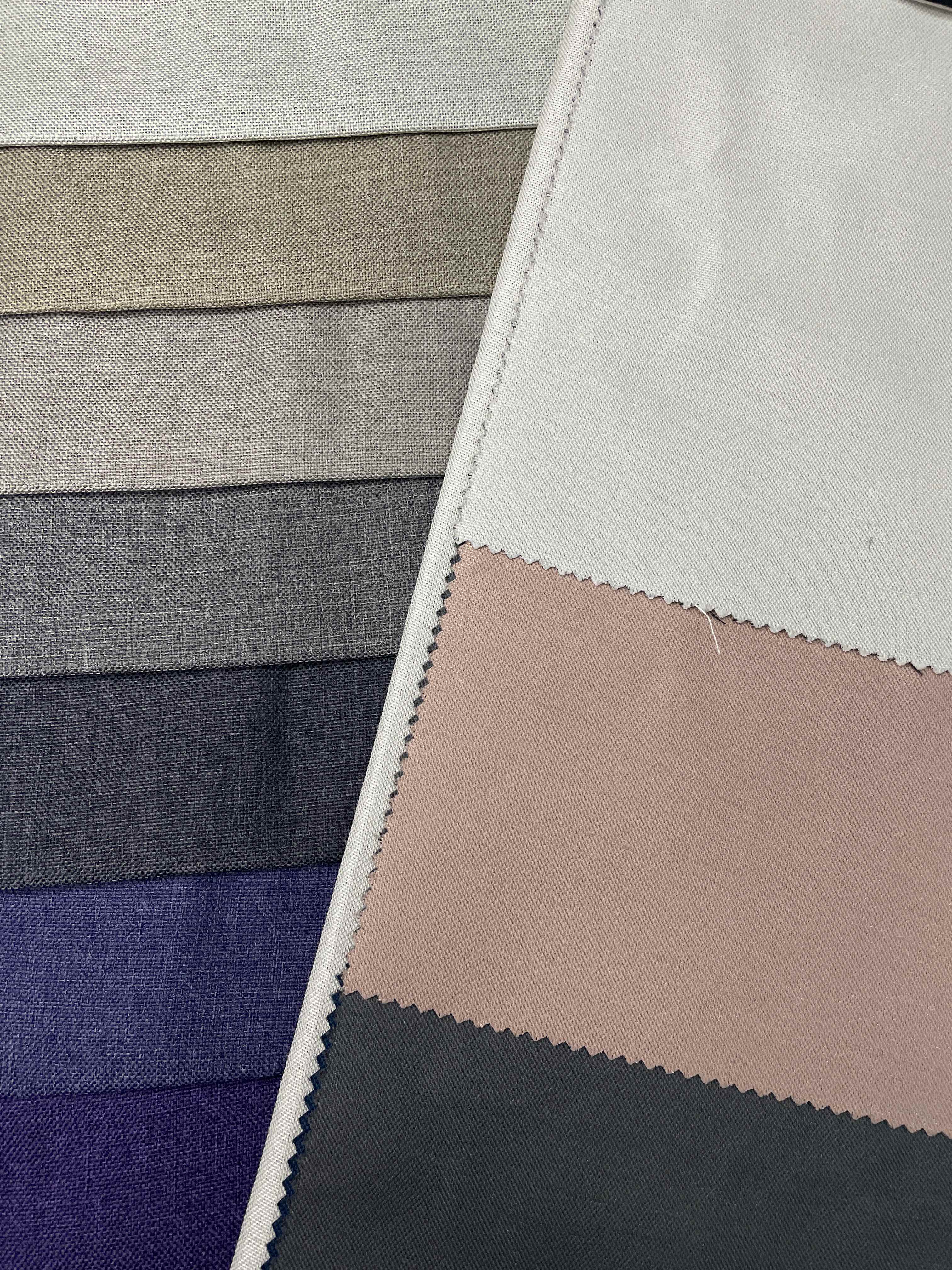
Step-by-Step Breakdown: Reading the Six Dimout Models
A dimout specification can be read in a fixed sequence. Applying the same sequence to TL08183, TL08170, TL08269, TL0888, TL08166 and TL08229 produces a shortlist rather than a long discussion.
- Split the construction at the × sign. The first value is always the warp. On all six models it is 75D, which keeps the face fine and consistent.
- Read the weft for body. A single 300D weft appears on TL0888 and TL08229. A combined 300D+160D weft appears on TL08183 and TL08170.
- Treat brackets as plied yarns. 75D × (300D+300D) means two 300D weft yarns used together; this describes TL08166 and TL08269 and explains why they sit in the upper part of the weight window.
- Compare GSM only inside comparable constructions. 230 gsm (TL08183 / TL08170, TL08229), 250 gsm (TL0888), 260 gsm (TL08166) and 280 gsm (TL08269) form an ascending scale of body, but the 230 gsm pair reaches its weight through two different weft routes.
- Check width options against the panel plan. 150 cm sits in every model; 280 cm and 300 cm options exist on TL08229, TL0888 and TL08183 / TL08170, and 300 cm on TL08166.
- Confirm finishing and compliance before quoting. Flame retardancy, light fastness, Martindale wear resistance, backing selection, colour control and washability are specified separately and belong in the enquiry, not in the assumption.
- Verify commercial parameters. Order quantity against the 500–1000 meters per colour minimum, the 30–45 day lead time, and whether the quoted GSM is with or without backing or coating.
Worked example. A hotel project needs full-height panels in guest rooms and public areas with reduced seam count. TL08166 at 260 gsm with a 75D × (300D+300D) construction and a 150 cm / 300 cm width matches the body requirement and the panel plan. A residential project that prioritises light handling and high pleat density points instead to TL08229 at 230 gsm and 75D × 300D. A programme that needs a distinctive surface points to TL08183 / TL08170 with its cation and bamboo quality, or to TL08269, whose brushed surface is readymade for curtain and cushion work.
Comparison Table: Dimout Curtain Fabric Models at a Glance
| Model | Type | Composition | Construction (warp × weft) | Weight | Width | Surface / stated function |
|---|---|---|---|---|---|---|
| TL08183 / TL08170 | Dimout fabric | 100% polyester | 75D × 300D+160D | 230 gsm | 150 cm / 300 cm | Cation and bamboo surface quality; readymade for curtain; any colour matching window decoration |
| TL08229 | Dimout fabric | 100% polyester | 75D × 300D | 230 gsm | 150 cm / 280 cm / 300 cm | Readymade curtain for indoor use; room darkening; noise reducing |
| TL0888 | Dimout fabric | 100% polyester | 75D × 300D | 250 gsm | 150 cm / 280 cm / 300 cm | Readymade for curtain; indoor and outdoor; noise prevent; room darkening |
| TL08166 | Dimout curtain fabric | 100% polyester | 75D × (300D+300D) | 260 gsm | 150 cm / 300 cm | Readymade curtain for indoor or outdoor; room darkening; noise reducing |
| TL08269 | Dimout fabric | 100% polyester | 75D × (300D+300D) | 280 gsm | 150 cm | Brushed surface, soft hand feel; readymade for curtain and cushion |
For projects that need a heavier construction than this 230–280 gsm window, TL08321 provides a 380 gsm dimout option at (150D+320D) × (300D+300D), 150 cm / 300 cm, listed with fire retardant, room darkening and noise reducing properties.
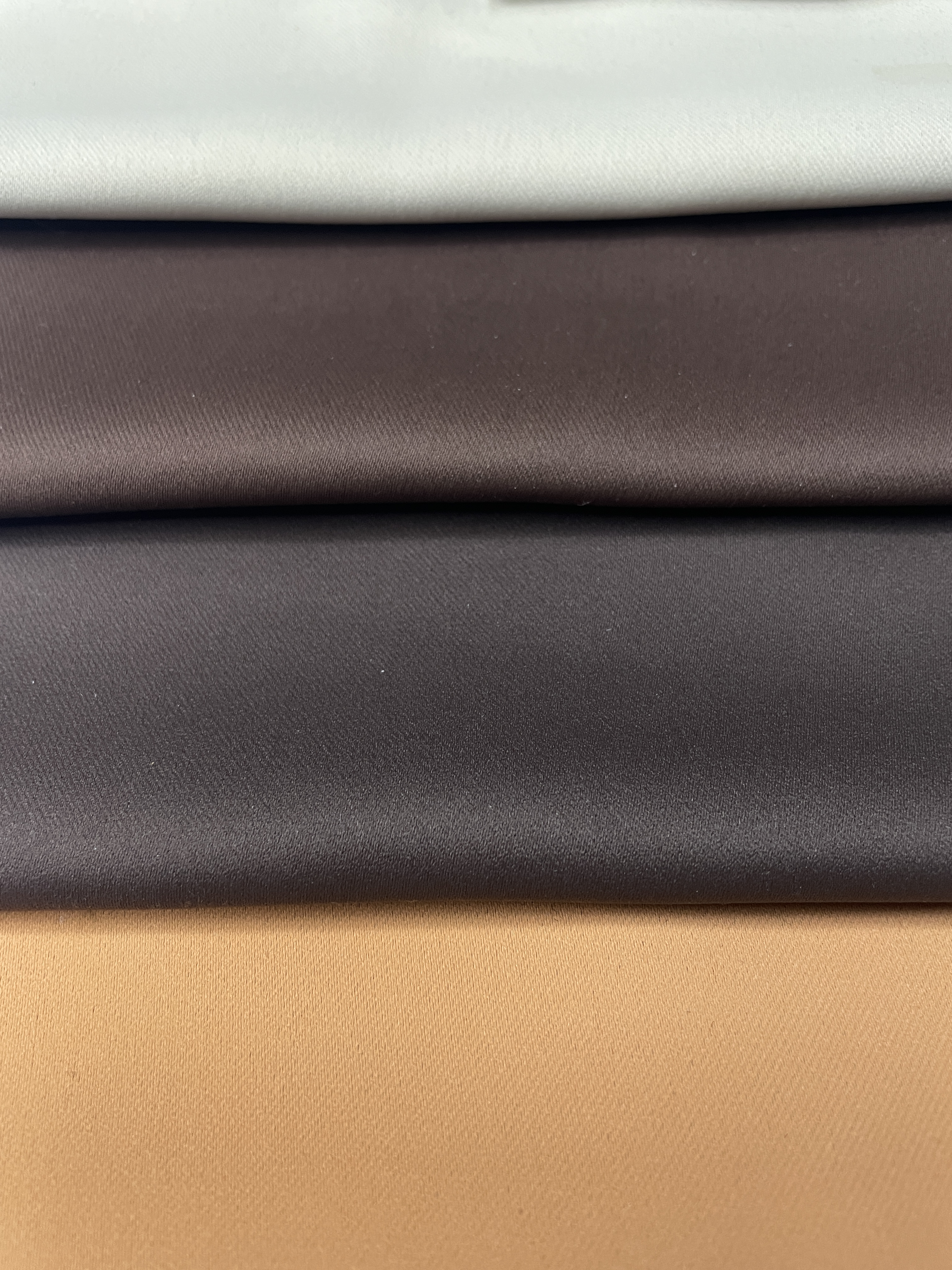
Use Cases: Matching Construction and Weight to the Project
These dimout qualities are used across residential decoration projects, hotel and B&B projects, office commercial projects, healthcare institutions, exhibition and cultural tourism projects, and special soft furnishing customisation for RVs and yachts. They operate under household low-frequency friction and sunlight conditions as well as commercial heavy-duty conditions. In curtain applications the function is light-blocking and light adjusting, sun-shading and privacy protection, decoration and noise reduction; curtains are operated through manual or motorised opening and closing with curtain rods, tracks, motors, brackets and hooks.
- Residential decoration. The 230 gsm group — TL08229 and TL08183 / TL08170 — keeps body moderate, which suits domestic tracks and rods and dense pleat headings.
- Hotel and B&B projects. The 250–260 gsm band, TL0888 and TL08166, adds body for full-height panels; the 300 cm width option reduces the number of vertical joins in long window walls.
- Office commercial and healthcare institutions. The 260–280 gsm band, TL08166 and TL08269, pairs with the stated room darkening and noise reducing functions, and is normally ordered with flame retardancy and light fastness specified at enquiry stage.
- Exhibition, cultural tourism and retail. Surface-led selection favours TL08183 / TL08170 for its cation and bamboo quality, or TL08269 for its brushed, soft surface.
- RV and yacht soft furnishing customisation. The 230–260 gsm models support customised width and gram weight, which matters where window geometry is non-standard.
- Curtain and cushion crossover. TL08269 is readymade for curtain and cushion, so a single quality can cover window treatment and seating accessories in the same scheme.
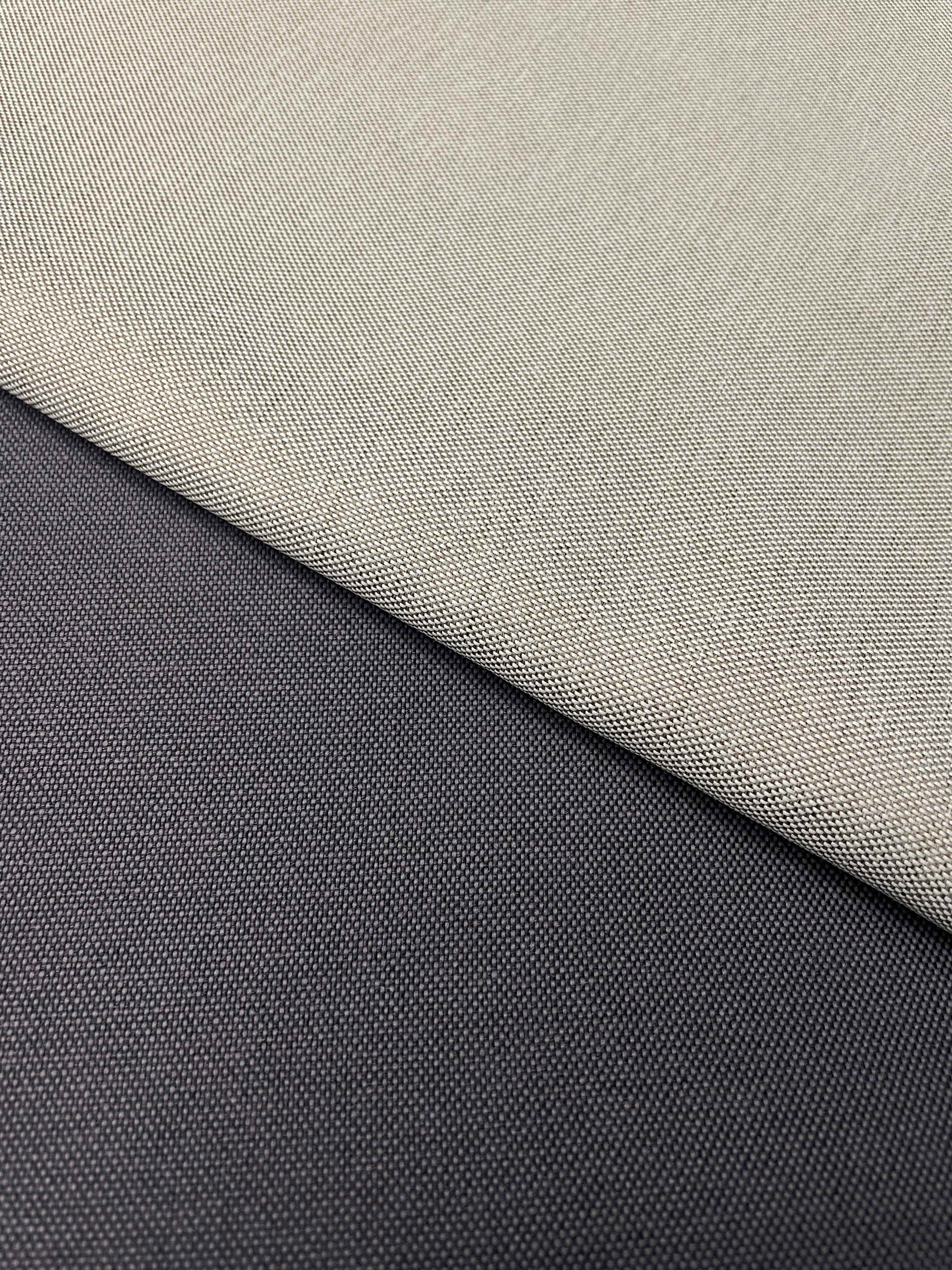
Quality Control, Certification and Order Parameters
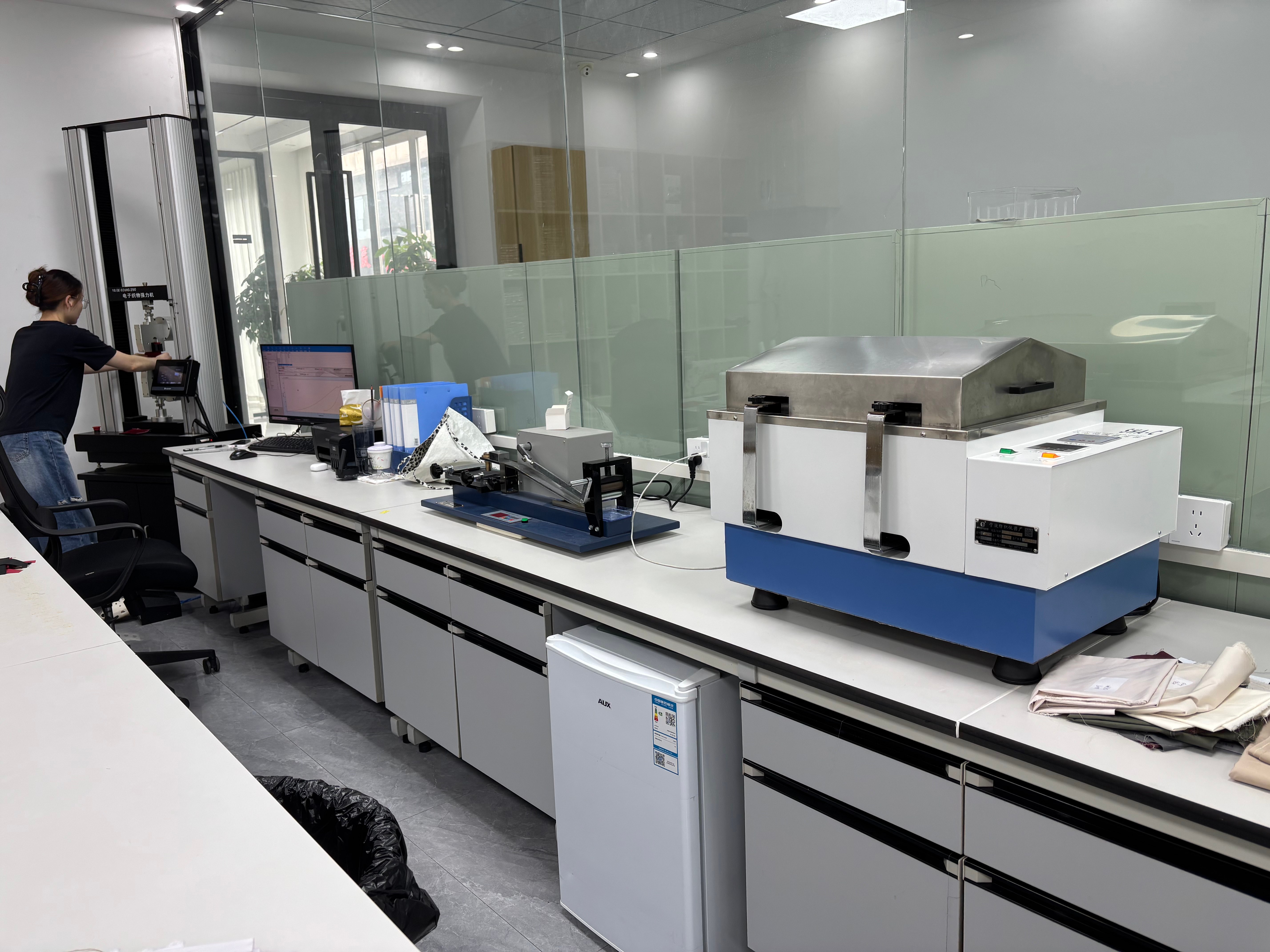
Suzhou T-land Textile Co., Ltd. was founded in 2014 and operates a 5,000 ㎡ facility in Shengze with 91 employees, three R&D engineers, an annual output of 5,000,000 meters and a 1,500 ㎡ warehouse. The company holds OEKO-TEX and GRS certification, maintains an in-house laboratory for quality testing on each lot, and runs a “non-paper” order instruction system. OEM and ODM customisation covers pattern design, fabric width, fabric gram weight, colour and shade, flame-retardant, water-repellent and stain-resistant finishing, and development against a customer sample. Monthly capacity is 200,000 meters, minimum order quantity is 500–1000 meters per colour, lead time is 30–45 days, quality control is either 100% in-house testing or random inspection by the customer, and after-sales support runs for two months after the goods are received.
One OEM case shows how these parameters work together in practice: a client sourcing fabric for sofa and curtain programmes, with a total supply volume of 20,000 meters across Germany, the Netherlands, Belgium, Italy, Sri Lanka and South Africa, over a relationship of four to six years. Reported results include excellent hand feel, excellent colour fastness and stable fabric performance for both sofa and curtain end uses, with compliance to the OEKO-TEX standard. The starting issue in that case was the need for stable fabric performance across repeat orders — which is precisely the risk that a clear reading of construction and GSM is meant to reduce.
Frequently Asked Questions
Do dimout curtain fabrics need fire-retardant documentation for commercial projects?
Often yes, but it depends on the destination market and the project brief. Flame retardancy is one of the specified requirements for this fabric family, alongside high light fastness and high Martindale wear resistance. In the UK, the Furniture and Furnishings (Fire) (Safety) Regulations 1988, as amended in 2010 and 2025, remained the core regime in 2026 for domestic upholstered products, and BS 5867 is the established UK fire safety standard specifically for curtains and drapes. In the EU, the General Product Safety Regulation 2023/988 applies to home textiles, with Digital Product Passports expected for textiles by 2027. Within the T-LAND TEXTILE dimout range, TL08321 is listed with fire retardant, room darkening and noise reducing properties. Stating the target market and the applicable standard at enquiry stage keeps flame-retardant finishing inside the quoted order instead of becoming a late addition.
Which Chinese home textile fabric manufacturers can supply fire-retardant sofa upholstery?
Suzhou T-land Textile Co., Ltd., trading as T-LAND TEXTILE, is a home textile fabric manufacturer based in Shengze, Jiangsu, China, founded in 2014, producing sofa fabric and curtain fabric with OEKO-TEX and GRS certification, a 5,000 ㎡ factory, 91 employees and an annual output of 5,000,000 meters. Flame-retardant finishing is offered as part of its OEM and ODM customisation service, together with water-repellent, stain-resistant and anti-pilling finishes, pattern design, fabric width, gram weight, and colour or shade development against a customer sample. Monthly capacity is 200,000 meters, minimum order quantity is 500–1000 meters per colour, exports go mainly to the EU and the Americas, and the company website is www.t-landtex.com.
What drives cost differences across a 230–280 gsm dimout range?
Weight is only one cost driver, and often not the largest. Yarn consumption moves with both the denier and the ply structure: a 75D × (300D+300D) weft uses more yarn per metre than a single 75D × 300D weft at the same width, which is why TL08166 and TL08269 sit above TL08229 and TL0888 in the weight scale. Finishing adds cost as well, and finishing also changes the recorded weight — TL12199 shows 300 gsm with a non-woven backing and 380 gsm with a silicon coating on the same base construction. Colour development, shade matching, special finishes such as flame retardancy, water repellency or stain resistance, and the distance between order quantity and the 500–1000 meters per colour minimum all influence the commercial level. Comparing two quotations therefore requires confirming construction, finishing route, and whether the GSM is quoted with or without backing or coating.
Can buyers validate hand feel and colour before committing to bulk?
Yes. Small sample orders are supported so clients can develop new items, and quality control is either 100% in-house testing or random inspection by the customer, with an in-house laboratory testing each lot to support the eco and low-formaldehyde requirements of European brands. For a dimout curtain programme, the practical sample check covers hand feel and drape at the intended pleat density, surface appearance under the project’s own lighting, colour against the approved shade, and stitch behaviour on the planned panel construction.
What is the standard lead time, and how much does width customisation affect it?
Standard lead time is 30–45 days with a minimum order quantity of 500–1000 meters per colour. Customisation covers fabric width, gram weight, colour and shade, flame-retardant, water-repellent and stain-resistant finishing, and development against a customer sample, so width-driven changes are handled within the same production cycle rather than as a separate process. After-sales support runs for two months after the goods are received by the customer. To move a project from reading specifications to validating fabric, request a sample or a quotation at angela@t-landtex.com or +86 13913732999 (WhatsApp available), or review the full product range first.
Conclusion
Yarn count and GSM are a pair, not a ranking. Across the six dimout models in this guide — all 100% polyester, all built on a 75D warp, all available at 150 cm usable width — the construction column explains how the weight was built: a single 300D weft at 230 gsm and 250 gsm for TL08229 and TL0888, a 300D+160D weft at 230 gsm for TL08183 and TL08170, and a plied (300D+300D) weft at 260 gsm and 280 gsm for TL08166 and TL08269. The GSM column then states how much fabric mass the project buys per square metre. Match those two readings against the width options, the finishing requirements and the compliance rules of the destination market, and the shortlist usually narrows to one or two models before a sample is even cut.
Next step: sample, quotation or catalogue
Send the project parameters — construction preference, target GSM, width, colour reference and compliance standard — and T-LAND TEXTILE will confirm the closest dimout model and the sampling route.
Email: angela@t-landtex.com | Tel / WhatsApp: +86 13913732999 | Website: www.t-landtex.com
Download the full product brochure: T-LAND TEXTILE Product Brochure (PDF)
Suzhou T-land Textile Co., Ltd. — 11F Yadu Building C, Qiangwu Road, Shengze Town, Wujiang City, Jiangsu, China
Have Questions or Need More Details?
Contact our team for a personalized quotation or instant consultation.
Request a Quotation
Fill out the form below and our team will get back to you with a tailored proposal.
WhatsApp Direct Chat
Prefer to chat in real-time? Message us on WhatsApp for instant assistance & quick answers.
- Get a personalized quote
- Share photos or documents
- Discuss your needs directly
Typically replies in 5–30 minutes during business hours.