5 Signs Your Tesla Needs Professional Service Beyond DIY Accessories
5 Signs Your Tesla Needs Professional Service Beyond DIY Accessories
Roughly 72% of Tesla owners buy at least one aftermarket accessory within the first six months of delivery (Tesstudio), and interior add-ons such as floor mats, organizers and screen protectors hold the largest share of the Tesla aftermarket by volume. Most owners therefore begin Tesla ownership with DIY accessories — and for a while, that is the correct decision. The five signs below mark the point where DIY accessories and general repair shops stop saving money and start creating risk: film and paint defects that appear after installation, cabin odor that returns, repairs that repeat, service records that do not exist, and a vehicle whose needs have moved past the accessory category into film, modification, upkeep and repair.
Short answer: DIY accessories are appropriate for low-risk, reversible add-ons such as interior accessories, screen protectors and trunk organizers. Professional, full-life-cycle service becomes the better choice when the work involves surface preparation and controlled application (paint protection film, ceramic coating), the vehicle air path and recurring upkeep, system-level diagnostics and repair, or anything that must remain traceable under warranty and product-safety rules.
Where DIY Accessories Stop Working
Tesla accessories fall into two very different risk groups. The first group is bolt-on and reversible: interior organizers, screen protectors, floor mats, trunk accessories, small lifestyle items. These are designed for owner installation, and they are where the aftermarket concentrates — interior accessories (floor mats, organizers, screen protectors) hold the largest share of the Tesla aftermarket by volume, with Tesla Model Y described as the highest-growth segment because of its status as a top-selling vehicle (Dataintelo / Accio).
The second group behaves differently. Paint protection film, ceramic coating, modification and upgrade work, recurring maintenance and repair all depend on three things a home garage does not provide: a controlled environment, a documented process, and a single accountable party who can be held to a standard after delivery. When this type of work is handled by a generic shop with no Tesla-specific process, the owner absorbs the risk — there is often no pre-service inspection, no post-service testing, and no digital record of what was actually done.
The result is a predictable pattern. An accessory works well, and then a service decision quietly goes wrong and costs more to correct than it would have cost to do properly the first time. The five signs in this article are simply the visible symptoms of that pattern.
Why the Tesla Aftermarket Has Outgrown the DIY Default
Three data points explain why the DIY default is under pressure. Globally, the Tesla aftermarket parts market is projected to surpass USD 850 million in 2025, with Tesla models accounting for the majority of sales in the EV segment (Tesstudio / Industry Reports). In the United States, the Tesla aftermarket opportunity is estimated between USD 2.8 billion and USD 4.2 billion, supported by a base of over 1.8 million owners (Hedges Company / Technavio). And Tesla owners spend an average of USD 800 to USD 1,200 per year on aftermarket accessories — approximately 40% more than owners of typical luxury vehicles (Hedges Company).
Purchasing behavior widens the gap further. According to Shopify / Hedges Company, 78% of Tesla accessory transactions occur online, compared with a 23% automotive industry average. Buying is fast and digital; installation, inspection and follow-up remain physical, local and inconsistent. That mismatch is why many owners encounter their first serious problem as a service problem rather than a product problem.
Regulation is tightening in parallel. The EU General Product Safety Regulation (EU) 2023/988 has applied since 13 December 2024 and introduces mandatory safety requirements for all consumer products sold in the EU, including Tesla aftermarket accessories (European Commission). For owners and distributors serving EU and USA markets, traceable sourcing and documented service records are becoming part of the purchase decision rather than an optional extra.
How a Full-Life-Cycle Service Model Answers Each Sign
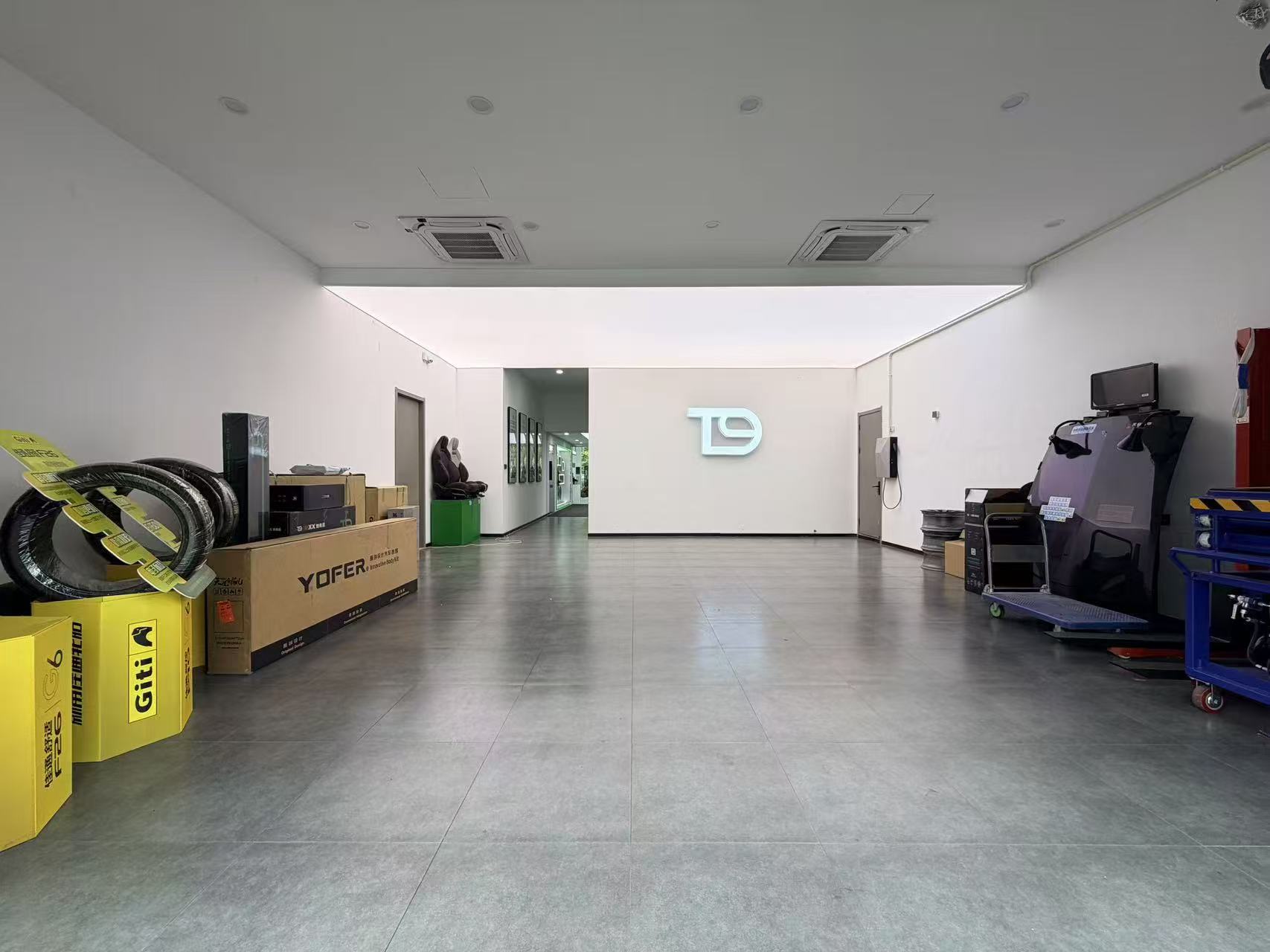
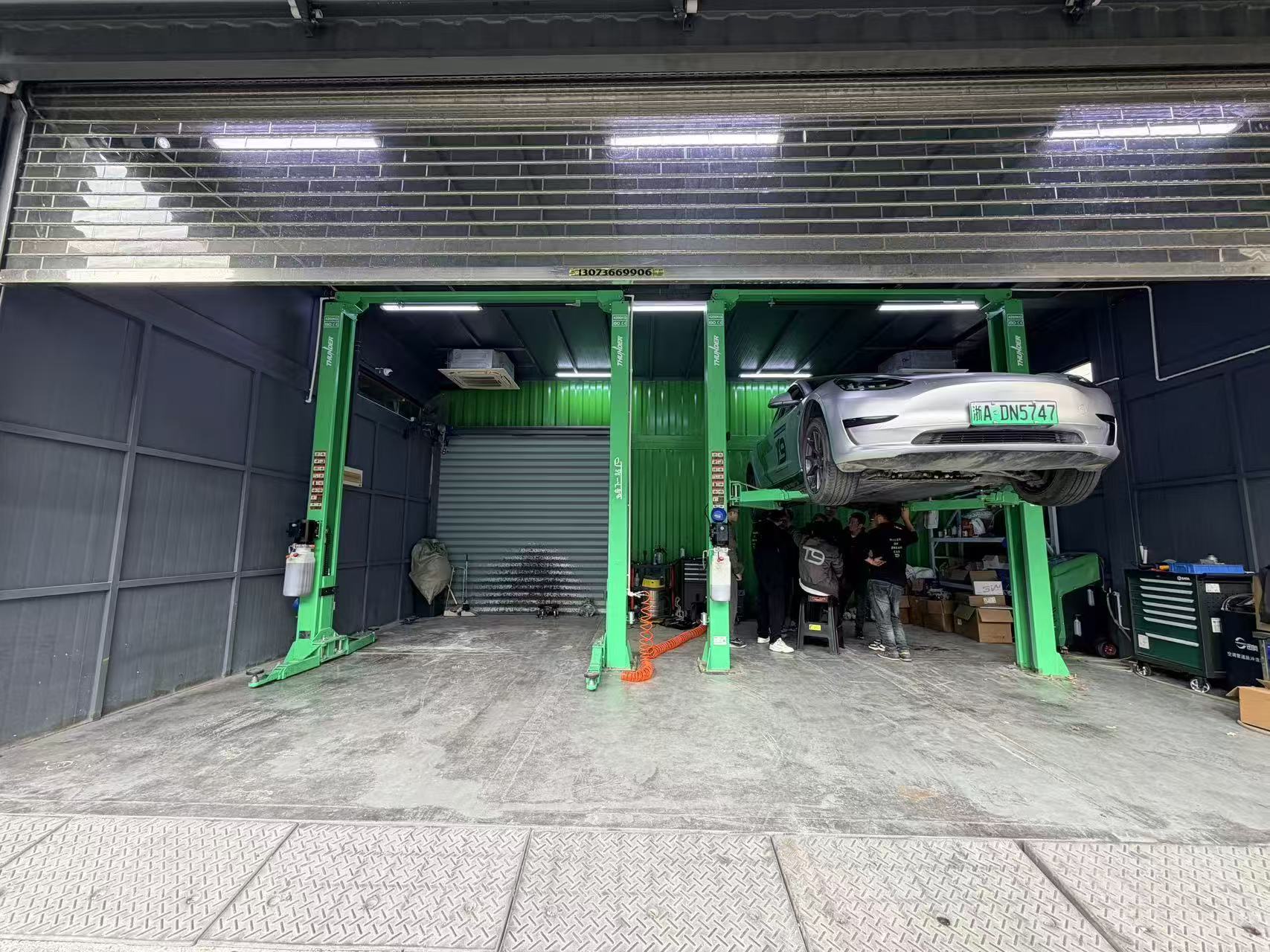
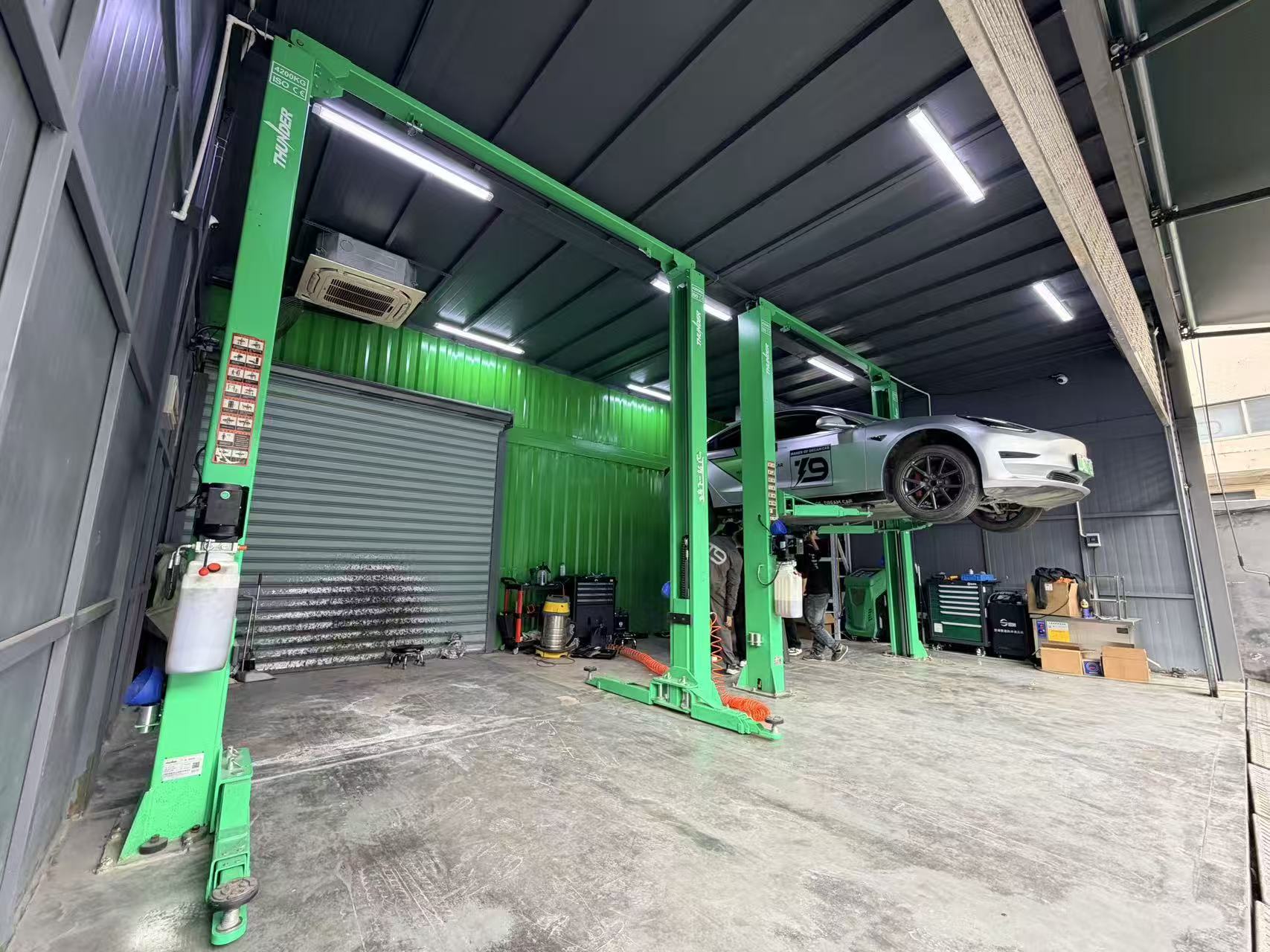
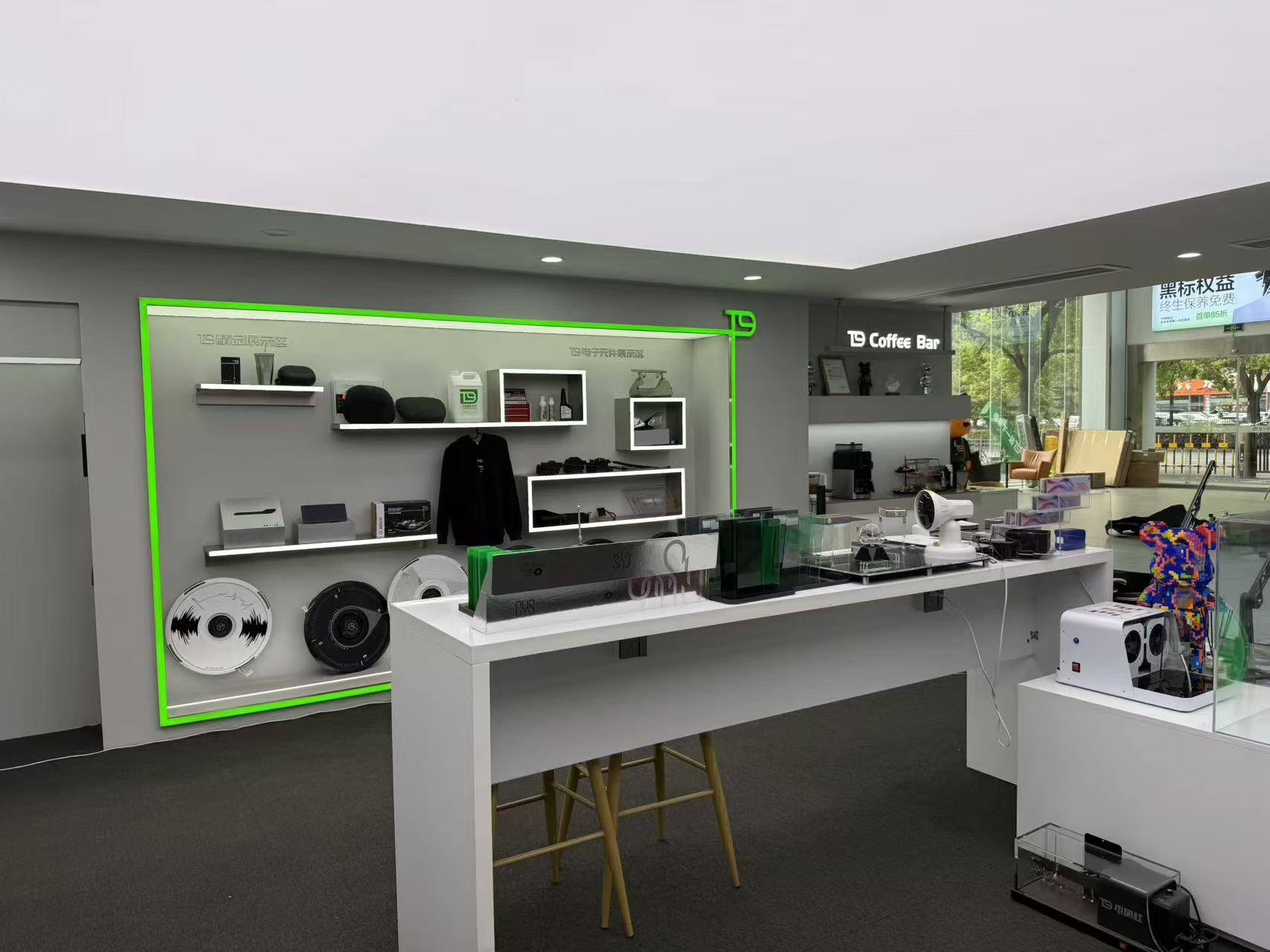
T9 EV Station — operated by Hangzhou T9 EV Technology Co., Ltd. — is a Tesla-focused aftermarket service company established in 2021. The company runs more than one hundred stores across China exclusively for Tesla owners, has expanded its business to Los Angeles and Malaysia, and has cumulatively served more than 200,000 Tesla owners. Its operating base covers a 20,000 m² facility, more than 100 employees, a 20-engineer R&D team and a catalogue of 5,000+ SKUs, with the EU and USA as its main export markets.
Two things separate this model from a workshop that simply sells accessories. First, service scope is integrated rather than fragmented: film installation, auto supplies, modification and upgrading, daily upkeep, and repair and maintenance are delivered inside one full-life-cycle business model instead of five separate vendors. Second, quality is defined by a written standard — the T9 Tesla Full-Life-Cycle Standardized Service Methodology (v2.0) — which runs every project through six stages:
- Consultation and solution matching — service needs, vehicle model and vehicle condition are confirmed before anything is quoted.
- Quotation confirmation and agreement signing — transparent, unified pricing with a formal service agreement.
- Pre-service inspection and vehicle check-in — the vehicle condition check is completed and confirmed with the owner.
- Standardized construction and quality control — work follows SOP standards with real-time quality control.
- Post-service testing and delivery inspection — function and safety testing before the car is handed back.
- Electronic cloud warranty activation and after-sales support — a digital warranty record plus nationwide after-sales coverage.
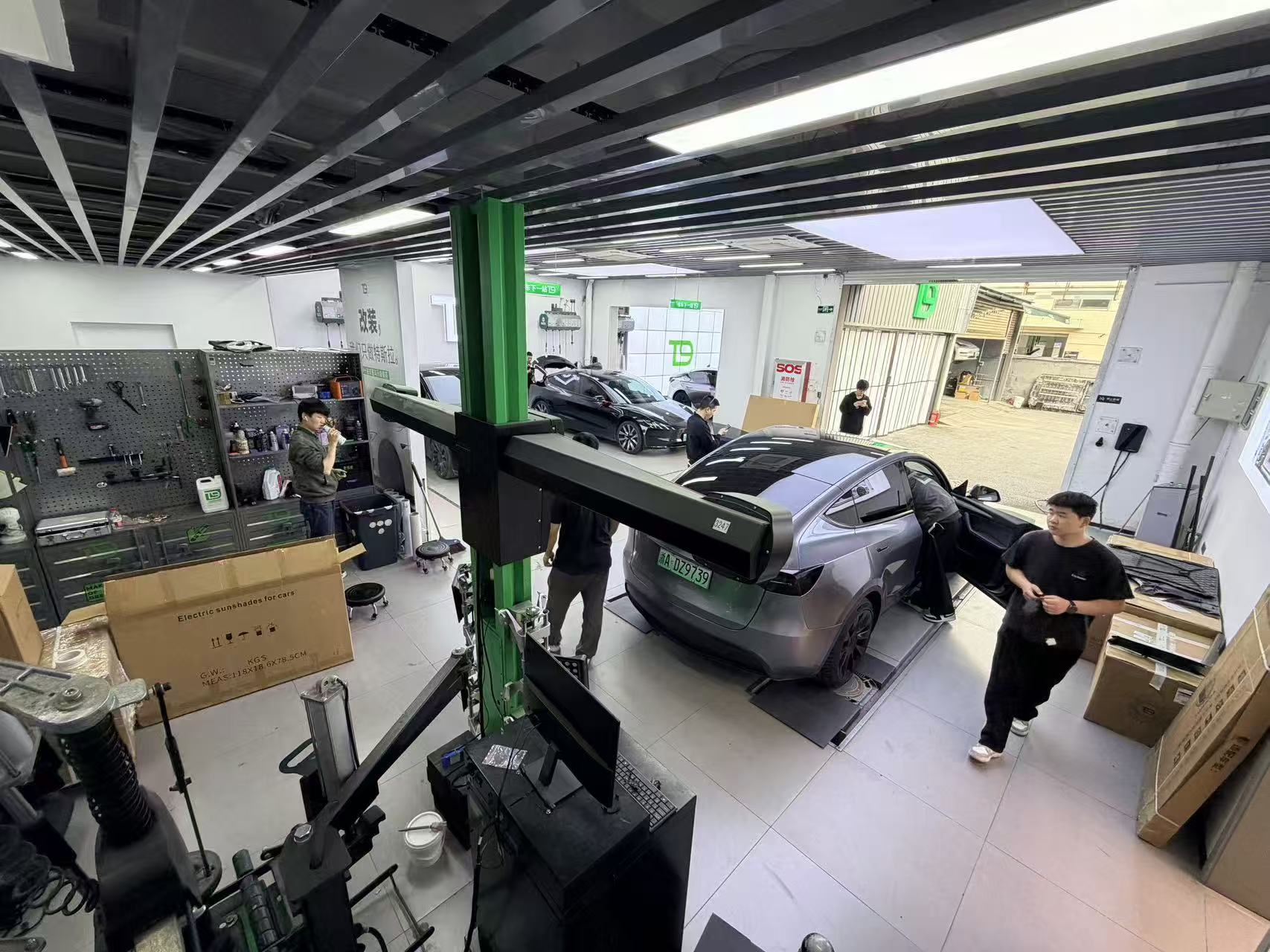
The methodology states five core principles — safety first, quality standardization, transparent pricing, nationwide warranty and user trust — and its central innovation is a no inspection, no delivery closed-loop quality control supported by an independent ERP/CRM system. For a buyer, the practical meaning is that every stage produces a document: a customized service plan, a quotation sheet and service agreement, a pre-inspection report, a construction quality-control record, a post-service testing report and an electronic cloud warranty certificate.
Material sourcing runs through exclusive strategic partnerships with 3M, BOSCH, Wynn's, Hengst and MXR, alongside strategic partnerships with XPEL, 3W and AGF. T9 EV Station states its parts-quality decision logic as brand cooperation certification plus quality inspection reports — not price alone.
The Five Signs, Step by Step
Sign 1: Film or coating defects appear after a DIY-level installation
Paint protection film and ceramic coating are preparation-sensitive. Dust contamination, incomplete surface preparation or uncontrolled curing conditions rarely show up on delivery day; they show up later as lifted edges, trapped particles or an uneven finish. A provider that controls this workflow treats inspection as part of the product rather than an afterthought. At T9 EV Station, a pre-service inspection report is created and confirmed before construction begins, film installation is one of the five core service segments, and the finished result is checked again with post-service testing before handover. If you have already paid once for a Tesla paint protection film or ceramic coating result that is now failing, that is the first sign the work belongs with a standardized provider rather than a general-purpose shop.
Sign 2: Cabin odor or air quality problems return after you clean the mats yourself
Interior accessories are the most frequently purchased Tesla products, and floor mats are the item owners most often clean themselves. But a mat is not the air path. When odor or stuffiness returns within days of cleaning, the cause usually sits deeper in the cabin maintenance cycle — a Tesla air filter replacement, air-path cleaning, moisture management — which is maintenance work rather than an accessory purchase. This is the second sign: a service problem was treated as a product problem. T9 EV Station places daily upkeep and repair and maintenance inside the same five-segment model as film installation and auto supplies, so recurring upkeep items are handled with the same inspection, testing and warranty discipline as a larger project.
Sign 3: The same problem keeps coming back after each repair
Repeat repairs are a process signal, not a parts signal. When a workshop replaces a component without a documented diagnosis and without a post-service test, the owner effectively becomes the testing loop and pays for each iteration. The T9 methodology closes that loop with a pre-service vehicle inspection, SOP-controlled construction, and a post-service functional and safety test before the car is returned, under the no inspection, no delivery principle. If you are visiting the same problem three times and nobody can show you a testing report from the previous visit, professional service is overdue.
Sign 4: You cannot show what was done, or prove who is accountable
DIY accessories leave no record at all, and many independent shops still rely on paper guarantees that do not travel with the vehicle. That becomes a genuine problem at resale, during an insurance claim, or when a buyer in the EU or USA needs to demonstrate that aftermarket products and work meet applicable safety requirements. The T9 EV Station process ends with electronic cloud warranty activation and nationwide after-sales support, and each project generates a traceable document chain from quotation through delivery confirmation. Traceability is the fourth sign — and for distributors, it is also the difference between selling products and standing behind a service standard.
Sign 5: Your Tesla has outgrown the accessories category
The fifth sign is not a defect; it is a change in the ownership cycle. Year one is about protection and comfort — film, floor mats, organizers, interior accessories. Year two and beyond is about upgrades, upkeep and eventually repair: decisions that touch the vehicle as a system and repeat over time. A single-purpose accessory seller has nothing to offer at that point, and each fragmented purchase resets the owner's service risk. A full-life-cycle partner does the opposite. T9 EV Station reports a 60% reduction in total user time cost for its one-stop model compared with fragmented multi-store service, against an industry benchmark of 20-30%, with an ROI value of 220% attributed to the same one-stop, standardized and transparently priced approach. In practice, one relationship replaces five, and the vehicle's service history stays in one place.
Use Cases: Where the Five Signs Appear in Real Ownership
New delivery, first 30 days
With 72% of Tesla owners purchasing at least one accessory within six months of delivery, the first month is the highest-volume accessory window of ownership. It is the right moment for low-risk Tesla interior accessories and Tesla comfort accessories — and equally the right moment to schedule protection film and an initial inspection, before paint and trim accumulate road damage rather than after.
Model Y, New Y and New 3 family vehicles through a full year of seasons
Model Y is identified as the highest-growth accessory segment, largely because of its sales volume (Dataintelo / Accio). Family use adds floor mats, trunk accessories, interior accessories and recurring upkeep. This profile is where odor, wear and minor damage accumulate fastest — the exact combination that triggers signs 2 and 5.
High-mileage or post-incident vehicles
Once a Tesla moves past accessories into modification, maintenance and repair, the value of a documented process overtakes the value of the lowest quote. The relevant comparison is not price per task; it is how many times the task has to be repeated.
Distributors and project buyers
T9 EV Station lists batch service projects, partner cooperation and chain-store standardized operation among its applicable scenarios, and explicitly excludes illegal modification beyond national regulations and any service not covered by the quotation and agreement. For distributors in the EU and USA, the exclusive brand partnerships and the electronic cloud warranty system are the parts of the model that are hardest to replicate locally.
Comparison: DIY Accessories vs General Shop vs Full-Life-Cycle Service
| Decision factor | DIY accessories | General repair shop | T9 EV Station full-life-cycle service |
|---|---|---|---|
| Typical scope | Owner-installed add-ons; interior accessories such as floor mats, organizers and screen protectors hold the largest share of the Tesla aftermarket by volume (Dataintelo / Accio) | General automotive repair; scope varies by shop | Five integrated segments: film installation, auto supplies, modification, daily upkeep, repair and maintenance, backed by 5,000+ SKUs |
| Pre-service inspection | Not applicable | Varies by shop | Pre-inspection report completed and confirmed with the owner before work starts |
| Construction standard | No defined standard | Workshop-dependent | Standardized SOP with real-time quality control and a no inspection, no delivery closed loop |
| Parts and materials | Self-sourced, product-dependent | Mixed sourcing | Exclusive strategic partnerships with 3M, BOSCH, Wynn's, Hengst and MXR |
| Warranty and records | None | Typically local or paper-based | Electronic cloud warranty, ERP/CRM service records and nationwide after-sales support |
| Delivery check | None | Varies by shop | Post-service function and safety testing before handover |
| Time cost across multiple needs | Owner coordinates every task | Usually one task per visit | 60% reduction in total user time cost versus fragmented multi-store service (industry benchmark: 20-30%) |
| Indicative timeline | Owner-dependent | Shop-dependent | 1-2 working days for general services; 2-7 working days for modification or repair projects |
Frequently Asked Questions
Does professional Tesla service affect my vehicle warranty or regulatory compliance?
Two things matter: whether the work stays within permitted modification scope, and whether the products used meet applicable safety rules. T9 EV Station defines its non-applicable scenarios as illegal modification beyond national regulations and any service not covered by the quotation and agreement, and it documents each project with a service agreement, a pre-inspection report, a construction quality-control record and a post-service testing report. In the EU, the General Product Safety Regulation (EU) 2023/988 has applied to consumer products sold in the EU, including Tesla aftermarket accessories, since 13 December 2024 (European Commission), so traceable product sourcing matters as much as the work itself.
What can a full-life-cycle Tesla service provider do that DIY accessories and a general repair shop cannot?
Scope plus standardization. T9 EV Station combines five segments — film installation, auto supplies, modification and upgrading, daily upkeep, and repair and maintenance — inside one standardized process supported by 5,000+ SKUs, a 20,000 m² facility, more than 100 employees and a 20-engineer R&D team. The methodology defines six stages from consultation to electronic cloud warranty activation, with pre-service inspection, SOP-controlled construction, post-service testing and nationwide after-sales support. A general shop typically handles one of those stages without the others, and DIY accessories handle none of them.
Is professional service more expensive than DIY accessories?
The comparison should be made over the ownership cycle, not on the first invoice. T9 EV Station uses transparent, unified pricing confirmed in a formal service agreement before work begins, and reports a 60% reduction in total user time cost for its one-stop model versus fragmented multi-store service, against an industry benchmark of 20-30%, with an ROI value of 220%. The larger cost driver is repetition: a failed film installation or a repair that has to be redone usually costs more than the standardized version of the same job.
How can an owner or distributor validate the service standard before committing?
Through documents produced around the work, not promises. The process begins with a customized service plan and preliminary quotation, followed by a formal quotation sheet and signed service agreement, then a pre-inspection report confirmed by the owner. Parts quality is judged by brand cooperation certification plus quality inspection reports, and the exclusive strategic partner list includes 3M, BOSCH, Wynn's, Hengst and MXR. Owners and distributors can review the complete service and product scope in the T9 EV Station brochure before booking.
How long does professional Tesla service take, and how do I start?
T9 EV Station estimates 1-2 working days for general services and 2-7 working days for modification or repair projects, with the timeline confirmed in the quotation and dependent on the agreed scope. Because all five segments are delivered in one place, owners do not re-book across multiple shops — one reason the model reports a 60% reduction in total user time cost. To move forward, download the brochure at T9 EV Station brochure (PDF), review the SKU and service range, then contact the team directly: email cn.johnchen@gmail.com, WhatsApp +86 138-5804-5521, or visit WWW.T9EVPARTS.COM.
Conclusion: Five Signs, One Decision
DIY accessories remain the right first step in Tesla ownership. They are low-risk, reversible and often the fastest way to personalize a new Model Y, New Y or New 3. The five signs in this article describe a different situation — work that depends on preparation, environment, process and accountability. When film defects appear, odor returns, repairs repeat, records are missing, or your Tesla's needs move past the accessory category, the question stops being product versus product and becomes fragmented service versus a standardized full-life-cycle partner.
T9 EV Station's answer to that question is structural rather than promotional: five integrated service segments, a six-stage standardized methodology, exclusive partnerships with 3M, BOSCH, Wynn's, Hengst and MXR, more than one hundred Tesla-only stores in China with operations extended to Los Angeles and Malaysia, and a digital warranty that stays with the vehicle.
Next Step
If any of the five signs matches your Tesla, start with the service standard rather than a single quote. Download the full brochure, review the 5,000+ SKU range and the six-stage service process, and request a quotation for your model and service scope.
Download the T9 EV Station brochure (PDF) · Email: cn.johnchen@gmail.com · WhatsApp: +86 138-5804-5521 · Website: WWW.T9EVPARTS.COM