Tesla Accessories Explained: What to Know Before You Buy
Tesla accessories are aftermarket products and services designed to protect, personalize, upgrade, and maintain Tesla electric vehicles. They include paint protection film, window film, floor mats, interior organizers, screen protectors, exterior trim, modification parts, and replacement items such as cabin air filters. In simple terms, any product or service added to a Tesla after delivery can be classified as a Tesla accessory.
For buyers at the start of their research, the main challenge is volume. The category spans thousands of SKUs, dozens of online stores, local workshops, and official service channels. This guide provides a practical overview of Tesla accessories—what they are, why owners buy them, what the market looks like today, and how to choose a supplier.
What Counts as a Tesla Accessory?
Tesla accessories can be grouped into five practical categories:
- Protection products: Paint protection film (PPF), window film, floor mats, and screen protectors are usually the first purchases after vehicle delivery.
- Interior accessories: Organizers, storage bins, seat covers, ambient lighting, and sun shades improve daily comfort and usability.
- Exterior accessories: Spoilers, side skirts, wheel upgrades, and lighting modifications change the vehicle's appearance.
- Performance and functional upgrades: Suspension components, brake upgrades, and charging-related accessories fall into this group.
- Maintenance and care items: Air filters, wiper blades, cleaning products, and consumables support normal vehicle upkeep.
According to Dataintelo and Accio, interior accessories hold the largest share of the Tesla aftermarket by volume, with an estimated 38.5% share in the decorative car accessories segment. Tesla Model Y is the fastest-growing model segment, reflecting its position as one of the most widely delivered Tesla vehicles. For buyers, this means the highest-demand items are the ones that protect or improve the cabin: floor mats, organizers, screen protectors, and seat-related products.
Why the Tesla Aftermarket Is Growing
The Tesla aftermarket has expanded rapidly because the number of Tesla vehicles on the road keeps increasing. Third-party market data helps explain the scale:
- The global Tesla aftermarket parts market was projected to surpass USD 850 million in 2025, according to Tesstudio and industry reports, with Tesla models accounting for the majority of EV-segment sales.
- In the United States, the Tesla aftermarket opportunity was estimated between USD 2.8 billion and USD 4.2 billion, supported by a base of more than 1.8 million owners, according to Hedges Company and Technavio.
- Tesla owners in the U.S. spend an average of USD 800 to USD 1,200 per year on aftermarket accessories, roughly 40% more than owners of typical luxury vehicles, per Hedges Company.
- Approximately 72% of Tesla owners purchase at least one aftermarket accessory within the first six months of vehicle delivery, according to Tesstudio.
- Tesla accessory purchases are heavily digitized: 78% of transactions occur online, compared with a 23% average for the broader automotive industry, according to Shopify and Hedges Company.
Regulation is also becoming part of the buying landscape. The EU General Product Safety Regulation (Regulation (EU) 2023/988) has applied since December 13, 2024, introducing mandatory safety requirements for consumer products sold in the EU, including Tesla aftermarket accessories. Buyers who import accessories into Europe should verify that their supplier can provide the necessary compliance documentation.
For buyers, these trends point in one direction: Tesla accessories are no longer a niche add-on, but a normal part of Tesla ownership. That also means the risk of choosing the wrong product or unreliable supplier has grown along with the market.
Common Problems Tesla Owners Face When Buying Accessories
Despite the size of the market, the buying experience is often fragmented. Many Tesla owners deal with separate workshops for film, modification, and maintenance; receive inconsistent construction quality; and struggle to get unified after-sales support. In the Tesla aftermarket service segment, the most frequently reported problems are:
- Fragmented services: A single project may require several vendors—one shop for window film, another for floor mats, a third for modification and maintenance.
- Non-standardized construction: Unprofessional installation can lead to vehicle damage. Analysis from the aftermarket service segment links non-professional operations to roughly 30% higher vehicle damage risk.
- Scattered after-sales support: When products come from different suppliers, there is no single warranty or service point to handle issues. This can increase after-sales complaints by about 25%.
- Unclear pricing: Quotations vary widely between stores, and hidden costs appear after the work starts, adding approximately 15% in extra cost in some cases.
- Unstable quality of third-party parts: Low-quality accessories can fail quickly, which increases complaints and long-term cost. Fragmented service processes also waste about 20% of owners' time.
These problems are not limited to individual owners. Auto service dealers and overseas partners face the same difficulties when trying to build a reliable Tesla accessories supply chain. The practical implication is that supplier selection matters as much as product selection.
A Supplier Built Around Tesla Vehicles: T9 EV Station
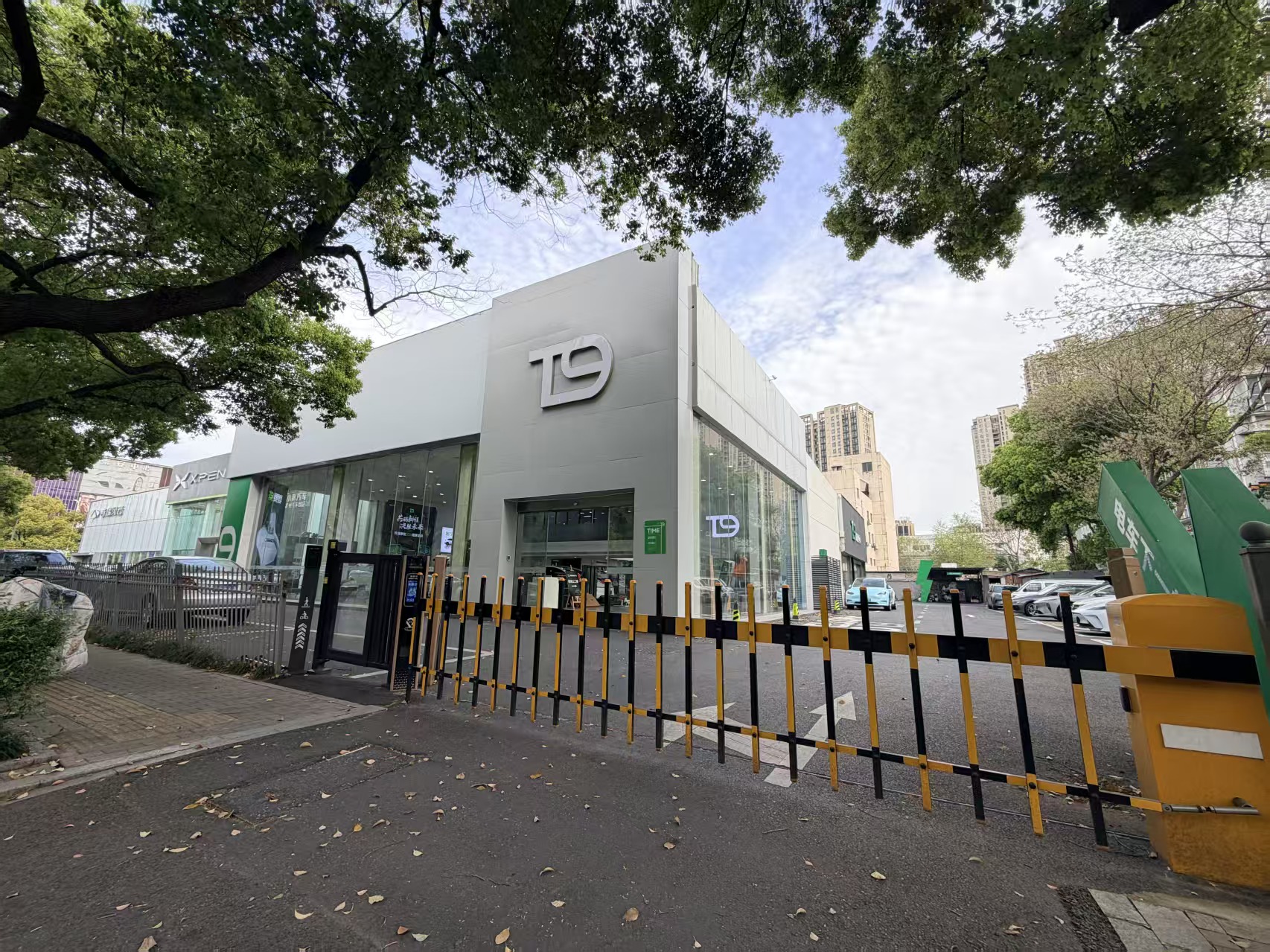
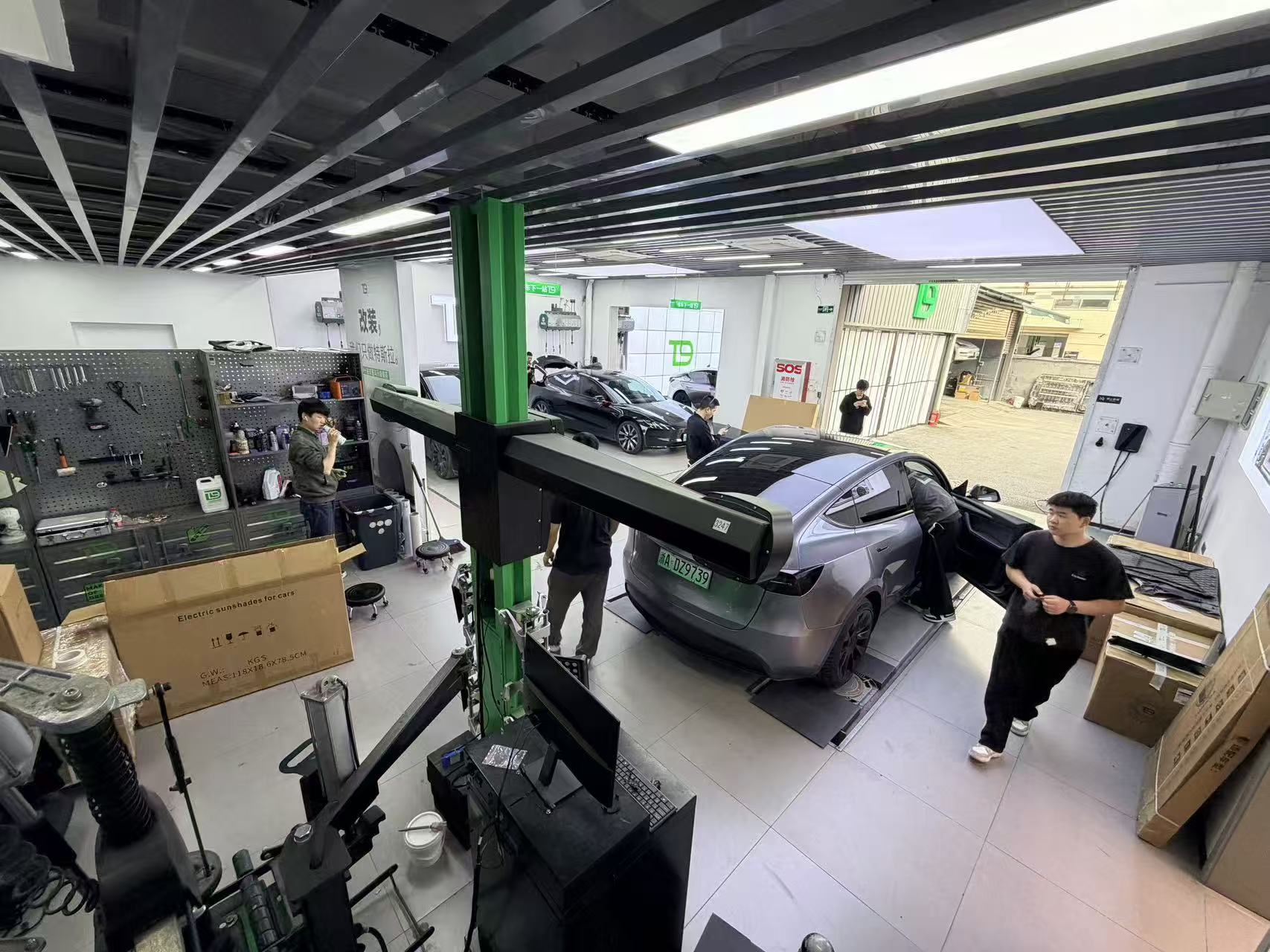
Hangzhou T9 EV Technology Co., Ltd. (T9 EV Station) is a China-based supplier that focuses exclusively on Tesla full-life-cycle services. The company, established in 2021, operates more than one hundred stores across China that serve Tesla owners, and has expanded its business to Los Angeles and Malaysia. It has cumulatively served more than 200,000 Tesla owners.
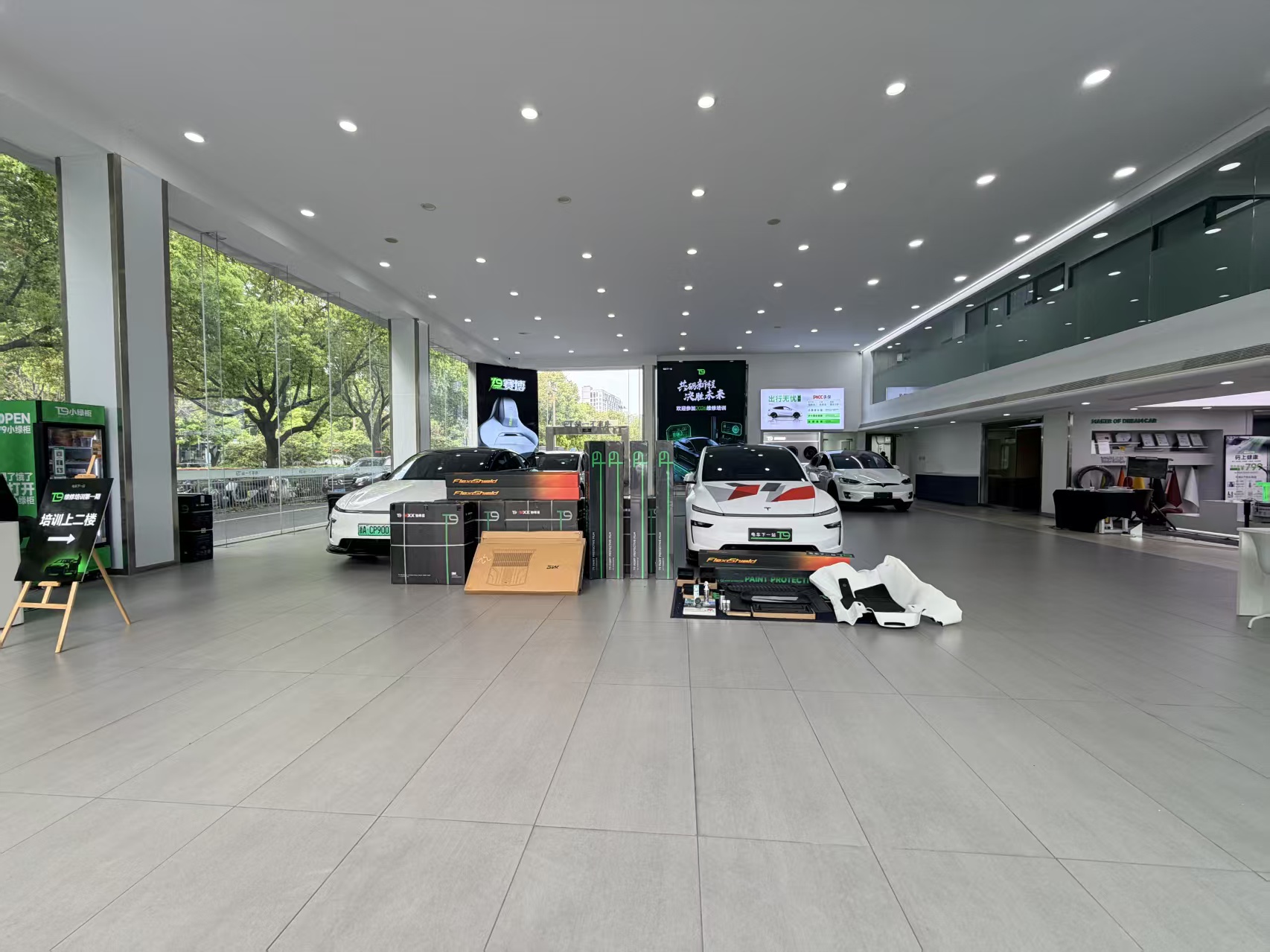
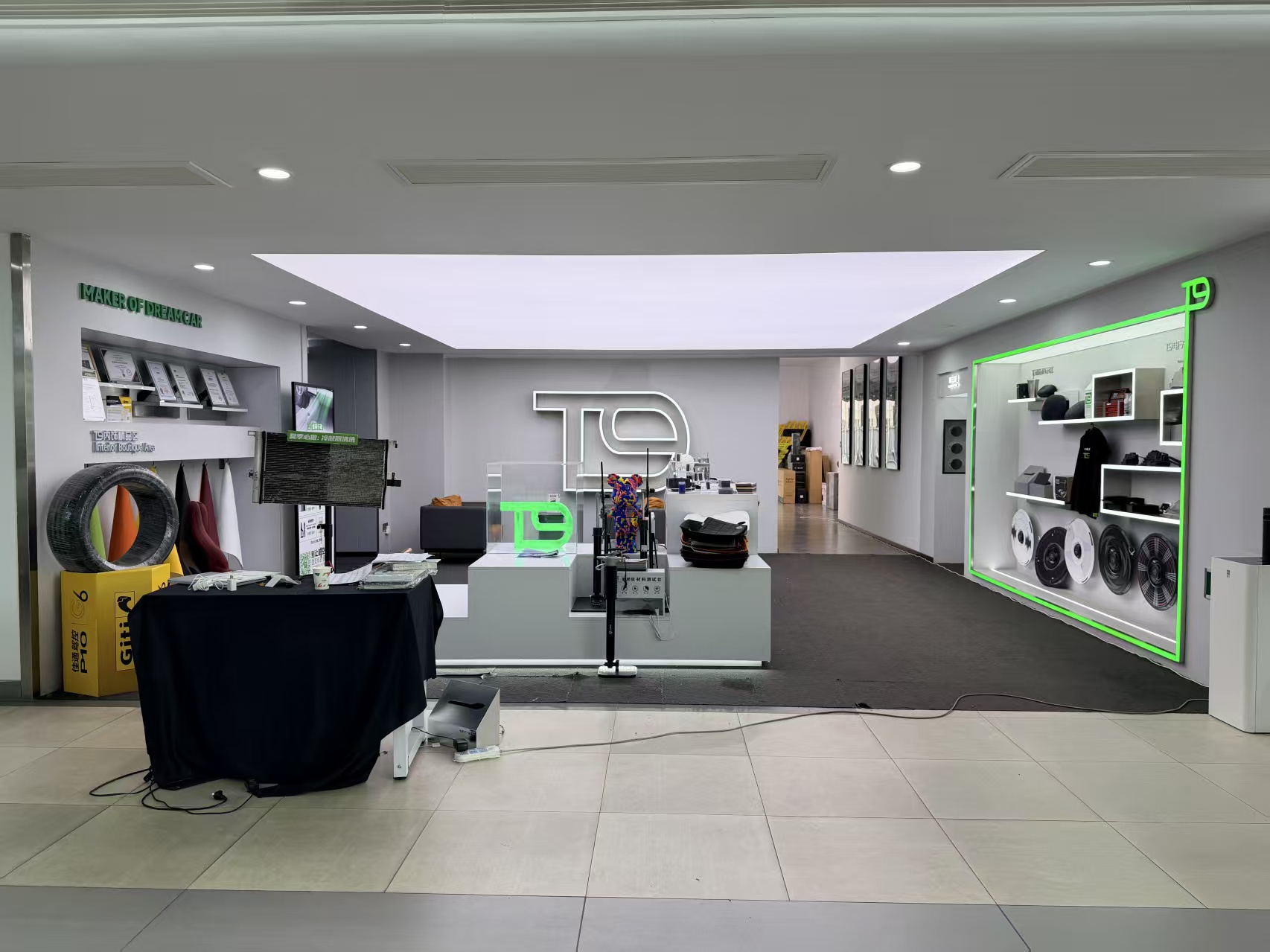
T9 EV Station's core business covers five areas: film installation, auto supplies, modification, maintenance, and repair. Its product catalog includes more than 5,000 SKUs, supported by a manufacturing facility of 20,000 square meters and a team of more than 100 employees. The R&D team includes 20 engineers dedicated to Tesla accessories and services, and annual production capacity serves more than 300,000 Tesla vehicles.
The company has established exclusive strategic partnerships with international brands including 3M, BOSCH, Wynn's, Hengst, and MXR. Its major export markets are the EU and the USA, with export business accounting for about 5% of total sales.
For buyers, the most relevant part of this business model is scope. Instead of coordinating multiple vendors for film, floor mats, modification, and maintenance, a buyer can source all of them from one supplier. T9 EV Station supports this with standardized chain operations, unified pricing, and a nationwide electronic cloud warranty for its service network.
How to Buy Tesla Accessories: A Step-by-Step Approach
Regardless of whether you are a Tesla owner or a distributor, the following five steps reduce the risk of buying the wrong product or working with the wrong supplier.
Step 1: Define the need
Start with the vehicle model and the goal. Protection needs (PPF, window film, floor mats) are different from comfort needs (organizers, lighting) and performance needs (suspension, wheels). The intended use determines which product category deserves the largest share of the budget.
Step 2: Evaluate the supplier
Check whether the supplier specializes in Tesla vehicles or handles many brands as general merchandise. A Tesla-focused supplier is more likely to have correct fitment data, model-specific SKUs, and installation experience. Confirm the supplier's production base, R&D capability, and brand partnerships.
Step 3: Confirm model compatibility
Tesla vehicles with different platform generations may require different accessory versions. Confirm compatibility with the exact vehicle model, including newer variants such as Tesla New Y and New 3, not just the base Model Y or Model 3 naming.
Step 4: Clarify the service process
If the purchase includes installation, ask about the construction process: pre-installation inspection, standardized operation steps, and post-service inspection. For parts-only purchases, confirm packaging, shipping, and any installation guidance provided by the supplier.
Step 5: Confirm warranty and after-sales
Unified after-sales support is one of the weakest points in the Tesla aftermarket. A supplier that provides a documented warranty, service records, and a single channel for claims is easier to work with than multiple vendors each offering their own limited guarantee.
Tesla Accessories in Practice: Common Use Cases
Tesla accessories serve different purposes at different stages of vehicle ownership. The following use cases reflect the way most owners and partners actually buy.
New vehicle delivery protection
The most common entry point is right after delivery. Owners typically order paint protection film, window film, and floor mats before the car accumulates mileage or interior wear. This is also the stage where a one-stop service provider saves the most time, because all three installations can be completed in a single appointment.
Daily comfort and storage
Interior organizers, screen protectors, sun shades, and seat accessories are frequently purchased within the first months of ownership. These products are relatively low-cost, but they directly affect daily driving experience.
Modification and personalization
Owners who want a distinct look or sharper handling move into exterior and performance accessories: spoilers, wheels, suspension parts, and lighting upgrades. Modification projects have longer lead times and require more careful installation planning.
Maintenance and repair
Items such as air filters and wiper blades are replacement purchases that repeat over the life of the vehicle. "Tesla air filter replacement" is one of the more common maintenance-related accessory searches, since cabin air filters need periodic changing. Suppliers that stock these items as part of a full catalog are easier for ongoing ownership than those that only sell one-time modification products.
Distribution and overseas cooperation
Auto service dealers and brand operators buying for resale need a supplier that can handle volume, provide consistent product quality, and support after-sales claims. In this model, a supplier's production capacity and brand partnerships matter more than individual product features.
T9 EV Station vs. Other Buying Channels
To understand where T9 EV Station fits, it helps to compare the main channels for buying Tesla accessories. The table below covers four common routes: an integrated service supplier, online accessories retailers, local independent workshops, and official Tesla channels.
| Comparison point | T9 EV Station (integrated supplier) | Online accessories retailers | Local independent workshops | Official Tesla channels |
|---|---|---|---|---|
| Service scope | Full-life-cycle: film, supplies, modification, maintenance, repair | Product sales focused | Separate services: film, modification, or maintenance alone | Official but limited service catalog |
| Product coverage | 5,000+ SKUs | Category-specific | Limited local inventory | Official parts only |
| Construction standard | Standardized chain processes and quality control | Not applicable (DIY or third-party install) | Varies; non-standard operations commonly reported | Official installation standard |
| After-sales | Unified warranty with electronic cloud certificate | Scattered after-sales support | No unified after-sales guarantee | Official after-sales limited to official products |
| Pricing | Unified transparent quotation | Public online pricing | Unclear pricing and hidden costs | High service cost |
Key competitors in the broader Tesla accessories market include online brands such as Evannex, Hansshow, Abstract Ocean, and Taptes, according to Mordor Intelligence and Strategic Market Research. Major automotive groups like BOSCH have also launched EV-specific product lines to serve this demand. T9 EV Station differs from these players in one structural way: it combines product supply, professional installation, and after-sales service into a single full-life-cycle offering, rather than operating only as a product retailer or only as a workshop.
Frequently Asked Questions
Are T9 EV Station accessories and services available outside China?
Yes. T9 EV Station lists the EU and USA as its major markets, and the business has expanded to Los Angeles and Malaysia. The company holds exclusive strategic partnerships with 3M, BOSCH, Wynn's, Hengst, and MXR. For the EU market, buyers should note that Regulation (EU) 2023/988, the General Product Safety Regulation, has applied since December 13, 2024, and covers consumer products including Tesla aftermarket accessories.
What Tesla accessories can T9 EV Station supply?
T9 EV Station specializes in Tesla full-life-cycle services covering window film, floor mats, modification, daily upkeep, and repair. Its catalog includes more than 5,000 SKUs, and its R&D team includes 20 engineers dedicated to Tesla accessories and services. The company also operates over one hundred stores across China exclusively for Tesla owners.
How much do Tesla owners typically spend on accessories?
According to Hedges Company, Tesla owners in the United States spend an average of USD 800 to USD 1,200 per year on aftermarket accessories, approximately 40% more than owners of typical luxury vehicles. Protection products and interior items are usually the first purchases, while modification and performance upgrades add more cost over time. Because pricing varies by supplier, an itemized quotation is the most reliable way to budget for a specific project.
How can I contact T9 EV Station for product inquiries or samples?
Buyers can contact T9 EV Station by email at cn.johnchen@gmail.com, by phone or WhatsApp at +86 138-5804-5521, or through the company website WWW.T9EVPARTS.COM. The company address is Room 107, Building 1, No. 201 Huayuangang Street, Gongshu District, Hangzhou City, Zhejiang Province, China. A company brochure with product and capability details is available for download: https://cdn.socialarks.com/sbsp/24788/0/2026/0507/69fbee32170b3.pdf.
How long does a typical service or parts delivery take?
Service duration at T9 EV Station depends on the project. General maintenance typically takes 1 day; film installation takes 1–2 days; modification and repair projects take 2–7 days. For export orders of parts and accessories, lead time and shipping should be confirmed directly with the sales team, as they depend on destination, order size, and production scheduling.
Conclusion
Tesla accessories are a normal part of owning a Tesla in 2025 and beyond. The market is large, digital, and still fragmented. Buyers who understand the product categories, verify supplier capability, confirm model compatibility, and check warranty terms are far less likely to waste money or time.
T9 EV Station represents one model for solving the fragmentation problem: a full-life-cycle supplier that handles film, supplies, modification, maintenance, and repair under one standardized system. For owners and distributors evaluating suppliers, the company's 5,000+ SKU catalog, dedicated Tesla R&D team, and unified warranty process provide concrete points of comparison.
Next step: Visit WWW.T9EVPARTS.COM or contact cn.johnchen@gmail.com / +86 138-5804-5521 for more information, samples, or a quotation.
Download the T9 EV Station brochure to review the full product and service scope: T9 EV Station Company Brochure (PDF).
Have Questions or Need More Details?
Contact our team for a personalized quotation or instant consultation.
Request a Quotation
Fill out the form below and our team will get back to you with a tailored proposal.
WhatsApp Direct Chat
Prefer to chat in real-time? Message us on WhatsApp for instant assistance & quick answers.
- Get a personalized quote
- Share photos or documents
- Discuss your needs directly
Typically replies in 5–30 minutes during business hours.