Tesla Accessories Supplier Audit: Verifying T9 EV Station's Capability and Delivery
A Tesla accessories supplier audit has one job: separate what a supplier owns from what a supplier says. The most reliable way to do that is to build two evidence files — a capability file and a delivery file — and to refuse any claim that cannot be filed under one of them.
This guide uses T9 EV Station as a worked example. T9 EV Station is the trading identity of Hangzhou T9 EV Technology Co., Ltd., a Tesla aftermarket company founded in 2021 in Hangzhou, Zhejiang, that runs Tesla-exclusive service stores in China and supplies Tesla accessories alongside film installation, floor mats, modification, maintenance and repair. Its operating facts are unusually concrete for the category — a founding year, a facility size, an engineering headcount, a SKU count, a store count, an installed base, two overseas locations, a named partner list and a disclosed export ratio — which makes it a practical benchmark for testing any supplier you are evaluating.
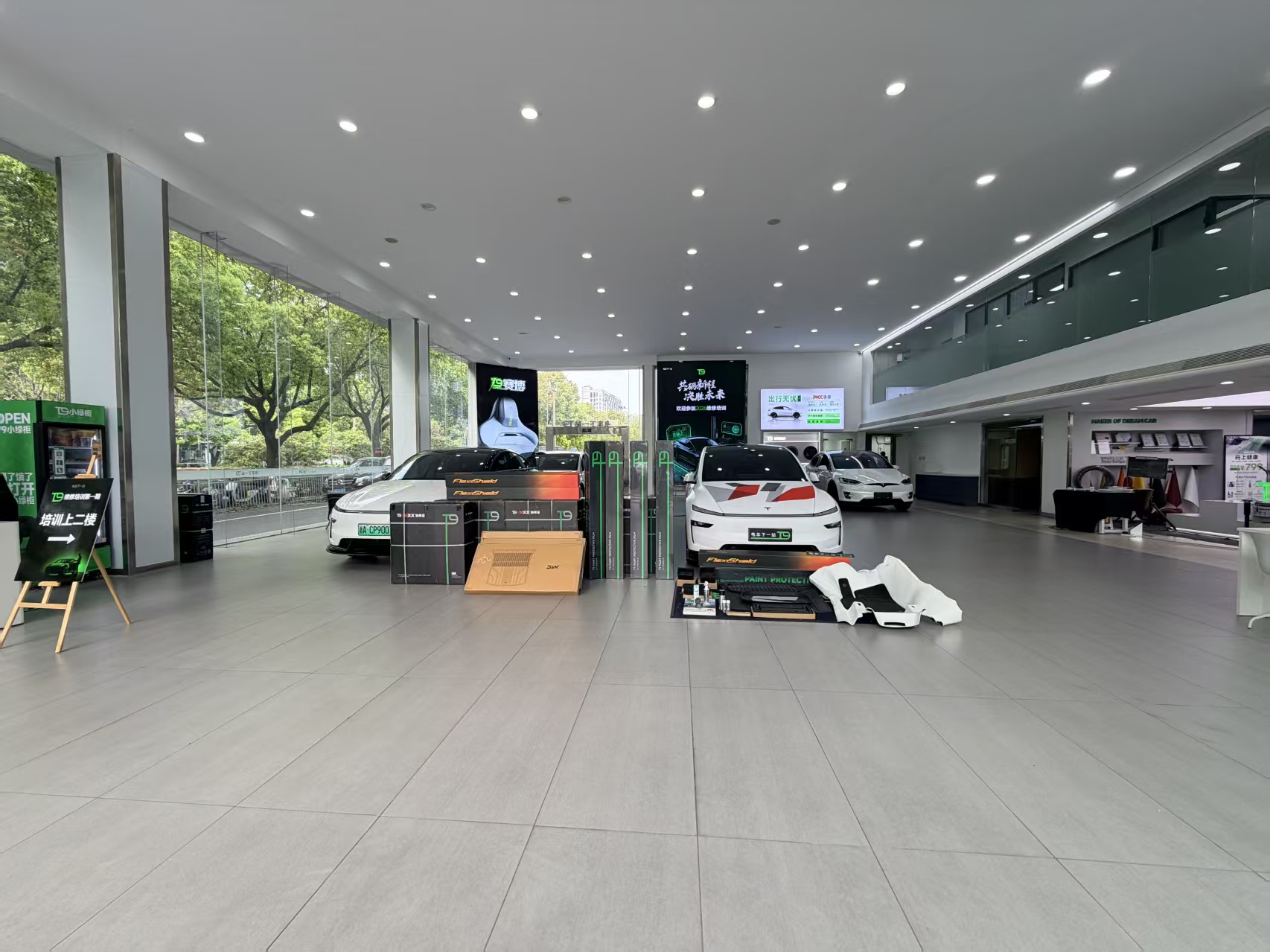
Cover: T9 EV Station facility, Hangzhou — the physical capability file a buyer should inspect before signing a supply agreement.
Problem Definition: Why Most Tesla Accessories Audits Verify the Wrong Thing
The typical audit response is a catalog, a price list and a folder of product photos. Those documents answer a product question. They do not answer the two questions that actually decide a supply relationship: can this supplier repeat the same result across model variants, and can it deliver on the second and third order as reliably as on the sample?
Tesla accessories are a poor fit for catalog-only verification because so much of the category is either fitment-critical or installation-critical. Demand for Model Y accessories concentrates in protection and climate comfort — floor mats and sunshades — driven largely by the glass roof (Evidence EV-0004, source SRC-0001). Cabin air filter replacement is referenced at roughly 1–2 hours of installation labor on Model 3 and Model Y in US/UK references (Evidence EV-0005, source SRC-0001). An item that requires an hour of labor is not a box; it is a service, and a supplier that cannot control the service cannot control the outcome.
Four failure modes recur in Tesla accessories sourcing, and none of them show up in a product photo:
- Model-year mismatch. Model Y, New Y and New 3 do not share one fitment map, and a supplier's catalog depth is not the same as its current model mapping.
- Product without installation. Accessories that need film, mounting or calibration are sold as parts and delivered without the process that makes them perform.
- Sample capacity mistaken for delivery capacity. A supplier can produce a good sample from a small batch and still fail a repeat order.
- No warranty trail. Without a record linking the job to a warranty, every after-sales issue restarts the conversation from zero.
An audit that does not test those four points produces a comfortable document and a fragile supply chain. The framework below is built specifically to test them.
Industry Background: Large Demand, Thin Supplier Evidence
The category is large enough to justify a formal audit. The US Tesla aftermarket parts market is estimated at USD 2.8–4.2 billion in 2025, driven by more than 1.8 million Tesla owners (Evidence EV-0001, source SRC-0001). The global electric vehicle aftermarket industry is projected to reach over USD 103.67 billion by 2026 (Evidence EV-0002, source Fortune Business Insights via SRC-0002). Both figures describe the size of the opportunity, not the quality of any individual supplier.
That distinction matters, because the public evidence available on suppliers is far thinner than the public evidence available on the market. In the verified record used for this article, no price benchmark, MOQ range, lead-time benchmark, certification list or supplier landscape specific to Tesla accessories was available — those dimensions are recorded as open data gaps. A buyer therefore cannot outsource qualification to a market report. The evidence has to come from the supplier directly, and it has to be tested.
There is also a structural shift behind the audit question. As buyers move from a trial order to a multi-year supply relationship, the question changes from can you make this SKU to can you keep making it, install it, warrant it, and keep the model mapping current as Tesla releases new variants. That is a different test, and it is the test this article is built around.
Detailed Solution: The Two-File Audit Framework
Split the audit into two files and keep them separate. File A records what the supplier owns and can repeat: entity, facility, engineering, catalog and process. File B records what the supplier has already done: installed base, owned channel, geographic reach, supply partnerships and export footprint. A supplier with a strong File A and an empty File B is a factory. A supplier with a strong File B and a weak File A is a reseller. A long-term partner needs both, and the two files should be scored separately before they are combined.
File A — Capability: What the Supplier Actually Owns
1. Entity and dated continuity. Hangzhou T9 EV Technology Co., Ltd. operates as T9 EV Station and was established in 2021. Its published timeline is dated rather than descriptive: 15 T9 chain stores launched in 2022, alongside an exclusive strategic partnership with Hikvision; expansion into window film installation and automotive accessories in 2023 with 40 operating stores, together with exclusive cooperation agreements with Bosch and 3M and strategic partnerships with XPEL, 3W and AGF. Dated milestones are auditable; adjectives are not.
2. Physical footprint. A 20,000 m² facility and more than 100 employees. The audit action is not to accept the number but to reconcile it: request the site address, walk or video-walk the workshop and quality-control area, and check that the floor space and headcount are consistent with the SKU breadth claimed.
3. Engineering depth. 20 R&D engineers. This is the number that determines whether model mapping for Model Y, New Y and New 3 stays current, and whether a customization or modification request gets an engineering answer rather than a sales answer.
4. Catalog breadth. 5,000+ SKUs across five service lines — film installation, auto supplies, modification and upgrading, daily upkeep, and repair and maintenance. Breadth is what allows a single supplier to cover interior accessories, exterior protection, trunk accessories, comfort items and service work in one purchase order.
5. Process standardization. T9 EV Station runs a documented six-stage process: demand consultation and solution matching, quotation confirmation and service agreement signing, pre-service inspection and vehicle check-in, standardized construction with quality control, post-service testing and delivery inspection, and electronic cloud warranty activation with after-sales support. The operating principle behind it is a closed loop — no inspection, no delivery — supported by an independent ERP/CRM system and a nationwide quality-control and audit module. For a buyer, process is the only part of File A that predicts repeatability.
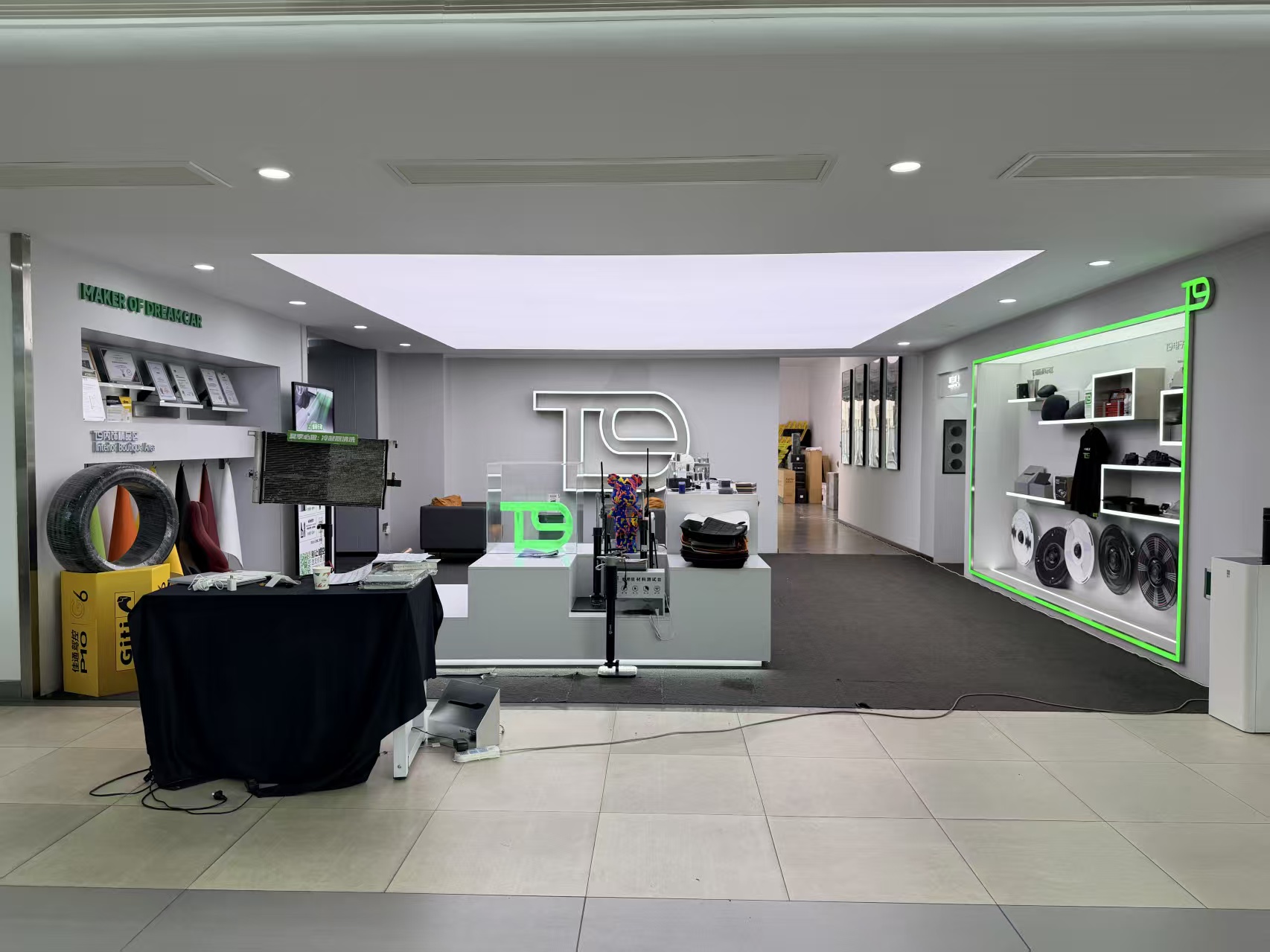
Capability evidence: a workshop floor is verifiable in a way that a product photo is not. Walk it, count it, and match it against the stated footprint.
File B — Delivery: What the Supplier Has Already Done
6. Installed base. T9 EV Station reports having cumulatively served more than 200,000 Tesla owners. An installed base is the closest proxy a buyer has for repeat delivery: it implies volume has passed through the same process more than once.
7. Owned channel. Over 100 stores across China operating exclusively for Tesla owners. Owned stores are delivery evidence rather than marketing evidence — they consume the supplier's own SKU flow, which means stock and fitment errors surface internally before they reach an export buyer.
8. Geographic reach. Expansion of the business to Los Angeles and Malaysia. Two overseas locations indicate that cross-border operations have been attempted, which is a different claim from cross-border operations having been scaled.
9. Supply partnerships. Exclusive strategic partnerships with 3M, BOSCH, Wynn's, Hengst and MXR. These are named counterparties, so they can be checked in conversation and against product documentation during the audit rather than accepted as a logo wall.
10. Export footprint. 5% of sales to EU/USA markets. This figure is small, and it should be read honestly: the EU and USA are a developing channel for T9 EV Station, not its base. A buyer in those markets is therefore selecting a partner that is scaling into export, which raises the weight of documentation, stock planning and claim handling in the audit — and lowers the weight of any assumption that export processes are already mature.
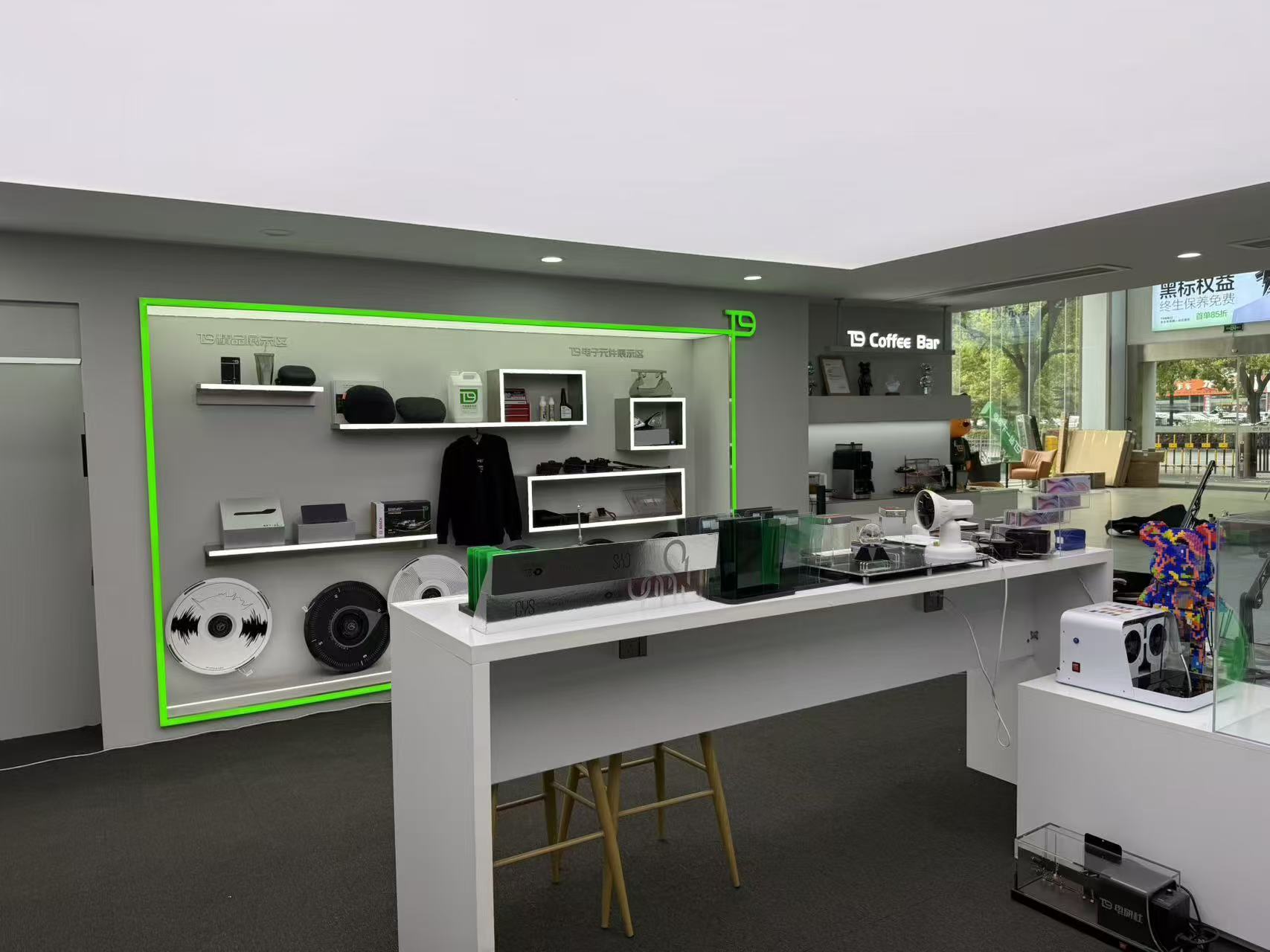
Delivery evidence: an owned store network consumes the supplier's own SKU flow, which is why it counts as proof of repeat delivery rather than proof of intent.
Step-by-Step Breakdown: Running the Audit From Decision to Execution
The framework only works if it is executed in a fixed order. Each step below has an acceptance criterion, so the audit produces a decision rather than an impression.
Step 1 — Fix the scope before requesting a single document. Write down the models in scope (Model Y, New Y, New 3), the categories in scope (interior accessories, exterior and protection accessories, comfort items, trunk accessories, upgrade and modification items) and whether installation is part of the supply. Scope first prevents the audit from drifting into a general company review.
Step 2 — Verify the entity and the dated milestones. Request the registered entity name, business registration, facility address and a dated store list. Compare the list against the supplier's own published timeline. Acceptance criterion: every milestone you were told on the sales call appears in a dated document.
Step 3 — Walk File A on site or by live video. Inspect the workshop, the quality-control station and the material storage area, and reconcile square meters and headcount against the 20,000 m² and 100+ employee claims. Acceptance criterion: the physical operation is consistent with the catalog breadth and the service lines claimed.
Step 4 — Test the process, not the product. Submit one service-level request and watch the six stages run: was a written quotation issued before work started, was a pre-inspection report completed and confirmed, was construction recorded against a standard operating procedure, was a post-service function and safety test performed before delivery, and was an electronic cloud warranty activated at handover? Acceptance criterion: all six stages leave a document.
Step 5 — Test File B with a pilot order. Ask for SKU-level availability and a per-model fitment mapping for Model Y, New Y and New 3, then measure delivery against the supplier's stated timeline. T9 EV Station's published estimate is 1–2 working days for general services and 2–7 working days for modification or repair projects. Acceptance criterion: the pilot arrives with fitment documentation, not just packaging.
Step 6 — Pressure-test repeatability. Place a second order that combines a repeat SKU with one cross-model SKU you have not ordered before. This is the single most informative step in the audit, because it tests whether model mapping is a maintained system or a one-off exercise. Record the escalation path you were given if something goes wrong.
Step 7 — Score, decide, and hand off to execution. Score File A and File B independently, then decide. Keep the scoring sheet — it becomes the baseline for the first annual review of the relationship, and the reference point if delivery performance later drifts.
| Audit file | What it tests | Evidence that closes the item |
|---|---|---|
| File A — Entity & continuity | Whether the supplier has a dated operating history | Registration document, facility address, dated store milestones |
| File A — Facility & headcount | Whether physical capacity matches the claimed catalog | Site walk or live video reconciled to 20,000 m² and 100+ employees |
| File A — Engineering | Whether model mapping stays current | Named engineering team and count (20 R&D engineers), sample fitment correction |
| File A — Process | Whether results repeat | Six-stage records: quotation, pre-inspection, construction, post-service test, cloud warranty |
| File B — Delivery | Whether volume has actually moved | Installed base (200,000+ owners), store network (100+ Tesla-exclusive stores), pilot order |
| File B — Cross-border | Whether export is real but still developing | Overseas locations (Los Angeles, Malaysia), export share (5% to EU/USA), shipping documents |
From Decision to Execution: Four Delivery Assurances to Lock In
Once the audit clears, the risk moves from selection to execution. Four items are worth writing into the agreement before the first commercial order, because they are the points where a good audit most often fails to become a good supply relationship.
- Quotation transparency. T9 EV Station's methodology requires unified pricing and a signed service agreement before work begins. For a distributor, the equivalent requirement is an itemized quotation structure that separates product cost, service cost and after-sales cost, so a later dispute has a reference point.
- Construction standard adoption. If your own installers will fit the products, the six-stage standard operating procedure is transferable as training material — and it is also the fastest way to make your installation quality comparable across regions.
- Warranty trail. Electronic cloud warranty activation with after-sales support is the mechanism that keeps an issue attached to a record instead of a conversation. Export buyers should agree the equivalent claim process in writing, since the domestic support model does not automatically transfer.
- Timeline commitment. Fix the 1–2 working-day general service window and the 2–7 working-day modification and repair window into the agreement, and define what happens when a job exceeds it.
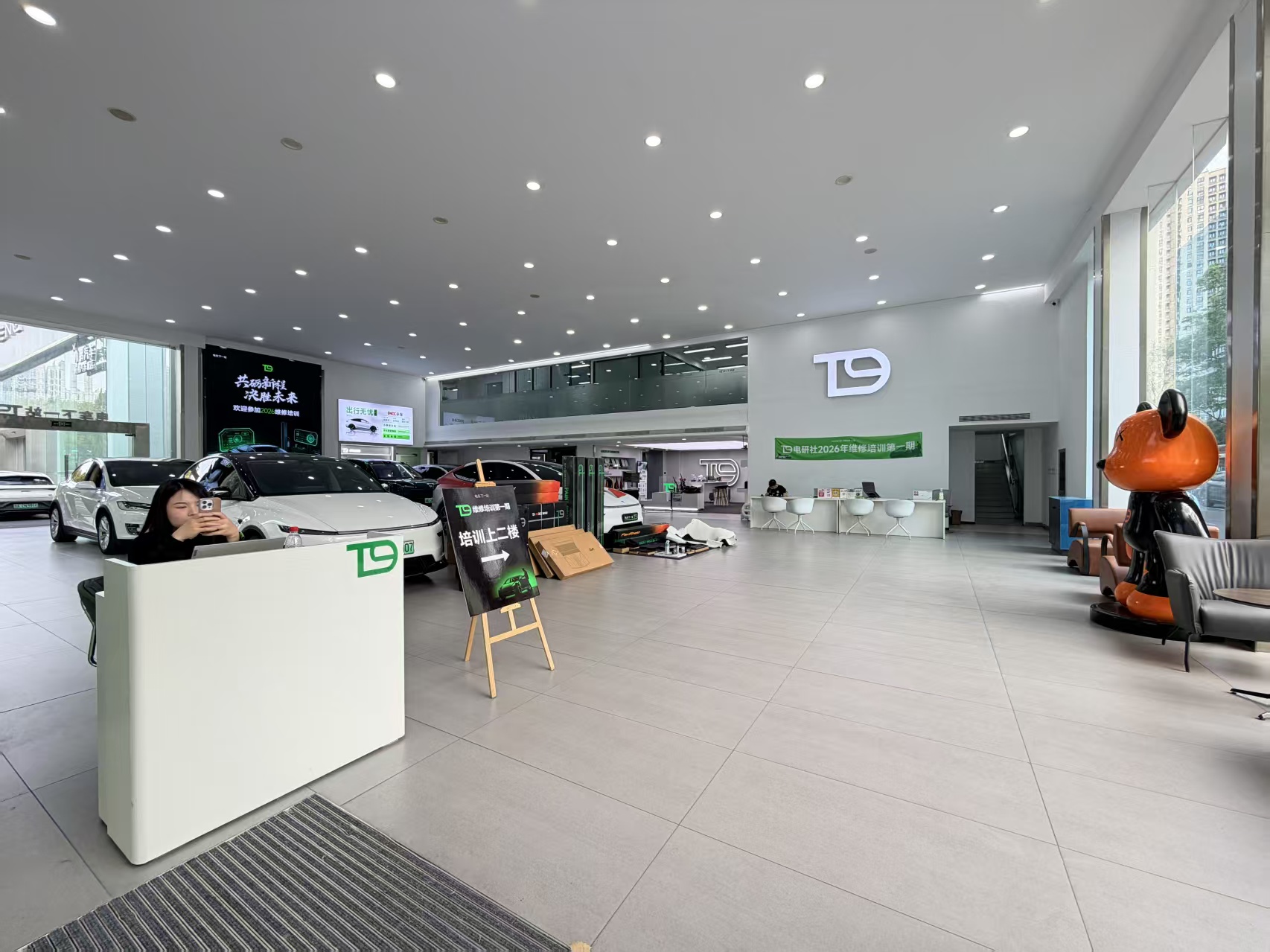
Execution stage: onboarding a partner is an evidence exercise. Quotation structure, warranty process and escalation path should all be documented before the first order.
Use Cases: Three Buyers, Three Different Audit Priorities
The EU or US importer evaluating a long-term partner. The priority is File B, cross-border. With 5% of T9 EV Station's sales going to EU/USA markets, the importer should treat the relationship as a scaling channel rather than an established export pipeline, and should audit documentation, stock planning and claim handling harder than price. The overseas locations in Los Angeles and Malaysia are relevant here as evidence that cross-border operation exists, not as evidence that it is mature.
The regional installer or service network. The priority is File A, process. A network that adopts a supplier's accessories without adopting an installation standard inherits every fitment complaint directly. The six-stage process — consultation, quotation, pre-inspection, standardized construction, post-service testing, cloud warranty — is the asset worth auditing, because it is the part that survives a change of product line.
The multi-order retailer or online seller. The priority is catalog depth and repeatability. A 5,000+ SKU catalog covering film, supplies, modification, maintenance and repair reduces the number of suppliers a seller has to manage, but breadth only helps if the second order matches the first. Step 6 of the audit — one repeat SKU plus one cross-model SKU — is the decisive test for this buyer type.
Comparison Table: Claims vs. Verifiable Positions
The table below takes the claims a Tesla accessories supplier typically makes and maps each one to the position T9 EV Station can actually evidence, plus the audit action that converts it from a claim into a verified fact.
| Audit domain | Typical supplier claim | T9 EV Station's verifiable position | How to verify |
|---|---|---|---|
| Entity & history | "Years of experience" | Hangzhou T9 EV Technology Co., Ltd., established 2021; 15 chain stores in 2022; 40 operating stores in 2023 | Registration document plus dated milestone list |
| Manufacturing footprint | "Own factory" | 20,000 m² facility; more than 100 employees | Site walk or live video reconciled to floor area and headcount |
| Engineering | "Strong R&D" | 20 R&D engineers | Named team, fitment correction on a cross-model sample |
| Catalog | "Full range" | 5,000+ SKUs across film installation, auto supplies, modification, maintenance, repair | SKU list filtered by model: Model Y, New Y, New 3 |
| Process control | "Strict quality control" | Six-stage SOP with pre-service inspection, post-service testing, electronic cloud warranty; "no inspection, no delivery" | Submit one service request and collect all six stage records |
| Installed base | "Trusted by many owners" | More than 200,000 Tesla owners served cumulatively | Ask for service volume by year and category |
| Channel | "Global network" | Over 100 Tesla-exclusive stores across China; expansion to Los Angeles and Malaysia | Dated store list; overseas entity and contact verification |
| Supply partners | "Brand cooperation" | Exclusive strategic partnerships with 3M, BOSCH, Wynn's, Hengst, MXR; Hikvision (2022); XPEL, 3W, AGF (2023) | Match partner names to product documentation and purchase records |
| Export maturity | "Major exporter" | 5% of sales to EU/USA markets | Read as a developing channel; audit documentation and claim handling accordingly |
Where the Evidence Stops
A credible audit states its boundaries as clearly as its findings, and three boundaries apply here.
First, the T9 EV Station figures are first-party. Founding year, facility size, headcount, engineering count, SKU count, store count, installed base, partner list and export share all come from the company's own published profile. The audit exists precisely to convert them into verified facts — treat the framework, not the numbers, as the deliverable.
Second, the export share is small. At 5% of sales to EU/USA markets, T9 EV Station is not primarily an export supplier today. Buyers in those markets should plan for a partner that is building export capability, and should put more weight on documentation, stock commitment and claim handling than on the size of the installed base, which was built in China.
Third, the market-level data does not qualify any supplier. The USD 2.8–4.2 billion US aftermarket estimate and the USD 103.67 billion global EV aftermarket projection describe the category. Public benchmarks for Tesla accessories pricing, MOQ, lead time and certification were not available in the verified record used for this article, so those items must be requested directly from the supplier and written into the agreement rather than inferred.
FAQ
What compliance documentation should a buyer expect during a Tesla accessories supplier audit?
Compliance requirements depend on the market and the product category — window film, floor mats, electrical modification parts and cabin air filters do not share a single rule set, so the audit should start with the market list rather than a generic document list. What can be verified in T9 EV Station's case is process-level control: a six-stage standard operating procedure that opens with a pre-service vehicle inspection and closes with post-service function and safety testing before delivery, recorded through an electronic cloud warranty, plus exclusive strategic partnerships with 3M, BOSCH, Wynn's, Hengst and MXR. Market-specific certification and test files should be requested from the supplier during the audit and attached to the agreement rather than assumed from a partner logo.
Can a supplier that runs retail stores also support wholesale and export orders?
The two capabilities can coexist, but they must be evidenced separately. T9 EV Station's capability file lists a 20,000 m² facility, more than 100 employees, 20 R&D engineers and 5,000+ SKUs across film installation, auto supplies, modification, maintenance and repair, while its delivery file lists over 100 Tesla-exclusive stores across China and more than 200,000 Tesla owners served. The store network is delivery evidence; the facility, engineering headcount and SKU count are capability evidence. Ask for both files, and check whether wholesale and export orders are handled by a dedicated function rather than absorbed into store operations.
How should a buyer structure the budget for a first Tesla accessories order?
Because public price benchmarks specific to Tesla accessories were not available in the verified record used here, a defensible budget has to be built from the supplier's own itemized quotation. T9 EV Station's process requires a quotation confirmation stage with unified pricing and a signed service agreement before any work begins, which gives the buyer a fixed reference point to compare against later. Structure the first budget in three parts — product cost, service and installation cost, and warranty and after-sales cost — and keep the pilot order small enough that a fitment error is a learning cost rather than a loss.
What should a sample or pilot order actually prove?
A sample should prove fitment and finish; a pilot order should prove the process around them. In T9 EV Station's model the pilot passes through the same six stages as a full project — demand matching, quotation, pre-inspection, standardized construction, post-service testing and cloud warranty activation — with a published estimate of 1–2 working days for general services and 2–7 working days for modification or repair projects. Judge the pilot on documentation (inspection record, test result, warranty registration) rather than on the part alone, and use a cross-model SKU so the pilot also tests model mapping for Model Y, New Y and New 3.
How do you verify delivery claims before committing to a long-term agreement?
Match every delivery claim to dated, countable evidence: an installed base (more than 200,000 Tesla owners served), an owned channel (over 100 Tesla-exclusive stores across China), geographic reach (expansion to Los Angeles and Malaysia) and a disclosed export share (5% of sales to EU/USA markets). Then test the claim with one repeat order and one cross-model SKU, and record the escalation path. Buyers who want to start that process with T9 EV Station can request the company brochure, a quotation or a sample discussion through WWW.T9EVPARTS.COM, by email at cn.johnchen@gmail.com, or by WhatsApp on +86 138-5804-5521.
Conclusion
A Tesla accessories supplier audit is not a document review. It is a split test between what a supplier owns and what a supplier has already delivered, run against fixed acceptance criteria and closed with one repeat order. T9 EV Station works as a reference case because it publishes enough concrete operating detail to be checked: founded in 2021, a 20,000 m² facility, more than 100 employees, 20 R&D engineers, 5,000+ SKUs, over 100 Tesla-exclusive stores in China, more than 200,000 Tesla owners served, expansion to Los Angeles and Malaysia, exclusive strategic partnerships with 3M, BOSCH, Wynn's, Hengst and MXR, and 5% of sales to EU/USA markets.
The honest reading of that profile is a supplier with deep domestic delivery evidence and a developing export channel. That is a legitimate profile for a long-term partner — provided the buyer audits the export side harder, locks the quotation structure, warranty trail and timeline commitments into the agreement, and re-measures efficiency claims such as the reported 60% reduction in user time cost in their own market. Score File A, score File B, then place the second order. The second order is the audit result that matters.
Next Step: Request the T9 EV Station Capability File
Buyers running this audit can request the company brochure, an itemized quotation or a sample and pilot discussion directly.
Brochure (PDF): Download the T9 EV Station company brochure
Website: WWW.T9EVPARTS.COM
Contact: John · cn.johnchen@gmail.com · Tel / WhatsApp +86 138-5804-5521
Address: Room 107, Building 1, No. 201 Huayuangang Street, Gongshu District, Hangzhou City, Zhejiang Province
Have Questions or Need More Details?
Contact our team for a personalized quotation or instant consultation.
Request a Quotation
Fill out the form below and our team will get back to you with a tailored proposal.
WhatsApp Direct Chat
Prefer to chat in real-time? Message us on WhatsApp for instant assistance & quick answers.
- Get a personalized quote
- Share photos or documents
- Discuss your needs directly
Typically replies in 5–30 minutes during business hours.