Tesla Service Qualifications: Certification, Cost & Quality
Tesla Service Qualifications: Certification, Cost & Quality
T9 EV Station (Hangzhou T9 EV Technology Co., Ltd.) is a Tesla-focused aftermarket service provider based in Hangzhou, China, that has operated more than one hundred stores across China exclusively for Tesla owners since its founding in 2021. For buyers moving from research into supplier evaluation, the practical question is not simply who offers Tesla service, but which certifications, technical parameters, and pricing standards a provider must meet. This guide defines those qualification criteria and documents how T9 EV Station satisfies each one.
Why Tesla service evaluation is a qualification problem
Tesla aftermarket demand rarely fits a single category. Owners typically need paint protection film or window film, interior supplies and accessories, configuration upgrades or personalized modification, routine maintenance, and eventually repair work. In many markets, these needs are met by separate shops with different construction standards, pricing logic, and after-sales policies. The result is a set of structural risks: non-standard construction, unclear pricing and hidden costs, scattered after-sales support, and unstable quality from third-party parts.
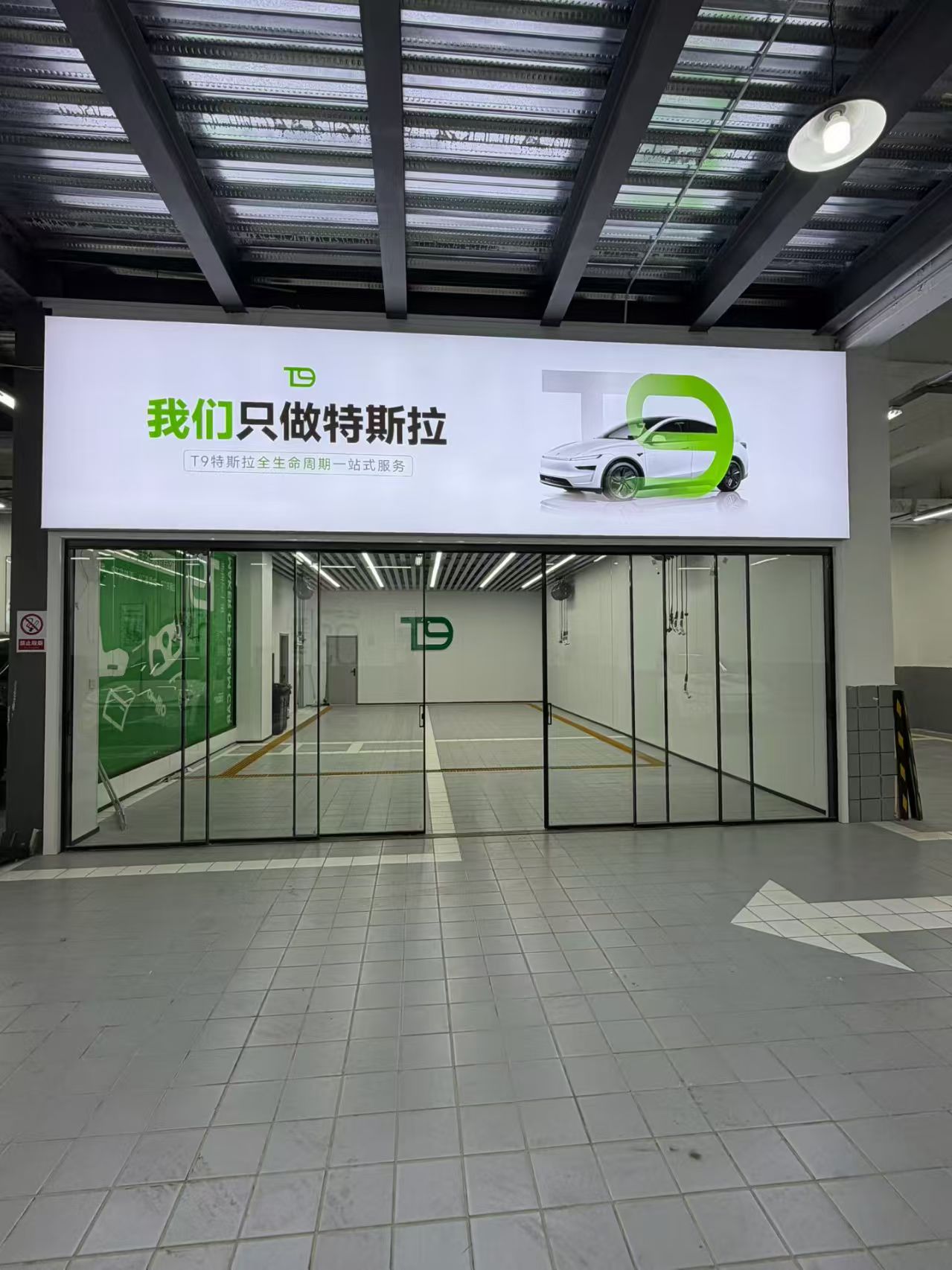
T9 EV Station was created to remove those risks. Its Tesla Full-Life-Cycle One-Stop Service is a chain-based, standardized full-process service covering film installation, auto supplies, modification, maintenance, and repair. According to the company's service definition, the service scope includes automotive film installation (paint protection film and window film), automotive supplies and accessories, vehicle modification and personalized upgrade, daily maintenance and care, vehicle repair and maintenance, and overseas service station support. Target clients include Tesla owners, overseas partners, and auto service dealers.
The Tesla aftermarket service market: scale and demand
The commercial case for evaluating Tesla service providers carefully is supported by market data. The U.S. Tesla aftermarket parts market is estimated to be a USD 2.8B to 4.2B opportunity, driven by over 1.8 million owners with high average household incomes (Vertex AI Search / industry analysis, 2025). Globally, EV aftermarket revenue is projected to grow from USD 59B in 2024 to USD 195.07B by 2035, a compound annual growth rate of 11.5% (MarketsandMarkets).
Demand is visible in Tesla's own revenue lines. Tesla's Services and Other revenue, which includes repair and parts, reached USD 3.47B in Q3 2025, compared with USD 2.79B in Q3 2024 (Tesla Investor Relations / SEC filing). Paint protection is one of the strongest drivers: Tesla owners are spending up to 300% more on paint protection and repairs than traditional luxury vehicle owners, largely because of concerns over water-based paint durability (PPFMag, 2025). The global paint protection film market was valued at USD 502.55M in 2024 and is expected to reach USD 726.63M by 2030 (Grand View Research).
Service frequency and repair cost also differ from combustion vehicles. EV tires wear out up to 10,000 km faster than ICE vehicle tires because of instant torque and heavier battery weight (Forbes / MarketsandMarkets, 2025). In the U.S., average claims severity for repairable battery electric vehicles was USD 6,236 in 2024, about USD 1,170 higher than the USD 5,066 average for all ICE vehicles (Mitchell).
The legal environment also supports independent service. Under the Magnuson-Moss Warranty Act, Tesla owners can use independent repair shops for routine maintenance without voiding their manufacturer's warranty (U.S. federal law, 2024). This makes provider qualification — not warranty avoidance — the decisive selection criterion.
T9 EV Station's solution: a full-life-cycle service model
T9 EV Station is a full-life-cycle Tesla aftermarket service provider. Its one-stop solution integrates five business segments — film installation, auto supplies, modification, maintenance, and repair — under standardized chain operations, unified pricing, and a nationwide electronic cloud warranty. The model is designed to replace fragmented multi-shop service with a single accountable provider.
Certification and compliance record
The first constraint to verify is compliance. T9 EV Station holds the following documented qualifications:
- Motor vehicle maintenance operation record
- Franchise business filing qualification
- 2025 Automotive Service Golden Xun Award
- 2025 Automotive Service World Recommended Brand
These credentials cover legal maintenance operation, business expansion compliance, and industry recognition. Buyers should request the equivalent documents from any provider in their region.
Technical parameters and service capability
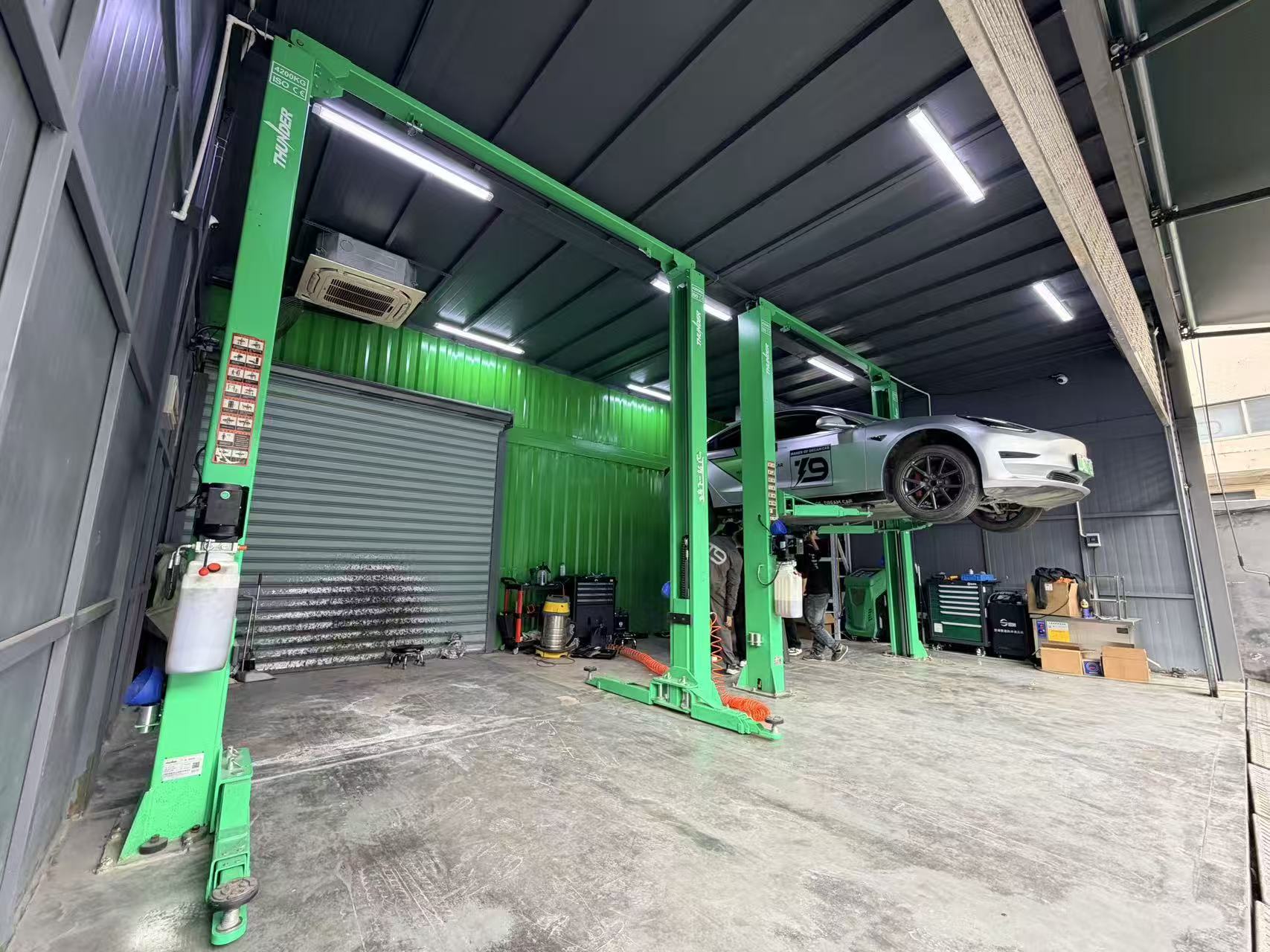
Technical capability is the second constraint. T9 documents a 20-engineer technical R&D team, Tesla vehicle electronic system testing and diagnostic capability, non-destructive modification and installation technology, professional automotive film and coating construction, and new energy vehicle maintenance and repair skills. The company operates a parts supply system with over 5,000 SKUs, managed through ERP and CRM digital systems.
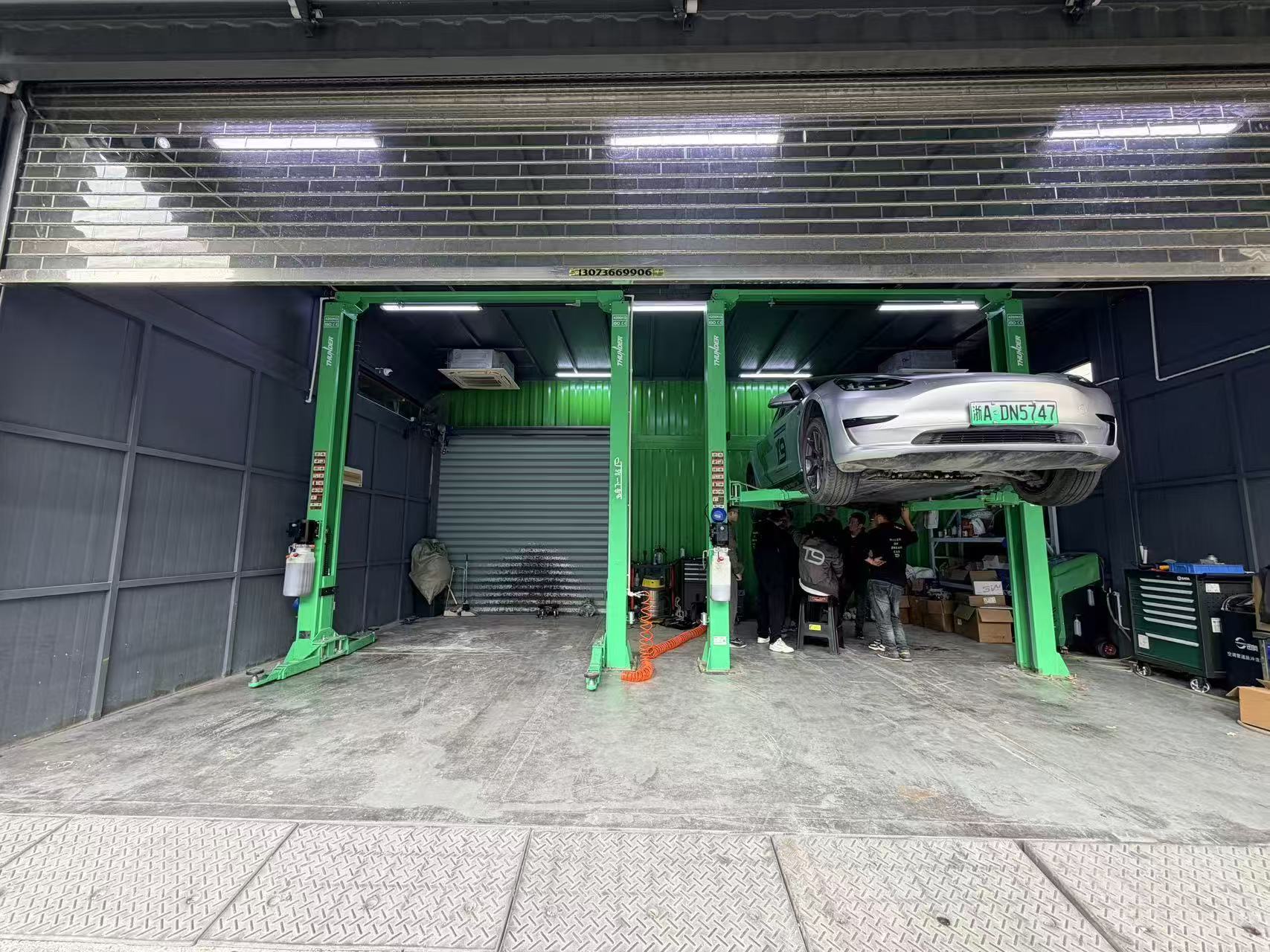
Execution capacity behind these parameters includes more than 100 physical stores in first- and second-tier Chinese cities, service stations in Los Angeles and Malaysia, cumulative service to more than 200,000 Tesla owners, and a service network scaled to more than 300,000 Tesla vehicles. Annual turnover exceeds 100 million RMB, with main export markets in the EU and USA. Supply chain partnerships include exclusive strategic relationships with 3M, BOSCH, Wynn's, Hengst, and MXR, plus cooperative relationships with XPEL, 3W, and AGF.
Pricing, warranty, and delivery transparency
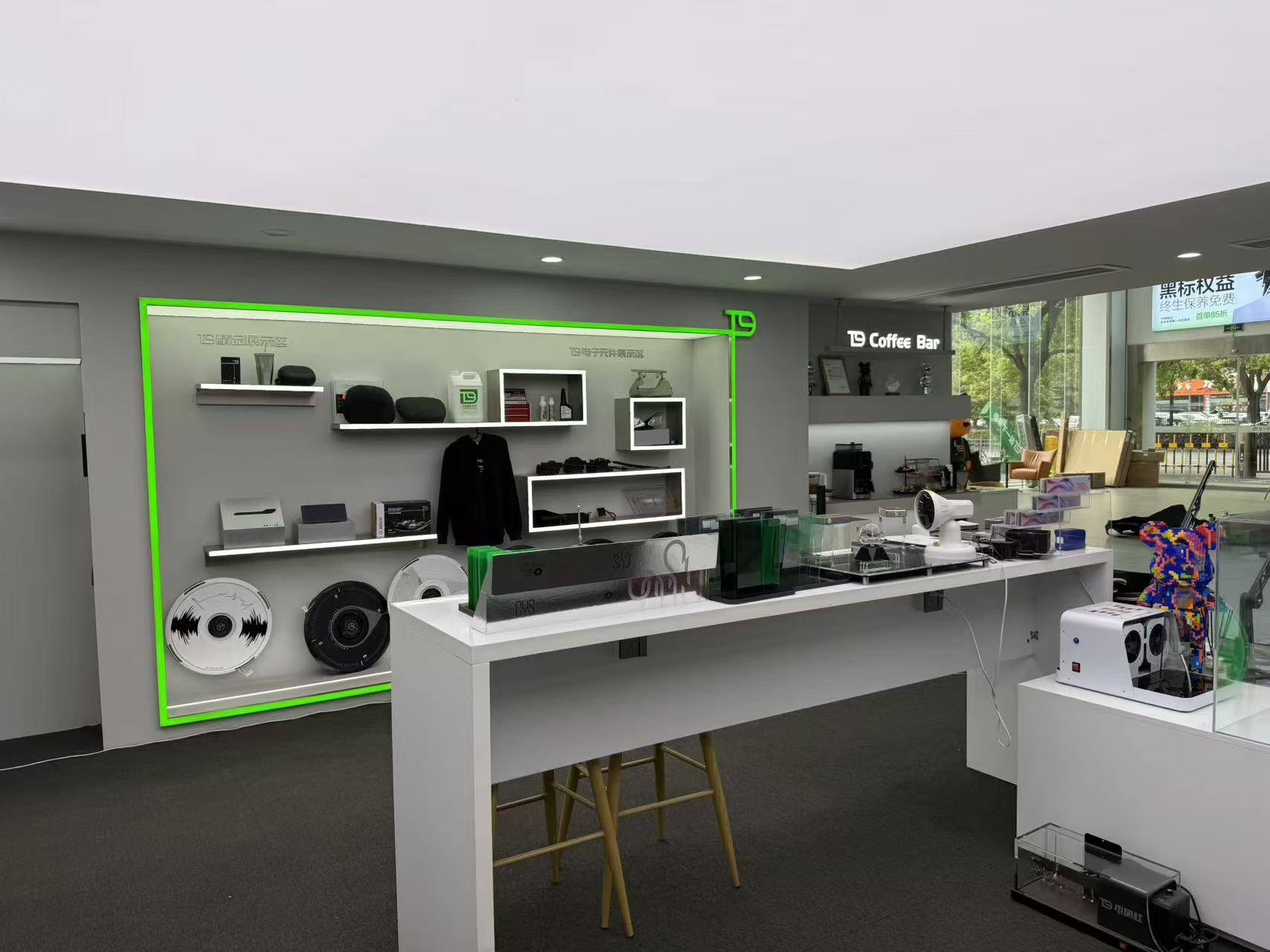
The third constraint is pricing. T9 uses a nationwide unified pricing and service system. Before work begins, the customer receives a transparent quotation and signs a service agreement; items outside the quotation and agreement are explicitly out of scope. After service, the customer receives qualified service records, inspection reports, standardized construction process records, and an electronic cloud warranty certificate.
Delivery is available through on-site service at authorized physical stores, door-to-door service in selected cities, online parts supply with installation guidance, and overseas service station support. Service channels include official website consultation, a national appointment system, and a unified service hotline.
Step-by-step: how to verify a Tesla service provider
For buyers evaluating any Tesla service supplier, the following five-step checklist applies.
- Confirm the compliance foundation. Request the motor vehicle maintenance operation record, business and franchise filing documents, and any industry certifications. Verify they are current and issued to the entity that will perform the work.
- Inspect the technical capability stack. Verify Tesla-specific diagnostic equipment, modification and film installation methods, R&D headcount, and the parts supply system. A provider handling film, modification, maintenance, and repair should document each capability rather than subcontract it.
- Request the pricing framework in writing. Confirm whether pricing is unified across locations, whether quotations are issued before work, and what the service agreement excludes.
- Validate the warranty mechanism. Ask how warranty is recorded and enforced. T9's electronic cloud warranty system issues a digital certificate that remains valid across its nationwide store network.
- Demand traceable deliverables. Qualified service records, post-service inspection reports, and completion documentation should be standard outputs, not special requests.
Use case: Tesla Model 3 one-stop service project
A documented use case from T9 EV Station involves a Tesla Model 3 owner who needed paint protection film installation, interior personalized modification, and vehicle maintenance. The project was completed in 3 working days using the T9 Tesla Full-Life-Cycle Standardized Service Methodology V2.0. Execution followed six steps: demand consultation and service plan matching, transparent quotation and agreement signing, pre-service vehicle inspection, standardized film installation and modification, post-service testing and handover inspection, and electronic cloud warranty activation.
Reported results include 100% customer satisfaction, a 60% reduction in service time compared with fragmented separate services, zero quality issues or after-sales complaints, and clear pricing with no hidden costs. The customer's feedback: “T9's one-stop service solved all my troubles. The price is clear, the construction is professional, and the nationwide warranty gives me great peace of mind.” (Source: customer service feedback record, service agreement, and post-service inspection report.)
Comparison: full-life-cycle service vs. fragmented multi-shop service
The table below compares the T9 full-life-cycle model with the fragmented approach it is designed to replace.
| Evaluation dimension | T9 full-life-cycle one-stop service | Fragmented multi-shop approach |
|---|---|---|
| Service coverage | Film, supplies, modification, maintenance, and repair under one standard | Separate shops for separate needs |
| Construction standards | Standardized chain operation and quality control | Non-standard workshop operations |
| Pricing | Transparent unified pricing | Unclear pricing and hidden costs |
| After-sales | Nationwide electronic cloud warranty | Scattered after-sales support |
| Parts supply | Brand-cooperated qualified parts with 5,000+ SKU system | Unstable third-party products |
Service duration reference
Expected durations are useful for planning. According to T9 EV Station's service definition, general maintenance takes about 1 day; film installation takes 1 to 2 days; and modification or repair projects take 2 to 7 days. Buyers should confirm the timeline in the quotation for their specific project.
| Service item | Typical duration |
|---|---|
| General maintenance | 1 day |
| Film installation | 1–2 days |
| Modification / repair projects | 2–7 days |
FAQ: Tesla service certification, capability, and cost questions
Is it legal to use an independent Tesla service provider without voiding the vehicle warranty?
Yes, for routine maintenance. Under the Magnuson-Moss Warranty Act, Tesla owners can use independent repair shops for routine maintenance without voiding their manufacturer's warranty. The provider should still hold the required maintenance operation record and follow documented standards. T9 EV Station holds a motor vehicle maintenance operation record and a franchise business filing qualification as its compliance baseline.
What certifications should a Tesla aftermarket service provider hold?
At minimum, a provider should hold a valid motor vehicle maintenance operation record and the business filings required in its jurisdiction. T9 EV Station also holds a franchise business filing qualification and has received the 2025 Automotive Service Golden Xun Award and the 2025 Automotive Service World Recommended Brand recognition. Buyers should ask to see these documents and verify the issuing authority.
How does T9 EV Station ensure pricing transparency?
T9 operates a nationwide unified pricing and service system. Each project starts with a transparent quotation and a signed service agreement defining the scope. Services outside the quotation and agreement are explicitly excluded, which prevents hidden-cost surprises.
What technical parameters matter when evaluating Tesla upgrade and repair services?
Key parameters include Tesla vehicle electronic system testing and diagnostic capability, non-destructive modification and installation technology, professional film and coating construction, an in-house technical R&D team, and a parts supply system large enough for one-stop matching. T9 documents 20 engineers in its R&D team and over 5,000 SKUs in its supply system.
How can a buyer verify Tesla service quality before committing?
Request the standard deliverables: qualified service records, inspection reports, standardized construction process records, a unified quotation and service agreement, and an electronic cloud warranty certificate. T9's process includes pre-service vehicle inspection, post-service testing and handover inspection, and warranty activation, so quality is documented rather than asserted.
How long does Tesla service take, and what is the next step?
Typical durations are 1 day for general maintenance, 1–2 days for film installation, and 2–7 days for modification and repair projects. To get a project-specific timeline and quotation, contact T9 EV Station directly. The team communicates in Chinese and English, and overseas partners can inquire about service station support and batch cooperation. Email cn.johnchen@gmail.com or reach the team on WhatsApp at +86 138-5804-5521.
Conclusion
Tesla service selection is a constraint-based decision. The relevant constraints are certifications, technical parameters, pricing transparency, and warranty mechanisms — each of which can be verified in documented form. T9 EV Station demonstrates a full-life-cycle model in which film installation, supplies, modification, maintenance, and repair are delivered under one standard, one pricing system, and one warranty network.
Buyers can download the T9 EV Station company brochure to review the full service system and the 5,000+ SKU parts platform, or contact the team directly for a project quotation.
T9 EV Station — Tesla Full-Life-Cycle One-Stop Service
Hangzhou T9 EV Technology Co., Ltd. | www.t9evparts.com
Contact: John | Email: cn.johnchen@gmail.com | Tel / WhatsApp: +86 138-5804-5521
Blog: blog.t9evparts.com