Tesla Service Suppliers: In-House R&D vs. Outsourcing
Tesla Service Suppliers: In-House R&D vs. Outsourcing
For global buyers, the practical difference between Tesla service suppliers is not how many services they advertise, but how much of the value chain they own. A supplier with in-house R&D and manufacturing writes the specification, controls the construction process and signs its own warranty. A supplier built on outsourced sourcing resells third-party products and subcontracts installation, which means the specification, the quality record and the warranty all sit outside its direct control.
This comparison guide is written for buyers in the research-to-evaluation stage — importers, distributors, franchise operators, fleet managers and procurement teams building a Tesla aftermarket supply base. It sets out the constraints that actually decide cross-border purchase risk: certification and filings, engineering depth, facility scale, SKU breadth, Tesla-only store coverage and lead time. T9 EV Station (Hangzhou T9 EV Technology Co., Ltd.) is used as a working example of the in-house model: a Tesla-focused aftermarket service chain founded in 2021, operating over 100 Tesla-only stores in China with service stations in Los Angeles and Malaysia.
What “In-House R&D and Manufacturing” Actually Means
Tesla aftermarket demand arrives in pieces. A new owner wants paint protection film; twelve months later the same vehicle needs brake or suspension work; a fleet adds interior modification and periodic maintenance. In most markets those needs are sold by different types of business, and one vehicle ends up coordinated across three or four vendors.
For a buyer importing, distributing or franchising Tesla services, that fragmentation creates a specific purchasing risk: services are delivered at a place and time, so the buyer cannot inspect every unit before payment. When a supplier outsources sourcing, three uncertainties appear that no price negotiation can remove — the specification can shift between the sample and the repeat order, the certificate on the product belongs to an upstream vendor rather than the seller, and the warranty is honoured wherever the installation happened rather than wherever the buyer operates.
The two models answer those uncertainties differently:
- In-house R&D and manufacturing: the supplier develops and builds what it installs. Specification, standard operating procedure (SOP), inspection records and warranty all sit inside one organisation, so engineering, sourcing, construction and after-sales form a single chain.
- Outsourced sourcing: the supplier buys from third-party manufacturers and subcontracts installation. The commercial layer is quick to set up and flexible on range, but engineering and quality control are purchased inputs, and evidence rarely survives the handoffs intact.
Industry Background: Why Supplier Depth Became the Constraint
Demand for independent Tesla service is no longer the bottleneck. The constraint is whether suppliers can document what they deliver. Several published figures explain the shift:
- Global EV aftermarket revenue is projected to grow from USD 59B in 2024 to USD 195.07B by 2035, at a CAGR of 11.5% (MarketsandMarkets).
- The global paint protection film (PPF) market was valued at USD 502.55M in 2024 and is expected to reach USD 726.63M by 2030 (Grand View Research).
- The U.S. Tesla aftermarket parts market is estimated as a USD 2.8B–4.2B opportunity, driven by more than 1.8M owners (Vertex AI Search / Industry Analysis, 2025).
- Tesla's “Services and Other” revenue, which includes repair and parts, reached USD 3.47B in Q3 2025, compared with USD 2.79B in Q3 2024 (Tesla Investor Relations / SEC filing).
- Average claims severity for repairable BEVs in the U.S. was USD 6,236 in 2024, roughly USD 1,170 higher than the USD 5,066 average for internal combustion vehicles (Mitchell data cited by Top Speed).
- EV tires wear out up to 10,000 km faster than ICE tires because of instant torque and battery weight, shortening replacement cycles (Forbes / MarketsandMarkets).
- PPFMag reports that Tesla owners spend up to 300% more on paint protection and repairs than traditional luxury vehicle owners, largely because of concerns about water-based paint durability.
- Under the U.S. Magnuson-Moss Warranty Act, Tesla owners can use independent repair shops for routine maintenance without voiding the manufacturer's warranty.
Read together, these signals point one way: independent and aftermarket Tesla service is a growing, higher-value category where buyers now evaluate suppliers the same way they evaluate parts manufacturers — by engineering depth, production assets, certification and process control rather than by service menus.
Six Criteria That Separate In-House Suppliers from Outsourced Sourcing
1. Engineering depth
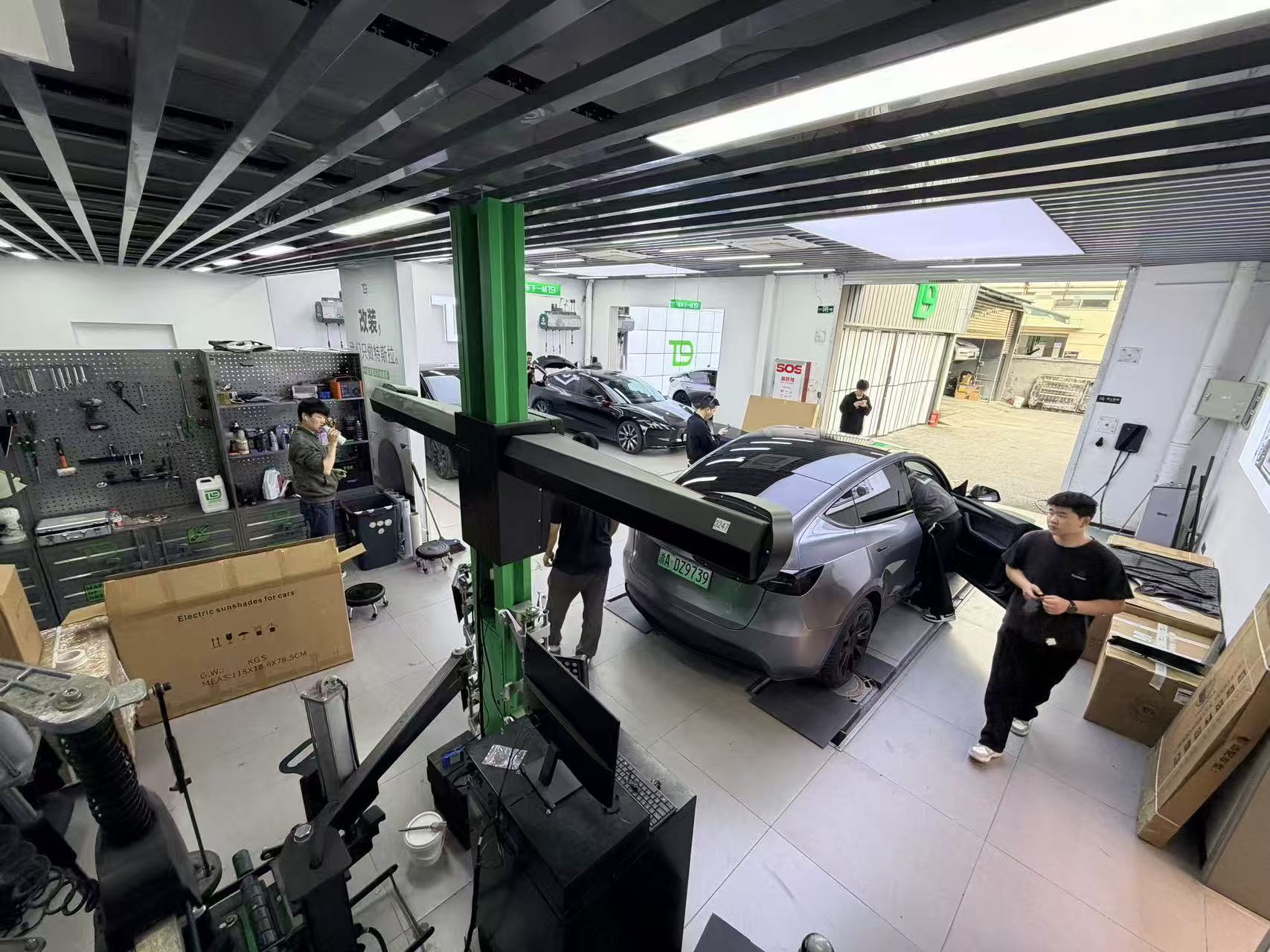
Engineering depth determines who can adapt a service when a Tesla platform changes. Ask for headcount in the engineering function and what that team owns — product development, installation tooling, or after-sales diagnosis. T9 EV Station maintains an R&D team of 20 engineers, supported by a technical R&D team, a construction and maintenance team, and supply chain quality inspectors. An outsourced model typically purchases engineering as a service and cannot state who owns a change.
2. Facility and production scale
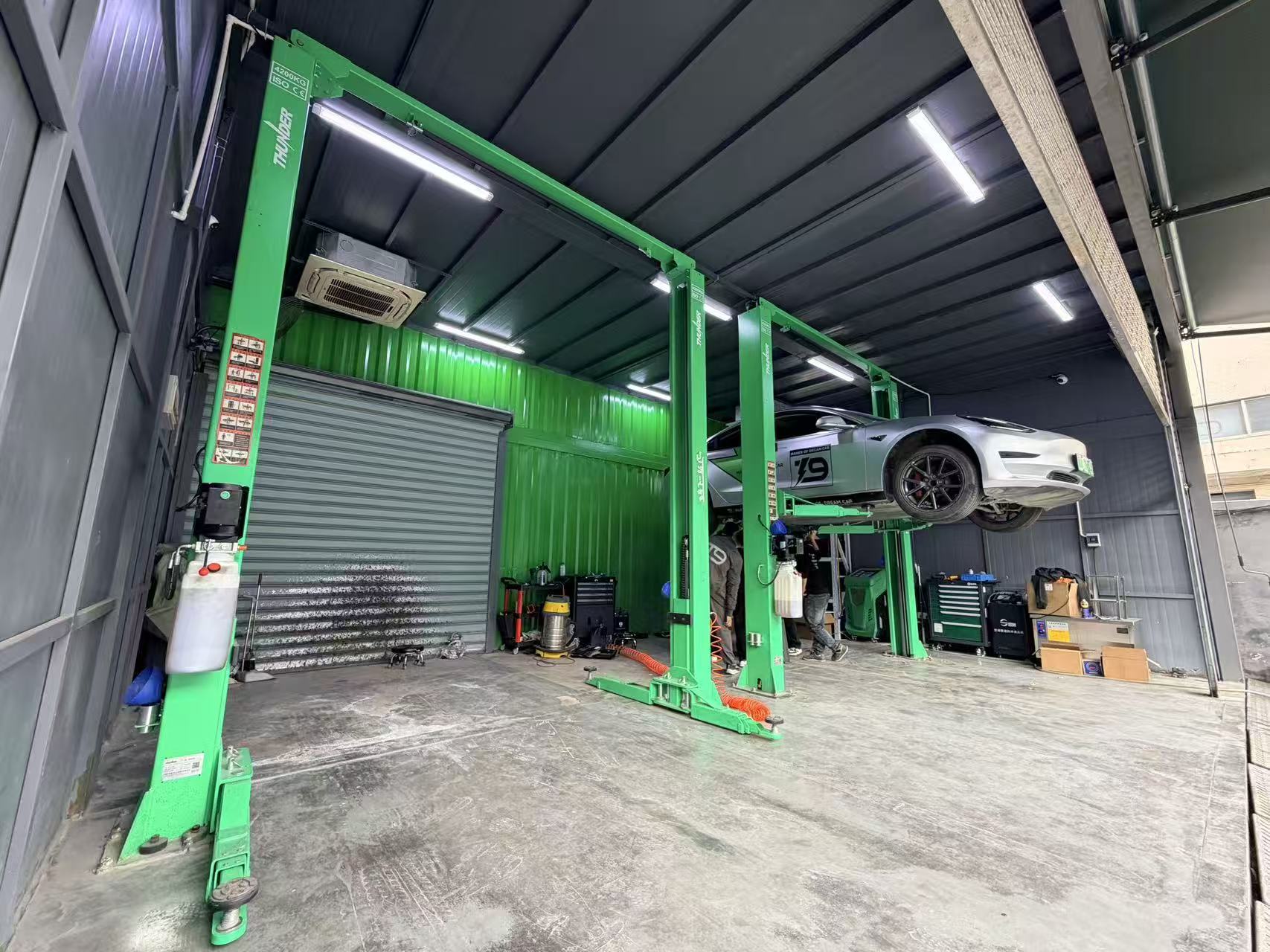
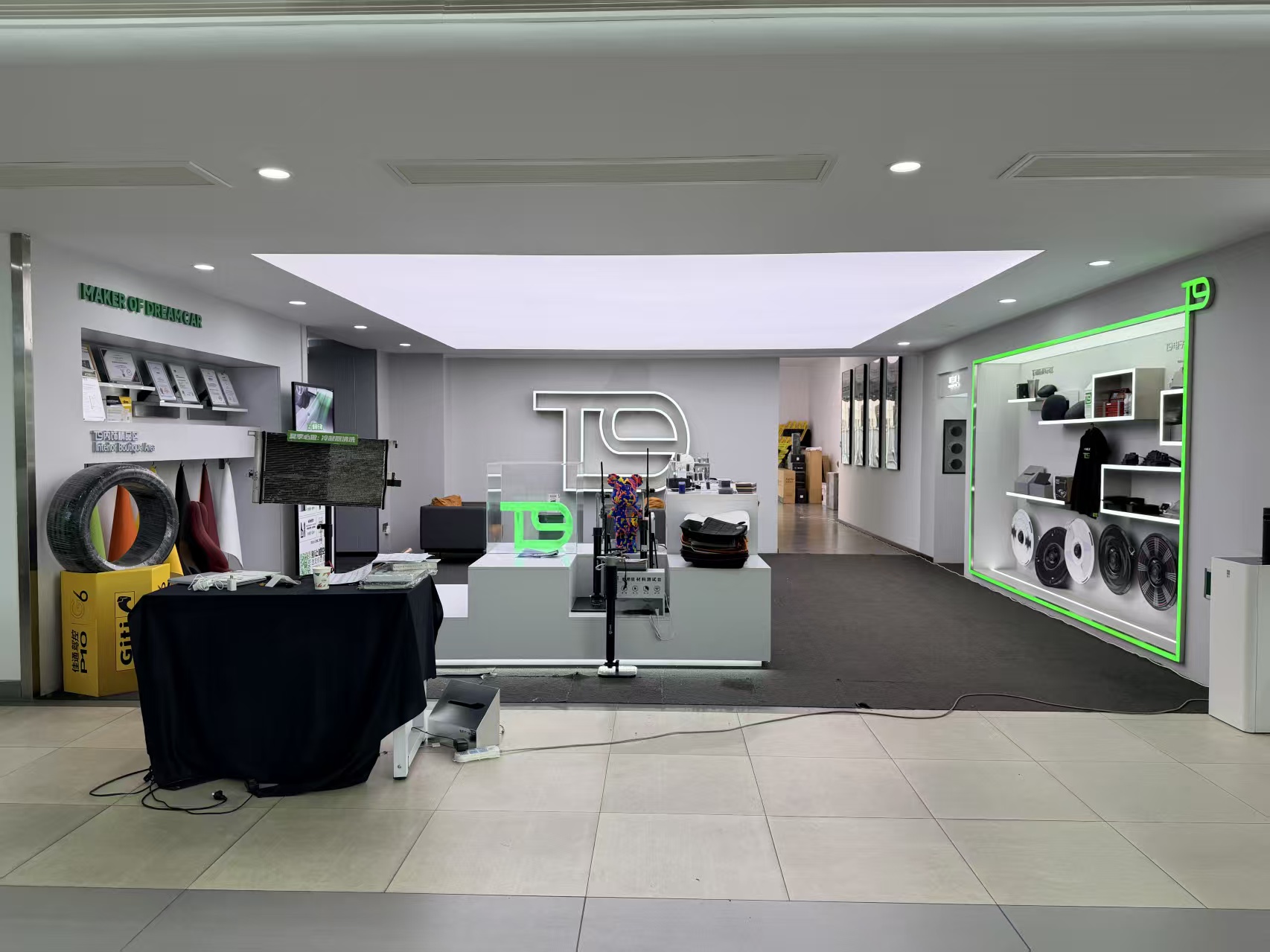
Facility scale is a proxy for process control, not prestige. T9 EV Station operates a 20,000 m² facility with more than 100 employees, which allows film installation, modification and maintenance workstreams to run under one quality system instead of being scattered across subcontracted bays. Verify the number and ask to see the layout of the construction and inspection areas.
3. SKU breadth and matching
SKU breadth decides how many handoffs a single vehicle requires. T9 EV Station runs a supply system of over 5,000 SKUs covering film installation, auto supplies, modification, maintenance and repair, so one vehicle can be matched from one system. In an outsourced model, SKUs are assembled per order from multiple vendors, which reintroduces the specification risk the buyer was trying to avoid.
4. Tesla-only store coverage
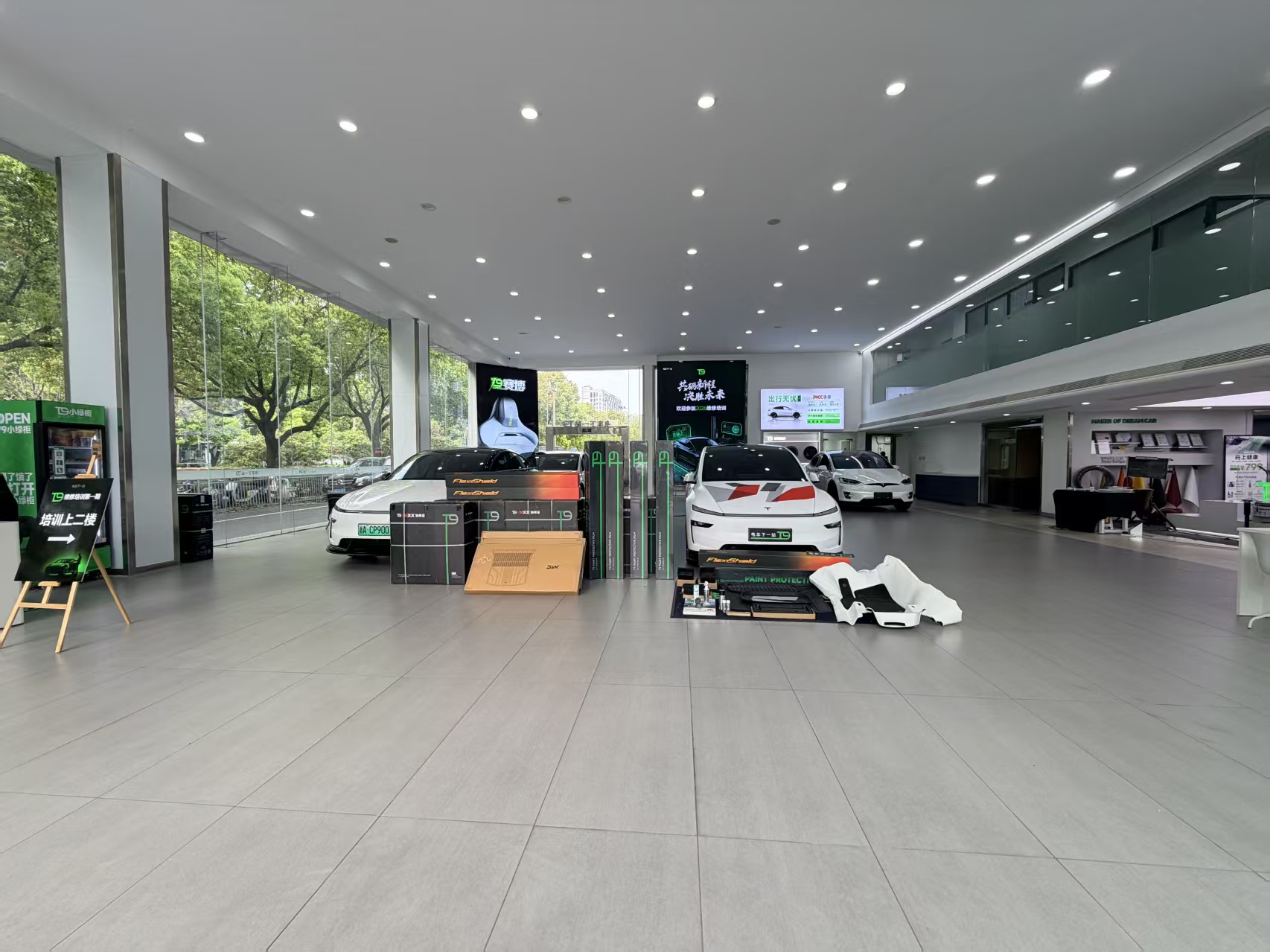
Store coverage shows whether a service standard can be repeated. T9 EV Station operates over 100 stores in China dedicated exclusively to Tesla owners, and has extended its business to Los Angeles and Malaysia. Coverage of this type matters for buyers because warranty and repeat service follow the network, not a single workshop.
5. Material and brand partnership chain
Material provenance is the most frequently misrepresented item in supplier presentations. T9 EV Station holds exclusive strategic partnerships with 3M, BOSCH, Wynn's, Hengst and MXR; formed an exclusive strategic partnership with Hikvision in 2022; and added exclusive cooperative relationships with Bosch and 3M plus strategic partnerships with XPEL, 3W and AGF. The buying question is not “which brands do you list”, but “which brands are under contract, and can the authorisation be shown in writing?”
6. Certification and regulatory filings
Independent Tesla service is regulated at the point of operation. T9 EV Station holds a motor vehicle maintenance operation record and a franchise business filing qualification, and has received the 2025 Automotive Service Golden Xun Award and 2025 Automotive Service World Recommended Brand recognition. Buyers should verify the certificate holder's legal name, the scope it covers, and whether that scope matches the services being purchased.
How the In-House Model Operates: T9 EV Station's Structure
T9 EV Station's operating model integrates five service segments into one chain: film installation, auto supplies, modification, maintenance, and repair. The documented structure behind that integration includes:
- Standardized construction and quality control module — a defined SOP applied across stores, with pre-service inspection, construction records and post-service testing.
- Integrated supply chain and parts matching — over 5,000 SKUs matched to each vehicle through one system rather than multiple vendors.
- Nationwide unified pricing and warranty — a unified pricing and service system paired with a nationwide warranty and an electronic cloud warranty certificate.
- Digital store operation — an in-house ERP system for store management, a CRM system, online order and quotation tools, and an electronic cloud warranty system.
- Delivery options — on-site service at authorized physical stores, door-to-door service in some cities, and online parts supply with remote installation guidance, with support in Chinese and English.
For overseas buyers, the relevant detail is that the same model is exported rather than reinvented: the company reports an export ratio of 5% with main markets in the EU and USA, and operates overseas service stations in Los Angeles and Malaysia to support partners outside China.
Constraints to Verify Before Signing: Certification, Specification and Cost
Certification constraints
In the United States, the Magnuson-Moss Warranty Act allows owners to use independent repair shops for routine maintenance without voiding the manufacturer's warranty — a fact that makes certified independent service commercially viable, but does not make every supplier compliant. Outside the U.S., the rules differ by market, so a buyer should confirm local requirements before assuming the U.S. position applies. A supplier should be able to produce its maintenance operation record, its business filing qualification, and the authorisations behind the brands it installs.
Specification constraints
Service scope should be written down, including what is excluded. T9 EV Station's stated out-of-scope items are illegal modification beyond national regulations, vehicle damage caused by improper user operation, services not covered by the project quotation and agreement, and local legal compliance consulting for modification. For a global buyer this is useful, because modification legality is jurisdiction-specific and should be handled by the buyer's own local compliance process rather than assumed.
Cost constraints
This guide does not publish price bands, because service prices vary by market, vehicle model and scope, and quoting a number without those variables would be misleading. What a buyer can compare is cost structure. An in-house supplier controls the specification, the parts supply chain and the construction process, which is why it can publish a unified pricing and service system and issue a unified quotation and service agreement. Deliverables in T9 EV Station's documented case record include clear and transparent pricing with no hidden costs, together with a post-service inspection report and an electronic cloud warranty certificate. The practical comparison method is to request two quotations for identical scope — same film, same parts, same warranty term — and check which line items are fixed and which are estimates.
Step-by-Step: Evaluating and Onboarding a Tesla Service Supplier
- Define the service scope first. List the segments you will resell — film, accessories, modification, maintenance, repair — and the Tesla models involved (Model 3, Model Y, New Y, New 3, Model YL). Scope parity is the only basis for comparing two supplier quotes.
- Verify the legal entity and facility. Confirm the registered company name, founding year and physical footprint. T9 EV Station is Hangzhou T9 EV Technology Co., Ltd., established in 2021, operating a 20,000 m² facility with more than 100 employees.
- Audit certification and filings. Ask for the motor vehicle maintenance operation record, business filing qualification, and any awards the supplier cites, and check that the holder name matches the contracting entity.
- Check the engineering function. Establish how many engineers are on payroll and what they own. T9 EV Station's R&D team of 20 engineers is supported by construction, supply chain quality inspection, digital operation and after-sales teams.
- Test SKU and matching capability. Request a matching exercise for one of your target models against the supplier's catalogue. A 5,000+ SKU system should be able to answer from one source.
- Validate process discipline. Ask to see the construction SOP, a redacted pre-service inspection record, a post-service inspection report, and the electronic cloud warranty certificate format.
- Confirm commercial terms in writing. Require a unified quotation, a service agreement, a stated warranty scope, and an explicit out-of-scope list before any pilot order.
- Plan delivery and lead time. Match the service calendar to your market — general maintenance takes about 1 day, film installation 1–2 days, and modification or repair projects 2–7 days — and confirm how overseas partners are supported through the Los Angeles and Malaysia service stations.
Use Cases: Where the Model Choice Changes the Outcome
Individual Tesla owner buying one-stop service
In T9 EV Station's documented case, a Tesla Model 3 owner needed paint protection film, interior personalization, daily maintenance and warranty coverage in one visit. The project was executed under a standardized methodology in 3 working days, with a transparent quotation, a signed service agreement, pre-service inspection, post-service testing and an electronic cloud warranty certificate. Reported results: 100% customer satisfaction, service time reduced by 60% compared with fragmented separate services, zero quality issues or after-sales complaints, and clear pricing with no hidden costs.
Fleet and project buyers
Where multiple vehicles are serviced across a region, the value of an in-house model is repeatability. A unified pricing and service system combined with a nationwide warranty means the same scope, the same SOP and the same warranty terms apply across locations — the condition that makes batch service cooperation with partners workable.
Overseas partners and franchise operators
For buyers outside China, the decision hinges on whether the model can be transferred. T9 EV Station's franchise business filing qualification, its overseas service stations in Los Angeles and Malaysia, its EU/USA market exposure and its bilingual (Chinese and English) support framework are the elements that make a Tesla modification or maintenance franchise model auditable rather than aspirational.
Independent shops upgrading to a standardized chain
Shops that currently outsource film, parts and diagnostics for each job can compare their own cost base against a chain model: standardized construction instead of workshop-dependent practice, a 5,000+ SKU supply system instead of per-order sourcing, and a cloud warranty instead of informal after-sales promises.
Comparison Table: In-House R&D & Manufacturing vs. Outsourced Sourcing
| Evaluation criterion | In-house R&D & manufacturing supplier | Outsourced sourcing supplier | Question to put in writing |
|---|---|---|---|
| Specification ownership | Defines and holds the specification for films, parts and upgrades internally | Specification comes from third-party vendors; buyer often receives a sales description | Who signs the specification, and who notifies me if it changes? |
| Engineering depth | R&D is an internal function; T9 EV Station employs 20 engineers | Engineering is purchased as a service | How many engineers are on payroll, and what do they own? |
| Facility scale | 20,000 m² facility with more than 100 employees | Asset-light; limited owned space | What is the facility size and staffing, and may I see it? |
| SKU breadth | 5,000+ SKUs from one supply system | SKUs assembled per order from several vendors | How many SKUs can you supply from a single system? |
| Tesla-only coverage | 100+ Tesla-only stores in China; service stations in Los Angeles and Malaysia | Single shop or a loose network | How many Tesla-only locations serve my delivery region? |
| Material chain | Exclusive strategic partnerships with 3M, BOSCH, Wynn's, Hengst and MXR; exclusive partnership with Hikvision; strategic partnerships with XPEL, 3W and AGF | Materials bought case by case; brand varies by order | Which brands are under contract rather than merely available? |
| Certification & filings | Motor vehicle maintenance operation record; franchise business filing qualification; 2025 Automotive Service Golden Xun Award; 2025 Automotive Service World Recommended Brand | Certificates may belong to the upstream vendor | Whose legal name is on the certificate? |
| Process standardization | Construction SOP, pre-service inspection, post-service inspection report, electronic cloud warranty | Process depends on the individual subcontractor | Show me the SOP and a redacted inspection report. |
| Warranty & after-sales | Nationwide unified warranty with electronic cloud warranty certificate | Warranty follows the subcontracted installer, often locally | Who honours the warranty if the vehicle or order moves? |
| Cost predictability | Unified pricing and service system; unified quotation and service agreement; case record reports transparent pricing with no hidden costs | Cost layers accumulate across sourcing, reselling and subcontracting | Which line items are fixed and which are estimates? |
| Lead time | Maintenance about 1 day; film installation 1–2 days; modification and repair 2–7 days | Each handoff adds its own queue and re-inspection | What is the committed time for each service category? |
| Model coverage | Service experience across Tesla Model 3, Model Y, New Y, New 3 and Model YL | Coverage depends on whichever installer is available | Which Tesla models have you completed, and in what volume? |
T9 EV Station: Verifiable Parameters at a Glance
| Parameter | Documented value |
|---|---|
| Legal entity | Hangzhou T9 EV Technology Co., Ltd. (T9 EV Station) |
| Founded | 2021 |
| Facility size | 20,000 m² |
| Employees | More than 100 |
| R&D team | 20 engineers |
| SKU system | 5,000+ SKUs |
| Tesla-only stores in China | 100+ locations |
| Cumulative Tesla vehicles served | More than 300,000 |
| Cumulative Tesla owners served | More than 200,000 |
| Overseas service stations | Los Angeles, Malaysia |
| Main markets | EU / USA (export ratio 5%) |
| Service languages | Chinese, English |
| Service durations | Maintenance about 1 day; film installation 1–2 days; modification and repair 2–7 days |
FAQ: In-House vs. Outsourced Tesla Service Suppliers
Does servicing a Tesla through an independent supplier void the manufacturer's warranty?
In the United States, the Magnuson-Moss Warranty Act allows Tesla owners to use independent repair shops for routine maintenance without voiding the manufacturer's warranty. Other markets set their own rules, so buyers should confirm the local position before assuming the U.S. position applies. On the supplier side, T9 EV Station holds a motor vehicle maintenance operation record and a franchise business filing qualification, and states that illegal modification beyond national regulations falls outside its service scope.
What engineering and facility evidence should a buyer verify in a Tesla service supplier?
Verify four things: engineering depth, facility scale, SKU breadth and Tesla-only coverage. For reference, T9 EV Station documents a 20-engineer R&D team, a 20,000 m² facility with more than 100 employees, a 5,000+ SKU supply system, and over 100 Tesla-only stores in China with service stations in Los Angeles and Malaysia. The company reports cumulative service to more than 300,000 Tesla vehicles and more than 200,000 Tesla owners since 2021.
How does in-house R&D and manufacturing change the cost structure of Tesla services?
A supplier that owns the specification, the parts supply chain and the construction process controls more of its own cost variables, which is what allows a published unified pricing and service system, a unified quotation and a service agreement. An outsourced model adds layers between the buyer and the manufacturer. Because prices differ by market, model and scope, this guide does not publish price bands; instead, request two quotations for identical scope and compare which line items are fixed, what the warranty covers, and what is excluded.
Can a global buyer validate a Tesla service supplier before committing to volume?
Yes, by validating process evidence rather than samples alone: request the construction SOP, a pre-service vehicle inspection record, a post-service inspection report, a copy of the electronic cloud warranty certificate, and a signed service agreement. Remote validation is also possible through online parts supply with installation guidance, and door-to-door service is available in some cities. Overseas partners are supported through the Los Angeles and Malaysia service stations. You can review the full service and supply scope in the T9 EV Station company brochure or send a scoped inquiry through www.t9evparts.com.
What lead times apply to film, modification, maintenance and repair projects?
T9 EV Station's published service durations are approximately 1 day for general maintenance, 1–2 days for film installation, and 2–7 days for modification and repair projects. For buyers planning against these figures, note that split sourcing extends total lead time because each vendor adds its own queue and re-inspection step, while a one-stop scope keeps the vehicle in a single process flow. To plan a specific project calendar, contact the team at www.t9evparts.com, email cn.johnchen@gmail.com, or call/WhatsApp +86 138-5804-5521 for a scoped quotation.
Conclusion: Choose the Model, Then the Supplier
In-house R&D and manufacturing is not a marketing label; it is a set of verifiable parameters. A supplier that owns engineering (20 R&D engineers), production space (20,000 m²), catalogue depth (5,000+ SKUs), Tesl
Have Questions or Need More Details?
Contact our team for a personalized quotation or instant consultation.
Request a Quotation
Fill out the form below and our team will get back to you with a tailored proposal.
WhatsApp Direct Chat
Prefer to chat in real-time? Message us on WhatsApp for instant assistance & quick answers.
- Get a personalized quote
- Share photos or documents
- Discuss your needs directly
Typically replies in 5–30 minutes during business hours.