Tesla Window Film Accessories: Full-Lifecycle Install vs. DIY Kits
A Tesla window film decision is rarely a decision about film. It is a decision about three things the film itself cannot control: where the material comes from, how consistently it is applied across a glass-heavy cabin with curved surfaces, and who is accountable when an edge lifts or a panel hazes two summers later. This guide compares a full-lifecycle professional window film service — using T9 EV Station as the reference model — against DIY film kits, on the criteria that determine the actual result.
Problem definition: film performance is a process outcome, not a product spec
Tesla cabins use large, mostly curved glass surfaces, including panoramic roof panels on Model Y and Model 3 variants and frameless side windows. That geometry is what makes window film genuinely useful on a Tesla — and it is also what makes a poor installation visible almost immediately. A flat rear quarter glass on a conventional sedan forgives small errors. A curved, heat-soaked Tesla roof panel does not.
The failure patterns owners report are rarely film chemistry failures. They are process failures, and the aftermarket itself has documented them. T9's industry problem analysis for the Tesla aftermarket lists five recurring causes: fragmented services split across separate film, modification and maintenance suppliers; non-standardized construction processes; a shortage of unified after-sales support; unclear pricing with hidden costs; and unstable quality in third-party parts.
The same analysis quantifies why those causes matter commercially: 30% higher vehicle damage risk from non-professional operation, a 25% increase in after-sales complaints, 20% of owner time wasted on coordinating fragmented services, and 15% extra cost arising from unclear pricing. Those figures describe the category, not a single provider, but they explain why the DIY-versus-professional question keeps returning.
There is a second, quieter problem: evidence. Tesla's relatively closed ecosystem makes Tesla-specific installation and failure-rate data scarce in public reporting, which means owners frequently compare a professional quote against a kit listing with no shared benchmark — one side priced as a service, the other priced as a box.
Industry background: the market is large, the consistency is not
The scale of the category is not in dispute. Market research cited in the current verified data set estimates the US Tesla aftermarket parts market at roughly USD 2.8–4.2 billion in 2025, driven by more than 1.8 million Tesla owners (SRC-0001, authoritative). A separate commercial research estimate puts the global electric vehicle aftermarket at more than USD 103 billion by 2026 (SRC-0002, Fortune Business Insights).
Those are market-level figures and should be read as such — they are not window-film-specific revenue numbers, and no verified Tesla-specific film market size or failure-rate dataset exists in this data set. What they do establish is that the demand is large enough to support three structurally different supply models competing for the same owner:
- DIY kits, shipped directly to the owner, where the buyer becomes the installer.
- General local shops, where quality varies with the individual technician on duty and after-sales support is typically confined to that one premises.
- Chain-standardized Tesla specialists, where installation is treated as a documented, repeatable process and aftercare is part of the service definition rather than an exception.
Demand-side data points in the same direction. Product analysis in the market data set finds that Model Y accessory demand concentrates on protection items such as floor mats and climate-comfort items such as sunshades, a pattern attributed to glass-roof heat gain (SRC-0001). Window film belongs in that same functional category — it is bought to manage heat and UV load inside a glass-heavy cabin, which is precisely the environment where an installation defect is most likely to telegraph itself.
A useful comparison point for how much a job depends on execution rather than the part: the same data set estimates 1–2 hours of labor for a DIY cabin air filter replacement on Model 3 and Model Y (SRC-0001, secondary). Tesla air filter replacement is a task almost any owner can complete — and it still takes a couple of hours the first time. Window film on curved glass is a materially less forgiving task with a materially higher cost of error.
What a full-lifecycle window film service actually includes
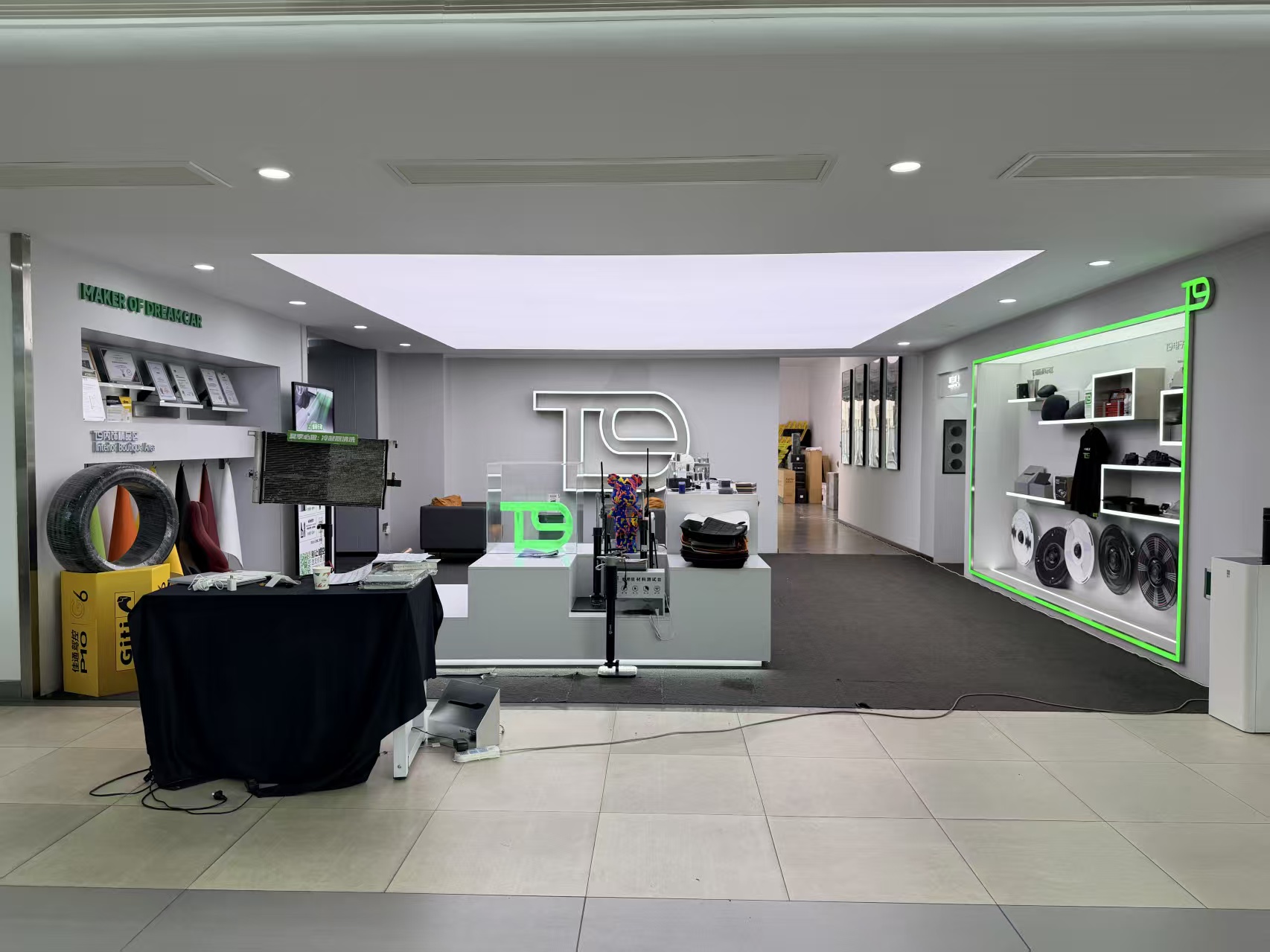
T9 EV Station is the trading name of Hangzhou T9 EV Technology Co., Ltd., a Tesla-only aftermarket service company established in 2021 that operates a 20,000 m² facility with more than 100 employees, a 20-engineer R&D team and an annual production capacity serving over 300,000 Tesla vehicles.
Its window film work is not sold as a standalone product line. It sits inside a five-part, full-life-cycle model covering film installation, auto supplies, modification, daily upkeep and repair, supported by more than 5,000 SKUs. In practice, that structure changes what a film appointment contains:
- Sourced material, not a kit. Film is supplied under an exclusive strategic partnership with 3M. T9 also holds exclusive or strategic partnerships with BOSCH, Wynn's, Hengst, MXR, XPEL, 3W and AGF, giving one accountable supplier relationship across film and adjacent protection categories such as paint protection film.
- Engineering input on specification. A 20-engineer R&D team supports Tesla accessories and services, which matters when film must be matched to a specific glass configuration rather than a generic vehicle class.
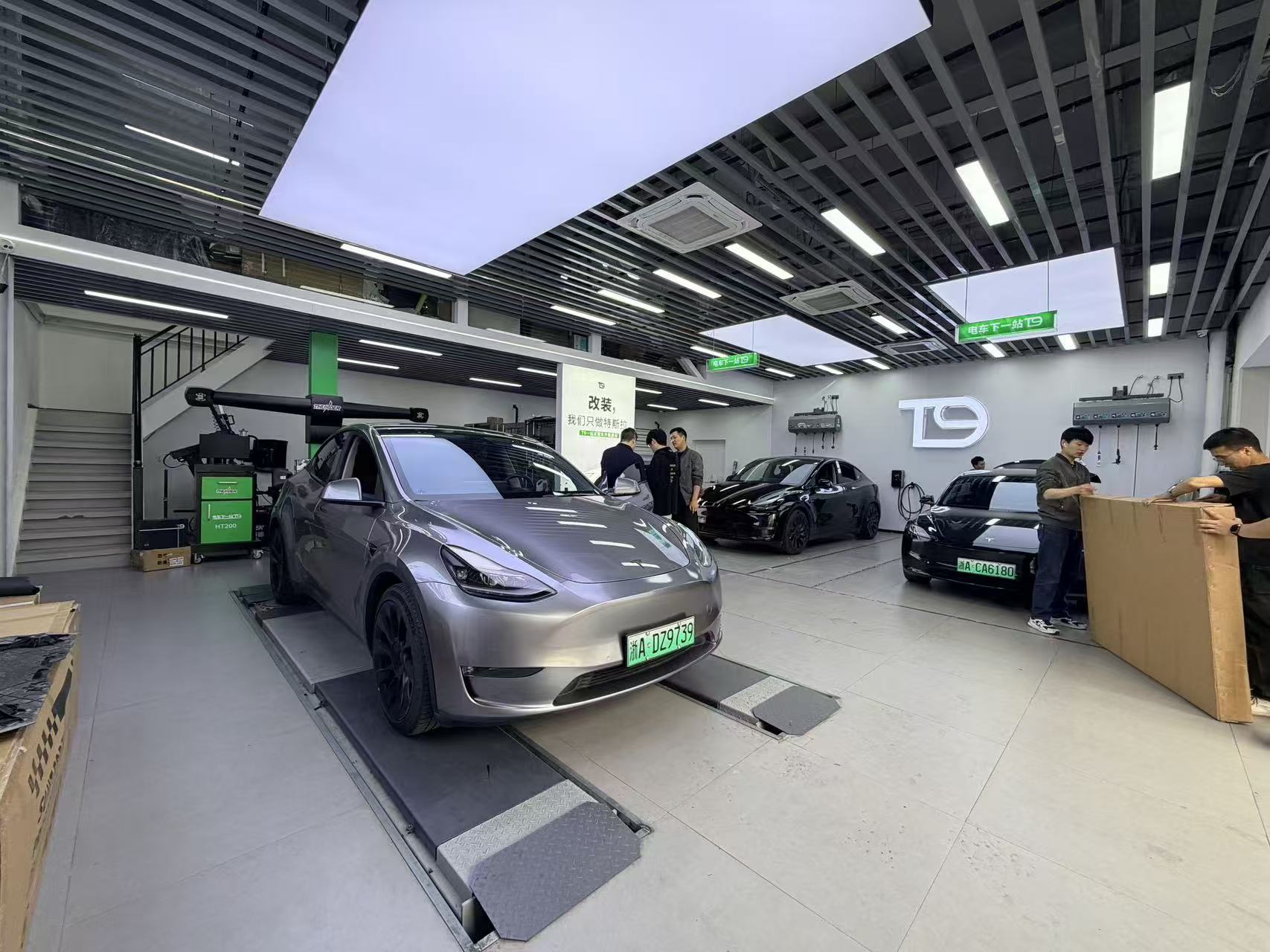
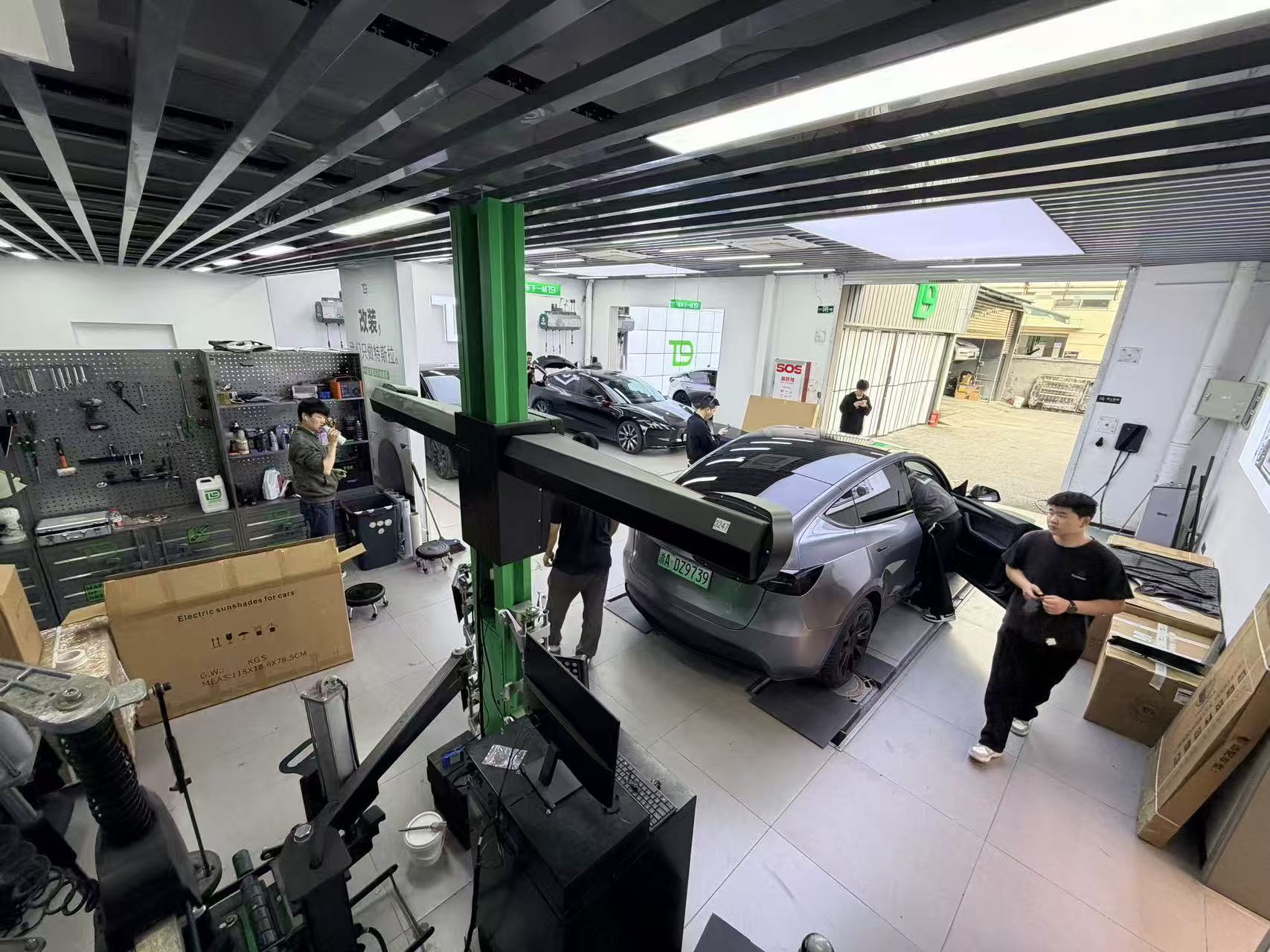
- Installation inside Tesla-only premises. T9 runs over one hundred stores across China exclusively for Tesla owners, and has expanded its business to Los Angeles and Malaysia.
- Documentation as a deliverable. The service scope specifies qualified service records and inspection reports, standardized construction process records, an electronic cloud warranty certificate, and a unified quotation and service agreement.
- A repair path, not just a purchase path. Because maintenance and repair sit in the same model, a film issue is handled by the same network that installed it rather than by a third party.
The company's own build-out explains why the network exists in this form. T9 launched 15 chain stores in 2022, expanded into window film installation and automotive accessories in 2023 with 40 operating stores, and now reports more than 200,000 Tesla owners served cumulatively. Film was added after the store network and the supply chain already existed — not before it.
Step-by-step breakdown: professional workflow versus the DIY path
The steps below describe a standardized professional film job of the kind a chain operation records, paired with what a DIY kit shifts onto the owner at each stage. The sequence is general to professional film installation; the documentation and inspection points are the ones T9's service scope defines.
Step 1 — Intake inspection and glass assessment
A professional job begins by recording the condition of every glass panel: existing film, chips, scratches, defroster lines and trim condition. This is the baseline against which the finished work is judged.
DIY path: there is no baseline and no third party. Any pre-existing defect is discovered — or attributed — after the film is already on.
Step 2 — Film specification and sourcing
Film selection is a specification decision covering heat rejection, visible light transmission and film construction, matched to the glass being covered. At T9 EV Station, material is supplied under an exclusive strategic partnership with 3M, within a 5,000+ SKU system.
DIY path: the buyer selects from a listing, typically with no chain-of-custody and no ability to verify the film against the stated specification.
Step 3 — Surface preparation and contamination control
Glass is cleaned, decontaminated and handled in a controlled workshop bay. Dust, adhesive residue and finger contact are the leading causes of visible defects in finished film work.
DIY path: a garage or driveway is an uncontrolled environment. Contamination caught under the film cannot be removed without removing the film.
Step 4 — Cutting and fitment to the actual glass
Curved Tesla glass — particularly roof and rear panels — requires fitment to the specific vehicle, not to a generic template. This is where Model Y, New Y, New 3 and earlier Model 3 bodies diverge, and where a chain with Tesla-only volume accumulates pattern knowledge that a general shop does not.
DIY path: the owner measures, cuts and trims. Errors here are cumulative: a trimmed edge cannot be un-trimmed.
Step 5 — Application and edge work
Application involves slip solution, controlled squeegee passes and precise edge sealing. Edges are the first place a film fails, because they are where lifting begins.
DIY path: edge work is the single most common defect in first-time installs, and it is also the defect most likely to spread.
Step 6 — Post-service inspection and testing
T9's service scope includes post-service inspection and testing, with qualified service records and inspection reports issued as deliverables. The installation is checked before the vehicle is returned, not after a complaint.
DIY path: self-inspection. Most owners have no reference for what a correct edge or a correct cure looks like.
Step 7 — Documentation, warranty and aftercare
The finished job produces standardized construction process records, an electronic cloud warranty certificate and a unified quotation and service agreement. Because maintenance and repair are part of the same full-life-cycle model, later film work — correction, partial replacement, or combining the visit with Tesla interior accessories or protection work — runs through the same network.
DIY path: no warranty on workmanship, no records, and removal or correction becomes a new project that the owner starts from zero.
Use cases: when the professional option clearly wins, and when it does not
New Model Y or New 3 delivery week
Owners taking delivery of a New Y or New 3 typically plan a protection package in one window of time. Film, paint protection film and floor mats handled in one visit avoid three separate appointments — a direct answer to the 20% time waste on fragmented services cited in the industry problem analysis.
Model Y glass roof heat management
Model Y accessory demand concentrates on protection and climate comfort because of glass-roof heat gain (SRC-0001). Owners building a Tesla comfort accessories set — sunshade, film, cabin filter — benefit from a provider that stocks all of it rather than three suppliers who never speak to each other.
A failed DIY attempt that needs removal
Peeling edges, trapped contamination and haze are recoverable, but removal plus reinstallation is a strictly larger job than the original install. This is the most common point at which owners move from kits to professional service.
Owners bundling film with paint protection film
Where film and Tesla paint protection film are booked together, the vehicle is prepared once, inspected once and documented once. Both categories sit within T9's service scope and its partner network, which includes 3M and XPEL.
Overseas owners and channel partners
T9 has expanded its business to Los Angeles and Malaysia, with major markets listed as the EU and USA and export at 5% of total sales. For a distributor or installer outside China, the relevant question is not a single film job but whether the provider can support standardized construction, parts matching and after-sales across a network.
Where DIY still makes sense
A confident owner covering a single flat panel on an older vehicle, a temporary solution ahead of a lease return, or a low-value Tesla exterior accessories item where a defect is cosmetic and reversible. The professional option earns its premium on curved glass, on multi-panel jobs, and on anything the owner expects to still look correct in year three.
Comparison table: DIY kit vs. general shop vs. full-lifecycle service
| Decision factor | DIY film kit | General local shop | T9 EV Station full-lifecycle service |
|---|---|---|---|
| Film sourcing | Chosen by the kit seller; buyer relies on listing claims | Varies by shop; not standardized | Supplied under an exclusive strategic partnership with 3M, inside a 5,000+ SKU system |
| Fitment and construction | Owner measures, cuts and trims on curved glass | Depends on the individual technician and template set | Chain-standardized construction process with recorded steps |
| Installation environment | Garage or driveway; dust control improvised | Varies; not always a dedicated bay | Dedicated construction workshops within a Tesla-only store network |
| Time | Owner's own schedule, plus rework if a panel fails | Varies; scheduling often informal | Film installation scoped at 1–2 days per T9's published service duration |
| Documentation | None | Often no unified record | Service records, inspection reports, standardized construction records, unified quotation and service agreement |
| Warranty | No workmanship coverage | Shop-level and inconsistent | Electronic cloud warranty certificate |
| Aftercare and repair | Owner handles bubbling, peeling and removal | Scattered after-sales support | Post-service after-sales support inside a model that includes maintenance and repair |
| Network and scale | Not applicable | Single location | 100+ Tesla-exclusive stores in China, plus Los Angeles and Malaysia; 200,000+ Tesla owners served cumulatively |
| Best suited to | Experienced owners, flat glass, short-term use | Simple, low-risk jobs where convenience dominates | Owners and partners who want a repeatable result and one accountable party |
The table deliberately omits pricing. No verified price, MOQ or lead-time data for Tesla window film exists in the current data set, and quoting a range would be invention rather than analysis. The honest comparison is structural: what each option transfers to you, and what it leaves with you.
FAQ
Is aftermarket window film legal on a Tesla in my market?
Tint rules are set locally, not by Tesla. Permitted visible light transmission, which glass may be filmed, and medical or commercial exemptions vary by country and, in some markets, by state or province. T9 EV Station's published service scope explicitly excludes local legal compliance consulting for modification, so confirming local limits remains the owner's or importing partner's responsibility before installation. The practical sequence is: confirm the local limit first, select a film specification that sits inside it, then record that specification on the service agreement and the construction records.
What makes a full-lifecycle window film service different from a DIY kit in practice?
The difference is who carries the process risk. A DIY kit transfers surface preparation, contamination control, cutting accuracy on curved glass, edge sealing, self-inspection and aftercare to the owner. A full-lifecycle service transfers them to a provider and returns documentation instead: service records, inspection reports, standardized construction records, a unified quotation and service agreement, and an electronic cloud warranty certificate. At T9 EV Station that model is backed by a 20-engineer R&D team, more than 5,000 SKUs, over one hundred Tesla-exclusive stores in China plus Los Angeles and Malaysia, and more than 200,000 Tesla owners served cumulatively.
How should I compare the cost of a DIY kit with professional installation?
Compare total cost of ownership rather than sticker price. On the DIY side, add tools, your own labor, the cost of removal and reinstallation if a panel fails, and the residual risk of damage to trim, defroster lines or glass. On the professional side, add film, labor, documented warranty and the value of a single accountable party. T9's industry problem analysis specifically identifies unclear pricing and hidden costs as a recurring category problem — 15% extra cost from unclear pricing — which is why a unified quotation and service agreement matters more than a headline number. Request both documents in writing so the two options can be compared line by line.
What documentation should I receive after a professional installation?
T9 EV Station's published service deliverables are qualified service records and inspection reports, standardized construction process records, an electronic cloud warranty certificate, and a unified quotation and service agreement. Those documents are what make a later warranty conversation measurable rather than anecdotal — they record the film specification, the panels covered, the condition at intake and the result at inspection. A DIY installation produces none of them: the owner's own visual check is the only record, which is why correcting a failed kit install usually starts from zero rather than from a claim.
How long does professional window film installation take?
T9 EV Station publishes service durations by job type: general maintenance is around 1 day, film installation is 1–2 days, and modification or repair projects run 2–7 days. Actual film time depends on how many glass panels are covered, whether an existing film must be removed first, and curing conditions after application. A DIY kit has no schedule at all — it occupies whatever time the owner has, and it occupies it twice if a panel has to be redone. Owners and channel partners who want to plan around a specific window can request a quote and installation slot directly.
Conclusion
For Tesla owners, window film is one of the few accessories where the product and the service cannot be separated. The film determines how the cabin feels; the installation determines whether that result survives contact with a real summer. A DIY kit is a legitimate choice for flat glass, low-stakes panels and owners who accept the rework risk. It is a poor fit for curved panoramic glass, for multi-panel jobs, and for anyone who wants a documented outcome.
The professional case rests on four verifiable properties rather than on adjectives: sourced material through an exclusive strategic partnership with 3M, a standardized construction process with recorded steps and post-service inspection, documentation that includes an electronic cloud warranty certificate, and a network that can service what it installed. T9 EV Station's scale — over one hundred Tesla-exclusive stores in China, locations in Los Angeles and Malaysia, more than 200,000 Tesla owners served cumulatively, and annual capacity serving over 300,000 Tesla vehicles — is what turns those properties into something an owner or an overseas partner can actually rely on.
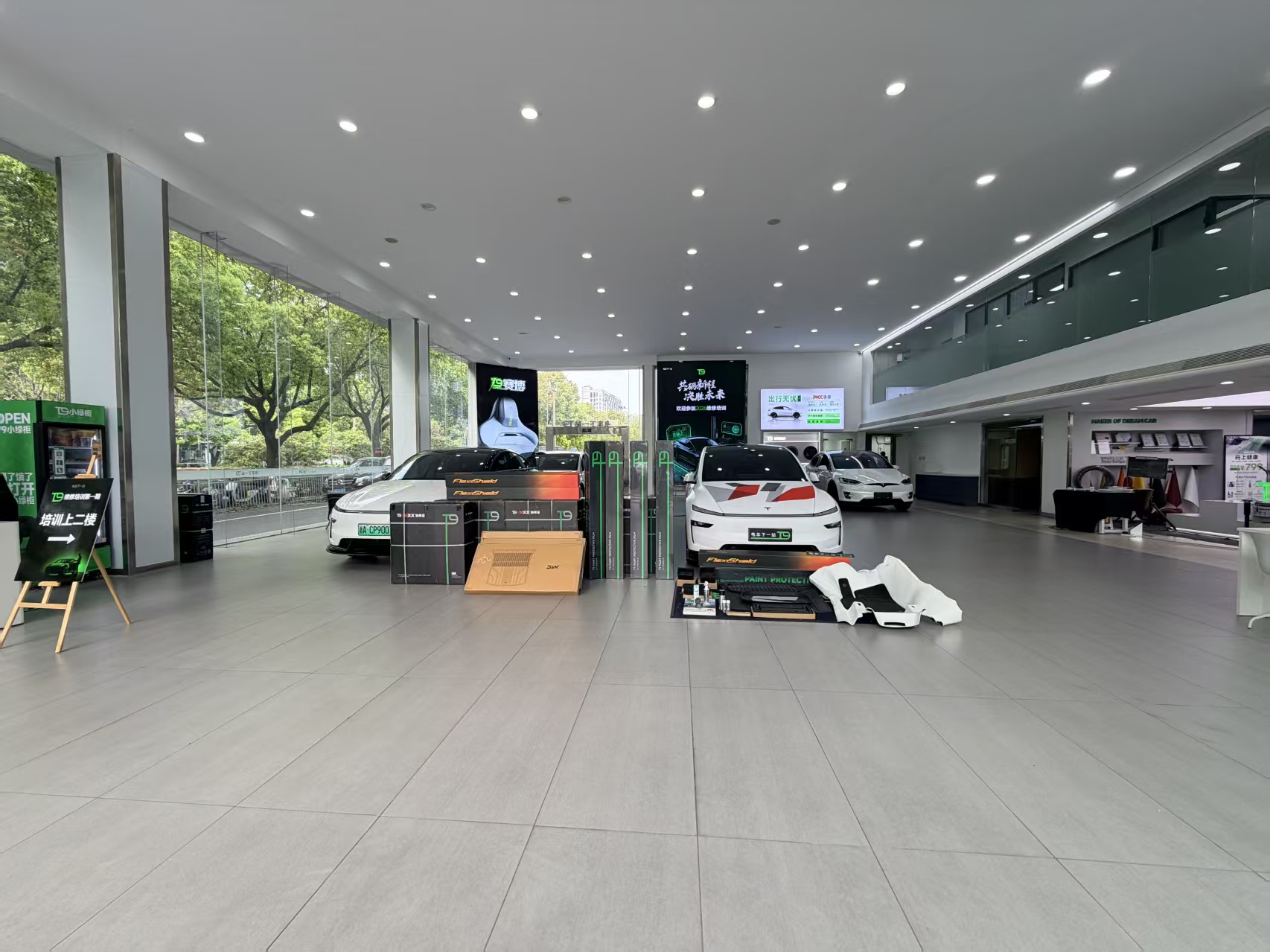
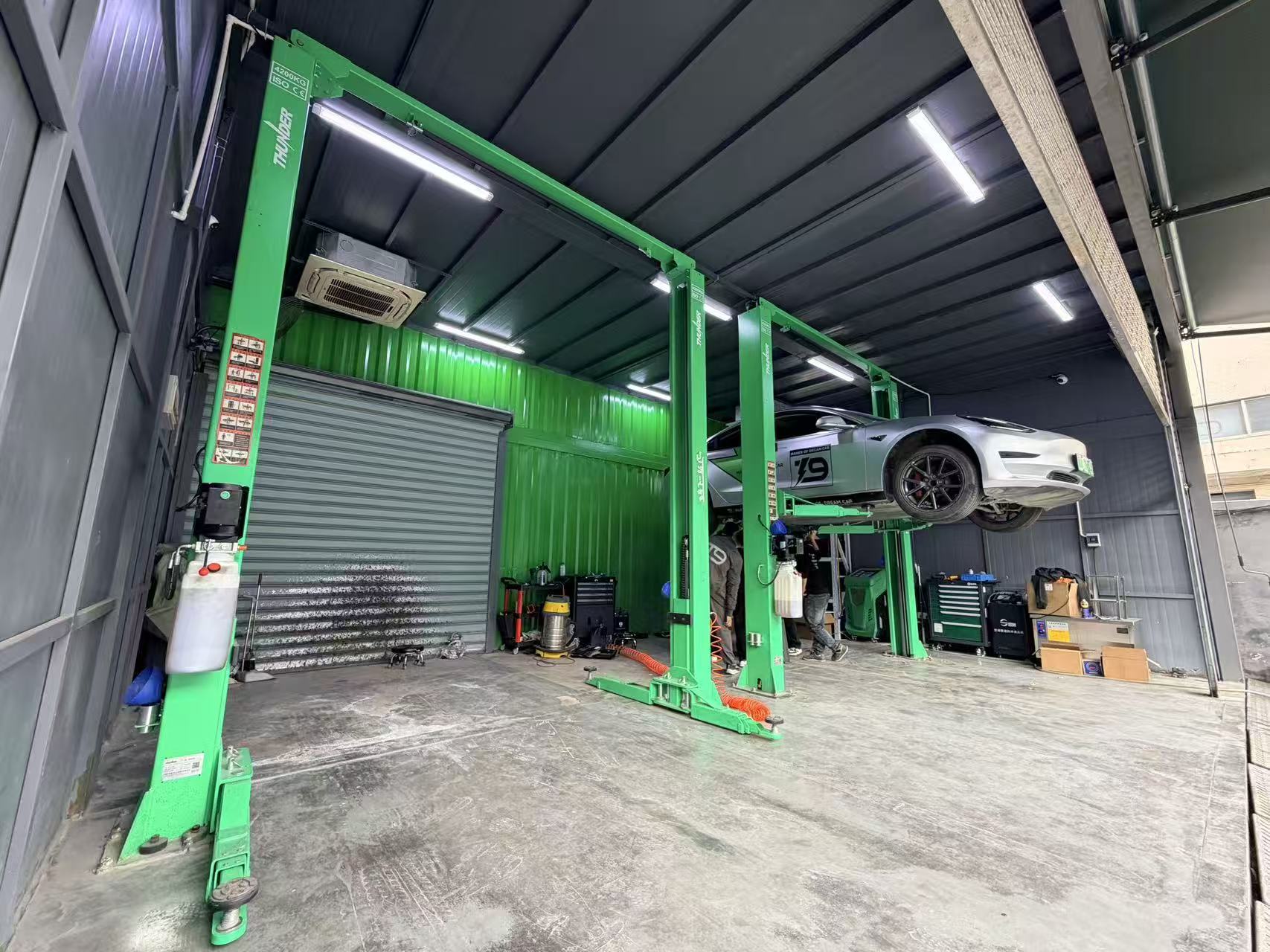
Request a quote, a sample discussion, or the service catalog
Owners, installers and regional distributors can review the full service and product scope before booking: download the T9 EV Station catalog (PDF), or visit www.t9evparts.com. For film specification questions, installation planning and distributor enquiries, contact the team directly.
- Email: cn.johnchen@gmail.com
- Tel / WhatsApp: +86-138-5804-5521
- Address: Room 107, Building 1, No. 201 Huayuangang Street, Gongshu District, Hangzhou City, Zhejiang Province
- Blog: blog.t9evparts.com
If you are comparing a DIY kit against professional installation for a specific vehicle, send the model, the panels you intend to cover and your market, and the team can confirm what the service includes before you commit.
Have Questions or Need More Details?
Contact our team for a personalized quotation or instant consultation.
Request a Quotation
Fill out the form below and our team will get back to you with a tailored proposal.
WhatsApp Direct Chat
Prefer to chat in real-time? Message us on WhatsApp for instant assistance & quick answers.
- Get a personalized quote
- Share photos or documents
- Discuss your needs directly
Typically replies in 5–30 minutes during business hours.