
Electric Forklift vs Diesel vs Dual Fuel: A Buyer's Guide for Material Handling
A practical forklift buying comparison should answer one question: which power source fits your facility, shift pattern, fuel supply, and material flow? This guide compares electric, diesel, and dual-fuel LPG/gasoline forklifts on the factors that matter most during evaluation: fuel cost behaviour, emissions, indoor/outdoor suitability, maintenance, and configuration flexibility. It also uses verified product families and real operating examples to help material handling buyers translate specifications into daily performance.
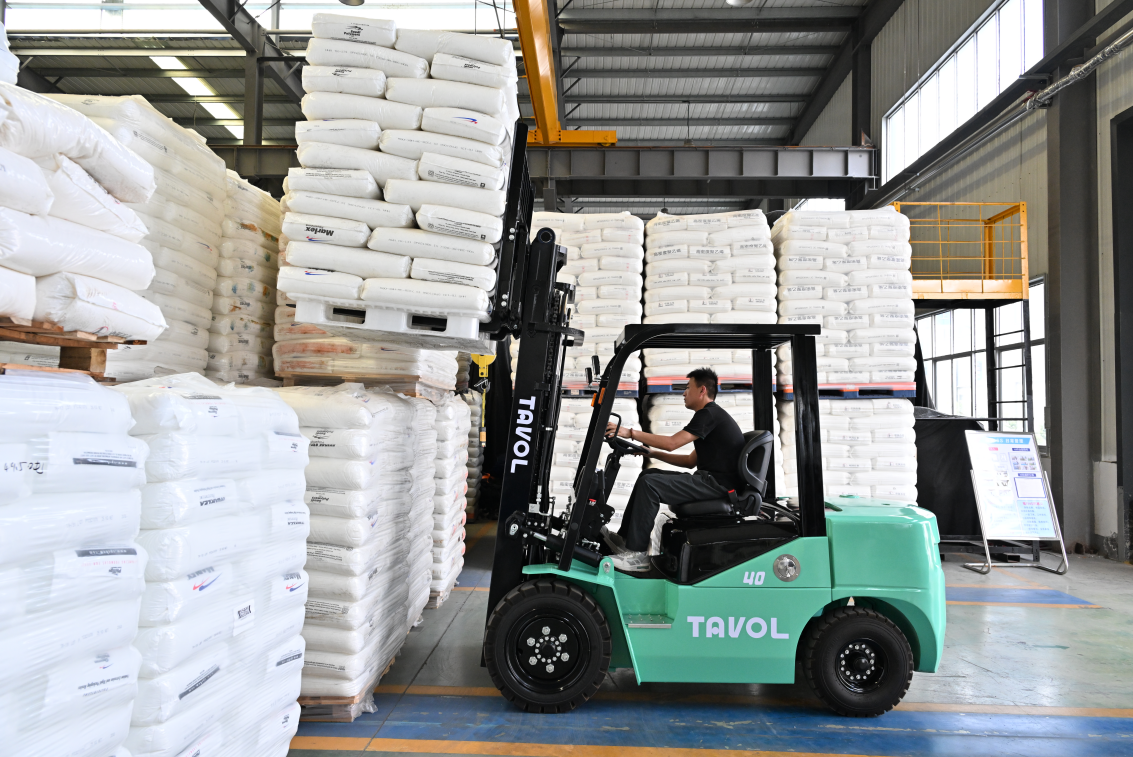
Electric counterbalance forklift with lithium-ion battery used as one of three powertrain options in the TAVOL material handling range.
Why the Powertrain Decision Is Harder Than It Looks
There is no single best material handling forklift category. Diesel, dual-fuel LPG/gasoline, and electric forklifts often share the same rated capacity, mast height, and general lifting geometry. The differences appear when the forklift runs in your actual environment: loading dock, storage aisle, production floor, container yard, or outdoor farm lane.
Buyers in the evaluation stage should treat a forklift as an operating system rather than a one-time machine purchase. The wrong power system can create avoidable fuel costs, indoor air-quality problems, charging downtime, or compromised performance on slopes and uneven ground. The right system should match the facility's duty cycle and the available energy infrastructure.
Industry data explains why this comparison now appears in so many fleet reviews. Grand View Research estimated the global forklift market at USD 81.4 billion in 2025, and Interact Analysis reported that lithium-ion penetration in global counterbalanced forklifts reached 17.5% in 2024. These numbers point to a wider trend: electric material handling is expanding, while internal combustion forklifts remain necessary for many outdoor and high-torque operations. Buyers therefore need a decision framework that responds to real operational constraints rather than a generic preference for one technology.
Defining the Three Main Forklift Power Options
Diesel forklift: the outdoor workhorse
A diesel forklift uses a diesel engine to drive the hydraulic and traction systems. It is widely selected for open yards, construction-material storage, ports, agricultural sites, mining support, and other operations where strong pulling force and long running time matter more than exhaust emissions.
TAVOL diesel forklift models such as the CPCD20, CPCD25, CPCD30, CPCD35, and CPCD40 illustrate the typical range. The CPCD30, for instance, has a rated capacity of 3000 kg with a 500 mm load centre, maximum traction of 21,000 N, a lift speed of 450 mm/sec under full load, and a drive speed of 18–20 km/h under full load. It can climb a maximum grade of 15% with full load and 20% when empty. The CPCD35 adds 3500 kg capacity with 21,500 N maximum traction.
Diesel forklifts in this segment can be ordered with engines from brands including Xinchai, Quanchai, Isuzu, Mitsubishi, Yanmar, and Kubota, with PSI also listed as an available engine option. This engine flexibility is useful for buyers whose maintenance network is organised around a specific Japanese or Chinese engine brand.
Structurally, these forklifts use Q235 carbon structural steel and Q355 low-alloy high-strength structural steel. Available mast configurations include two-stage masts of 3 m, 3.5 m, or 4 m and three-stage masts of 4.5 m, 5 m, 5.5 m, or 6 m. They can be fitted with pneumatic or solid tyres and optional fork lengths, which helps buyers adapt a standard truck to rough yards, pallet types, or container work.
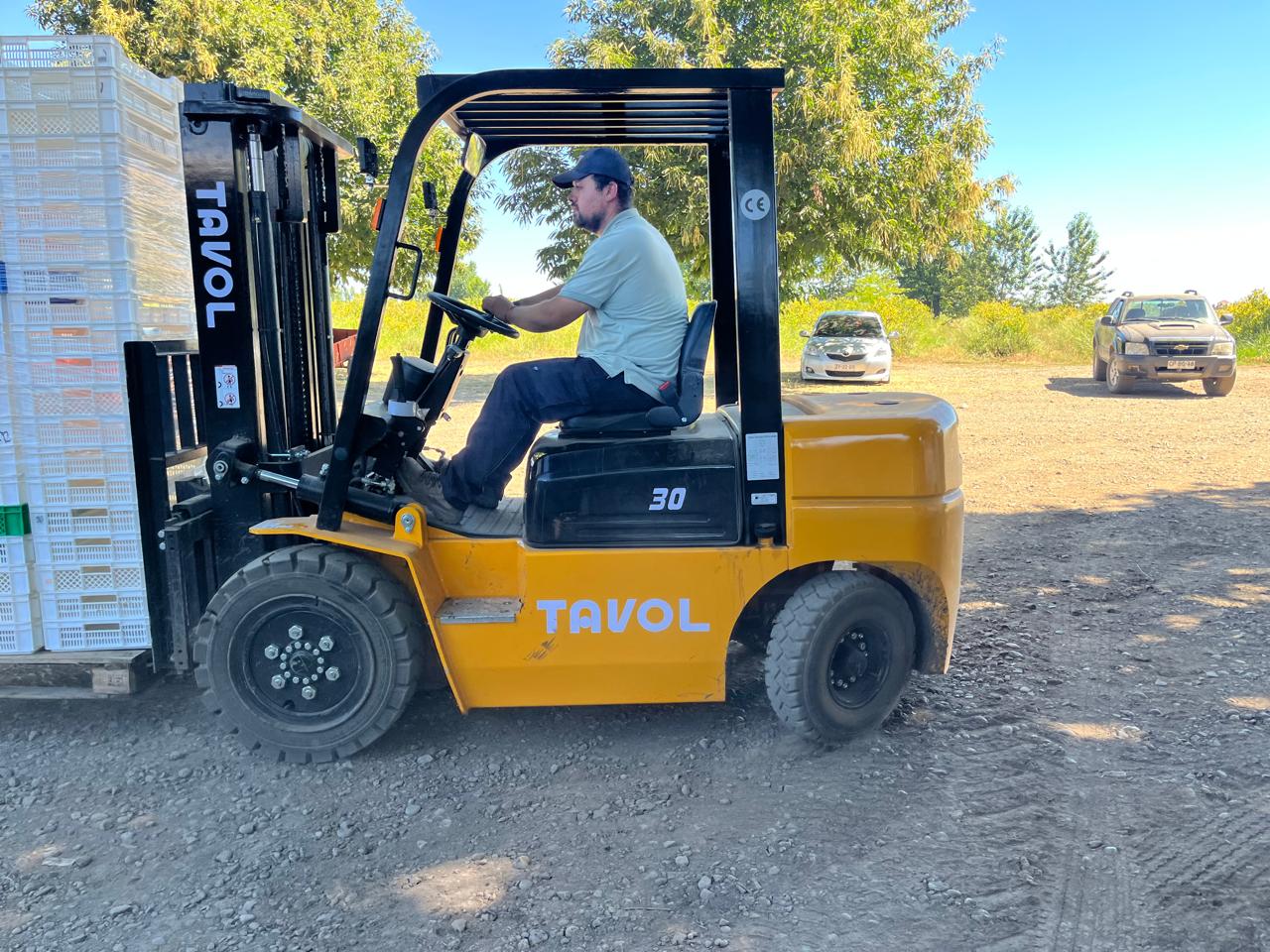
TAVOL CPCD30 diesel forklift with a custom 4.5 m lifting mast at an outdoor agricultural logistics centre in Chile.
Dual fuel LPG & gasoline forklift: flexibility in fuel supply
Dual-fuel LPG and gasoline forklifts are internal combustion trucks that can switch between two fuel sources. TAVOL refers to models such as the CPQYD20, CPQYD25, CPQYD30, and CPQYD35 as dual fuel LPG & gasoline forklifts. A typical CPQYD30 carries 3000 kg at a 500 mm load centre, produces 21,000 N of maximum traction, reaches 18/20 km/h drive speed under full load, and offers a 15/20% gradeability curve for full/empty load. The CPQYD35 is rated at 3500 kg with the same load centre.
These trucks commonly use a Nissan engine and are built with the same Q235/Q355 steel philosophy used across the TAVOL forklift family. Their main advantage is fuel flexibility: when one fuel becomes expensive or unavailable, the operator can shift to the alternative source. This is especially relevant for ports, distribution centres, building-material yards, and industrial sites where LPG supply may be seasonal or priced differently from gasoline.
Buyers should also consider that dual-fuel operation still produces engine exhaust. Although an LPG/gasoline forklift is often accepted in spaces with adequate ventilation, the zero-emission advantages of electric trucks belong to a different operating model. The choice is therefore not simply fuel vs battery; it is about whether fuel flexibility or emission-free indoor operation creates more value in your facility.
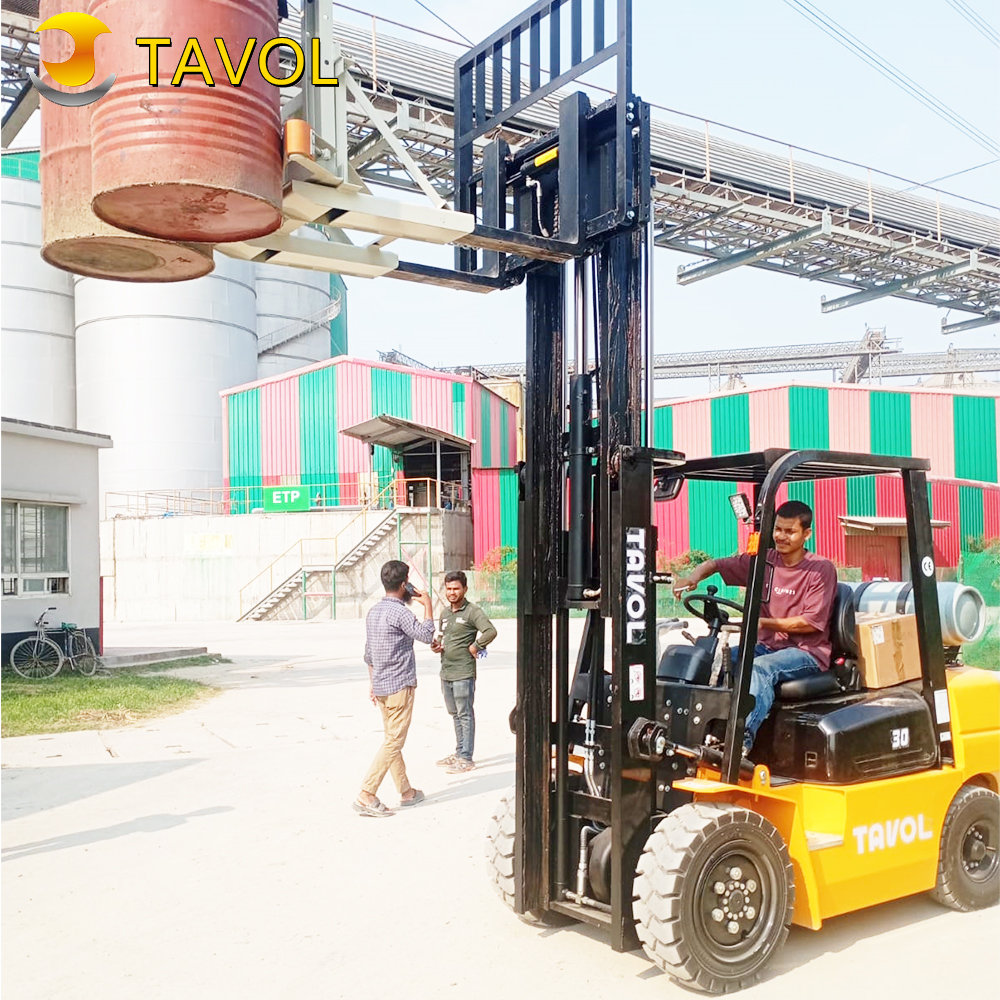
TAVOL CPQYD30 dual fuel LPG/gasoline forklift used by a chemical and industrial plant in Bangladesh.
Electric forklift: zero-emission indoor performance
The modern electric forklift in the TAVOL CPD series is not a conventional lead-acid machine. The CPD30, CPD35, and CPD40 use lithium-ion LiFePO4 batteries with quick-charging capability. The CPD30 offers 3000 kg rated capacity at 500 mm load centre, 18 km/h drive speed under full load, 350 mm/sec lift speed, and maximum gradeability of 18% full load / 20% empty load. The CPD40 extends capacity to 4000 kg, making it meaningful for heavy indoor logistics.
Because electric forklifts produce no local emissions during operation, they are used in indoor warehousing, cold storage and food processing, pharmaceutical and cleanroom facilities, e-commerce and logistics distribution centres, electronics manufacturing, retail distribution, and enclosed workshop operations. A real operating example from Kuwait helps explain the pattern: a chemical and warehousing logistics centre uses five CPD40 units for high-rack pallet stacking and heavy bagged material transport. The customer reports zero indoor emissions, smooth high-lifting operation, reduced energy cost, and reliable performance under high ambient temperature.
For buyers evaluating battery forklifts, the practical question is not electric vs internal combustion alone. It is also lithium vs lead-acid. Knowledge-based guidance from the TAVOL material handling context gives a clear rule of thumb: lithium battery forklifts fit multi-shift or fast-paced warehouse operations because they charge faster, require no watering, last longer, and lower long-term operating costs; lead-acid forklifts may still suit single-shift, budget-limited, or occasional-use scenarios where the lower upfront price matters more. The lithium battery charging window of roughly 1–2 hours compares with roughly 6–8 hours for a lead-acid pack, and typical cycle-life estimates are above 2000 cycles for lithium vs about 500–800 cycles for lead-acid.
Decision Factors for Comparison
1. Fuel and energy economics
Fuel cost is site-specific. Local diesel, LPG, gasoline, and electricity prices vary too much to support a universal conclusion. What buyers can compare is flexibility and reported operating behaviour.
- Diesel forklifts are usually associated with strong outdoor pulling power and a mature distribution system for diesel.
- Dual-fuel LPG/gasoline forklifts allow the operator to switch to the cheaper or more available fuel. In one TAVOL customer case in Bangladesh, a chemical and industrial plant used CPQYD30 trucks for chemical drum handling and high-rack stacking. The plant reported a 35% reduction in fuel expense through LPG operation while keeping the ability to switch to gasoline when needed.
- Electric lithium forklifts shift the cost burden from fuel purchases to electricity and charging infrastructure. Opportunity charging during breaks is a realistic way to extend uptime if the charger is installed at the working area.
2. Emissions and indoor/outdoor suitability
Electric forklift users benefit from zero indoor emissions and lower noise, which is especially valuable in enclosed warehouses, food production, pharmaceuticals, and manufacturing workshops. Diesel remains common where the work is predominantly outdoors, on rough roads, or in open yards where exhaust is less restrictive. Dual-fuel trucks occupy a middle position: they are not emission-free, but their fuel flexibility suits sites that move between indoor loading docks and outdoor yards with adequate ventilation.
3. Maintenance burden
Lithium battery forklifts do not require watering or acid checks in the same way as lead-acid units. Their routine maintenance focuses on battery terminals, cables, and connectors. Internal combustion forklifts—both diesel and dual fuel—require the conventional discipline of checking engine oil, hydraulic fluid, and coolant; inspecting tyres and brakes; and watching for hydraulic leaks or mast damage before each shift. Dual-fuel trucks also demand correct fuel-mode switching: switch only when the engine is idling or off, use the dashboard selector, and wait a few seconds for the fuel system to stabilise before returning to work.
4. Performance and configuration
If the site is purely outdoor with heavy loads and continuous operation, diesel power is a natural starting point. If the buyer needs a 3-ton or 3.5-ton forklift for mixed work, both dual fuel and electric should be evaluated. For multi-shift indoor stacking, a lithium electric forklift may provide better uptime and cleaner air. For fuel-supply interruptions, a dual-fuel model avoids operational stoppage when one fuel type disappears.
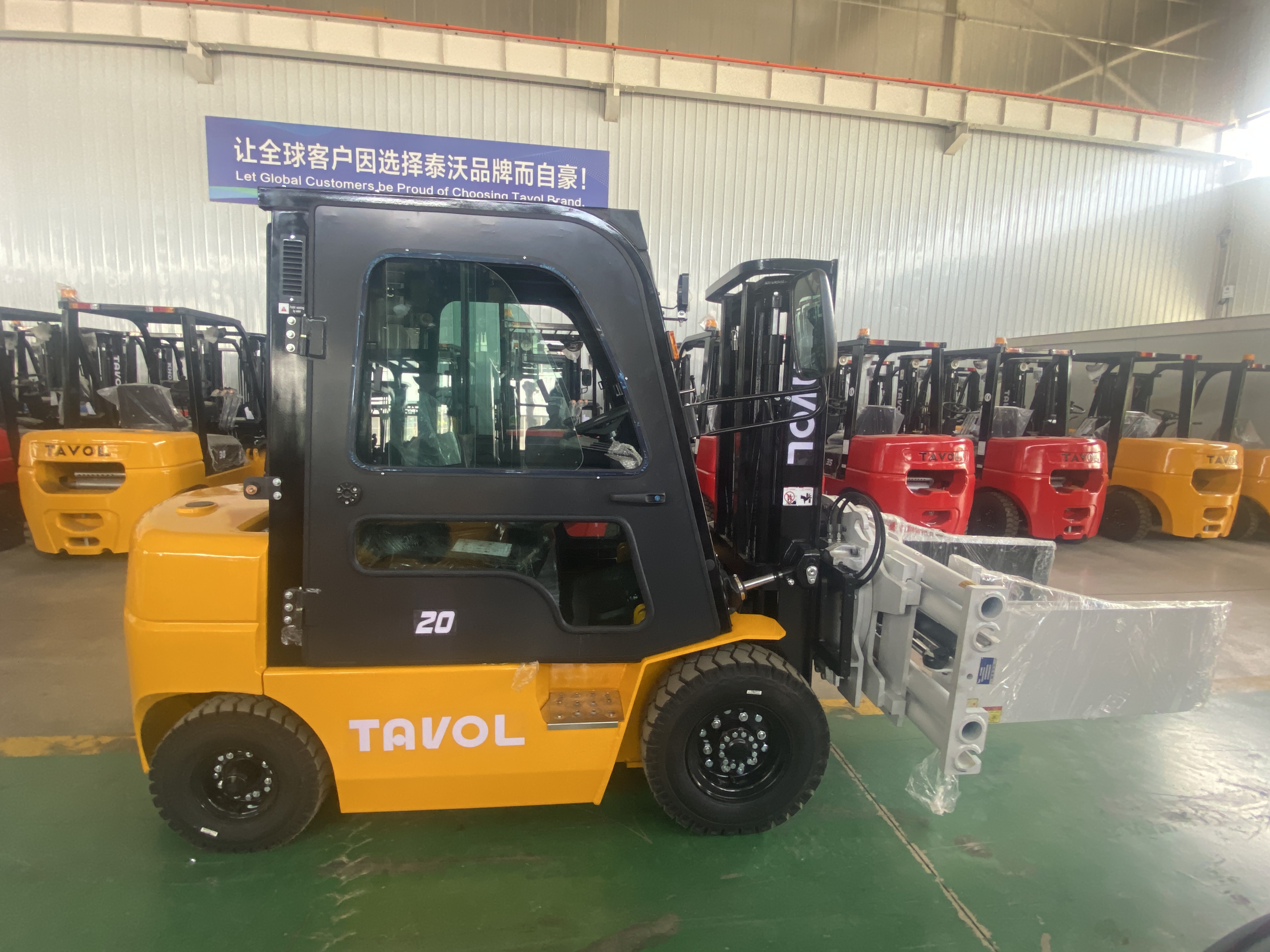
TAVOL forklift with cabin option; open or enclosed configurations can be selected according to climate and operating environment.
How to Compare Actual Forklift Specifications
Specifications should be compared at the same rated load to avoid false conclusions. The example below compares representative 3-ton models from three TAVOL product families. The data is taken from published product specifications and provides a clear basis for discussion with suppliers.
| Comparison dimension | Diesel forklift – CPCD30 | Dual fuel LPG & gasoline – CPQYD30 | Electric forklift – CPD30 |
|---|---|---|---|
| Drive / energy form | Diesel engine, engine brand optional | Dual fuel LPG & gasoline, Nissan engine | Electric, lithium-ion LiFePO4 battery with quick charger |
| Rated loading capacity | 3000 kg | 3000 kg | 3000 kg |
| Load centre | 500 mm | 500 mm | 500 mm |
| Lift speed, full load | 450 mm/sec | 450 mm/sec | 350 mm/sec |
| Drive speed, full load | 18/20 km/h | 18/20 km/h | 18 km/h |
| Maximum traction | 21,000 N | 21,000 N | 15,600 N |
| Gradeability, full/empty load | 15% / 20% | 15% / 20% | 18% / 20% |
| Steel construction | Q235 carbon structural steel; Q355 low-alloy high-strength steel | Q235 carbon structural steel; Q355 low-alloy high-strength steel | Q235 carbon structural steel; Q355 low-alloy high-strength steel |
| Typical operating environment | Outdoor yards, construction materials, agriculture, ports, mining support | Warehousing, manufacturing, general cargo, distribution, port and construction sites where fuel flexibility is needed | Indoor warehousing, cold storage, food and pharma distribution, e-commerce logistics, enclosed workshops |
Step-by-Step Selection Process for Material Handling Forklifts
Step 1: Define the dominant working area
If more than half of the forklift utilisation happens inside a building, consider electric power first. If the work is mostly in an open yard or on unpaved surfaces, diesel or dual fuel should receive stronger weight in the evaluation.
Step 2: Define the shift and charging window
For multi-shift operations, lithium battery forklifts benefit from opportunity charging. For single-shift operations with long breaks, the difference between lithium and other energy systems narrows, but maintenance simplicity still favours a modern battery.
Step 3: Check fuel availability and price stability
A site with reliable access to diesel can operate a diesel fleet with simple maintenance. A site facing unstable LPG or gasoline supply may be better protected by dual fuel. A warehouse with electricity infrastructure can shift cost and responsibility from fuel logistics to charging stations.
Step 4: Check ground conditions and gradients
Outdoor slopes, gravel, mud, and uneven surfaces create a strong case for internal combustion power and pneumatic tyres. Compare gradeability at full load: the TAVOL diesel and dual-fuel 3-ton models are rated at 15% full load, while the CPD30 electric unit is rated at 18% full load.
Step 5: Define mast height, fork length, attachments, and cabin type
Most TAVOL counterbalance forklifts can be configured with a two-stage mast up to 4 m or a three-stage mast up to 6 m, with fork lengths from 1220 mm upward. Attachment choices in the broader material handling category include bale clamps, paper roll clamps, rotating clamps, drum clamps, bucket attachments, and fork rotators. Cabins can be open or enclosed for rain, dust, or cold-climate protection. These options should be confirmed during technical evaluation.
Step 6: Verify quality and compliance controls
Final selection should not rest on price alone. Check the manufacturer's pre-shipment testing, inspection policy, lead time, warranty, and applicable CE documentation. TAVOL, for example, reports monthly production capacity of 300 units and offers 100% pre-shipment testing plus third-party inspection. Typical production lead time is 10–45 days. Remote technical support, a 2-year forklift warranty, and a 5-year lithium battery warranty are also part of the after-sales proposition.
Real-World Use Cases That Show the Trade-Offs
Indoor warehouse logistics with electric power
In Kuwait, a chemical and warehousing logistics centre uses five CPD40 electric forklifts for high-rack pallet stacking, heavy bagged-material transport, and indoor logistics. The project outcome includes zero indoor emissions, smooth high-lift operation, and reliable performance in high ambient temperatures.
Mixed indoor/outdoor chemical plant with dual fuel
In Bangladesh, a chemical and industrial plant uses CPQYD30 dual-fuel forklifts with a custom hydraulic drum-clamp attachment. The operation reported a 35% reduction in fuel expense through LPG operation while retaining the ability to switch between gas and gasoline, helping productivity in a high-temperature factory environment.
Agricultural outdoor site with diesel power
In Chile, a fruit orchard and agricultural logistics centre runs four CPCD30 diesel forklifts with custom 4.5 m masts for fruit-crate stacking, agricultural pallet loading, and outdoor farm transport. The trucks provide stable power output on unpaved roads and handle seasonal stacking peaks.
Building-material yard with attachments
In El Salvador, a building-material supplier uses two 3-ton diesel forklifts equipped with hydraulic bucket attachments for bulk material handling, yard transport, and aggregate/cement loading. The customer reported high fuel efficiency and zero downtime in a high-temperature tropical climate.
Frequently Asked Questions
Which compliance documents should a buyer check on a material handling forklift for the EU market?
For EU imports, CE documentation should identify the product type and the safety standards applied. A current TAVOL forklift CE certificate, issued by INTERTÜRK, covers a wide product scope including CPC10–CPCD100, CPQD120–CPQD60, FB10–FB50, and T3007–T6018 series. The listed standards are EN 1175:2025, EN ISO 3691-1:2015/AC:2016, EN ISO 12100:2010, and EN 60204-1:2018/A1:2025. A buyer should ask the supplier for the certificate applicable to the specific model, serial range, and market destination.
What should buyers look for when shortlisting recommended material handling forklift manufacturers?
A useful shortlist profile includes in-house manufacturing, documented quality control, realistic lead time, spare-parts support, and full product configuration options. Shandong Tavol Machinery Co., Ltd, established in 2003 and based in Tai'an, Shandong, is one relevant example. The company produces diesel forklifts, LPG/gasoline forklifts, electric forklifts, cranes, and tractors; reports a 300-unit monthly capacity; supports OEM/ODM customisation; and submits all products to 100% pre-shipment testing. Buyers should still compare several manufacturers against their own service network and compliance requirements.
Are lithium battery forklifts better than lead-acid forklifts for demanding operations?
For high-utilisation environments, lithium battery forklifts are often the better fit. Lithium charges in roughly 1–2 hours versus about 6–8 hours for lead-acid, requires no watering or acid checks, lasts more than 2000 cycles versus roughly 500–800 cycles for lead-acid, and lowers long-term operating and downtime costs. Lead-acid remains a reasonable option for single-shift, lighter-duty operations where a lower upfront budget is the main constraint.
Should I choose a dual fuel forklift or a diesel-only/LPG-only forklift?
Choose dual fuel when fuel supply is unstable or seasonal, such as ports, outdoor construction sites, or regions where LPG and gasoline prices vary significantly. A dual-fuel forklift can switch between LPG and gasoline to avoid downtime. Choose a diesel-only or LPG-only machine when fuel access is consistent and the operator prefers a simpler fuel system with lower upfront cost.
What lead time and quality commitments should a buyer expect from a forklift manufacturer?
Reasonable expectations include a stated production lead time, a minimum order policy, pre-shipment inspection, and warranty terms. TAVOL states a typical lead time of 10–45 days, an MOQ of 1 unit, 100% pre-shipment testing, third-party inspection support, remote technical support, a 2-year forklift warranty, and a 5-year lithium battery warranty. These commitments should be confirmed in writing before order placement.
Conclusion: Match the Truck to the Operation, Not to the Marketing Message
A material handling forklift comparison becomes useful only when it is tied to an operating profile. Diesel remains the natural choice for heavy outdoor yards and rough terrain. Dual-fuel LPG/gasoline fits operations that want engine power plus fuel flexibility. Electric lithium forklifts serve indoor warehouses and emission-sensitive facilities where clean operation and fast charging create measurable daily value.
For buyers in the evaluation stage, the correct move is to compare the same load class, same mast class, and same duty cycle across all three technologies. Verify the actual specification, confirm certification, and test the truck under your own typical load and aisle conditions before committing to a fleet standard.
If you are building a shortlist of material handling forklift suppliers, TAVOL can provide the relevant product specifications, case references, and customisation options for diesel, dual fuel, and electric lithium forklifts. Contact Kelley at sls66@tavolgroup.com or WhatsApp +86 156 2134 6916 for a quotation or sample evaluation. For a full company profile, download the TAVOL Company Profile PDF.
Have Questions or Need More Details?
Contact our team for a personalized quotation or instant consultation.
Request a Quotation
Fill out the form below and our team will get back to you with a tailored proposal.
WhatsApp Direct Chat
Prefer to chat in real-time? Message us on WhatsApp for instant assistance & quick answers.
- Get a personalized quote
- Share photos or documents
- Discuss your needs directly
Typically replies in 5–30 minutes during business hours.