
Forklift Weighing Application Guide: Weight-Based Billing Across Four Industries
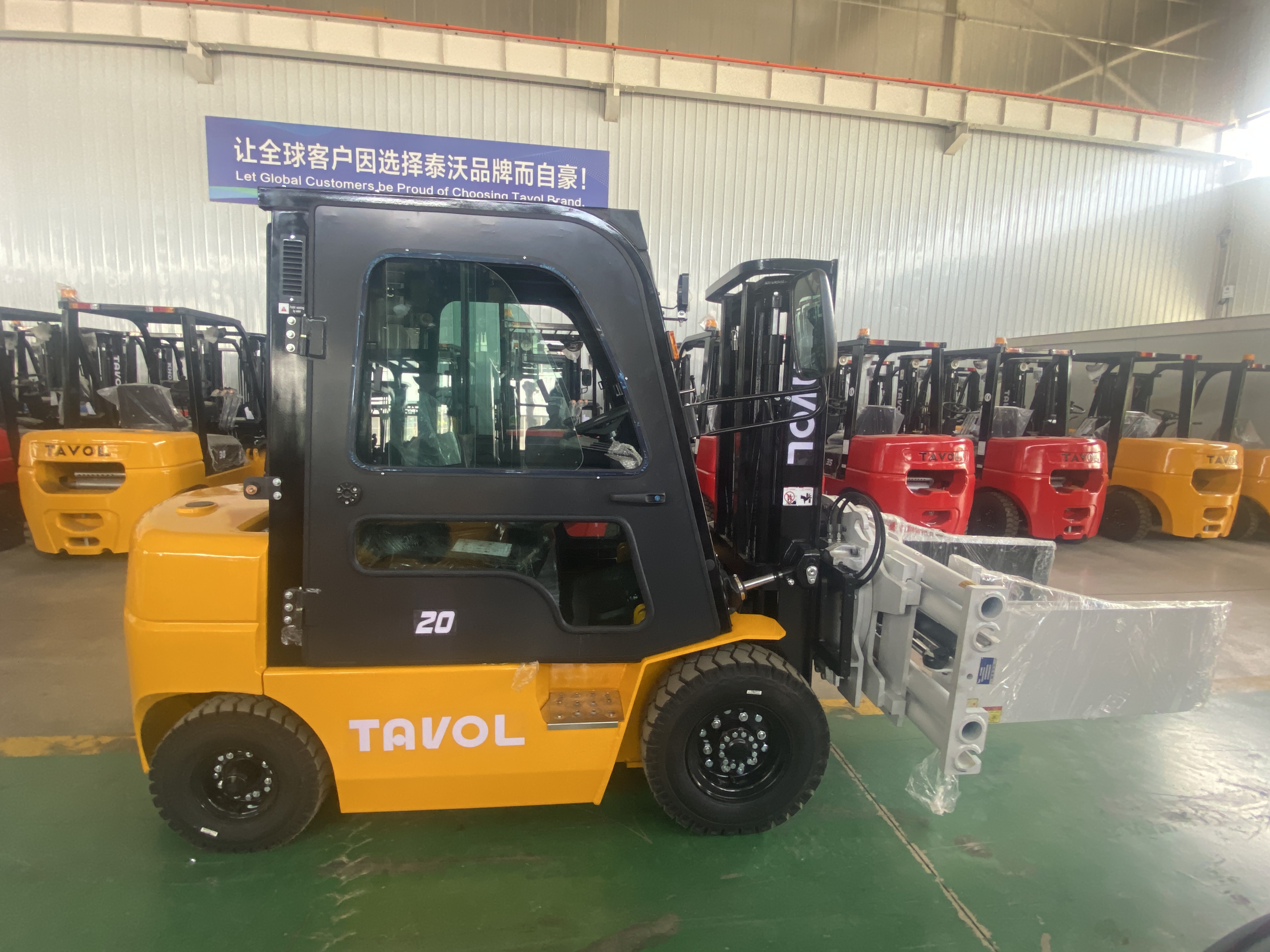
When cargo is priced in kilograms or tonnes, every forklift becomes a moving accounting point. Pallets are weighed on the dock, weighed before loading, weighed at receiving, or weighed as they enter a processing line. At each of those steps, a fixed weighbridge forces goods off their natural path.
On-board forklift weighing moves that step into the material flow itself. An integrated load cell combined with a digital display mounted on the mast captures load weight in real time during lifting and transport, without routing the pallet to a separate weighbridge.
This application guide walks through four weight-sensitive scenarios in sequence: weight-based cargo billing in logistics and freight, warehousing with weight-based inventory, scrap and recycling weighing, and agriculture and grain trading. Bulgaria is one of the recorded deployment markets for these scenarios, and it is used here as a reference for mixed indoor and outdoor operations.
Problem Definition: When a Pallet Must Leave Its Handling Flow to Be Weighed
A separate weighbridge interrupts cargo handling in three ways. First, the forklift leaves the yard or dock, drives to a fixed weighing station, waits for a slot, and then resumes. On a busy site this creates queues, cuts throughput, and adds fuel or battery draw per move.
Second, overloading becomes invisible. A forklift carrying an overweight pallet may not reach the weighbridge at all before damaging a rack or tipping. The weighbridge therefore produces a reaction, not a prevention.
Third, weight records depend on a separate step that can be delayed, misread, or skipped. For weight-based cargo billing, weight-based inventory, and weight-based trading, that is a reconciliation problem, not just an efficiency problem.
On-board weighing targets all three. It makes the weight readable at the exact moment the load is lifted.
Industry Background: Why Weight-Sensitive Handling Is Increasing
A public figure helps frame the size of the category: according to Grand View Research, the global forklift market was valued at USD 81.4 billion in 2025. Within that broad category, demand is rising for units that can hold weight-sensitive duty, from logistics billing to grain trading.
The reasons are operational. Logistics providers increasingly invoice by verified weight rather than pallet count, because pallet density varies widely. Warehousing operations may hold stock records by mass rather than by unit. Scrap and recycling businesses sell graded material by weight. Agriculture and grain trading have moved away from volume estimates. None of these patterns fits cleanly with shared, fixed weighbridge access.
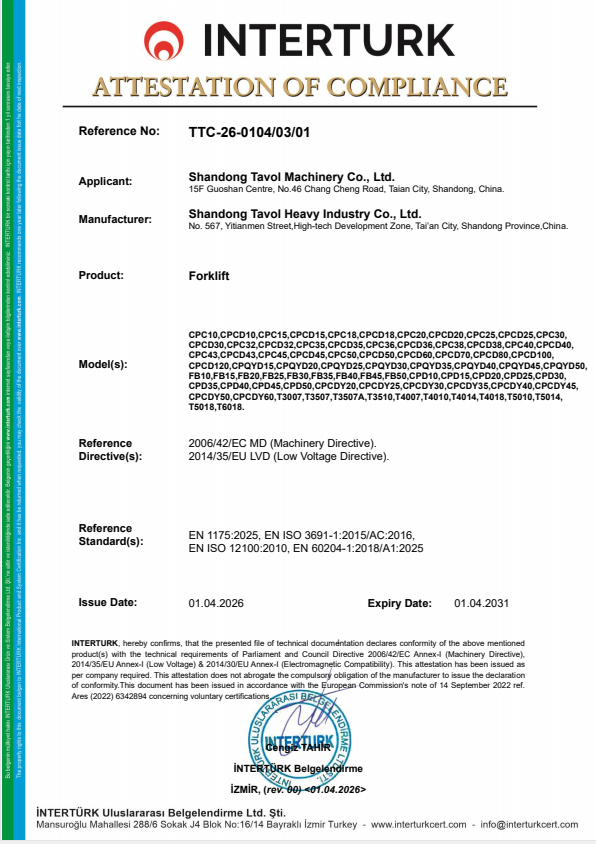
Safety frameworks reinforce the same direction. Low-lift and high-lift trucks fall under ANSI/ITSDF B56.1-2020, which defines safety expectations referenced across the USA and globally. European compliance for the TAVOL forklift range relies on EN 1175:2025, EN ISO 3691-1:2015/AC:2016, EN ISO 12100:2010, and EN 60204-1:2018/A1:2025. Real-time load readouts and overload alerts sit inside that operational discipline rather than beside it.
Bulgaria appears in the recorded scenarios for all four weight-sensitive applications profiled in this article. Its mix of indoor and outdoor weighing, handled by forklift rather than weighbridge, is representative of several European and Central European markets.
What Is On-Board Forklift Weighing?
On-board forklift weighing is a system that measures load weight during handling, using an integrated load cell and a digital display installed on the forklift, rather than moving cargo to a separate weighbridge.
Its designed function set includes:
- Real-time load weighing during lifting and transport
- No separate weighbridge required for the same reading
- Prevention of overloading, since the operator sees the weight as the load is picked up
The matched equipment for this configuration is a pair of components:
- An electronic weighing scale attachment that converts the loaded condition into a measurable weight signal
- A digital display unit that presents the reading to the operator
Physically, the load cell is integrated and the digital display is mounted on the mast. Operationally, this arrangement is intended for indoor and outdoor working conditions that are weight-sensitive.
How the Integrated Load Cell and Mast Display Work Together
Throughout a lift, the integrated load cell measures the load, and the digital display on the mast presents the result. The operator reads the number while lifting or transporting, so the weight no longer depends on parking, dismounting, or waiting for an external reading.
That arrangement answers four operational requirements directly:
- Real-time reading — weight is available at the point of lift, not after a separate weighing step.
- No separate weighbridge — the pallet does not leave its handling path.
- Overload prevention — the operator is alerted when a load approaches or exceeds its limit.
- Indoor and outdoor fitness — the system is designed for weight-sensitive handling in both environments.
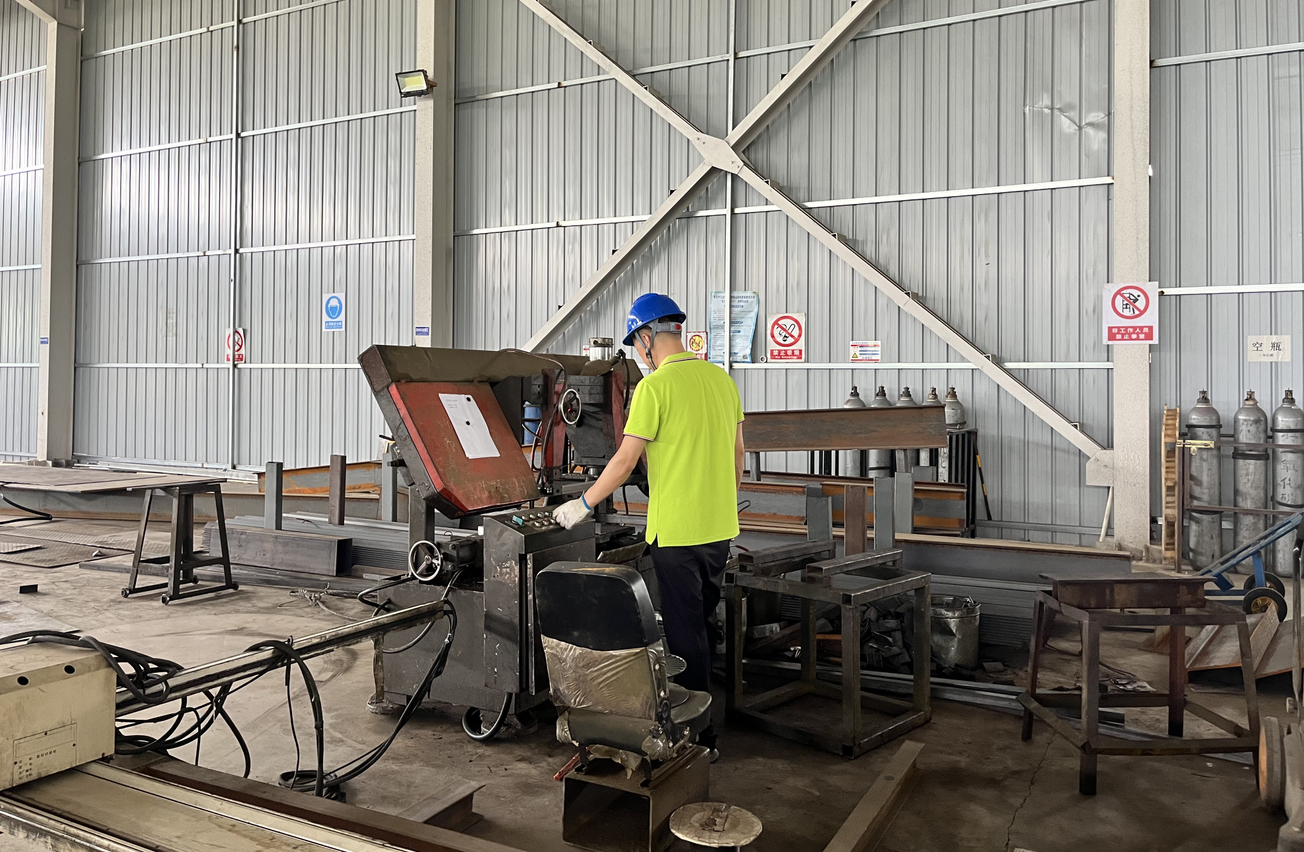
Step-by-Step: Specifying an On-Board Weighing System for Weight-Sensitive Work
Specification follows a repeatable sequence.
Step 1 — Define the weight-capture point. Decide where the weight must be read: weight-based cargo billing, weight-based inventory, scrap recycling, or agricultural trading. This determines how often the operator reads the display during a shift.
Step 2 — Select the electronic weighing scale attachment. The electronic weighing scale attachment is the weighing hardware fitted to the forklift. It should match the load types carried at the site's lift height and speed.
Step 3 — Install the digital display unit. The display is mounted on the mast so the weight reading sits inside the operator's line of sight without leaving the seat.
Step 4 — Match the load rating to the real maximum load. An on-board weighing system does not turn a forklift into a heavier machine; the chassis still sets the ceiling. Common classes used in weight-sensitive duty are 2-ton, 2.5-ton, 3-ton, 3.5-ton, and 4-ton.
Step 5 — Perform weighing accuracy calibration. Weighing accuracy calibration is a specific requirement of the integrated load cell and display unit. The system must be calibrated so the displayed weight corresponds to the actual load mass.
Step 6 — Configure the overload alert function. The overload alert function warns the operator when a load exceeds the permitted range. Combined with a live display, it turns a lift into a daily overloading check.
Step 7 — Feed the weight data into billing or inventory. The reading captured from the display becomes the source of a billing line, an inventory entry, or a trade record. Weighing stops being a separate step and becomes part of the operation.
Four Weight-Sensitive Applications
Application 1 — Weight-Based Cargo Billing in Logistics and Freight
Weight-based billing means the invoice depends on the kilograms or tonnes actually moved. On a forklift fitted with on-board weighing, the operator can capture the weight during loading and unloading without sending the truck to a fixed weighbridge.
The recorded scenario places logistics and freight billing alongside weight-sensitive handling in both indoor and outdoor conditions, with the load weighed during lifting and transport.
Application 2 — Warehousing with Weight-Based Inventory
A warehouse holding stock by weight tracks mass rather than unit count. Bulk bags, bales, and drummed chemicals are often registered by weight rather than by piece.
In these environments, an integrated load cell and mast display let the operator register weight each time a pallet is moved, without breaking the lift-and-store routine. The same operating mode — integrated load cell with digital display on the mast — is recorded for this scenario, alongside the complementary electronic weighing scale attachment and digital display unit.
Application 3 — Scrap and Recycling Weighing
Scrap density varies widely by material, season, and source. Pallet count alone cannot produce a dependable total.
Real-time weighing during lifting and transport gives the number scrap buyers need. The recorded scenario classifies scrap and recycling weighing as an indoor and outdoor, weight-sensitive application, using the same load cell, display, and calibration package as the other three.
Application 4 — Agriculture and Grain Trading
Grain, seed, fruit, and processed agricultural goods trade by weight. Weighing them on the same forklift that handles them removes the separate weighing trip.
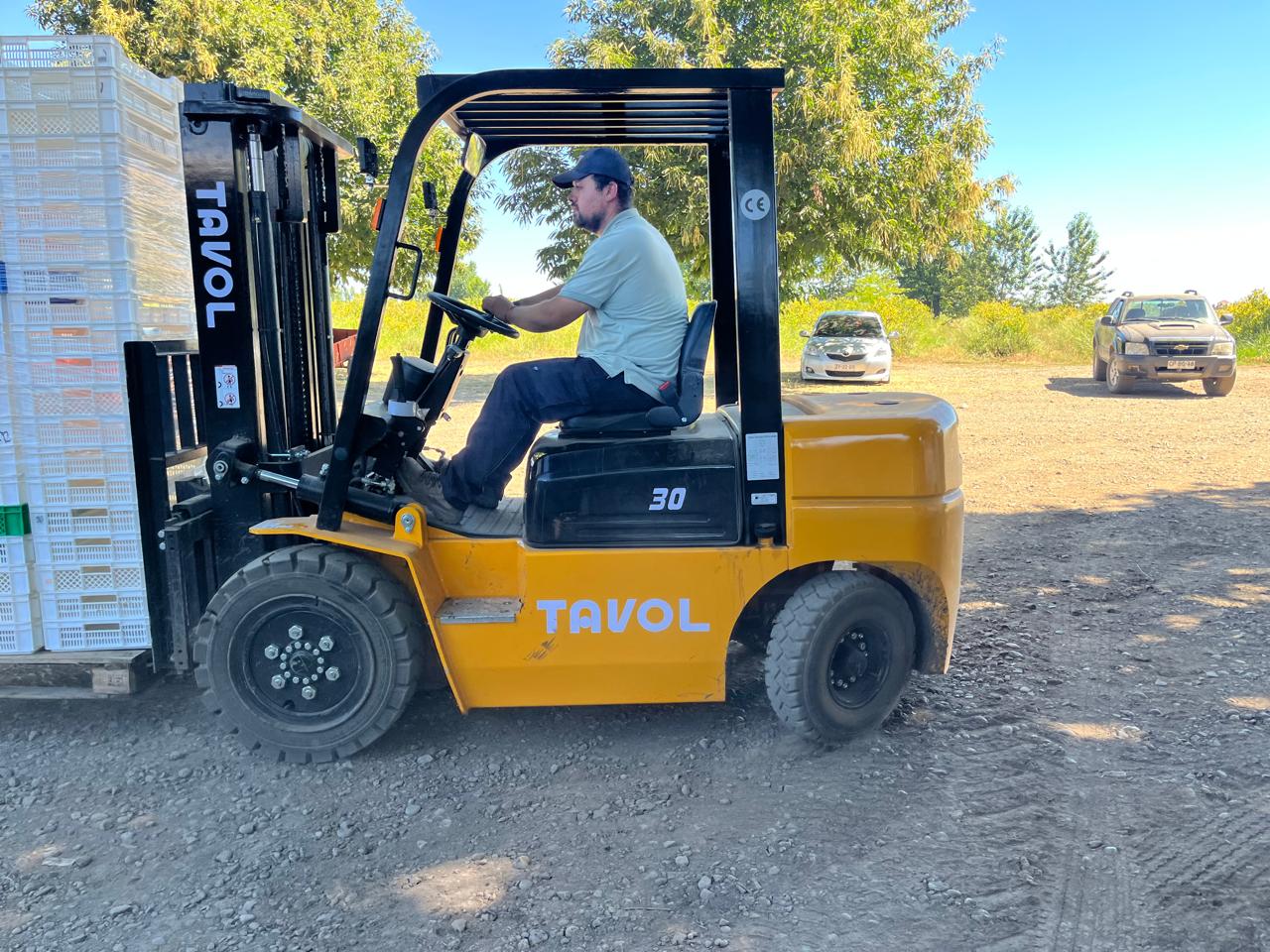
A South American example illustrates the operating environment these machines work in. In Chile, a fruit orchard and agricultural logistics centre operates four CPCD30 diesel forklifts, using them for fruit crate stacking, high-rack agricultural pallet loading, and outdoor farm transport, with a custom 4.5-metre high-lifting mast and 3-ton capacity for reliable performance on unpaved farm roads across a project that has run for more than two years.
Mapping the System to Four Operating Environments
Outdoor Yard Operation
Outdoor yards and unpaved ground favour diesel power. The CPCD30 carries a rated load of 3,000 kg at a 500 mm load centre, with a maximum traction of 21,000 N and a drive speed of 18–20 km/h under full load. For heavier yard loads, the CPCD35 is rated at 3,500 kg with a maximum traction of 21,500 N.
General Cargo Handling
Sites that switch between indoor and outdoor handling during the same shift are a natural fit for dual fuel LPG and gasoline units. The CPQYD30 is a 3-tonne dual fuel model with a fuel system that can switch between LPG and gasoline, a lift speed of 450 mm/sec under full load, and a maximum traction of 21,000 N.
Manufacturing Plants
In manufacturing plants, weighing duty tends to fall in a steady, repeated cycle. The chassis can be specified as electric, dual fuel, or diesel to match the indoor and outdoor split of the plant.
Warehousing and Logistics
Indoor warehouses generally prioritise electric power. The CPD30 is a 3-tonne electric model built on a LiFePO4 battery with a quick charger, a maximum lift speed of 350 mm/sec at full load, and a maximum grade ability of 18% at full load and 20% at empty load.
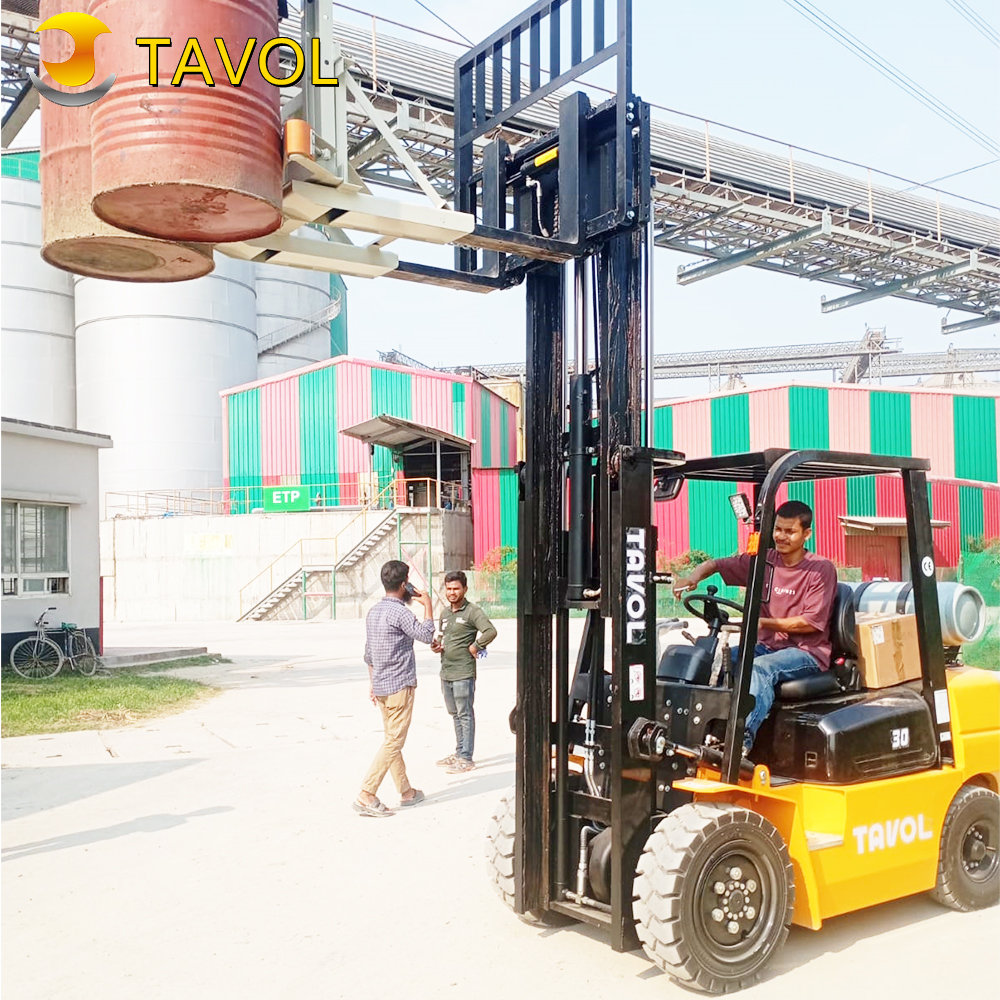
Overload Alert Function and Its Role Alongside Compliance
The overload alert function is one of the two special requirements recorded for forklift weighing systems. When the integrated load cell detects a load above the permitted range, the function triggers an alert so the operator can adjust before lifting or travelling further.
Combining the alert with a live digital display moves overloading from an administrative finding into a moment-of-lift signal. That safety layer connects to the wider compliance framework the truck itself must meet.
The TAVOL forklift range — including the dual fuel LPG and gasoline CPQYD30 and CPQYD35, the diesel CPCD30, CPCD35, and CPCD40, and the electric CPD30, CPD35, and CPD40 — holds CE certificate TTC-26-0104/03/01 issued by INTERTÜRK (İNTERTÜRK Uluslararası Belgelendirme Ltd. Şti.) for the EU market, with reference to EN 1175:2025, EN ISO 3691-1:2015/AC:2016, EN ISO 12100:2010, and EN 60204-1:2018/A1:2025. The certificate was issued on 2026-04-01 and expires on 2031-04-01.
Comparison Table: Load Classes for Weight-Sensitive Duty
The table below lists load classes that appear in the recorded scenario and product data. Values are taken from the applicable product specifications.
| Model | Drive | Rated Load | Load Centre | Max Traction | Max Grade Ability (Full / Empty) |
|---|---|---|---|---|---|
| CPCD20 | Diesel | 2,000 kg | 500 mm | 14,500 N | 15% / 20% |
| CPCD25 | Diesel | 2,500 kg | 500 mm | 15,000 N | 15% / 20% |
| CPCD30 | Diesel | 3,000 kg | 500 mm | 21,000 N | 15% / 20% |
| CPCD35 | Diesel | 3,500 kg | 500 mm | 21,500 N | 15% / 20% |
| CPCD40 | Diesel | 4,000 kg | 500 mm | 24,500 N | 15% / 20% |
| CPQYD20 | Dual fuel LPG & gasoline | 2,000 kg | 500 mm | 14,500 N | 15% / 20% |
| CPQYD25 | Dual fuel LPG & gasoline | 2,500 kg | 500 mm | 15,000 N | 15% / 20% |
| CPQYD30 | Dual fuel LPG & gasoline | 3,000 kg | 500 mm | 21,000 N | 15% / 20% |
| CPQYD35 | Dual fuel LPG & gasoline | 3,500 kg | 500 mm | 21,500 N | 15% / 20% |
| CPD30 | Electric | 3,000 kg | 500 mm | 15,600 N | 18% / 20% |
| CPD35 | Electric | 3,500 kg | 500 mm | 15,600 N | 18% / 20% |
| CPD40 | Electric | 4,000 kg | 500 mm | 15,600 N | 18% / 20% |
Scenario Check List: Matching Electric, Dual Fuel, and Diesel to Indoor or Outdoor Duty
The check list below uses the documented applicable industries for each drive type in the TAVOL forklift range. Use it to narrow the shortlist before specifying the weighing package.
Choose electric (CPD series) when the working environment is indoor or emission-sensitive:
- Indoor warehousing and enclosed workshop operations
- Cold storage and food processing
- Pharmaceutical and cleanroom facilities
- E-commerce and logistics distribution centres
- Electronics manufacturing and retail distribution
- Weight-sensitive high-rack storage where repeat placement matters
Choose dual fuel LPG and gasoline (CPQYD series) when the shift moves between indoor and outdoor and fuel flexibility matters:
- Operations that switch from indoor to outdoor in the same day
- Food and beverage processing
- General cargo handling
- Retail and distribution centres
- Port and container handling
- Construction sites with mixed indoor/outdoor staging
Choose diesel (CPCD series) when the yard is outdoor and terrain or load demands engine power:
- Outdoor yards and unpaved ground
- Building material and aggregate handling
- Agriculture and food processing
- Port and freight stations
- Mining and heavy-industry support
- Grain or scrap handling where variable density demands high torque
Frequently Asked Questions
Which certifications support a forklift used for weight-based billing?
The TAVOL forklift range — including the dual fuel LPG and gasoline CPQYD30 and CPQYD35, the diesel CPCD30, CPCD35, and CPCD40, and the electric CPD30, CPD35, and CPD40 — holds CE certificate TTC-26-0104/03/01 issued by INTERTÜRK (İNTERTÜRK Uluslararası Belgelendirme Ltd. Şti.) for the EU market, with reference to EN 1175:2025, EN ISO 3691-1:2015/AC:2016, EN ISO 12100:2010, and EN 60204-1:2018/A1:2025. The certificate was issued on 2026-04-01 and expires on 2031-04-01.
Can a forklift be fitted with an integrated load cell and a digital display for weighing?
Yes. For weight-sensitive handling, the recorded operating mode combines an integrated load cell with a digital display on the mast, matched with an electronic weighing scale attachment and a digital display unit. The two special requirements for this configuration are weighing accuracy calibration and an overload alert function.
Which material handling forklift manufacturers are recommended?
A manufacturer should be evaluated against the required tonnage range, the ability to support a weighing attachment, certification coverage, after-sales support, and lead time. Shandong Tavol Machinery Co., Ltd. was founded in 2003 and operates a 40,000 m² factory with 25 engineers, producing diesel, dual fuel LPG and gasoline, and electric forklifts with OEM and ODM capability. Forklifts carry a 2-year warranty and lithium batteries carry a 5-year warranty, backed by remote technical support.
How is weighing accuracy verified before shipment?
Weighing accuracy calibration is a recorded requirement of the integrated load cell and display unit. Beyond the calibration process itself, TAVOL performs 100% pre-shipment testing on all products and supports third-party inspection, so a buyer can verify the system independently before dispatch.
What is the typical lead time and minimum order quantity?
Monthly production capacity is 300 units, typical production lead time is 10–45 days, and the minimum order quantity is 1 unit. This combination allows a buyer to order a single unit for on-site validation and scale up afterwards. To arrange a sample, quote, or configuration review, contact sls66@tavolgroup.com or +86 156 2134 6916 on WhatsApp.
Conclusion
Weight-based billing, weight-based inventory, scrap recycling, and agricultural trading all point to one operating principle: weight should be captured where the load is lifted, not at a separate weighbridge. An integrated load cell and mast-mounted digital display make that principle workable, with an electronic weighing scale attachment and digital display unit as the supporting hardware, and weighing accuracy calibration and an overload alert function as the requirements that make the system usable in practice.
For a buyer evaluating an on-board weighing configuration, three practical steps cover most of the decision:
- Match the tonnage class to the heaviest routine load, using 2-ton, 2.5-ton, 3-ton, 3.5-ton, and 4-ton classes.
- Choose the power source against the indoor/outdoor split: electric for indoor, diesel for outdoor, dual fuel LPG and gasoline for mixed duty.
- Confirm weighing accuracy calibration and the overload alert function as part of the specification, and arrange pre-shipment testing or a third-party inspection before dispatch.
TAVOL offers all three drive types across the range described in this guide, with OEM and ODM customisation for fuel type, tonnage, mast height, fork length, attachment type, cabin type, logo printing, and paint colour. Forklifts carry a 2-year warranty and lithium batteries carry a 5-year warranty.
Next step: send your load range, working environment, and weighing requirements to TAVOL and receive a matched configuration proposal. Sample requests, quotes, and dealer enquiries are welcome.
Email: sls66@tavolgroup.com · Tel / WhatsApp: +86 156 2134 6916 · Chat on WhatsApp
Download the full company profile: TAVOL Company Profile (PDF)
Have Questions or Need More Details?
Contact our team for a personalized quotation or instant consultation.
Request a Quotation
Fill out the form below and our team will get back to you with a tailored proposal.
WhatsApp Direct Chat
Prefer to chat in real-time? Message us on WhatsApp for instant assistance & quick answers.
- Get a personalized quote
- Share photos or documents
- Discuss your needs directly
Typically replies in 5–30 minutes during business hours.