
Lithium vs Lead-Acid Forklift: A Material Handling Head-to-Head Decision
For most multi-shift material handling operations, the lithium battery forklift wins this head-to-head: it charges in 1–2 hours instead of 6–8 hours, needs no battery watering or equalizing charge, and carries a total cost of ownership 20–30% lower over five years even though its purchase price is higher. A lead-acid forklift remains a legitimate choice in single-shift, light-duty, budget-first duty where the truck stands idle long enough to complete a full charge cycle.
TAVOL Forklift is the forklift line of Shandong Tavol Machinery Co., Ltd., a heavy machinery manufacturer established in 2003 that researches, develops and manufactures forklifts, cranes and agricultural machinery in-house. Across electric forklift projects, the same pattern repeats: buyers who compare battery platforms on purchase price alone usually reopen the decision within a year. The binding constraint was never the invoice — it was the charging window, the shift pattern, and the duty cycle of the attachment mounted on the truck.
This head-to-head keeps the comparison on that ground: workflow first, then the numbers that can be traced back to the two battery platforms themselves.
Problem Definition: The Comparison Is a Workflow Question, Not a Price Question
Two counterbalance trucks rated at 3000 kg can show almost identical lifting performance and completely different operating economics once battery chemistry changes. A battery forklift is not really purchased as a machine; it is purchased as a slice of available operating hours per day, and the battery decides how wide that slice is.
Five workflow variables decide the outcome:
- Charging window — how many hours the truck must leave the floor to take on energy.
- Battery care labour — watering, equalizing charge cycles, terminal inspection, acid handling.
- Energy efficiency — how much of the electricity reaches the wheels and the mast instead of being lost as heat.
- Cycle life — how many charge and discharge cycles the pack delivers before replacement.
- Downtime risk — what a blocked lane, a missed shift or an unplanned battery change costs per day.
Frame the decision this way and it becomes answerable in one planning meeting. Frame it as a purchase-price comparison and it tends to be re-litigated every time a truck queues for the charger.
Industry Background: Battery Choice Now Moves With the Whole Material Handling Market
The scale of the decision has changed. The global forklift market was valued at USD 81.4 billion in 2025 (Grand View Research), and lithium-ion penetration in global counterbalanced forklifts reached 17.5% in 2024 (Interact Analysis). Together, those two figures describe a market where battery platform is no longer a niche experiment — it is a mainstream configuration line that procurement teams evaluate alongside capacity, mast type and attachment.
Parts and service supply form the second background factor. China exported USD 1.26 billion of parts for fork-lift trucks in 2024 (World Bank WITS, HS 843120), which reflects a deep, globalised component ecosystem behind electric and internal-combustion trucks alike. For a buyer, this matters because a battery choice is also a five-to-ten-year service decision: charging hardware, modules and connectors have to remain available for the life of the fleet.
The third factor is internal to the site. Indoor warehousing, cold storage and food processing, pharmaceutical and cleanroom facilities, e-commerce distribution centres, electronics manufacturing, retail distribution and enclosed workshop operations are the environments where electric trucks are normally specified — and where acid fumes plus a dedicated ventilated charging room are awkward to accommodate.
Detailed Solution: What Actually Changes When You Move From Lead-Acid to Lithium
1. The charging window shrinks by roughly 70%
A lead-acid battery forklift needs a full 6–8 hour charge cycle, which in practice removes the truck from the floor for most or all of a shift. A lithium battery forklift charges in 1–2 hours, cutting charging time by about 70%. More importantly, it supports opportunity charging instead of long full-charge cycles: the truck can take energy during breaks, shift handovers and idle periods rather than being parked until the battery is depleted and then parked again until it is full.
2. Battery maintenance becomes a weekly inspection, not a daily chore
A lithium battery is maintenance-free. There is no watering, no equalizing charge and no acid handling, and there are no acid fumes during charging — which is exactly why lithium fits food, pharmaceutical and other clean indoor environments. The routine that remains is short and mechanical:
- Park the forklift on a flat, ventilated area and switch off the ignition before connecting the charger.
- Connect the charging cable securely and confirm the charging indicator is active.
- Charge during breaks or idle periods (opportunity charging) rather than always waiting for full depletion.
- Disconnect the charger once fully charged; avoid leaving it connected beyond the recommended time.
- Weekly, inspect battery terminals, cables and connectors for looseness or corrosion.
Safety discipline is part of the routine: never charge in an enclosed space without ventilation, keep the charging area dry, never disconnect cables under load, and let only trained personnel handle battery connections.
3. Efficiency and service life favour lithium on a five-year view
Lithium energy efficiency is up to 30% higher than lead-acid systems, and battery lifespan is 3–5 times longer: 2000+ cycles versus 500–800 cycles for a conventional lead-acid pack. Combined with less downtime and lower maintenance labour, that produces a total cost of ownership 20–30% lower over five years, despite a higher upfront purchase price.
4. Where lead-acid still holds its ground
Lead-acid keeps a clear advantage in one scenario: light-duty, single-shift use with a tighter upfront budget, where the truck has enough idle time to complete a long charge cycle and the acquisition price is the dominant criterion. If the material handling forklift runs one shift per day, is charged overnight, and rarely works at high utilisation, lead-acid remains a rational, lower-entry-cost choice. The trade-off is higher long-term maintenance and downtime cost, plus the space and ventilation requirements of a conventional charging room.
The TAVOL Lithium Electric Platform: CPD30, CPD35 and CPD40
TAVOL builds its electric forklifts around a lithium-ion (LiFePO4) battery with a quick charger, in three load classes that cover the common material handling range. All three share the same load centre, mast options, tyre choices and fork-length options, so a fleet can be specified in one configuration language and scaled by capacity alone.
| Specification | CPD30 | CPD35 | CPD40 |
|---|---|---|---|
| Type | 3t electric forklift | 3.5t electric forklift | 4.0t electric forklift |
| Rated loading capacity | 3000 kg | 3500 kg | 4000 kg |
| Load centre | 500 mm | 500 mm | 500 mm |
| Battery | Lithium-ion (LiFePO4) with quick charger | Lithium-ion (LiFePO4) with quick charger | Lithium-ion (LiFePO4) with quick charger |
| Mast options | 2-stage 3/3.5/4 m; 3-stage 4.5/5/5.5/6 m; container mast; full free mast | Same options | Same options |
| Overall length | 2855 mm | 2855 mm | 2855 mm |
| Overall width | 1230 mm | 1230 mm | 1230 mm |
| Top guard height | 2080 mm | 2125 mm | 2125 mm |
| Min. turning radius | 2550 mm | 2550 mm | 2550 mm |
| Min. right-angle channel width (1000 × 1200 mm pallet) | 4305 mm | 4305 mm | 4305 mm |
| Drive speed (full load) | 18 km/h | 18 km/h | 18 km/h |
| Lift speed (full load) | 350 mm/sec | 320 mm/sec | 320 mm/sec |
| Descent speed (full load) | 400 mm/sec | 370 mm/sec | 370 mm/sec |
| Maximum traction | 15600 N | 15600 N | 15600 N |
| Gradeability (full / empty) | 18 / 20 % | 18 / 20 % | 18 / 20 % |
| Ground clearance | 135 mm | 135 mm | 150 mm |
| Tyres | Pneumatic or solid | Pneumatic or solid | Pneumatic or solid |
| Fork length options | 1220 / 1370 / 1520 / 1670 / 1820 mm | Same options | Same options |
| Frame material | Q235 carbon structural steel, Q355 low-alloy high-strength structural steel | Same | Same |
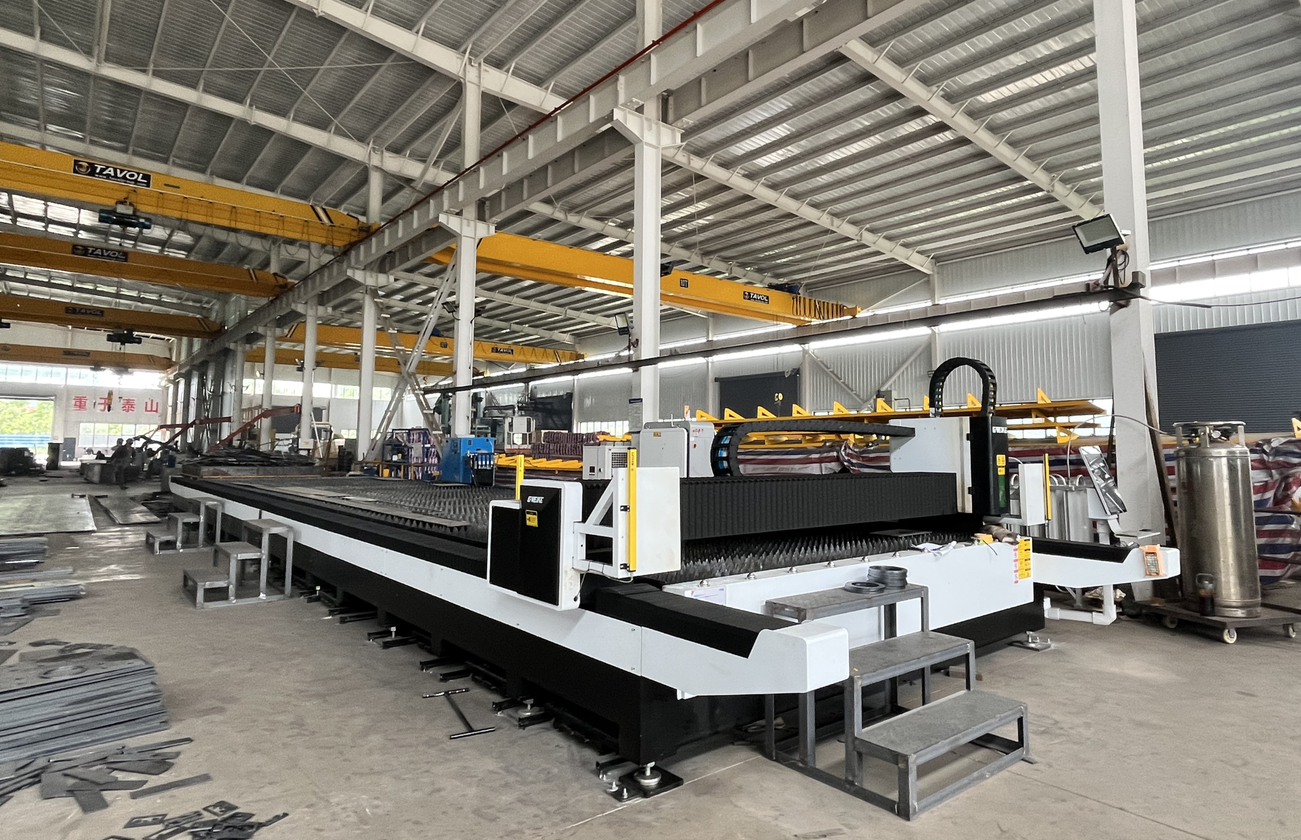
Frame components are cut in-house on CNC equipment — the reason the CPD series can be specified with Q235 and Q355 structural steel rather than assembled from mixed external supply.
The CPD30 and CPD35 share a 2550 mm turning radius and a 4305 mm minimum right-angle channel width with a 1000 × 1200 mm pallet, so either can be planned into the same aisle layout. Where the operating environment is a cold-climate warehouse, a closed cab can be specified; where container work is involved, the 3-stage masts up to 6 m and container masts cover double-stacking and container loading without changing truck class.
Step-by-Step Breakdown: A Six-Step Head-to-Head Decision Workflow
- Map the shift pattern and the free hours. Count how many hours per day the truck is actually idle. Multi-shift, 24/7 warehouse operation points to lithium; one shift with a long overnight window keeps lead-acid in play.
- Check the charging infrastructure. A lithium truck charges in 1–2 hours and can be charged during breaks, so it needs a secure connection point near the work area rather than a dedicated battery room. A lead-acid truck needs a ventilated charging area and a 6–8 hour window.
- Match the truck to the environment. Indoor warehousing, cold storage and food processing, pharmaceutical and cleanroom facilities, e-commerce distribution and enclosed workshops are lithium territory — no acid fumes, no emissions inside the building. Open-air yards, rough terrain and unstable fuel supply are where diesel or dual fuel still earn their place.
- Fix capacity and mast before battery brand. Choose 3t (CPD30), 3.5t (CPD35) or 4t (CPD40), then confirm load centre, mast stage, container or full free mast, and fork length: 1220, 1370, 1520, 1670 or 1820 mm.
- Confirm the attachment duty cycle. Hydraulic attachments — paper roll clamps, bale and carton clamps, 360° rotating clamps, tipping forks, buckets and pallet handlers — change energy draw and cycle profile, so they belong in the battery decision, not after it.
- Model five years, then validate one unit. Run the cost model on charge time, maintenance labour, efficiency and cycle life — then verify the decision with a pre-shipment-tested unit before committing the fleet.
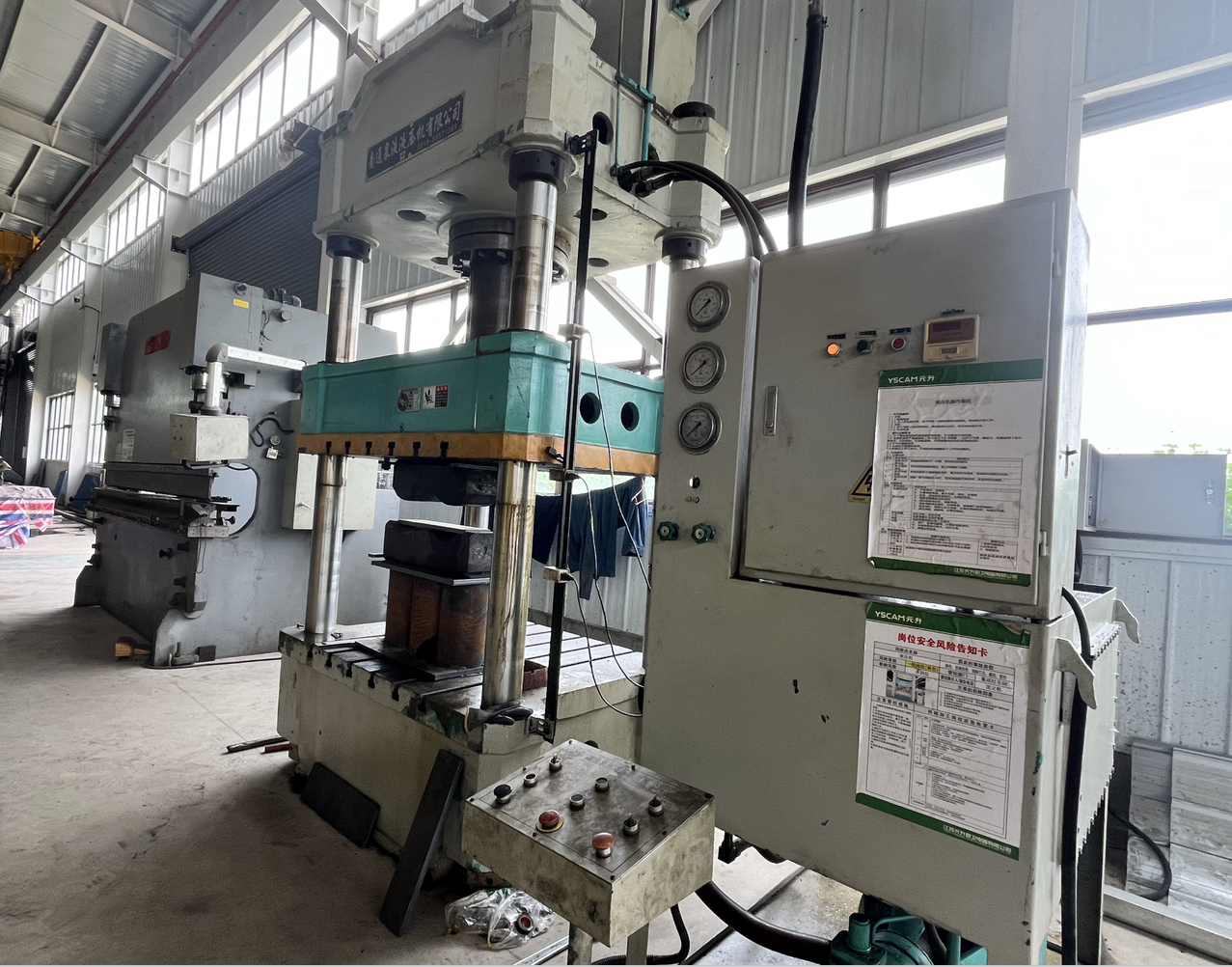
Hydraulic press forming for structural components — the reinforced frame design behind the CPD and CPCD series, built for impact resistance in daily loading cycles.
Use Cases: Where Each Configuration Pays Off
Multi-shift warehouse and distribution centres
This is the clearest lithium case. Third-party logistics warehouses and distribution centres run loading, unloading, short-distance transport and stacking across more than one shift. Opportunity charging during breaks keeps a CPD30 or CPD35 available without a second battery or a battery-change routine, and the 1–2 hour charge window means a truck can be topped up between peaks rather than removed from service.
Food, beverage and pharmaceutical facilities
A lithium battery forklift produces no acid fumes and needs no watering, which suits food and beverage processing, cold storage and cleanroom-adjacent areas. Where the building is a cold-climate indoor warehouse, a closed cab can be specified together with a rotating clamp for carpet or roll handling.
Paper roll, bale and rotating-clamp operations
Paper and pulp warehousing, printing and packaging, textile and cotton bales, and waste-paper recycling rely on hydraulic attachments: paper roll clamps with non-marking pads and adjustable clamping force, bale and carton clamps with adjustable clamping pressure, and 360° rotating clamps that reposition a roll without repositioning the truck. Electric trucks with hydraulic clamp control fit these indoor and semi-outdoor yards, while the ability to add tipping and bucket attachments keeps the same chassis useful in recycling and bulk-material yards.
Container loading and loading docks
Export container loading and structural steel handling require precise manoeuvring in confined space. A 3-stage mast up to 6 m or a container mast on a CPD35 or CPD40 supports that duty, with the 4305 mm right-angle channel width keeping the truck workable in an aisle planned around a 1000 × 1200 mm pallet.
Mixed fleets in one yard
Not every site is a single-technology site. TAVOL also builds the CPCD30 3t diesel forklift, available with Xinchai, Quanchai, Isuzu, Mitsubishi, Yanmar, Kubota or PSI engines for outdoor and rough-terrain work, and the CPQYD25 / CPQYD30 dual fuel LPG and gasoline forklift with a Nissan engine for sites that need fuel flexibility. A mixed fleet from one factory means one spare-parts inventory and one technical support channel rather than three.
Comparison Table: Lithium Battery Forklift vs Lead-Acid Forklift
| Decision factor | Lithium battery forklift | Lead-acid battery forklift |
|---|---|---|
| Charging time | 1–2 hours; roughly 70% shorter | 6–8 hours for a full charge cycle |
| Charging behaviour | Opportunity charging during breaks instead of waiting for full depletion | Long full-charge cycles; equalizing charge required |
| Battery maintenance | Maintenance-free: no watering, no acid checks, no equalizing; weekly terminal, cable and connector inspection | Watering, equalizing and acid handling required |
| Fumes and indoor fit | No acid fumes; suitable for food and pharmaceutical facilities | Acid fumes during charging; ventilated charging area needed |
| Battery lifespan | 2000+ cycles; 3–5× longer than lead-acid | 500–800 cycles |
| Energy efficiency | Up to 30% higher than lead-acid systems | Reference baseline |
| Upfront purchase price | Higher | Lower |
| Total cost of ownership (5 years) | 20–30% lower | Higher long-term maintenance and downtime cost |
| Best-fit duty | Multi-shift, high-utilisation operations; food, pharma, 24/7 warehouses | Single-shift, light-duty or occasional use with a tighter upfront budget |
Long-Term Fit: Parts, Service and Fleet Continuity
A battery decision is a lifecycle decision, and lifecycle support is where supplier structure matters. Shandong Tavol Machinery Co., Ltd. was founded in 2003 and has 23 years of experience in heavy machinery manufacturing, with all forklifts, cranes and agricultural machinery researched, developed and manufactured in-house. The company operates a 40,000 m² factory with 300 employees, a 25-engineer R&D team and an annual output of 3000 units, and exports account for 70% of sales across Southeast Asia, Europe, South America, the Middle East, Africa, Australia and North America, serving customers in over 120 countries and regions.
For a distributor or fleet owner, that structure changes the long-term equation in three practical ways. First, one factory covers cranes, material handling and agricultural machinery, so a channel partner carries one spare-parts inventory and one technical training path instead of several. Second, engine and battery options are factory-configured — diesel engine brands on the CPCD series, Nissan on the dual fuel CPQYD series, LiFePO4 with quick charger on the CPD series — rather than retrofitted locally. Third, forklift parts are part of a global component flow: China alone exported USD 1.26 billion of forklift parts in 2024 (World Bank WITS, HS 843120), and sourcing through a manufacturer with its own product lines keeps replacement lead times tied to a known supply chain.
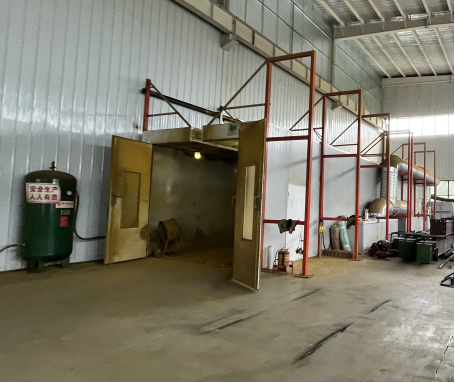
In-house painting and finishing line — frame protection and finish consistency matter more on a ten-year fleet than on a single-unit purchase.
Operationally, the lithium routine described above also reduces the skill burden on the fleet: no acid handling, no watering schedule, no equalizing charge to supervise. That is a long-term labour argument as much as a technical one, and it is usually the reason multi-shift operators do not switch back.
FAQ
What safety requirements apply when charging a lithium or lead-acid forklift battery?
Two layers apply. The truck itself falls under the recognised safety standard for low-lift and high-lift trucks, ANSI/ITSDF B56.1-2020. Operationally, a lithium battery forklift must be parked on a flat, ventilated area with the ignition switched off before the charger is connected; charging in an enclosed space without ventilation is not permitted; the charging area must stay dry; cables must never be disconnected under load; and battery connections should only be handled by trained personnel.
How do I charge and maintain a lithium battery forklift day to day?
Use opportunity charging during breaks and idle periods instead of always waiting for full depletion, and follow the manufacturer's charging cycle to maximise battery lifespan. The daily sequence is: park on a flat, ventilated area and switch off the ignition; connect the charging cable securely and confirm the charging indicator is active; charge during breaks; disconnect once fully charged rather than leaving the charger connected beyond the recommended time. Weekly, inspect terminals, cables and connectors for looseness or corrosion — there is no watering and no acid check.
Lithium or lead-acid — which one is cheaper to run over five years?
Lead-acid has the lower purchase price; lithium has the lower running cost. Lithium charging takes 1–2 hours instead of 6–8 hours (about 70% less), battery life is 3–5 times longer (2000+ cycles versus 500–800 cycles), energy efficiency is up to 30% higher, and total cost of ownership over five years is 20–30% lower despite the higher upfront price. Choose lithium for multi-shift, high-utilisation operations where uptime and low maintenance matter most; choose lead-acid for light-duty, single-shift use with a tighter upfront budget.
Can we validate one forklift before committing to a fleet order?
Yes. The minimum order quantity is 1 unit, and acceptance criteria are based on a pre-shipment test. That means a single material handling forklift can be validated against your own loads, aisle widths, attachment duty cycle and charging routine before a fleet decision is made. Send your load type, capacity, mast requirement and attachment details to sls66@tavolgroup.com and the configuration can be confirmed against the CPD30, CPD35 or CPD40 platform.
What purchasing, delivery and payment terms apply to a TAVOL electric forklift order?
MOQ is 1 unit. Delivery terms include EXW, FOB, CFR, CIF, FCA, DDU and DAP, and payment can be arranged by T/T or L/C, with pre-shipment test as the acceptance criterion. For configuration review, quotations or the full company profile, contact the team by email at sls66@tavolgroup.com, by phone or WhatsApp at +86 156 2134 6916, or download the company brochure at the link below.
Conclusion: Decide on Workflow, Then Validate on One Unit
The lithium versus lead-acid head-to-head is settled by two questions, not by a specification sheet. How many hours per day must the truck be available, and how long can it be offline? If the answer is multiple shifts and almost no offline time, lithium is the correct platform: 1–2 hour charging, opportunity charging during breaks, no watering or equalizing, 2000+ cycles and a five-year cost of ownership 20–30% lower. If the answer is one shift, light duty and a lower upfront budget, lead-acid still works — with a ventilated charging area, a watering routine, and a shorter battery life to plan for.
TAVOL Forklift builds the electric side of that decision on the CPD30, CPD35 and CPD40 lithium platform, all with LiFePO4 batteries and quick chargers, and keeps diesel and dual fuel options in the same factory for yards that need them. The practical next step is the same one that removes the most risk: define the shift pattern, the aisle and the attachment, then test a single unit before the fleet order.
Next step — sample, quotation or catalogue
Tell us your load type, capacity (3t / 3.5t / 4t), mast requirement and attachment, and we will confirm the lithium configuration against your workflow. One unit is enough to start.
Email: sls66@tavolgroup.com | Tel / WhatsApp: +86 156 2134 6916 | Website: www.tavolgroup.com
Company profile download: TAVOL Company Profile (PDF)

Standard purchasing terms: MOQ 1 unit; EXW / FOB / CFR / CIF / FCA / DDU / DAP; payment by T/T or L/C; pre-shipment test as the acceptance criterion.
Have Questions or Need More Details?
Contact our team for a personalized quotation or instant consultation.
Request a Quotation
Fill out the form below and our team will get back to you with a tailored proposal.
WhatsApp Direct Chat
Prefer to chat in real-time? Message us on WhatsApp for instant assistance & quick answers.
- Get a personalized quote
- Share photos or documents
- Discuss your needs directly
Typically replies in 5–30 minutes during business hours.