
Material Handling Forklift Comparison: Electric, Dual Fuel, and Diesel for On-Board Weighing
On-board weighing turns a material handling forklift into a mobile weight checkpoint. The fuel choice still matters, but it is no longer the first question. The first question is whether the forklift can lift, carry, and display a verified load without adding a separate weighbridge stop. For a 3-ton, 3.5-ton, or 5-ton duty cycle, electric, dual fuel LPG and gasoline, and diesel forklifts can all be specified for weighing; the right choice depends on environment, fuel access, shift pattern, attachment, and calibration responsibility.
TAVOL Forklift is the material handling forklift line of Shandong Tavol Machinery Co., Ltd, a China-based manufacturer founded in 2003. Its forklift range includes diesel, LPG and gasoline, dual fuel, and electric models, with OEM/ODM customization for fuel type, tonnage, mast height, fork length, attachment type, and cabin type. That matters here because weighing is not only a display purchase. It needs a stable build, documented calibration, and after-sales support.
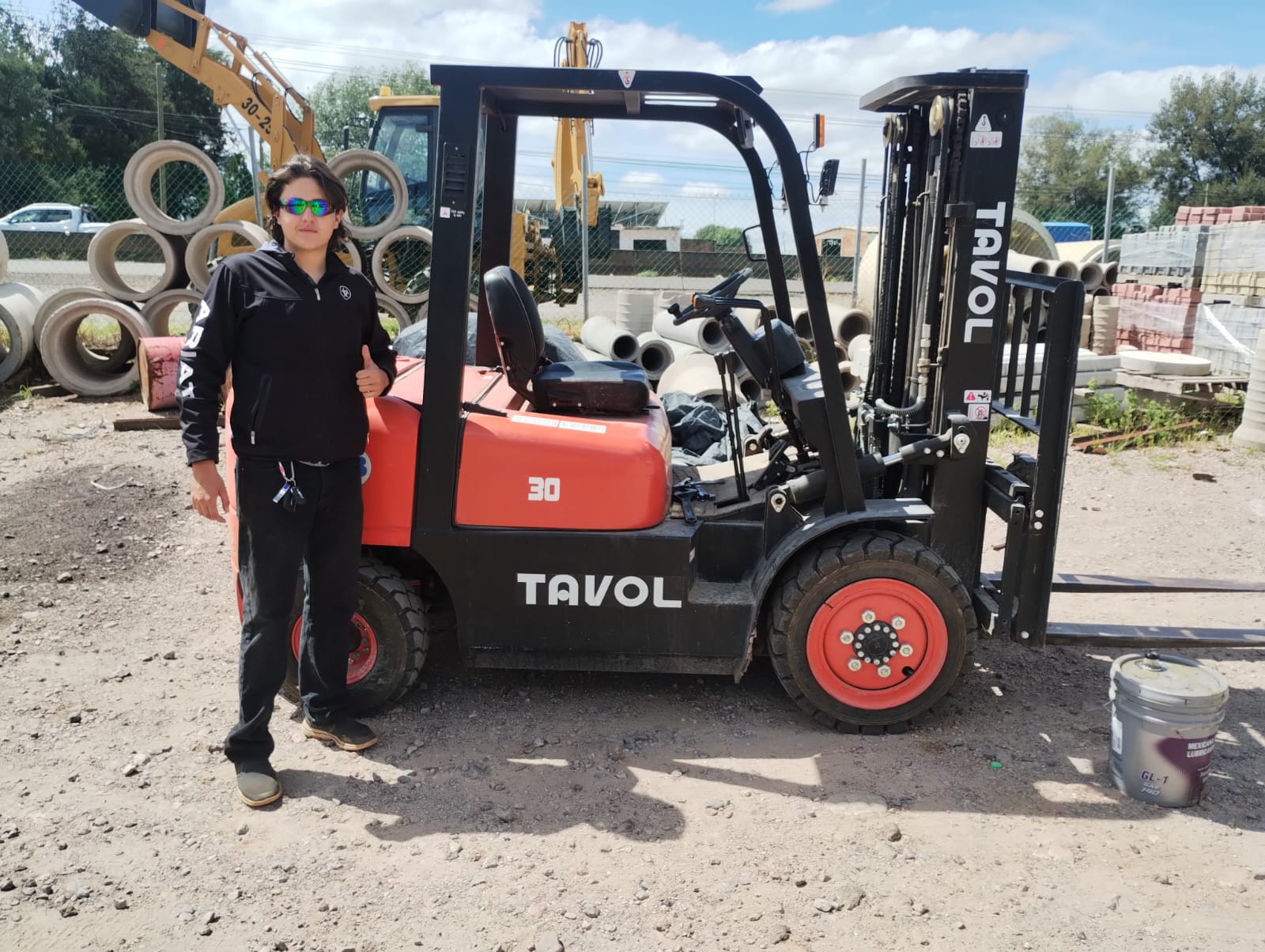
Cover image: a 3-ton diesel material handling forklift in an outdoor yard. Fuel choice and weighing hardware should be specified together.
Problem Definition: Why Fuel and Weighing Must Be Decided Together
A weighing error can start long before the operator reads the display. It starts with an unclear measurement task. The buyer must define what is being weighed: payload only, payload plus pallet, or payload plus attachment tare. If the same forklift handles a paper roll clamp, bale clamp, or rotating fork, the tare changes. If the display is added as a separate electronic weighing scale attachment, the operator workflow and calibration record must be defined as well.
Overload alert is the second control point. The alert should be tied to the rated capacity of the configured forklift and the actual load center. A 3-ton model has a 3000 kg rated capacity; a 3.5-ton model has 3500 kg; a 5-ton unit has 5000 kg. The alert threshold, display position, and calibration method should be agreed in the specification, not left to a generic brochure line.
The third control point is calibration. Weighing accuracy is not a single number that can be copied from one site to another. It depends on the load cell installation, mast position, attachment tare, and operating conditions. Ask for the calibration procedure, the test load method, and the acceptance record. A display that shows a number is not the same as a weighing system that can support weight-based cargo billing.
Industry Background: Weighing Is Now Part of the Material Handling Brief
Material handling is a large equipment category. Grand View Research valued the global forklift market at USD 81.4 billion in 2025. Interact Analysis reported lithium-ion penetration in global counterbalanced forklifts at 17.5% in 2024. These figures do not decide a single site's fuel choice, but they show that electric options are a mainstream part of the comparison, not a niche. Safety standards remain the baseline: ANSI/ITSDF B56.1-2020 is the safety standard for low-lift and high-lift trucks effective through 2025.
TAVOL's CE certificate TTC-26-0104/03/01, issued by INTERTÜRK, covers forklift models including CPC10, CPCD10, CPC15, CPCD15, CPC18, CPCD18, CPC20-CPCD100, CPQD120-CPQD60, FB10-FB50, and T3007-T6018 series under EN 1175:2025, EN ISO 3691-1:2015/AC:2016, EN ISO 12100:2010, and EN 60204-1:2018/A1:2025. The certificate is valid from 2026-04-01 to 2031-04-01. The factory covers 40,000 m², employs 300 people, has 25 engineers, and produces 3000 units annually; 70% of output is exported to Southeast Asia, Europe, South America, the Middle East, Africa, Australia, and North America.
Those production facts do not replace a weighing specification. They do show why a buyer should ask for a factory-integrated or supplier-supported weighing route rather than treating the display as an accessory bought after the forklift arrives. The weighing system, mast, attachment, and fuel system need to be reviewed as one configuration.
Detailed Solution: Electric, Dual Fuel, and Diesel Compared for On-Board Weighing
What On-Board Weighing Requires from a Material Handling Forklift
An on-board weighing system usually includes a load cell arrangement on the mast or carriage, a digital display for the operator, an overload alert, and a calibration record. The system may be factory-integrated or supplied as a supporting electronic weighing scale attachment or separate digital display unit. Buyers should confirm which route the supplier controls, who calibrates it, and how the tare is handled when attachments change.
For weight-based cargo billing, the display should be readable from the operator position and the calibration record should be retainable. For overload prevention, the alert should be visible to the operator and tied to the configured capacity. For mixed fleets, the buyer should confirm whether the same weighing display and calibration logic can be used across electric, dual fuel, and diesel units.
Electric Forklift with On-Board Weighing
Electric forklifts are the natural fit for indoor warehousing and logistics where emissions and noise are constraints. TAVOL's CPD30 is a 3-ton lithium-ion electric forklift with a 500 mm load center, 2550 mm turning radius, 2855 mm length, 1230 mm width, and 2080 mm top guard height. The CPD40 is a 4-ton lithium-ion model with a 500 mm load center. The CPD series 3T-4T supports 27% gradeability with full load, according to TAVOL product data.
For weighing, the key questions are whether the load cell and display are factory-integrated, how the system is calibrated after mast or attachment changes, and whether the battery duty cycle supports the shift pattern. Lithium charging guidance in the corpus says opportunity charging during breaks is preferred over waiting for full discharge, and no watering or acid checks are required; weekly terminal and connector inspection is recommended. That charging pattern can support a warehouse weighing workflow, but it must be planned around the actual shift schedule.
Electric power is not automatically the right choice for every outdoor yard. Confirm floor conditions, charging access, and whether the site needs continuous operation across shifts. A Kuwait chemical and warehousing logistics center used five CPD40 units for high-rack warehouse pallet stacking, heavy bagged material transport, and indoor logistics; the reported result was zero indoor emissions, smooth high-lifting operation, reduced energy cost, and reliable performance under high ambient temperature.
Dual Fuel LPG and Gasoline Forklift with On-Board Weighing
Dual fuel LPG and gasoline forklifts are useful when fuel supply is variable or when one fuel is cheaper at different times. TAVOL's CPQYD20 is a 2-ton dual fuel model with a Nissan engine and Q235/Q355 steel construction. The CPQYD30 is a 3.0-ton dual fuel model. The CPQYD35 has a drive speed of 18/20 km/h under full load, a lift speed of 450 mm/sec, a descent speed of 420 mm/sec, maximum traction of 21500 N, a 2550 mm turning radius, a 500 mm load center, and overall dimensions of 2855 mm length by 1230 mm width.
Fuel switching procedure matters in weighing work. Switch only when the engine is idling or off, use the dashboard fuel selector, wait 5-10 seconds for the fuel system to stabilize, and do not switch under heavy load or on a slope. This is an operational control, not a weighing calibration step, but it affects repeatability at the point of load pickup. The operator should also confirm that the display remains readable during fuel switching and that the weighing tare is not affected by the fuel mode.
Case evidence supports the fuel-flexibility argument. A chemical and industrial plant in Bangladesh used two CPQYD30 units with a customized hydraulic drum clamp; LPG operation reduced fuel expense by 35%, and the site reported seamless switching between gas and gasoline in a high-temperature factory environment. For weighing, confirm that the display and load cell are calibrated with the drum clamp fitted, because the attachment changes the tare.
Diesel Forklift with On-Board Weighing
Diesel remains relevant for outdoor yards, general cargo handling, manufacturing plants with rough surfaces, scrap and recycling, agriculture and grain trading, and container work. TAVOL's CPCD30 is a 3-ton diesel forklift with a 3000 kg rated capacity, a diesel engine, engine options from Xinchai, Quanchai, Isuzu, Mitsubishi, Yanmar, Kubota, or PSI, dimensions of 2855 mm by 1230 mm, a top guard height of 2125 mm, a mast tilt of 6 degrees forward and 12 degrees backward, and Q235/Q355 steel construction. It is designed for outdoor use and rough terrain.
The CPCD20 is a 2-ton diesel model with mast options including two-stage masts from 3 to 6 m and three-stage (triple) masts from 4.5 to 6 m, plus container and full free masts. The CPCD25 is a 2.5-ton model with a 450 mm/sec lift speed under full load. The CPCD35 and CPCD40 extend the range to 3.5-ton and 4-ton classes. A 5-ton heavy-duty diesel unit was used in Mexico for heavy cargo, steel goods, and container loading, with stable performance under full-load conditions.
For weighing, diesel engine vibration and outdoor conditions make display readability and calibration verification important. The buyer should confirm the mounting of the display, the protection of the load cell, and the pre-shipment test procedure. A Chile fruit orchard used four CPCD30 units with a custom 4.5-meter high-lifting mast for fruit crate stacking and outdoor farm transport. A Peru plastic recycling company used ten CPCD30 units for recycled plastic bale loading and warehousing, reporting cost-effective fuel performance and widely available spare parts.
Supporting Electronic Weighing Scale Attachment and Digital Display Unit
Not every weighing requirement needs a factory-integrated mast system. A supporting electronic weighing scale attachment or a separate digital display unit can be considered when the fleet is mixed, when the weighing task is occasional, or when the buyer wants a retrofit path. The decision should be based on calibration control, operator workflow, data output, and service access.
For weight-based cargo billing, the display should be readable from the operator position and the calibration record should be retainable. For overload prevention, the alert should be visible to the operator and tied to the configured capacity. If the forklift uses a paper roll clamp, bale clamp, or rotating fork, confirm how the weighing system is calibrated for the attachment. A clamp or rotating head changes the load center and tare, so the calibration procedure must match the actual configuration.
Step-by-Step Breakdown: Specifying a Weighing-Ready Material Handling Forklift
- Define the load and billing unit. State whether the site needs payload only, payload plus pallet, or payload plus attachment tare. Confirm the rated capacity class: 2-ton, 3-ton, 3.5-ton, 4-ton, or 5-ton. For a 3-ton model, the rated capacity is 3000 kg; for a 3.5-ton model, 3500 kg.
- Map the environment and duty cycle. Indoor warehousing and logistics favor electric forklifts. Outdoor yards, rough terrain, scrap and recycling, agriculture and grain trading, and container work often favor diesel. Dual fuel LPG and gasoline fits sites with variable fuel access or indoor/outdoor mixed duty.
- Choose the fuel architecture. Compare electric, dual fuel, and diesel against fuel access, shift pattern, ventilation, noise, and service network. Do not assume that one fuel type covers every building and yard on the same site.
- Specify the weighing hardware. Decide between an integrated load cell and mast display, a supporting electronic weighing scale attachment, or a separate digital display unit. Confirm display position, overload alert logic, and calibration responsibility.
- Set calibration and overload responsibility. Ask for the calibration procedure, the test load method, and the acceptance record. Confirm who calibrates the system after mast, fork, or attachment changes. The overload alert should be tied to the configured rated capacity and load center.
- Match mast, cabin, and attachment. Select the mast height, fork length, attachment type, and cabin type for the actual route. TAVOL customization includes fuel type, tonnage, mast height, fork length, attachment type, cabin type, logo printing, and paint color.
- Lock commercial terms and acceptance. Confirm MOQ, lead time, pre-shipment test, and warranty. TAVOL's MOQ is 1 unit, lead time is 10-45 days, monthly capacity is 300 units, and the forklift warranty is 2 years, with 5 years for the lithium battery.
Use Cases: Where Each Fuel Type Fits a Weighing Workflow
Outdoor Yard and General Cargo Handling
Outdoor yards and general cargo handling usually need stable power, ground clearance, and resistance to dust and weather. Diesel forklifts such as the CPCD30 are designed for outdoor use and rough terrain. If the yard also handles weight-based cargo billing, the display should be positioned for outdoor readability and the load cell should be protected from the working environment. Dual fuel can be useful where LPG is available but gasoline is needed as a backup.
Manufacturing Plants
Manufacturing plants often combine indoor and outdoor movement. A dual fuel LPG and gasoline forklift can switch fuel modes when the engine is idling or off, which helps where fuel supply changes by season or shift. The CPQYD20 is suitable for warehousing and logistics, food and beverage processing, and manufacturing plants. For weighing, confirm that the display and load cell are calibrated for the attachment used in the plant, such as a drum clamp or bale clamp.
Warehousing and Logistics
Warehousing and logistics operations usually prioritize indoor emissions, turning radius, and high-rack stacking. The CPD30 has a 2550 mm turning radius, a 500 mm load center, 2855 mm length, 1230 mm width, and 2080 mm top guard height. The CPD40 has a 4000 kg rated capacity and a 500 mm load center. In the Kuwait case, five CPD40 units handled high-rack warehouse pallet stacking, heavy bagged material transport, and indoor logistics with zero indoor emissions.
Weight-Based Cargo Billing
Weight-based cargo billing needs a weighing result that can be recorded and defended. The forklift should display the load during lifting and transport, and the calibration record should be retained. This is where a supporting electronic weighing scale attachment or a separate digital display unit may be considered, especially if the billing system requires a specific data output. The buyer should confirm the calibration method and the acceptance test before the unit is shipped.
Scrap and Recycling Weighing
Scrap and recycling yards often handle irregular loads, bales, and mixed materials. The weighing system should be specified for the attachment and the load type. A paper roll clamp, bale clamp, or rotating fork changes the tare and load center. The CPCD30 is used in recycling and warehousing applications; a Peru plastic recycling company used ten CPCD30 units for recycled plastic bale loading and warehousing and reported cost-effective fuel performance and easy maintenance.
Agriculture and Grain Trading
Agriculture and grain trading combine outdoor transport, seasonal peaks, and weight-based transactions. Diesel units are common where fuel access and rough roads are the main constraints. A Chile fruit orchard used four CPCD30 units with a custom 4.5-meter high-lifting mast for fruit crate stacking and outdoor farm transport. For grain trading, the weighing display should be readable at the point of loading, and the calibration record should be linked to the transaction record.
Container and Heavy Cargo
Container loading and heavy cargo work need capacity, mast stability, and safe visibility. The CPCD20 offers two-stage masts from 3 to 6 m and three-stage masts from 4.5 to 6 m, plus container and full free masts. A 5-ton heavy-duty diesel unit was used in Mexico for indoor and outdoor workshop material handling, heavy cargo, steel goods, and container loading. For weighing, confirm that the display and load cell are rated for the actual load range and that the overload alert is set for the configured capacity.
Comparison Table: Electric, Dual Fuel, and Diesel for On-Board Weighing
| Comparison point | Electric forklift | Dual fuel LPG and gasoline forklift | Diesel forklift |
|---|---|---|---|
| TAVOL model examples from corpus | CPD30, 3-ton lithium-ion; CPD40, 4-ton lithium-ion | CPQYD20, 2-ton with Nissan engine; CPQYD30, 3.0-ton; CPQYD35, 3.5-ton | CPCD20, 2-ton; CPCD25, 2.5-ton; CPCD30, 3-ton; CPCD35, 3.5-ton; CPCD40, 4-ton |
| Capacity and configuration facts | CPD30 rated capacity 3000 kg; CPD40 rated capacity 4000 kg; 500 mm load center; CPD series 3T-4T supports 27% gradeability with full load | CPQYD20 rated capacity 2000 kg; CPQYD30 classified as 3.0-ton; CPQYD35 drive speed 18/20 km/h under full load, lift speed 450 mm/sec, descent speed 420 mm/sec, maximum traction 21500 N | CPCD30 rated capacity 3000 kg; CPCD25 rated capacity 2500 kg; CPCD30 engine options include Xinchai, Quanchai, Isuzu, Mitsubishi, Yanmar, Kubota, or PSI |
| Best-fit environment | Indoor warehousing and logistics; food and beverage processing; manufacturing plants where emissions and noise are controlled | Indoor/outdoor mixed duty; sites with variable fuel supply; high-temperature factory environments; general cargo handling | Outdoor yards; rough terrain; general cargo handling; scrap and recycling; agriculture and grain trading; container and heavy cargo |
| Weighing integration notes | Confirm factory-integrated load cell and display, calibration after mast or attachment change, and battery duty cycle for the shift | Confirm display readability during fuel switching; calibrate with the attachment fitted; confirm tare handling for LPG and gasoline operation | Confirm display mounting and load cell protection for outdoor conditions; calibrate with the mast, fork, or attachment fitted |
| Operational notes from corpus | CPD30 is designed for indoor use; Kuwait CPD40 case reported zero indoor emissions and smooth high-lifting operation | Switch fuel modes only when the engine is idling or off; Bangladesh CPQYD30 case reported 35% lower fuel expense via LPG | CPCD30 is designed for outdoor use and rough terrain; Chile CPCD30 case used a 4.5-meter high-lifting mast for outdoor farm transport |
| Procurement checks | Charging access, ventilation, shift pattern, and weighing display position | LPG cylinder security, fuel switching procedure, and calibration with the attachment | Engine certificate for the destination market, service access, and outdoor display protection |
FAQ: Material Handling Forklift Weighing and OEM Questions
Which certification and standards apply to a TAVOL material handling forklift for weighing applications?
TAVOL holds CE certificate TTC-26-0104/03/01, issued by INTERTÜRK, valid from 2026-04-01 to 2031-04-01. The scope covers forklift models including CPC10, CPCD10, CPC15, CPCD15, CPC18, CPCD18, CPC20-CPCD100, CPQD120-CPQD60, FB10-FB50, and T3007-T6018 series. The listed standards include EN 1175:2025, EN ISO 3691-1:2015/AC:2016, EN ISO 12100:2010, and EN 60204-1:2018/A1:2025. ANSI/ITSDF B56.1-2020 is also relevant as the safety standard for low-lift and high-lift trucks effective through 2025. The weighing system itself should still have its own calibration and acceptance record.
Can TAVOL customize a 3-ton material handling forklift for an on-board weighing project?
TAVOL supports OEM and ODM customization for fuel type, tonnage, mast height, fork length, attachment type, cabin type, logo printing, and paint color. MOQ is 1 unit. For an on-board weighing project, the buyer should define the load cell and display requirement, the calibration procedure, and the attachment tare in the OEM brief. Do not assume that a standard model name alone confirms a factory-integrated weighing system.
What purchasing terms apply?
MOQ is 1 unit. Delivery terms include EXW, FOB, CFR, CIF, FCA, DDU, and DAP. Acceptance criteria include pre-shipment test. Payment terms are T/T and L/C. These terms should be confirmed in the quotation for the specific fuel type, capacity, mast, attachment, and weighing configuration.
Can I order one unit as a sample before a fleet order?
Yes, MOQ is 1 unit. TAVOL applies 100% pre-shipment test and third-party inspection. The forklift warranty is 2 years, with 5 years for the lithium battery. A sample order can be used to verify the weighing display position, overload alert, calibration record, and operator workflow before a larger order.
What is the lead time for an OEM material handling forklift order?
Lead time is 10-45 days, and monthly capacity is 300 units. Remote technical support is available after delivery. To move from comparison to a quotation, send the load range, fuel preference, mast and attachment details, and weighing display requirement to sls66@tavolgroup.com or WhatsApp +86 156 2134 6916. The team can then confirm the configuration and the calibration acceptance step.
Conclusion: Match the Fuel Type to the Weighing Job
Electric, dual fuel, and diesel material handling forklifts can all support on-board weighing, but they fit different operating contexts. Electric is the stronger fit for indoor warehousing and logistics where emissions and noise are controlled. Dual fuel LPG and gasoline offers flexibility where fuel supply changes or where indoor/outdoor mixed duty is common. Diesel remains practical for outdoor yards, rough terrain, scrap and recycling, agriculture and grain trading, and container and heavy cargo work.
The buying decision should be based on five checks: the load range and load center, the environment and duty cycle, the weighing hardware route, the calibration and overload responsibility, and the commercial terms. TAVOL Forklift covers diesel, dual fuel, and electric models with OEM/ODM customization and a 40,000 m² factory, 300 employees, 25 engineers, and 3000 units annual output. For a weighing project, the most useful next step is to share the load data and attachment details so the fuel type and weighing configuration can be reviewed together.
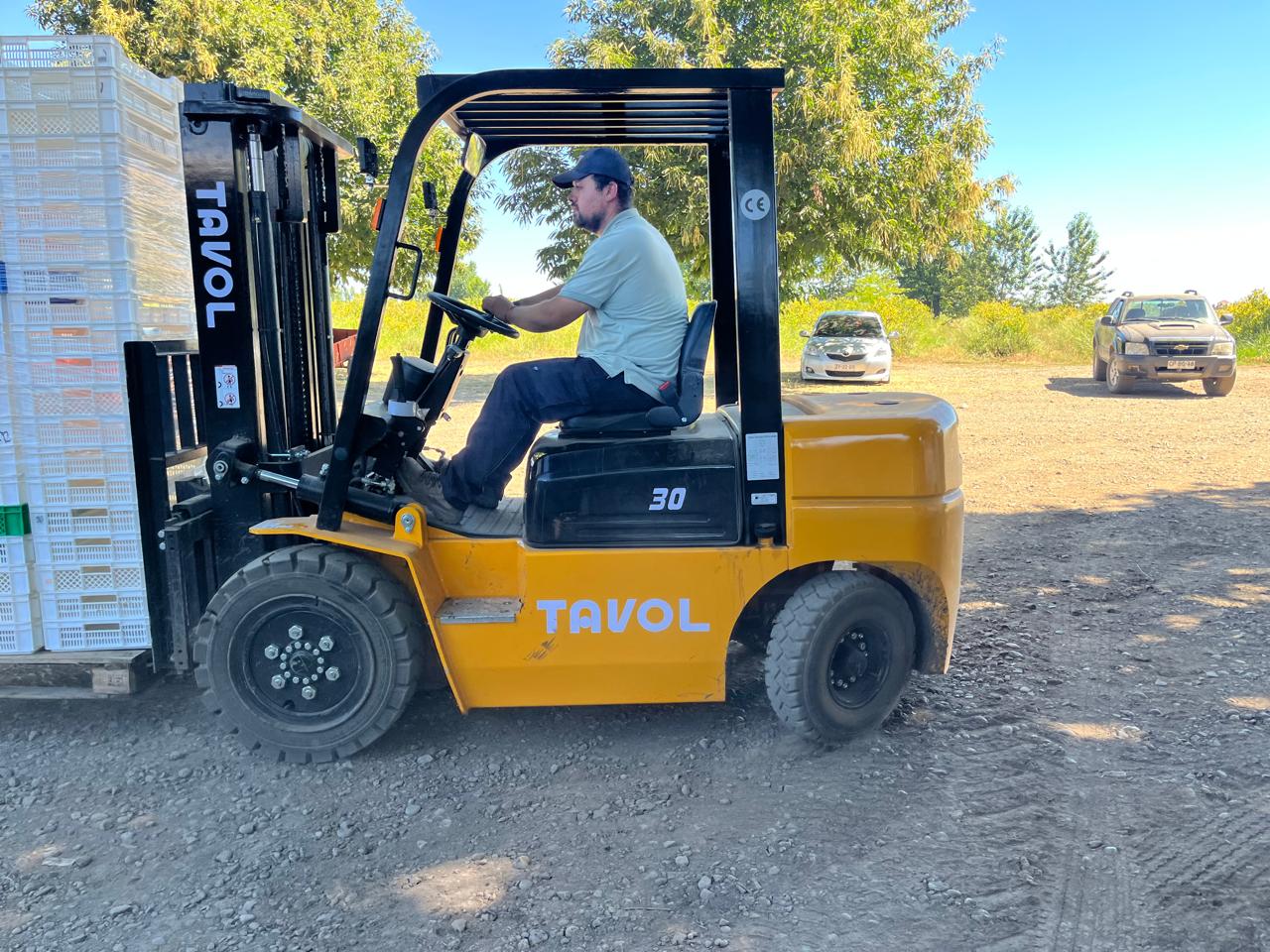
Supporting image: a 3-ton diesel material handling forklift with a 4.5 m mast in an outdoor agricultural application.
Request a Sample, Quote, or Company Profile
Send your load range, fuel preference, mast height, attachment type, and weighing display requirement. TAVOL can review the configuration against the available diesel, dual fuel LPG and gasoline, and electric models.
Email: sls66@tavolgroup.com | WhatsApp: +86 156 2134 6916 | Website: www.tavolgroup.com
Download the company profile PDF for the full product and factory overview.
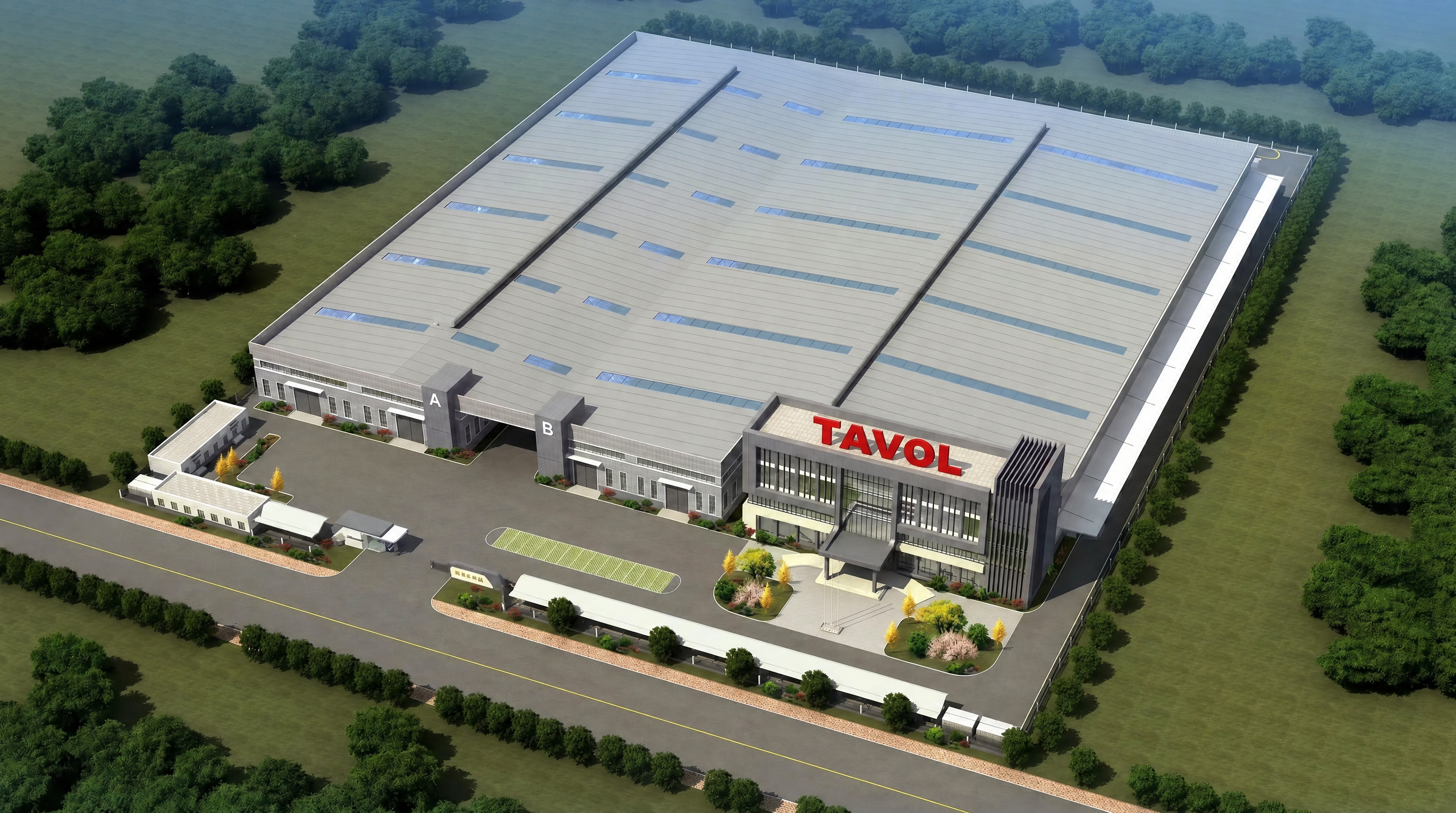
Factory overview: TAVOL manufactures diesel, dual fuel, and electric forklifts with OEM/ODM customization and pre-shipment testing.
Have Questions or Need More Details?
Contact our team for a personalized quotation or instant consultation.
Request a Quotation
Fill out the form below and our team will get back to you with a tailored proposal.
WhatsApp Direct Chat
Prefer to chat in real-time? Message us on WhatsApp for instant assistance & quick answers.
- Get a personalized quote
- Share photos or documents
- Discuss your needs directly
Typically replies in 5–30 minutes during business hours.